Fire Alarms for Restaurants in Manchester: Licensing Compliance
Do you actually know if your restaurant fire alarm setup would pass inspection tomorrow?
Let’s be real. Most restaurant owners only think about fire alarms when something starts beeping at 2am or when the council books an inspection. That is not a strategy. That is gambling with your premises licence.
Hospitality venues across Manchester operate in high risk settings. Open flames. Deep fat fryers. Packed dining rooms. Alcohol. One weak link in your fire alarm compliance and you are not just facing a fine. You are facing closure, insurance disputes, and your reputation dragged through the mud online.
At iSecurity Solutions fire safety services, we help restaurant owners cut the nonsense. We design and install Insurance Approved systems that meet BS 5839, satisfy licensing officers, and stand up to real kitchen risks.
Fire Alarms For Restaurants In Manchester And Licensing Compliance
Here’s what’s actually happening. Manchester City Council does not care that you are fully booked on a Saturday night. They care about public safety. It is one of the core licensing objectives.
If your fire alarm system is not suitable, not maintained, or not documented properly, your premises licence is at risk. It is that simple.
Under the Regulatory Reform Fire Safety Order 2005, the responsible person, usually you or your general manager, must provide proper fire detection and warning. BS 5839 1 is the code of practice used across the UK for non domestic premises such as restaurants. You can see how this standard works in practice on the BSI overview of fire alarm standards.
Compliance is not about ticking a box. It is about having a system that works when your extraction system ignites or a fault sparks behind the bar. When that happens, you get one shot at getting it right.
BS 5839 For Restaurant Fire Alarms In Manchester
Cut the nonsense. BS 5839 1 is not optional guidance. It is the recognised benchmark for designing, installing, commissioning and maintaining fire alarm systems in commercial buildings.
For your venue, this means the system must be designed to the correct category, installed by competent engineers, and serviced on schedule. Our Fire Alarm Installation service follows BS 5839 1 from day one.
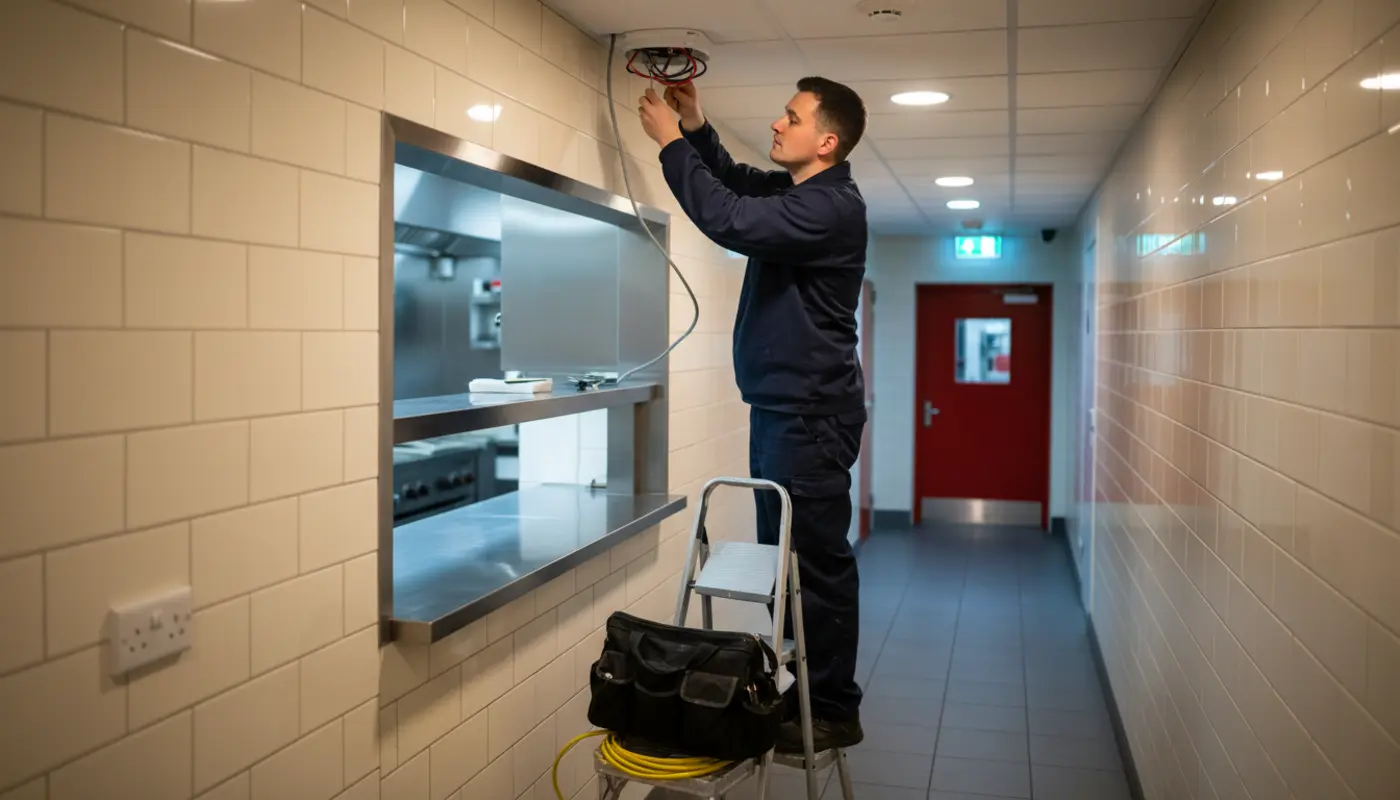
Installation and maintenance should be carried out by an SSAIB certified and Insurance Approved company. This certification is independently audited. It proves your system meets recognised standards. It also supports eligibility for a Police Response URN where alarm monitoring is required, as SSAIB certification is the prerequisite.
If your installer cannot show third party certification, stop pretending that is good enough.
L2 Vs M Fire Alarm Categories
This is where people get confused.
Category M is manual only. Break glass call points with no automatic detection. That means someone has to spot the fire before the alarm is raised. In a busy kitchen full of steam and noise, that is weak protection.
Category L2 includes automatic detection in escape routes and high risk areas such as kitchens and plant rooms. For most Manchester restaurants, L2 is the sensible baseline. Especially if you have a basement, mezzanine, or flats above.
Choosing M only because it is cheaper is risky. Restaurants are commercial premises. They need commercial grade systems designed to BS 5839.
The correct category must be justified in your fire risk assessment. If you have not reviewed that recently, read our guide on fire risk assessments for businesses in Manchester. It explains how the risk assessment drives the alarm category decision.
Fire extinguishers must comply with BS 5306 and be serviced under BAFE SP101. An annual service certificate is insurance required. We explain this in our article on fire extinguishers for restaurants in Manchester.
Kitchen Detection Done Properly
Let’s talk about the real danger zone. Your kitchen.
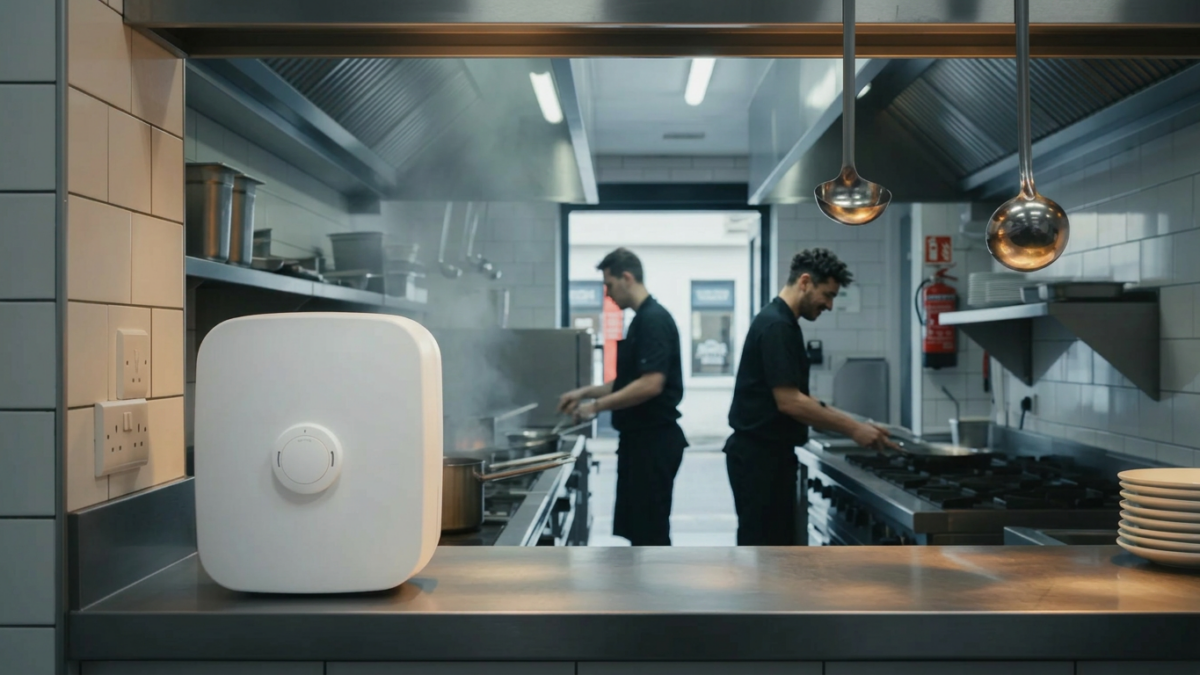
Deep fat fryers, open grills, solid fuel ovens and grease filled extraction systems are where restaurant fires often start. Put the wrong detector above a fryer and you will get constant false alarms. Put no detection near high risk areas and you are asking for trouble.
BS 5839 1 requires detectors to suit the risk and environment. In commercial kitchens, that often means heat detectors instead of smoke detectors. They must be positioned to avoid steam but still give early warning.
Here is what sensible design looks like:
- Heat detection in kitchens
- Smoke detection in corridors
- Coverage of escape routes
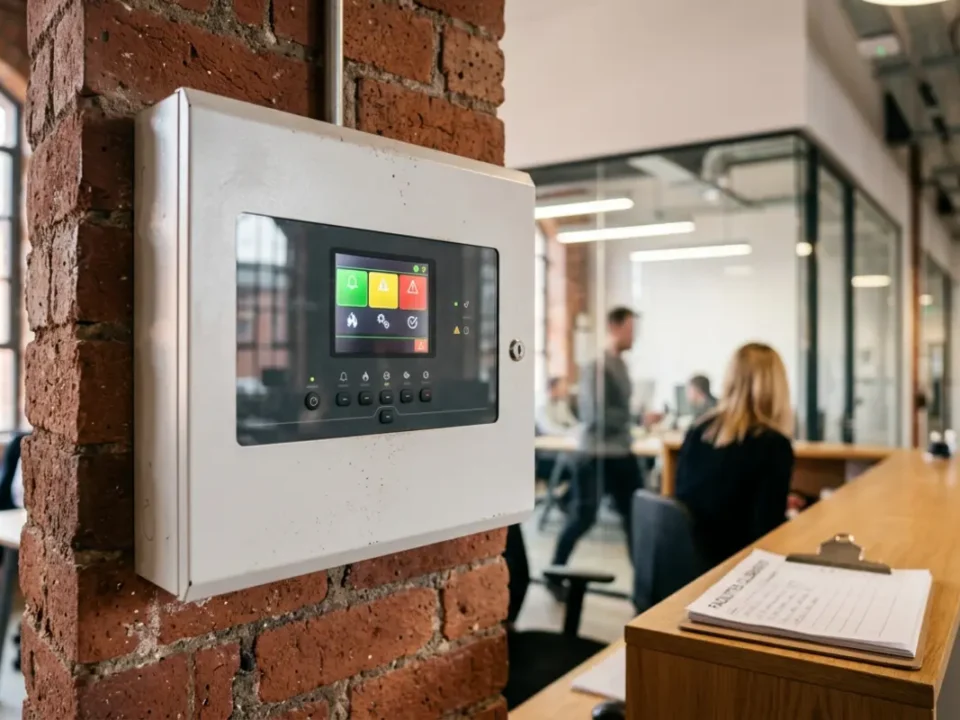
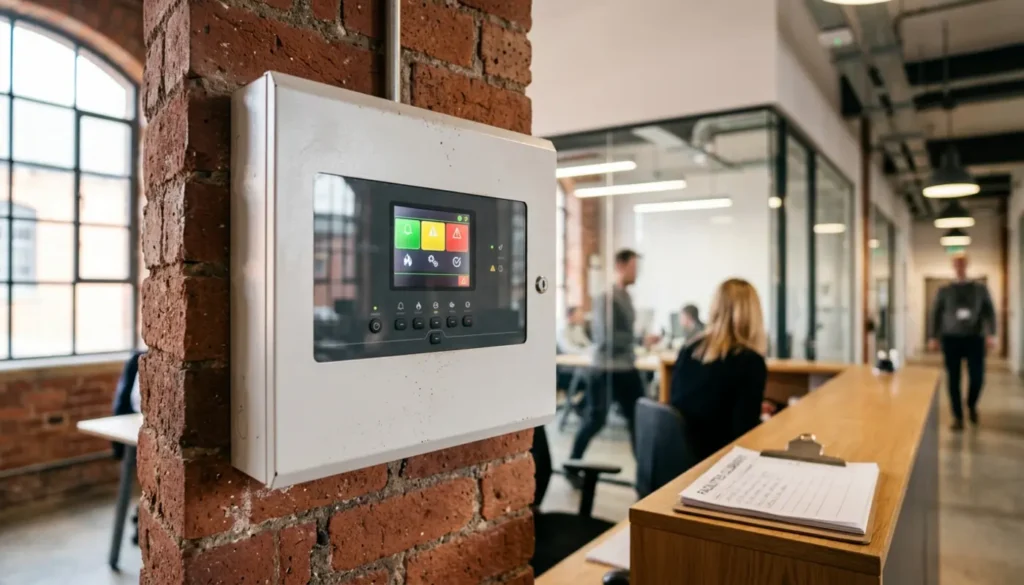
- Control panel near the main entrance
- Sounders in dining areas
- Clear zone chart displayed
- Documented commissioning certificate
A domestic alarm from a DIY shop is not adequate. When the fire service asks who designed the system, you need a better answer than ‘I ordered it online’.
Fire Alarms And Your Premises Licence
When you apply for a new premises licence or a variation, the council can consult Greater Manchester Fire and Rescue Service. Weak fire precautions get flagged quickly.
A properly designed, Insurance Approved system installed by an SSAIB certified company shows you take public safety seriously. It makes inspections smoother and reduces awkward questions.
Licensing officers and Environmental Health Officers will expect to see:
- Up to date fire risk assessment
- Fire alarm commissioning certificate
- Six monthly service records
- Weekly test log entries
- Emergency lighting test log
- Staff fire training records
If you cannot produce that paperwork, you are not compliant.
Servicing That Keeps Inspectors Quiet
Here is the part most operators ignore.
BS 5839 requires routine user checks and periodic inspection by a competent engineer. Daily panel checks. Weekly call point tests. Professional servicing, usually every six months.
Emergency lighting must comply with BS 5266. That includes monthly functional tests and a full annual duration test. Inspectors do check the logbook.
Keep everything under a structured plan such as our security and fire maintenance contracts. It keeps servicing scheduled, recorded, and easy to prove if questioned.
Lighting Signage And Real World Evacuation
An alarm without lighting is only half a plan.
When power fails and smoke builds, emergency lighting to BS 5266 guides people to safety. Exit signage must clearly mark escape routes. Lights should be placed near exits, stairs, call points and changes in direction.
The alarm tells people to get out. The lighting shows them how. If you run late night events or larger venues, you should also understand wider safety duties. We explain this in our guide on what is Martins Law and what it means for public spaces.
Why SSAIB Certification Matters
Look. Anyone can buy alarm equipment. Not everyone can design a compliant system that survives inspection.
An SSAIB certified and Insurance Approved installer is independently audited for competence. That matters to insurers and licensing authorities. It also matters if you need a Police Response URN for monitored systems, as SSAIB certification is the prerequisite.
If your restaurant also has an intruder alarm, it must comply with EN 50131. Usually Grade 2 or Grade 3, depending on risk.
If your installer does not understand how a Friday night kitchen runs, you have hired the wrong company.
Choosing The Right Fire Alarm Company
Stop pretending all installers are the same. They are not.
Ask direct questions:
- Are you SSAIB certified and Insurance Approved?
- Do you design to BS 5839 1?
- Can you show restaurant case studies?
- Will you support licence inspections?
- Do you provide clear logbooks?
- Is maintenance included?
At iSecurity Solutions commercial security services, we design systems around your layout, your risk assessment and your licence conditions. We are a trusted UK provider of commercial and domestic security systems. From CCTV and intruder alarms to fire safety, access control and construction site monitoring, our expert team delivers reliable, tailored solutions backed by responsive service and modern, remotely monitored technology. Whether you secure one site or manage multiple locations, we provide the equipment, expertise and peace of mind to keep what matters most safe.