Fire Alarms for Retail Shops in Manchester
Fire Alarms For Retail Shops In Manchester
Fire alarms for retail shops in Manchester are a legal requirement under the Regulatory Reform Fire Safety Order 2005. If you run or manage a shop, you must have a suitable fire detection and warning system in place to protect staff, customers and visitors. The level of cover depends on your fire risk assessment, the layout of your building and how the space is used day to day.
If that sounds a bit confusing, you are not alone. Many shop owners feel unsure at first. Working with experienced providers like iSecurity Solutions and using tailored fire safety services makes the process much clearer and easier to manage.
Retail Fire Alarm Manchester BS 5839 Insurance Requirements Explained
When people search for retail fire alarm Manchester BS 5839 insurance requirements, they usually want to know what is expected of them. In simple terms, your system should meet BS 5839 Part 1. This is the British Standard that covers fire alarm design, installation and maintenance in commercial buildings. It also needs to match your actual risks, not just be a basic setup.
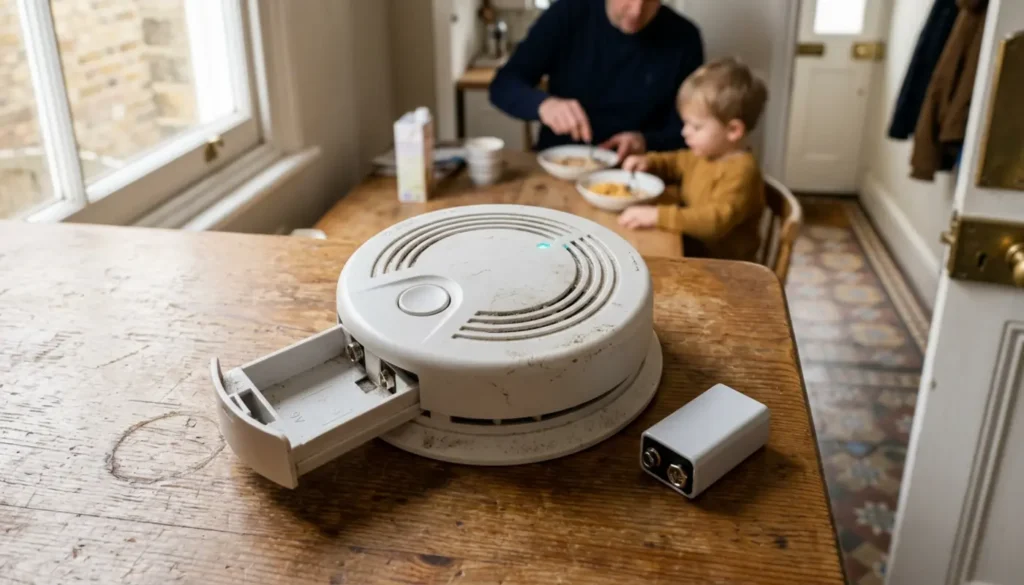
If you are unsure what that means for your shop, you are not alone. Working with professionals who provide business security systems and reliable maintenance contracts helps make sure your system stays compliant and dependable. You can also read more about how fire alarm systems work to better understand what you are installing.
Understanding Fire Alarms For Retail Shops In Manchester
The Regulatory Reform Fire Safety Order 2005 applies to most non domestic premises in Manchester, including retail shops and shopping centres. It places responsibility on the person in control of the premises to make sure fire safety measures are suitable and properly maintained.
According to UK Government fire safety guidance, the responsible person must reduce risks and ensure people can leave safely in an emergency. This includes installing suitable fire alarms, maintaining them and keeping records.
Who Is The Responsible Person In A Retail Shop
In most Manchester retail settings, the responsible person is the business owner or employer who controls the premises. In leased shops, responsibility may be shared with the landlord, especially for common areas. In shopping centres, centre management often looks after shared systems, while each shop remains responsible for its own internal safety.
For a clearer explanation, see fire risk assessments for Manchester businesses.
Fire Risk Assessment For Retail Shops
Before choosing a fire alarm system, you must carry out a suitable and sufficient fire risk assessment. This means reviewing your shop to identify hazards, understand risks and decide what level of protection is needed.
Retail spaces often include flammable stock, electrical equipment and high customer footfall. These factors increase fire risk. In busy areas like Manchester city centre, safe evacuation becomes even more important due to the number of people on site.
How Risk Assessment Influences Alarm Choice
Your fire risk assessment directly affects the type of system required under BS 5839. A small shop may need a simple setup, while a larger store with stockrooms or multiple floors will need broader coverage. The aim is always early detection and safe evacuation.
BS 5839 Fire Alarm Categories For Retail
BS 5839 Part 1 defines different fire alarm categories based on the level of protection needed. While it may sound technical, the categories are quite straightforward when explained clearly.
Common Categories Used In Shops
The most common categories in retail settings include:
- Category M uses manual call points and suits smaller, lower risk shops
- Category L3 provides automatic detection along escape routes
- Category L2 adds protection in higher risk areas like stockrooms
In larger Manchester shops or multi level stores, L2 systems are often expected. A proper risk assessment will confirm what is right for your space.
Manchester Retail Fire Safety Considerations
Greater Manchester Fire and Rescue Service actively enforces fire safety laws and carries out inspections. This means compliance is regularly checked, not just paperwork.
Shops in busy areas such as central Manchester often face more inspections due to higher footfall. Older buildings may also present challenges like outdated wiring or limited escape routes, which require extra care.
Common Compliance Issues Seen Locally
Common issues found during inspections include:
- Missing or outdated fire risk assessments
- Poorly maintained alarm systems
- Gaps in detector coverage
These problems can lead to enforcement action or even temporary closure.
Shared Buildings And Mixed Use Premises
Many shops in Manchester are located within mixed use buildings or beneath flats. In these cases, responsibilities are often shared, which can cause confusion if not clearly agreed.
Usually, the shop owner is responsible for their unit, while landlords or managing agents handle shared areas such as corridors and stairwells. Coordination is important so that alarm systems and evacuation plans work together.
Installation And Commissioning Standards
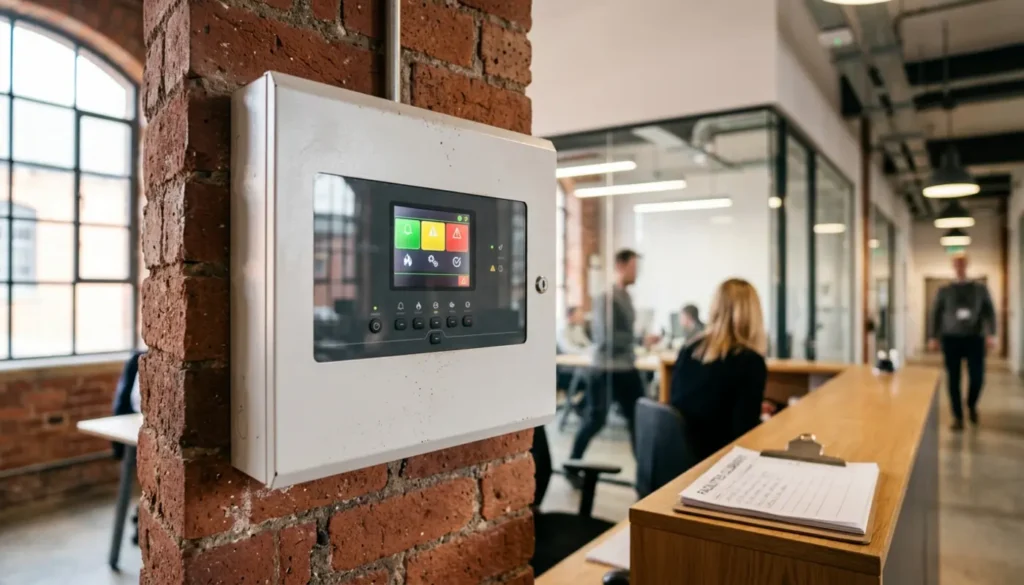
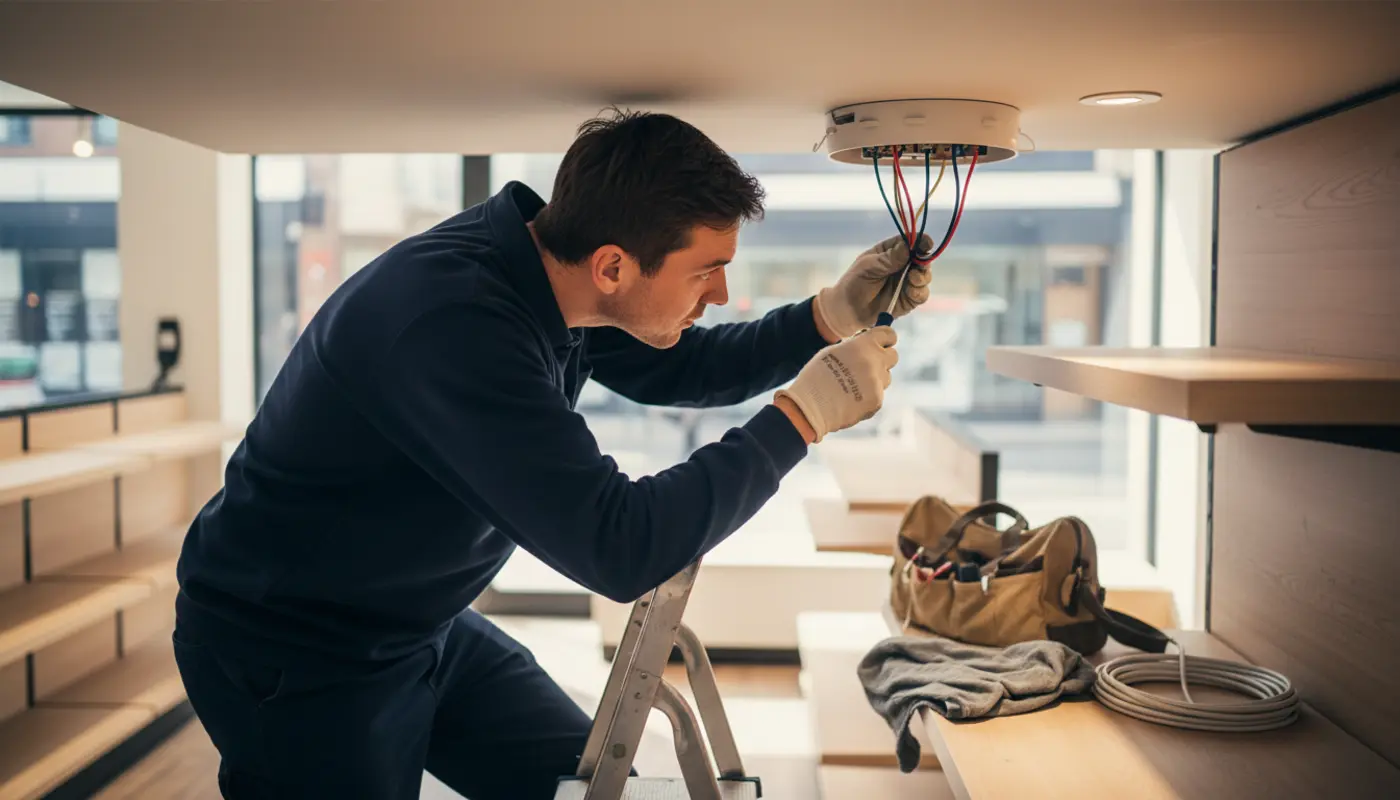
Fire alarms must be installed by competent professionals and meet BS 5839 Part 1 standards. This includes correct wiring, proper zoning and making sure alarms are clearly heard throughout the premises. You should receive commissioning certificates as proof the system has been set up correctly.
Using an SSAIB certified and Insurance Approved installer helps ensure recognised standards are met. It can also support eligibility for a Police Response URN where monitoring is used.
Maintenance Testing And Record Keeping
After installation, regular testing and maintenance are essential. This keeps the system reliable and ensures it works when needed.
- Weekly testing using a manual call point
- Professional servicing, usually every six months
- Quick repair of any faults
Keeping a logbook is just as important. Every test, service and issue should be recorded. For more details, see fire alarm service contract details and how often fire alarms should be tested.
Insurance Expectations For Retail Fire Alarms
Insurance providers often expect more than the legal minimum. They may require certified installation, regular maintenance records and sometimes monitored systems.
If your system does not meet expectations or records are missing, claims may be reduced or refused. Keeping everything compliant protects both your people and your business.
Consequences Of Non Compliance
Failing to meet fire safety requirements can lead to serious outcomes:
- Enforcement or prohibition notices
- Unlimited fines or legal action
- Business disruption and damage to your reputation
It is not just about avoiding penalties. It is about keeping people safe and your business running without interruption.
Conclusion
Fire alarms for retail shops in Manchester are essential for safety, legal compliance and business protection. From understanding your duties to choosing the right system and keeping it maintained, each step matters.
With the right support, the process becomes much more straightforward. iSecurity Solutions is a trusted UK provider of commercial and domestic security systems, helping businesses stay protected with reliable, tailored fire safety solutions and ongoing support.