Fire Alarms for Universities in Manchester & Leeds
Fire Alarms For Universities In Manchester And Leeds
Fire alarms for universities in Manchester and Leeds must be carefully designed, installed and maintained to protect large numbers of students, staff and visitors across complex estates. From lecture theatres and laboratories to libraries and halls of residence, each building has different risks and legal duties. Compliance with BS 5839 1 for non domestic buildings and BS 5839 6 for student accommodation, alongside clear fire risk assessments under the Regulatory Reform Fire Safety Order 2005, is essential. When systems are planned properly and supported by an SSAIB certified and Insurance Approved provider, managing campus wide fire safety becomes structured and far less overwhelming.
Universities in Manchester and Leeds often operate across multiple sites, including heritage buildings, high rise residences and modern research facilities. Each space requires the right fire alarm category, suitable detectors and a clear maintenance plan. At iSecurity Solutions, we support higher education estates with tailored fire safety systems built around BS 5839 multi building campus requirements, giving estates teams confidence, compliance and genuine peace of mind.
Understanding BS 5839 1 For University Buildings
BS 5839 1 2025 is the main code of practice for fire detection and alarm systems in non domestic premises, including teaching blocks, laboratories, libraries and administration buildings. It explains how systems should be designed, installed, commissioned and maintained so they match the building layout and level of risk. Although BS 5839 1 is not law on its own, it supports compliance with the Regulatory Reform Fire Safety Order 2005, which places legal duties on the responsible person within the university.
In practical terms, most universities in Manchester and Leeds require addressable fire alarm systems. These systems identify the exact device that has activated, making it easier to manage evacuations and investigate incidents. A clear technical summary is available in the BS 5839 1 overview, which supports informed decision making during upgrades or new projects.
System Design In Multi Occupancy Educational Buildings
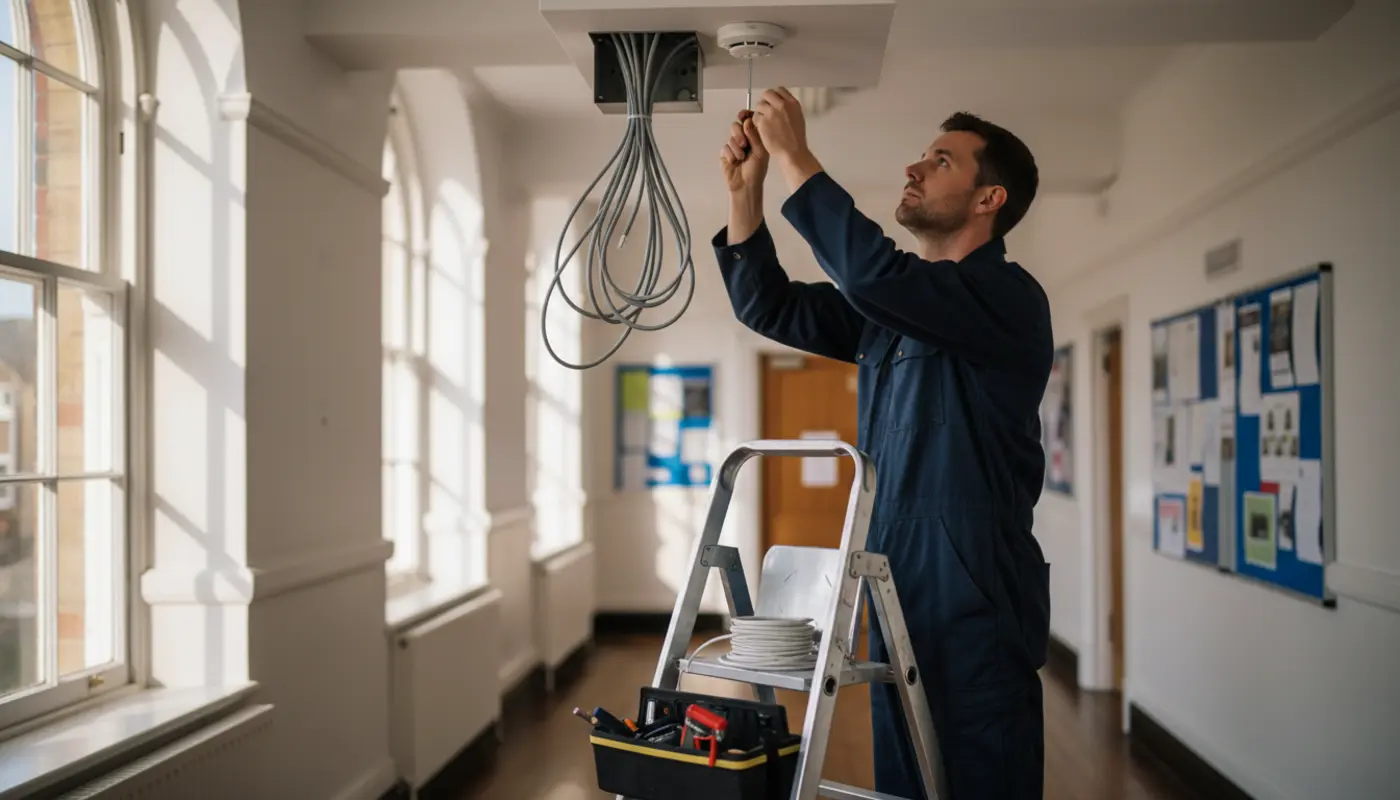
University buildings are rarely straightforward. A large lecture theatre may sit beside smaller seminar rooms, plant areas and staff offices. BS 5839 1 requires manual call points on escape routes, automatic detection in defined areas and clear alarm audibility throughout occupied spaces. Getting this balance right ensures early warning without causing unnecessary disruption.
Design should always follow a suitable and sufficient fire risk assessment because no two buildings are identical. Estates teams often look at structured approaches similar to those outlined in fire risk assessment for businesses in Manchester, adapting them to the higher education environment. A joined up campus strategy helps avoid gaps between departments or buildings.
Category M Vs Category L Systems On Campus
BS 5839 divides systems into Category M for manual systems and Category L for life protection, with L1 to L5 offering different levels of automatic detection. There is also Category P for property protection, which is especially important in universities where research, archives and specialist equipment hold significant value.
Category M systems rely only on break glass call points. In large university buildings, this is rarely enough on its own because early automatic detection is critical for safe evacuation. Most campuses therefore use Category L systems, often combined with Category P coverage where property protection is a priority.
Which Category Suits Lecture Halls, Labs And Libraries
Lecture theatres and teaching blocks are commonly protected to Category L3 or L2. This means detection is installed on escape routes and in rooms that open onto them, helping ensure people can leave safely. Laboratories with higher fire loads or specialist processes may require L2 or even L1 protection, depending on the findings of the fire risk assessment.
Libraries and IT suites often combine life safety and property protection. Category L coverage protects occupants, while Category P1 helps safeguard valuable collections and equipment. The correct category must always reflect the actual risk, not just the building type.
Fire Alarms For Halls Of Residence Under BS 5839 6
Student accommodation falls under BS 5839 6, which applies to domestic premises such as flats, cluster units and shared houses. In cities like Manchester and Leeds, where purpose built student accommodation continues to expand, this standard plays a vital role in protecting sleeping occupants.
Most halls of residence require systems equivalent to LD1 or LD2 coverage. This includes detection in circulation spaces and high risk rooms, with smoke or multi sensor detectors protecting sleeping areas. Where buildings include both flats and communal corridors, the domestic system under BS 5839 6 must link correctly with the non domestic system under BS 5839 1. Similar compliance principles are explained in fire alarms for HMOs in Manchester.
Campus Wide Networked Fire Alarm Systems
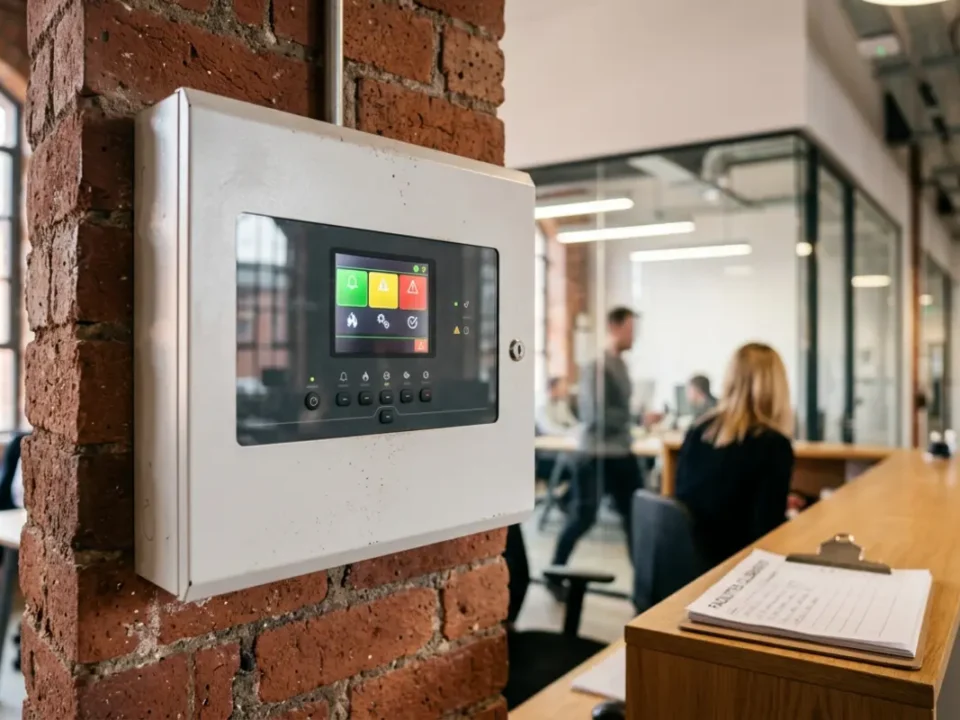
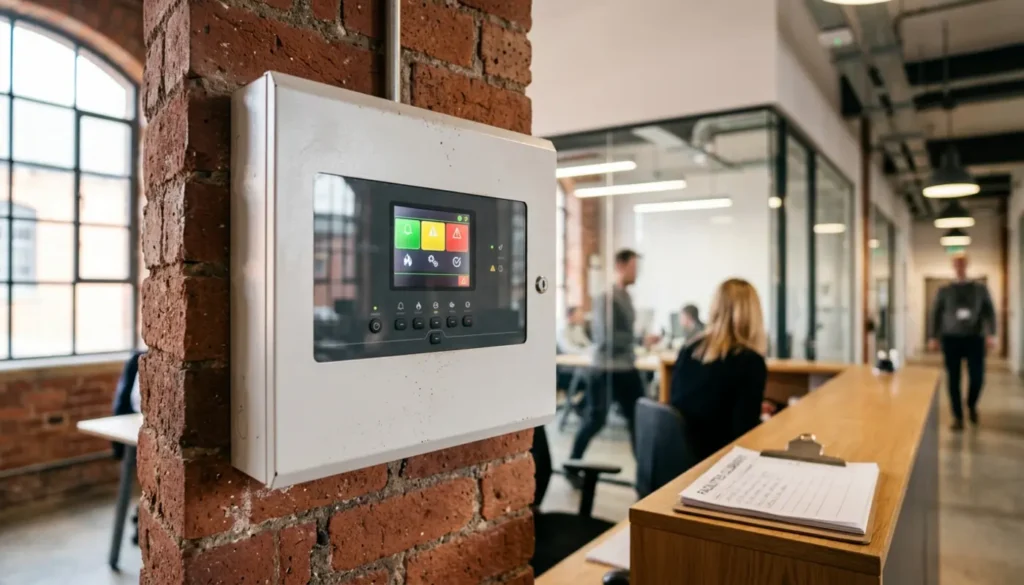
Large universities benefit from networked fire alarm systems that connect multiple buildings to a central monitoring point. Instead of operating separately, each panel communicates across secure pathways so estates or security teams can view the status of the entire campus in real time.
This approach improves response times, simplifies fault reporting and supports coordinated evacuation procedures. In some cases, integration with access control systems ensures doors release safely during an alarm while maintaining security during normal operation.
Integration With BMS HVAC And Lifts
Modern campuses rely on Building Management Systems to control heating, ventilation and other services. When a fire alarm activates, signals can instruct the system to shut down air handling units, manage smoke control and initiate lift recall procedures. This coordinated response helps prevent smoke spread and supports safe evacuation.
Clear planning and routine testing are essential so fire signals always take priority. When integration is handled properly, life safety and security work together rather than conflicting with each other.
Fire Risk Assessments In Higher Education
Every non domestic university building must have a suitable and sufficient fire risk assessment under the Regulatory Reform Fire Safety Order 2005. The responsible person, often represented by estates or health and safety teams, must ensure risks are identified and controlled.
The assessment reviews ignition sources, fuel loads, vulnerable occupants and escape routes. It then informs the required fire alarm category, detector types and maintenance regime. A structured approach similar to fire risk assessment for HMOs in Manchester can be scaled to suit complex campus environments.
Manchester And Leeds Specific Considerations
Both cities include universities with heritage and listed buildings. Installing fire detection in historic spaces requires careful planning, discreet devices and sympathetic cable routes to protect architectural features. Early consultation with conservation teams helps avoid delays.
Liaison with Greater Manchester Fire and Rescue Service or West Yorkshire Fire and Rescue Service is also advisable for major refurbishments or new developments. Sharing clear zone plans and access details can support operational response and make inspections more straightforward.
Maintenance And Testing Under BS 5839
Compliance continues long after installation. BS 5839 1 recommends weekly user tests of manual call points, rotating devices so a different point is tested each week. All results should be recorded in a fire alarm logbook to demonstrate due diligence.
The system should also be inspected by a competent person at least every six months, with more detailed annual checks forming part of a planned regime. Many estates teams use structured security maintenance contracts in Manchester to keep servicing organised and fully documented. Where emergency lighting is part of the strategy, BS 5266 requires monthly functional tests and an annual full duration test, which should be coordinated alongside fire alarm maintenance.
Why SSAIB Accreditation Matters
Working with an SSAIB certified and Insurance Approved installer provides assurance that systems meet recognised British Standards such as BS 5839. SSAIB certification demonstrates audited competence, consistent processes and ongoing compliance.
For insurers and university governors, this level of accountability is important. It supports smoother audits, clearer documentation and confidence that large estates are protected by professionally managed systems.
University Fire Alarm Compliance In Manchester And Leeds
Effective fire alarm compliance across a university campus is about more than meeting minimum requirements. It involves applying BS 5839 1 and BS 5839 6 correctly, selecting the right system categories and maintaining clear records across every building.
With detailed fire risk assessments, networked systems and disciplined maintenance, universities in Manchester and Leeds can create safer environments for students, staff and visitors. Partnering with an experienced SSAIB certified and Insurance Approved provider such as iSecurity Solutions ensures design, installation and servicing remain aligned with British Standards and evolving best practice.