What Is Martyn’s Law?
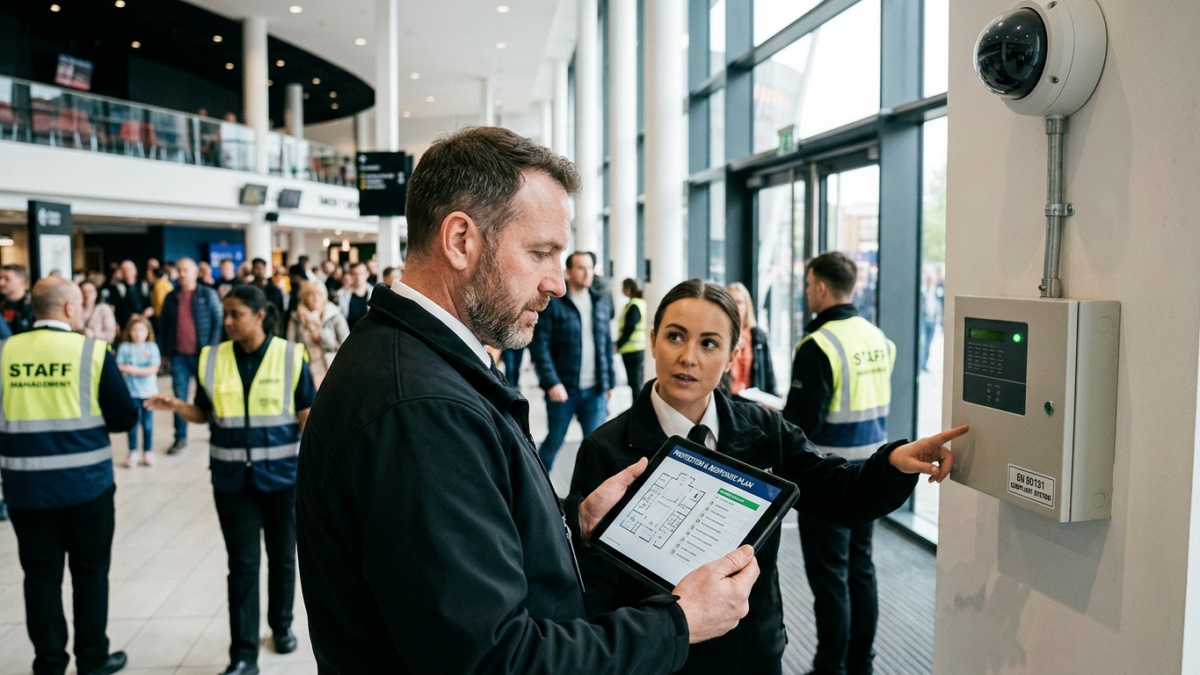
If you run a venue in the UK and still think terrorism planning is someone else’s problem, 2027 will be a shock.
Martyn’s Law, officially the Terrorism Protection of Premises Act 2025, is not guidance. It is law. It changes how shops, arenas, schools and event spaces prepare for serious threats.
At iSecurity Solutions, we speak to venues every week who think they are covered because they have CCTV or an alarm. Come on. A camera on a wall is not a response plan. This is about clear procedures, trained staff and proper systems. That includes EN 50131 compliant CCTV systems and structured emergency planning.
So let’s cut the nonsense and break it down properly.
What Is Martyn’s Law And Why It Exists
Here is what happened.
On 22 May 2017, a terrorist attack at Manchester Arena killed 22 people and injured hundreds. One of those killed was Martyn Hett.
His mother, Figen Murray, refused to accept that lessons would quietly fade away. She campaigned for a legal duty on venue owners to plan for terrorist attacks. Not hope. Plan.
That campaign became Martyn’s Law.
In April 2025, the Terrorism Protection of Premises Act received Royal Assent. You can read the official factsheet on the Home Office website.
This law is about preparedness. It is about protecting people who go out for a normal day and expect to come home safely.
What Martyn’s Law Requires From UK Venues
Stop pretending this is vague. It is not.
If you operate premises expecting 200 or more people, you have duties. The law introduces two tiers. Standard and Enhanced.
You must assess the risk of a terrorist attack and put reasonable measures in place. That means evacuation plans, lockdown procedures, communication systems and trained staff.
If you already use a proper access control system and monitored security setup, good. If not, now is the time.
Standard Tier Vs Enhanced Tier Explained
Standard tier applies to venues with a capacity of 200 to 799 people.
Enhanced tier applies to venues with 800 or more.
Here is the difference, straight up.
- Standard Tier 200 to 799
- Basic response procedures
- Staff awareness training
- Evacuation and lockdown plans
- Enhanced Tier 800 Plus
- Formal risk assessment
- Documented vulnerability checks
- Measures to reduce risk
If you run a large stadium, this is not a clipboard job. You must review crowd flow, entry points, vehicle access, surveillance blind spots and communication systems.
If you manage a shopping centre, ask hard questions. Where could a vehicle be left. Are loading bays secure. Can tenants contact control quickly.
Most sites have bits of security. Few have one joined up plan. Enhanced tier means proving what you have done and why.
Which UK Venues Are Affected
This law focuses on publicly accessible places.
That includes shops, restaurants, nightclubs, theatres, sports grounds, concert halls, schools, hospitals and visitor attractions.
If the public can walk in and numbers reach 200 or more, check your position.
The responsible person is usually the operator or controller of the site. Not the junior manager. The person in control.
We are already seeing hospitality clients review their EN 50131 Grade 2 and Grade 3 intruder alarm systems. Where police response is required, SSAIB certification is essential for Insurance Approved systems and eligibility for a Police Response URN.
Security is now part of legal compliance. Not a side project.
The Role Of The Security Industry Authority
Here is what surprises people.
The Security Industry Authority, the SIA, enforces Martyn’s Law.
They will oversee compliance, issue guidance and take action where needed.
The SIA can issue compliance notices, restriction notices and financial penalties. In serious cases, criminal action is possible.
So no, this is not optional.
The April 2027 Deadline
You have a 24 month implementation period from April 2025. That takes you to April 2027.
Here is what you should be doing now.
- Confirm your capacity level
- Identify your tier
- Assign a responsible lead
- Review emergency procedures
- Plan staff training
- Budget for upgrades
As we explained in our guide to building a layered security strategy, technology without procedure is theatre. Procedure without training is fantasy. You need both.
If you run fire systems, make sure they comply with BS 5839, often Category L1 or L2. Emergency lighting must meet BS 5266 with monthly checks and annual full tests. Fire extinguishers must comply with BS 5306 and BAFE SP101 with an annual service certificate. These duties overlap with emergency planning, but they do not replace Martyn’s Law.
Staff Training That Actually Works
Cut the nonsense. A policy in a folder means nothing if staff freeze during an incident.
Under Martyn’s Law, staff must know how to raise the alarm, guide people to safety, lock down areas and contact emergency services.
Training should be simple and repeated. Not a one off slide deck.
If you use monitored CCTV built to EN 50131 standards, make sure control room procedures match your response plan. Where police response is needed, SSAIB certification is required for Insurance Approved systems and for obtaining a Police Response URN.
If you have not carried out a fire risk assessment under PAS 79, that is another issue. Terrorism planning and fire safety should work together.
Martyn’s Law And Education Settings
Schools and universities are not exempt.
Large lecture theatres and public events can push campuses into standard or enhanced tiers.
Education sites already follow safeguarding rules. Martyn’s Law adds a specific terrorism preparedness duty where capacity thresholds are met.
We covered similar principles in our blog on securing multi building sites. Clear roles. Clear communication. Tested procedures.
Penalties For Non Compliance
Let’s talk consequences.
The SIA can issue notices that force improvements or restrict site use. They can impose serious financial penalties. In extreme cases, there can be criminal liability.
Stop assuming enforcement only hits big brands. It does not.
Martyn’s Law Vs Health And Safety Law
Here is the common mistake.
We comply with health and safety, so we are covered.
No.
Health and safety law focuses on general risks. Martyn’s Law focuses on terrorism risk and malicious acts.
There is overlap in evacuation, lighting and communication. But Martyn’s Law requires you to think about deliberate harm, not accidents.
That mindset shift is the real change.
What You Should Do Now
Look. This is not about panic. It is about planning early.
Ask yourself.
- Are our procedures realistic
- Are staff properly trained
- Are systems compliant and Insurance Approved
- Where required, are systems SSAIB certified for Police Response URN eligibility
If you are not sure, that is your starting point.
iSecurity Solutions is a trusted UK provider of commercial and domestic security systems. We help homes and businesses stay protected around the clock. From CCTV and intruder alarms to fire safety, access control and construction site monitoring, our expert team designs reliable, tailored solutions backed by responsive service and modern remotely monitored technology. Whether you manage one site or many, we deliver the equipment, expertise and peace of mind to keep what matters most safe.
April 2027 sounds far away. It is not. Get ahead of it now.