Wired vs Wireless Access Control: Which Is Right for You?
Wired Vs Wireless Access Control
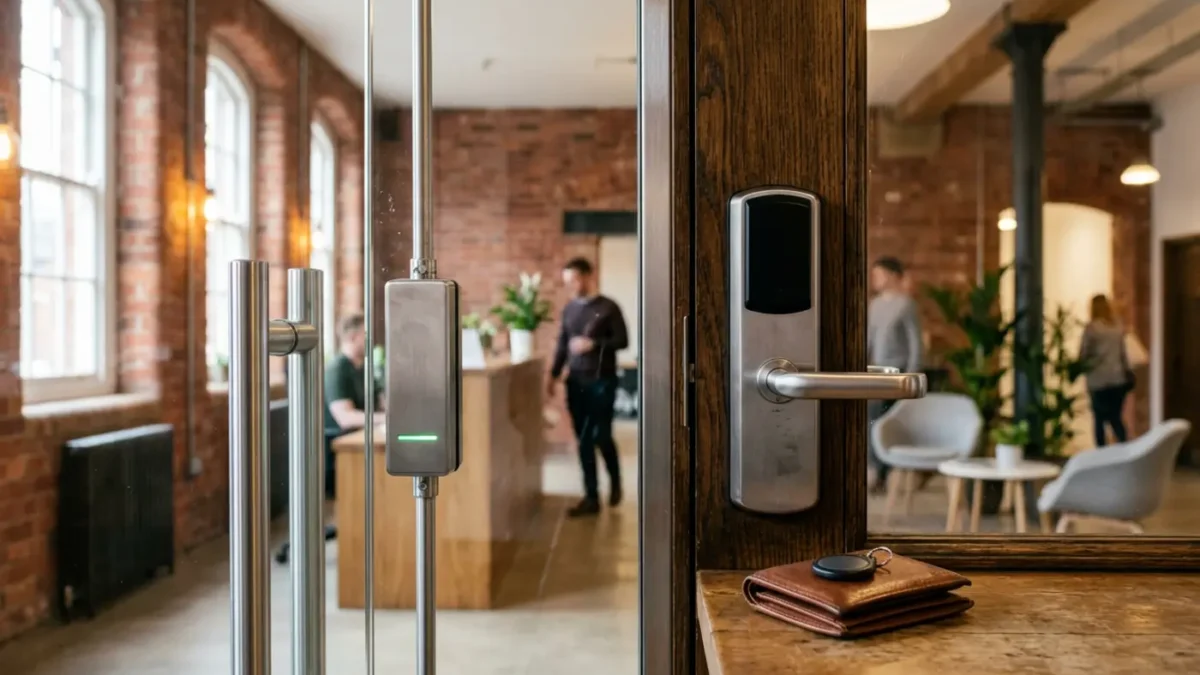
Wired vs wireless access control is about how your doors communicate, how they are powered, how much disruption installation will cause, and how your building needs to work each day. Wired access control is usually best for permanent, busy, and high security doors, while wireless access control is often better for retrofits, listed buildings, and areas where cabling would be awkward or costly.
For UK businesses, landlords, and facilities teams, the right choice affects security, maintenance, compliance, user experience, and long term cost. A system that looks cheap at the start can become a headache if batteries are missed, doors are unsuitable, or access logs are not managed properly.
iSecurity Solutions is a trusted UK provider of commercial and domestic security systems, helping homes and businesses stay protected around the clock. From CCTV and intruder alarms to fire safety, access control and construction site monitoring, our expert team designs reliable, tailored solutions backed by responsive service and modern, remotely monitored technology.
Wired Vs Wireless Access Control At A Glance
Wired access control uses physical cabling between the reader, controller, lock, power supply, and network. Wireless access control uses radio, Bluetooth, or similar communication between locks, hubs, and management software, although some parts may still need power or data cabling.
- Wired access control is usually best for main entrances, busy staff doors, warehouses, schools, plant rooms, and doors that need close links with CCTV, alarms, lifts, or building systems.
- Wireless access control is often useful for internal office doors, older premises, residential blocks, storage rooms, and heritage areas where opening ceilings or cutting into walls is not ideal.
- Hybrid access control can combine wired access for reception, external doors, and higher risk areas with wireless locks on meeting rooms, cupboards, tenant spaces, or upper floor offices.
Many sites end up with a hybrid design because buildings rarely behave like neat diagrams. If you manage a mixed site, that is often a very sensible place to start.
What Is Wired Access Control?
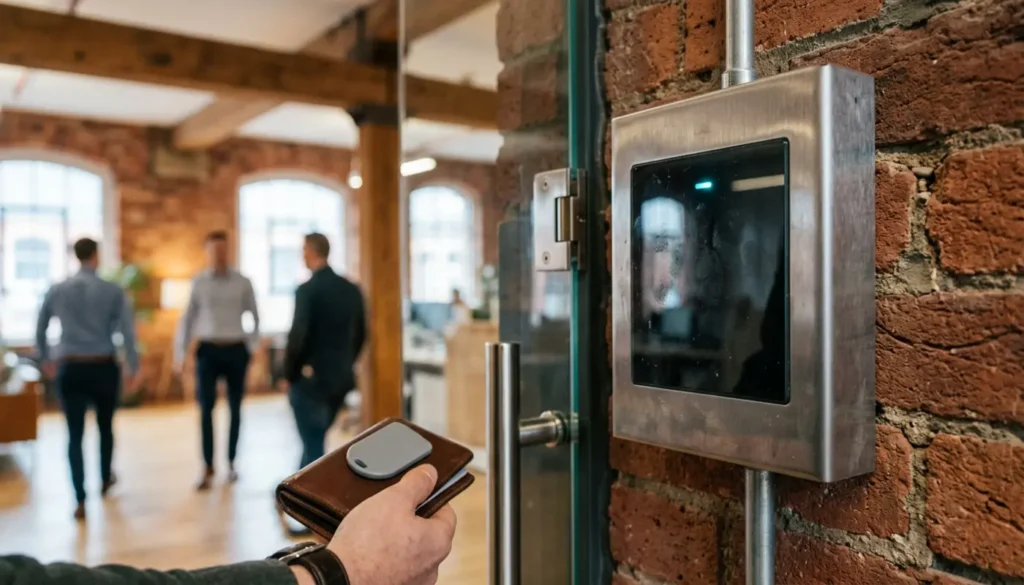
Wired access control connects each door to a controller using cables. A person presents a fob, card, keypad code, mobile credential, or biometric credential, and the controller checks whether that person is allowed through at that time.
The door may use an electric strike, magnetic lock, motorised lock, or electric lock case. It may also include a request to exit button, emergency break glass unit, door contact, sounder, and battery backed power supply, so the door works correctly during normal use and during a fault.
For organisations comparing full building security, access control should be planned alongside the doors, fire strategy, network, user permissions, and future expansion. It is not just a small reader on a wall, even if that is the part most people notice first.
Where Wired Access Control Works Best
Wired access control works best on doors that need steady power, regular use, and strong links with other security systems. It is commonly used in offices, schools, colleges, warehouses, healthcare premises, industrial units, and managed commercial buildings.
These systems suit doors that open many times per day because power and communication are constant, and there are no lock batteries to replace at the door. They are also useful where security needs to work as one joined up system.
For example, a warehouse may want access events linked with CCTV footage, an office may need lift control, and a school may need reliable lockdown zones and safe visitor routes. The main downside is the installation work, as cabling may require ceiling access, containment, drilling, door frame work, riser access, and making good afterwards.
What Is Wireless Access Control?
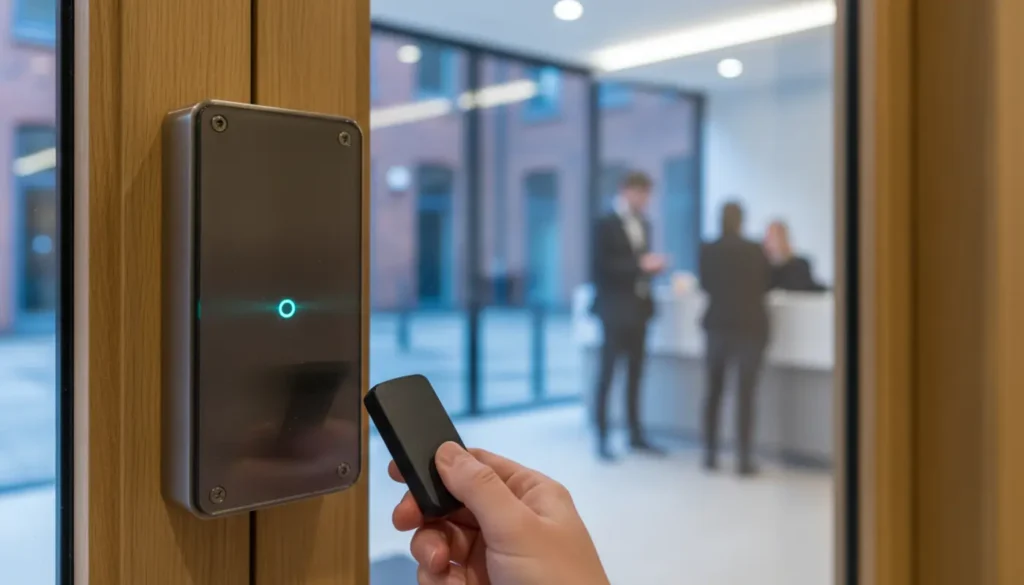
Wireless access control uses battery powered locks, electronic cylinders, smart handles, wireless readers, or escutcheons that communicate with a hub, gateway, or management platform. Some systems work online in near real time, while others store permissions locally and update when they connect.
Wireless does not always mean completely cable free. Hubs may need mains power and network access, some wall readers still need local wiring, and any door on an escape route may need fire alarm interfaces or emergency release equipment.
Wireless access control is popular where cabling would be messy, expensive, or sensitive. Older UK properties, listed buildings, residential blocks, HMOs, small offices, and internal doors are common examples.
Where Wireless Access Control Works Best
Wireless access control works best where cabling would cause too much disruption, cost, or damage to finishes. It is often well suited to retrofit projects because it can reduce drilling, trunking, and decoration work in occupied buildings.
If a landlord wants to control access to communal doors, bin stores, service cupboards, or tenant areas, wireless can be a practical route when the building is already in use. For listed buildings, wireless can reduce physical changes, but it does not automatically remove the need for checks or consent.
GOV.UK explains that work affecting the character of a listed building may require listed building consent, including internal changes, so it is wise to check historic environment guidance before altering doors, frames, panelling, or historic fittings. The trade off is maintenance, as batteries need monitoring, radio coverage must be tested, and the system needs a clear plan for what happens if a gateway, internet connection, or lock battery fails.
Installation And Cabling In Older UK Properties
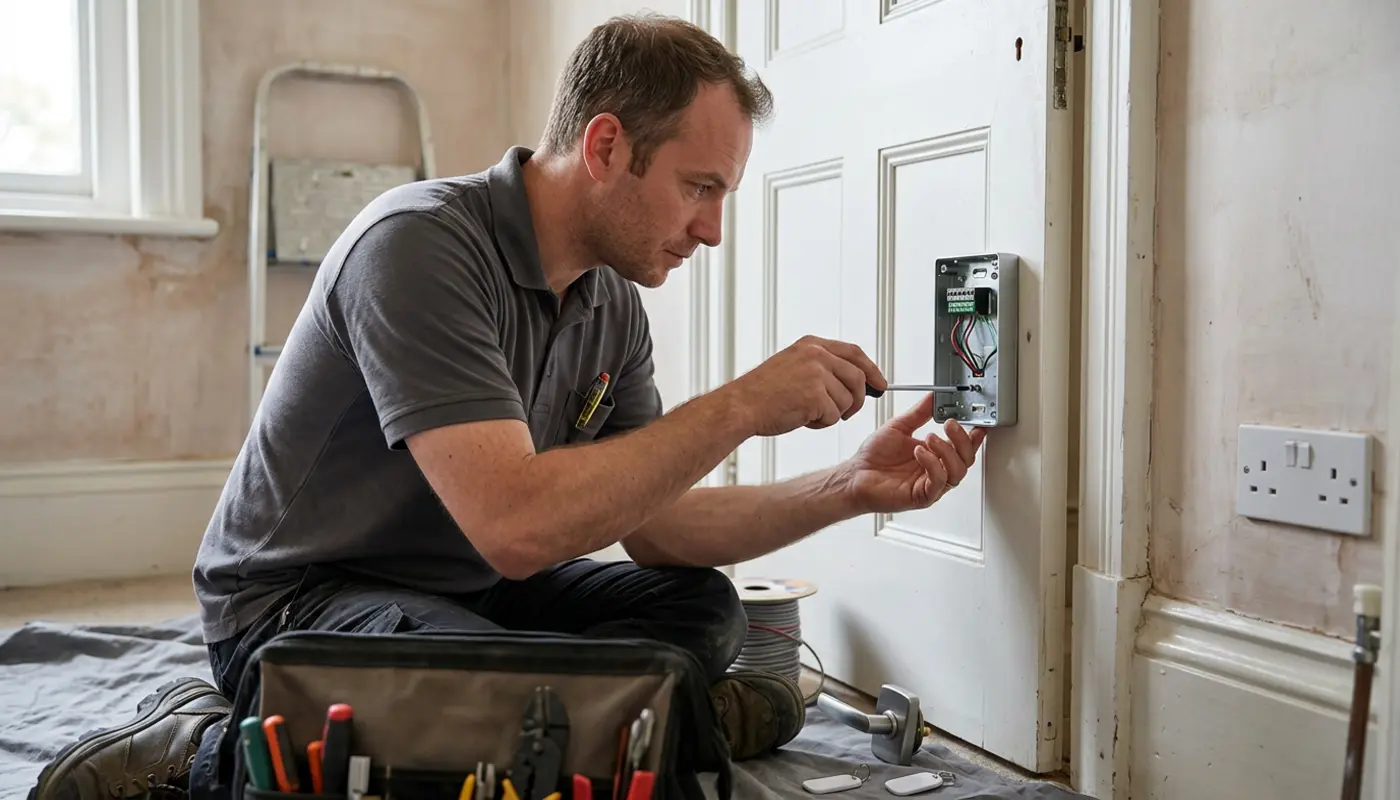
Installation is often where the real difference shows up. Wired systems usually need cable routes from each controlled door back to a controller, power supply, network cabinet, or local equipment position, which can be simple in a new build but much harder in a Victorian conversion with thick walls and awkward ceiling voids.
Wireless systems can be quicker at the door, but they still need a proper survey. The installer should check door material, frame condition, lock compatibility, hinge position, signal strength, battery access, hub locations, and whether the door is part of an escape route.
In older properties, asbestos surveys, fire compartments, decorative finishes, and listed building rules may influence the design. A tidy plan on paper can become less tidy when the only cable route runs through a protected cornice, which is nobody's idea of a good afternoon.
Access Control Cost Comparison In The UK
Access control cost in the UK varies widely because door type, lock choice, cabling, software, credentials, and fire safety requirements all affect the final price. As an indicative 2026 guide, a single door retrofit may start from around £900 to £2,500, while a small multi door commercial system may range from £3,000 to £12,000 depending on complexity.
- Upfront cost can be higher for wired systems where cabling routes are difficult or work must be completed outside normal hours.
- Labour cost can be lower for wireless systems on suitable internal doors because there may be less drilling, containment, and decoration work.
- Hardware cost can be higher for some wireless locks compared with basic wired readers.
- Maintenance cost for wireless systems may include batteries, gateways, cloud licences, firmware updates, and planned service visits.
- Long term running cost depends on how easy the system is to manage, expand, repair, and support across the building.
For larger or multi site projects, the better question is not only what the system costs to install today. It is what it costs over five to ten years. A slightly higher upfront design can be cheaper if it reduces callouts, makes user management easier, and avoids opening walls later.
Reliability And Security
Wired access control is generally less affected by wireless interference because the main communication path uses cable. It still needs resilient controllers, protected power supplies, battery backup, and sensible cable protection, especially for external doors and higher risk areas.
- Wired systems usually give stable communication and continuous power at busy doors.
- Wireless systems depend on good signal coverage, suitable construction, and well placed hubs.
- Thick concrete, steelwork, plant rooms, metal doors, and long distances can affect wireless performance.
- Encrypted communication helps protect wireless data, but it also needs strong passwords, sensible permissions, prompt user removal, and regular updates.
- Battery alerts are useful, but someone still needs to act on them before they become a locked door problem.
Modern wireless systems can use encrypted communication, which means the data is scrambled so it cannot be easily read if intercepted. Encryption is important, but it is not magic dust. Security also depends on strong administrator passwords, role based permissions, prompt removal of leavers, firmware updates, and a clear process for lost credentials.
Battery life depends on how often the door is used, the lock type, the environment, and how often it communicates. Good systems provide low battery alerts, but someone still needs to act on them because an ignored alert is only a polite warning slowly turning into a locked door problem.
Scalability And Flexibility
Scalability depends on how easily the system can grow as the building changes. Adding doors to a wired system may require new cable routes, extra controllers, more power supplies, and network capacity, which is easier during a refurbishment than after the office is fully occupied.
Wireless access control can be easier to expand, provided the doors are compatible and the hub coverage is strong enough. It can be especially useful where businesses grow floor by floor, landlords add tenant areas, or sites need phased installation without closing the building.
User management is just as important as door hardware. A good networked access control system should allow central user updates, instant removal of leavers, temporary visitor permissions, time schedules, audit trails, and, where suitable, mobile credentials.
If you are deciding between cards, fobs, biometrics, and app based entry, key fob, smart card, biometric and app access control comparisons can help you think about convenience, cost, and user habits before committing to one approach.
Compliance And Regulations In The UK
Access control in the UK needs to support security without creating safety, data, or accessibility problems. Access logs linked to named people may count as personal data under UK GDPR, so you should have a clear reason for collecting logs, limit who can view them, decide how long to keep them, and review cloud or supplier arrangements properly.
Electrical work should be designed and installed with BS 7671 in mind, which is the UK standard commonly known as the IET Wiring Regulations. Wireless systems may reduce door cabling, but they do not remove every electrical consideration because hubs, power supplies, network equipment, and fire interfaces may still be involved.
Security system design may also need to consider BS EN IEC 60839 11 1, which relates to electronic access control systems. Where electrically controlled doors interact with fire detection and emergency release arrangements, BS 7273 4 may also be relevant. In plain English, the access system needs to secure the door without making escape harder when people need to leave quickly.
Fire safety is critical. Access controlled doors must not prevent safe escape, and emergency routes should allow people to leave easily and immediately when needed. The design should consider fail safe or fail secure locking, emergency release, fire alarm interfaces, door closers, fire door integrity, and the premises fire risk assessment.
The Equality Act 2010 also matters because entrances, exits, internal doors, and gates can affect disabled users. Reader height, reach distance, door opening force, audible and visual feedback, alternative credentials, and accessible routes should be considered before equipment is fixed in place.
Choosing Access Control By Premises Type
The best access control choice depends on the building, the doors, and the people using them. If you are not sure where to start, think about the problem you are trying to solve first, such as lost keys, staff movement, tenant access, safeguarding, stock security, or all of these at once.
- Offices can use wired, wireless, or hybrid systems, depending on footfall and layout. Main entrances, reception doors, and server rooms often suit wired access, while meeting rooms, cupboards, and upper floor offices may be good wireless candidates.
- Schools and colleges usually benefit from hybrid access control because safeguarding, visitor routes, and busy entry times demand reliability. High traffic external doors should be treated carefully, while internal rooms may use wireless locks to reduce disruption.
- HMOs and residential blocks need a careful balance between security and safe escape. Any system should preserve keyless exit where required, protect fire doors, allow emergency access, and include a realistic maintenance plan.
- Warehouses and industrial sites often favour wired access for main gates, loading areas, staff entrances, and high use internal doors. Wireless may still help with remote storage rooms, offices inside the warehouse, plant areas, and temporary phases.
- Retail units often want minimal trading disruption, quick staff changes, and simple stockroom control. Wireless may be attractive for fast retrofits, while wired access may be better for front of house integration, alarm links, and doors that take constant use.
Decision Checklist For The Right System
A clear decision checklist helps you choose a system that fits the building rather than forcing the building to fit the equipment. In many real UK premises, hybrid access control is the most practical answer because it puts resilience where it matters most and flexibility where it saves time and money.
- Choose wired access control when the project is a new build, major refurbishment, or high traffic area with easy cable routes.
- Choose wired access control when continuous power, predictable communication, and integration with CCTV, alarms, or building systems are key priorities.
- Choose wireless access control when cabling would damage finishes, cause major disruption, or make the project too expensive for lower risk internal doors.
- Choose wireless access control for heritage buildings, occupied premises, remote rooms, and phased rollouts where the doors are suitable.
- Choose hybrid access control when some doors are mission critical and others simply need better management than a large bunch of keys.
Questions To Ask During A Site Survey
A proper site survey should look at more than the number of doors. Ask which doors need control, how often they are used, whether they are fire doors, what happens during power failure, how users will be managed, and whether the system needs to work across more than one site.
You should also ask about cabling routes, network availability, radio coverage, battery alerts, emergency release, accessibility, access log retention, cloud hosting, and future expansion. If the answers are vague, keep asking until they are practical enough to build from.
Final Thoughts On Wired And Wireless Access Control
There is no universal winner in the wired vs wireless access control debate. Wired systems offer strong reliability for permanent and busy doors, wireless systems reduce disruption in retrofit and sensitive buildings, and hybrid systems often give the best balance for real UK premises.
The best next step is a documented site survey from a UK installer who understands doors, power, fire safety, data protection, accessibility, and how people actually use the building. Once those details are clear, the right choice usually becomes much easier to see.
Frequently Asked Questions
Is Wired Or Wireless Access Control More Secure?
Both can be secure when designed and maintained properly. Wired systems reduce radio related risks, while modern wireless systems can use encrypted communication. Good user management, updates, and access permissions matter just as much.
How Much Does Access Control Cost In The UK In 2026?
As an indicative guide, a single door retrofit may start from around £900 to £2,500, while small multi door systems may range from £3,000 to £12,000 or more depending on doors, locks, software, cabling, and fire safety requirements.
Can Wireless Access Control Be Used In Listed Buildings?
Yes, it can be a good option because it may reduce cabling and physical alteration, but listed building consent may still be needed if the work affects the building's character. Always check with the local planning authority before changing historic doors, frames, or fittings.
Do Access Control Installers Need Insurance Approved SSAIB Certification?
Insurance Approved SSAIB certified installation is often valued by insurers and clients, especially where access control is part of a wider security system. It gives added confidence that the work is being delivered to recognised security standards.
What Happens If A Wireless Access Control Battery Fails?
A well designed system should provide low battery alerts before failure, along with a planned replacement schedule. The site should also have a clear contingency process so authorised people can still gain access safely when needed.