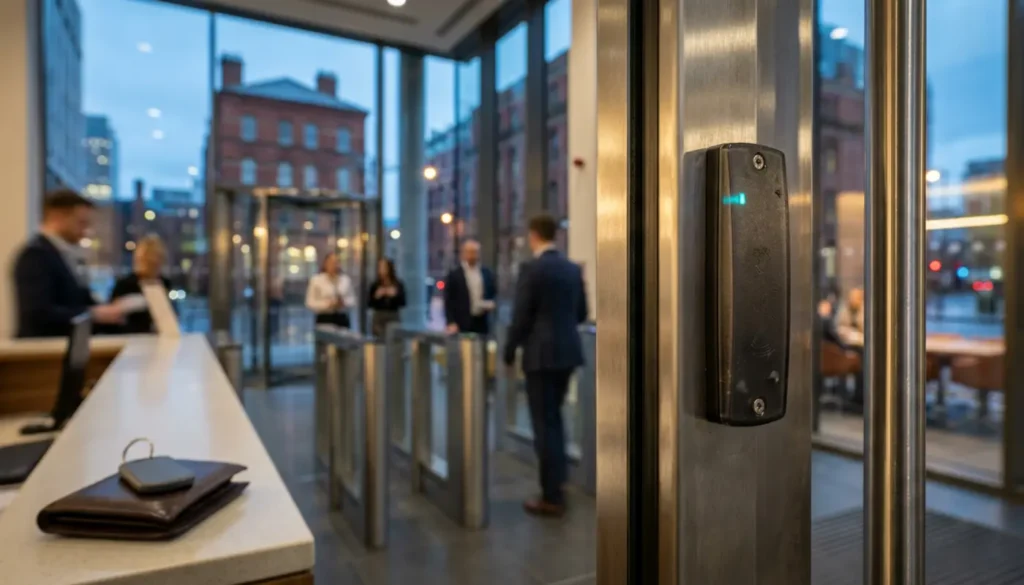
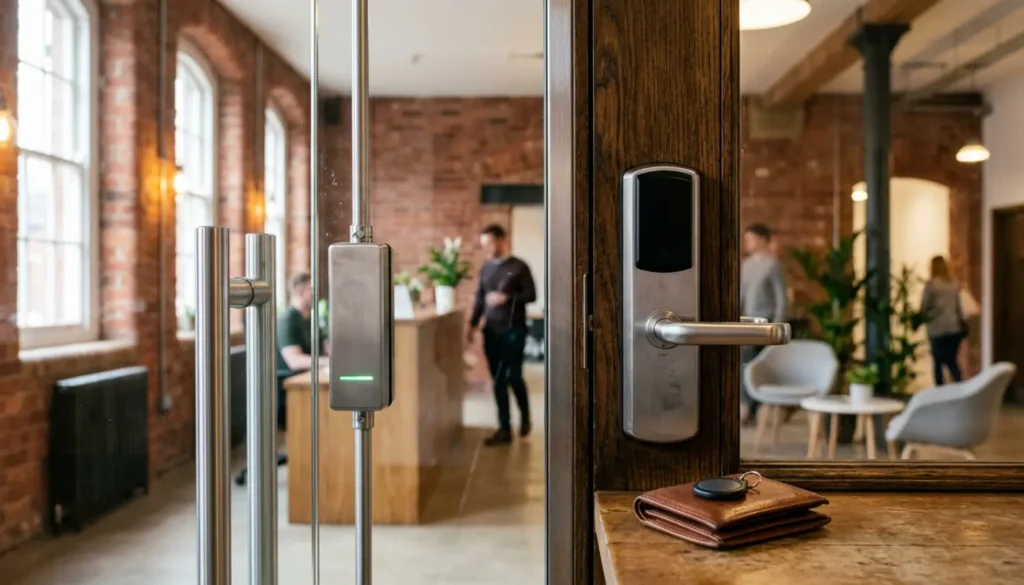
Why Is Regular Access Control System Maintenance Important
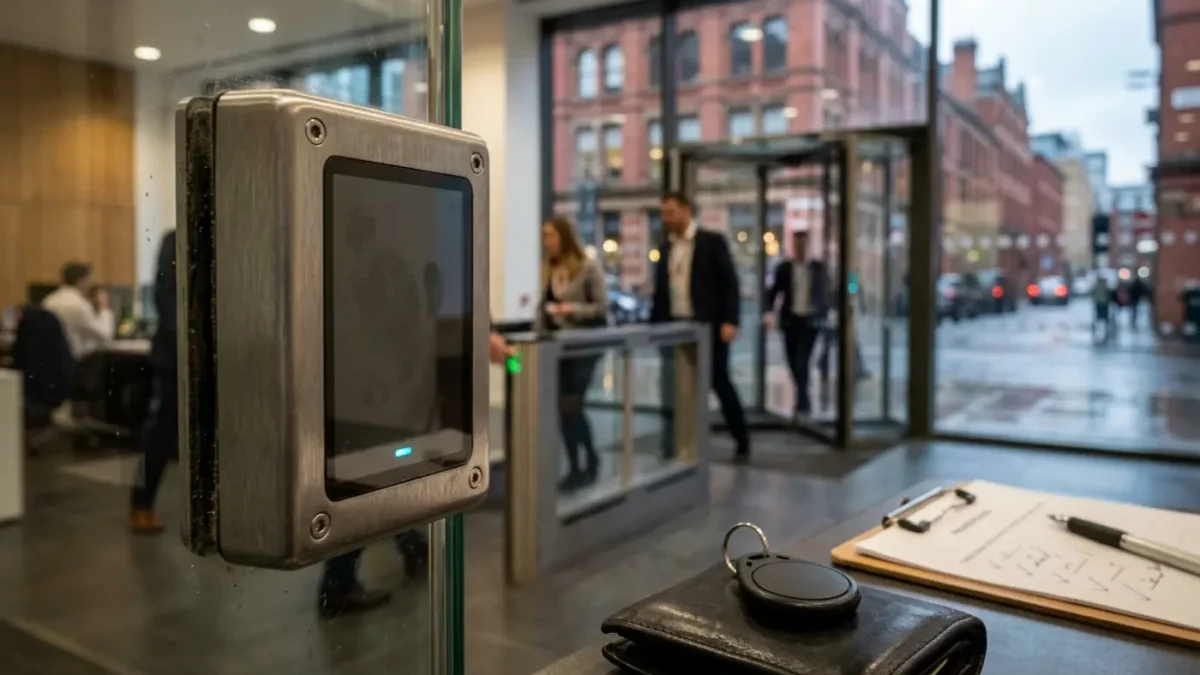
Access Control System Maintenance
Regular access control system maintenance keeps doors, gates, locks, readers, software and emergency release devices working safely, securely and legally. For UK businesses, schools, hospitals, retail sites and industrial units, it helps prevent access failures, supports fire safety, protects personal data and gives insurers clearer evidence that the system is being looked after properly.
Access control is not something to fit once and forget until a door refuses to open on a wet Monday morning, which is rarely anyone's preferred start to the week. A reliable system needs planned checks, good records and fast action when faults appear.
iSecurity Solutions is a trusted UK provider of commercial and domestic security systems, helping homes and businesses stay protected around the clock. From CCTV and intruder alarms to fire safety, access control and construction site monitoring, our expert team designs reliable, tailored solutions backed by responsive service and modern, remotely monitored technology.
What Access Control Maintenance Means
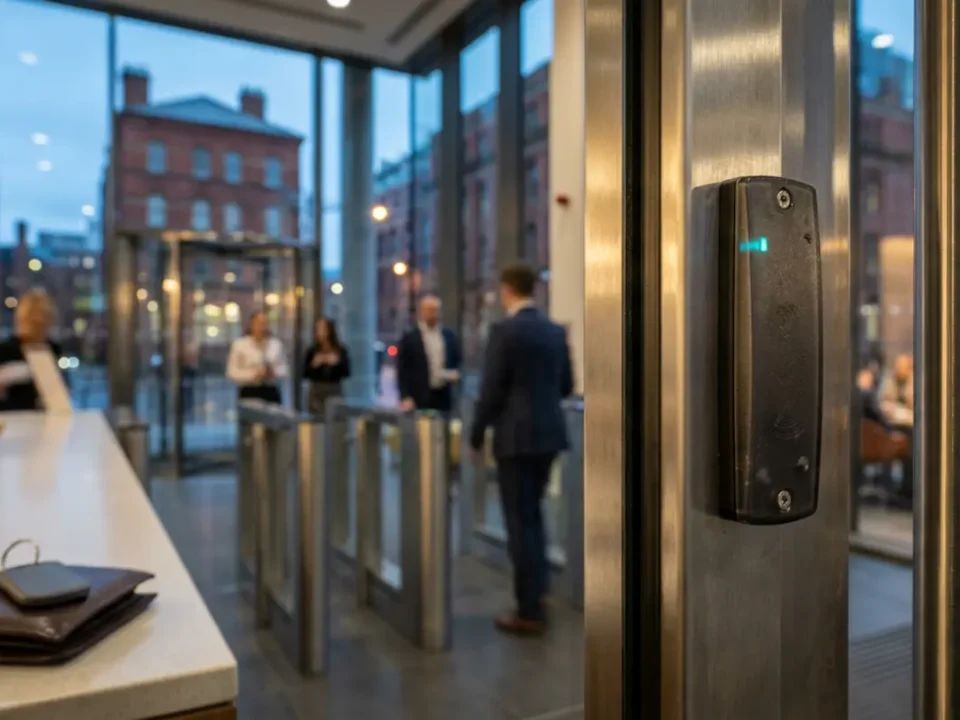
Access control maintenance is the routine checking, testing, updating and repairing of an electronic access control system. It covers the visible parts, such as card readers, keypads, door entry panels and locks, as well as the important parts behind the scenes, including controllers, power supplies, batteries, cabling, software and user databases.
Preventive maintenance is planned in advance and is designed to spot problems before they become failures. Reactive maintenance happens after something has already gone wrong, such as a door not locking, a gate not opening, or a staff member being unable to access a secure area. Corrective maintenance sits between the two because it deals with repeated faults, poor settings, old parts and changes in how the building is used.
If you are trying to manage security, safety, users and budgets at the same time, it can feel like a lot. For organisations wanting a structured approach rather than waiting for breakdowns, professional security maintenance contracts can help keep checks consistent, documented and easier to budget for across one site or several locations.
Why Access Control Maintenance Supports UK Compliance
Access control maintenance supports UK compliance because it helps organisations meet their duties around safety, data protection, fire escape and building security. In the UK, organisations need to consider the UK GDPR and Data Protection Act 2018, the Health and Safety at Work etc. Act 1974, and fire safety duties under the Regulatory Reform Fire Safety Order 2005. The exact responsibilities depend on the building, occupancy, fire strategy, risk assessment and how the system is used.
Access records, visitor logs, user profiles and door event history can count as personal data if they identify someone. That means the system should only give people access they genuinely need, remove access when it is no longer required, keep logs accurate and protect those records from unauthorised use. If a leaver's fob still works six months after they left, that is not just awkward, it is a security and data governance problem.
Workplace safety is also part of the picture. Powered doors, vehicle barriers, gates and electronically locked escape routes must be maintained so they remain safe for employees, visitors, contractors and anyone else affected by the organisation's activities. A faulty lock is annoying, but a faulty lock on an escape route can be far more serious.
Why Fire Safety And Emergency Escape Matter
Fire safety and emergency escape matter because people must be able to leave safely during an emergency, even when doors are controlled by electronic locks. Access controlled doors often interact with fire alarm systems, emergency release units, door closers and locking hardware, so a small fault can affect the wider fire strategy. Fire alarm interfaces should be considered alongside BS 5839 fire alarm arrangements and the building's documented cause and effect plan.
In plain English, your access control should not work against your fire safety plan. It should support safe escape first, then help the building return to secure operation once the emergency has passed.
Fail safe and fail secure locks are often misunderstood, so it is worth clearing that up. A fail safe lock releases when power is lost, which can support escape in some situations, while a fail secure lock remains locked when power is lost, usually to protect a secure area. Neither option is automatically right for every door because the correct choice depends on the escape route, fire risk assessment, security risk, door type and any relevant standards.
Maintenance should test emergency door release devices, break glass units, exit buttons, local release controls and the link between the fire alarm and access control system. It should also check whether doors close properly afterwards, because a door that releases but then fails to latch can create a security weakness once the incident has passed. The result of each test should be recorded, including any failed items and temporary measures.
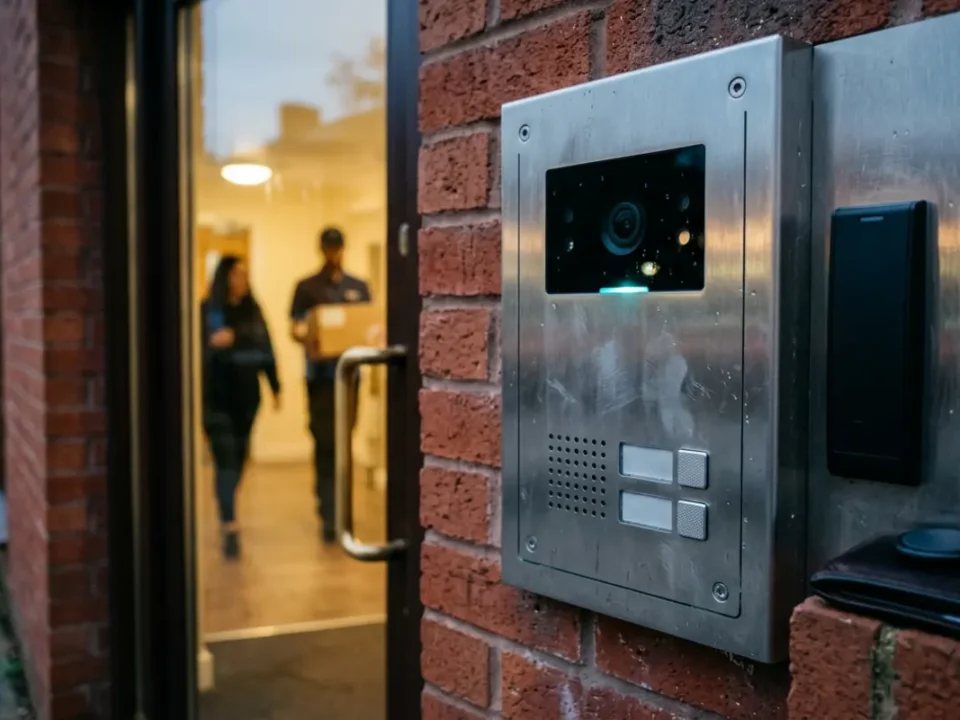
If you want to understand how door entry links with wider access arrangements, door entry and access control explains the core components in a clear, practical way.
How Access Control Maintenance Protects People And Property
Access control maintenance protects people and property by making sure the right people can enter the right areas at the right times. In offices, that might mean protecting meeting rooms, server cupboards, tenant spaces and out of hours entrances. In schools, it supports safeguarding by controlling visitor access, staff movement and sensitive areas during the school day.
Hospitals and healthcare buildings have different pressures because they operate around the clock, often with restricted clinical areas, medicine stores and emergency access needs. Retail sites need reliable control over stockrooms, delivery doors and staff only spaces, while industrial units often rely on external readers, gates, barriers and loading bay controls. Each setting has different risks, but the maintenance principle is the same: test the system before a weak point becomes an incident.
If you are not sure which doors carry the highest risk on your site, start with escape routes, main entrances, external doors, gates and any area where a failure would quickly affect safety, security or operations.
Good maintenance also supports everyday trust. Staff need to know that their fob will work when they arrive, managers need confidence that former staff cannot re enter, and visitors need a smooth but controlled route through reception. Security should feel calm and dependable, not like a daily wrestling match with a moody door reader.
How Planned Maintenance Reduces Downtime
Planned maintenance reduces downtime by finding worn parts, weak batteries, damaged readers and software issues before they stop the building from working properly. Reactive repairs can become expensive because they often happen at the worst possible time. A failed main entrance during opening hours can mean staff delays, temporary guarding, frustrated visitors, lost productivity and urgent call out costs.
If a gate fails at an industrial site, deliveries can back up quickly and the knock on effect can be bigger than the repair itself. Planned preventive maintenance gives you a better chance of spotting worn locks, loose connections, faulty door closers and poor door alignment before a full failure happens. It also makes budgeting easier because inspections can be scheduled around quieter periods.
For example, an urgent call out might cost £180 to £350 before parts are added. If the fault also causes four hours of disruption, £250 in temporary security cover and delayed deliveries, the real cost can quickly pass £700. A planned maintenance visit or service contract is often easier to budget for because you know what is being checked, when it is happening and what evidence you will receive afterwards.
A useful way to compare costs is to add up the call out fee, parts, labour, staff downtime, temporary security and business disruption from previous incidents. That real figure is often more useful than a generic price range because every site has different opening hours, occupancy levels and consequences of failure. For many businesses, the hidden cost of downtime is the part that hurts most.
Why Software And User Records Need Checks
Software and user records need checks because modern access control systems are often connected to servers, cloud platforms, networks and remote management tools. That means software updates, firmware updates and user account reviews are now a normal part of maintenance. Firmware is the built in software that helps a device work correctly, a bit like the operating instructions inside a controller or reader.
The National Cyber Security Centre highlights user access control and software updates as core parts of Cyber Essentials, which is useful context for any organisation using connected security systems. You can read the official overview on the NCSC Cyber Essentials website.
Maintenance should review supported software versions, default passwords, administrator accounts, remote support access and backups. Leavers should be removed quickly, dormant accounts should be disabled, and privileged access should be limited to people who genuinely need it. If the access control server is treated like someone else's IT problem, it can easily become a cyber risk as well as a physical security risk.
How Audit Trails And GDPR Accuracy Improve
Audit trails and GDPR accuracy improve when access logs, user names, door names and retention settings are regularly checked. Access logs can be very helpful during an investigation, but only if they are accurate, complete and easy to understand. A log that says User 104 opened Door 7 is not much use if nobody knows who User 104 is or whether Door 7 has been renamed twice since installation.
Routine user database reviews help remove duplicate credentials, expired visitor passes, temporary access and people who have changed roles. This supports GDPR principles such as accuracy, integrity and confidentiality. It also helps with subject access requests, where an individual may ask to see personal data held about them, including access records if they are relevant.
Visitor records also need sensible retention rules. Keeping everything forever is rarely the answer, but deleting everything too quickly can affect investigations and operational accountability. The best approach is to define a clear retention period based on the reason for collecting the data, the organisation's risk profile and any legal or contractual needs.
How Regular Checks Extend Equipment Life
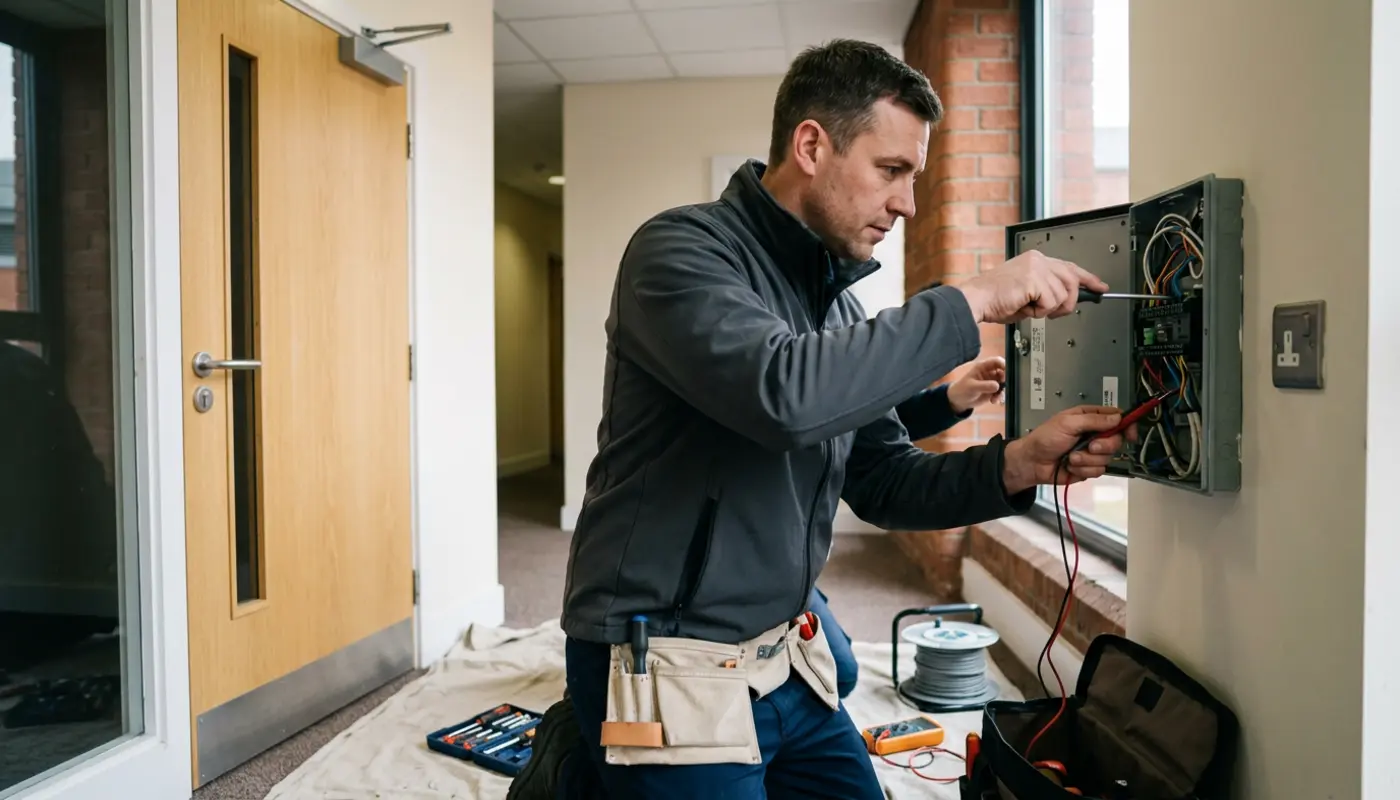
Regular checks extend equipment life by reducing strain, spotting wear and replacing weak parts before they cause bigger faults. Access control equipment works hard, especially on busy entrances and exposed external doors. Readers are tapped all day, locks carry physical strain, door closers deal with wind and heavy use, and batteries quietly sit in the background waiting to be useful during a power issue.
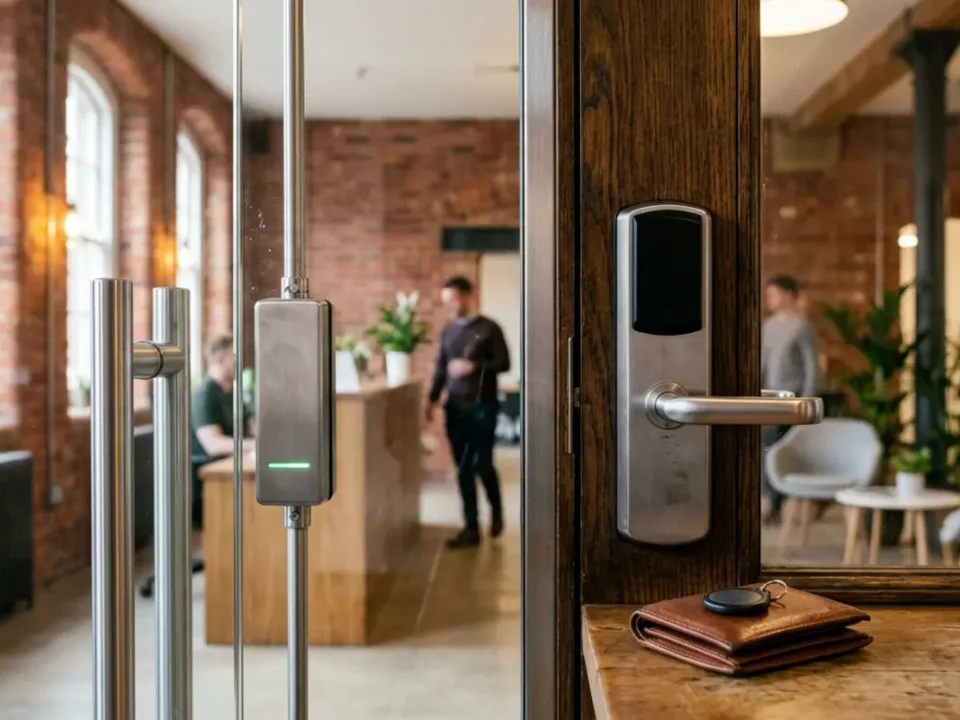
Maintenance should include readers, keypads, maglocks, electric strikes, controllers, power supplies, batteries, door contacts, cabling and enclosures. External devices need extra attention because damp, frost, condensation, grit, UV exposure and corrosion can all cause faults. Coastal sites may also suffer from salty air, which is not kind to metalwork or electronics.
Batteries deserve special attention because they often fail silently until they are needed. A battery may look fine but provide poor standby performance during an outage. Testing and replacing batteries based on condition, measured performance and manufacturer guidance helps protect the system when mains power is interrupted.
Which Standards And Certification Matter?
Standards and certification matter because they set a recognised benchmark for design, installation, servicing and documentation. BS EN 60839 is the key standards series for electronic access control systems, covering areas such as system and component requirements, operation and interoperability. BS 7273 is relevant where access control interfaces with fire alarm systems and door release arrangements, while BS 8418 may apply where the wider system includes monitored CCTV within its scope.
Put simply, these standards help make sure the system is designed, tested and recorded in a way that other competent people can understand. That matters if you need to prove what was installed, how it was maintained and whether critical doors were checked properly.
NSI procedures, along with SSAIB and Insurance Approved procedures, may look at competence, maintenance arrangements, documentation, fault response, data protection and information security. These expectations are not the same as statutory law, but they can matter for insurers, contracts, procurement frameworks and internal governance.
Insurers may ask for service records, fault reports, evidence of competent maintenance, proof that critical doors are tested regularly and confirmation that defects are followed up. If your policy or lease mentions maintenance, inspection evidence or approved contractors, keep those documents close rather than buried in a folder marked probably important. Future you will be grateful.
For access control design, upgrades and site specific advice, professional access control systems support can help align the system with your building, users, fire strategy and security priorities.
What Should A Maintenance Visit Include?
A maintenance visit should include practical testing, clear checks and written evidence of what has been inspected. The engineer should review previous faults, test normal entry and exit, check readers and locks, inspect door alignment, confirm emergency release devices work, and test the fire alarm interface where agreed procedures allow. Gates, barriers and intercoms should also be checked where they form part of the access control system.
The software side should include user records, administrator accounts, logs, time settings, backups, firmware versions and support status. The visit should also record battery condition, power supply faults, weather damage, enclosure condition, loose cabling and any signs of tampering. At the end, you should receive a clear report that explains what was tested, what passed, what failed and what needs action.
How Often Should Access Control Be Maintained?
Access control should be maintained as often as the site risk, daily use, manufacturer guidance, insurance conditions and fire strategy require. There is no perfect one size fits all service interval because buildings vary. A quiet internal office door does not carry the same risk as a busy school entrance, hospital ward door, warehouse gate or final exit on an escape route.
High use doors, external readers, powered gates, emergency release points and areas with previous failures usually need closer attention. Multi site organisations may also benefit from a consistent schedule so records are easier to compare. The most important thing is that maintenance is planned, recorded and reviewed when the building, staff, technology or risk profile changes.
Final Thoughts On Access Control Maintenance
Regular access control system maintenance matters because it protects far more than doors. It supports safe escape, stronger security, GDPR good practice, cyber resilience, insurance evidence, equipment life and day to day business continuity. When maintenance is neglected, faults tend to appear at inconvenient moments, and inconvenient moments have a habit of becoming expensive ones.
The best approach is to treat access control as a living system that needs regular attention, not a one time installation. Keep records, review users, test emergency functions, update software, inspect hardware and act quickly on faults. That steady routine is what keeps people safe, buildings secure and operations running with fewer nasty surprises.
Frequently Asked Questions
Is Access Control Maintenance Legally Required In The UK?
There is no single law that says every access control system must be serviced in the same way, but maintenance supports duties under fire safety, workplace safety and data protection law. If doors affect escape routes, security, personal data or workplace equipment, regular checks become an important part of responsible management.
How Often Should An Access Control System Be Serviced?
The right frequency depends on use, risk, location, manufacturer guidance, fire strategy, insurance wording and fault history. Busy entrances, external readers, gates, barriers and emergency release doors usually need more frequent checks than low risk internal doors.
What Is The Difference Between Fail Safe And Fail Secure Locks?
A fail safe lock releases when power is lost, while a fail secure lock stays locked when power is lost. The correct option depends on the door's role, escape requirements, security risk and the building's fire strategy.
Does Access Control Data Fall Under GDPR?
Yes, access logs, user records and visitor details can be personal data if they identify someone. Maintenance helps keep this data accurate, secure, limited to authorised users and retained only for a suitable period.
Do Insurers Look For SSAIB And Insurance Approved Access Control Maintenance?
Some insurers, contracts or procurement frameworks may prefer or require an SSAIB and Insurance Approved provider, especially where security evidence and documented maintenance are important. Always check your policy wording and any risk improvement requirements with your broker or insurer.