How Do Door Entry Systems Work with Access Control?
Door Entry Access Control
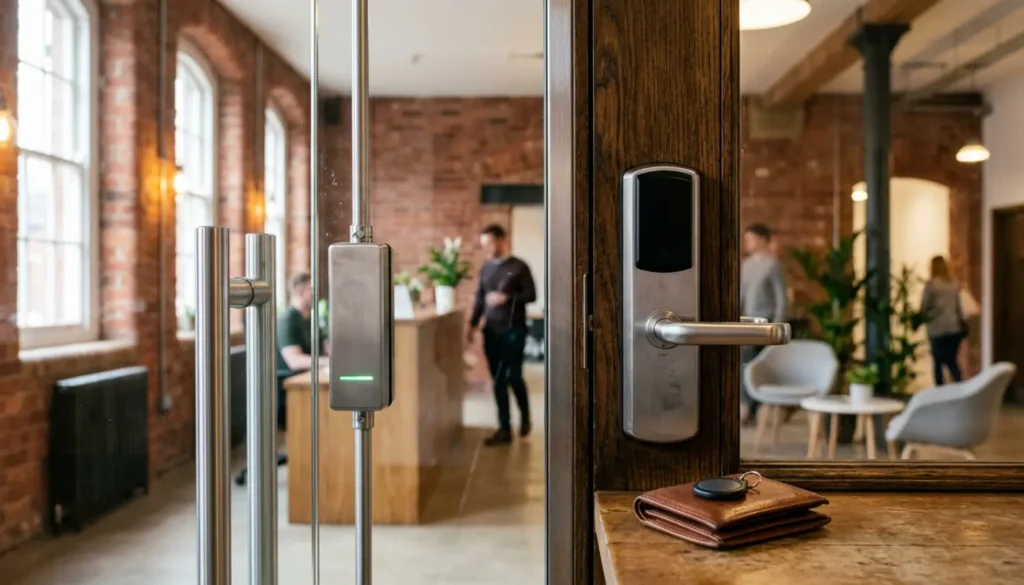
Door entry access control works by letting a visitor request entry, while the access control part checks whether an authorised person is allowed through a door using a fob, card, PIN, app or biometric reader. In simple terms, the door entry system handles communication, and access control handles permission.
In UK homes, flats, HMOs, offices, warehouses and industrial sites, both systems are often joined together so residents, staff and approved visitors can move safely without relying on shared keys. iSecurity Solutions is a trusted UK provider of commercial and domestic security systems, helping homes and businesses stay protected around the clock with CCTV, intruder alarms, fire safety, access control and construction site monitoring.
The idea can sound technical at first, especially if you are a landlord, facilities manager or business owner trying to balance safety, cost and convenience. The good news is that the system is really a secure conversation between a person, a reader, a controller and a lock. Once you know what each part does, the whole setup becomes much easier to understand.
Door Entry Versus Access Control
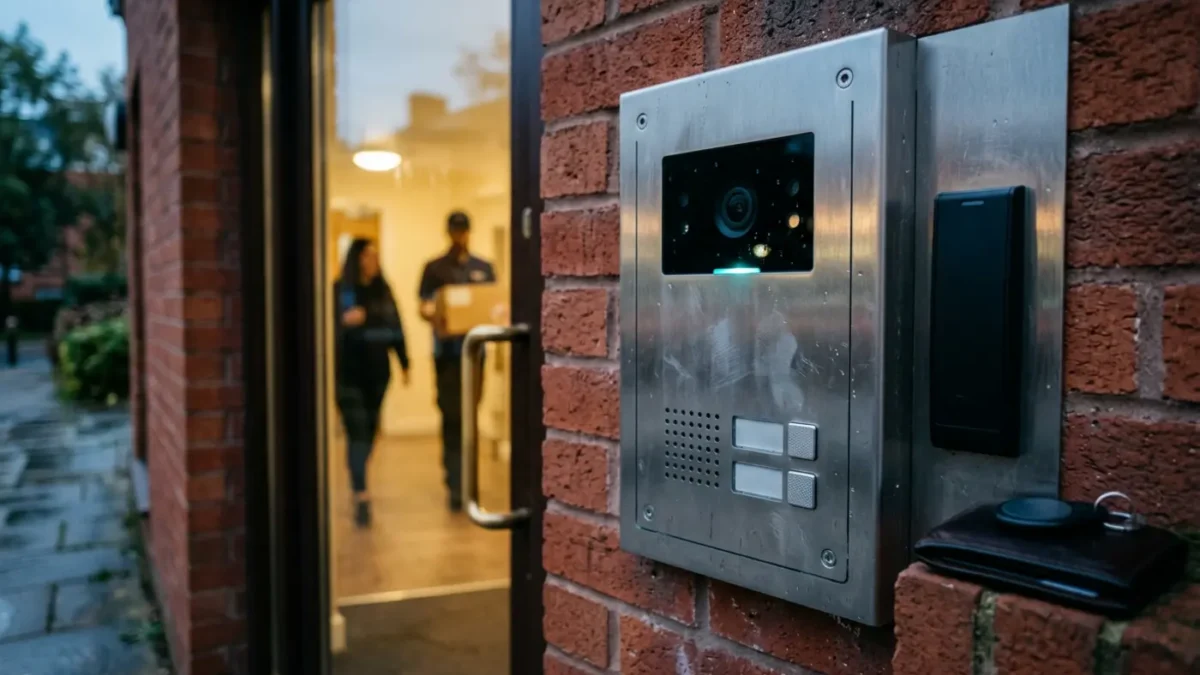
A door entry system is mainly about communication. A visitor presses a button at an entrance panel, speaks to a resident or receptionist, and may be allowed in after their identity has been checked by voice or video.
Access control is mainly about permissions. It checks whether a known user should be allowed through a particular door at a particular time, then records the event so there is an audit trail if it needs to be checked later.
When the two work together, a block of flats can handle visitors through an intercom while residents use fobs, and an office can let staff through with cards while visitors speak to reception first. For a tailored system design, the access control team can help match the right technology to the way your building is actually used.
The Main Parts Of A Door Entry Access Control System
Most door entry and access control systems are built from a few core parts, and each part has a clear job. Once you know what each one does, it becomes much easier to picture how the system works in a real building.
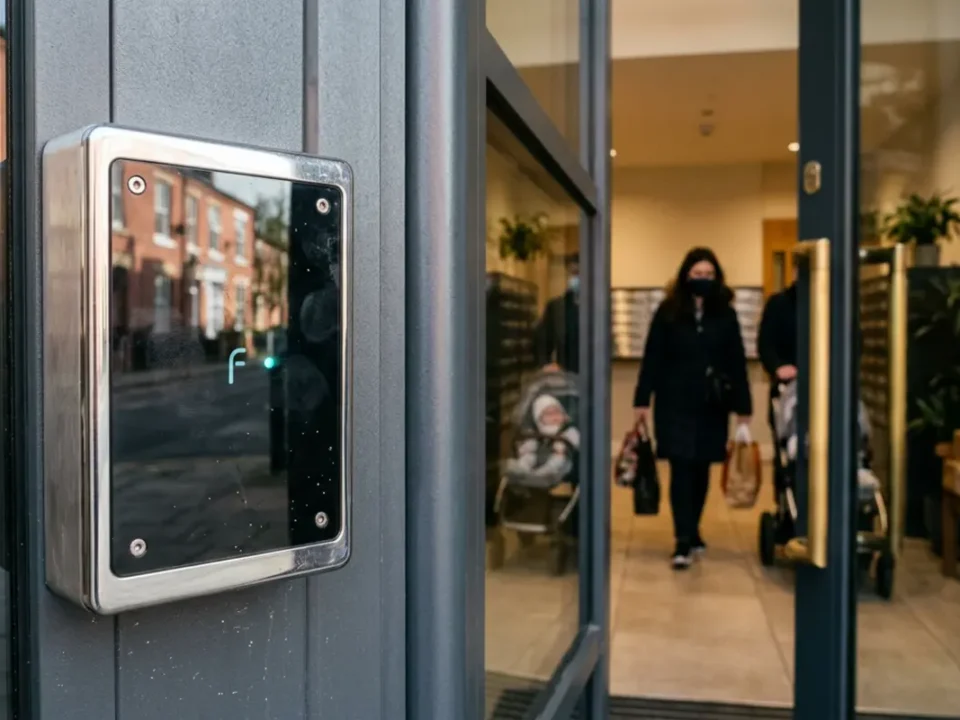
- Entry panel: This is the part visitors usually see first. It may include call buttons, a microphone, a speaker, a camera, a display and sometimes a keypad, depending on whether the system is audio only, video based, GSM connected or app enabled.
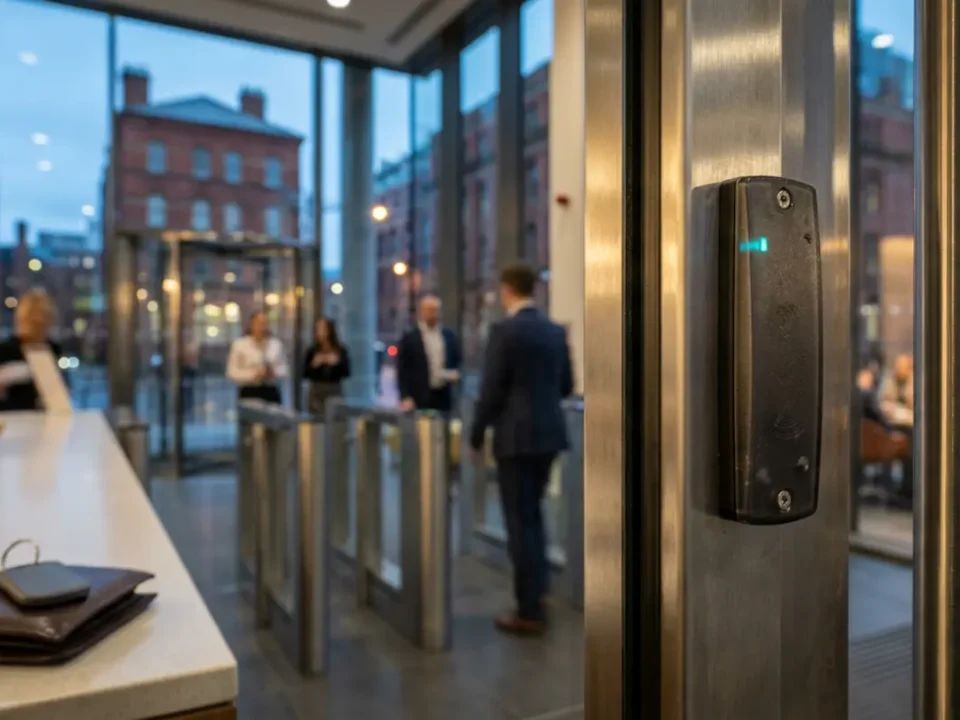
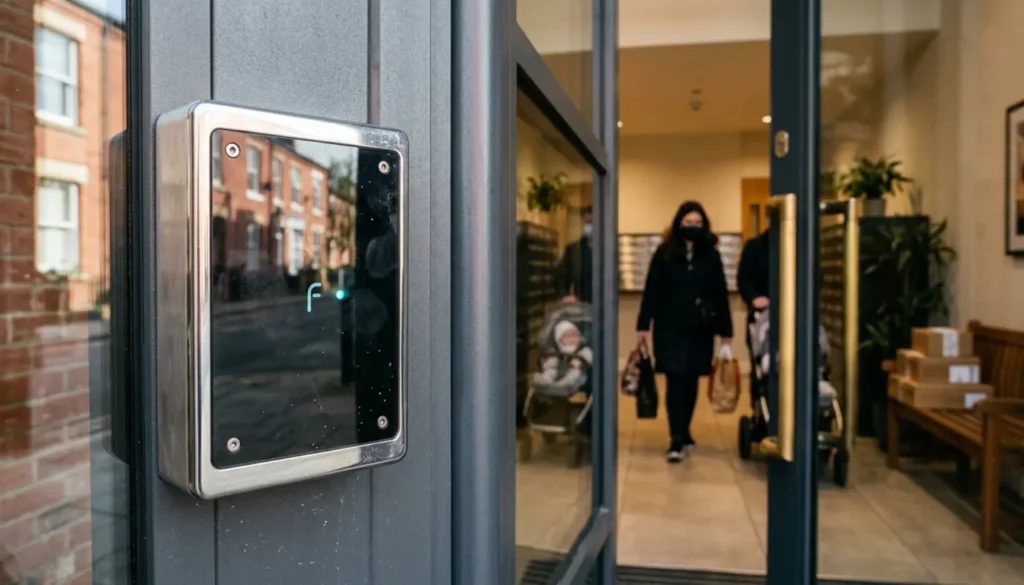
- Reader: This is used by authorised people such as staff, tenants or contractors. It reads a key fob, proximity card, PIN code, smartphone credential or biometric detail, then passes that information to the controller for a decision.
- Controller: This is the brain of the system. It stores or receives user permissions, checks schedules, talks to the reader, operates the lock and may send information to management software for reporting.
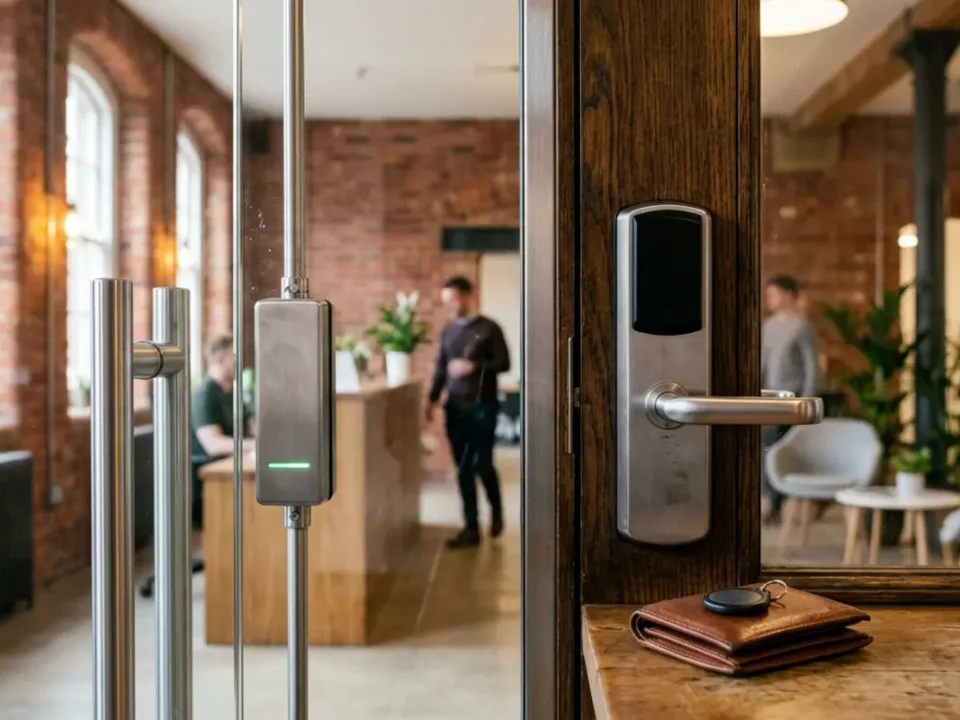
- Electric lock: This physically secures the door. Common options include maglocks, which use magnetic force to hold a door closed, and electric strikes, which release the latch so the door can open while the mechanical lock remains part of the door set.
- Exit devices and monitoring: Exit buttons, request to exit sensors, door position contacts and power supplies complete the system. The door position contact tells the controller whether the door is open or closed, while the power supply and backup battery help keep the system stable during normal use and short power interruptions.
How Door Entry Systems Work Step By Step
A door entry system works with access control by receiving a request, checking the person or visitor, and then releasing or keeping the door locked. The process is quick, but several checks can happen in the background before the door opens.
A person presents a credential, enters a PIN or calls through the door entry panel, and the reader or intercom sends that request to the controller. The controller checks the user identity, the door, the time of day and the access rules. If the request is allowed, it releases the lock for a set number of seconds. If it is refused, the door stays secure and the event can be logged.
Credential Or Visitor Call To Reader Or Entry Panel To Controller To Permission Check To Lock Release Or Refusal To Door Monitoring And Event Log
If the door is forced open, held open too long or presented with an invalid credential, the system can create an alert. On larger commercial and industrial sites, that alert may also link to CCTV, an intruder alarm or a security control room, although each connection needs careful design.
Credential Types Used In The UK
Key fobs are popular in flats, HMOs and workplaces because they are simple to use and quick to cancel when someone leaves. If a tenant loses a fob, the old one can be disabled without changing locks, which is a welcome relief for landlords who have seen enough mystery keys to last a lifetime.
Proximity cards are often used in offices, colleges and larger organisations where staff may need printed ID cards as well as door access. PIN codes can work well for small teams or lower risk doors, but shared codes should be changed regularly because codes can travel very quickly between people.
Smartphone apps allow mobile credentials, remote unlocking and easier administration, especially across several sites. Biometrics, such as fingerprint or facial verification, can provide stronger identity checks, but they also need careful privacy planning because biometric data is highly sensitive.
For a deeper look at choosing between user credentials, see key fob, smart card, biometric and app access control, which compares everyday options in a practical way.
Audio And Video Door Entry For Shared Buildings
Audio door entry lets a visitor call a flat, office or reception point, then speak to someone before the door is released. It is simple, familiar and still works well in many residential entrances, small offices and HMOs.
Video door entry adds visual confirmation, which is useful when residents, reception staff or site teams want to see who is at the entrance before pressing release. Camera position, lighting, privacy, signage and accessibility all matter because a camera that only sees the top of someone's head is not doing its best work.
GSM door entry systems route calls over the mobile network, which can help where fixed handsets are not practical. App based systems go further by sending visitor calls and notifications to smartphones, although managers still need to control accounts properly when residents or staff change.
In multi occupancy buildings, permissions can be separated by entrance, floor, store room, bin area, car park or plant room. This means a resident might access the main entrance and their own shared areas, while a cleaner or contractor only has access during agreed times.
Maglocks, Electric Strikes And Safe Exit
A maglock uses an electromagnet to hold a door shut while power is applied. It is common on communal entrances, but it must be designed with suitable emergency release arrangements, door monitoring and the building fire strategy in mind.
An electric strike works with a latch and releases the keep in the frame when access is granted. It can be a neat option on certain doors, but compatibility with the door, frame, latch, escape hardware and direction of travel must be checked before installation starts.
Fail safe means the lock releases when power is lost, while fail secure means the lock remains locked from the secured side during power loss. Neither option is automatically better, because the correct choice depends on security, escape routes, fire requirements, building use and the approved design.
Fire Safety And Emergency Release
Door access must never block a safe escape route. In UK buildings, designers should consider the Regulatory Reform Fire Safety Order 2005, Building Regulations Approved Document B, the building fire strategy and any fire alarm interface requirements.
Where access control connects to a fire alarm system, the fire alarm should be designed and maintained in line with BS 5839, and the cause and effect plan should explain exactly which doors release during an alarm. In plain English, that plan is a written list of what should happen when the alarm activates. Official guidance such as Approved Document B is a useful reference, but project specific advice from competent professionals is essential.
Emergency release may involve break glass units, request to exit devices, mechanical escape hardware or fire alarm interfaces. The important point is that normal access control and emergency escape are different jobs, and the system must support both without creating a hidden risk.
UK Standards And Good Practice
UK door entry and access control systems should be planned with the right standards, building use and insurance needs in mind. This is especially important where the system protects commercial premises, shared residential buildings, high value areas or life safety routes.
BS EN 60839 is relevant to electronic security and access control system requirements, including performance and system considerations. BS 7671 applies to electrical installation work, so wiring, containment, power supplies and electrical safety should be handled by competent people.
Approved Document M is also important because door entry systems should be usable by disabled people, including those who are deaf, hard of hearing, unable to speak or unable to reach poorly placed controls. Clear visual indicators, audible feedback, sensible response times, good lighting and accessible approach routes all make a real difference.
Secured by Design is a recognised police led approach that encourages safer building design and better security planning. It is particularly useful where door entry, controlled doors, communal spaces, CCTV and physical security all need to work together.
For wider safety planning, BS 5839 applies to fire alarm systems, BS 5266 applies to emergency lighting, and BS 5306 applies to fire extinguishing equipment. Fire risk assessment work may also refer to PAS 79, while intruder alarm systems are usually specified to EN 50131 grades, often Grade 2 or Grade 3 depending on risk. Fire extinguisher servicing should be carried out by competent providers, with BAFE SP101 commonly used as a recognised scheme. For structured cabling and network testing, BICSI knowledge and Fluke testing certification can also support good quality design and verification where networked access control equipment is used.
Access Logs, CCTV And Data Protection
Access logs help building managers see who used a controlled door, when it happened and whether access was granted or refused. This can be useful for security checks, tenant changes, staff management and incident reviews.
Access control logs can include a user name, credential number, door location, date, time and access result. When video door entry or CCTV is linked, the information becomes more sensitive because it can show both movement records and images.
Under UK GDPR and the Data Protection Act 2018, organisations should have a clear reason for collecting access data, restrict who can view it and keep it only for as long as needed. Signage, policies, administrator permissions and subject access request procedures should not be left until after the system is live.
If access control is integrated with CCTV or an intruder alarm, the wider security design should also be considered. Intruder alarms should be specified to EN 50131 where relevant, and monitored alarm systems that need police attendance usually require the correct certification route for a Police Response URN.
Cloud Based Versus On Site Systems
Cloud based access control is useful when managers need to add users, cancel fobs, view events and change schedules through a secure web portal or app. It is often a good fit for landlords, managing agents and multi site businesses because changes can be made without visiting every building.
On site systems are managed locally or through a private network, which can appeal to organisations that want more direct control. They may also continue operating locally if set up correctly during an internet outage, although remote support and updates can be less convenient.
The best choice depends on internet resilience, data hosting, account security, subscription costs, local backup, future expansion and who will manage the system day to day. A good installer should explain the trade offs clearly, rather than pushing a system that does not match the building.
Choosing, Installing And Maintaining A System
The right system starts with the building, not the product. Before choosing equipment, list every door, gate and shared area that needs controlling, then identify residents, staff, visitors, contractors, delivery teams, cleaners and emergency access needs.
Costs in the UK vary widely, so be cautious with one size fits all prices. A simple single door fob system may cost hundreds of pounds, while multi door video entry, app management, fire alarm interfaces, door alterations and cloud subscriptions can move projects into several thousand pounds. Door condition, cabling, fire interfaces, credentials, software, ongoing support and future expansion all affect the final price.
Ask for a quotation that separates equipment, installation, commissioning, credentials, software, subscriptions, training and maintenance. It should also cover power supplies, backup batteries, door hardware, cable routes, fire interface testing and handover documents.
Using an SSAIB certified and Insurance Approved installer is a sensible step for many commercial and higher risk sites because it supports competent design, installation, documentation and maintenance. It can also help where insurers need evidence that the system has been installed to a recognised standard, and where linked monitored alarms may need a Police Response URN.
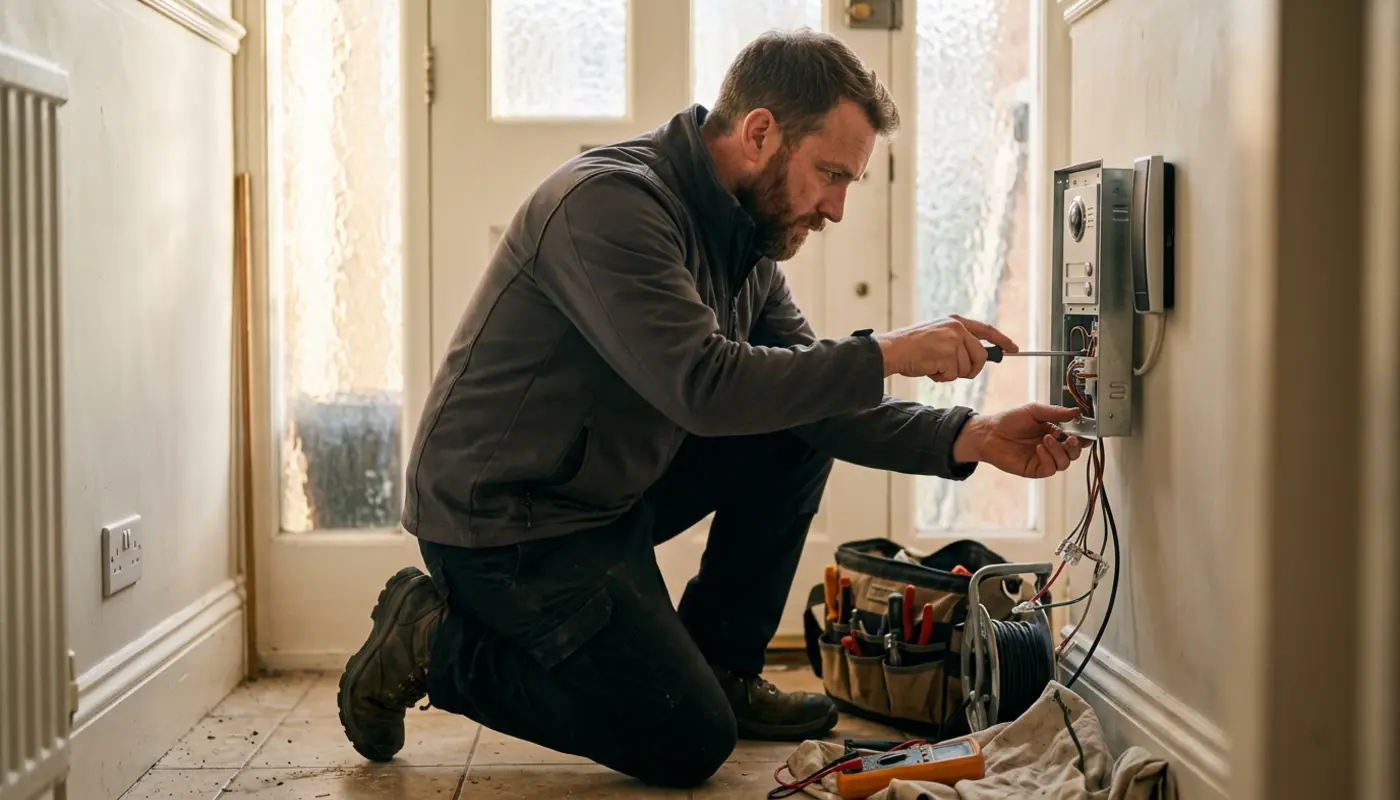
Maintenance should include testing readers, locks, exit devices, emergency releases, batteries, door contacts, permissions and event logs. Leavers should be removed quickly, lost credentials disabled, firmware kept supported and administrator access reviewed regularly.
Future Trends In Door Entry Access Control
Door entry access control is moving towards mobile credentials, cloud administration and better links with CCTV, alarms and building management platforms. The goal is not only stronger security, but also easier day to day management for landlords, facilities teams and business owners.
Expect more focus on cyber security, privacy, offline resilience and inclusive design. Touchless readers, digital wallets, smarter visitor workflows and unusual access pattern alerts are also becoming more common, especially in larger commercial and industrial settings.
Final Thoughts
Door entry and access control work best when they are designed as one joined up system rather than a collection of separate devices. The reader, controller, lock, power supply, fire interface, data policy and maintenance plan all need to support the way people use the building every day.
For homes, flats, HMOs, offices and industrial premises, the right setup can reduce key problems, improve safety, support compliance and give managers better control. The clever part is not just making the door open. It is making sure it opens for the right person, at the right time, for the right reason.
If you are planning a new system or wondering whether your current setup is still doing its job, iSecurity Solutions can help you talk through the options, arrange a survey and choose a practical solution for your building.
Frequently Asked Questions
Is A Door Entry System The Same As Access Control?
No, although they often work together. Door entry handles visitor communication, while access control checks authorised users and manages permissions, schedules and event logs.
How Does A Key Fob Unlock A Controlled Door?
The reader scans the fob and sends its unique number to the controller. If the user has permission for that door at that time, the controller releases the electric lock.
What Happens If The Power Fails?
It depends on the lock type, backup power and fire strategy. Some locks release on power loss, some remain secure, and the correct behaviour must be designed around safe escape and building requirements.
Can Access Control Integrate With A Fire Alarm?
Yes, but it must be designed carefully and tested properly. Fire alarm interfaces should follow the building fire strategy, and fire alarm systems should be designed in line with BS 5839 where relevant.
Should I Use An NSI Or SSAIB Installer?
Using an NSI or SSAIB certified and Insurance Approved installer is a sensible choice because it supports competent design, installation, documentation and maintenance. It is especially useful for commercial buildings where insurers may expect clear evidence of professional standards.