Need Fire Alarms for Manufacturing Plants in Greater Manchester?
Manufacturing Fire Alarms In Greater Manchester
Need fire alarms for a manufacturing plant in Greater Manchester? If you run a factory, processing plant or industrial unit, you already know fire safety is not just a tick box exercise. It is about protecting your staff, your production line and the future of your business.
Compliance can often feel overwhelming. Audits, insurance requirements, HSE guidance and local fire service expectations can quickly become a lot to manage. Manufacturing environments also carry higher risks than standard offices, including dust, fumes, heavy machinery and flammable materials. That is why compliance with BS 5839, HSE guidance and the expectations of Greater Manchester Fire and Rescue Service is so important.
At iSecurity Solutions fire safety services, we design and install compliant systems tailored to industrial sites across the region. iSecurity Solutions is a trusted UK provider of commercial and domestic security systems, supporting homes and businesses with reliable, remotely monitored protection. From CCTV and intruder alarms to fire safety, access control and construction site monitoring, our experienced team delivers practical solutions backed by responsive service and modern technology. We help you cut through technical jargon, understand what applies to your site and make confident decisions that meet legal, insurance and operational needs.
Legal Duties And Fire Risk Assessment For Manufacturing Plants
Under the Regulatory Reform Fire Safety Order 2005, the responsible person must carry out a suitable and sufficient fire risk assessment and put the right fire precautions in place. In a manufacturing setting, that assessment should reflect real risks such as hot works, combustible dust, solvent storage and rotating shift patterns.
In practice, this means your fire alarm system must match the actual risk on site rather than simply relying on what was installed years ago. As processes change, your protection may need to change as well.
Greater Manchester Fire and Rescue Service expects clear documentation, up to date maintenance records and a fire alarm system that aligns with your risk profile. If you need clarity on what a strong assessment looks like, take a look at fire risk assessment for businesses in Manchester, which explains responsibilities in practical terms.
For official guidance on explosive atmospheres and DSEAR duties, the HSE ATEX overview outlines what employers must do to classify hazardous areas and select suitable equipment.
BS 5839 1 System Categories Explained For Factories
BS 5839 1 is the British Standard that governs fire detection and alarm systems in non domestic premises. In simple terms, it sets out how systems should be designed, installed, commissioned and maintained so they remain reliable and fit for purpose.
So which category do you actually need?
Life safety categories L1 to L5 focus on protecting people. L1 provides automatic detection throughout the building, while L2 and L3 cover specific risk areas and escape routes. In many manufacturing plants, L2 is common because it covers high risk rooms such as electrical switchgear, plant rooms and storage areas.
Category M is manual only and relies on break glass call points. In most factories this is rarely enough on its own. Property protection categories P1 and P2 are designed to protect the building and support business continuity, often linked to remote monitoring. A large Greater Manchester plant operating around the clock may require a combined L2 and P1 system to protect both staff and assets.
All installations must comply with BS 5839 1, and servicing must follow the same standard. This usually means bi annual engineer visits along with routine user checks. If you are unsure how systems work in practice, how a fire alarm system works explains it clearly without heavy technical language.
ATEX And DSEAR In Hazardous Manufacturing Areas
If your site handles flammable gases, vapours, mists or combustible dusts, DSEAR applies. You must classify hazardous areas into zones based on how likely an explosive atmosphere is to occur.
In these zones, standard detectors may not be suitable. You may need intrinsically safe or ATEX certified devices that are designed to prevent sparks or excessive heat. This can include detectors, sounders, call points and interface modules.
Choosing the wrong equipment is not only a compliance issue. It can also affect insurance and create serious safety risks. Fire alarm design should always align with hazardous area classification so that every component suits its environment and performs safely.
Addressable Panels And Zoning Strategies For Large Sites
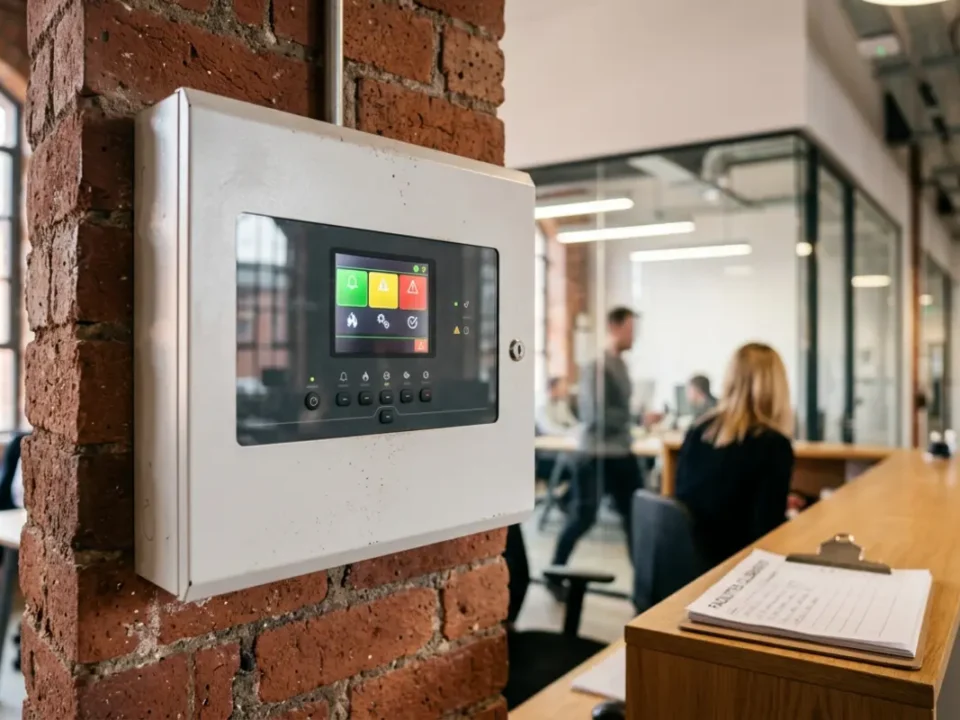
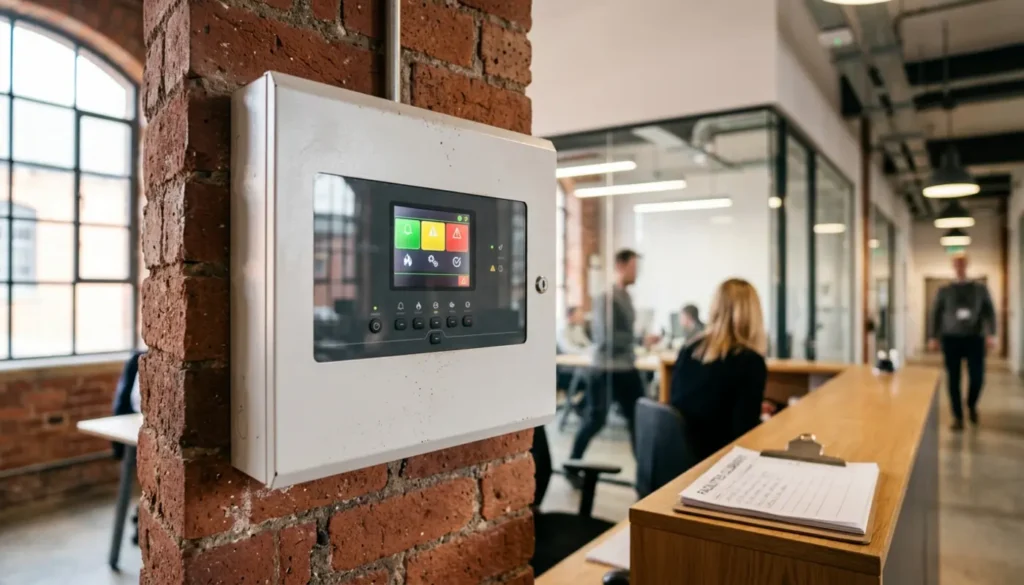
Most modern manufacturing fire alarm systems that comply with BS 5839 and HSE guidance use addressable panels. Unlike conventional systems, each device has a unique address, which allows you to see exactly which detector has activated. That level of detail can save valuable time during an incident.
In a multi building factory, zoning is critical. Zones may be divided by production line, warehouse section, office block and hazardous processing areas. Clear zoning supports faster evacuation, reduces confusion and helps emergency services respond more efficiently.
Cause and effect programming can also trigger plant shutdown, gas isolation or door release automatically. Where voice evacuation is required, integration with PA systems ensures instructions can be heard clearly above machinery noise. If your site already uses site wide audio, you may notice similar principles in PA systems for schools, especially around intelligibility and zoning.
Integration With Suppression And Building Systems
Fire alarms rarely operate alone on a factory site. They often connect with sprinkler systems, gas suppression, extraction fans and building management systems under BS 7273 guidance for door release mechanisms.
For example, if a detector activates in a spray booth, the system may need to stop airflow, isolate fuel supplies and trigger local suppression. Achieving this requires careful design and thorough commissioning so that all systems work together as intended.
For larger estates, remote visibility through a central dashboard can be extremely useful. While fire detection is separate from CCTV, many manufacturers combine it with monitored video systems for full site oversight. You can see how monitoring works in practice in CCTV for warehouses in Manchester, particularly where business continuity is a priority.
Third Party Certification And Why It Matters
When investing in a manufacturing fire alarm system, third party certification provides reassurance that the work meets recognised standards. Installers with recognised approvals show competence in design, installation, commissioning and maintenance.
iSecurity Solutions is SSAIB certified and all fire alarm installations are Insurance Approved. This supports insurer confidence and demonstrates compliance with BS 5839 1 and employer liability duties.
At handover, you should receive zone charts, cause and effect matrices, commissioning certificates and user training records. Without this documentation, proving compliance during a GMFRS audit can quickly become stressful.
Fire Alarm Monitoring And ARC Connection
If your manufacturing plant closes overnight or runs with minimal staffing, monitored fire alarms add an extra layer of protection. Signals are sent to an Alarm Receiving Centre that can contact keyholders or emergency services when needed.
Monitoring centres typically operate in line with recognised standards such as BS 5979 and follow structured response procedures. For sites that combine fire and intruder protection, it is important that intruder systems meet EN 50131 Grade 2 or Grade 3 where appropriate, particularly if police response and a URN are required.
Cost Breakdown For Greater Manchester Manufacturing Plants
Costs vary depending on size, risk and chosen technology. A small single building light industrial unit may start from around £6,000 to £12,000 for an addressable system. Larger multi building sites with hazardous zones and several hundred devices can range from £25,000 to £80,000 or more.
Main cost factors include the number of detectors and call points, whether ATEX rated equipment is required, panel capacity, cable routes and integration with other systems. Every site is different, which is why a detailed survey should always come first before firm figures are provided.
It is also wise to budget for ongoing maintenance. A structured service contract helps ensure your system remains compliant, reliable and ready when it is needed most.
Planned Preventative Maintenance And Testing
BS 5839 1 requires regular inspection and servicing, normally every six months for non domestic premises. In addition, weekly user tests of call points should be recorded in a logbook.
A thorough maintenance visit includes detector testing, battery checks, reviewing false alarm history and confirming that cause and effect programming still reflects the building layout. If you are unsure how often alarms should be tested, how often should fire alarms be tested explains the basics in plain English.
Clear records are essential. Missing service certificates can raise difficult questions during inspections or insurance reviews.
Managing False Alarms And UwFS
Manufacturing plants are more prone to unwanted fire signals caused by steam, dust, aerosols or process heat. Excessive false alarms not only interrupt production but can also lead to staff taking alarms less seriously than they should.
Good design plays a key role in prevention. This may involve using heat detectors instead of smoke detection in dusty areas, applying double knock logic in specific zones or adjusting sensitivity levels appropriately. Reviewing false alarm data during maintenance visits allows for ongoing improvement rather than repeated disruption.
Taking a proactive approach to reducing unwanted fire signals protects your relationship with emergency services and ensures that when the alarm sounds, everyone understands it matters.
Final Thoughts
Choosing the right fire alarm system for your manufacturing site in Greater Manchester is about more than buying equipment. It involves understanding your risks, meeting legal duties and ensuring your system supports daily operations without constant disruption.
With the right design, certified installation and structured maintenance, your fire alarm system becomes a dependable safety net rather than a source of worry. When the next audit or inspection takes place, you can approach it with confidence.