Best Access Control for Mosques in Manchester
If you are part of a mosque committee, you are probably trying to keep the building welcoming while also making sure people feel safe. That is not always easy, especially during busy prayer times, classes, and community events.
Mosques in Manchester need access control that protects people without making the building feel closed off. For most mosques, the best setup usually includes controlled main entrance points, simple staff and volunteer access, safe zoning for prayer and teaching areas, integration with CCTV and intruder alarms, and timed access for prayer periods and events.
That balance matters because a mosque is not like a standard office or warehouse. It is a place of worship, a teaching space, and a community hub. At times, it is also a very busy public venue. Any system needs to support openness, dignity, and safeguarding at the same time.
For many committees, the technical side can feel like one more thing on an already long list. iSecurity Solutions is a trusted UK provider of commercial and domestic security systems, helping homes and businesses stay protected around the clock. From CCTV and intruder alarms to fire safety, access control and construction site monitoring, the team designs reliable, tailored solutions backed by responsive service and modern, remotely monitored technology. Whether you are securing a single property or managing multi site assets, they provide the equipment, expertise and peace of mind to help keep what matters most safe.
Access Control In Manchester
The best access control for mosques in Manchester is a practical and community sensitive system that protects worshippers, volunteers, children, and visitors while still keeping the mosque welcoming. In most cases, that means controlling who can enter certain doors, at certain times, with different permission levels for trustees, teachers, cleaners, and authorised volunteers.
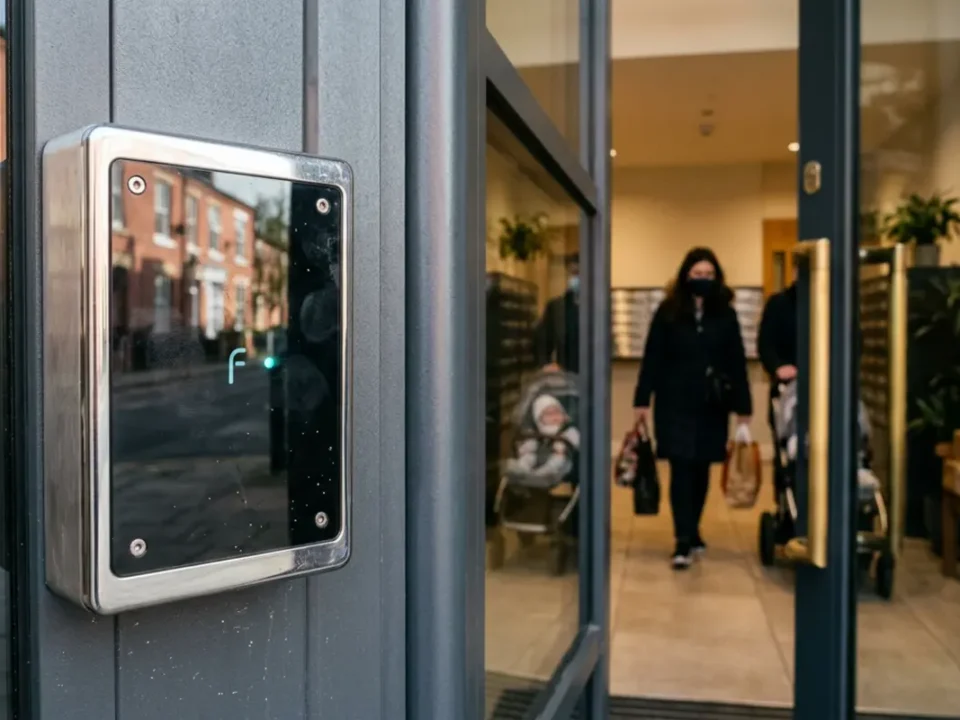
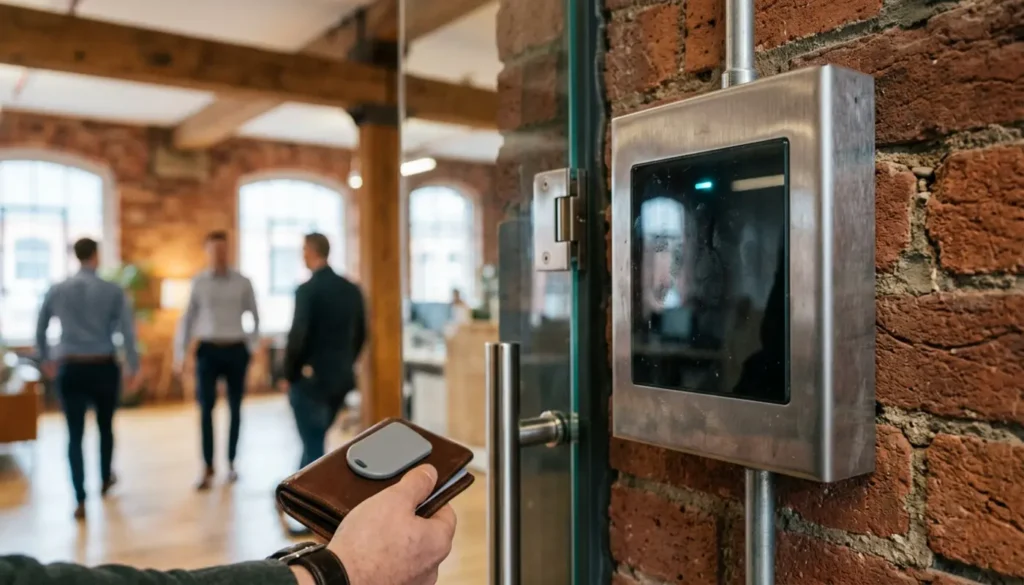
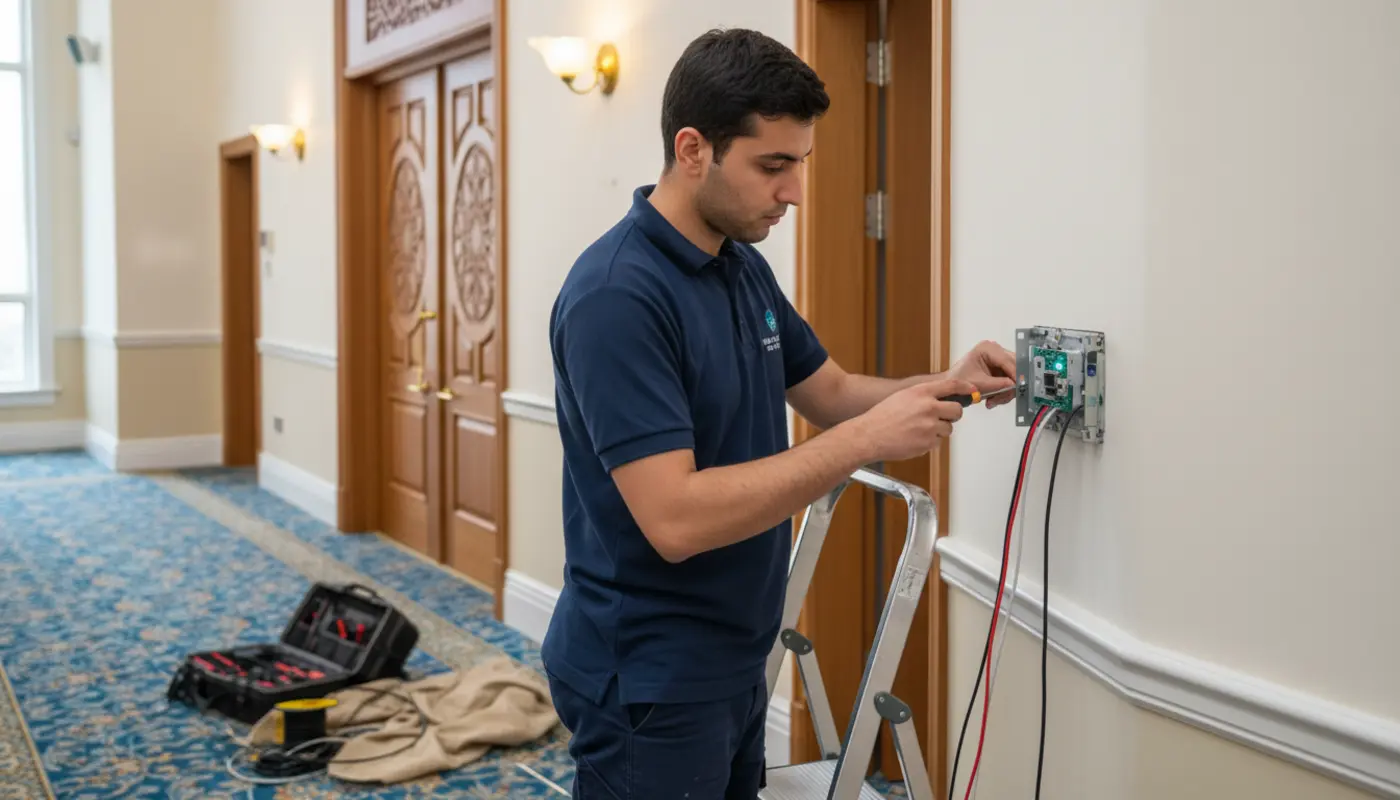
A strong starting point is a professionally designed access control system that covers the main entrance, side doors, office areas, and teaching rooms. That gives the committee far better control over movement in the building without relying on keys that can be lost, copied, or passed around too easily.
Best Access Control For Mosques In Manchester
The right system keeps the mosque open when it should be open and secure when it needs to be secure. For most committees, that comes down to clear planning, sensible zoning, and a setup that matches how the mosque is used day to day, during Friday prayers, and at larger community events through the year.
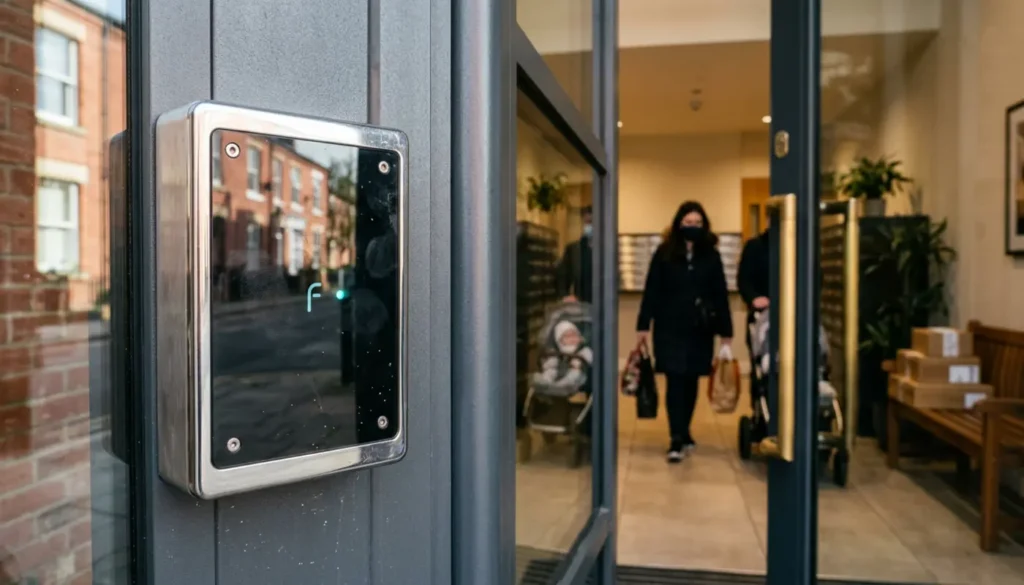
Because mosques have a mix of public, private, and teaching spaces, the system needs to be easy to manage and simple for volunteers to use. After these opening sections, the image below remains exactly as required.
Why Mosques Need A Different Approach
Mosques have a pattern of use that makes standard door security a poor fit. Daily prayers bring repeated arrivals across the day, while Friday prayers, Ramadan nights, and Eid gatherings can bring large numbers of worshippers through the same entrances in a short space of time.
That is why many committees benefit from specialist planning that works around worship patterns rather than against them. A well chosen system should fit within wider business security measures such as surveillance, alarms, managed permissions, and emergency procedures.
When a mosque is busy, the system cannot create queues, confusion, or awkward access issues. It should help the building run smoothly while still giving trustees control over important areas.
What The Best System Usually Includes
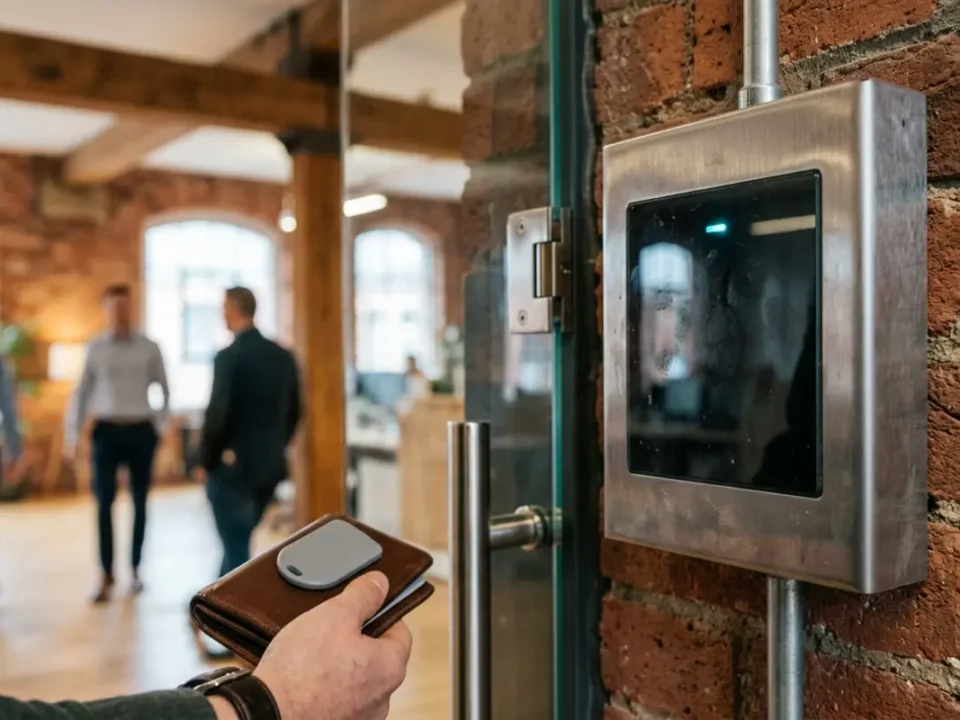
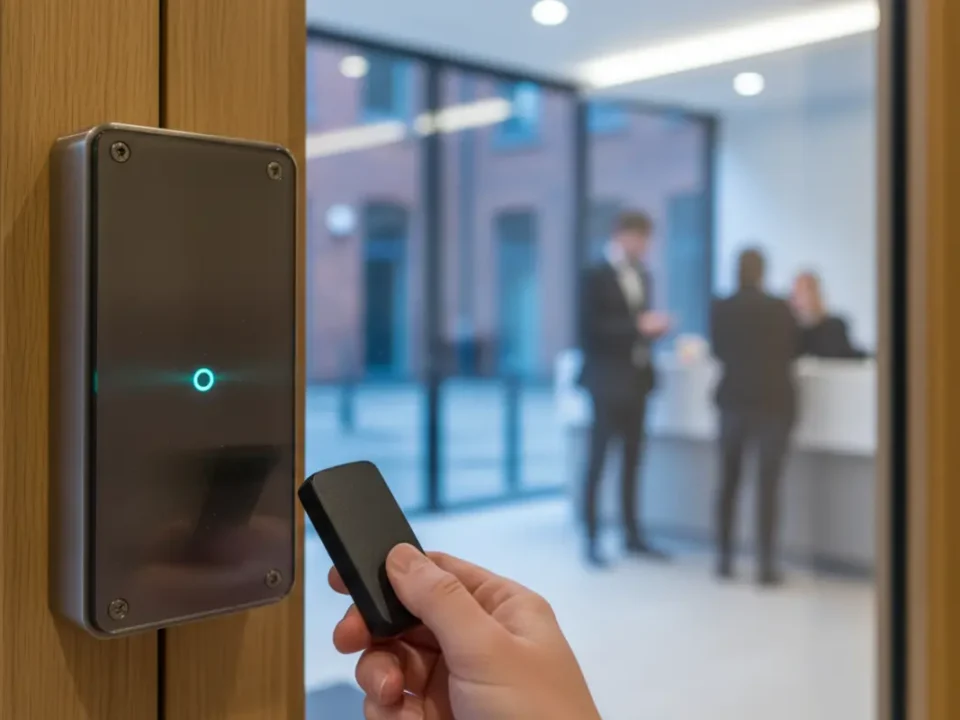
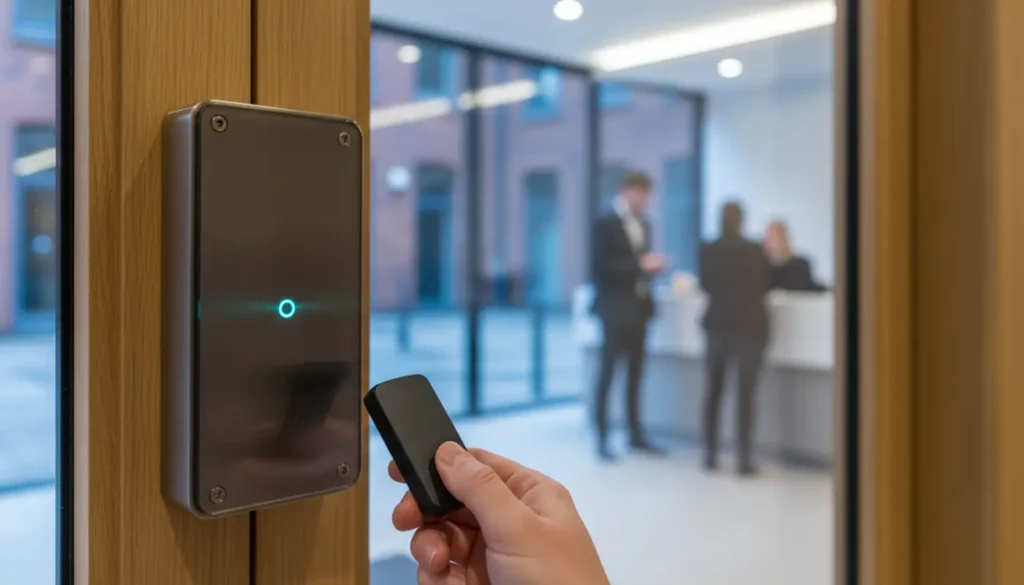
For most mosques, the strongest option is not one single device but a combination of tools that work together. This usually includes key fob or card access for trustees and regular authorised users, PIN entry for selected internal doors, video intercoms for unknown visitors and deliveries, networked controls with entry records, and zoning for classrooms, offices, storage rooms, and other sensitive spaces.
- Key fob or card access for trustees and regular authorised users
- PIN entry for selected internal doors
- Video intercoms for unknown visitors, deliveries, and arrivals outside normal hours
- Cloud based or networked controls with entry records
- Zoning for classrooms, offices, storage rooms, and other sensitive spaces
Cloud based or networked systems can also provide an audit trail showing who entered and when. That can be very useful for safeguarding, incident reviews, contractor visits, and managing volunteer access during classes or events.
Where there are separate prayer spaces, toilets, offices, classrooms, and storage rooms, zoning is especially useful. Instead of locking down the whole site, the committee can keep public access open where appropriate while restricting sensitive areas such as cash offices, IT cupboards, staff rooms, and madrassah spaces.
Why SSAIB Approved And Insurance Approved Installers Matter
For a mosque, using an SSAIB approved and Insurance Approved installer is not just a badge on a leaflet. It gives trustees confidence that the system has been designed and fitted to recognised standards, that documentation is in order, and that insurers are more likely to accept the installation without difficult questions later.
If access control is integrated with monitored CCTV or intruder alarms, that becomes even more important. Alarm and monitored CCTV elements should align with EN 50131 where relevant for intruder systems, often Grade 2 or Grade 3 depending on risk. An SSAIB approved and Insurance Approved installer is normally the starting point for Police Response URN eligibility.
That matters if the mosque wants police response support for a monitored alarm setup after a confirmed activation. Trustees looking at alarm integration may also find it helpful to read our guide to intruder alarms for Manchester premises, because the compliance principles are similar even though mosque use is very different.
Balancing Open Access With Congregation Safety
A mosque should feel welcoming, not difficult to enter at the times people need it most. The aim is to keep public access simple at the right times while still controlling private and higher risk areas in the background.
During daily prayers, the main entrance may remain open or lightly supervised, while offices, staff areas, and classrooms stay secure. During quieter periods, the same front door can switch to controlled entry through timed schedules, intercom approval, or fob access. That gives flexibility without needing someone at the door all day.
This timed approach is especially useful during Ramadan, Taraweeh, Eid, and weekend classes when visitor patterns change. Schedules can be adjusted for known busy periods so queues move smoothly while the committee still keeps oversight.
Gender Sensitive Entry And Respectful Design
Many mosques in Manchester need separate access routes for men's and women's prayer areas, and access control should support that respectfully. The right design can make routes clear, private, and easy to use without creating confusion for first time visitors or families arriving together.
In practice, that may mean dedicated entry readers, clear door signage, and different permissions for internal connecting doors. It is also worth considering pram access, accessible routes without steps, and the needs of elderly worshippers so the system improves movement rather than becoming an obstacle.
Good design can also help reduce confusion during large gatherings, keep family access simple, and support privacy without creating awkward bottlenecks. That is especially important when the building is busy and volunteers are trying to guide people quickly and respectfully.
Video intercoms can be helpful for side entrances used less often, particularly where volunteers need to confirm entry before unlocking. That gives reassurance without requiring doors to stay propped open.
Safeguarding Children And Vulnerable Attendees
Safeguarding is one of the strongest reasons for better access control in mosques. Madrassah rooms, youth spaces, and community classrooms should not be freely accessible to every visitor, especially when children are arriving, leaving, or moving between sessions.
Restricted entry for teaching rooms helps staff and volunteers know who should be there. It also reduces the risk of unauthorised access, supports attendance management, and gives trustees a clearer process for drop off and collection times.
Where CCTV supports safeguarding, it should be installed to recognised standards and integrated sensibly with the wider setup. Many mosques pair door control with CCTV to monitor entrances, corridors, and external approaches while keeping recordings available for incident review.
Integration With CCTV And Alarm Systems
Access control works best when it is not operating on its own. Integration with CCTV, intruder alarms, and remote notifications can help mosque committees respond faster when something unusual happens, especially outside prayer times.
For example, if a rear door is forced outside normal hours, the intruder alarm can trigger, cameras can bookmark the event, and keyholders can receive an alert. Intruder alarm elements should meet EN 50131, usually Grade 2 or Grade 3 depending on the building risk, and an SSAIB approved and Insurance Approved installation is normally required where a Police Response URN is needed.
If the mosque already has older cameras in place, it is worth reviewing whether they still provide useful evidence. A quick comparison of camera types and performance can be found in this CCTV explainer, which helps when planning upgrades around door entry points.
Protect Duty, Martyn's Law, And Mosque Security Planning
By 2026, trustees also need to think carefully about Protect Duty and Martyn's Law when reviewing venue security. Access control does not replace good procedures, but it does support them by helping mosques manage entry, define public and private areas, and respond more effectively during incidents.
For religious venues, that means thinking in practical terms about busy entrances, volunteer awareness, incident reporting, and how people move through the building during high attendance periods. Access control supports a wider protective security plan by giving committees more control over access, better visibility, and clearer procedures.
Official guidance on the Martyn's Law FAQs is useful for understanding what religious venues may need to consider. For mosque committees, the practical takeaway is simple. Know your entrances, know your busy periods, know your vulnerable spaces, and make sure volunteers understand what to do if something feels wrong.
Trustees wanting a clearer breakdown of venue obligations can also read what Martyn's Law means in a more practical UK security context. It helps translate legal language into the day to day decisions committees actually have to make.
Managing Visitors And Interfaith Events
Mosques often welcome visitors who are not Muslim, school groups, neighbours, and interfaith guests, which is good for community life. Access control should support that openness by making visitor entry easy to manage rather than forcing doors to remain unlocked everywhere.
A simple intercom at the main door, combined with timed releases and controlled internal zones, can work very well for open days and community events. Volunteers can welcome visitors warmly while still protecting offices, classrooms, and family areas from unrestricted movement.
Temporary credentials can also be issued for contractors, tutors, or event volunteers and then removed afterwards. That is far safer than passing around physical keys and hoping they all come back.
Cost Considerations And Funding Options
Costs vary depending on the size of the mosque, the number of doors, the type of locks, whether cabling is already in place, and whether CCTV or alarms are being integrated at the same time. A small mosque with one or two controlled doors may spend far less than a larger site with classrooms, offices, multiple prayer entrances, and remote management.
Committees should usually budget for hardware and installation, user setup and permissions, software if required, training for trustees and volunteers, maintenance and future support, and integration with CCTV or alarms where needed.
- Hardware and installation
- User setup and permissions
- Software if required
- Training for trustees and volunteers
- Maintenance and future support
- Integration with CCTV or alarms where needed
Some Manchester mosque committees may choose to spread costs through phased installation, starting with the main entrance and highest risk internal doors. Others may look at community fundraising among worshippers, charitable grant routes for faith buildings, or general building improvement funds where security upgrades form part of a wider project.
It is also worth checking whether insurers may ask for evidence that the system was installed by an SSAIB approved and Insurance Approved provider. A cheaper system that is awkward to manage often becomes expensive in practice because no one wants to use it properly after installation.
Ongoing maintenance is just as important as the initial installation, which is why many organisations also consider service contracts to keep systems reliable and compliant over time.
Practical Checklist For Manchester Mosque Committees
Start with a proper site assessment rather than choosing hardware first. Look at all entry points, identify which doors should be public, semi private, or staff only, and review how those doors are used on weekdays, Fridays, evenings, and festival periods.
Before choosing a system, review which entrances need to stay open at prayer times, which rooms should be restricted, who needs access and at what times, how visitors, contractors, and volunteers will be managed, what happens during emergencies or power loss, and whether CCTV and alarms should be integrated.
- Which entrances need to stay open at prayer times
- Which rooms should be restricted
- Who needs access and at what times
- How visitors, contractors, and volunteers will be managed
- What happens during emergencies or power loss
- Whether CCTV and alarms should be integrated
Trustees, imams, teachers, cleaners, and approved volunteers rarely need the same level of access, so permissions should reflect real duties instead of giving everyone a master key in electronic form.
Plan for emergencies as well as convenience. Every system should allow safe exit, fast override where needed, and clear procedures if power fails, a door jams, or a volunteer is unsure what to do.
It can also help to review examples from similar sectors where safeguarding and public access overlap. For instance, this access control article for schools shows how zoning and controlled entry can support child safety in busy community settings.
Final Thoughts
The best access control for mosques in Manchester is one that respects the way a mosque actually works. It should welcome worshippers, support volunteers, protect children and vulnerable attendees, and give trustees confidence during both quiet weekdays and the busiest moments of the year.
Most of all, it should be simple enough to use every day and robust enough to stand up to real world pressure. When designed by an SSAIB approved and Insurance Approved installer, and integrated properly with CCTV and alarms where needed, access control becomes less about locking people out and more about helping the community feel safe inside.