Access Control for Alternative Provision Schools in Manchester
Access Control In Manchester
Access control for alternative provision schools in Manchester means using clear safeguarding procedures and reliable entry systems to control who can enter, leave, and move around an AP setting. In 2026, this is shaped by Keeping Children Safe in Education, Department for Education alternative provision guidance, Manchester commissioning expectations, UK GDPR, fire safety law, and Ofsted’s focus on safeguarding culture.
For Manchester AP leaders, the challenge is rarely just fitting a keypad on a door and calling it finished. Many AP settings operate from converted offices, shared community buildings, or small education hubs, so access control has to work around real pupils, real visitors, and real safeguarding pressure.
iSecurity Solutions is a trusted UK provider of commercial and domestic security systems, helping homes, schools, and businesses stay protected around the clock. From CCTV and intruder alarms to fire safety, access control, and construction site monitoring, the expert team designs reliable, tailored solutions backed by responsive service and modern remotely monitored technology.
Why Access Control Matters In AP Settings
Access control matters in AP settings because the entrance is a safeguarding control point, a visitor checkpoint, and often the first place where staff manage risk. Alternative provision supports pupils who cannot attend mainstream school for reasons such as exclusion, medical needs, behavioural challenges, social vulnerability, or complex personal circumstances, so the system must protect pupils without making the site feel cold or difficult to use.
The Department for Education makes clear that schools and local authorities retain safeguarding responsibilities when placing a child in alternative provision. The official alternative provision guidance explains the importance of safe, suitable provision, which naturally includes controlling access to the site and knowing where pupils are during the day.
Manchester has its own local context too. Through local commissioning and quality assurance expectations, schools are encouraged to use suitable providers and maintain clear safeguarding information sharing. The Manchester City Council website is a useful starting point for local education and safeguarding information. In practice, access logs, visitor records, and site procedures should be organised enough to stand up to scrutiny, so nobody is hunting through an old paper diary while a safeguarding lead asks who entered the building at 11:20.
Safeguarding Duties That Shape Entry And Exit Control
Safeguarding duties shape entry and exit control by requiring AP providers to know who is on site, where pupils are, and whether visitors have been properly checked before reaching pupil areas. Keeping Children Safe in Education places safeguarding at the heart of how schools and colleges operate, and AP providers are part of that wider duty of care.
Good access control supports these duties by creating a managed route into the building, often through a staffed reception or secure lobby. This gives staff time to verify identity, check appointments, issue visitor badges, and decide whether a person needs to be escorted.
AP leaders should be able to answer simple but important questions. Is every visitor checked before they reach pupil areas? Would the team know what to do if a pupil left unexpectedly? These questions often show whether access control is working as part of everyday safeguarding rather than sitting in the background as a door system.
For AP settings, entry and exit control also helps manage pupils who may be at risk of going missing, being targeted for exploitation, or leaving during a moment of distress. A controlled exit does not mean locking pupils in, because that would create serious safety problems. It means designing doors, supervision points, and alerts so staff can respond quickly and calmly.
Understanding The Risk Profile Of AP Cohorts
The risk profile of AP cohorts affects access control because many pupils may have additional safeguarding, welfare, behaviour, or attendance needs. AP cohorts can include vulnerable pupils, children with special educational needs, pupils at risk of criminal exploitation, those referred after exclusion, and young people involved with youth justice services.
Most pupils are not a security concern, but the setting may face more safeguarding complexity than a typical mainstream classroom. A reception door may need video intercom access so staff can speak to visitors before opening, while internal doors may need zoning so pupils cannot move into staff offices, therapy rooms, plant rooms, or shared tenant spaces without permission.
External risks matter as well. Some AP pupils may have difficult family circumstances, peer conflict, or safeguarding concerns involving people outside the setting, so visitor management cannot rely on good manners and a clipboard alone. The aim is not to make AP feel unwelcoming, but to create clear boundaries that protect pupils, staff, and legitimate visitors.
Manchester Commissioning Expectations And Site Security
Manchester commissioning expectations mean AP providers should be able to show that their site is safe, suitable, and aligned with national safeguarding duties. Access control should form part of the evidence trail, alongside safeguarding policies, risk assessments, staff checks, attendance records, and incident reporting procedures.
Commissioners and schools will often want to know how visitors are managed, how pupils are supervised at arrival and departure, and how the provider prevents unauthorised access in shared or mixed use premises. A clear answer is always better than a hopeful shrug, especially when safeguarding, Ofsted, and local authority quality assurance all overlap.
A strong access control plan should show who has access to each area, what happens when a pupil arrives late, how staff respond to a missing pupil concern, and how records are stored. These details help demonstrate that security is not just a gadget added to a door, but part of the AP provider’s safeguarding culture.
Where provision is unregistered or being reviewed as part of local authority quality assurance, premises security, safeguarding culture, and pupil supervision may also be considered as part of suitability checks. That does not mean every setting needs the same system, but leaders should be able to explain their arrangements clearly.
Visitor Management For Parents And Professionals
Visitor management in AP settings needs a clear and repeatable process because reception staff may deal with parents, carers, social workers, youth offending teams, police officers, education welfare staff, CAMHS professionals, tutors, contractors, and local authority officers. That is a busy guest list for a small building, and it needs a system that supports staff instead of leaving them to make sensitive decisions on the spot.
A practical visitor pathway starts before arrival. Visitors should be booked where possible, asked to bring identification, signed in at reception, given a visible badge, and told where they may and may not go.
- Confirm the visit before arrival where possible.
- Ask visitors to bring official identification.
- Check the visitor at reception before access is granted.
- Record the name, organisation, arrival time, and purpose of visit.
- Issue a visible badge and explain site expectations.
- Escort visitors when they need to enter pupil areas.
- Record departure time when the visitor leaves.
If visitors are not known to the setting, staff should verify their identity with the relevant organisation before allowing access beyond reception. This is especially important when agency staff, contractors, or professionals arrive between sessions or outside normal appointment times.
Escorted access is also important in AP. A social worker attending a planned meeting may be escorted to a private room, while a contractor should be kept away from pupil areas unless access is essential and supervised. Parents or carers in distress should be managed sensitively, but still through the same secure process, because safeguarding rules should not disappear just because the doorbell is ringing.
Technology Options For Small AP Buildings
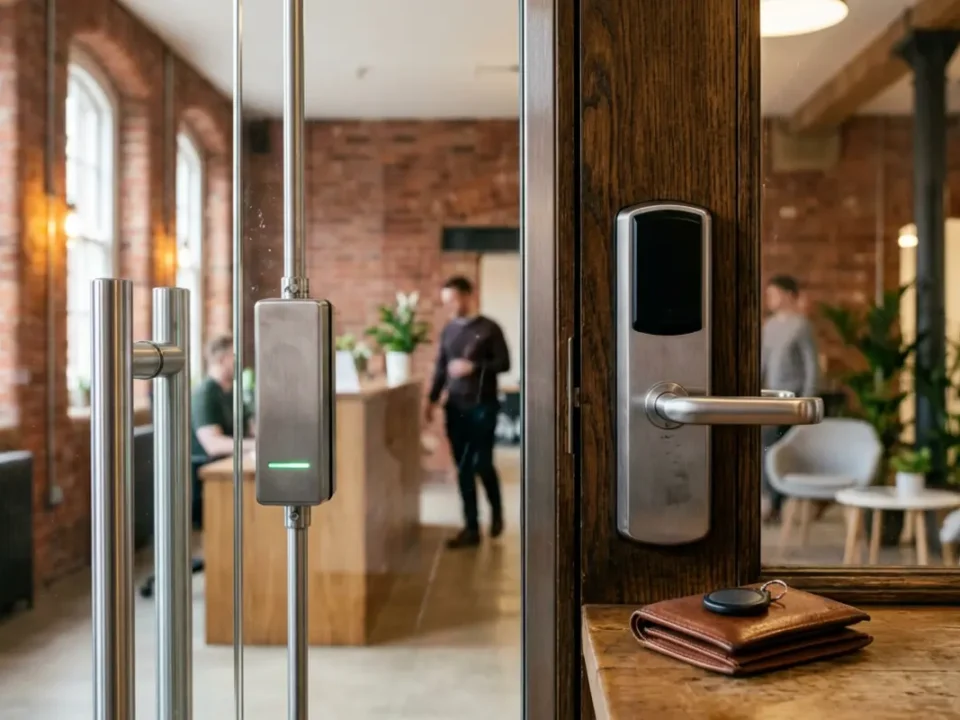
Technology for small AP buildings should be simple, reliable, and matched to the way staff and pupils actually use the site. Many small AP sites in Manchester were not originally designed as schools, so common options include keypad entry, fob systems, card systems, biometric readers, and video intercoms.
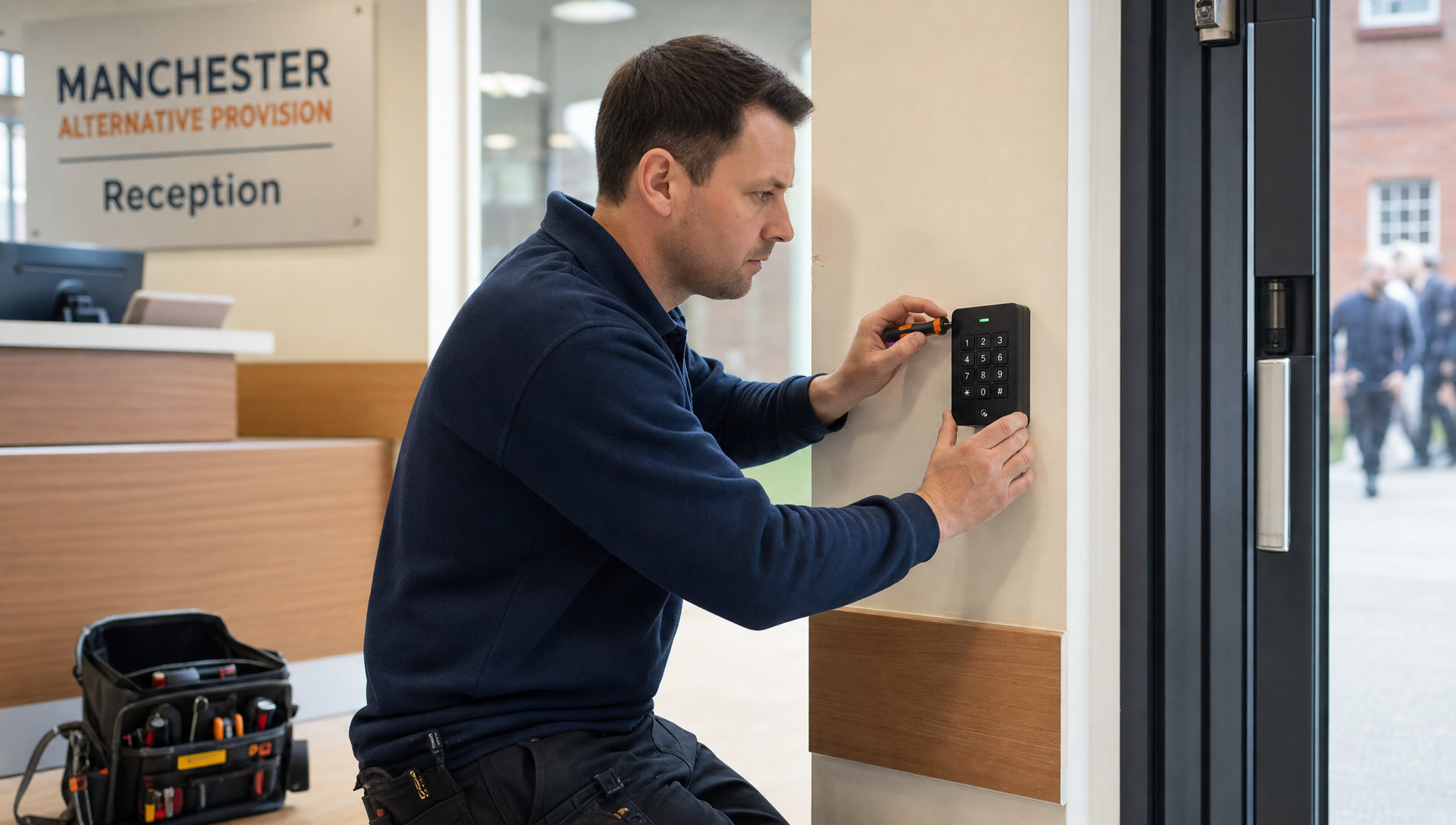
- Keypad entry works well for simple staff areas. It is affordable and easy to use, but codes can be shared, guessed, or forgotten.
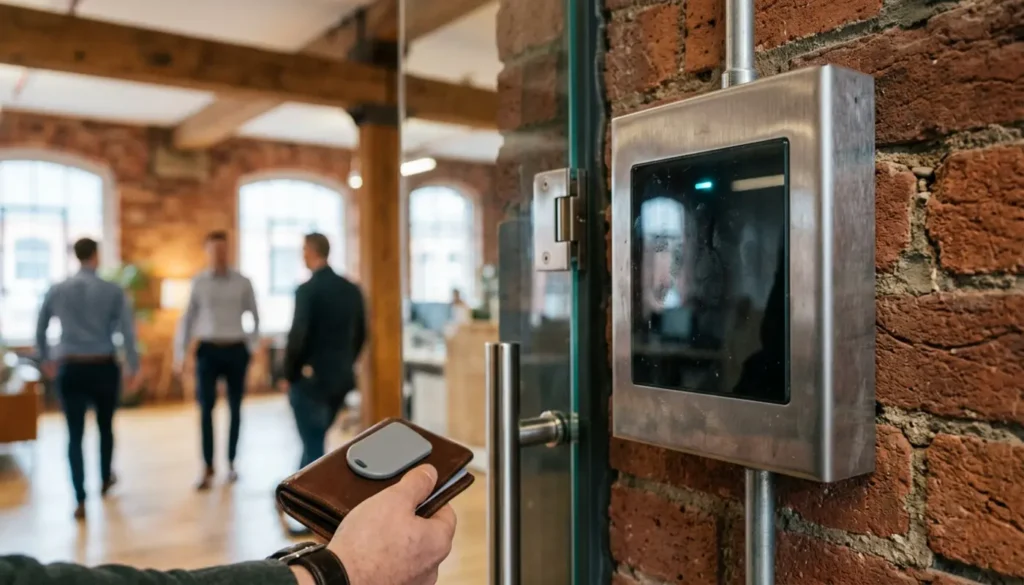
- Fob access is useful for staff permissions. If someone leaves, their fob can be removed from the system without changing every lock.
- Card access suits larger teams or sites that already use staff ID cards. Cards still need clear issuing and cancellation procedures.
- Biometric access, such as fingerprint readers, can reduce lost credentials, but it uses sensitive personal data and needs careful UK GDPR handling.
- Video intercoms help reception staff see and speak to visitors before granting entry. They are especially useful at shared entrances and small sites without a full time front desk.
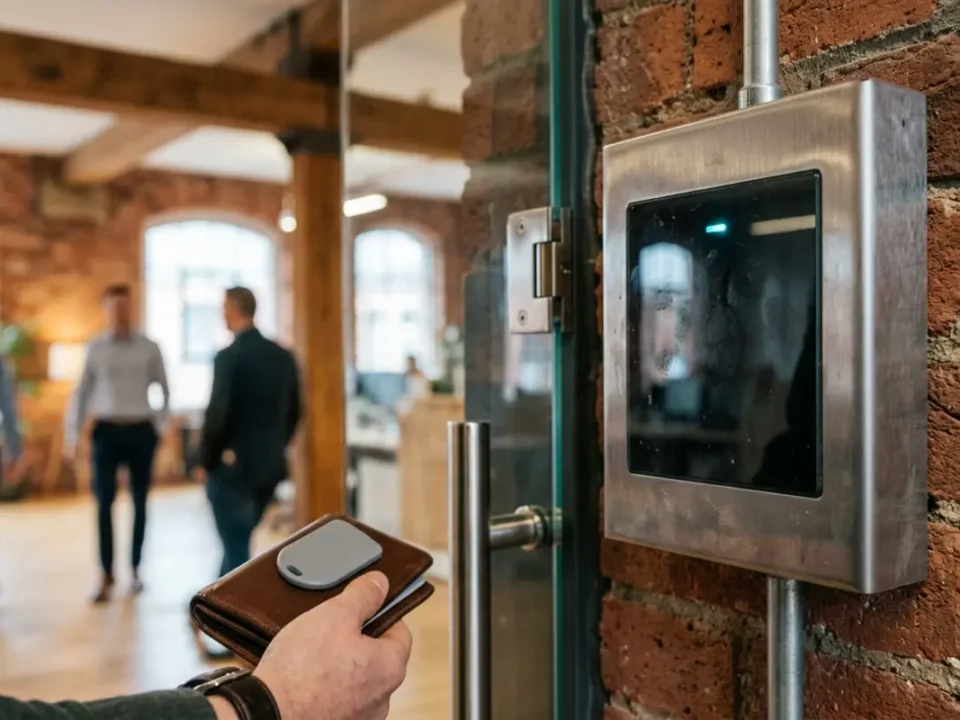
Keypad entry can work for lower risk staff entrances, but it needs regular code changes and should not be the only control for sensitive areas. Fob and card systems are usually better for AP because they allow individual permissions, so if a staff member leaves, their access can be removed from the system without changing every lock in the building.
Biometric access can be useful in some settings, but it must be handled carefully because biometric data is sensitive under UK GDPR. Providers should complete a data protection impact assessment, consider less intrusive alternatives, and make sure parents, pupils, and staff understand what data is collected and why.
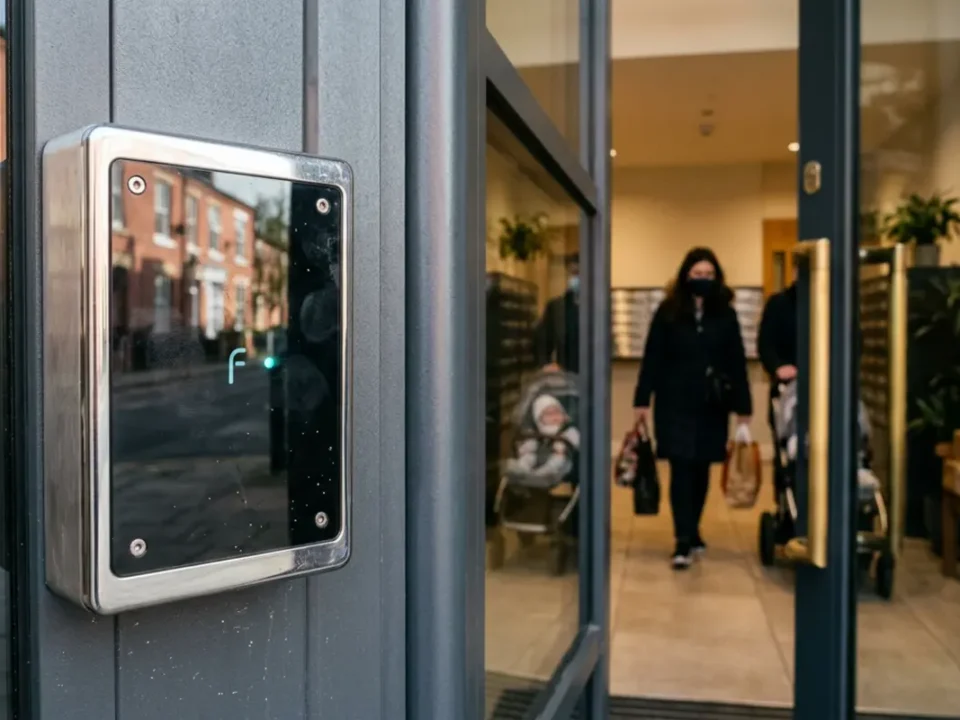
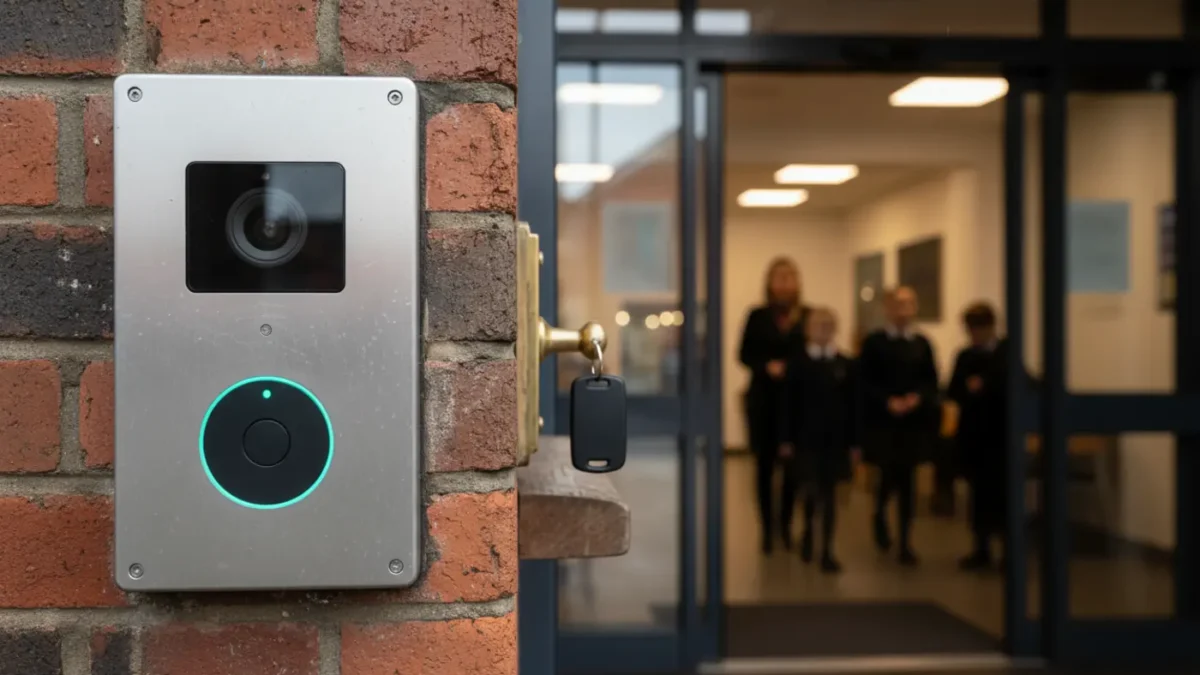
Video intercoms are particularly helpful for AP reception doors, shared entrances, and sites without a full time front desk. They let staff see and speak to a visitor before granting access, which is valuable when managing unknown callers, unexpected parents, or agency professionals arriving between sessions.
Access Zoning For Shared And Converted Premises
Access zoning helps shared and converted AP premises stay safe by dividing the building into areas with clear access rules. Many Greater Manchester AP providers work from converted houses, office units, community buildings, or shared education spaces, where pupils may otherwise pass through areas used by other tenants, contractors, or visitors.
Typical zones include reception, pupil learning spaces, staff only offices, welfare rooms, therapy rooms, plant rooms, toilets, outdoor areas, and shared corridors. Each zone should have a clear rule about who can enter, when they can enter, and whether supervision is needed.
Electronic access control makes zoning easier because permissions can be tailored by role. For example, tutors may access classrooms and staff rooms, safeguarding leaders may access confidential record areas, and pupils may only enter learning areas during supervised times. You can also compare options in key fob and biometric access control if you are weighing up the right system type.
Linking Access Control With CCTV And Alarms
Linking access control with CCTV and alarms gives AP leaders a clearer view of who entered, who left, and how the building is protected outside teaching hours. Access control works best when it forms part of a wider security plan rather than standing alone.
Where CCTV is used for security in an AP setting, it should be proportionate, clearly signed, and managed under UK GDPR. Systems should also be designed with EN 50131 principles in mind where they interact with intruder alarm detection. EN 50131 is a recognised standard for intruder alarm systems, and it helps make sure alarms are designed and graded properly, usually Grade 2 or Grade 3 depending on the risk.
Any monitored CCTV or alarm pathway that requires police attendance will normally need SSAIB Insurance Approved certification first for a Police Response URN. A Police Response URN is a unique reference number that allows eligible monitored alarm systems to request police response through an approved monitoring process.
If an AP provider is considering a wider security upgrade, CCTV systems can be designed to support safeguarding without creating unnecessary intrusion into pupils’ daily lives. Cameras should be used for safety and evidence, not as a substitute for supervision, pastoral care, or good staff judgement.
Balancing Secure Access With Fire Safety
Secure access and fire safety must work together, because no access control system should ever trap people inside a building. In AP settings, the safest design controls unauthorised entry while still allowing quick escape during a fire, lockdown release, or medical emergency.
Fire alarm systems in schools and AP premises should be designed and maintained in line with BS 5839, with category L1 or L2 commonly considered depending on the size, layout, and risk profile of the premises. L1 gives automatic detection throughout the building, while L2 provides detection in defined higher risk areas and escape routes.
Emergency lighting should comply with BS 5266, with monthly functional checks and an annual full duration test recorded. Fire extinguishers should be serviced to BS 5306 and BAFE SP101. BAFE SP101 is a recognised scheme for competent fire extinguisher servicing, and insurers normally expect evidence that equipment has been maintained properly.
Fire risk assessments should follow PAS 79 principles and consider access control doors, magnetic locks, emergency release buttons, and escape routes. PAS 79 is a practical framework for carrying out and recording fire risk assessments. If doors are electronically locked, they should release safely in an emergency, and staff should understand the difference between keeping a site secure and blocking safe escape.
- Check that emergency exits open safely when needed.
- Test emergency release buttons and record the results.
- Make sure magnetic locks release correctly during a fire alarm activation.
- Keep escape routes clear and clearly signed.
- Train staff on lockdown release and evacuation procedures.
- Review fire risk assessment findings after changes to doors or access systems.
UK GDPR For Entry Logs And Visitor Records
UK GDPR applies to entry logs, visitor records, CCTV images, and intercom recordings because they can identify people. AP providers must handle these records carefully under UK GDPR and the Data Protection Act 2018.
The key principles are straightforward. Collect only what is needed, explain why it is collected, keep it secure, restrict who can view it, and delete it when it is no longer needed. A visitor record that includes name, organisation, arrival time, departure time, and purpose of visit is usually enough for safeguarding and site management.
- Review door access logs and who can view them.
- Check visitor sign in records and retention periods.
- Confirm CCTV signage is clear and visible.
- Document why recordings are used and how long they are kept.
- Limit access to records to staff who genuinely need it.
- Record any lawful sharing with police, the local authority, or safeguarding partners.
Access logs may sometimes be shared with Manchester City Council, police, or safeguarding partners, but this should be done lawfully and recorded properly. The reason for sharing should be clear, such as a missing pupil concern, safeguarding investigation, serious incident, or crime prevention matter.
Local Authority And Police Liaison Procedures
Local authority and police liaison procedures help staff act quickly when an access related incident becomes a safeguarding concern. If a pupil leaves unexpectedly, an excluded pupil arrives in distress, or an unauthorised adult tries to gain access, staff need to know who makes the decision, who records the incident, and who contacts external partners.
- Keep named safeguarding contacts for the placing school, local authority, and emergency services where appropriate.
- Set a clear missing pupil escalation route, including when parents, carers, police, and the placing school should be contacted.
- Record exclusion related risks that may affect arrival, departure, or visitor management.
- Agree lockdown procedures for serious external threats or violent incidents.
- Train reception staff on when to refuse entry and when to ask for senior support.
- Review incidents after they happen so access procedures can be improved.
This does not need to feel dramatic. It just needs to be clear. In a tense moment, nobody wants to be debating who has the phone number for the right safeguarding contact.
Ofsted Readiness And Evidence For Commissioners
Ofsted readiness for access control means being able to show that leaders understand site risks, visitor movement, pupil supervision, and safeguarding records. Ofsted does not expect every AP site to look the same, but inspectors do look closely at safeguarding culture, premises suitability, and whether leaders understand the risks pupils face.
Useful evidence includes an access control policy, visitor management procedure, site risk assessment, fire risk assessment, lockdown plan, CCTV policy, data retention schedule, and staff training records. It also helps to keep maintenance certificates, testing records, and incident logs organised, because calm leadership is much easier to show when the right document can be found quickly.
- Access control policy and permissions list.
- Visitor management procedure.
- Site risk assessment and safeguarding risk assessment.
- Fire risk assessment and emergency lighting records.
- Lockdown plan and staff training records.
- CCTV policy and data retention schedule.
- Maintenance certificates and test records.
- Incident logs and follow up actions.
For AP providers seeking a practical starting point, an audit should check the main entrance, side doors, visitor procedures, staff permissions, pupil movement, shared premises routes, emergency exits, fire compliance, and data protection controls. The goal is a system that is secure, explainable, and proportionate to the pupils and building.
Final Thoughts On Access Control For AP Schools
Access control for alternative provision schools in Manchester is not just about doors, fobs, or intercoms. It turns safeguarding duties into daily routines that protect vulnerable pupils, support staff, and reassure commissioners that the site is safe and well managed.
The best systems feel calm, practical, and proportionate. They let the right people in, keep the wrong people out, support visitor checks, respect privacy, allow safe evacuation, and give leaders a clear evidence trail when questions are asked.
iSecurity Solutions designs SSAIB Insurance Approved access control, CCTV, intruder alarm, and fire safety systems for education and specialist settings across Manchester and the North West. Whether you are securing a single property or managing multi site assets, the right planning can create safer spaces without losing the warm, supportive atmosphere pupils need.
Frequently Asked Questions
What Access Control Does An Alternative Provision School Need?
Most AP settings need a controlled main entrance, visitor sign in process, staff access permissions, secure internal zoning, and safe emergency exit arrangements. The exact system should reflect the building, pupil risk profile, and Manchester commissioning expectations.
Do AP Providers In Manchester Need SSAIB Insurance Approved Systems?
SSAIB Insurance Approved systems are strongly recommended, especially where access control links with alarms, monitored CCTV, or insurer requirements. SSAIB Insurance Approved certification is also the prerequisite for a Police Response URN on eligible alarm and monitored security systems.
Can Pupils Use Fobs Or Cards In AP Settings?
Yes, but permissions should be carefully limited so pupils can only access appropriate areas at appropriate times. Many AP providers restrict fobs to staff only where pupil movement needs close supervision.
How Does UK GDPR Apply To Access Logs And CCTV?
Access logs and CCTV images are personal data, so AP providers must collect only what is needed, explain their use, protect records, and delete them when no longer required. Sharing with police or local authorities should be documented and linked to a clear safeguarding or legal reason.
How Can Secure Doors Still Meet Fire Safety Rules?
Secure doors must allow safe escape during an emergency, usually through compliant release devices, emergency break glass units, or fail safe arrangements. Fire alarms should follow BS 5839, emergency lighting should follow BS 5266, and fire risk assessment findings should guide the final design.