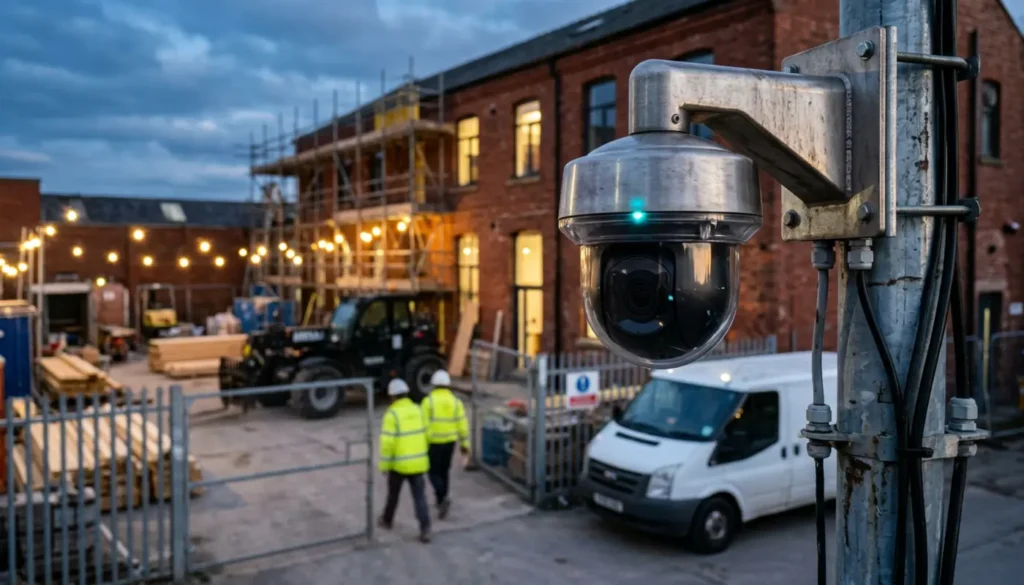
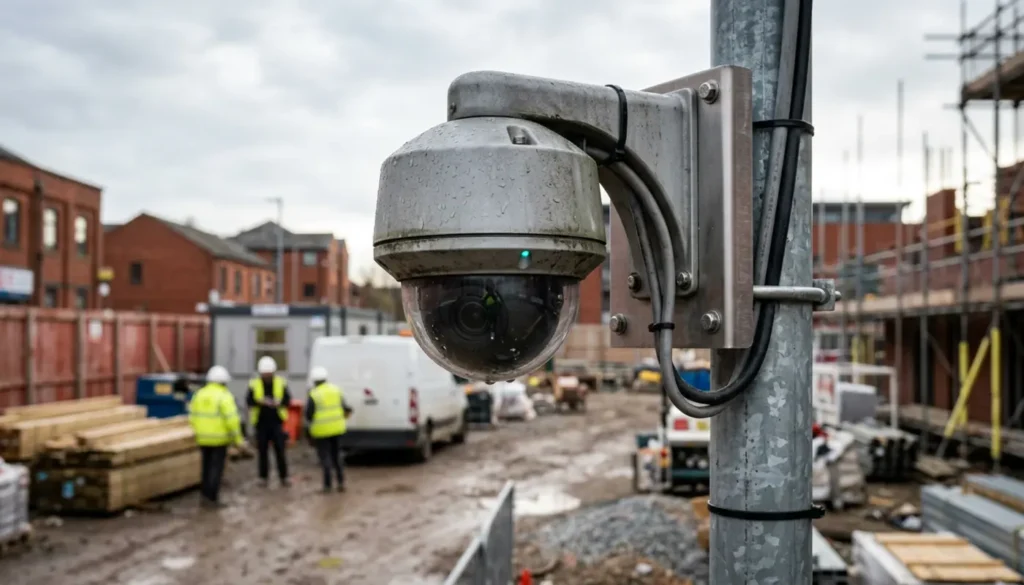
How Does Remote CCTV Monitoring Protect Construction Sites
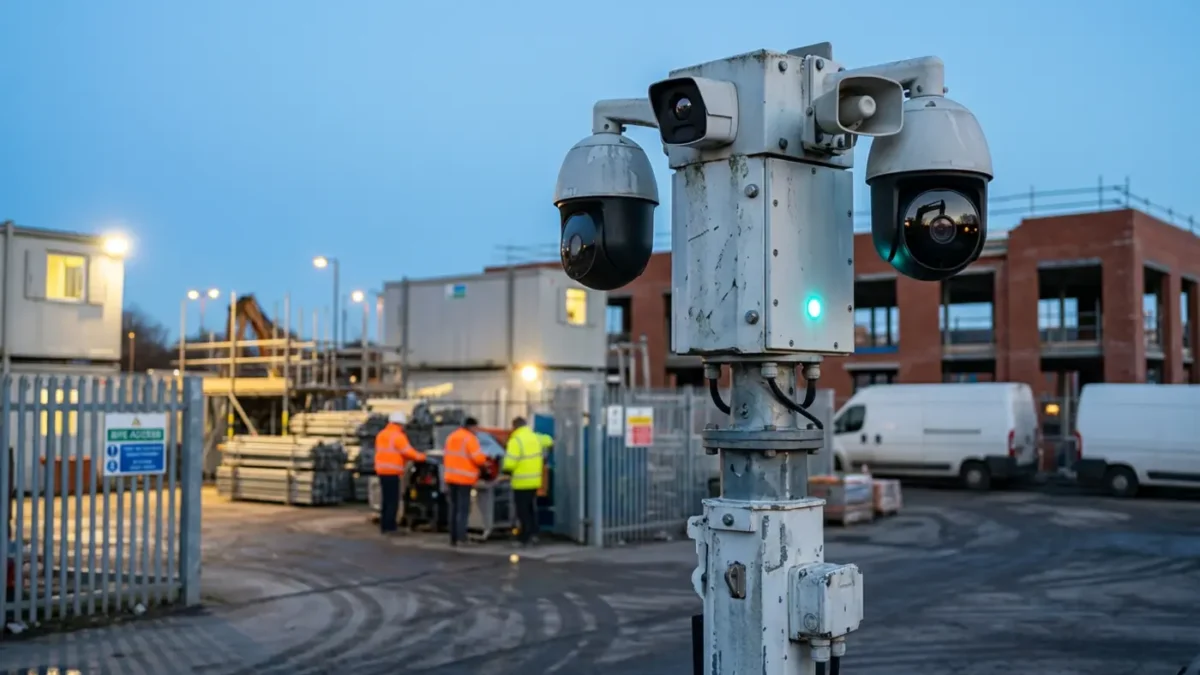
Remote CCTV Monitoring For Construction Sites
Remote CCTV monitoring protects construction sites by giving your project live security cover when your own team is not there. It detects suspicious activity, alerts trained operators, allows audio warnings to be issued, supports fast escalation, and keeps clear evidence for police, insurers and site managers.
If you manage a construction project, security can quickly become one more pressure on an already busy programme. Recording only cameras can help after an incident, but monitored CCTV adds live review and response while the event is still happening, which makes it far more useful for out of hours site protection.
For UK contractors, the main value is not simply having cameras on site. A camera that only records may show what happened after the damage is done, while live monitoring adds human judgement, stronger deterrence and a clearer route to action when a site is at its most exposed.
iSecurity Solutions is a trusted UK provider of commercial and domestic security systems, helping homes and businesses stay protected around the clock. From CCTV and intruder alarms to fire safety, access control and construction site monitoring, the team designs reliable, tailored solutions backed by responsive service and modern remotely monitored technology.
Why Construction Sites Are Targeted After Working Hours
Construction sites are targeted after working hours because they often contain valuable equipment, temporary boundaries and access points that change as the job moves forward. Once workers leave, thieves may see plant, copper, cable, fuel, tools and building materials as easy items to steal.
The scale of the problem is serious across the UK construction sector. Industry reports have often put construction theft at very high annual levels, while insurers continue to report major losses linked to stolen small tools, hired plant and site equipment. Not every incident is reported, but any contractor who has arrived on a Monday morning to find a generator missing knows how quickly one theft can disrupt the week.
The hidden cost is often worse than the stolen item itself. A missing excavator, telehandler or set of specialist tools can delay trades, increase hire costs, trigger insurance excesses and put pressure on tight project dates. Add the paperwork, site downtime and client conversations, and a simple theft can turn into a much larger problem.
What Remote CCTV Monitoring Means
Remote CCTV monitoring means site cameras are connected to a professional monitoring station, where trained operators can review alerts in real time. Instead of waiting until the next morning to discover a break in, the system is designed to spot activity as it happens and support an agreed response.
There is a clear difference between recording only CCTV and monitored CCTV. Recording only cameras store footage for later review, which is useful for evidence, but they do not challenge intruders or alert anyone during the incident. Monitored CCTV uses detectors, video analytics and live operator checks to decide whether activity looks genuine, accidental or suspicious.
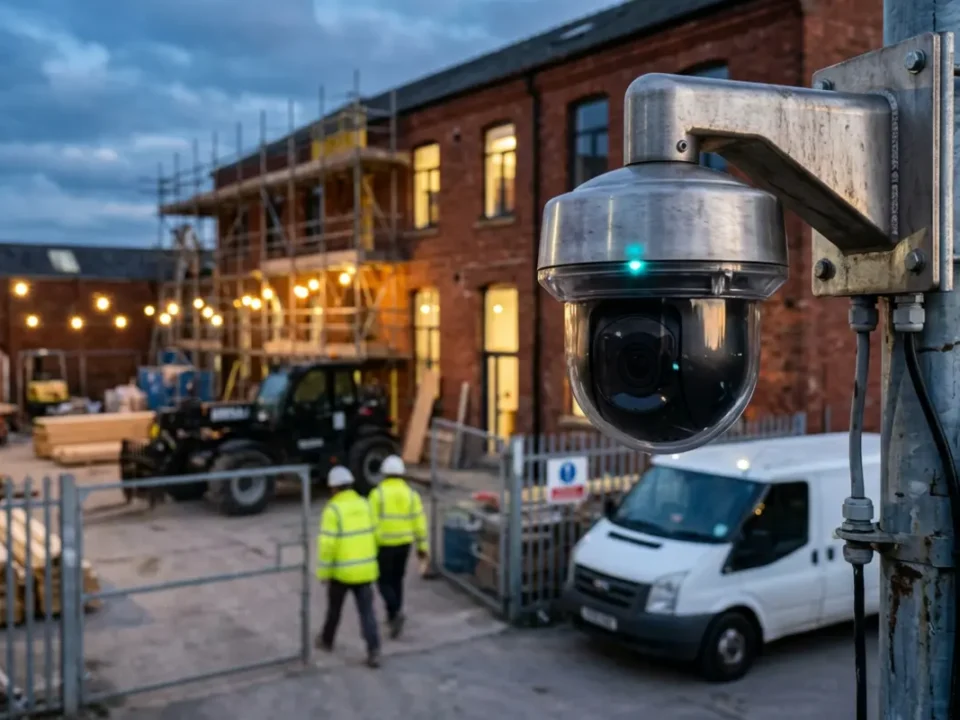
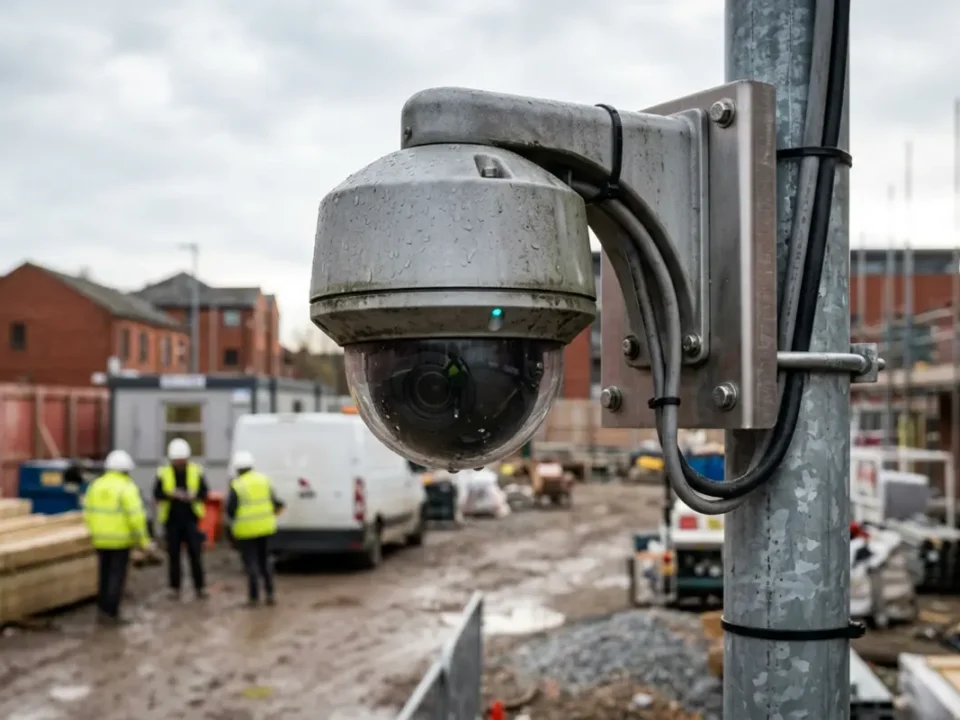
For temporary or permanent site protection, construction site security cameras can be planned around entrances, compounds, material storage areas, welfare units, plant parking and weak boundaries, with coverage adjusted as the site layout changes.
How Remote CCTV Monitoring Protects Sites In 2026
Remote CCTV monitoring protects sites in 2026 by combining cameras, detection tools, trained operators and agreed response steps. A camera or detector identifies movement, analytics help classify whether it looks like a person or vehicle, and the event is sent to a remote video response centre for review.
A trained operator then checks the footage, uses a live audio warning if needed, and follows the escalation plan for the site. That plan may include calling keyholders, contacting a mobile response team, notifying the site manager, or requesting police assistance where the incident is verified and the right arrangements are in place.
For monitored CCTV and perimeter detection, police response may depend on a Police Response URN, verified alarm processes and certified monitoring arrangements. Where insurers are involved, they may also expect an SSAIB certified and Insurance Approved system before they accept the setup as part of the site security plan.
Live Audio Challenges Deter Intruders Early
Live audio challenges deter intruders early by making it clear that the site is being watched in real time. An operator can speak through a site speaker, explain that the area is private property and tell the person to leave before damage or theft takes place.
This matters because many site crimes rely on the belief that nobody is watching. When a clear voice addresses someone near a plant compound at 2 am, the site no longer feels empty. It will not stop every determined criminal, but it can stop an opportunistic intruder before locks are cut, cabins are forced open or materials are loaded into a van.
Good operators follow a clear script and avoid creating confrontation. If the person appears to be an authorised worker, lost delivery driver or emergency contractor, the operator can handle the event in a more suitable way. The aim is to deter, verify and escalate safely.
Out Of Hours Protection For Nights Weekends And Holidays
Out of hours protection is important because construction sites face higher risk when normal routines stop. Nights, weekends, bank holidays, shutdowns, bad weather closures and gaps between project phases all create times when a site may be quiet for longer than usual.
A good out of hours plan sets out who should be contacted first, who has keys, who can attend, and when police or a response team should be called. Contact lists should be tested because a phone number that worked six months ago may now belong to someone who has changed role, left the business or gone away on leave.
Before long weekends or planned shutdowns, it is sensible to check camera views, battery levels, connectivity, lighting and audio speakers. A quick test before everyone leaves can prevent a lot of trouble later, especially on sites where boundaries have moved or new materials have arrived.
Mobile And Relocatable CCTV Towers For Changing Sites
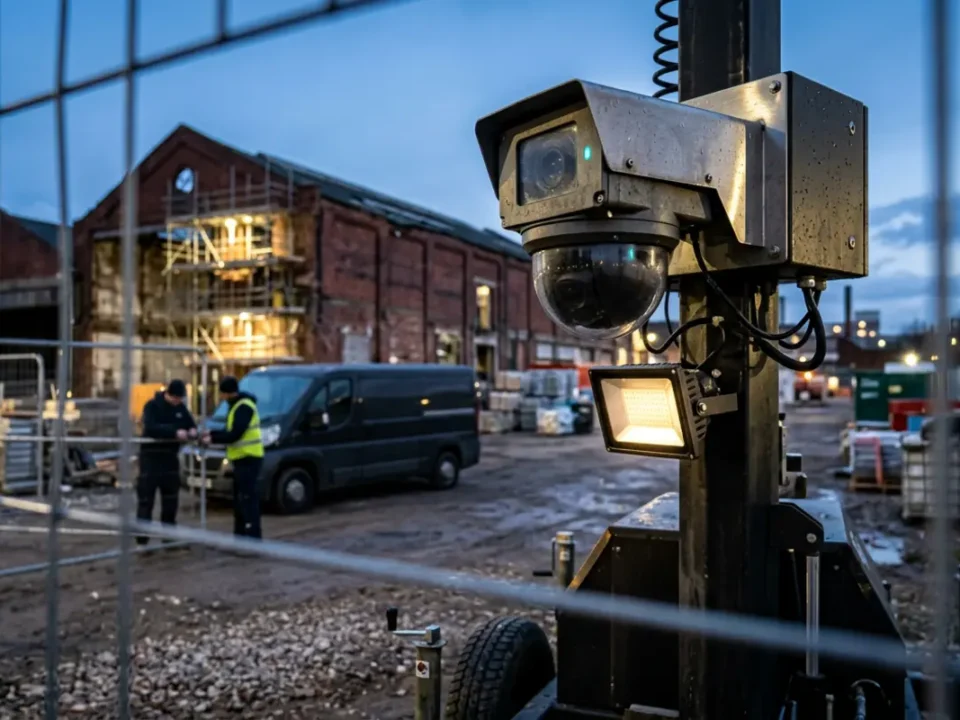
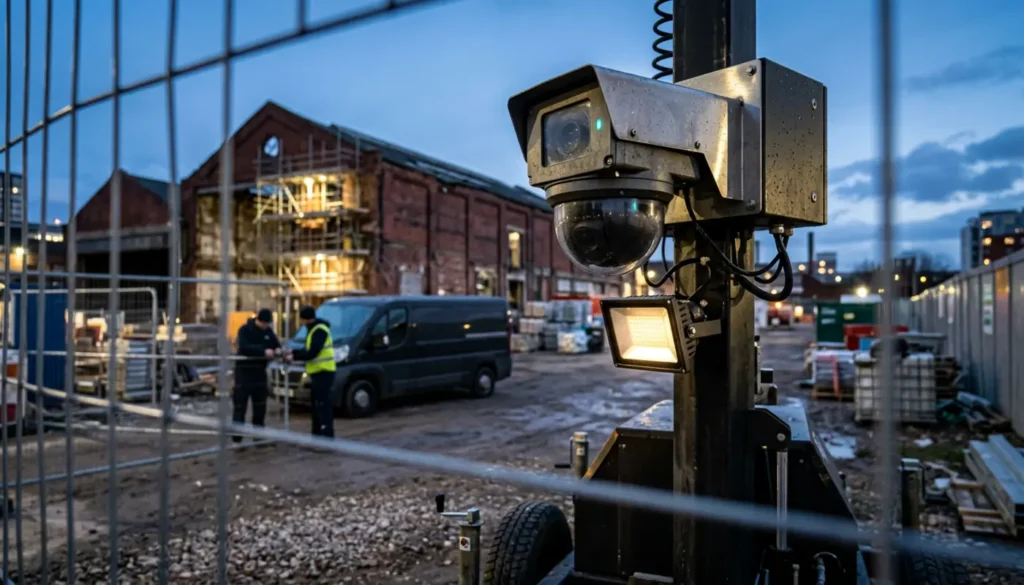
Mobile and relocatable CCTV towers help protect changing sites where there is no mains power, fixed broadband or suitable building for mounting cameras. They combine cameras, masts, power options and communications in one unit that can be moved as the project develops.
These towers can be placed near entrances, compounds, fuel stores, site cabins or exposed perimeters. Many use battery, solar or hybrid power with 4G or 5G connections where coverage allows, while some also include local recording, remote health checks and tamper alerts.
If your site is off grid, ask practical questions before deployment. Check how long the system can run without charge, what happens during poor weather, whether the mobile signal is strong enough and how quickly faults will be spotted. CCTV without mains power is useful, but only when power, signal and maintenance are properly planned.
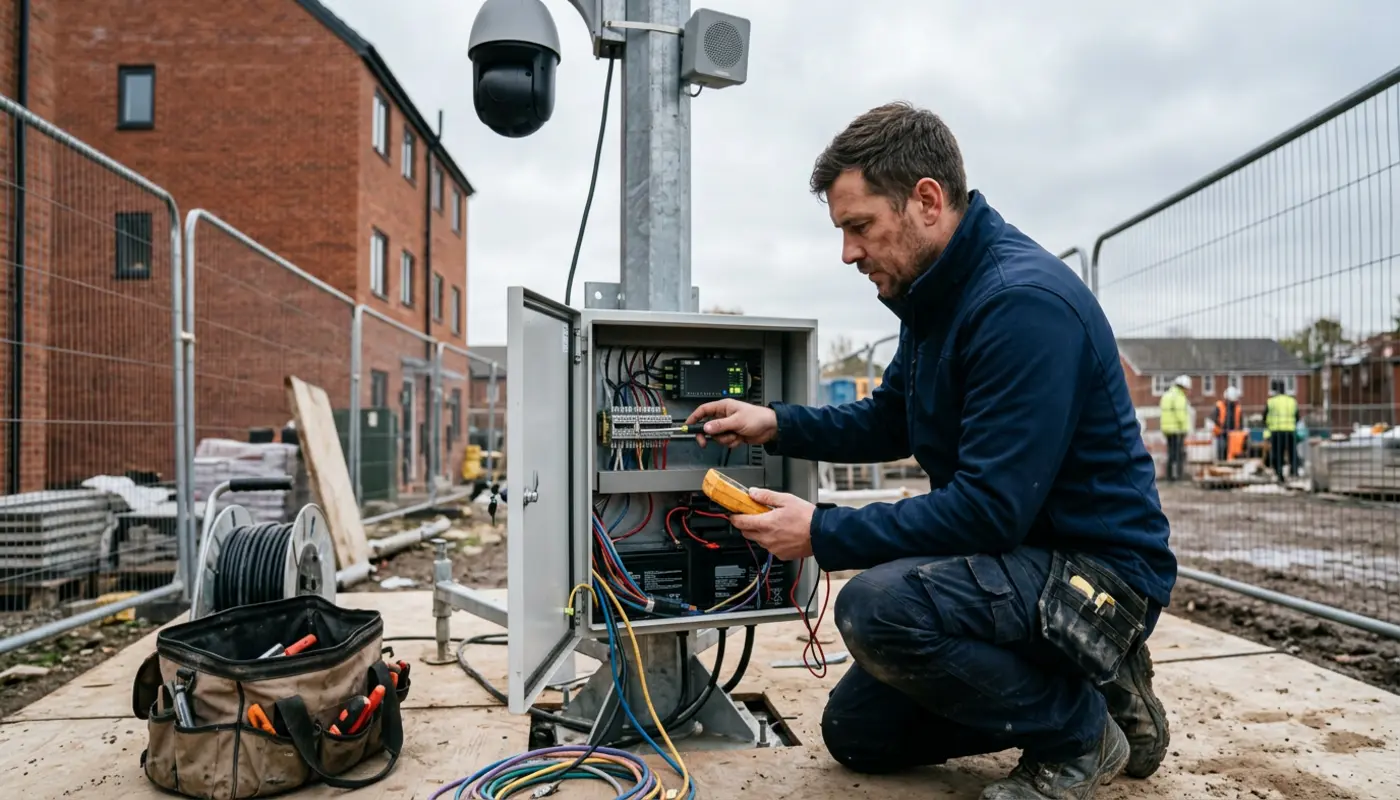
Thermal Imaging And AI Detection Reduce False Alarms
Thermal imaging and AI detection reduce false alarms by helping the system understand what is moving on site. Thermal cameras detect heat rather than relying only on visible light, so they are useful around dark perimeters, open land and areas where standard cameras may struggle at night.
Thermal cameras are excellent for detection, although they are not the same as facial identification cameras. They can help spot people or vehicles in poor light, but they may not always show fine detail. This makes them best suited to early warning, perimeter cover and wide area detection.
AI video analytics help the system decide whether movement is likely to be a person, vehicle, animal, tree branch or harmless background activity. Rules can be set for intrusion zones, line crossing, loitering, direction of travel and exclusion areas near public paths or roads. Human verification is still important because construction sites change often, and analytics need review when scaffold, cabins, hoarding or stored materials move.
Police Response Evidence And Crime Reference Numbers
Police response should be understood clearly because a monitored CCTV alert does not automatically guarantee attendance. Response depends on local force policy, whether the incident is verified, whether registration requirements are met, and whether the system has the right certification and procedures in place.
A Police Response URN is different from a crime reference number. A Police Response URN relates to qualifying monitored alarm arrangements and police response eligibility, while a crime reference number is issued after an incident has been reported. For monitored CCTV and perimeter detection, certified and Insurance Approved systems are commonly needed before a Police Response URN can be considered.
Good evidence handling makes life easier for police, insurers and project teams. Keep the original footage, exported clips, time and date details, camera names, entry and exit images, vehicle registration details where available, asset serial numbers, operator logs and the crime reference number. A clear evidence pack helps people understand what happened without guesswork.
You can also explore practical site protection ideas in how mobile CCTV improves construction site security, especially if your project has temporary boundaries or no fixed infrastructure.
Standards Compliance And Signage Requirements
Standards compliance and signage requirements help make sure CCTV is planned, installed, monitored and managed in a professional and lawful way. The aim is not to make security harder, but to make sure the system is suitable, documented and clear to people on site.
BS 8418 is the key British Standard for detector activated, remotely monitored CCTV systems. It covers design, installation, commissioning, maintenance, operation and monitoring, including temporary and portable systems. In simple terms, it helps show that the system has been designed for proper monitoring rather than placed wherever there was space.
EN 50131 can also be relevant where CCTV forms part of a wider intruder alarm or perimeter detection setup. Depending on the risk, insurers may expect an EN 50131 Grade 2 or Grade 3 system, especially where valuable plant, tools or materials are stored on site.
SSAIB certified and Insurance Approved installers, or suitable NSI approved providers, can help show that proper procedures, competence and documentation are in place. Always check the actual scope of certification rather than relying on a logo alone, because installation, maintenance and monitoring may sit under different arrangements.
UK GDPR and the Data Protection Act 2018 also apply when CCTV records workers, visitors or members of the public. You need a lawful reason for using surveillance, clear purposes, limited access, sensible retention periods and suitable privacy controls. The ICO CCTV guidance explains these responsibilities in plain terms.
Signage matters as well. Signs should make clear that CCTV is operating, why it is being used, who operates it and how people can contact the data controller. This supports compliance and also acts as a visible deterrent.
Insurance Benefits And Risk Control
Remote CCTV monitoring can support insurance and risk control by showing that site security is being managed, monitored and documented. Insurers may value verified CCTV, secure compounds, lighting, asset marking, tracking, alarms, fencing and clear response procedures.
Discounts are not automatic, so it is wise to speak with your broker before installation. Insurers may set specific conditions, such as approved monitoring, secure storage, plant immobilisation or locking standards. Ask what evidence they want to see, and get written confirmation before assuming a camera system will reduce premiums.
When a claim is needed, monitored CCTV can help by providing footage, timestamps, event logs and a clear incident timeline. It may also show how intruders entered, what was taken, how long they stayed and whether vehicles were involved, which can support the claim and help improve security afterwards.
Remote CCTV Monitoring Versus On Site Guarding
Remote CCTV monitoring and on site guarding serve different security needs, so the best choice depends on the risk level and the way the site operates. CCTV gives continuous coverage of selected zones, live audio intervention and recorded evidence, while guards provide physical presence, patrols and support with access control.
For many construction sites, monitored CCTV is more cost effective than placing guards on site every night, especially across large perimeters or quiet compounds. Cameras can watch key areas without breaks, although the operators behind the system still need a good cup of tea. However, cameras cannot physically stop someone, so higher risk sites may still need mobile response or guarding alongside monitoring.
The right answer depends on location, asset value, access points, working hours, local crime risk and insurer requirements. A layered plan is usually strongest, combining fencing, lighting, monitored CCTV, secure storage, access control, tracking and documented response procedures.
How To Choose A UK Monitoring Provider
A UK monitoring provider should be chosen for response quality, not just camera count. Ask where the monitoring centre is, whether it is staffed at all times, how alerts are verified, what the typical operator response time is and how audio challenges are handled.
Technical questions matter too. Check whether the system supports thermal imaging, AI classification, tamper detection, remote health checks and reliable night performance. Ask what happens if power or signal fails, how footage is stored and how quickly a tower can be moved when the layout changes.
Compare the full cost rather than only the headline monthly figure. Installation, monitoring, connectivity, maintenance, relocation, call outs and end of project removal may all be priced separately. Flexible contracts are helpful because construction sites rarely follow the original programme perfectly.
Practical Implementation Checklist
A practical implementation checklist helps make sure remote CCTV monitoring is set up around real site risks rather than assumptions. Use it before installation, then review it again whenever the site layout, access points or stored assets change.
- Complete a site specific crime risk assessment before choosing equipment.
- List high value plant, tools, fuel, cable, materials and temporary buildings.
- Record serial numbers, photographs, VINs and ownership evidence.
- Map entrances, blind spots, storage areas, fuel points and public boundaries.
- Check power, lighting, mobile signal and possible camera mounting locations.
- Choose the right mix of fixed cameras, mobile towers, thermal imaging and audio warnings.
- Agree keyholder, police, mobile response and incident reporting procedures.
- Confirm insurer requirements before installation.
- Install clear CCTV signage and document UK GDPR responsibilities.
- Test the system at night, in poor weather and before holiday shutdowns.
- Review false alarms, incidents and site changes regularly.
Final Thoughts
Remote CCTV monitoring protects construction sites by combining technology with live human judgement. Cameras detect activity, operators verify what is happening, audio warnings deter intruders, and evidence is kept ready for police, insurers and internal reporting.
It works best as part of a layered plan, not as a single camera watching a quiet compound and hoping for the best. When monitoring is designed around your actual site risks, backed by the right standards and supported by clear response procedures, it can reduce losses, protect progress and give everyone better peace of mind.
If you want a practical next step, speak with iSecurity Solutions about a site risk assessment, temporary CCTV tower setup or monitored camera plan that fits the way your project works.