How to Secure a Construction Site at Night: A UK Guide
Secure A Construction Site At Night
To secure a construction site at night, use layered protection that combines strong fencing, controlled gates, good lighting, monitored CCTV, intruder alarms, access records, secure storage, and a clear response plan. Night security can feel like one more task when you are managing trades, deliveries, budgets, deadlines, and a site layout that changes often, but it is one of the best ways to stop costly surprises before the next working day begins.
The aim is straightforward. You need to make unauthorised entry difficult, make suspicious activity easy to see, protect valuable assets, and keep members of the public away from dangerous areas. A good plan should be practical enough for the site team to follow every evening, not so complicated that it gets ignored after a long shift.
Night time site security matters because empty sites attract theft, vandalism, arson, and trespass, especially when tools, plant, fuel, copper, cable, and materials are left on site. UK police backed guidance has often highlighted how theft and damage affect construction sites, and the cost to the sector can run into hundreds of millions of pounds each year.
iSecurity Solutions is a trusted UK provider of commercial and domestic security systems, helping homes, contractors, developers, and site managers stay protected around the clock. From CCTV and intruder alarms to fire safety, access control, and construction site monitoring, the team designs reliable, tailored systems backed by responsive service and modern remotely monitored technology.
Why Construction Site Security Matters At Night
A building site changes completely after the last contractor leaves because there are fewer witnesses, fewer checks, and often plenty of valuable kit sitting behind temporary fencing. Even a small theft can delay work, create insurance paperwork, affect deadlines, and leave site teams starting the next morning with a problem they did not need.
The biggest risks are usually theft of plant, tools, fuel, and materials, but trespass is just as important. Children, opportunistic intruders, or curious members of the public can be seriously injured by excavations, scaffolding, temporary electrics, hazardous substances, unstable materials, and unfinished structures.
Vandalism and arson can be just as damaging as theft, especially if welfare units, stores, temporary offices, or timber are targeted. A good night security plan should therefore protect property, support health and safety duties, and help show that reasonable steps were taken if something goes wrong.
Know The UK Legal And Insurance Duties
Construction site security in the UK is not only about stopping crime because it is also part of managing risk under health and safety law. The Health and Safety at Work etc. Act 1974 places broad duties on employers to protect employees and others who may be affected by their work activities.
The Construction Design and Management Regulations 2015, often called CDM 2015, require construction work to be planned, managed, and monitored so risks are controlled. The HSE explains that dutyholders must take reasonable steps to prevent unauthorised access to construction sites, which is why security should be included in the construction phase plan and reviewed as the project changes through HSE CDM 2015 guidance.
Insurance requirements can be more specific than the law, so it is never wise to rely on guesswork or a generic checklist. Check policy wording for lock standards, alarm conditions, inspection frequency, keyholder arrangements, CCTV requirements, reporting deadlines, and any warranties that may affect a claim.
Carry Out A Site Specific Security Risk Assessment
A site specific security risk assessment is the starting point because no two construction sites have the same layout, value, neighbours, or weak spots. Walk the site near closing time and look at it the way an intruder would, as this is often when the most useful fixes become clear.
Start by mapping the perimeter, gates, vehicle routes, pedestrian access points, scaffolding, ladders, welfare units, compounds, fuel stores, offices, and storage areas. Then list the assets and hazards, including plant, tools, cable, copper, generators, chemicals, excavations, temporary power supplies, and anything that would be costly or dangerous if accessed. Ask what would be easiest for someone to reach after dark.
Next, rate the risks by likelihood and impact, then prioritise the actions that need to happen first. A city centre refurbishment with shared boundaries, public footpaths, and expensive tools needs different controls from a small rural site, especially during winter, weekends, bank holidays, and longer shutdowns.
Secure The Perimeter, Hoarding And Gates
The perimeter is the first layer of defence, so it should slow intruders down and make entry obvious. Heras fencing can work well on lower risk areas, but only when panels are properly joined, feet are secure, gaps are closed, and regular inspections catch lifted panels, damaged sections, or places where someone can squeeze through.
Hoarding may be better for higher risk or public facing areas, especially where privacy, debris control, or public safety is a concern. Keep it stable, well maintained, and free from hidden recesses where people can shelter, because a dark corner can quickly become an easy place for trouble to start.
Gates deserve extra attention because criminals rarely climb if a weak lock or loose hinge gives them an easier route. Keep the number of entrances as low as practical, use robust locks, protect hinges, control vehicle access, and make sure gates are closed, locked, and tested before the final person leaves.
Use Lighting To Improve Visibility
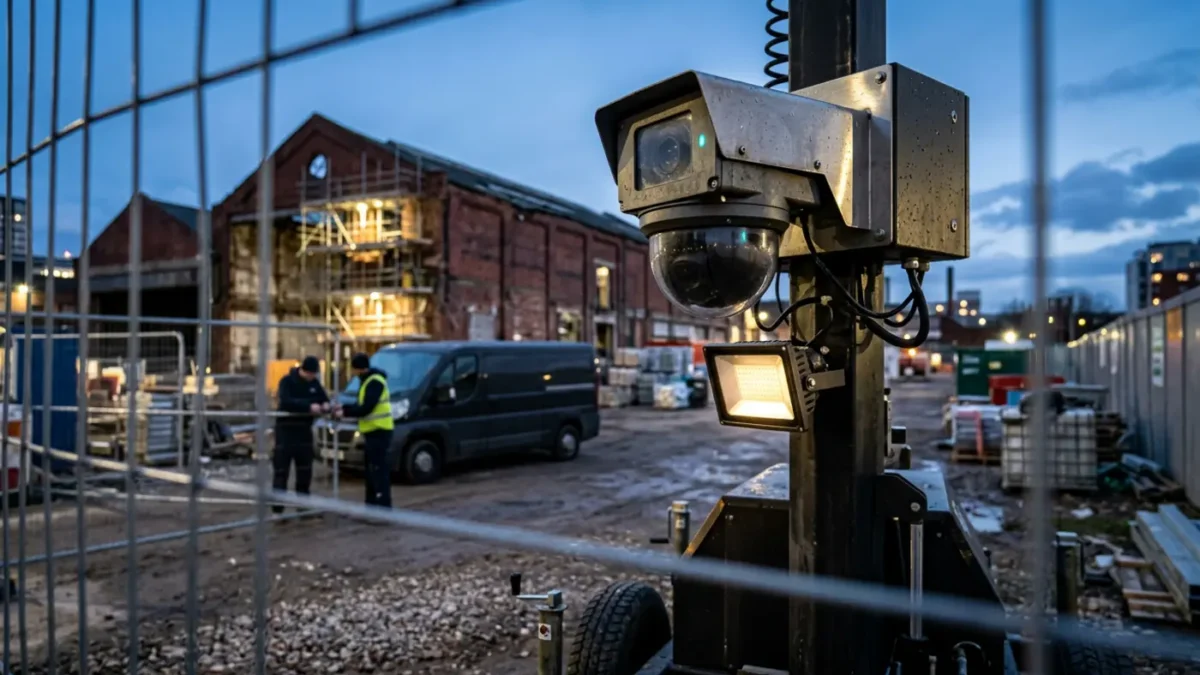
Good lighting makes a site harder to approach unnoticed and helps CCTV capture clearer images at night. It should cover entrances, compounds, vulnerable perimeter sections, site offices, welfare units, and routes used by keyholders or patrols.
LED floodlights, PIR activated lighting, and dusk to dawn lighting can all be useful, depending on the layout and power available. PIR means passive infrared, which simply means the light activates when it detects movement, making it handy for entrances, storage areas, and blind spots.
Avoid lighting that creates glare, deep shadows, or nuisance for neighbours because a badly aimed floodlight can blind a camera and annoy nearby residents at the same time. Test the lighting in darkness, rain, and fog where possible, and consider backup power for critical areas if mains power is not reliable.
Install CCTV And Remote Monitoring Lawfully
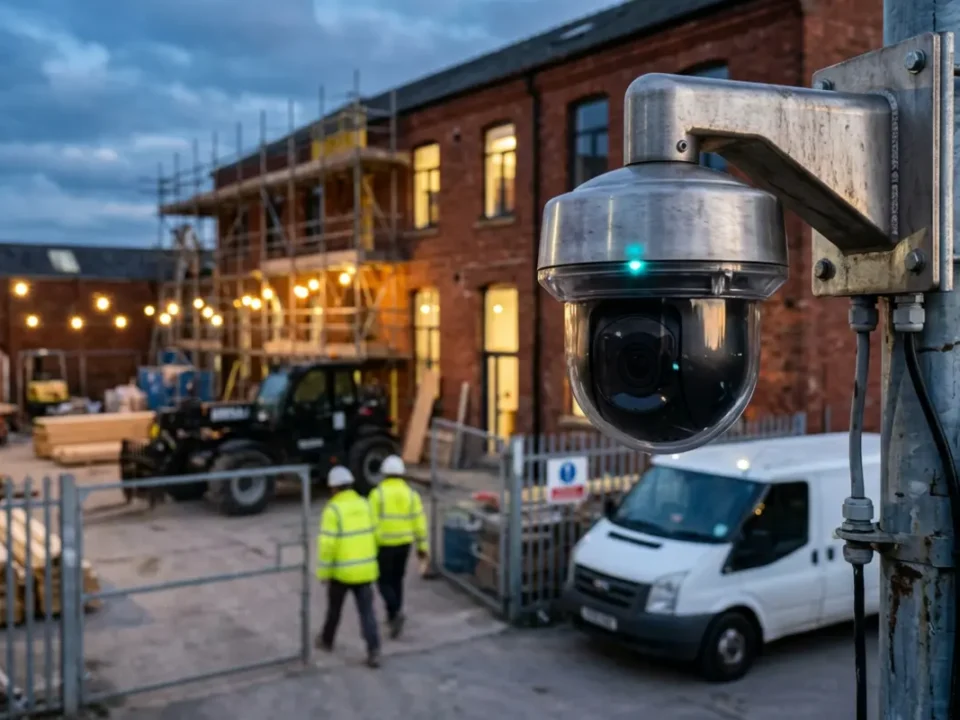
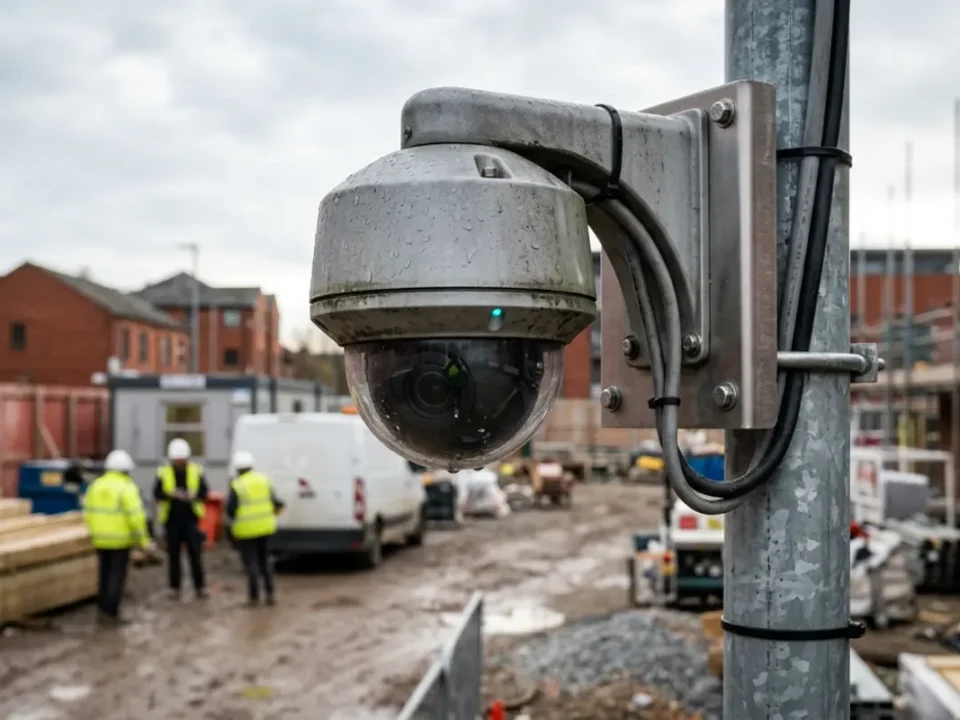
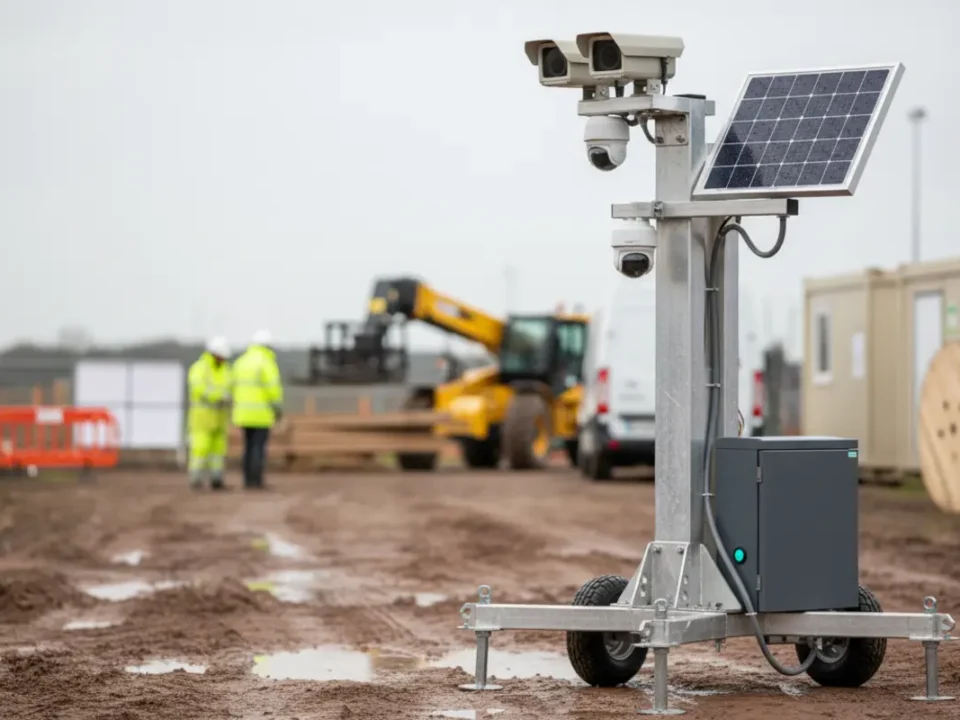
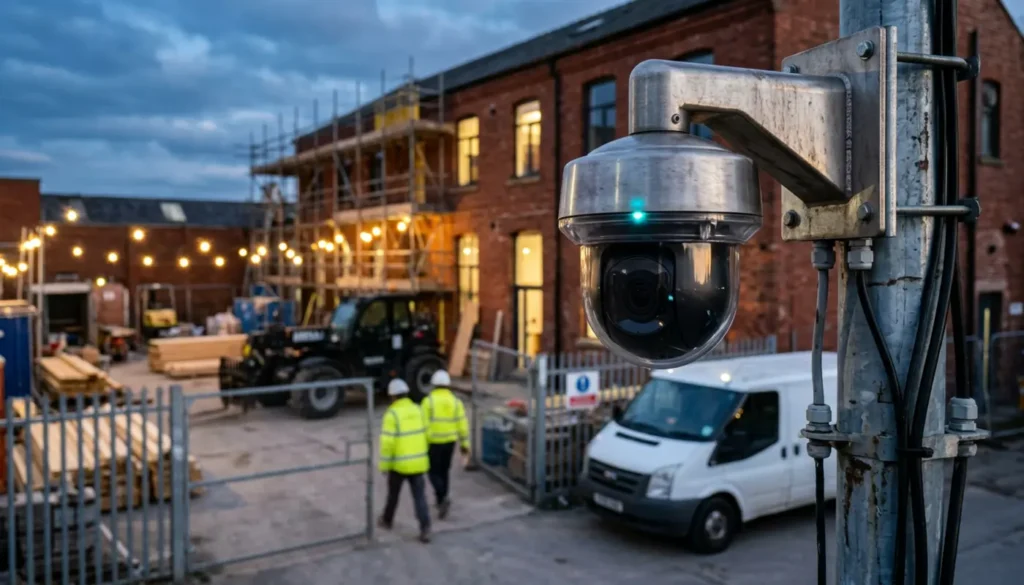
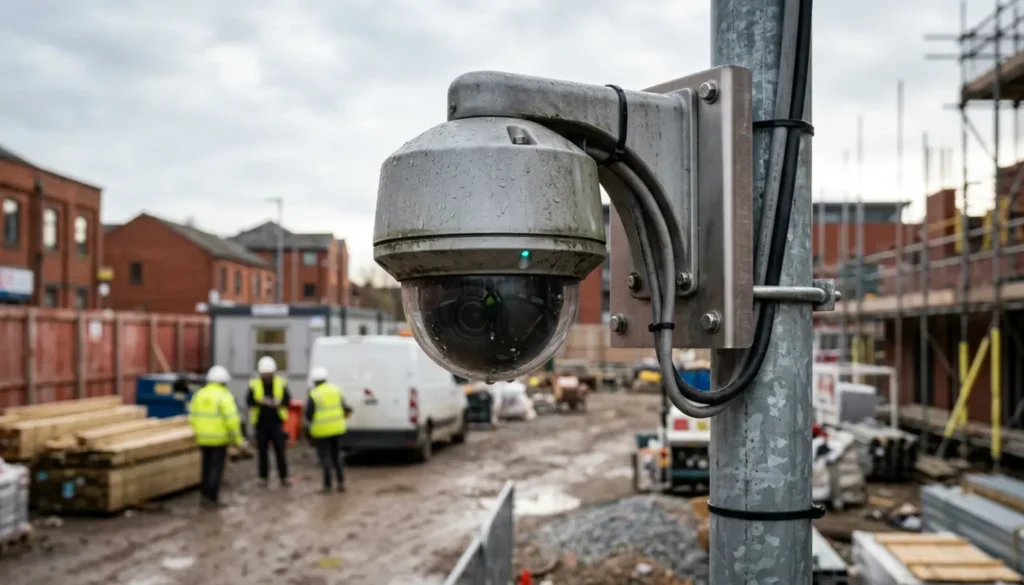
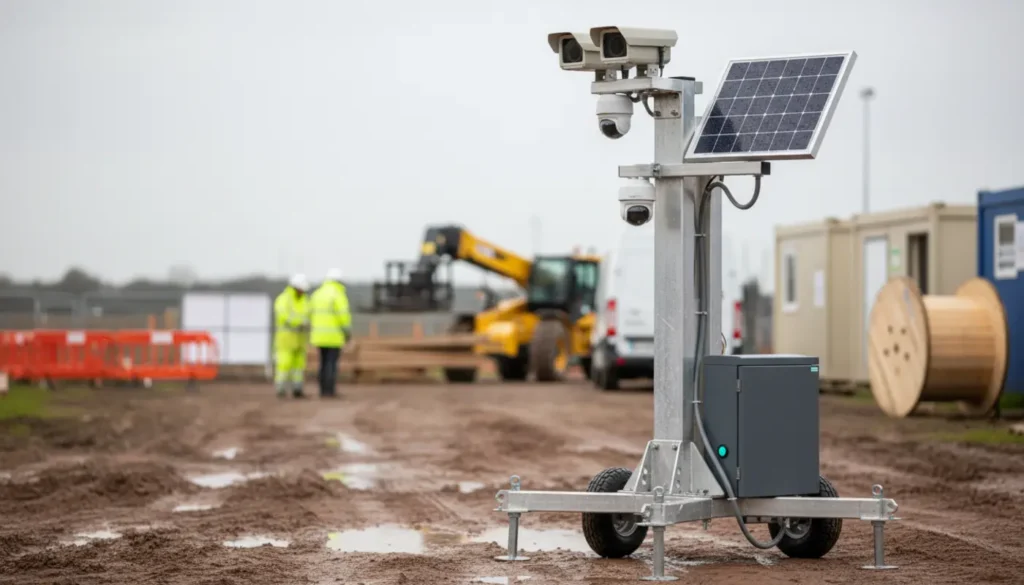
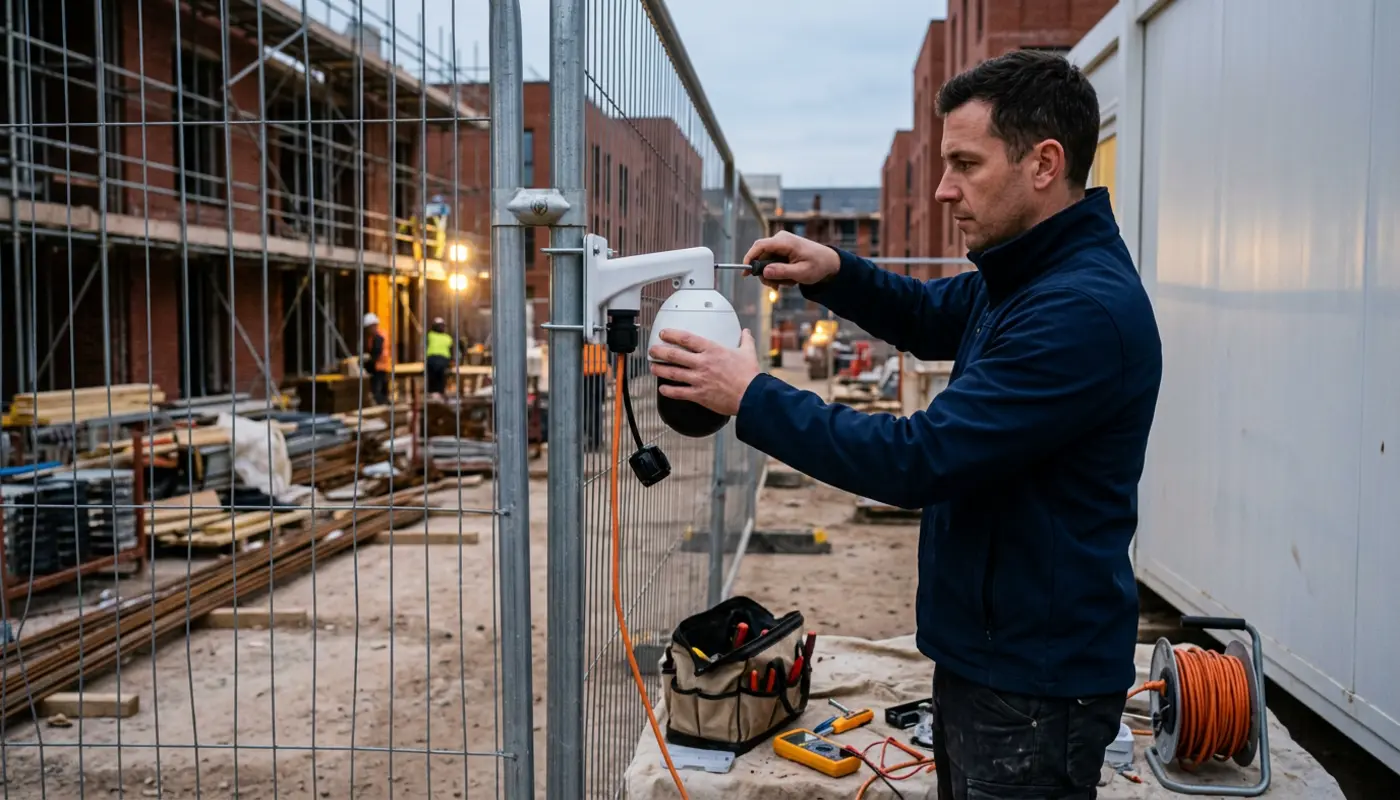
CCTV is most effective when it is designed around the site, not placed randomly and hoped for the best. Fixed cameras are useful for gates, offices, and compounds, while mobile CCTV towers suit changing layouts, temporary works, and larger sites where cabling is not practical.
For sites with valuable plant or repeated incidents, 24 hour remote monitoring can make a real difference because trained operators can assess activity, issue audio warnings, and follow the agreed response process. You can explore the practical benefits of mobile CCTV for construction sites if your layout changes often or you need flexible coverage.
Camera placement should cover entrances, exits, fuel stores, plant compounds, materials, offices, and vulnerable boundaries, while avoiding unnecessary views into homes, gardens, or private areas. Under UK GDPR, CCTV must have a clear purpose, a lawful basis, appropriate signage, controlled access to footage, secure storage, and a justified retention period.
For monitored CCTV, intruder alarms, and perimeter detection, systems should be properly specified and maintained, with BS EN 50131 considered where alarm detection forms part of the design. If police response is required, an SSAIB Insurance Approved installation is normally the route towards eligibility for a Police Response URN, although final requirements depend on the system design and the relevant police force process.
Add Intruder Alarms And Access Control
Intruder alarms are useful for site offices, containers, fuel stores, and tool stores, particularly where CCTV alone would only record the problem after damage has already been done. Door contacts, movement detectors, beam sensors, and perimeter detection can all be used, but they need a clear process for checking the alarm and arranging a safe response.
When alarms are combined with monitoring and well placed construction site security cameras, activity can be checked quickly rather than leaving a siren to sound through the night with nobody listening. Keyholder details should be current, alarm faults should be logged, and out of hours responders should understand the site layout, hazards, and safe access routes.
Access control is just as important during the day because poor access records often create night time problems. Keep worker, contractor, visitor, and vehicle logs, issue temporary passes where needed, remove permissions when people leave the project, and maintain a key register that records who has what and when it was returned.
Consider Guards, Patrols And Dog Patrols
Manned guarding may be justified on high value, isolated, or repeatedly targeted sites, especially where there is a large perimeter or a serious risk of arson, trespass, or organised theft. A static guard provides a visible deterrent and a human response, but they need clear instructions, welfare facilities, communication equipment, and safe handover procedures.
Mobile patrols are useful for lower risk sites or contractors managing several locations, but they are not the same as continuous guarding. If patrols are used, agree routes, visit frequency, check points, alarm response arrangements, and how missed visits or problems will be reported.
Dog patrols can be a strong deterrent on suitable sites, although they need properly trained handlers, clear operating rules, and sensible risk controls. Contracted security officers carrying out guarding work against theft, damage, or unauthorised access will usually need the correct SIA licence, so licence checks should be part of choosing a security provider and managing the site.
Secure Plant, Tools, Fuel And Materials
Plant and tools are often the biggest target, so make them hard to move, hard to sell, and easy to identify. Remove keys from machinery, store them securely, use immobilisers where possible, and consider wheel clamps, hitch locks, chains, ground anchors, and secure compounds.
For high value plant, tracking devices can support recovery if equipment is stolen, while forensic marking such as SmartWater can help link recovered property to the owner. Record serial numbers, VINs, registration numbers, photographs, and distinguishing marks, then keep that record somewhere accessible if police or insurers need it.
Tools should be stored in lockable tool safes or high security containers rather than vans or lightweight site offices. Fuel, cable, copper, and expensive materials should be kept away from the perimeter, locked where practical, and checked at the end of each shift.
Create A Night Security Checklist
A night security checklist helps make sure the last person off site does not have to rely on memory after a long day. It also creates an audit trail, which is useful for managers, insurers, and investigators after an incident. If something happened overnight, could your team prove what was locked, checked, and recorded before leaving site?
- Inspect the perimeter, hoarding, and fencing for gaps or damage.
- Close, lock, and test all gates and unnecessary access points.
- Remove plant keys and secure machinery, tools, fuel, and materials.
- Check that excavations, ladders, scaffolding, and hazardous areas are safe.
- Confirm lighting, CCTV, and alarms are working and correctly positioned.
- Complete visitor, contractor, delivery, vehicle, and key records.
- Arm alarms, update the defect log, and record the responsible person.
The checklist should be reviewed whenever the site layout changes, after an incident, before a long weekend, and before holiday closures such as Christmas. Sites move quickly, and yesterday's perfect camera view can become today's clear view of a stack of plasterboard if nobody checks it again.
Prepare Emergency Response And Police Liaison
Every site needs a clear response plan before an alarm activates or a neighbour reports suspicious activity. Call 999 if a crime is in progress, there is immediate danger, or urgent police attendance is needed, and use 101 or the relevant local reporting route for non emergency incidents.
After a break in, preserve evidence where it is safe to do so, export CCTV footage, photograph damage, record times and witness details, and list missing assets using your inventory. Notify the site manager, principal contractor, client, insurer, monitoring centre, keyholder, and neighbours where appropriate.
Working with local police and nearby residents can also help, especially on sites with repeated trespass or theft attempts. Share an out of hours contact route without giving away sensitive security details, and keep reporting incidents because police data helps build a picture of local crime patterns.
Final Thoughts On Night Site Security
The best way to secure a construction site at night is to combine physical barriers, lighting, monitored CCTV, alarms, access control, asset protection, and a practical response plan. One measure on its own rarely solves the problem, but several sensible layers make your site harder to enter, harder to damage, and harder to steal from.
Good security should also be reviewed as the project changes because new openings, moved compounds, extra plant, insurer demands, limited handover time, and seasonal darkness can all alter the risk. If you need a system that fits your layout, budget, insurance conditions, and out of hours arrangements, speak to iSecurity Solutions about a tailored site security review and a practical night security plan that protects your site throughout the project.
Frequently Asked Questions
Is Construction Site Security Required By Law In The UK?
Yes, in practical terms. CDM 2015 requires reasonable steps to prevent unauthorised access, while health and safety law creates wider duties to protect workers and others. The law does not usually demand one specific product, so controls should match the site risk.
Does A Construction Site Need CCTV At Night?
CCTV is risk based, but it is often sensible for vulnerable entrances, plant compounds, fuel stores, and isolated sites. If monitored CCTV is linked to alarm response, BS EN 50131 considerations, SSAIB Insurance Approved installation, and Police Response URN requirements should be discussed where police response is needed.
Do Construction Site Security Guards Need An SIA Licence?
Contracted guards protecting premises or property against theft, damage, or unauthorised access will usually need the correct SIA licence. Always check the licence category and status before using a guarding contractor.
What Is The Best Lighting For A Construction Site?
The best lighting is the type that supports visibility without glare, deep shadows, or nuisance to neighbours. LED floodlights, PIR activated lights, and dusk to dawn lighting can all work well when placed around entrances, compounds, and weak points.
How Can Plant Be Protected Overnight?
Remove keys, immobilise machinery, use clamps or locks, store equipment in secure compounds, and keep good records of serial numbers and photographs. Trackers and forensic marking can also help police identify and recover stolen plant.