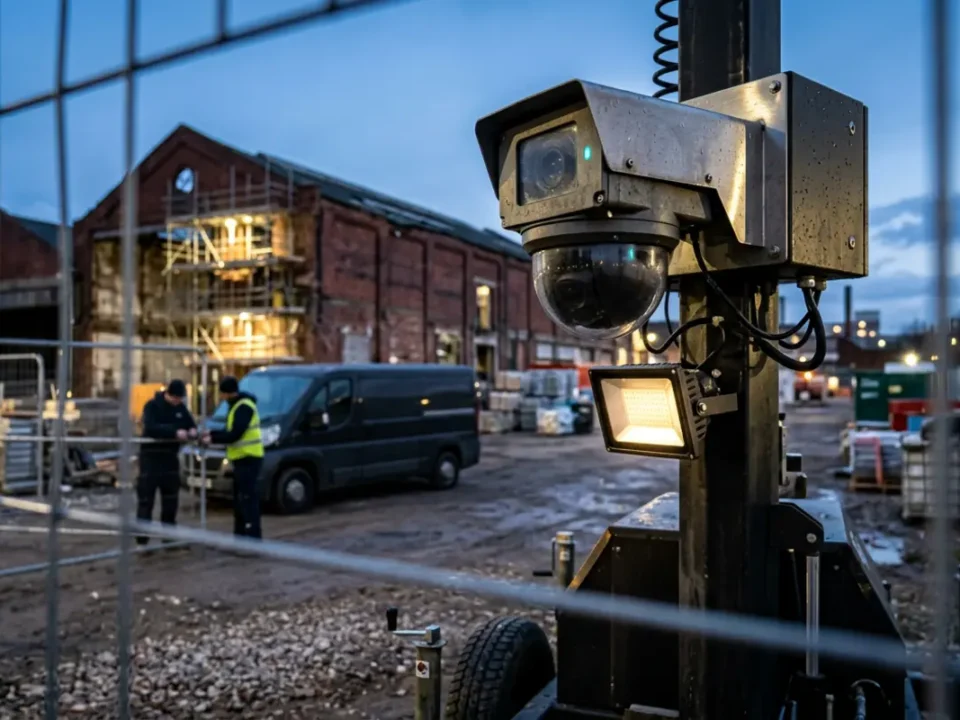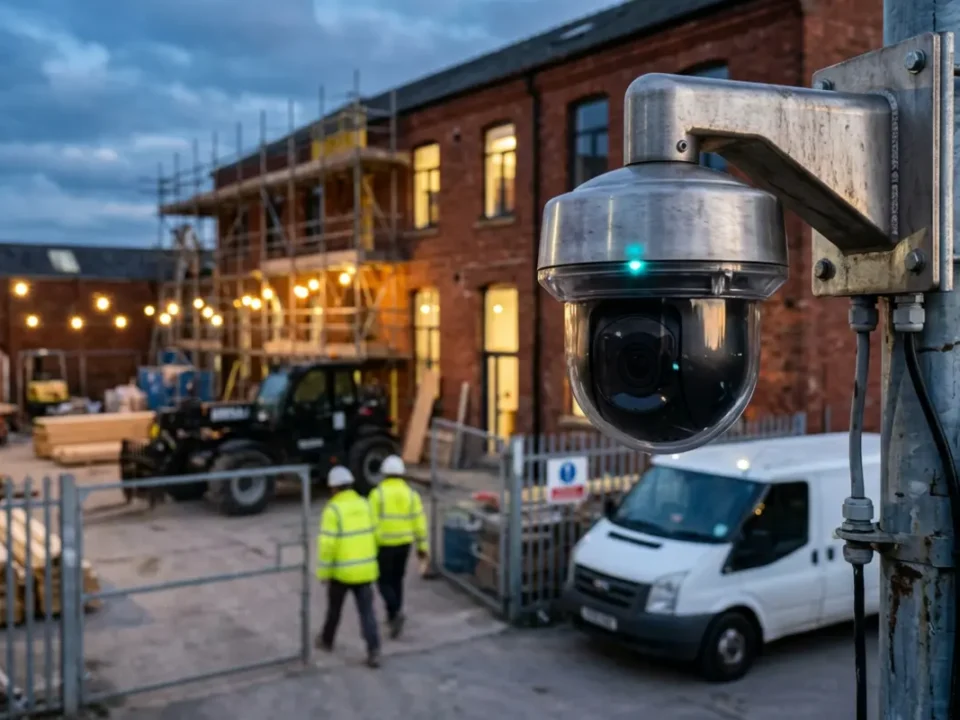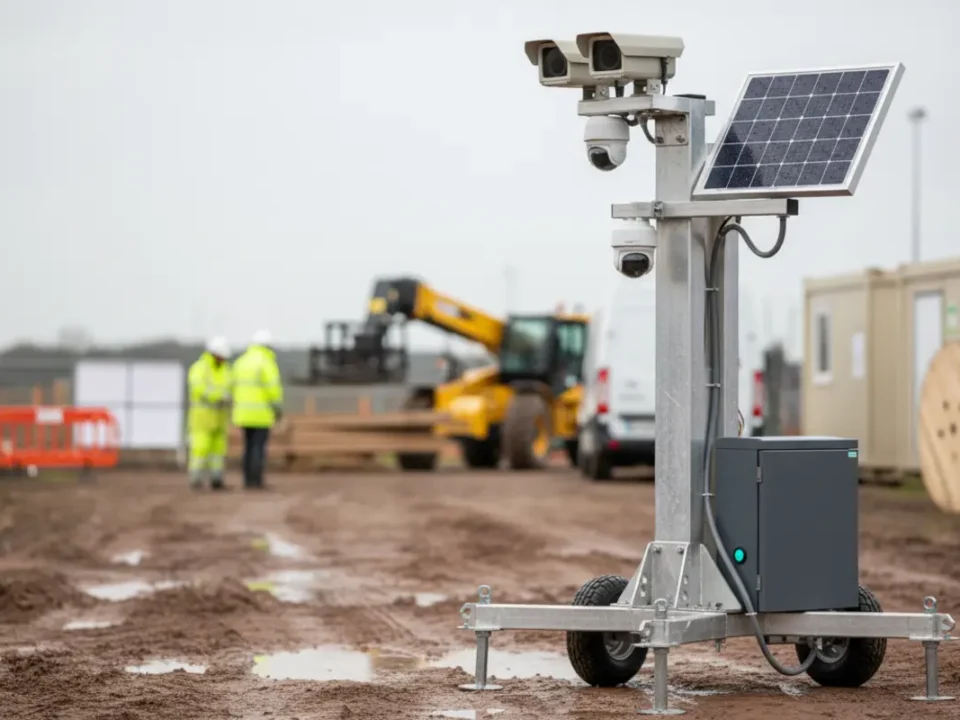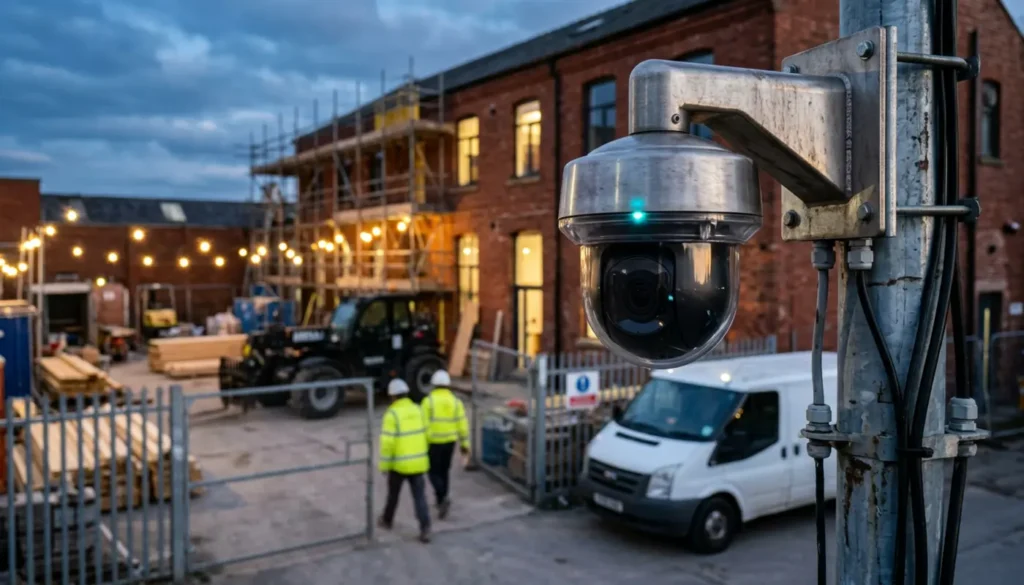
How Many CCTV Cameras Does a Construction Site Need?
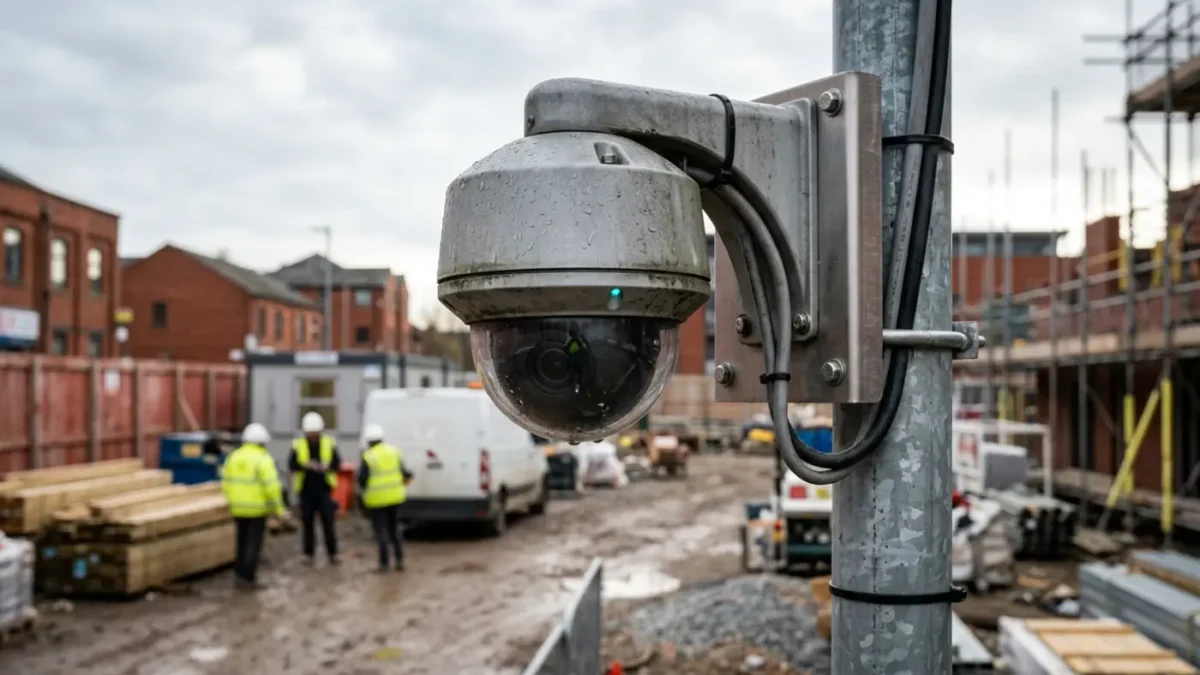
Construction Site CCTV Cameras
A construction site needs enough CCTV cameras to cover its real risks, not a fixed number based on guesswork. In most UK projects, there is no single legal camera count because the right number depends on the site layout, hoarding length, access points, high risk areas, asset value, lighting, blind spots and whether footage is monitored live or reviewed only after an incident.
A small residential build may only need a handful of well placed cameras, while a large civil engineering project may need several fixed cameras, mobile CCTV towers and regular layout reviews as the work changes. The aim is not to film every inch for the sake of it, but to create useful, lawful and proportionate coverage that protects people, plant, tools, materials and the wider project.
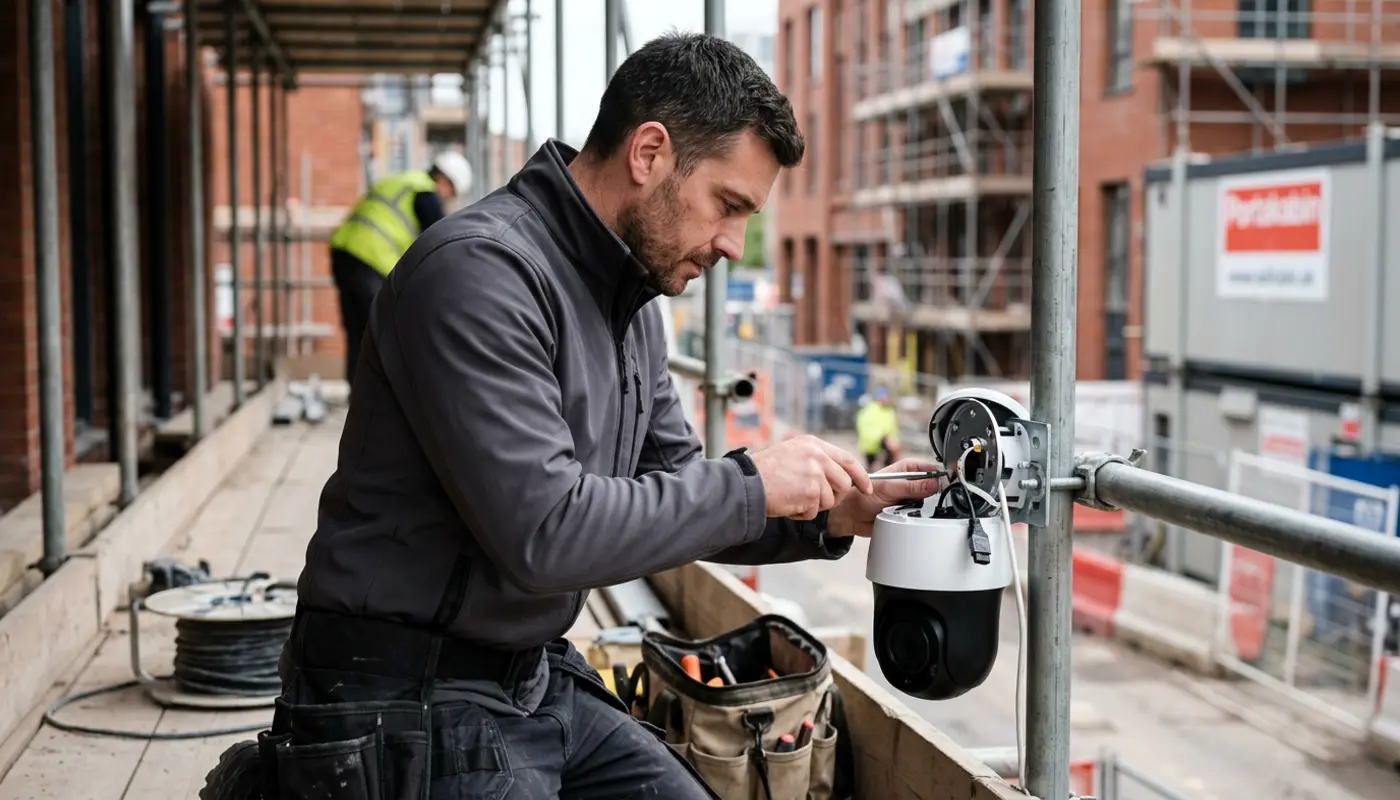
iSecurity Solutions is a trusted UK provider of commercial and domestic security systems, helping homes and businesses stay protected around the clock. For construction sites, the team designs practical security layouts for gates, welfare cabins, site boundaries, plant compounds and high value areas, using reliable equipment and responsive service.
How To Estimate Construction Site CCTV Cameras
The best way to estimate construction site CCTV cameras is to start with risk, purpose and coverage rather than a simple camera count. A wide camera view may show that somebody entered the site, but it may not provide enough detail to identify a face, vehicle registration or direction of travel.
For temporary building projects, construction site security cameras should be planned around real site activity, including deliveries, contractor movement, plant storage and out of hours risks. A good layout normally combines perimeter views, gate views and focused coverage of high value zones, while monitored systems should also consider BS EN 62676 for CCTV systems, BS 8418 for detector activated monitored CCTV where relevant and BS EN 50131 for intruder alarm integration.
Start With Clear Surveillance Objectives
Clear surveillance objectives help you decide how many cameras are needed and where they should go. Most sites need CCTV to deter trespass, detect movement after hours, verify alarms, record deliveries, protect expensive assets and provide evidence if theft, damage or vandalism occurs.
Some projects also need live remote monitoring, where trained operators can issue audio warnings and contact keyholders or police when an incident is confirmed. If the system supports an alarm response process, check early whether a Police Response URN is required because SSAIB Insurance Approved certification is usually needed for a Police Response URN and an Insurance Approved installation.
Create A Scaled Site Plan
A scaled site plan makes the camera count far easier to work out because it shows what needs to be protected and where cameras can be placed. Mark the full hoarding line, fence runs, corners, gates, temporary openings, welfare cabins, offices, plant storage, material compounds, fuel tanks, generators, scaffolding stores and loading areas.
The plan should also show roads, footpaths, neighbouring homes, nearby businesses and any public area that cameras might accidentally capture. Just as importantly, mark obstructions such as skips, scaffolding, stored materials, trees and machinery because these are often the things that block a camera view when footage is needed most.
Construction Site CCTV Perimeter Coverage
Construction site CCTV perimeter coverage should be based on boundary shape, viewing angles and risk, not just the total length of fencing or hoarding. A long straight boundary may need fewer cameras than a smaller urban site with corners, recesses, shared access routes and parked vehicles.
As a practical planning method, divide the boundary into clear sections and decide what each section must show. Some areas only need detection, while others need enough detail to identify a person climbing the hoarding or a vehicle stopping near a gate.
Corners often need overlapping views because one camera looking along a fence line can miss activity just around the bend. The perimeter should also be reviewed as the build progresses because hoarding moves, buildings rise, scaffolding blocks views and internal roads change over time.
Cover Every Entry And Exit Point
Every active entry and exit point should be checked separately because gates are common weak points on construction sites. This includes the main vehicle gate, pedestrian entrance, delivery route, contractor access, emergency exits and any temporary gates added during the project.
Many gates need more than one camera view because the system may need to show the approach, the gate action and the movement into the site. One camera trying to do all three jobs can leave poor detail, especially if vehicles, bright headlights or busy traffic routes are involved.
Main vehicle gates usually need clear footage of vehicles entering and leaving, while pedestrian gates should support access records, visitor logs and incident checks. Where entry control is used, CCTV works best alongside wider access control measures such as fobs, keypads or turnstiles, rather than replacing them completely.
Prioritise High Risk Zones
High risk zones should be prioritised because construction theft is often focused on valuable items that are easy to reach, poorly lit or hidden from public view. Giving these areas dedicated CCTV coverage can reduce loss, support faster response and provide better evidence after an incident.
Priority areas usually include plant and machinery compounds, fuel tanks, generators, tool stores, copper and metal storage, scaffolding stores, loading bays, isolated corners and waste or skip areas where arson or trespass could occur. Each zone can be rated as low, medium or high risk based on asset value, ease of access, likelihood of an incident and the impact of loss. UK construction crime remains a costly issue for builders and contractors, with theft, vandalism and project disruption regularly raised by trade bodies.
Remove Blind Spots And Add Overlap
Blind spots should be removed because a CCTV system is only useful if it records the activity that matters. A camera may look good on a plan but still fail in real life because of glare, rain, dust, shadows, scaffolding, machinery or a delivery vehicle parked in the wrong place.
Camera overlap is especially useful at gates, corners, compounds and common routes because it gives more than one angle when something happens. A wide camera can show a person approaching a compound, while a tighter camera can capture the gate, face, vehicle or tools being removed.
Night testing is essential because many site incidents happen outside normal working hours. Check image quality in darkness, rain, fog and bright vehicle headlights, and make sure lighting supports the camera plan rather than creating glare or deep shadows where people can move unseen.
Welfare Cabins And Privacy
CCTV around welfare cabins and site offices should protect external approaches without filming private areas. Cameras may be suitable for doors, walkways, car park routes, stores and equipment areas, but toilets, showers, changing rooms and private welfare spaces should not be recorded.
UK GDPR and the Data Protection Act 2018 apply when CCTV captures identifiable people, including workers, visitors, delivery drivers and members of the public. The Information Commissioner provides detailed ICO CCTV guidance on lawful use, signage, retention, access and accountability.
In simple terms, there should be a clear reason for filming, cameras should only capture what is necessary, and people should be told that CCTV is in use. Privacy masking, clear signage, restricted access to recordings and documented retention periods help keep the system fair, controlled and defensible.
Practical Construction Site Camera Count Scenarios
Practical camera count scenarios can help with early planning, although the final number should still be based on a site survey. A small residential construction site may only need a few carefully placed cameras if it has one or two access points, a short perimeter, welfare cabins and a tool or material store.
A medium commercial development often needs more cameras because deliveries, trades, plant and materials are spread across a wider area. The main gate, pedestrian access, compound, cabins and perimeter corners may all need dedicated views, with overlap where vehicle routes and pedestrian routes cross.
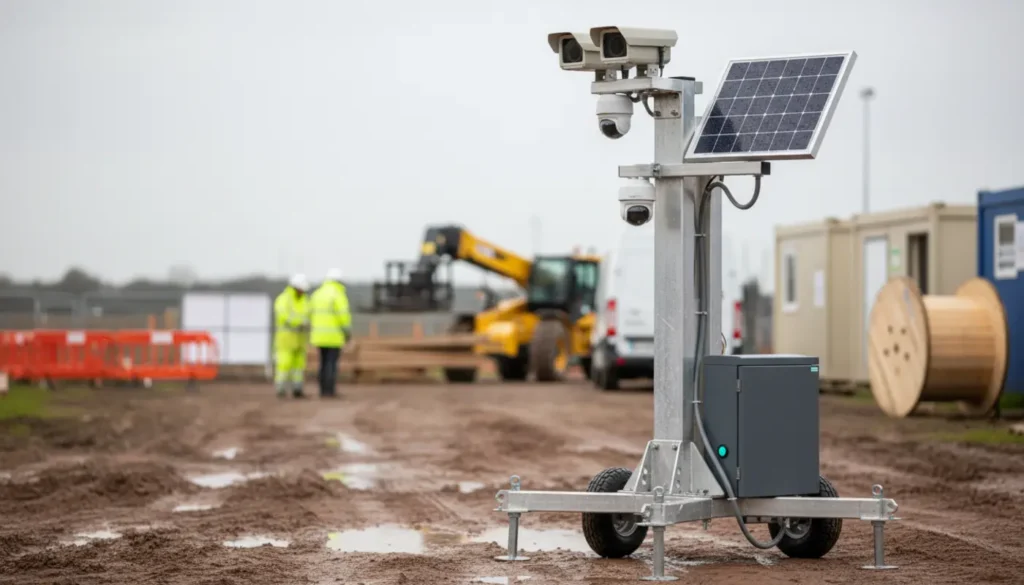
Large infrastructure and civil engineering projects can need a different approach because the work front may move over long distances. Roads, rail, utilities, bridges and pipeline schemes may require mobile towers, relocatable cameras and separate coverage for compounds, remote stores and temporary access routes.
For more detail on monitoring features, response options and cost factors, see construction site camera monitoring. It is especially useful where a project needs live intervention rather than footage that is only checked after damage has already been done.
UK Legal And Regulatory Considerations
UK legal and regulatory considerations do not set one universal CCTV camera number for every construction site. The Health and Safety Executive focuses on managing risks such as unauthorised access, plant movement, public safety and emergency arrangements, so CCTV should support the wider risk assessment and site security plan.
Under UK GDPR and the Data Protection Act 2018, CCTV footage that identifies people is personal data. Site operators should define the purpose, choose a lawful basis, minimise unnecessary capture, secure recordings, limit access and keep footage only as long as needed.
Relevant standards can also support a reliable design. BS EN 62676 covers video surveillance systems, BS 8418 applies to detector activated monitored CCTV where relevant and BS EN 50131 supports intruder alarm integration, although none of these standards creates a simple camera number for every site.
You should also check whether your organisation needs to register with the ICO and pay the data protection fee. Many businesses using CCTV for crime prevention or site security need to consider this, although exemptions can apply in some situations.
Insurance And Client Requirements
Insurance and client requirements can strongly affect how many cameras a construction site needs. Policy schedules, warranties and endorsements may set expectations for gates, plant compounds, recording quality, night operation, monitoring, retention periods, maintenance and incident response.
A cheap recorder and a few cameras will not satisfy every insurer, especially where high value plant, fuel storage, copper, tools or remote sites are involved. If monitored CCTV verifies intruder alarms or perimeter detection for police response, confirm whether an SSAIB Insurance Approved system and Police Response URN are required before installation begins.
How To Test CCTV Coverage
CCTV coverage should be tested before the system is treated as complete. Walk the site during the day and at night, then check whether each access point, compound, cabin approach and high risk zone is visible at the level of detail needed for the purpose.
- Check every active gate, pedestrian entrance and delivery route.
- Confirm that plant, fuel, generators, tools and material compounds are visible.
- Test image quality at night, in poor weather and under site lighting.
- Look for blind spots caused by scaffolding, skips, cabins or parked plant.
- Check that time and date settings are correct on recordings.
- Confirm that footage can be exported securely when needed.
- Restrict access to recordings and document who can view them.
- Review signage, retention periods and privacy masking.
- Repeat the check after major layout changes or new work phases.
Final Thoughts On Construction Site CCTV Cameras
The right number of construction site CCTV cameras is the number that gives proportionate, useful and compliant coverage of the risks that matter. Start with a scaled plan, mark every access point, identify high value assets, check privacy duties and test the views before relying on them.
A good CCTV design protects people, property and project progress without turning the site into excessive surveillance. When the site layout changes, the camera plan should change with it, because a view that worked during groundworks may be blocked once the building rises.
If you would like a practical camera layout for your site, iSecurity Solutions can help assess your access points, high risk zones, monitoring needs and insurer requirements before installation.
Frequently Asked Questions
Is There A Legal Minimum Number Of CCTV Cameras On A Construction Site?
There is generally no universal legal minimum number of cameras for UK construction sites. The correct number depends on the site risk assessment, layout, access points, privacy duties and any insurer or client requirements.
How Many Cameras Are Needed Per Metre Of Hoarding?
There is no reliable camera per metre rule because boundary shape, lighting, camera lens, mounting height and image detail all change the answer. A site survey is the safest way to calculate useful coverage.
Should Every Site Entrance Have A Camera?
Every active entrance should be assessed, and important vehicle, pedestrian and delivery gates commonly need dedicated CCTV coverage. Busy gates may need more than one view to show the approach, entry and movement into the site.
Can CCTV Record Workers On A Building Site?
Yes, but it must be lawful, necessary and proportionate under UK GDPR and the Data Protection Act 2018. Workers should be told why CCTV is used, where cameras operate and how footage is handled.
Do Insurers Require SSAIB Insurance Approved For Monitored Construction CCTV?
Many insurers expect an SSAIB Insurance Approved installation where monitored CCTV, alarms or perimeter detection support police response. SSAIB Insurance Approved certification is normally the prerequisite for a Police Response URN.