How Can Access Control Improve Apartment Building Security?
Access Control For Apartment Building Security
Access control improves apartment building security by making sure only authorised residents, visitors, contractors and staff can enter shared areas at the right time. In UK blocks of flats, the weakest point is often not an individual flat door, but the communal entrance, lobby, bike store, car park, parcel area or internal corridor.
If you live in or manage a block of flats, you will know that security is not only about the front door to each home. It is also about the shared spaces everyone uses every day, where one open door or lost fob can affect the whole building.
A good access control system helps reduce tailgating, lost key problems, parcel theft, bike theft and unwanted access to restricted communal areas. It also gives managing agents, landlords and residents' committees better control, clearer records and fewer awkward moments involving mystery visitors pressing every buzzer until someone lets them in.
iSecurity Solutions is a trusted UK provider of commercial and domestic security systems, helping homes and businesses stay protected around the clock. From CCTV and intruder alarms to fire safety, access control and construction site monitoring, the team designs reliable, tailored solutions backed by responsive service and modern, remotely monitored technology.
What Is Access Control In A Block Of Flats?
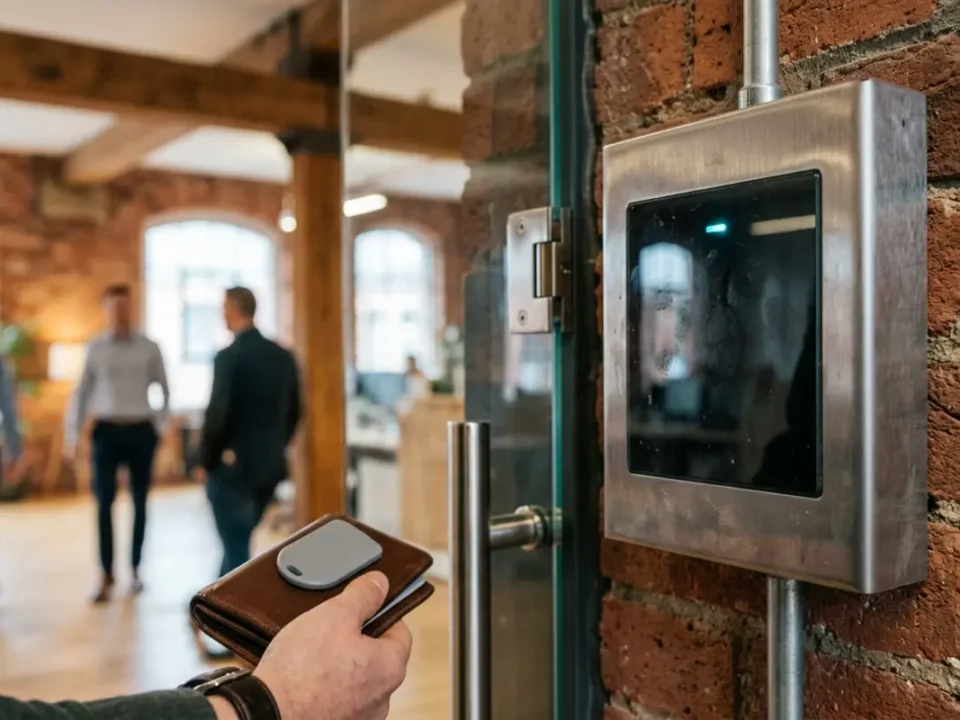
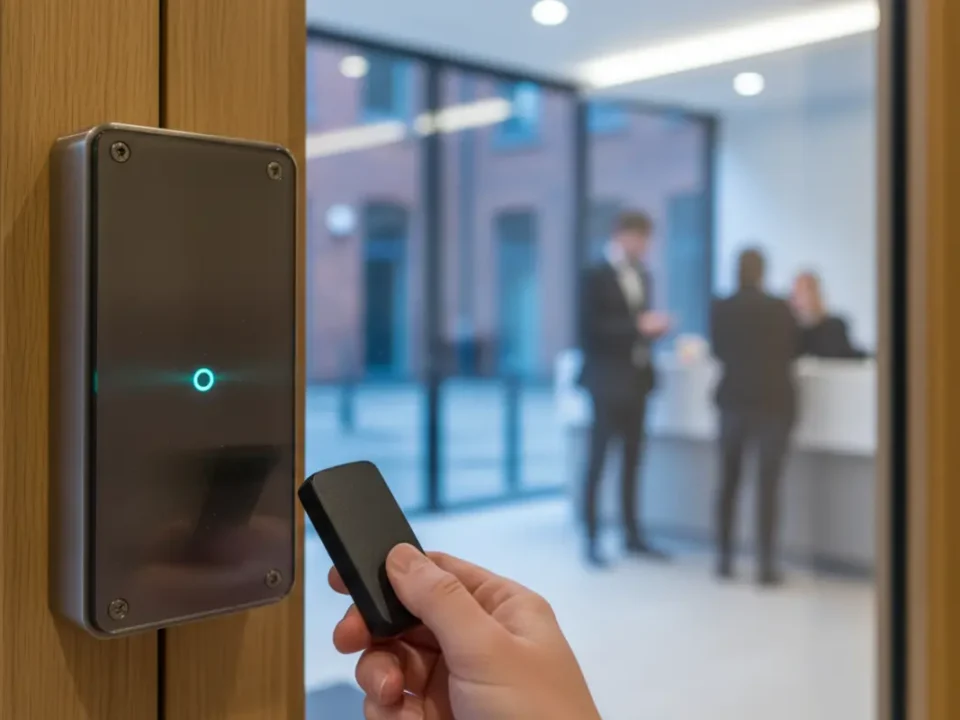
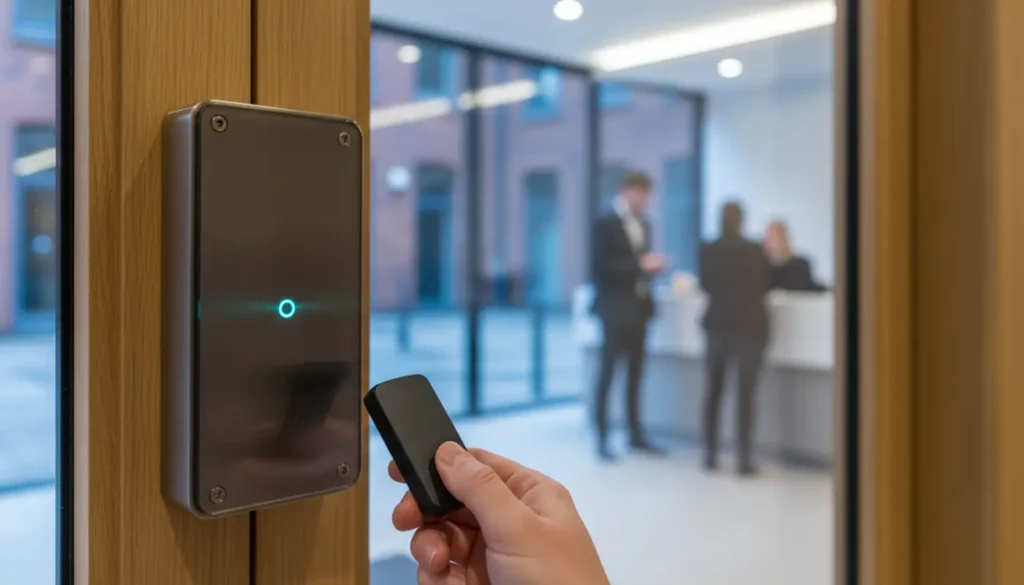
Access control in a block of flats is the process of managing who can enter a door, gate, lift, store room or shared facility. Instead of relying only on metal keys, residents use approved credentials such as fobs, cards, PIN codes, mobile apps or video door entry systems.
The idea is simple. The system checks who is trying to enter, decides whether they are allowed through, and records the event if logging is enabled. In plain English, authentication means proving who you are, authorisation means deciding where you can go, and an audit trail is the record of what happened.
For a deeper explanation of how permissions, readers and controllers work together, see how access control systems work, which breaks down the technology in clear, practical terms.
Common Security Challenges In UK Residential Blocks
Most apartment security issues start with shared spaces. A resident may be careful with their own flat door, but if the communal entrance is propped open, or an unknown person follows someone into the lobby, the whole building becomes more exposed.
If you manage a block of flats, you will know how quickly one lost fob, shared code or open door can become everyone's problem. The best starting point is to look at the areas people use most often and the places where access is hardest to control.
Tailgating And Unauthorised Following
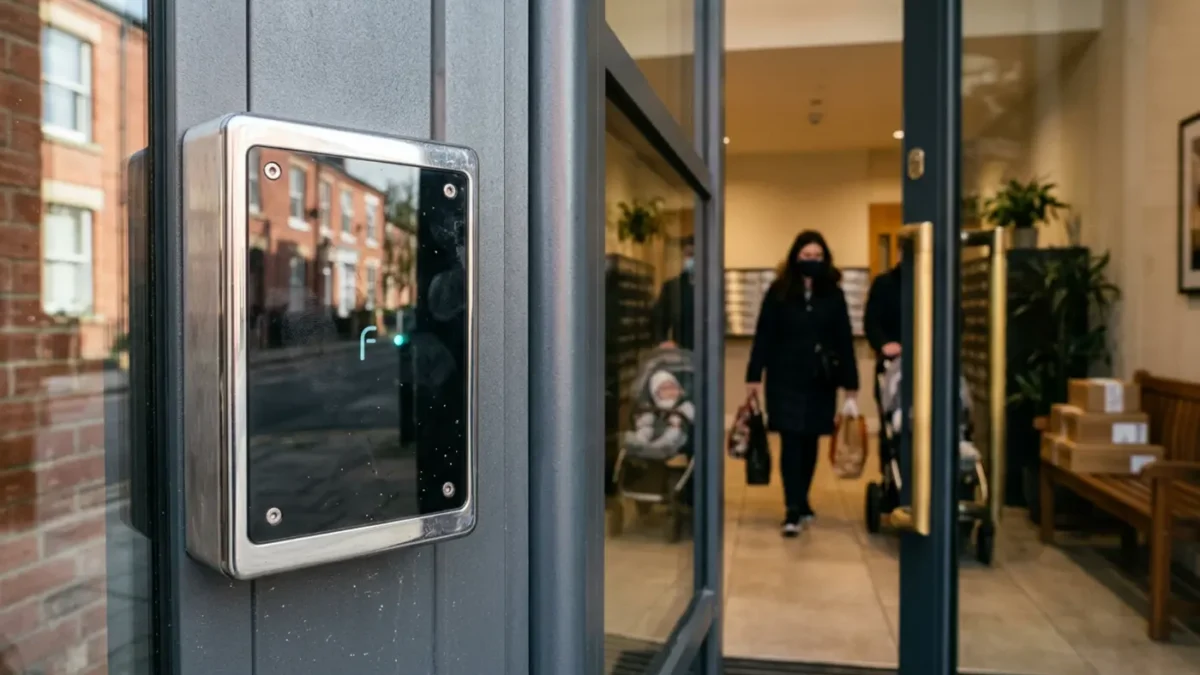
Tailgating is when someone slips in behind an authorised resident before the door closes. It can happen in seconds, especially when people are carrying shopping, pushing a pram or trying not to seem rude to a stranger.
Access control helps by using self closing doors, door position monitoring, video verification and alerts when doors are forced or held open. It does not replace common sense, so resident awareness and polite signage still matter.
Lost Keys, Stolen Fobs And Former Residents
Traditional keys are awkward in blocks of flats because one lost key can mean replacing communal locks and issuing new keys to everyone. With electronic fob access, a managing agent can usually deactivate one missing fob without changing every lock in the building.
The same applies when residents move out, cleaners change or contractors finish a job. Access can be removed quickly, rather than hoping a key has been returned and has not been copied.
Parcel Theft, Bike Theft And Shared Stores
Stolen parcels, missing bikes and unknown visitors in the lobby are often signs that shared spaces need better control, not more guesswork. These issues are common in blocks where deliveries are left in open lobbies or bike stores are treated as low priority areas.
A better approach is to use controlled parcel rooms, temporary delivery access, video door entry and clear rules for couriers. Bike stores need similar thinking, with a fob reader on the store door, strong doors, good lighting, secure internal locking points and cameras where appropriate.
Types Of Access Control Systems For Flats
There is no single best system for every apartment building, because a converted house with six flats has very different needs from a city centre development with lifts, parking and concierge staff. The right choice depends on risk, resident turnover, budget, accessibility and how much management support is available.
- Key fobs and proximity cards: Familiar, easy to issue and simple to deactivate if lost, making them suitable for most residential blocks.
- PIN keypads: Useful for lower risk areas, but shared codes can spread very quickly and are harder to control.
- Mobile app access: Good for remote permissions, visitor access and temporary credentials, although not everyone wants or can use a smartphone.
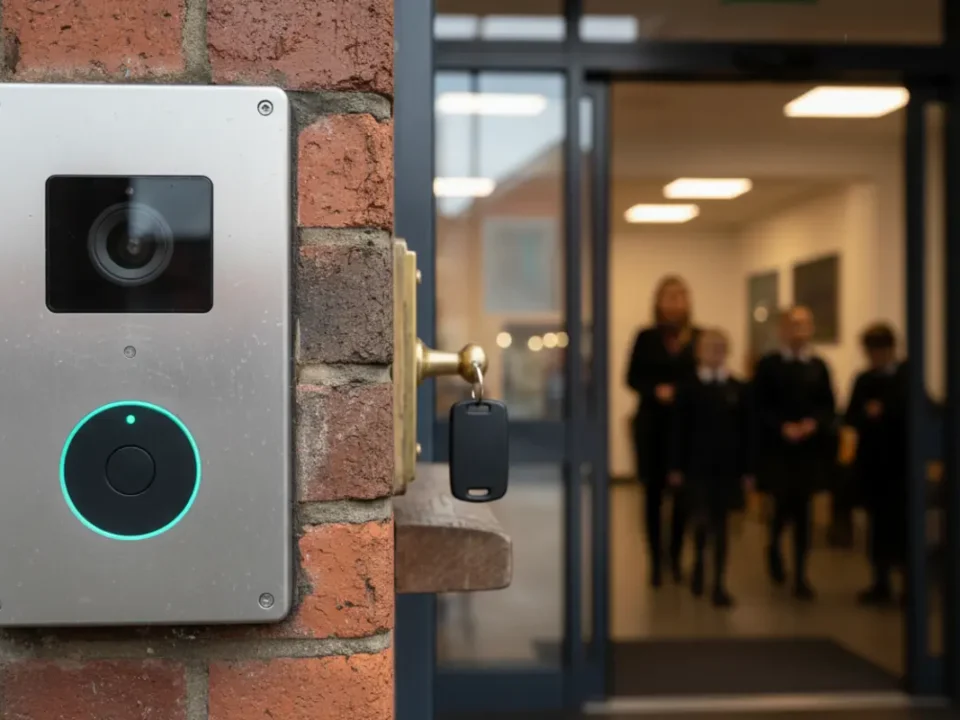
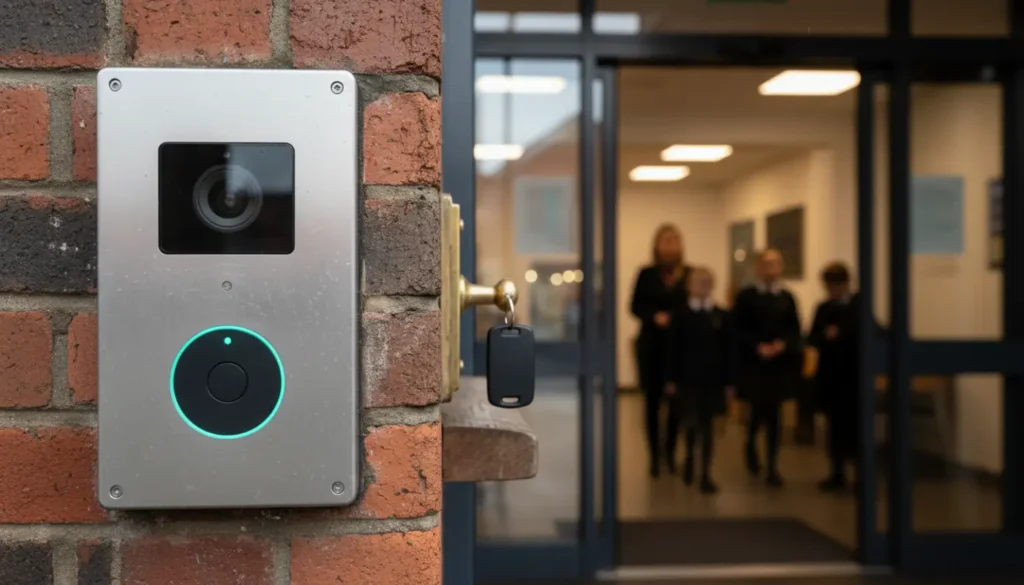
- Audio and video door entry: Lets residents check who is calling before releasing the communal door.
- Biometric access: Convenient in some settings, but it needs careful thought around privacy, accessibility and fair alternatives.
- Hybrid systems: Often best for larger blocks, because they allow different methods for residents, visitors, staff and contractors.
Key Security Benefits Of Access Control
The biggest benefit is control. A well designed access control system lets managers decide who can enter each part of the building, when they can enter and how long that permission lasts.
You do not need the most complicated system on the market. You need one that fits how your building is used in real life, from early morning cleaners to late night residents and regular delivery drivers.
Instant Credential Deactivation
If a resident loses a fob, the missing credential can be removed from the system. That is much cleaner than changing a communal lock and asking every resident to collect a new key from the managing agent.
Audit Trails For Incident Review
An access audit trail can show which credential was used at a door and at what time. It cannot always prove who was physically holding the fob, but it can still be valuable when reviewing thefts, vandalism, door faults or disputed contractor visits.
Access logs, CCTV images and visitor records may count as personal data, so UK GDPR and the Data Protection Act 2018 need to be considered. The Police guidance on flat security also gives practical advice on communal doors, entry systems, cycle stores and resident behaviour.
Remote Management And Time Limited Access
Remote management can be very useful for managing agents and facilities teams. Permissions can be added, changed or removed without visiting site, and contractors can be given access during agreed working hours rather than having open ended entry.
This is especially helpful for cleaners, maintenance teams, delivery staff and short term contractors. It also creates a clearer leaver process when residents move out or staff change.
Securing Key Areas Of The Building
Apartment security works best when the building is treated as a set of zones, rather than one front door and a hope for the best. Each area should have access rules based on risk, convenience and fire safety.
- Main entrance and lobby: Use fob access for residents and video door entry for visitors.
- Lifts and floor access: Restrict lift permissions where needed, especially in larger buildings.
- Car parks and vehicle gates: Control both vehicle and pedestrian routes to reduce unauthorised movement.
- Bike stores: Limit access to residents who need it and review logs after incidents.
- Bin stores: Reduce fly tipping, misuse and unwanted access from outside the building.
- Plant rooms and roof access: Restrict to authorised maintenance staff only.
- Parcel rooms: Use clear delivery processes, temporary access and resident collection controls.
- Emergency exits: Keep them secure from outside while always allowing safe escape from inside.
Integration With CCTV, Intercom And Fire Alarm Systems
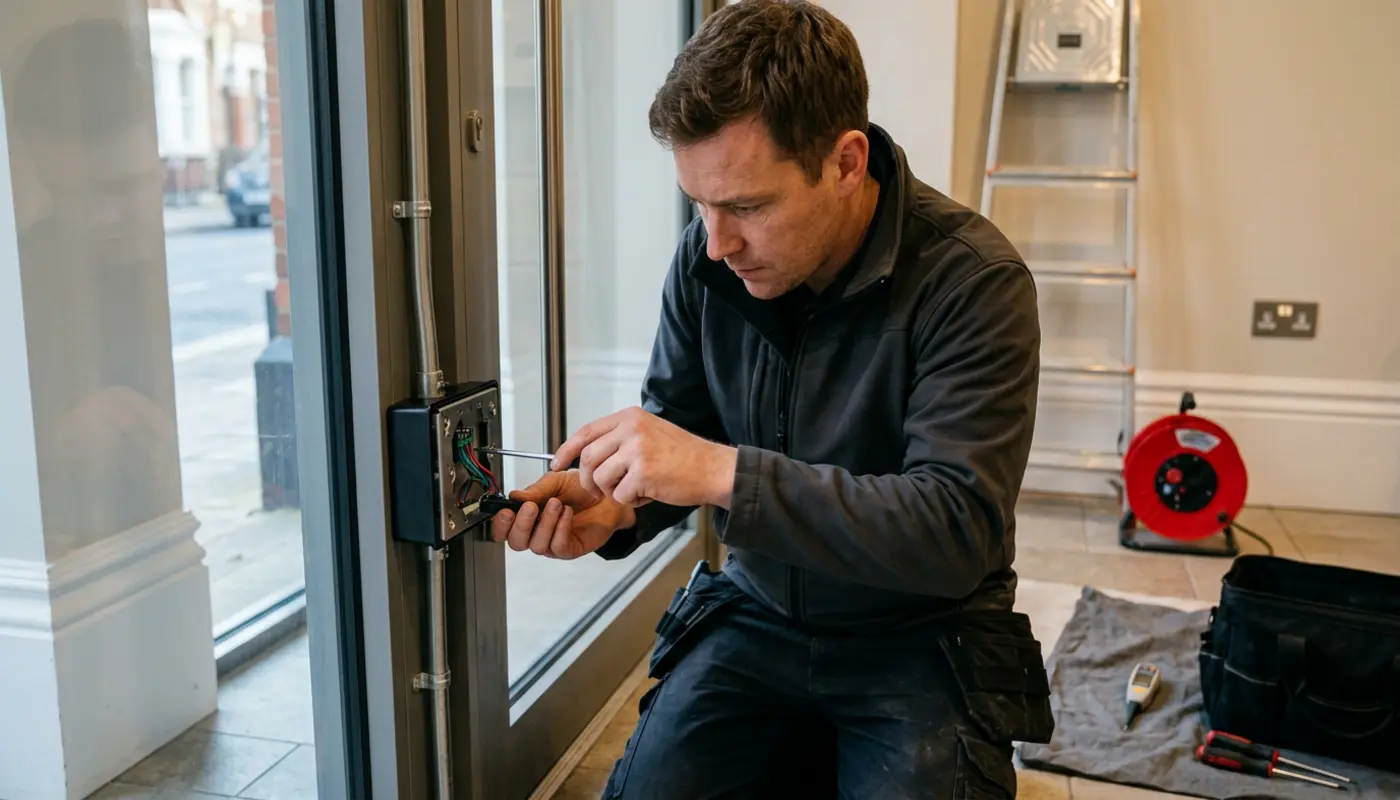
Access control becomes more useful when it works with the rest of the building systems. CCTV can help review forced doors or failed entry attempts, while video intercoms help residents confirm who is at the entrance before pressing release.
Where CCTV is used in communal areas, it should be designed carefully, signed properly and managed under a clear privacy policy. If CCTV forms part of a wider electronic security design, EN 50131 risk principles may be considered. Any monitored CCTV or perimeter detection requiring police attendance will normally need an SSAIB certified and Insurance Approved route for Police Response URN eligibility.
Fire safety is just as important as security. Door locks, release buttons and fire alarm interfaces must not stop people escaping, and fire alarm links should be reviewed against the building fire strategy and BS 5839 where relevant.
For example, a communal door may be secure from outside but still open easily from inside using a suitable release method. That balance is where proper design matters, because a door that is secure but unsafe is not a good result, no matter how smart the reader looks.
UK Legal And Compliance Considerations
Apartment access control should be planned with privacy, fire safety, building safety and accessibility in mind. The technology is only part of the job, because the legal and management side decides whether the system is fair, safe and properly controlled.
UK GDPR And Data Protection
Access logs, CCTV footage, visitor records and biometric data can all identify people. That means the building manager should know why data is collected, who can view it, how long it is kept and how residents are told about it.
Biometrics need particular care because they involve sensitive personal identifiers. In many apartment buildings, a fob, card or app with a practical fallback will be more suitable than making fingerprints or facial recognition the only way in.
Fire Safety Order And Building Safety Act
In simple terms, the common parts of many residential buildings must be managed with fire safety in mind. For higher risk buildings, the Building Safety Act 2022 can add further responsibilities.
Access control should therefore be checked against the fire risk assessment, escape strategy and the responsibilities of the accountable person or responsible person where applicable.
Equality Act And Accessibility
Security should not exclude people who cannot use a smartphone, reach a reader easily, hear an intercom clearly or operate a heavy door. The Equality Act 2010 makes accessibility an important design issue, so alternatives and reasonable adjustments should be considered from the start.
Leaseholder Consultation And Service Charges
Access control upgrades may be paid for through service charges, depending on the lease and management structure. Section 20 consultation may apply where qualifying works cost more than £250 per leaseholder, or where qualifying long term agreements cost more than £100 per leaseholder per year.
Costs, Service Charges And Whole Life Value
The cost of access control depends on the number of doors, the condition of existing doors, cabling, power, software, intercom integration, lift controls, cloud services and ongoing maintenance. The cheapest quote is not always the best value if it creates lockouts, poor support or expensive future changes.
A sensible budget should include the survey, design, door hardware, readers, controllers, cabling, fobs, software licences, resident communication, commissioning and maintenance. It should also include future needs, such as extra doors, replacement fobs and changes in building use.
Implementation Best Practices
Start with a site survey and a simple map of every door, gate, lift and shared space. Then list the user groups, such as residents, visitors, cleaners, contractors, managing agents, concierge staff and emergency responders.
Define permissions before choosing hardware. It is much easier to design the right system when everyone agrees who needs access to the lobby, bike store, car park, plant room and parcel room.
Test real life scenarios before handover, including lost fobs, power failure, network failure, visitor entry, contractor access and emergency release. After installation, give residents a plain English guide so they know how to use the system and what to do if something goes wrong.
Common Mistakes To Avoid
The most common mistake is using one shared PIN for the whole building and never changing it. Sooner or later, that code may be given to friends, delivery drivers, former residents and possibly someone who was definitely not invited to the residents' meeting.
- Choosing app only access without a fob or card fallback.
- Forgetting bike stores, bin stores, car parks and plant rooms.
- Keeping access logs for longer than needed.
- Failing to remove former residents or contractors from the system.
- Installing locks that make escape difficult in an emergency.
- Ignoring residents with accessibility needs.
- Skipping maintenance until a door fails at the worst possible time.
Final Thoughts On Apartment Building Security
Access control can make apartment buildings safer, easier to manage and less dependent on old fashioned keys. It helps control shared entrances, protect communal areas, manage visitors and respond quickly when credentials are lost or misused.
The best results come from combining good technology with secure doors, resident awareness, fire safe escape routes, clear privacy rules and proper maintenance. No single system can guarantee security, but a well planned access control setup can make everyday life in a block of flats feel calmer, safer and better organised.
If you are planning an upgrade, keep the basics clear and practical.
- Start with a full survey of shared doors and high risk areas.
- Choose access methods that suit residents, visitors and contractors.
- Make sure fire escape, privacy and accessibility are considered early.
- Use a qualified installer where monitored security or insurance requirements apply.
Frequently Asked Questions
Is Access Control Better Than Traditional Keys For Flats?
Yes, in most shared buildings it is more manageable because lost fobs or cards can be deactivated without changing every communal lock. Traditional keys can still be useful as part of a backup plan.
Can Access Control Stop Tailgating Completely?
No system can stop every tailgating attempt on its own, but self closing doors, video entry, door monitoring and resident awareness can reduce the risk significantly.
Does Access Control Affect Fire Escape Routes?
It must not block safe escape. Any electric locks, releases and fire alarm links should be designed around the building fire strategy and relevant BS 5839 fire alarm considerations.
Are Access Logs Covered By UK GDPR?
Usually yes, because access logs can identify residents, staff or visitors. Building managers should control who can view logs, how long they are kept and why they are used.
Should Apartment Buildings Use SSAIB Installers?
Using an SSAIB certified and Insurance Approved installer is a sensible choice where electronic security, alarms, monitored CCTV or Police Response URN eligibility may be involved, but the exact scope should always be checked before work starts.