Emergency Lighting for Hmos in Manchester
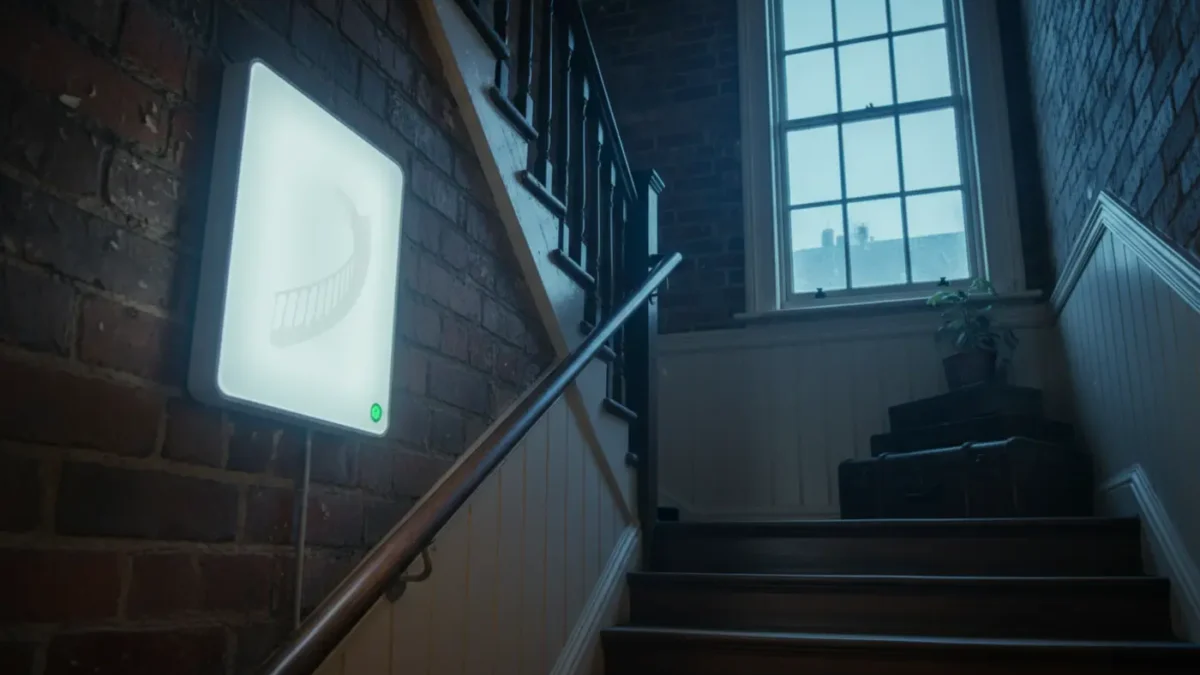
Emergency lighting for HMOs in Manchester needs to keep escape routes safely lit if the normal power fails. In most shared properties, that means staircases, corridors, changes of direction, fire alarm call points, and final exits need proper cover in line with BS 5266 1. The exact setup depends on the building layout, the fire risk assessment, and local HMO licensing requirements.
For landlords, the difficult part is that emergency lighting is not something to judge by guesswork or by whatever was fitted years ago. It sits within housing law, fire safety law, local council licensing rules, and the findings of your fire risk assessment. That is why the answer is rarely a simple yes or no.
If you are managing tenants, maintenance, and inspections, it is easy for this to slip down the list. That is completely understandable. There always seems to be one more rule, one more document, and one more check to deal with.
That is where iSecurity Solutions can help. iSecurity Solutions is a trusted UK provider of commercial and domestic security systems, helping homes and businesses stay protected around the clock. From CCTV and intruder alarms to fire safety, access control and construction site monitoring, the team delivers reliable and tailored solutions backed by responsive service and modern monitored technology. For Manchester landlords, that means dependable emergency escape lighting that supports licensing duties, protects tenants, and reduces avoidable compliance problems.
Emergency Lighting In Manchester
Emergency lighting in Manchester HMOs is there to help people get out safely if the mains power fails during an emergency. In older conversions, shared houses, and taller buildings, escape routes often depend heavily on artificial light. That means landlords need a system that stays on long enough for tenants to leave safely and for key points on the route to remain clearly visible.
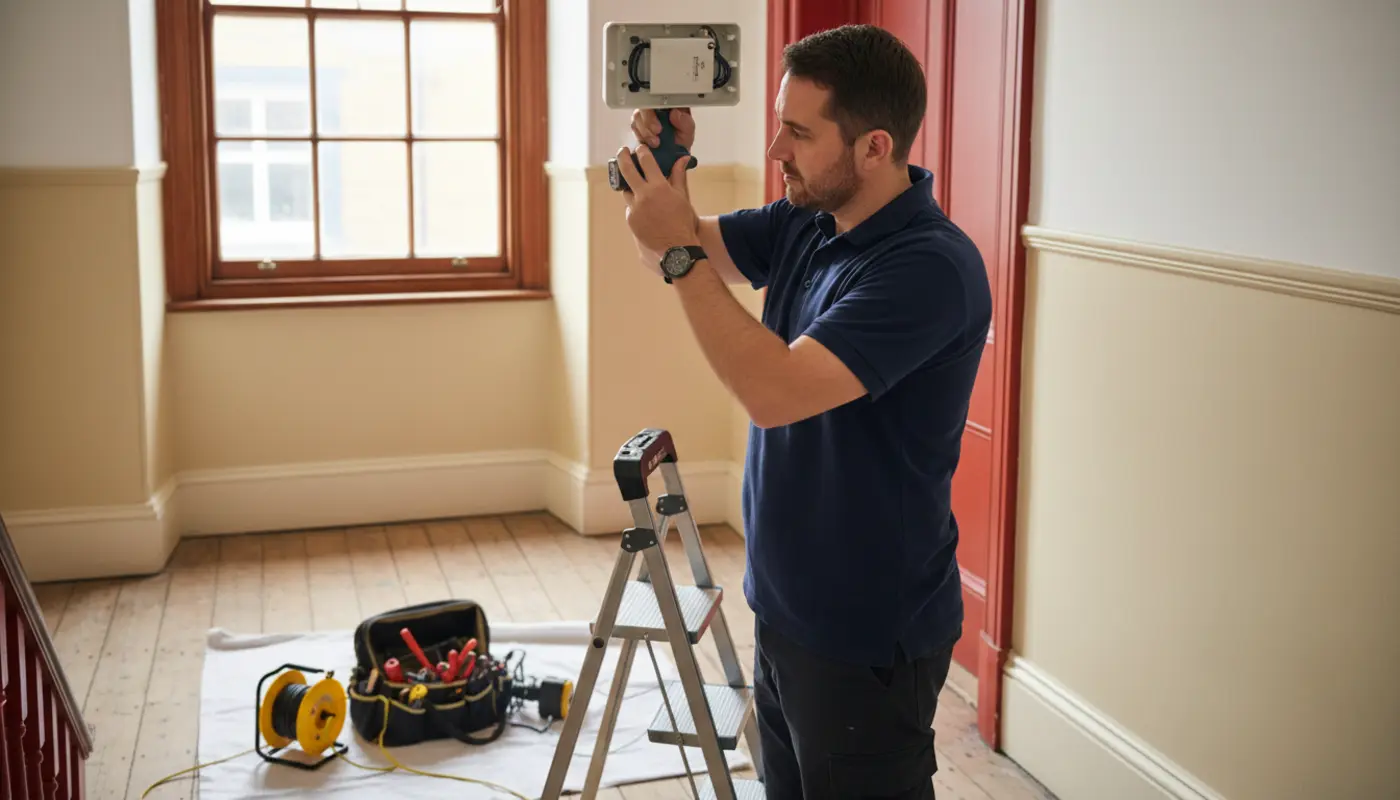
For properties that need help with design, installation, and ongoing servicing, a specialist fire safety provider can assess the building layout and recommend the right setup for the shared parts of the property. That matters because a converted Victorian terrace will not need exactly the same solution as a larger purpose built HMO.
Emergency Lighting For HMOs In Manchester
Whether your HMO needs emergency lighting depends on the building layout, the escape route design, and the findings of the fire risk assessment. In many Manchester HMOs, especially those with enclosed staircases, internal corridors, or poor natural light, emergency lighting is likely to be needed to support safe evacuation.
The main legal framework comes from the Housing Act 2004, the Management of HMOs Regulations 2006, and the Regulatory Reform Fire Safety Order 2005. Together, these place duties on landlords and managers to reduce fire risks, keep escape routes safe, and provide suitable fire precautions where required.
Manchester landlords often need to connect lighting decisions with wider licence conditions and fire precautions, including suitable alarms and maintenance arrangements. If you are also reviewing detection and warning systems, it helps to compare these requirements with fire alarms for HMOs in Manchester so the whole setup works together properly.
What Landlords Need To Know About The Legal Rules
The Housing Act 2004 created the modern HMO licensing framework and links fire safety failings to the Housing Health and Safety Rating System, often called HHSRS. If poor lighting on an escape route increases the risk to occupiers, the council can treat that as part of a wider hazard assessment when reviewing the property.
The Management of HMOs Regulations 2006 add day to day duties for whoever manages the property. That includes keeping common parts in good order, maintaining installations, and making sure escape routes remain usable. That is why backup lighting cannot be treated as something you fit once and then forget about.
The Regulatory Reform Fire Safety Order 2005 applies to the common parts of HMOs, and the landlord or managing agent is usually the responsible person. Government guidance explains that where escape routes rely on artificial lighting, suitable emergency escape lighting should be provided where needed. For the full legal wording, landlords can refer to the Fire Safety Order.
How Manchester HMO Licensing Fits In
Manchester City Council has its own HMO standards and licence conditions, and these are the documents local landlords need to take seriously. They set out what the council expects for fire precautions, testing, and records. Even if a landlord believes the current setup is fine, the licensing team may expect stronger evidence.
Escape route lighting forms part of that wider fire safety picture, especially in licensed HMOs with more complex layouts. If the council sees poor provision, missing test records, or faults that have not been repaired, it can affect licence applications, renewals, and enforcement decisions.
Many landlords find planned servicing helpful because it keeps lighting, alarms, and related systems on a proper schedule rather than relying on memory. A structured service contract can make inspections far less stressful, especially if you manage several properties.
Which HMOs Usually Need Emergency Lighting
As a general rule, simple two storey HMOs with straightforward layouts and good borrowed light may not always need a full emergency lighting system. Once you move into three or four storey buildings, enclosed staircases, long internal corridors, or darker layouts, the need becomes far more likely.
- Three or more storeys
- Enclosed staircases
- Internal corridors with little natural light
- Escape routes with turns or level changes
- Buildings with higher occupancy or more complex layouts
For five storey or taller HMOs, emergency escape lighting is usually expected throughout the escape routes. Higher occupancy, a more complicated layout, and a building where tenants may not know each other well all strengthen the need for a properly designed system.
In Manchester, a common example is a converted terrace split over three floors with bedrooms opening onto a shared landing and a single protected staircase. If that route has little natural light and includes turns, stairs, or level changes, emergency lighting is likely to be required so tenants can leave safely if the normal lighting fails.
BS 5266 1 And What It Means In Practice
BS 5266 1 is the standard that guides the design, installation, testing, and maintenance of emergency lighting systems. For HMOs, it is the main benchmark used to decide where fittings should go, how long they should operate, and how they should be checked over time.
In practical terms, BS 5266 1 covers escape routes, open areas, and points of emphasis such as stair treads, changes in direction, fire alarm call points, firefighting equipment, and final exits. Monthly and annual testing requirements also sit under BS 5266 1, which is why landlords need more than an old installer invoice sitting in a drawer.
If you want a closer look at inspection routines, test intervals, and fault reporting, there is useful detail in emergency lighting testing monthly and annual checks, which explains what good maintenance looks like in everyday use.
Best System Types For HMOs
Most smaller HMOs use self contained emergency luminaires, where each fitting has its own battery. They are usually easier to install in converted properties, cause less disruption during upgrade work, and are often more cost effective for standard shared houses.
Central battery systems are more common in larger buildings where there are many fittings and centralised testing or maintenance makes more sense. They work well, but they are usually more complex and better suited to bigger HMOs or purpose built blocks.
Landlords will also come across maintained and non maintained fittings. Maintained lights stay on during normal operation and continue working in an emergency. Non maintained fittings switch on only when the mains power fails. In sleeping accommodation, the right choice depends on the layout, the usual lighting levels, and the fire risk assessment, although the required emergency duration is typically three hours.
Where Emergency Lighting Should Be Installed
Emergency lighting should be installed along the routes tenants will use to leave the building safely. In most HMOs, that means corridors, landings, staircases, and final exit routes. If any part of that route becomes dark during a power cut, the risk rises quickly, especially in smoke affected conditions.
- Corridors and shared hallways
- Landings and staircases
- Changes of direction
- Changes of level
- Fire alarm call points
- Firefighting equipment locations
- Final exits and exit routes
Lighting should also make changes of direction and level clear. A staircase is not the place for uncertainty at the best of times, let alone during an emergency in the middle of the night, so steps and turns need reliable illumination.
Call points, fire extinguishers, and final exits should also be easy to identify. Even where extinguishers are present, they fall under separate rules, with servicing guided by BS 5306 and BAFE SP101, and the annual service certificate is insurance required.
Why The Fire Risk Assessment Matters
The fire risk assessment brings the legal duties and the technical standard together. It should consider the number of storeys, the occupancy level, how complex the escape route is, whether the route depends on artificial light, and whether there are any higher risk occupants or layout features that affect evacuation.
For HMOs in Manchester, that assessment also supports local licence compliance. If the council asks why one area has escape route lighting and another does not, the answer should come from the risk assessment rather than guesswork.
Landlords dealing with shared accommodation can get more context from fire risk assessment for HMOs in Manchester, which explains how risk based decisions support safer layouts and stronger evidence during inspections.
Testing Maintenance And Records
BS 5266 1 requires regular checks, and for HMOs the basic routine is clear. Monthly function tests are needed to confirm each fitting operates when the mains supply is interrupted. Annual full duration tests are then needed to confirm the lights stay on for the required period, which is usually three hours in sleeping accommodation.
The annual test should be carried out by a competent person, and any failures should be repaired quickly. A dead battery, damaged fitting, or light that does not stay on for the full duration is not just a paperwork issue if it leaves the only staircase in darkness.
- Monthly check records
- Annual full duration test results
- Fault reports
- Repair and remedial work records
- Service reports
- Certificates
- Completion dates for any follow up work
Landlords should keep a logbook with these records ready to show during a council inspection, because good paperwork often makes the difference between a smooth visit and an awkward one.
For larger portfolios or mixed residential sites, many landlords also combine emergency lighting support with wider business security and fire system maintenance so records stay organised and testing dates do not get missed.
What Happens If You Do Not Comply
Non compliance can lead to improvement action, licence problems, civil penalties, or prosecution, depending on how serious the failings are. Under the Fire Safety Order, major deficiencies in common parts can trigger enforcement notices. Under housing legislation, the council can also act where hazards put occupiers at risk.
- Improvement notices
- Problems with licence applications or renewals
- Civil penalties
- Enforcement action
- Possible prosecution in serious cases
In Manchester, poor records can be almost as problematic as poor equipment because landlords may struggle to prove that the system has been maintained properly. If the lighting is installed but nobody can show the monthly and annual tests, inspectors are unlikely to be impressed.
Final Thoughts
Emergency lighting for HMOs in Manchester is about safe escape, clear evidence, and meeting the standards the council expects to see. The right solution depends on the number of storeys, the layout, the occupancy, and the level of risk. Once a system is required, it should be designed, installed, and maintained properly under BS 5266 1, with monthly and annual testing clearly recorded.
For landlords, the simplest approach is to treat emergency lighting as part of the wider fire safety plan rather than as a separate box to tick. When the risk assessment, lighting design, alarm setup, and maintenance records all work together, compliance becomes easier and tenants are better protected.
iSecurity Solutions supports landlords and property managers with dependable fire and security systems that are built around real property risks, practical compliance needs, and responsive service. Whether you manage one HMO or a wider portfolio, having the right support in place can save a great deal of stress later.
Frequently Asked Questions
Do All HMOs In Manchester Need Emergency Lighting?
No. Simple two storey HMOs may not always need it, but properties with three or more storeys, longer escape routes, enclosed staircases, and darker layouts often do. The final decision should come from the fire risk assessment.
How Often Must HMO Emergency Lighting Be Tested?
BS 5266 1 requires monthly function tests and an annual full duration test. In sleeping accommodation, that annual test is typically for three hours and should be carried out by a competent person.
What Records Should A Manchester Landlord Keep?
Keep a logbook with monthly checks, annual test results, faults, repairs, service reports, and certificates. These records help show Manchester City Council that the system is being maintained properly.
Does SSAIB Matter For Emergency Lighting In HMOs?
For emergency lighting, the key benchmark is BS 5266 1 compliance, but many landlords prefer an SSAIB Insurance Approved provider when wider fire and security systems are involved. All security and fire installations should be Insurance Approved. Police Response URN applies to alarms, monitored CCTV, and perimeter detection rather than emergency lighting, but using a compliant contractor helps keep standards consistent.
Can Poor Emergency Lighting Affect My HMO Licence?
Yes. In Manchester, inadequate emergency lighting, missing test records, or unresolved faults can affect licence approval, renewal, or enforcement action, and serious failings may lead to fines or prosecution.