Best Emergency Light for Restaurant in Manchester

Emergency Lighting For Manchester Restaurants
If you run a restaurant in Manchester, emergency lighting is not optional. It is a legal requirement under the Regulatory Reform Fire Safety Order 2005 and must guide people safely out of your building if the mains power fails. In simple terms, if the lights go out, your emergency system must switch on and clearly show the way to safety.
For restaurants, this means meeting BS 5266 standards, satisfying Manchester City Council licensing conditions and making sure the system is properly tested and recorded. It is not just about paperwork. It is about protecting your guests, your team and your reputation when it matters most.
Emergency lighting may not be the most visible part of your restaurant design, but during a power cut it quickly becomes the most important feature in the room. A well designed system keeps evacuation calm and organised rather than stressful and confusing.
At iSecurity Solutions fire safety services, we design and install BS 5266 certificated systems that meet licensing authority emergency lighting conditions across Manchester. We keep the technical side clear and manageable so you can focus on running a successful restaurant.

Legal Requirements For Restaurant Emergency Lighting In Manchester
Every restaurant in England must comply with the Regulatory Reform Fire Safety Order 2005. The law places responsibility on the responsible person, usually the owner or manager, to make sure people can evacuate safely in an emergency. This includes installing and maintaining suitable emergency lighting.
Manchester City Council licensing officers expect to see evidence of compliance during inspections. This normally links directly to your fire risk assessment and supporting documents. If you are unsure what that involves, our guide to fire risk assessment for restaurants in Manchester explains what inspectors typically check.
BS 5266 1 2016 is the main British Standard covering emergency lighting design, installation and maintenance. It sets out where lights must be positioned, how bright they need to be and how long they must stay on after a power cut. It also requires monthly and annual testing, with clear records available for inspection.
For official background on fire safety law, you can refer to the Regulatory Reform Fire Safety Order 2005 published on legislation.gov.uk.
Types Of Emergency Lighting Suited To Restaurants
Restaurants have unique layouts, from open dining spaces to busy kitchens and narrow corridors. Because of this, emergency lighting must be designed carefully rather than fitted as an afterthought.
There are two main system types:
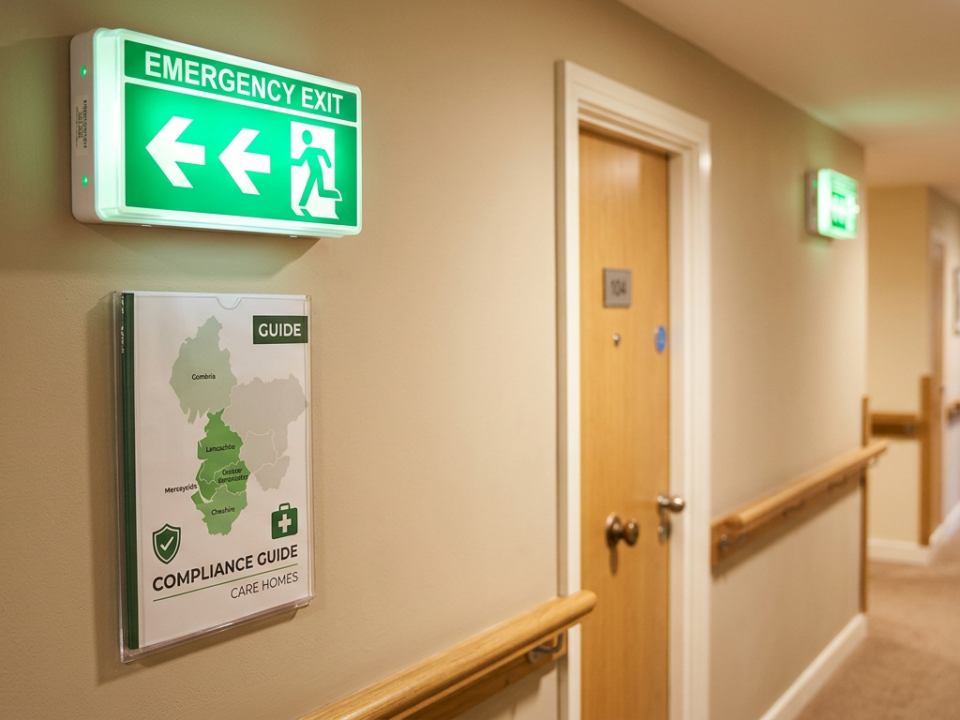
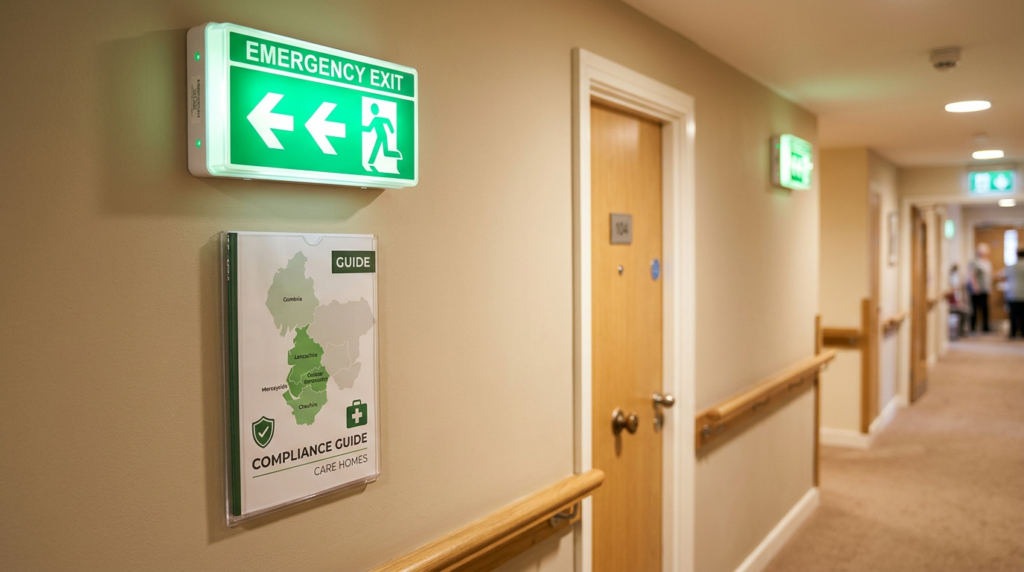
- Maintained emergency lighting stays on at all times and switches to battery mode during a power cut. This is commonly used for illuminated exit signs above doors.
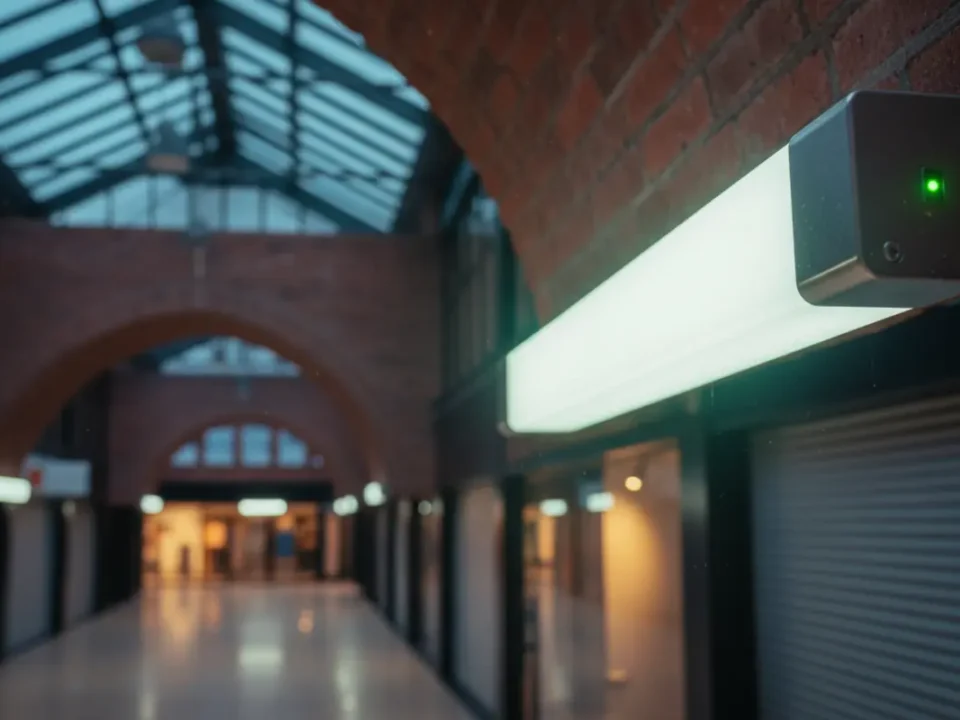
- Non maintained lighting only turns on when the mains power fails. This is typical for bulkhead fittings in corridors, kitchens and storage areas.
Under BS 5266, restaurants usually require three functional categories:
- Escape route lighting so corridors and paths to final exits remain clearly visible.
- Open area lighting, sometimes called anti panic lighting, to provide enough light in larger dining areas so people can move safely.
- High risk task area lighting in commercial kitchens where staff may be using potentially dangerous equipment.
If your premises includes a bar or late night entertainment, your emergency lighting should work smoothly with your fire alarm system for restaurants so evacuation remains calm and controlled.
Minimum Lux Levels And Coverage Under BS 5266
Lux is a simple measure of light level. BS 5266 sets minimum lux levels so people can see clearly enough to exit safely. On escape routes up to two metres wide, the centre line must achieve at least 1 lux. Open areas must receive at least 0.5 lux across the floor space.
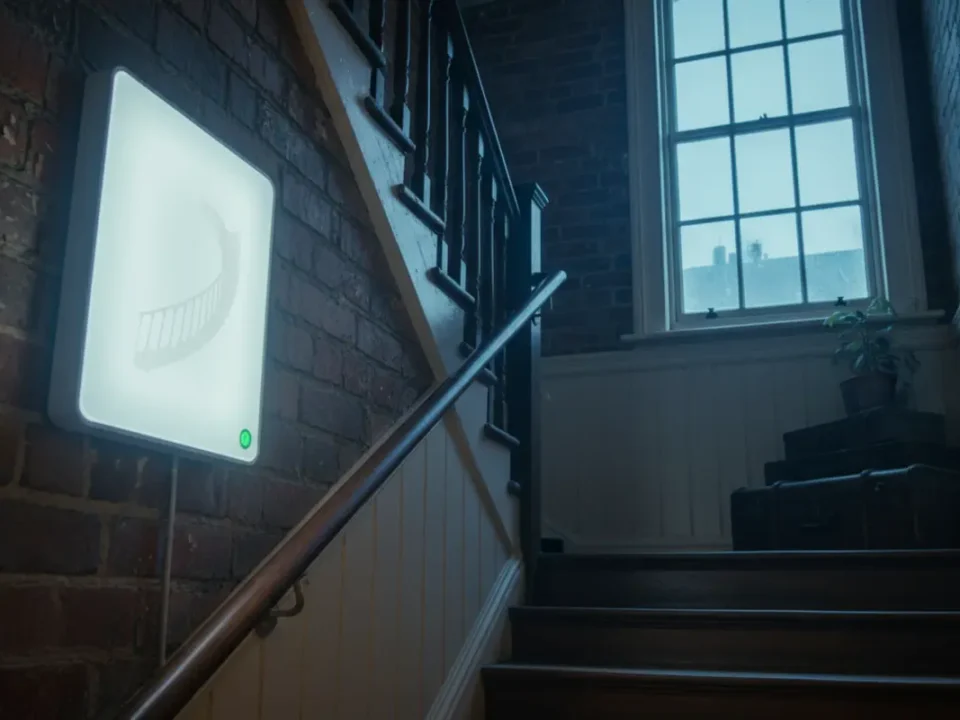
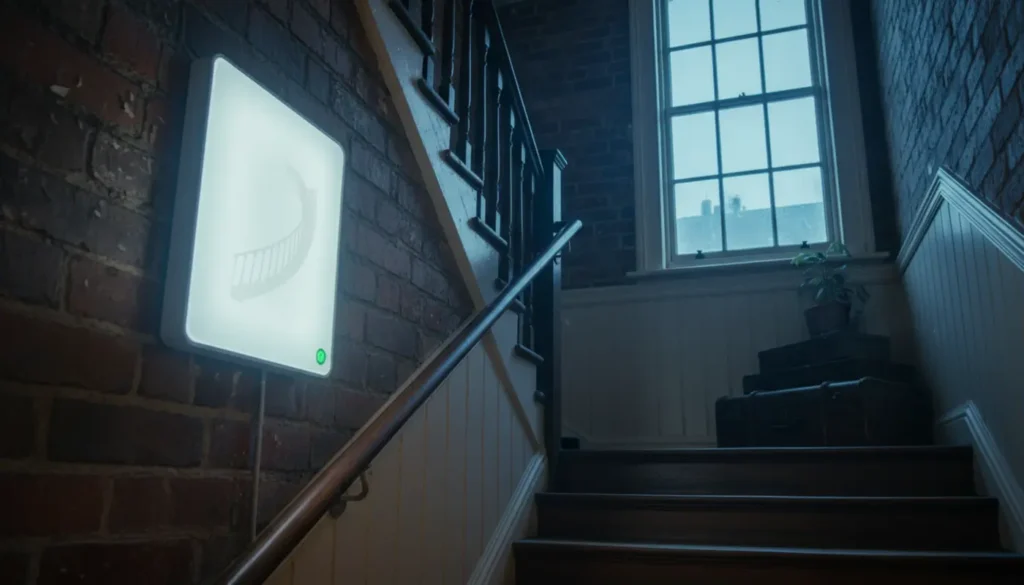
Final exit doors must be clearly illuminated, especially where there are steps, level changes or changes of direction. In a restaurant, this often includes corridors from dining areas, staircases to upper floors and routes from basement kitchens or storage cellars.
Good design prevents dark spots that could fail inspection. At iSecurity Solutions for business premises, we carry out detailed lighting assessments to make sure your layout meets the required lux levels throughout.
Duration And Battery Backup Standards For Assembly Venues
Restaurants are classed as assembly venues because members of the public gather inside. For most assembly premises, BS 5266 expects a minimum three hour emergency lighting duration. This means that after a power failure, your system must continue operating for at least three hours on battery backup.
One hour systems may be used in smaller, lower risk buildings. However, for licensed hospitality venues in Manchester, three hours is generally the safer and more widely accepted option. Licensing officers often expect this level of protection, particularly where alcohol is served or customer capacity is higher.
Modern LED emergency fittings make three hour duration practical and energy efficient, while also reducing maintenance needs compared to older fittings.
Placement Guidance For Restaurant Layouts
Every restaurant layout is different, but certain placement rules always apply. Emergency luminaires should be positioned:
- At final exits and exit doors
- Near stairways and changes of level
- At changes of direction along escape routes
- Close to fire alarm call points and fire fighting equipment
- Across open dining areas to avoid dark patches between tables
Commercial kitchens need particular care. Steam, grease and heat can affect fittings, so robust and properly rated LED bulkheads are usually recommended. Cellars and storage rooms must also be covered because staff may still be present when a power failure occurs.
Toilets and back of house corridors are often overlooked. During Manchester inspections, poor coverage in these areas is a common issue even when the main dining space appears compliant.
Recommended Emergency Lighting Products For Restaurants
In 2026, LED emergency bulkheads, illuminated exit signs and twin spot units remain reliable options for restaurants. Look for CE and UKCA marked products from reputable UK manufacturers suitable for commercial hospitality settings.
In most cases:
- LED bulkheads are well suited to corridors and kitchens.
- Maintained LED exit signs are ideal above final exit doors.
- Twin spot units are useful in larger open areas where higher light output is needed.
Product choice should always follow a compliant design. Simply selecting the brightest fitting will not guarantee your system meets BS 5266 requirements.
Testing, Servicing And Logbook Requirements Under BS 5266
Installation is only part of the responsibility. BS 5266 requires:
- A monthly function test to confirm each luminaire operates when the power supply is interrupted.
- An annual full duration test, usually three hours, to confirm battery performance.
All tests must be recorded in a fire safety logbook. Manchester licensing officers may request these records during routine inspections or following a complaint. Missing documentation can create problems even if the lights appear to work correctly.
Many restaurant owners choose a planned maintenance agreement so they do not have to track every test date themselves. Our security and fire maintenance contracts include scheduled emergency lighting tests and clear documentation to support licensing inspections.
If you are unsure how emergency lighting works alongside other systems, our overview of how a fire alarm system works explains how detection, alarm and lighting operate together during an incident.
Consequences Of Non Compliance For Manchester Restaurants
Failing to meet emergency lighting requirements can lead to serious disruption. Fire safety enforcement notices may be issued if your system is inadequate or poorly maintained. In more serious cases, prohibition notices can restrict the use of part or all of your premises until issues are resolved.
Your premises licence may also be affected. Manchester City Council can review or revoke licences where fire safety conditions are not met. Insurance providers may question claims if systems were not maintained in line with BS 5266.
Beyond the legal and financial impact, the real risk is to people. Poor lighting during an emergency can cause confusion and injury. Clear, reliable illumination helps everyone leave calmly and safely, which is exactly what the law is designed to ensure.
Best Emergency Light For Restaurant In Manchester
The best emergency light for a restaurant in Manchester is not about choosing a specific brand. It is about installing a properly designed, BS 5266 compliant system that suits your layout, capacity and licensing conditions. In most cases, this includes maintained LED exit signs at final exits, non maintained bulkheads along escape routes and sufficient open area lighting across dining spaces.
Working with a competent and experienced provider ensures your system meets legal requirements and performs reliably during inspections and real emergencies. A professionally installed and maintained solution gives you confidence that your guests and staff are protected at all times.
iSecurity Solutions is a trusted UK provider of commercial and domestic security and fire systems, supporting restaurants across Manchester with compliant emergency lighting design, installation and ongoing maintenance. From initial survey and certification to routine testing, our team delivers practical solutions that keep your business protected around the clock.