Best Emergency Lighting for Shopping Centres, North West
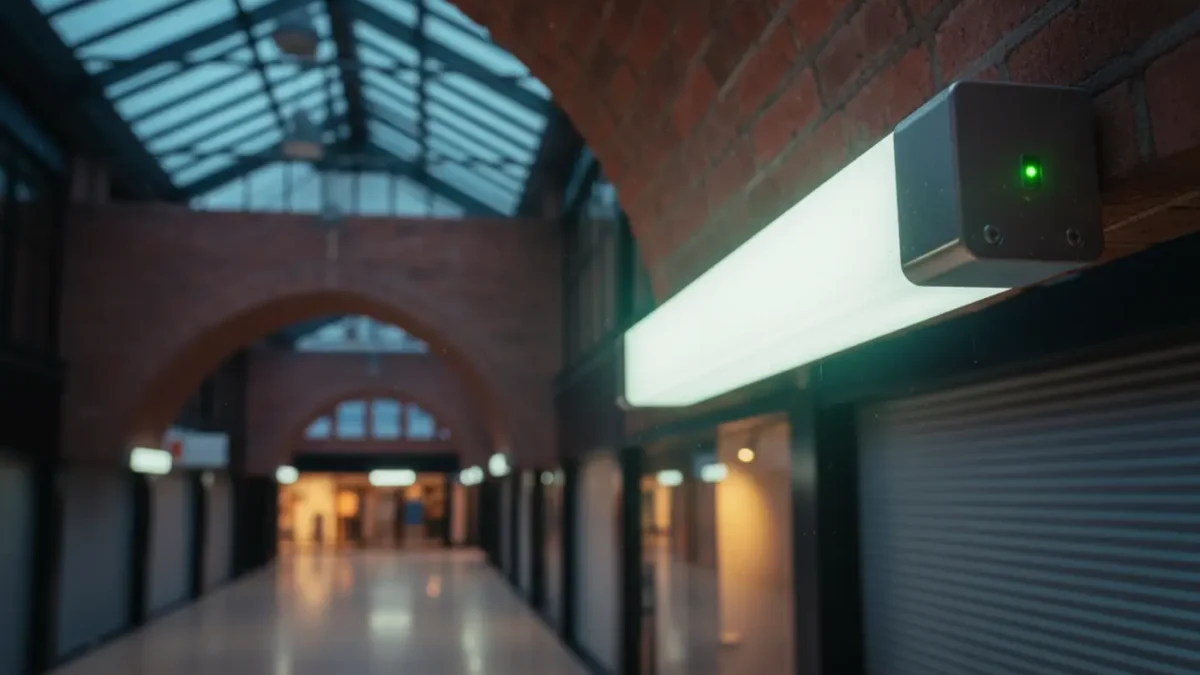
Emergency Lighting North West
The best emergency lighting for shopping centres in the North West is a BS 5266 compliant LED system with safe escape route lighting, clear exit signs, reliable backup power and easy testing records. For large retail sites in Manchester, Liverpool, Preston, Warrington and across the region, iSecurity Solutions can help plan practical emergency lighting that supports legal duties and helps visitors, tenants and staff leave safely if the mains power fails.
Why Shopping Centres Need Clear Compliance
Shopping centres need clear compliance because they are busy public buildings with malls, anchor stores, food courts, toilets, lifts, stairwells, car parks, service yards and plant rooms. Emergency lighting cannot be treated as a few green signs near the doors, so iSecurity Solutions supports landlords, managing agents and facilities teams with fire safety services that make escape routes visible, properly recorded and easier to maintain.
When normal lighting fails, people need clear visual guidance within seconds. A well designed emergency lighting system reduces panic, supports staff during an evacuation and helps everyone move towards a safe exit without guessing where to go.
Best Emergency Lighting For Shopping Centres In The North West
For 2026, the best choice is usually a low energy LED emergency lighting design that follows BS 5266 Part 1, uses BS ISO 7010 exit signage and includes either addressable self testing units or a central battery system for larger sites. Smaller retail areas may suit self contained luminaires, while larger shopping centres often benefit from central monitoring, automatic test records and lower maintenance pressure over time.
Under the Regulatory Reform Fire Safety Order 2005, the responsible person must make sure emergency routes and exits can be used safely at all relevant times. Article 14 states that emergency routes and exits requiring illumination must be provided with emergency lighting of adequate intensity, and the official wording is available on legislation.gov.uk.
UK Legal Requirements For Shopping Centre Emergency Lighting
UK legal requirements for shopping centre emergency lighting start with knowing who is responsible for each part of the building. In many centres, duties are shared between the landlord, managing agent and individual tenants, but common areas are normally managed by the centre operator or another named duty holder.
BS 5266 is the key UK code of practice for emergency lighting in premises, and BS 5266 Part 1 gives guidance for design, installation and operation. In plain terms, it explains how emergency escape lighting should be designed, installed, commissioned, tested and maintained, while the Fire Safety Order creates the legal duty to keep escape routes and exits safe.
For shopping centres, a competent design should cover escape route lighting, open area lighting, high risk task areas and standby or local area lighting where needed. It should also match the fire risk assessment, evacuation plan and tenant fit out rules, rather than being added later as a quick fix.
Types Of Emergency Lighting For Retail Spaces
Retail spaces use different types of emergency lighting because public areas, staff zones and back of house routes do not all have the same risk. Maintained emergency lighting stays on during normal use and continues to run during a power failure, which makes it useful for exit signs, public malls, cinemas, food courts and areas where visitors may not know the layout.
Non maintained emergency lighting is normally off and only turns on when the mains lighting fails. This can work well in back of house corridors, staff areas, stock rooms and plant spaces, provided the fire risk assessment and BS 5266 design support that choice.
Combined emergency lighting includes both maintained and non maintained functions within one fitting or system arrangement. It is useful where a centre wants visible signage during trading hours and emergency output if the normal power supply fails.
Why LED Emergency Lighting Is Now The Standard
LED emergency lighting is now the standard choice for modern shopping centres because it uses less energy, lasts longer and needs less routine lamp replacement than older fluorescent or incandescent fittings. Across hundreds or thousands of emergency luminaires, that can make a clear difference to running costs.
LED fittings also work well with modern control gear, automatic testing and central reporting systems. For large retail estates with several North West sites, this means fewer manual checks, faster fault spotting and better evidence during audits.
Common LED fittings include emergency bulkheads, recessed downlights, twin spots, exit signs and weather resistant units for car parks or service yards. The aim is not to choose the brightest fitting available, but to place the right light level in the right area.
Exit Signage And BS ISO 7010 Pictograms
Exit signage in shopping centres must be clear, consistent and easy to understand for people who may never have visited the building before. BS ISO 7010 running man pictograms create a standard visual style, which is important in retail centres where shop signs, adverts and displays can compete for attention.
Signs should be placed at final exits, changes of direction, corridor junctions, stair entrances, relevant escalator areas and any decision point where people need guidance. If a visitor has to stop and think about the route, the signage layout should be reviewed.
Illuminated exit signs are usually best for busy shopping centres because they remain visible when normal lighting fails. Photoluminescent signs can support the system in some areas, but they should not replace properly designed emergency lighting.
Central Battery Systems Or Self Contained Luminaires
Central battery systems and self contained luminaires both have a place in shopping centre emergency lighting, but they suit different layouts and budgets. Self contained luminaires have their own battery inside or near each fitting, so they are often quicker to install, simple to expand and useful for smaller units, tenant spaces and some refurbishment work.
The challenge is that every self contained fitting has its own battery to test, track and replace. In a large shopping centre, that can quickly become a long maintenance list, and facilities teams usually have enough lists already.
Central battery systems use one central power supply to feed many emergency luminaires. They can be better for large shopping centres because battery care is managed in one location, monitoring is easier and fittings can be simpler at the point of use.
The right choice depends on the building size, cable routes, existing equipment, trading hours, budget and maintenance resources. In practice, many large centres use a planned mix, with central systems in common areas and self contained fittings where they make better sense.
Addressable And Self Testing Emergency Lighting
Addressable and self testing emergency lighting helps shopping centre teams find faults faster and keep better records. Each fitting can report its status to a control panel or software system, so the facilities team can see battery problems, lamp faults and test results without relying only on manual checks.
Self testing systems can run scheduled functional checks and duration tests in line with BS 5266 Part 8. This does not remove the need for competent oversight, but it does reduce the manual workload across large sites.
For shopping centres, addressable testing is especially useful because monthly checks can be phased outside peak trading hours and faults can be prioritised by zone. If a stairwell, car park route or service corridor has a problem, the team can deal with it before it becomes a larger compliance issue.
Coverage Considerations For Shopping Centre Zones
Coverage in shopping centre zones must be planned around the way people actually move through the building. Escape routes need enough light for people to travel safely towards a place of safety, and BS 5266 guidance is commonly applied as at least 1 lux along the centre line of defined escape routes, with fittings near exits, stairs, changes of direction, changes of level and intersections.
Open areas such as atria, concourses and food courts need anti panic lighting, often designed around a minimum of 0.5 lux across the main floor area. These spaces can be visually busy, so the lighting should help people orientate quickly without creating glare or confusing shadows.
Car parks need special care because of ramps, columns, pedestrian routes, payment machines and darker corners. External and covered areas may need weather resistant luminaires, clear wayfinding and careful positioning around final exits and stair cores.
Service corridors, loading bays and plant rooms should not be missed just because customers do not see them. Staff, cleaners, contractors and delivery teams still need safe escape routes, especially where there are trip hazards, machinery, electrical panels or restricted access areas.
Brands And Product Choices Used In UK Retail Sites
Product choices for UK retail sites should be based on design needs, certification and long term service support. Facilities teams in the North West will often see recognised emergency lighting names such as Kosnic, JCC, Channel Safety and Ansell, including bulkheads, exit signs, downlights, twin spots and self testing products.
The brand matters less than the correct design, installation and maintenance plan. A suitable mid range fitting in the right place will usually perform better than a premium product installed without proper calculations, test records or commissioning documents.
When choosing products, look for compatibility with BS 5266 design needs, suitable emergency duration, clear battery information, practical replacement parts and useful reporting options. For shopping centres, long term serviceability matters just as much as the first day installation cost.
Testing, Inspection And Maintenance In 2026
Testing, inspection and maintenance in 2026 should prove that emergency lighting will work when needed. BS 5266 expects systems to be checked and maintained, which usually means monthly functional tests and an annual full duration test, with results kept in a logbook or digital maintenance system.
The monthly test is often called a flick test because the emergency lighting is activated briefly to confirm it works. In shopping centres, this should be scheduled out of hours or by zone, so retailers are not disrupted while customers are shopping.
The annual full duration test checks that emergency fittings can run for their rated period, commonly three hours in many UK commercial premises. After this test, the system needs time to recharge properly, so planning is important to avoid leaving the centre with reduced emergency cover.
If you manage tenants, public safety, budgets, audits and daily disruption at the same time, emergency lighting records can feel like one more plate to keep spinning. A formal maintenance contract helps keep testing, repairs and documents under control, especially where facilities teams are already managing lifts, alarms, cleaning, tenants and the occasional mystery leak. A planned service contract can make compliance easier to prove during inspections and insurance reviews.
If you want a deeper look at test routines, records and common errors, emergency lighting testing explains monthly and annual checks in a practical way.
Choosing A Qualified North West Contractor
Choosing a qualified North West contractor means looking for proven emergency lighting skill, clear paperwork and experience in busy public buildings. Emergency lighting should be designed, installed and certified by a competent electrical contractor with knowledge of BS 5266 and experience in commercial fire safety systems.
A good contractor should provide design information, installation certificates, commissioning records, as installed drawings, test results and practical maintenance guidance. If the handover pack is missing, unclear or hard to follow, it can create problems during audits, insurance checks and future repairs.
iSecurity Solutions is a trusted UK provider of commercial and domestic security systems, helping homes and businesses stay protected around the clock. Alongside emergency lighting, CCTV, intruder alarms, fire safety, access control and construction site monitoring, the team can advise on wider business security and building protection where retail operators need joined up support.
Practical Compliance Checklist For Shopping Centres
A practical compliance checklist helps shopping centre teams keep emergency lighting safe, simple and ready for inspection. The aim is to confirm responsibility, match the system to the fire risk assessment and keep testing records easy to find.
- Confirm who the responsible person is for common areas, tenant units and shared escape routes.
- Review the fire risk assessment and identify escape routes, open areas, stairs, car parks, service corridors and plant rooms.
- Design emergency lighting to BS 5266 Part 1, with monthly and annual testing planned from day one.
- Use BS ISO 7010 compliant exit signage with clear running man pictograms and directional arrows.
- Choose LED fittings suited to the environment, including robust units for car parks and service areas.
- Consider addressable or self testing systems for large sites to reduce manual inspection time.
- Keep test logs, certificates, drawings and maintenance records ready for audits and insurers.
Final Thoughts
The best emergency lighting for shopping centres in the North West is not just about choosing smart looking fittings. It is about safe movement, legal compliance, clear signage, reliable testing and long term maintenance across a busy building that may welcome thousands of visitors every day.
For most large centres in 2026, LED emergency lighting with BS 5266 Part 1 design, BS ISO 7010 signage and addressable testing is the strongest route. Whether the final system uses central battery power, self contained luminaires or a mix of both, the priority stays the same. People must be able to find a safe way out when normal lighting fails.
If you manage a shopping centre in the North West, speak with iSecurity Solutions to arrange a compliance review, site survey or maintenance discussion that keeps your emergency lighting clear, practical and ready when it matters.