Best wireless intruder alarms With No Subscription Fees
Wireless Intruder Alarms With No Fees
The best wireless intruder alarms with no subscription fees for UK homes are reliable wireless kits that include door sensors, motion detectors, a loud external siren, app alerts, good battery life and no forced monthly plan. They protect your property without adding another direct debit, which is why many homeowners, renters and landlords now choose them for simple, everyday security.
For many UK properties, subscription free alarms make sense because they are quick to fit, easy to move and affordable over the long term. If you want help choosing a system that suits your home, budget and insurance needs, iSecurity Solutions can design and install practical security that fits the way you live.
Why UK Homeowners Choose No Monthly Fee Alarms
UK households are watching costs more closely, and alarm subscriptions can become an unwanted expense over time. A wireless intruder alarm with no monthly fees lets you pay once for the equipment, receive app notifications and control the system yourself without being tied to a rolling plan.
The other big reason is ease of use. Modern wireless alarms use battery powered sensors, smart hubs and mobile apps, so there is no need to run cables through walls or lift carpets, which is helpful if you have recently decorated or you are renting and want to avoid damage.
Subscription free does not always mean suitable for every situation. If you need a Police Response URN, which is the unique reference number required for eligible police response to confirmed alarms, you usually need a professionally installed and maintained system that meets the right standards and is connected through approved monitoring.
Wireless Intruder Alarms Vs Wired Systems
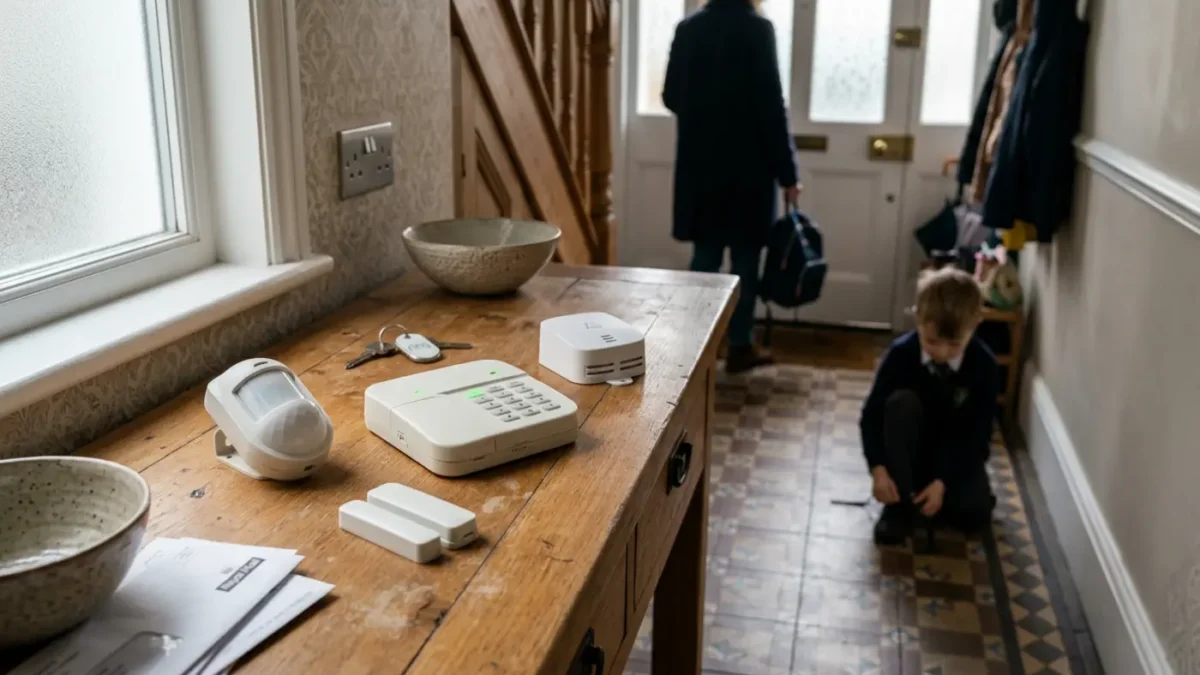
Wireless intruder alarms suit most UK homes, flats and rental properties because they are faster to fit and cause far less disruption. A typical kit includes a control hub, keypad, door and window contacts, motion sensors and a siren, with each device communicating by secure radio signal rather than cables.
Wired systems remain a strong choice for larger homes, major refurbishments and properties where cables can be hidden neatly during building work. They can be very reliable because sensors are powered by cable, although installation usually takes longer and costs more.
If you want a neat, professionally planned setup without chasing walls or guessing where sensors should go, wireless intruder alarms can be tailored to cover doors, windows, garages, outbuildings and other vulnerable access points.
What Suits Houses, Flats And Rentals?
For detached and semi detached houses, a wireless system with an external siren, rear door sensors, ground floor window contacts and pet friendly motion detectors is usually a sensible starting point. Burglars often target side gates, patio doors and hidden rear entrances, so the front door should not be the only focus.
For flats, the main focus is usually the entrance door, balcony access and any shared corridors or storage spaces. Renters should choose systems with adhesive sensor mounts where suitable, app control and easy removal, although you should always check your tenancy agreement before fitting a siren to an outside wall.
Landlords often prefer wireless systems because they can protect empty properties, reduce risk during void periods and avoid costly building work. If the property is an HMO or has licence conditions, fire safety, emergency access and local authority expectations should also be considered alongside security.
Subscription Free Alarms Vs Monitored Alarms
The real cost difference becomes clearer when you look beyond the purchase price. A subscription free wireless alarm may cost around £100 to £500 depending on the kit, while a monitored alarm can include installation, monitoring, maintenance and call out charges that build up over several years.
For example, a no monthly fee alarm bought for £250 may only need occasional battery replacements. A monitored alarm costing £25 to £45 per month could cost £1,500 to £2,700 over five years before maintenance or upgrades, although it may offer stronger response options, better records and possible insurance benefits.
The best option depends on your risk level. If you only need a loud siren and phone alerts, subscription free can be excellent value, but if you need keyholder response, alarm receiving centre monitoring or a Police Response URN, monitored security is usually the more suitable route.
- Wireless Alarm: Best for homes, flats and rentals where quick fitting and low disruption matter, but battery life and signal strength should be checked.
- Wired Alarm: Best for larger homes and refurbishments where cable routes can be planned neatly during building work.
- Subscription Free Alarm: Best for simple self monitored security with no forced monthly plan, as long as key app features stay free.
- Monitored Alarm: Best for higher risk or insurance led properties where BS EN 50131 compliance and Police Response URN eligibility may be required.
Key Features To Look For In 2026
A good wireless alarm should include reliable sensors, a loud siren, secure app control, tamper alerts and batteries that last long enough to avoid constant maintenance. Expandable kits are also useful because many homeowners start with the basics and later add extra window sensors, shed contacts or outdoor detectors.
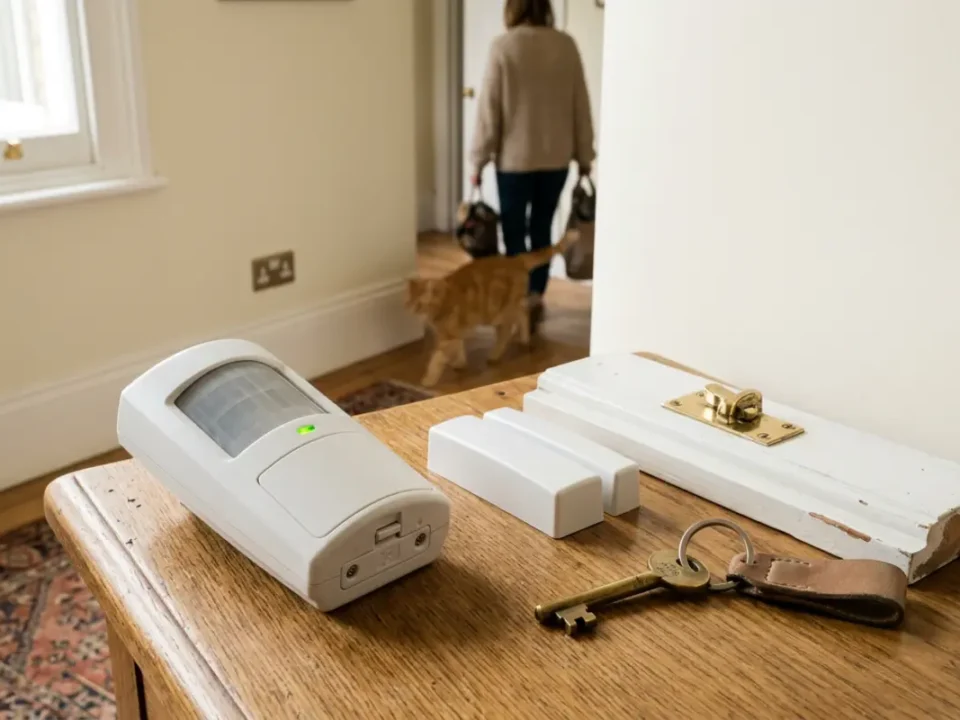
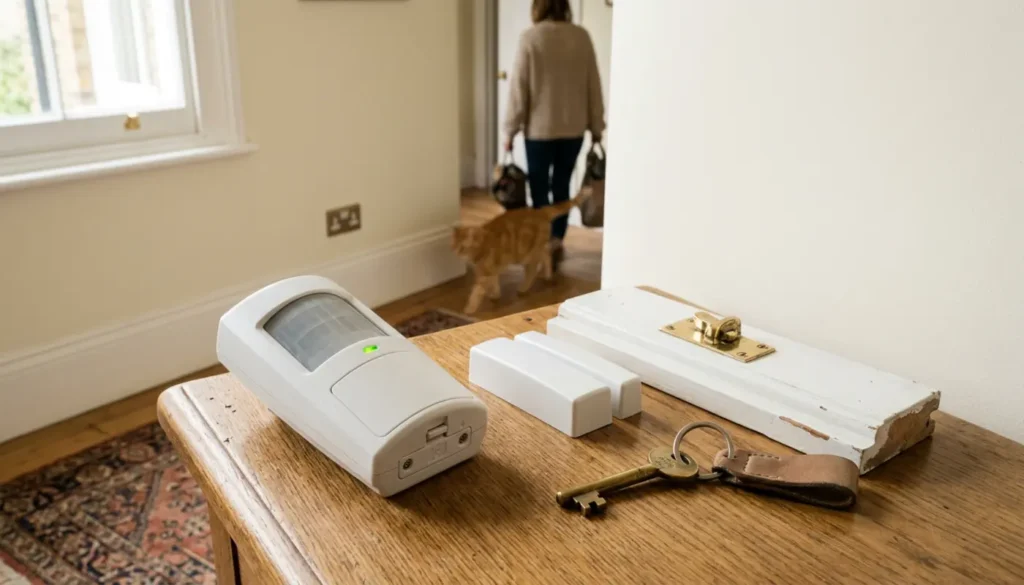
Door and window sensors are the backbone of most home alarm systems because they detect when an entry point opens. Motion sensors then cover rooms and hallways, while pet tolerant sensors help reduce false alarms caused by cats, dogs and the occasional leap onto the sofa.
App control is now expected rather than unusual. You should be able to arm and disarm the system, receive alerts, check device status and manage users from your phone, but the alarm should still work as a siren system if your internet goes down.
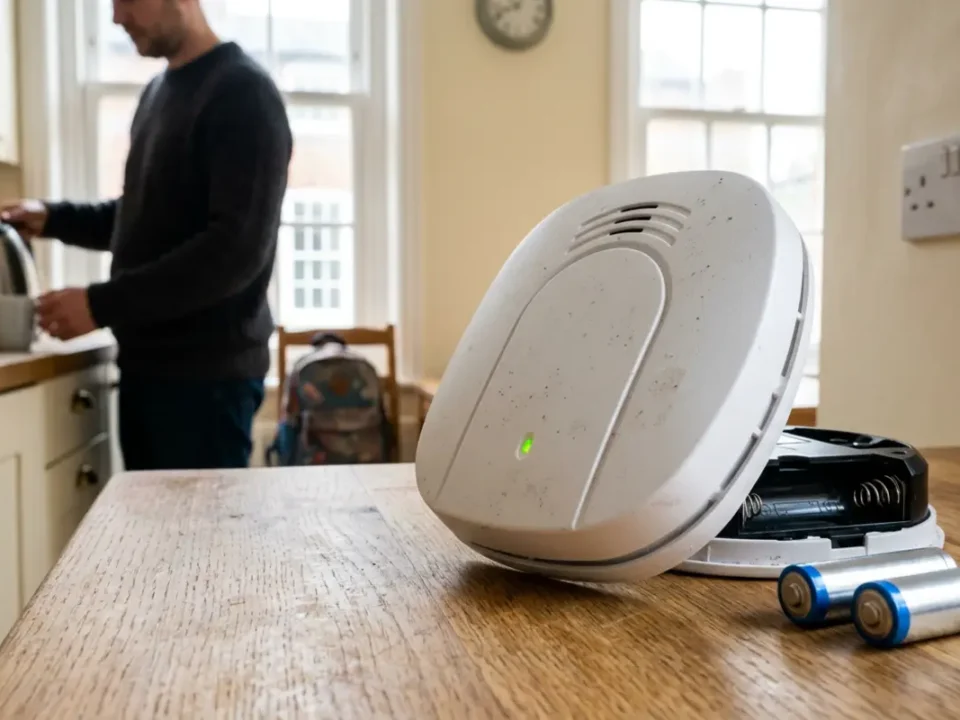
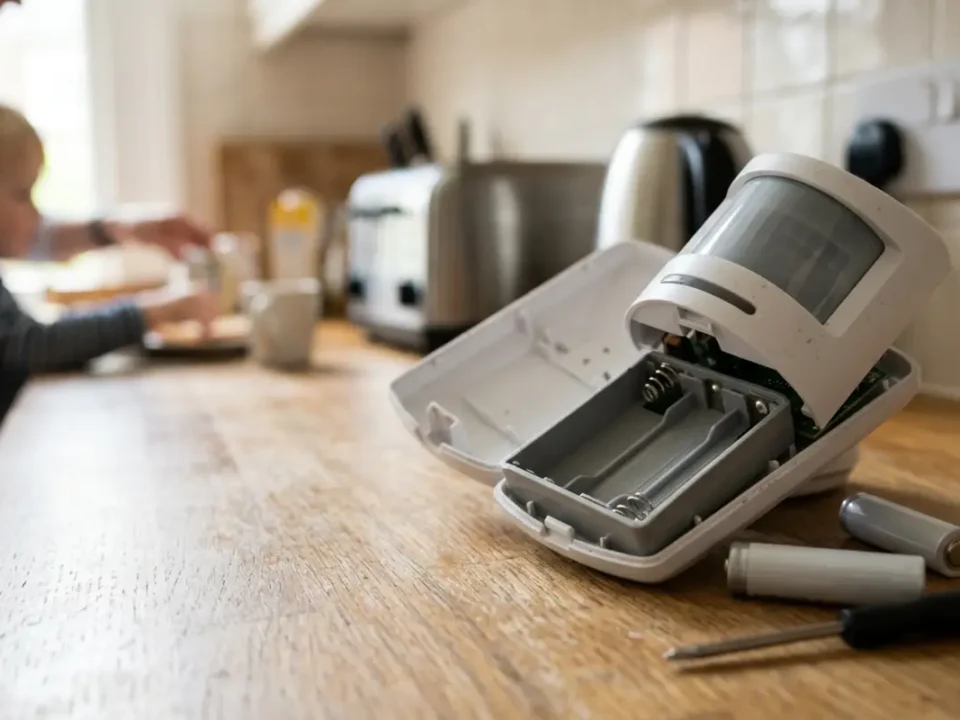
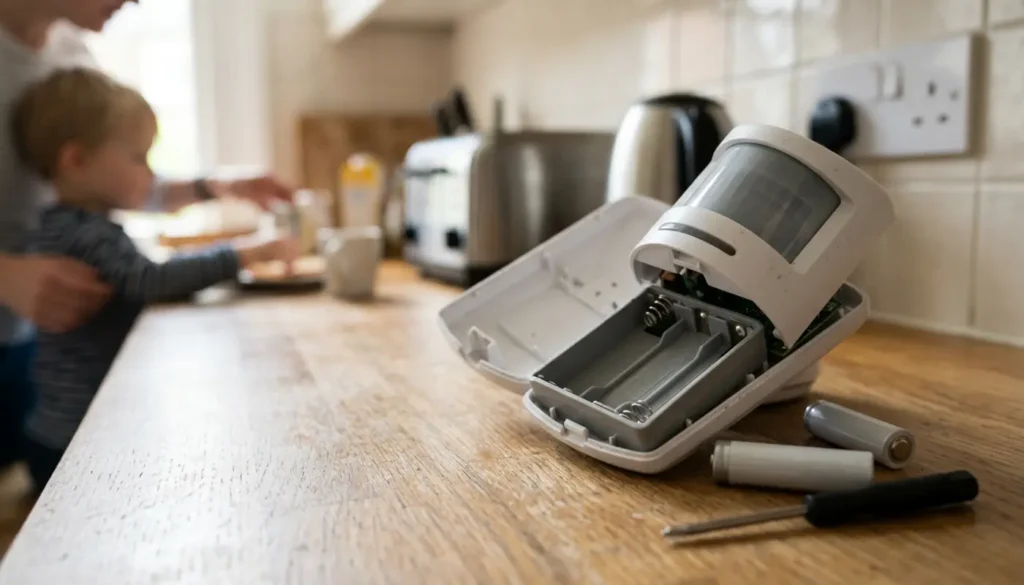
Battery life matters because wireless devices depend on it. Many good sensors last one to three years, while some last longer, but the exact lifespan depends on use, temperature and signal strength, so careful placement can make a real difference.
It is also worth checking exactly what subscription free means. Some systems include basic app alerts for free but charge for extras such as cloud recording, extended history, assisted monitoring or advanced smart features, so check what is included before buying.
If you want a clearer look at sensors before buying, the explanation of wireless alarm sensors is useful for understanding how contacts, PIR detectors and other devices work together.
Top Subscription Free Wireless Alarm Systems In The UK
Several consumer alarm kits are available in the UK with no compulsory monthly fee, although features vary by package. Some focus on simple home protection, some work well with smart home devices and others offer optional paid services if you decide you want extra features later.
Traditional style kits are often chosen by homeowners who want a familiar setup with sirens, keypads and practical sensors. They can work well for houses where the main priority is a clear deterrent, easy arming and reliable protection for doors, windows and hallways.
Smart alarm kits are popular with people who already use connected cameras, video doorbells or voice assistants. The basic alarm may work without a subscription for self monitoring, but advanced features can sometimes sit behind optional plans, so it is worth checking the details.
The main thing is not the badge on the box. It is whether the kit covers your real risk points properly, because a smart app will not help much if the rear patio door, garage or side entrance is left unprotected.
Best Budget Wireless Alarms Under £150
Budget wireless alarms under £150 can be a good fit for flats, small terraces, garages and renters who want basic protection without committing to a monitored package. At this price, expect a hub or siren unit, a small number of sensors and simple app or remote control features.
The compromise is usually expandability, siren quality, battery reporting, smart home links or support. Some cheaper kits are perfectly fine for a low risk property, but they may not be suitable for larger homes, high value contents or insurance led requirements.
When shopping under £150, focus on essentials rather than flashy extras. A reliable door sensor, motion detector and loud siren will usually do more good than a complicated app that looks impressive but fails to alert you when it matters.
Best Smart Alarm Features For Modern Homes
Smart alarm systems can connect with Alexa, Google Home and sometimes Apple HomeKit, depending on the product. This can make daily use easier, especially if you want voice routines, smart lighting responses or alerts that work alongside cameras and video doorbells.
The most useful smart feature is often automation rather than voice control. For example, your system may switch on hallway lights when the alarm triggers or remind you to arm the system when everyone has left home.
Connected security should be set up carefully. Use strong passwords, turn on two factor authentication where available and keep apps updated, because a connected alarm should make your home safer rather than create another weak point.
Police Response, Insurance And British Standards
For everyday self monitored alarms, police do not normally attend just because your phone receives an alert. Police response in the UK usually requires a compliant monitored alarm, confirmation technology and a valid Police Response URN issued through the correct process.
Professional intruder alarm systems should be designed and installed in line with BS EN 50131, often shortened to EN 50131, which is the key British and European standard for intruder alarms. Domestic homes are commonly Grade 2, while higher risk properties may need Grade 3 depending on the risk assessment and insurer expectations.
Insurance conditions can feel dull, but they are important. If your insurer requires an alarm, always ask whether it must be installed and maintained by an SSAIB certified, Insurance Approved company, because that can affect cover, claims and eligibility for a Police Response URN.
Secured by Design is the official police security initiative that gives useful crime prevention advice for homes and buildings. You can read general security information through Secured by Design, especially if you are improving doors, locks, lighting and alarms together.
DIY Installation Tips For UK Properties
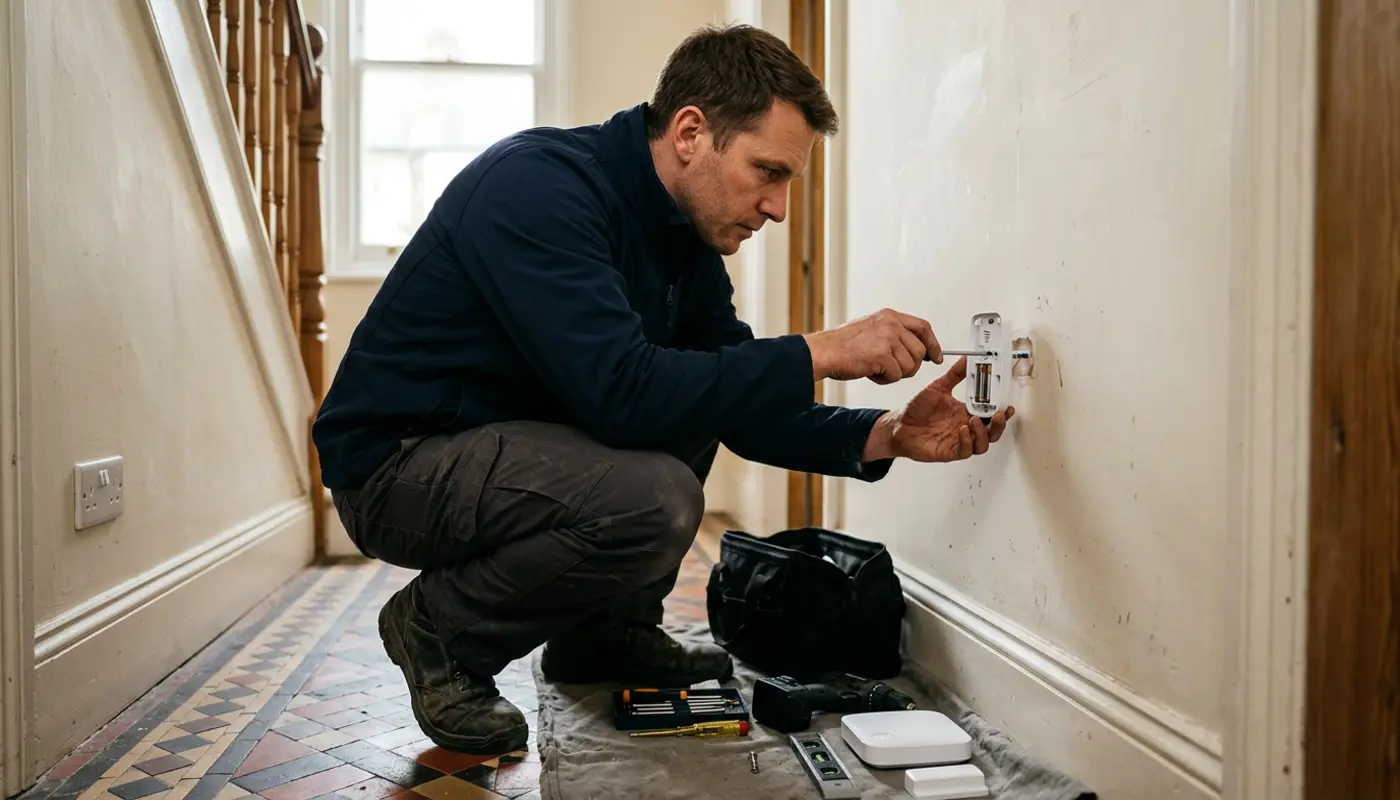
DIY installation is one of the main attractions of subscription free wireless alarms, but sensor placement makes a big difference. Fit door contacts neatly on the main entrance, rear doors and accessible patio doors, then place motion sensors where an intruder is likely to walk after entry rather than pointing them at windows, heaters or moving curtains.
Keep the alarm hub somewhere discreet while making sure it can still communicate with all devices. If the hub relies on broadband, position it close enough to your router for a stable connection, but avoid leaving it beside the front door where it can be reached quickly.
For renters, use non damaging fixings only where suitable and keep all original packaging, spare pads and instructions. For landlords, make sure tenants understand how to use the system, because even the best alarm becomes a noisy wall decoration if nobody knows the code.
Test the system after installation and then at regular intervals. Walk test motion sensors, open protected doors and check that app alerts arrive quickly, because discovering notifications were switched off after a break in would be very frustrating.
UK Law On Alarm Noise And False Alarms
External alarm sirens are there to attract attention, but they should not ring endlessly. In the UK, repeated or prolonged alarm noise can become a nuisance, and local authorities have powers to act where noise causes unreasonable disturbance.
Good practice is to use a siren cut off, often around 15 to 20 minutes, and make sure trusted keyholders can access the property if something goes wrong while you are away. False alarms are not just annoying for neighbours, as they can also teach people nearby to ignore your alarm.
Most false alarms come from poor sensor placement, low batteries, pets, open windows or users rushing the entry code. A little setup care and a quick family briefing can prevent a lot of late night drama, including the classic moment when someone forgets the alarm is on.
Buying Checklist For 2026
- Choose a system with enough sensors for all realistic entry points, so your coverage matches how someone would actually enter.
- Check whether app alerts are included without a subscription, so you know what you can use from day one.
- Look for a loud siren, tamper alerts and battery status notifications, so faults and interference are spotted quickly.
- Make sure the kit can expand if you later add a garage, shed or extra rooms, so you do not need to replace the whole system.
- Confirm smart home compatibility with Alexa, Google Home or Apple HomeKit if you need it, so the alarm fits your daily routine.
- Ask your insurer whether they require BS EN 50131 compliance, professional maintenance or an SSAIB certified, Insurance Approved installation, so your cover stays clear and valid.
- If you need police response, confirm the route to a Police Response URN before buying, so you do not choose the wrong type of system.
- Check replacement battery costs and expected battery life, so ongoing maintenance does not become a nuisance.
- Read the privacy and data settings if cameras or cloud services are included, so you understand how recordings and alerts are handled.
Final Verdict On Wireless Alarms With No Fees
The best wireless intruder alarm with no subscription fees is the one that fits your home layout, risk level and daily routine. For many UK homes, a subscription free system gives a strong mix of deterrence, app alerts and affordability, especially when fitted carefully and tested regularly.
If your property has higher risk, valuable contents or insurance conditions, it is worth speaking with a professional before buying a DIY kit. No monthly fee alarms are excellent for many people, but monitored systems, BS EN 50131 compliance and Police Response URN eligibility still matter when you need a stronger response and formal assurance.