SSAIB Certified Intruder Alarms: Fix Security Worries
SSAIB Certified Intruder Alarms
If you have ever looked at your insurance documents and seen terms like SSAIB certified alarm business insurance UK EN 50131, you are not alone in wondering what it all means. The acronyms can feel overwhelming at first. The simple answer is that insurers and police expect your intruder alarm to meet recognised standards and to be installed by a properly certified company.
In clear terms, most UK insurers and police forces require an intruder alarm to be installed by an SSAIB certified, Insurance Approved company and designed to EN 50131 and BS 8243 standards where police response is needed. Without third party certification, you could lose police response and face problems with your insurance cover.
For businesses across the North West, from retail shops to warehouses and offices, this is not just about ticking a compliance box. It is about protecting your stock, your staff and your reputation while making sure your insurer cannot question the quality of your security.
At iSecurity Solutions, we focus on Insurance Approved systems that meet EN 50131 grading, align with NPCC policy for Police Response URN eligibility and are designed around real world risks. If those standards sound confusing, do not worry. They are easier to understand than they first appear.
What Is SSAIB And Why It Matters
SSAIB stands for the Security Systems and Alarms Inspection Board. It is a UKAS accredited certification body that inspects and certifies security companies to make sure they meet recognised British and European standards. UKAS, the United Kingdom Accreditation Service, is the government appointed body that checks certification organisations are competent and impartial. You can read more on the official UKAS website.
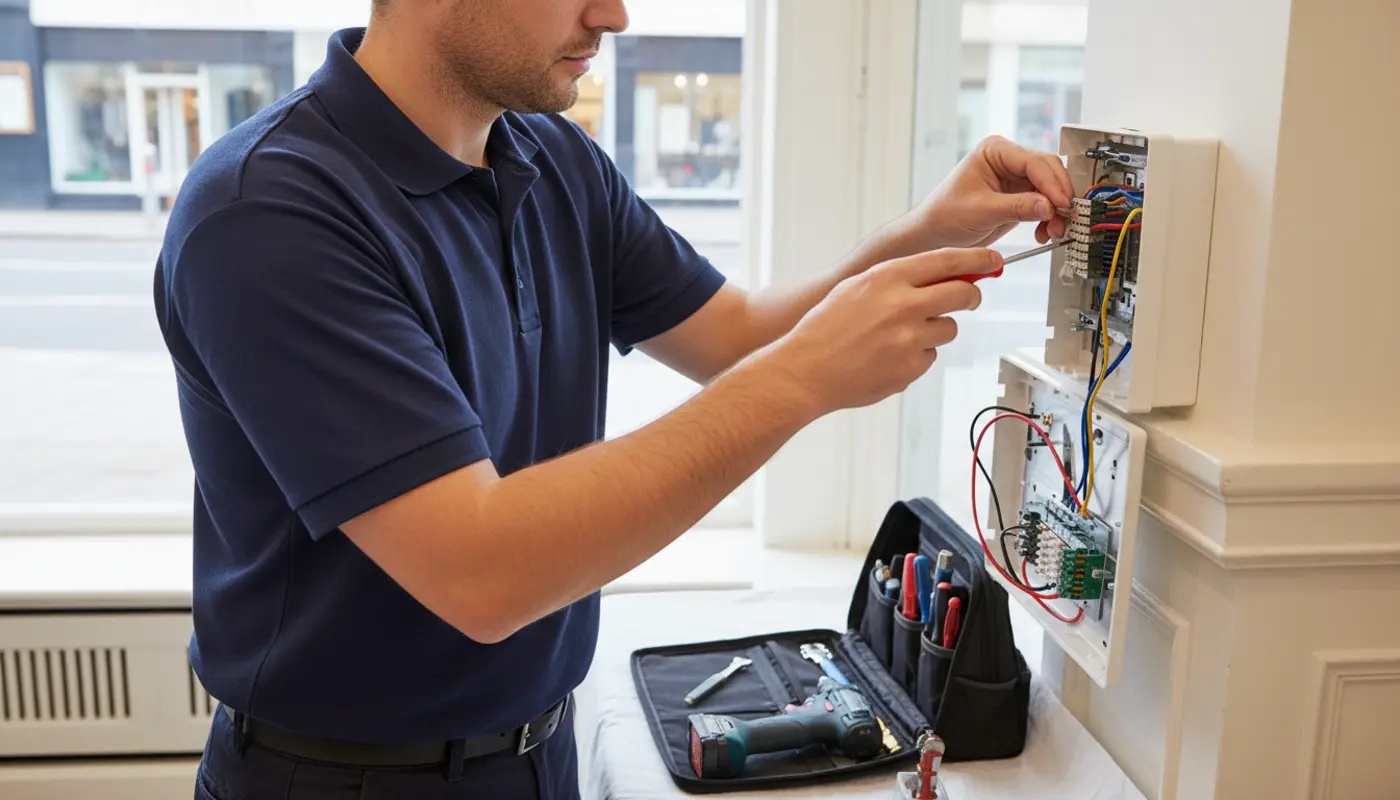
For you as a business owner, this means that if your alarm installer is SSAIB certified, an independent body has assessed their training, processes, documentation and technical standards. For intruder alarms, that includes compliance with EN 50131, usually Grade 2 or Grade 3 for commercial premises and, where police response is required, BS 8243 for confirmed alarm signalling.
SSAIB certification is recognised by insurers and police forces. It forms the foundation of an Insurance Approved installation and allows you to apply for a Police Response URN under National Police Chiefs Council policy. Without it, the police may refuse to attend alarm activations.
SSAIB Vs NSI What Is The Difference
In the UK, the two main certification bodies for intruder alarms are SSAIB and NSI. Both are UKAS accredited and both are recognised by police and insurers. From a business owner perspective, either can satisfy insurance conditions provided the system is installed and maintained correctly.
The key point is not which logo appears on the van. What matters is whether the installer holds current third party certification for the specific scheme covering intruder alarms, CCTV or fire systems. Always check that the certification is valid and up to date before going ahead.
EN 50131 And BS 8243 Explained Simply
EN 50131 is the European standard that sets out how intruder and hold up alarm systems must be designed, installed and graded. Grades range from 1 to 4. Grade 2 is common for standard commercial premises, while Grade 3 is used for higher risk environments such as jewellery shops, pharmacies or sites with high value stock.
BS 8243 focuses on confirmed alarm conditions when police response is required. In practice, this means the system must verify an intrusion through more than one trigger or technology before signalling the Alarm Receiving Centre. False alarms are a major concern for police and repeated issues can lead to response being withdrawn.
An SSAIB certified and Insurance Approved installer will ensure your system complies with EN 50131 and, where required, BS 8243. That compliance supports your Police Response URN application and keeps your insurer satisfied.
NPCC Policy And Police Response URN
Under National Police Chiefs Council guidelines, police will only issue and maintain a Unique Reference Number for systems installed, maintained and monitored by a company certified by a UKAS accredited body such as SSAIB. If certification is not in place, the system may be treated as non compliant.
If your business relies on a monitored intruder alarm for rapid police attendance, this is essential. The alarm must meet EN 50131 grading, follow BS 8243 for confirmed alarms and be connected to an approved Alarm Receiving Centre. Only then can a Police Response URN be issued and retained.
Similar compliance requirements are discussed in Intruder Alarms For Offices In Manchester, where Grade 2 and Grade 3 systems are often required for Insurance Approved protection.
Why Insurers Insist On SSAIB Certified Alarms
From an insurer perspective, risk management is everything. If your policy includes an alarm condition, it will usually state that the system must be installed and maintained by a third party certified company. That means SSAIB or another UKAS accredited, Insurance Approved body and it means EN 50131 compliance.
For higher risk premises, insurers often specify Grade 3 systems and monitored signalling with police response. If you install a cheaper, non certified system, you may technically have an alarm but not the level of protection your policy demands. No one wants to discover a policy issue after a break in.
After an incident, insurers can request installation certificates, maintenance records and confirmation of Police Response URN status. If these are missing or non compliant, there is a real risk of reduced settlement or even claim rejection.
Can SSAIB Certification Reduce Premiums
Every insurer calculates premiums differently, but many underwriters view certified and Insurance Approved systems as a positive risk factor. A properly installed EN 50131 Grade 2 or Grade 3 alarm with a valid Police Response URN shows that you take security seriously.
This can lead to improved terms or lower excesses. It is not about chasing small savings. It is about protecting your position if the worst happens.
Systems Covered Under SSAIB Certification
Although intruder alarms are often the main focus, SSAIB certification covers a wide range of security and fire systems. These include CCTV, access control and fire detection systems.
Professionally installed CCTV systems should align with relevant standards and, where monitored for police response, fall under NPCC requirements. Intruder alarms must comply with EN 50131, usually Grade 2 or Grade 3 and be Insurance Approved.
Fire alarm systems must comply with BS 5839, typically Category L1 or L2 in commercial settings depending on risk. Emergency lighting must meet BS 5266 including monthly function tests and annual full duration tests. Fire extinguishers must be serviced in line with BS 5306 and BAFE SP101 with an annual service certificate that insurers expect to see. Fire risk assessments should follow PAS 79 methodology.
By integrating intruder alarms, CCTV and access control systems under certified schemes, you create a stronger compliance framework and a clear audit trail.
The Risk Of Using A Non Certified Installer
It can be tempting to choose the lowest quote, especially when budgets are tight. However, if the installer is not certified by SSAIB or another UKAS accredited, Insurance Approved body, you could face serious consequences.
You are unlikely to obtain a Police Response URN for monitored systems. Your insurer may argue that you failed to meet policy conditions. Without independent oversight, there is also a higher chance of incorrect grading, poor installation or missing documentation.
Security is not just about hardware on the wall. It is about compliance, paperwork and long term maintenance. That is why ongoing service contracts are essential to keep EN 50131 systems within specification and maintain Insurance Approved status.
How To Check If An Installer Is SSAIB Registered
Verifying an installer is straightforward. Visit the SSAIB website and use the Find a Registered Firm tool. You can search by company name, region and scheme category such as intruder alarms or CCTV.
Check that the company is listed for the correct discipline and that its certification is current. It only takes a few minutes and can prevent major compliance issues later.
Steps To Become SSAIB Compliant
The first step is a proper risk assessment of your premises. Consider asset value, crime levels in your area, access points and any insurer requirements. For higher risk environments, Grade 3 EN 50131 systems may be appropriate.
Next, choose an SSAIB certified and Insurance Approved installer who understands NPCC Police Response URN criteria. Agree the correct grading, confirmed alarm signalling in line with BS 8243 and monitored connection to an approved Alarm Receiving Centre.
Put a maintenance agreement in place to ensure ongoing compliance. Regular servicing keeps detectors, signalling paths and control panels working correctly. Annual inspections and updated documentation are part of staying insured.
Keep all certificates and service records stored safely. If you ever need to make a claim, clear paperwork showing EN 50131 compliance and valid Police Response URN status will make the process much smoother.
Final Thoughts On Fixing Security Worries
Most business owners ask the same questions. Are we compliant. Will the police attend. Will our insurer pay out if something goes wrong.
An SSAIB certified and Insurance Approved intruder alarm installed to EN 50131 and BS 8243 standards provides clear answers. It gives you structure, documentation and recognised compliance that stands up to scrutiny.
For businesses in the North West, the right grading, Police Response URN eligibility and documented maintenance offer genuine peace of mind. It is not about buying the most expensive system. It is about choosing the right certified system and keeping it compliant year after year.