How Does Access Control Systems Work
Access Control Systems
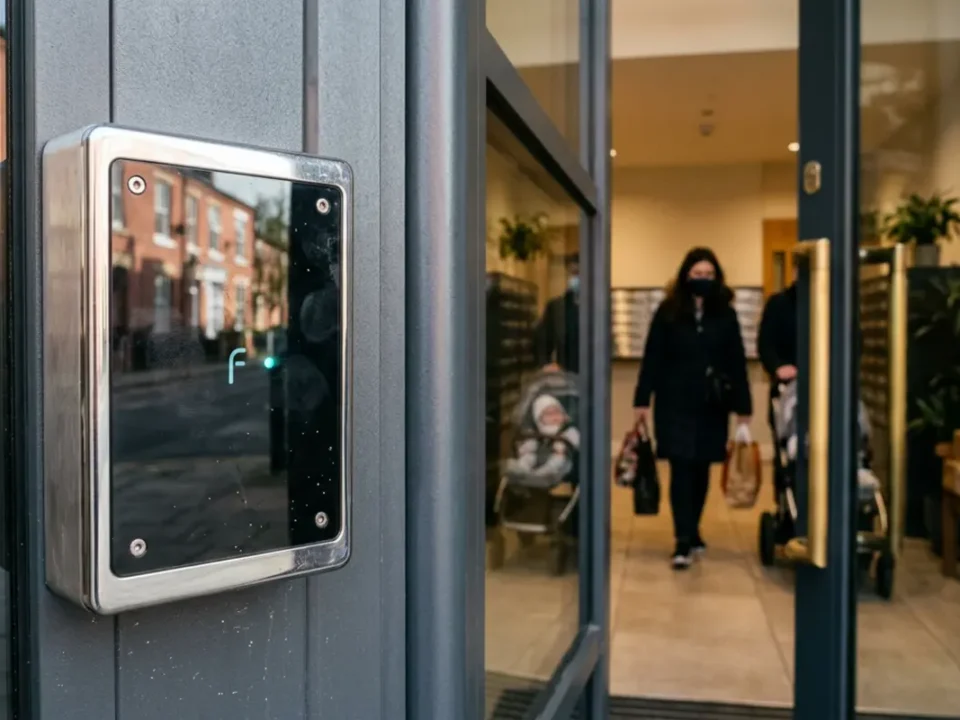
If you are trying to understand how access control systems work, the simple answer is that they check whether a person is allowed to enter a door, gate or secure area, then unlock it for a short time when their card, fob, PIN, phone or biometric check is approved.
Instead of relying only on metal keys that can be lost, copied or passed around, access control gives UK homes and businesses a safer way to manage who can go where. It is useful for offices, schools, warehouses, flats, care settings, gyms and private homes where different people need different levels of entry.
For tailored support with modern door entry and wider security systems, iSecurity Solutions helps property owners choose practical systems that suit the building, the users and the risk level. iSecurity Solutions is a trusted UK provider of commercial and domestic security systems, covering CCTV, intruder alarms, fire safety, access control and construction site monitoring with reliable, tailored support.
The best access control systems feel simple for everyday users, but they do serious work in the background. They help protect people, property and sensitive areas while giving managers a clear record of access activity when it is needed.
What Is An Access Control System?
An access control system is an electronic security setup that decides who can enter a building, room, car park, stock area or staff only zone. It reduces the need for traditional keys by using electronic access methods that can be added, changed or removed through a control system.
The main benefit is control. If an employee leaves, a tenant moves out or a visitor badge goes missing, you do not need to change every lock in the building. You simply remove that person from the system, which is far easier than searching every drawer for spare keys.
Access control is common in UK offices, schools, nurseries, warehouses, gyms, apartment blocks and private homes. It helps manage daily movement, protect private areas and create an audit trail that shows which door was used and when.
Why UK Homes And Businesses Use Access Control
UK homes and businesses use access control because it gives better control than keys, supports safer entry and makes it easier to manage staff, visitors, contractors and residents. It is especially useful when people need different access rights at different times of the day.
Traditional keys still have their place, but they are not ideal when several people need different levels of access. A school may need teachers to enter classrooms, cleaners to access selected areas after hours and visitors to remain in reception until they are approved.
For businesses, access control supports safer working, better safeguarding and smoother building management. It can help stop unauthorised entry, reduce internal theft, protect server rooms and support reception teams that need to manage guests without leaving doors open.
For homes, controlled door entry can improve both convenience and security. A smart entry system can allow family members, carers or trusted tradespeople to enter without hiding a key under a plant pot, which is rarely as secret as people hope.
Access Control System Components
The main parts of an access control system are credentials, readers, controllers, electric locks and management software. Each part has a clear job, and together they allow the system to make a safe access decision in just a few seconds.
- Credentials prove who the user is.
- Readers collect the credential information at the door.
- Controllers decide whether access should be approved.
- Electric locks secure or release the door.
- Management software lets authorised users control permissions and view activity.
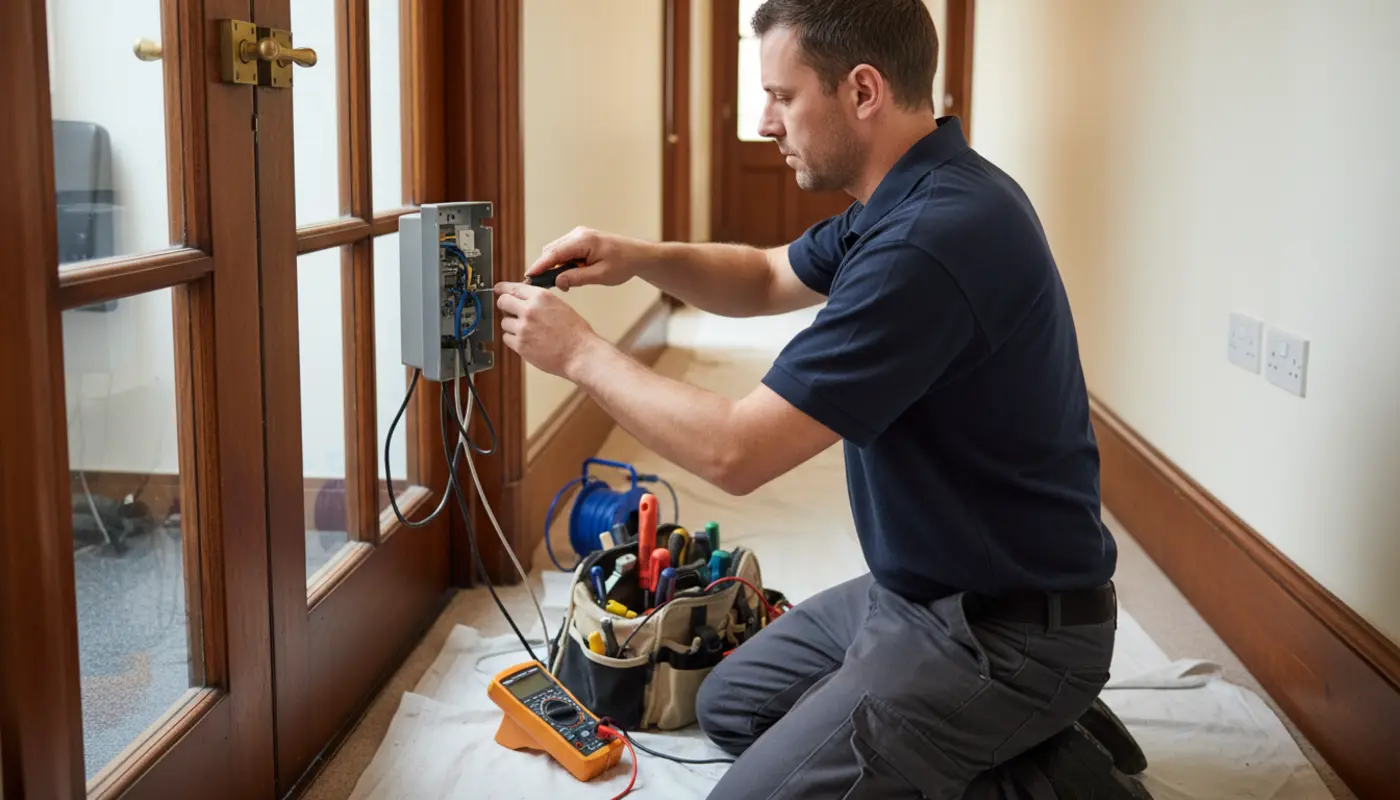
For a professional setup, an installer will look at the doors, escape routes, user numbers, network availability, power supplies and fire safety needs before recommending equipment. You can explore tailored options on the access control service page.
Credentials
A credential is the item or method a person uses to prove they are allowed in. It might be a fob, card, PIN, phone app, fingerprint or face scan. The system only needs enough information to confirm whether that person has permission.
Readers
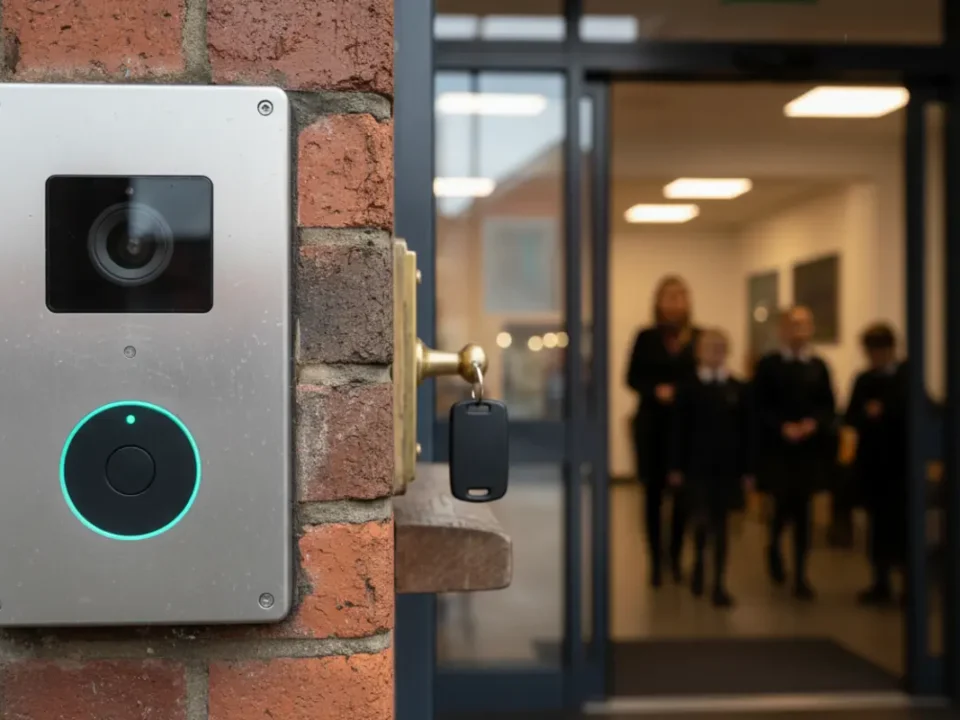
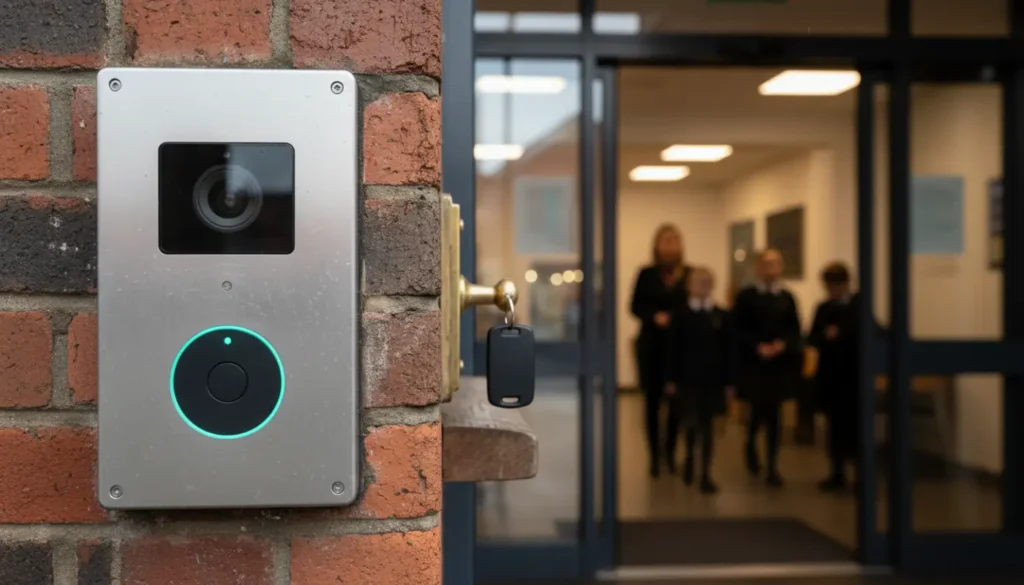
The reader is the device fitted at the door, gate, turnstile, lift or barrier. It scans or receives the credential and sends the information to the controller so the system can decide whether access should be granted.
Controllers
The controller is the decision maker in the system. It checks whether the credential is valid, whether the person has permission for that door and whether access is allowed at that time.
Electric Locks
The electric lock physically secures the door until the system tells it to release. Common options include magnetic locks and electric strikes, both of which must be chosen carefully for the door type, building use and escape route requirements.
Management Software
The management software lets authorised people add users, remove users, set access times, create groups and view activity records. In larger buildings, this is where access control becomes especially useful because everyday admin can be handled from one place.
Credential Types Explained
The best credential depends on the building, the people using it, the security level and the budget. Key fobs, proximity cards, PIN codes, smartphone access and biometrics all work well in the right setting, but no single option is perfect for every site.
- Key fobs are small, simple and quick to issue.
- Proximity cards are useful where staff ID is also needed.
- PIN codes can suit lower risk doors or work alongside another method.
- Smartphone access is convenient for users who already rely on mobile apps.
- Biometrics can provide stronger identity checks, but they need careful data protection planning.
Key Fobs
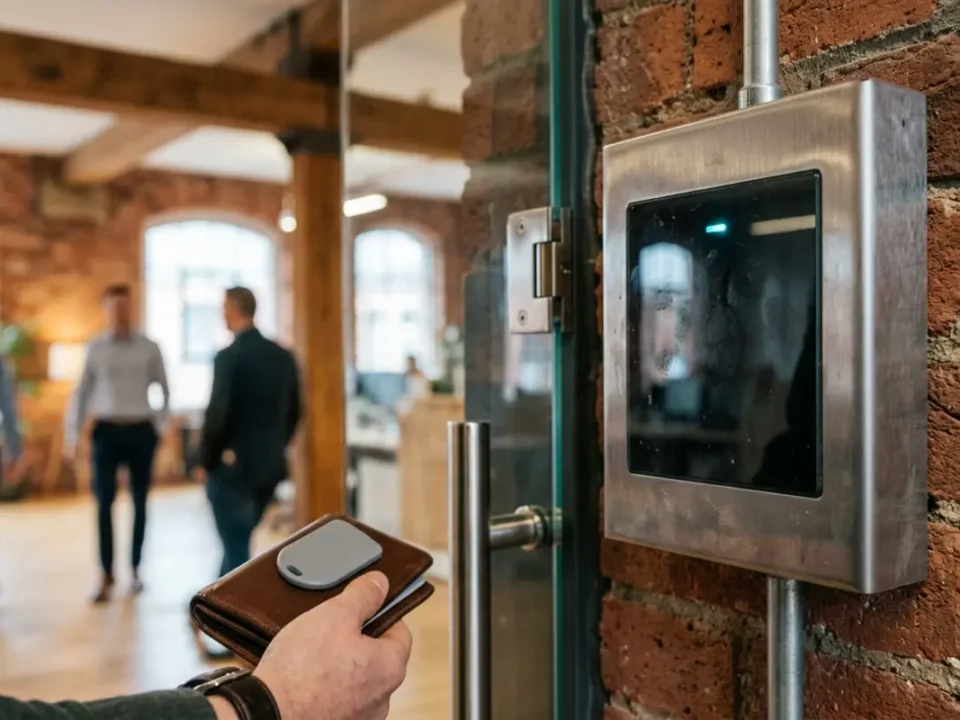
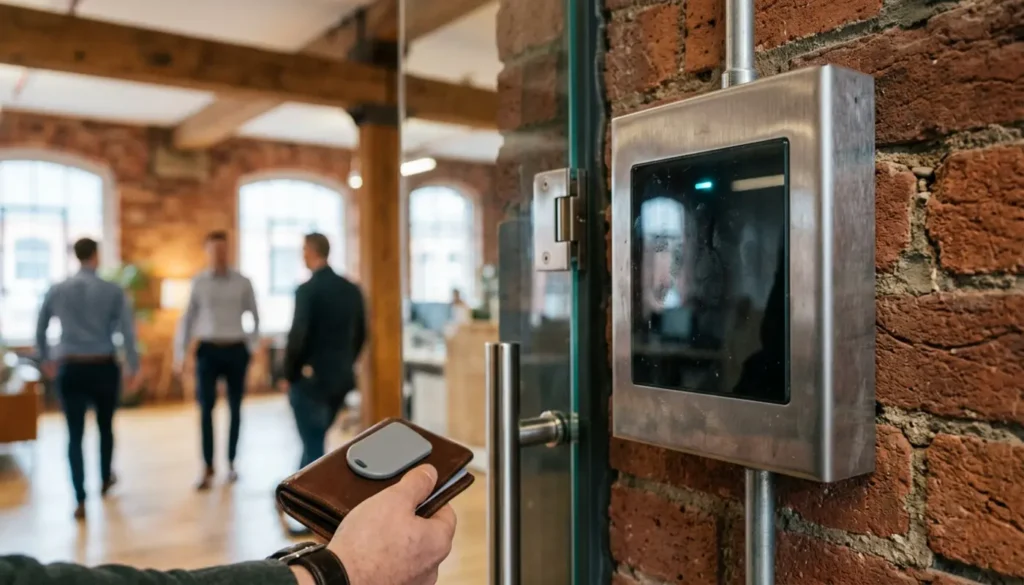
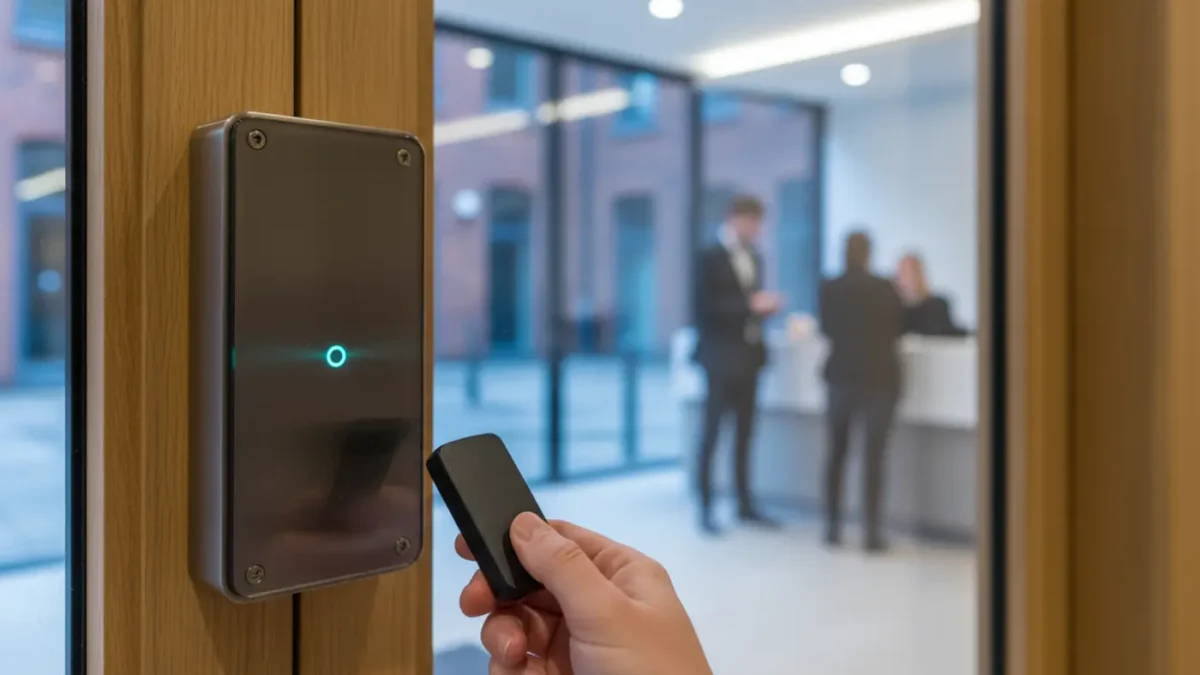
Key fobs are popular because they are small, affordable and easy to use. A person taps the fob on the reader, the system checks it, and the door opens if access is approved.
Proximity Cards
Proximity cards work in a similar way to fobs, but they are often easier to display as staff ID. They are useful in offices, schools and healthcare settings where visual identification matters as well as electronic access.
PIN Codes
PIN codes are cost effective and do not require a physical token. The downside is that codes can be shared, watched or forgotten, so they are best used for lower risk doors or alongside another access method.
Smartphone Apps
Smartphone access is becoming more common in 2026, especially in offices, gyms and managed residential buildings. Users can unlock doors through an app or mobile credential, which is convenient because most people notice a missing phone before they notice a missing card.
Biometrics
Biometric access uses a physical feature, such as a fingerprint or facial recognition, to identify someone. It can be convenient and hard to share, but biometric information is sensitive personal data under UK GDPR, so it must be handled with care.
For a deeper comparison of fobs, smart cards, apps and biometric options, see key fob vs smart card vs biometric vs app access control.
How The Access Control Process Works
The access control process works by checking a user's credential against the rules stored in the system. If the credential is valid and the user is allowed through that door at that time, the lock releases and the event is recorded.
Presenting The Credential
The user taps a fob, scans a card, enters a PIN, uses a phone app or presents a biometric feature. The reader collects the information and sends it securely to the controller or access control platform.
Reader Verification
The reader usually does not make the final access decision by itself. Its job is to collect the credential and pass the information on, rather like a helpful reception point at the door.
Controller Decision
The controller checks the credential against stored permissions. It looks at whether the user is active, whether they can use that door, whether the time is allowed and whether any temporary restriction applies.
Door Release And Event Logging
If the details match, the controller sends a signal to the lock and the door releases for a set number of seconds. The system then logs the event, which can help with safeguarding, investigations, attendance checks and general building management.
Access Control Lock Hardware
Access control lock hardware is the part that turns an electronic decision into a physical action at the door. Choosing the right lock matters because the wrong hardware can cause poor security, daily frustration or unsafe escape routes.
Maglocks
A magnetic lock, often called a maglock, uses an electromagnet to hold the door closed. It is common on internal doors and controlled entrance points, but it must be fitted with safe exit devices and suitable fire release arrangements.
Electric Strikes
An electric strike replaces part of the door frame latch plate. When access is approved, the strike releases the latch and allows the door to open, which can make the door feel more like a traditional handled door.
Fail Safe And Fail Secure Options
Fail safe locks unlock when power is removed, which is often important for escape routes. Fail secure locks stay locked when power is lost, which may suit higher security areas where safe exit is provided by another compliant method.
The choice must consider fire escape, building use and the people inside. A secure door is only a good door if people can still leave safely during an emergency.
Controllers, Software And Permissions
Controllers, software and permissions decide who can go where, when they can enter and what happens when access is refused. This is what makes electronic access control more flexible than ordinary keys.
On Site Systems
On site systems store the control equipment and software within the premises. They can suit organisations that prefer local management, have strict internal IT rules or need a system that is not dependent on cloud access.
Cloud Based Systems
Cloud based access control lets authorised users manage the system remotely through a secure online platform. This is helpful for multi site businesses, landlords, schools with several buildings and managers who do not want to travel just to remove one lost fob.
User Permissions And Time Schedules
Permissions can be grouped by role, department or user type. For example, office staff may access the building from 7 am to 7 pm, cleaners may access selected areas in the evening and visitors may only enter during reception hours.
Audit Trails And Reporting
Audit trails show access events, denied attempts and door activity. They can support safeguarding in schools, compliance checks in regulated settings and investigations after incidents, although they should only be used for fair and lawful purposes.
Power, Network And Backup Requirements
Access control systems need reliable power and communication to work properly. If power supplies, cabling and network links are not planned well, even a smart system can become unreliable at the worst possible time.
PoE
PoE means Power over Ethernet. It allows certain devices to receive power and data through one network cable, which can reduce cabling work and help create a neater installation.
Battery Backup
Battery backup keeps important parts of the system working during a power cut. The design should consider how long the backup must last, which doors must remain controlled and how safe exit will be maintained.
Network Connectivity
Networked systems may need secure cabling, switches, routers and protected internet access for cloud features. Larger sites should involve IT teams early because controlled entry is now part of wider building technology, not just a lock with a reader beside it.
Fire Safety And Accessibility In The UK
Access control must never trap people inside a building. In the UK, door security needs to work alongside fire safety law, building regulations and accessibility duties, especially in offices, schools, care settings and public buildings.
- Check whether controlled doors are on escape routes.
- Confirm how doors release during a fire alarm activation.
- Include break glass units, exit buttons or mechanical escape where required.
- Make sure reader heights and access routes work for disabled users.
- Test emergency release arrangements as part of regular maintenance.
Fire Alarm Integration And Break Glass Units
Access controlled doors on escape routes may need to release when the fire alarm activates, and fire alarm systems should be designed and maintained in line with BS 5839. Break glass units, emergency exit buttons and mechanical escape options may also be needed depending on the door and risk assessment.
Regulatory Reform Fire Safety Order 2005
The Regulatory Reform Fire Safety Order 2005 places duties on the responsible person to manage fire safety in non domestic premises. If access control affects escape routes, it should be included in the fire risk assessment and tested as part of emergency procedures.
Approved Document B
Approved Document B gives guidance on fire safety matters linked to building regulations in England, including means of escape. You can read the official government guidance on Approved Document B for more detail on fire safety design expectations.
Equality Act 2010 And Approved Document M
Access control should also be usable by disabled people, visitors and staff with different needs. The Equality Act 2010 and Approved Document M are important when planning reader heights, door opening forces, accessible routes and alternatives to access methods that some people cannot use.
Data Protection, Standards And Accreditation
Access control systems handle personal data because they can identify people and record their movements. That does not make them a problem, but organisations should be clear, fair and careful about how access data is collected, stored and used.
UK GDPR And Biometrics
UK GDPR requires a lawful basis for processing personal data, and biometric access control can involve special category data when used to uniquely identify a person. Employers and organisations should explain what data is collected, why it is needed, how long it is kept and what alternatives are available.
ICO Guidance And DPIAs
For biometric systems, a Data Protection Impact Assessment is often needed before installation. A DPIA helps identify privacy risks and decide whether the same security aim could be met with a less intrusive method.
BS EN 60839, NSI, SSAIB And Secured By Design
BS EN 60839 is a key standard for electronic access control systems, covering performance and system requirements. Many UK clients also look for NSI certification or SSAIB and Insurance Approved certification, while Secured by Design principles can support better crime prevention through practical physical and electronic security choices.
Choosing And Installing Access Control In 2026
Choosing access control in 2026 starts with understanding the building, not simply buying the newest reader. A good installer will ask about user numbers, door types, visitor flow, fire escape routes, staff changes, data protection duties and future growth.
Typical UK Costs
In 2026, a simple single door access control installation for a small office or home entrance may start from around £800 to £1,500, depending on hardware and cabling. A multi door commercial system can range from £2,500 to £10,000 plus, while larger schools, warehouses and multi site premises can cost much more.
- Initial costs may include readers, locks, controllers, cabling and installation.
- Ongoing costs may include software licences and cloud subscriptions.
- Support costs may include maintenance visits, replacement credentials and user training.
- The cheapest quote is not always the best value if it skips fire safety integration, backup power or proper setup.
Maintenance And Support
Maintenance keeps readers, locks, power supplies, batteries and software working properly. Regular checks should include door release times, emergency exit operation, audit logs, user permissions and any links to fire alarm systems.
Scalability
A scalable system allows you to add doors, users and sites without starting again. This is useful for growing businesses, schools planning new buildings, landlords with several properties and gyms that want 24 hour controlled access.
Questions To Ask An Installer
Before choosing a secure entry setup, ask practical questions that connect the technology to real everyday use. The right answers should give you confidence that the system will be safe, manageable and suitable for the building.
- Does the system support your preferred credentials?
- Will it work with your fire strategy and emergency escape routes?
- Does it provide useful audit trails without collecting more data than needed?
- How is personal data protected?
- What happens if the internet fails or power is lost?
- How quickly is support available if something stops working?
- What happens if an administrator leaves the organisation?
What Is Martyn's Law UK And How Does Access Control Help?
Martyn's Law, formally the Terrorism Protection of Premises Act 2025, is now part of the UK protective security landscape. It affects qualifying premises and events once the relevant duties are in force, so UK venues and publicly accessible premises should keep current guidance under review.
Access control can support readiness by helping manage entry points, restrict staff only areas, create clearer lockdown procedures and improve records during an incident. It is not a complete Martyn's Law solution on its own, but it can form part of a wider security plan alongside staff training, emergency procedures, CCTV, alarms, visitor management and communication systems.
Final Thoughts
Access control works by combining identity, permission and physical locking into one joined up system. It helps homes and organisations move beyond keys, reduce security gaps and manage access in a way that is flexible, traceable and easier to maintain.
The best systems are designed around real people and real buildings. When fire safety, accessibility, data protection and future growth are considered from the start, secure entry becomes more than a door gadget and starts to become a practical part of keeping people, property and daily operations safer.
If you are planning access control for a home, office, school or commercial site, start with the doors people use every day, the areas that need extra protection and how people need to leave safely in an emergency.