Fire Risk Assessment for Offices: Must-Have Tips for 2026
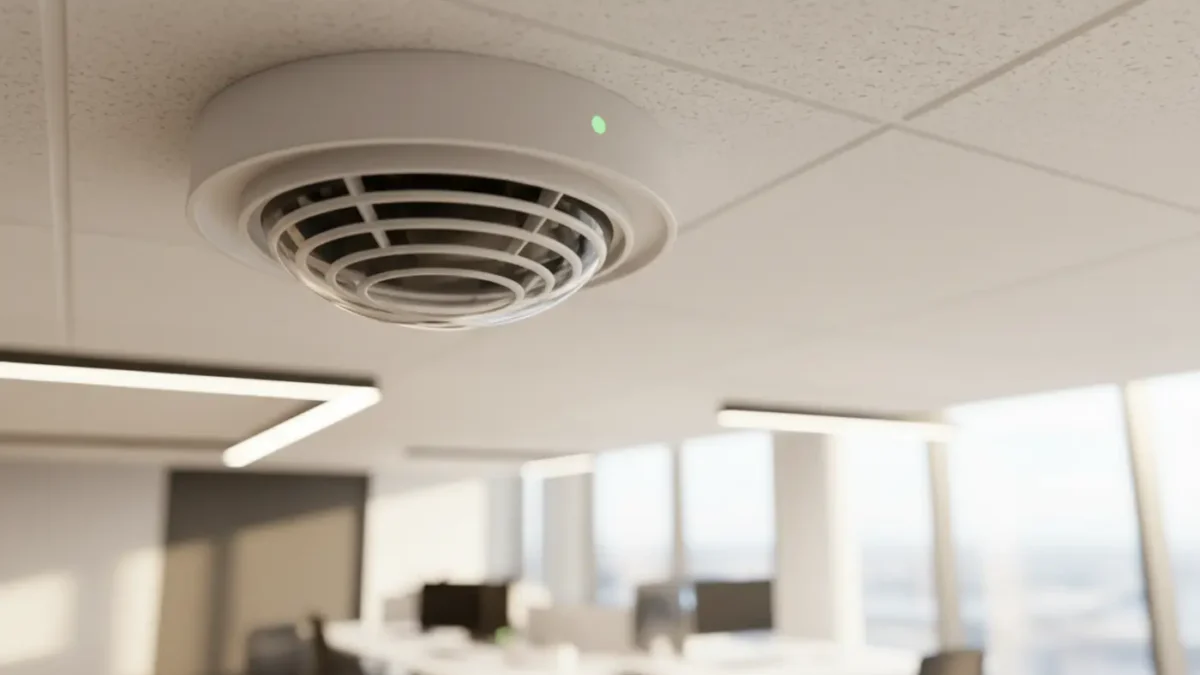
A fire risk assessment for offices in 2026 must do more than tick a legal box. It needs to identify fire hazards, protect everyone who uses the building, record findings clearly, and show that the responsible person is meeting duties under the Regulatory Reform Fire Safety Order 2005. For offices, that now means looking closely at documents, staff training, alarm compliance, escape planning, and recent legal updates.
Keeping on top of fire safety while running an office can feel like a lot. Many managers only realise how detailed it becomes once they start reviewing it properly. Shared spaces, contractors, hybrid working, and changing layouts all add extra pressure, so it is easy for small issues to go unnoticed until they become bigger problems.
Office fire safety often seems simple until you list what can go wrong. A blocked corridor, a wedged fire door, or a charger left plugged in overnight can turn an ordinary day into a serious incident far more quickly than most people expect. Non compliance can also lead to enforcement action, fines, insurance trouble, and in serious cases, prosecution.
iSecurity Solutions is a trusted UK provider of commercial and domestic security systems, helping homes and businesses stay protected around the clock. From CCTV and intruder alarms to fire safety, access control and construction site monitoring, the team designs reliable, tailored solutions backed by responsive service and modern, remotely monitored technology. Whether you are securing one property or managing sites across different locations, the focus is on practical protection and peace of mind.
Fire Risk Assessment For Offices
A fire risk assessment for offices is a legal requirement, but it is also one of the most useful ways to protect staff, visitors, contractors, and anyone else in the building. It should not be treated as paperwork that gets filed away and forgotten. A good assessment shapes day to day fire safety decisions and helps show that risks are being managed properly.
If you are reviewing wider fire safety arrangements, the assessment should guide practical choices such as alarms, emergency lighting, escape routes, and staff procedures. A suitable and sufficient assessment looks at how fire could start, who may be harmed, and what needs to be done to reduce the risk to a sensible level.
Your Legal Duty
In most offices, the responsible person is the employer, owner, landlord, managing agent, or anyone with control over the premises. In shared buildings, there may be more than one responsible person. When that happens, everyone involved must cooperate and make sure fire safety is managed properly across the whole space.
If you manage an office, the responsible person should be able to show that the basics are under control. That usually means being able to:
- identify fire hazards
- protect staff, visitors, and contractors
- maintain alarms, lighting, and fire doors
- train staff and appoint fire wardens where needed
- keep records up to date
- review the assessment when things change
Office managers often miss how closely fire safety links to wider building management, especially in shared spaces with reception areas, access points, and contractors. If security systems and occupancy controls form part of that setup, business security planning should support fire safety rather than work against it.
What Has Changed In 2026
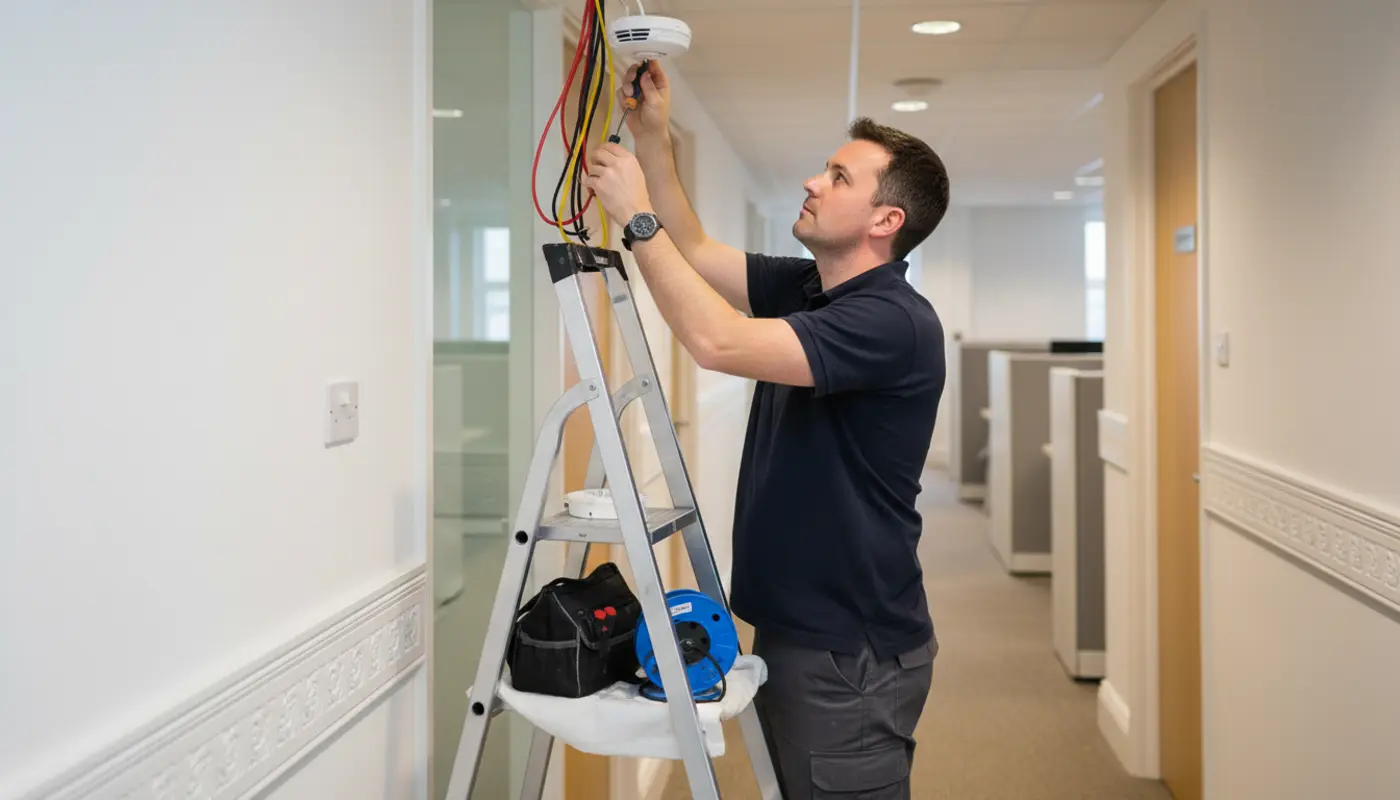
Recent reforms linked to the Building Safety Act 2022, including Section 156 updates to the Fire Safety Order, have raised expectations for responsible persons. Office fire risk assessments now need fuller records, better documentation of fire safety arrangements, and clear details of who completed or reviewed the assessment.
In simple terms, a quick checklist is no longer enough. You need proper records, clear actions, dates, named responsibilities, and evidence that issues have actually been dealt with. That makes the assessment far more useful in practice and far easier to defend if the fire authority or an insurer asks questions.
The official guidance on fire safety legal duties explains these responsibilities in straightforward terms. It is worth checking when reviewing whether your current process still matches legal expectations.
For office occupiers, these changes affect everyday management. If there is a refurbishment, a layout change, subletting, a near miss, or an actual fire, the assessment should be reviewed and updated. Leaving it untouched until the next annual reminder is not enough.
How Martyns Law Overlaps With Office Safety
Martyns Law is separate from fire law, but the two can overlap in office settings, especially where there are public access areas, event spaces, or meeting rooms used by visitors. Emergency planning may need to cover both fire evacuation and hostile threat response, so staff know what to do in different situations.
One plan does not replace the other. Fire usually means getting people out quickly, while some security incidents may require another response. The important point is that staff need clear instructions and realistic planning, so nobody is left unsure during an emergency.
For a wider view of that topic, what Martyns Law means explains how it may affect premises with public facing spaces. It is especially relevant for larger office buildings that host meetings, visitors, or shared tenant events.
Choosing A Competent Assessor Using PAS 79
PAS 79 is a recognised method for carrying out and recording fire risk assessments. It gives assessors a clear structure for inspecting the building, recording findings, and recommending action. That matters because a fire risk assessment needs to be based on a proper process, not guesswork.
A competent assessor should understand office layouts, common ignition sources, fire spread, escape routes, vulnerable occupants, and the legal rules involved. Just as importantly, they should be able to turn those findings into practical actions instead of producing a long report that nobody uses.
In house assessments can work for simple, low risk offices if the person carrying them out is genuinely competent and follows PAS 79 properly. For multi tenanted buildings, unusual layouts, complex evacuations, or major refurbishment work, bringing in a specialist is often the safer option.
If you want more detail on local expectations, fire risk assessment for businesses in Manchester gives useful context on what responsible persons should be checking when the office setup becomes more demanding.
Common Office Fire Hazards In 2026
Most office fires start from ordinary risks that have been allowed to build up. The basics still matter, but newer working habits have introduced extra issues too. In many workplaces, the biggest danger is not one dramatic event. It is several small problems being ignored at the same time.
- electrical equipment left running unnecessarily
- overloaded sockets and extension leads
- paper storage and waste build up
- kitchen and break room risks
- blocked corridors and stairwells
- fire doors propped open for convenience
- chargers, adapters, and lithium battery devices used without control
Hybrid working has added new challenges. Hot desking means devices move around more often, staff bring in extra chargers, and battery powered equipment is now part of normal office life. If charging areas are poorly managed and faulty adapters slip into use, the risk can rise quite quickly.
Good housekeeping is still one of the easiest and most effective ways to reduce risk. Corridors should stay clear, stairwells should not become storage areas, and fire doors should never be wedged open. It may seem harmless at the time, but small shortcuts have a habit of becoming serious problems when an emergency happens.
Fire Detection And Alarm Compliance
Office fire alarm systems should comply with BS 5839. Depending on the building, that may mean a category such as L1 or L2. These categories simply describe the level of detector coverage needed based on the layout, use, and level of risk in the premises.
Your assessment should confirm whether the current alarm system is suitable, whether detector coverage is adequate, and whether testing and servicing are taking place at the right intervals. A reliable alarm system is not just there to satisfy paperwork. It provides early warning when time matters most.
If you are unsure about how often checks should happen, fire alarm testing schedules explain what regular testing should look like. Good records of those checks are also helpful for insurers and enforcing authorities.
Means Of Escape, Signage And PEEPs
An office fire risk assessment should review escape routes, final exits, travel distances, fire doors, and assembly arrangements. It should also consider signage in line with BS 5499, so routes and equipment are easy to identify, especially when people are under pressure or visibility is poor.
Emergency lighting is just as important, particularly in stair cores, internal corridors, and areas without natural light. Systems should comply with BS 5266, with monthly function tests and annual full duration tests properly recorded. Lighting that fails in a real evacuation can leave people in danger very quickly.
For offices with shared circulation space or poor visibility on escape routes, emergency lighting for offices is closely tied to safe evacuation. The fire risk assessment should show clearly where lighting supports escape and where improvements are needed.
PEEPs, or personal emergency evacuation plans, are important for disabled employees and, in some cases, regular visitors who may need assistance. A proper PEEP should explain what support is needed, who will provide it, which route will be used, and how the plan is tested in real life.
Training, Fire Wardens And Staff Responsibility
Even a well written fire risk assessment will achieve very little if staff do not know what to do. Training should cover alarm awareness, escape routes, assembly points, basic fire prevention, and how to report hazards. New starters should receive fire safety induction, and refresher training should happen often enough to keep the information useful.
Fire wardens can bring order to an evacuation, especially in larger offices or on multiple floors. They can help check designated areas, report issues, support safe movement, and help make sure the response is calm rather than chaotic.
Drills should reflect real occupancy patterns, including hybrid working. If the office is busiest on certain days, drills should be planned around those times. Otherwise, the exercise may look good on paper but prove very little in reality.
Documentation, Reviews And Record Keeping
In 2026, office fire safety records should be clear, complete, and easy to find. That includes the full fire risk assessment, assessor details, action plans, alarm tests, emergency lighting tests, drill records, training logs, extinguisher service records, and proof that remedial work has been completed.
Fire extinguisher provision and servicing should also be checked where relevant. Extinguishers should align with BS 5306 and BAFE SP101 expectations. BAFE SP101 is the scheme commonly used for portable fire extinguisher servicing, which helps show the work has been carried out correctly.
The assessment should be reviewed regularly and always after significant change. Common triggers include:
- refurbishment
- layout changes
- staffing increases
- process changes
- incidents or near misses
- disabled access changes
- new equipment with different fire risks
Where scheduled inspections and servicing form part of your compliance process, service contracts can help keep maintenance organised and records up to date. That often makes the difference between a controlled process and a stressful rush before an audit or insurer visit.
What Recent UK Cases Show
Recent enforcement activity across the UK keeps showing the same lesson. Fire authorities take action where responsible persons fail to maintain escape routes, update records, or manage basic precautions properly. The details change from case to case, but the message remains the same. Poor fire safety management is not treated as a small paperwork issue.
For office employers, that means missing records, weak staff training, or poorly maintained systems can become very difficult to defend after an inspection or incident. A current assessment backed by evidence is one of the strongest ways to show that fire safety is being managed properly.
Consequences Of Non Compliance
Non compliance can lead to enforcement notices, prosecution, unlimited fines, and in serious cases, imprisonment. It can also create insurance problems if an incident happens and records show that known risks were ignored or essential systems were not maintained.
- enforcement notices from the fire authority
- costly remedial works
- disruption to business operations
- insurance disputes after an incident
- serious reputational damage
- prosecution in severe cases
For office employers, the most common failings are often the least dramatic. Poor documentation, blocked exits, weak training, missed reviews, and alarm maintenance gaps are the issues that appear again and again in enforcement cases. They may not sound dramatic, but their consequences can be.
If your office also uses intruder alarms or monitored systems as part of wider life safety and asset protection, those systems should comply with EN 50131, usually Grade 2 or Grade 3 depending on risk. Where a Police Response URN is required for monitored alarm or perimeter detection arrangements, SSAIB certified and Insurance Approved installation is the prerequisite. A URN is the unique reference needed for eligible police response arrangements.
Keeping Office Fire Safety Practical
A strong fire risk assessment for offices in 2026 is about more than legal compliance. It is about understanding how people use the workplace, how risks change over time, and how small oversights can grow into serious danger if nobody takes ownership.
Employers should treat the assessment as a living document rather than a one off task. When it is completed properly, reviewed at the right time, and supported by training, maintenance, and clear records, it becomes one of the most useful safety tools in the building. Starting with the basics and keeping records current is often the best way forward.
Frequently Asked Questions
Who Is The Responsible Person For An Office Fire Risk Assessment?
It is usually the employer, owner, landlord, managing agent, or anyone with control over the premises. In shared office buildings, more than one responsible person may exist, and they must cooperate.
How Often Should An Office Fire Risk Assessment Be Reviewed?
It should be reviewed regularly and whenever there is a significant change such as refurbishment, occupancy changes, incidents, or layout alterations. Even if nothing obvious changes, a scheduled periodic review is still expected.
What Standard Should Office Fire Alarms Meet?
Office fire alarm systems should comply with BS 5839, often to an L1 or L2 category depending on the risk and layout. The fire risk assessment should explain why that level of coverage is suitable.
Can An Employer Carry Out Their Own Fire Risk Assessment?
Yes, if they are competent and can produce a suitable and sufficient assessment using a recognised method such as PAS 79. For more complex offices, a specialist assessor is usually the safer option.
Do Insurers Require SSAIB For Office Security Systems?
For monitored alarms, monitored CCTV, and systems needing a Police Response URN, insurers often expect SSAIB certified and Insurance Approved installation. That approval helps demonstrate compliance and is commonly required for police response eligibility.