Nursing Home Fire Risk Assessment North West Guide
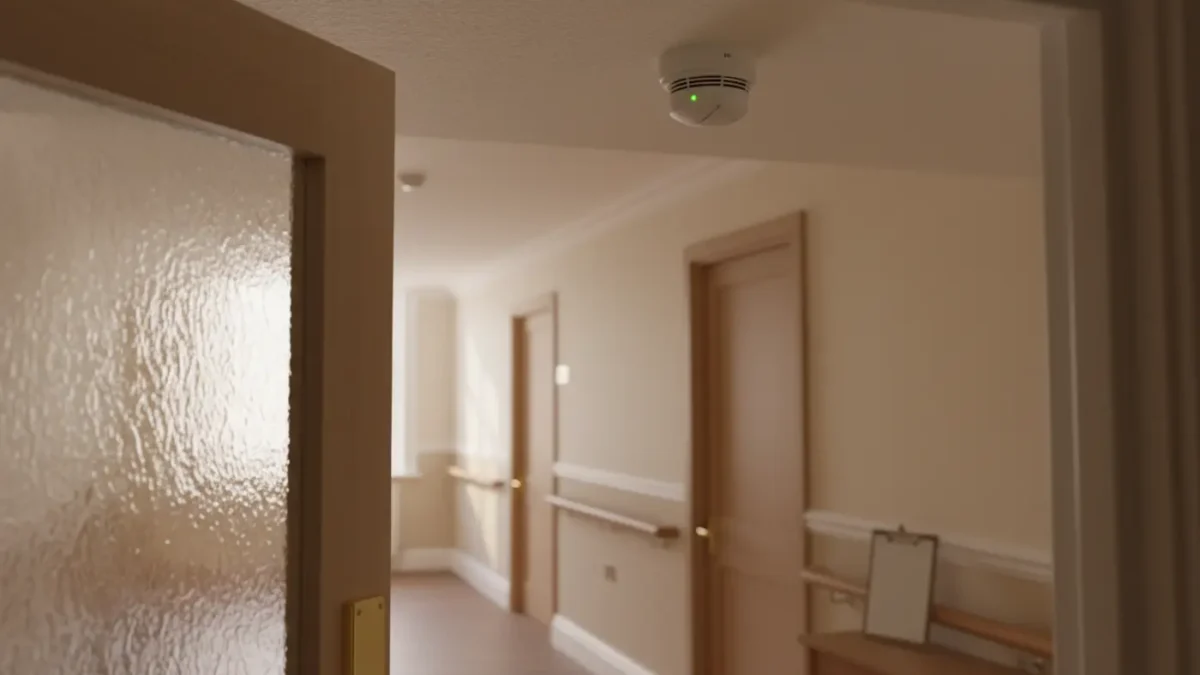
Nursing Home Fire Risk Assessment North West
A nursing home fire risk assessment in the North West helps care providers meet their legal duties, protect residents, and prove that fire risks are being managed in a clear and practical way. It should reflect the real layout of the home, the needs of residents, staffing levels, evacuation plans, and the fire safety systems in place, rather than relying on a generic document that does not match daily care.
In 2026, responsible persons must meet the Regulatory Reform Fire Safety Order 2005, follow a suitable method such as PAS 79 part 1 2020, and support CQC Regulation 15 expectations. Professional fire safety support can help turn those duties into a working plan, with clear actions, evidence, training records, and maintenance checks that staff can use with confidence.
Why Nursing Home Fire Safety Matters In 2026
Nursing home fire safety matters because residents may not be able to react quickly, move without help, or understand what is happening during an alarm. A strong fire risk assessment looks at people as well as the building, including night time routines, resident dependency, staff response, care plans, and the small details that make a real difference during an emergency.
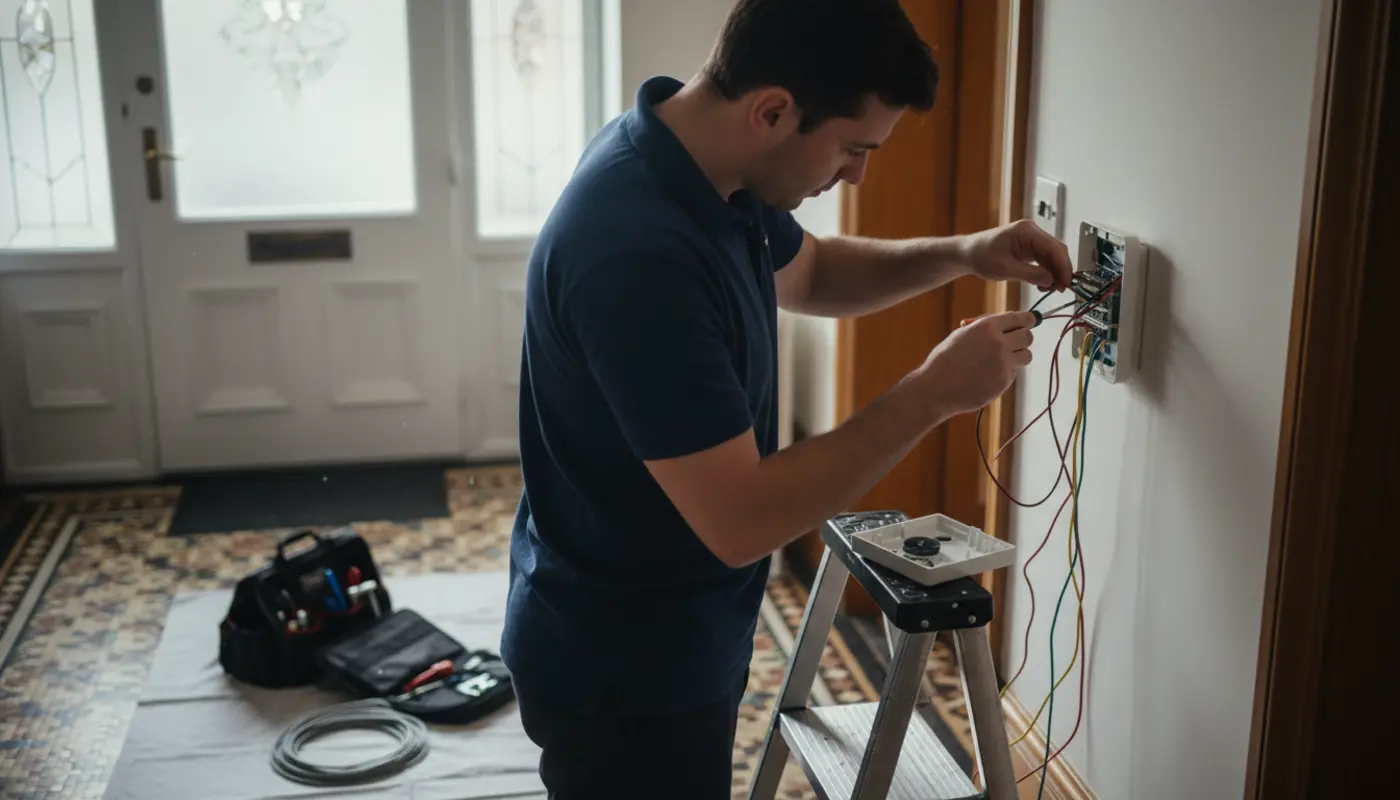
iSecurity Solutions is a trusted UK provider of commercial and domestic security systems, helping homes and businesses stay protected around the clock. Across the North West, the team supports care providers with reliable, tailored solutions, including fire safety, CCTV, intruder alarms, access control, and modern remotely monitored technology through iSecurity Solutions.
For nursing homes, the risk is higher because many residents may have reduced mobility, dementia, sensory loss, medication effects, or oxygen use. A good assessment should never feel like an office template with the name changed, because inspectors and Fire and Rescue Authorities expect it to match the real risks inside the home.
One useful test is simple but important: could your night staff safely move residents from one fire compartment to another if the alarm sounded at 3 am? That question can feel uncomfortable, but it is exactly the type of practical thinking that makes a fire risk assessment useful.
Legal Duties Under The Fire Safety Order
The Regulatory Reform Fire Safety Order 2005 places duties on the responsible person, who may be the employer, owner, registered provider, manager, or anyone with control of the premises. Article 9 requires a suitable and sufficient fire risk assessment, which means the assessment must identify fire hazards, people at risk, existing controls, gaps, actions, and review arrangements.
In a nursing home, this duty covers residents, staff, visitors, contractors, and anyone else who may be affected by a fire. The assessment should look at how the building is really used, including sleeping risk, night staffing, locked doors, lounges, kitchens, laundry rooms, clinical equipment, medicine storage, charging points, and smoking arrangements.
Fire and Rescue Authorities in Greater Manchester, Lancashire, Cheshire, and the wider North West can audit premises, issue alteration notices, enforcement notices, prohibition notices, and prosecute serious breaches. The best way to avoid enforcement problems is to treat the fire risk assessment as a live safety tool, not as paperwork that is updated once a year and then forgotten.
CQC Regulation 15 And Fire Safety
CQC Regulation 15 requires premises and equipment to be safe, suitable, properly maintained, and fit for purpose. Fire safety supports that requirement directly, because alarms, fire doors, escape routes, emergency lighting, extinguishers, and evacuation equipment all affect whether residents are cared for in a safe environment.
CQC may ask for the current fire risk assessment, evidence of Personal Emergency Evacuation Plans, fire drill records, maintenance logs, staff training records, and proof that actions have been completed. You can also compare your approach with the official GOV UK guidance for residential care premises, which explains how hazards, vulnerable residents, and evacuation planning should work together.
Regulation 17 on good governance also matters because inspectors expect leaders to monitor risk, learn from incidents, and keep accurate records. If fire safety documents are missing, out of date, or different from daily practice, this can affect CQC judgement around safe and well led services.
Using PAS 79 Part 1 2020 Properly
PAS 79 part 1 2020 is a recognised method for carrying out fire risk assessments in non domestic premises, including residential care settings. It gives assessors a clear structure for gathering building details, finding hazards, judging risk, and producing an action plan that the responsible person can understand and use.
A PAS 79 aligned assessment should record details about the premises, occupants, fire hazards, likelihood of fire, fire protection measures, fire safety management, possible consequences, risk rating, and required actions. This helps show that the assessment is organised, evidence based, and not built on guesswork.
For nursing homes, the assessor must understand care operations as well as fire precautions. This includes resident dependency levels, evacuation aids, staff response times, compartment layouts, and whether people can understand alarms or instructions during an emergency.
Person Centred Fire Risk Assessment
A person centred fire risk assessment looks at how fire risk affects each resident, rather than treating everyone in the home as the same. This is vital because one resident may walk independently, another may need two carers and an evacuation sheet, and another may become distressed by alarms, smoke, crowds, or sudden movement.
Each resident who needs support should have a Personal Emergency Evacuation Plan, often called a PEEP. It should explain the resident’s mobility, understanding, communication needs, hearing or sight loss, equipment required, likely behaviour, preferred support, and the number of staff needed to move them safely.
These plans should link back to the main fire risk assessment and the resident’s care plan. If a resident’s dependency increases after a hospital stay, or if a new resident arrives with complex needs, the assessment should be reviewed instead of waiting for the next annual date.
Fire Compartmentation And Escape Strategy
Fire compartmentation means the building is divided into protected areas that can resist fire and smoke for a set time. In many nursing homes, this supports progressive horizontal evacuation, where residents are moved from the affected compartment into a safer compartment on the same level before any further movement is considered.
Fire doors, walls, ceilings, service openings, and protected corridors must all work together for this strategy to be safe. A good evacuation plan on paper will not help if a fire door is wedged open, smoke seals are damaged, or contractors have left unsealed gaps above a ceiling tile.
Some premises may use simultaneous evacuation, where everyone leaves as soon as the alarm sounds, but this can be difficult in nursing homes with high dependency residents. A stay put approach may only be suitable where the building design, compartmentation, detection, staffing, and management procedures genuinely support it, so it should never be assumed without evidence.
Fire Alarms, Lighting And Equipment Standards
Fire alarm systems in nursing homes should be designed, installed, and maintained in line with BS 5839, with category L1 or L2 considered according to the risk profile, layout, and resident dependency. Many care settings need a high level of automatic detection because residents may be asleep, unable to raise the alarm, or unable to respond without staff support.
If you are reviewing care home detection arrangements, our related article on fire alarms for care homes explains what North West providers should consider when planning compliant systems. The fire risk assessment should also check weekly alarm testing, routine servicing, zone plans, call points, staff response, and false alarm management.
Emergency lighting should meet BS 5266, with monthly functional checks and an annual full duration test recorded. Fire extinguishers should be selected, located, and serviced to BS 5306 and BAFE SP101, with an annual service certificate kept because insurers commonly require proof that equipment has been maintained.
Staff Training And Night Time Drills
Staff training is where the fire plan becomes real and useful. Care teams should know how to raise the alarm, call the Fire and Rescue Service, close doors, use evacuation aids, support residents, check safe areas, and communicate clearly when there is pressure.
Drills should test realistic situations, including night time conditions when staffing levels are lower and residents are asleep. It is sensible to practise moving residents with different needs, checking how long it takes, whether staff understand compartment boundaries, and whether evacuation equipment is easy to reach.
There is no single staffing number that suits every nursing home because the right level depends on resident dependency, layout, compartment size, travel distance, and evacuation strategy. The assessment should show that staffing levels are enough to carry out the chosen strategy at all times, not just when the home is fully staffed and everything is running smoothly.
- Check how many residents need two staff to move safely.
- Confirm how many staff are awake, trained, and available at night.
- Test whether staff can move residents without using lifts.
- Make sure agency and new staff understand the home’s evacuation strategy.
- Consider whether one compartment can be cleared before smoke spread becomes a concern.
- Record learning from drills, then update care plans, PEEPs, and staff training where needed.
North West Enforcement Themes
North West Fire and Rescue Services often focus on practical life safety measures during care premises audits. In areas such as Greater Manchester, Lancashire, and Cheshire, common audit points include current fire risk assessments, maintained fire alarms, clear escape routes, effective fire doors, oxygen storage, smoking controls, staff training, and records.
Care homes with sleeping risk may receive closer attention because residents can be unable to react quickly or leave without help. Fire doors and compartmentation are often a major focus, especially where progressive horizontal evacuation depends on smoke control and protected routes doing their job properly.
Typical problems that can lead to enforcement include poor compartmentation, blocked escape routes, missing PEEPs, weak night evacuation planning, poor alarm testing, lack of staff training, and overdue actions from previous assessments. These are everyday issues, but they are also the basics that protect residents and satisfy inspectors.
Security and life safety can overlap in care settings, especially where doors are controlled to prevent wandering while still allowing safe escape in an emergency. For a broader view of care site protection, see our piece on access control for care homes, which looks at safe movement and controlled areas.
Common North West Fire Safety Enforcement Examples
Common fire safety enforcement examples in care settings include incomplete action plans, poor fire door condition, weak night time evacuation planning, and missing resident evacuation records. If CQC or the Fire and Rescue Service visited tomorrow, your records should show what has been checked, what has been fixed, and what is still being managed.
- A care provider may receive an enforcement notice where PEEPs are missing or no longer match residents’ current needs.
- Fire door defects, damaged smoke seals, and unsealed service gaps can lead to formal action where compartmentation is not reliable.
- Poor records for alarm testing, staff drills, and emergency lighting checks can make it hard to prove safe management during an audit.
- Oxygen storage and smoking controls may be challenged if staff cannot show clear procedures, safe locations, and regular checks.
- Night time staffing evidence may be questioned if the evacuation strategy cannot be carried out with the number of staff on duty.
Review Triggers And Annual Updates
A nursing home fire risk assessment should be reviewed at least once a year and sooner when any important risk changes. PAS 79 part 1 2020 supports regular review, and care homes should have a clear trigger list so the assessment is updated when the building, residents, systems, or procedures change.
Review triggers include building alterations, changes to bedroom use, new extensions, increased resident dependency, new oxygen use, new mobility equipment, staffing changes, CQC findings, Fire and Rescue audit feedback, near misses, and any fire incident. If the premises layout, people, or procedures change, the fire risk assessment may need to change too.
Service and maintenance records are a major part of that review cycle because an assessment depends on systems working when needed. Planned service contracts can help nursing homes keep testing, servicing, and remedial actions under control throughout the year.
Documentation For CQC And Fire Audits
Good fire safety documentation should tell a clear story from risk to action to completion. Keep the fire risk assessment, significant findings, action plan, review notes, PEEPs, drill records, staff training, alarm tests, emergency lighting tests, extinguisher service certificates, fire door checks, and maintenance reports in a system that managers can access quickly.
It also helps to keep evidence of management decisions, such as why a certain evacuation strategy was selected, how staffing was checked, and how resident dependency is monitored. If an action cannot be completed straight away, record temporary controls, responsibility, target dates, and progress updates.
For providers who want wider building protection alongside fire compliance, iSecurity Solutions offers tailored business security systems that can support safe operations across single sites and care groups. Fire safety still needs its own assessment, but joined up planning makes day to day management much easier.
Practical Nursing Home Checklist
A practical nursing home fire safety checklist helps managers check that the main legal, care, and maintenance duties are being covered. It should support the full assessment, not replace it, and should be reviewed whenever the building, residents, staffing, or inspection findings change.
- Confirm who the responsible person is and make sure they understand their Fire Safety Order duties.
- Use a PAS 79 part 1 2020 aligned method and record significant findings clearly.
- Link fire safety to CQC Regulation 15 and Regulation 17 governance evidence.
- Create and review PEEPs for residents with mobility, cognitive, hearing, sight, or behaviour related needs.
- Check compartmentation, fire doors, escape routes, and evacuation equipment.
- Confirm whether progressive horizontal, stay put, or simultaneous evacuation is suitable.
- Maintain BS 5839 fire alarms, BS 5266 emergency lighting, and BS 5306 or BAFE SP101 extinguishers.
- Run realistic day and night drills, then record learning and follow up actions.
- Review the assessment annually and whenever resident needs, the building, or inspection findings change.
Final Thoughts
A strong nursing home fire risk assessment is not only about keeping inspectors satisfied, although that is clearly important. It is about giving residents, families, and staff confidence that risks are understood, systems are maintained, and people know what to do when every second matters.
In the North West, responsible persons should expect joined up scrutiny from CQC and Fire and Rescue Authorities, especially around resident vulnerability, evacuation planning, fire doors, training, and records. With a PAS 79 aligned approach and the right support, fire safety becomes less daunting and much easier to manage.
Frequently Asked Questions
Nursing Home Fire Risk Assessment North West CQC Requirements In 2026?
CQC expects the fire risk assessment to be current, suitable for the premises, and linked to resident support needs, including PEEPs, drills, equipment checks, and action records. It should support Regulation 15 premises safety and Regulation 17 governance evidence.
How Often Should A Nursing Home Fire Risk Assessment Be Reviewed?
It should be reviewed at least annually, and sooner after building changes, resident dependency changes, CQC findings, Fire and Rescue feedback, incidents, or changes to staffing and procedures.
What Is A Person Centred Fire Risk Assessment?
It assesses how fire risk affects an individual resident, including mobility, understanding, sensory needs, behaviour, equipment, and staff support. It should feed into a clear Personal Emergency Evacuation Plan.
Do Care Home Fire Systems Need SSAIB Insurance Approved Certification?
Fire risk assessments do not require SSAIB Insurance Approved certification, but security systems such as intruder alarms, monitored CCTV, and perimeter detection may need SSAIB Insurance Approved installation for insurer acceptance and Police Response URN eligibility. Intruder alarm systems should also be designed to the right EN 50131 grade, often Grade 2 or Grade 3 depending on risk.
What Standards Apply To Nursing Home Fire Equipment?
Fire alarms should follow BS 5839, often category L1 or L2 depending on risk, emergency lighting should meet BS 5266 with monthly and annual tests, and extinguishers should meet BS 5306 or BAFE SP101 with annual servicing evidence.