Fire Alarm Service Contract in Manchester: What’s Included
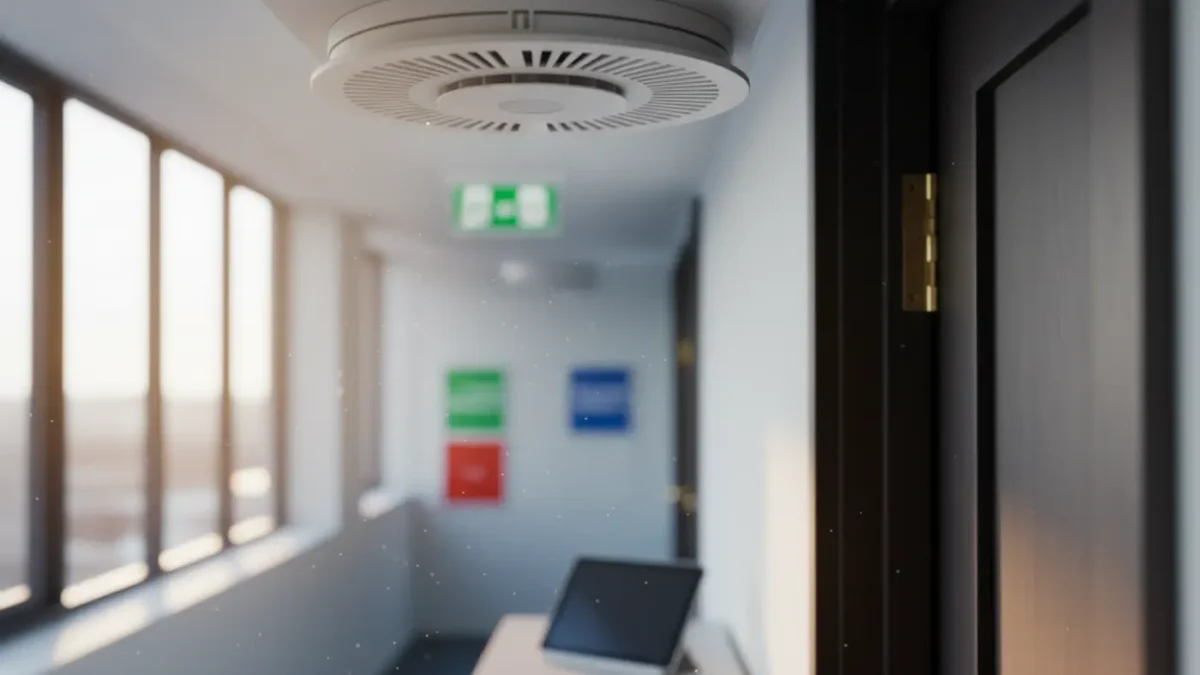
Fire Alarm Service Contract In Manchester
A fire alarm service contract in Manchester ensures your system is legally compliant, regularly maintained and ready to protect lives if a fire occurs. If you manage a business, rental property or residential block, you are responsible for making sure the alarm works correctly and that servicing records are up to date.
Under the Regulatory Reform Fire Safety Order 2005, fire detection systems must be maintained in efficient working order. That means routine inspections, clear documentation and professional servicing in line with BS 5839. When paperwork is requested by an inspector or insurer, you need to be confident everything is in place.
What Is Included In A Fire Alarm Service Contract
A proper fire alarm service contract covers scheduled inspections, testing of devices, battery checks, fault reporting and written certification. In most Manchester premises, servicing takes place at least twice a year in line with BS 5839 1 for non domestic buildings and BS 5839 6 for domestic properties such as HMOs.
When the work is carried out by an SSAIB certified and Insurance Approved fire safety provider, you receive documented proof that your system has been checked by a competent company. That evidence can be vital if Greater Manchester Fire and Rescue Service or your insurer asks questions.
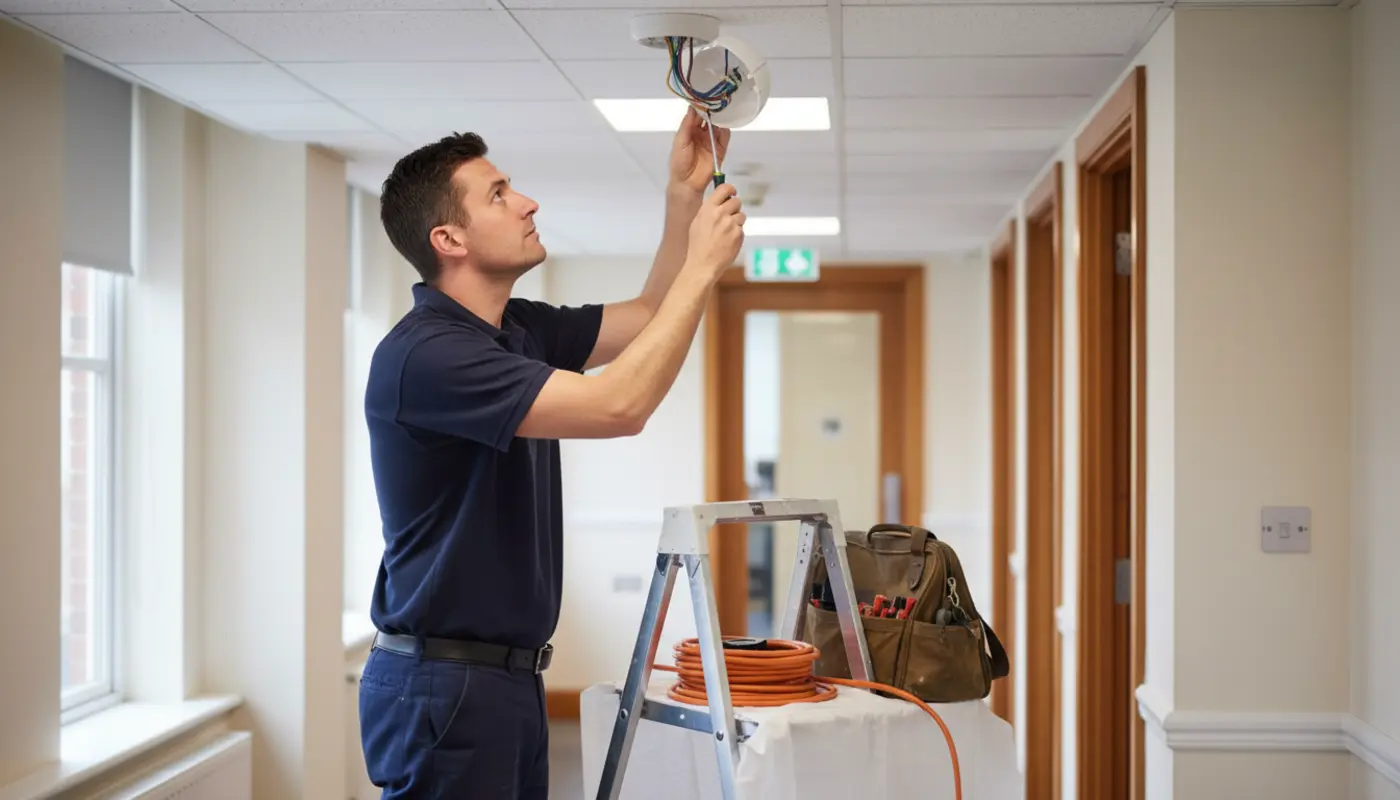
At iSecurity Solutions, Manchester businesses receive Insurance Approved fire alarm maintenance aligned with BS 5839 and SSAIB standards, so compliance is clear and straightforward rather than confusing.
Legal Duties Under The Fire Safety Order 2005
The Regulatory Reform Fire Safety Order 2005 places responsibility on the responsible person. This is usually the employer, landlord, building owner or managing agent. Article 17 states that fire precautions, including fire alarm systems, must be maintained in efficient working order and good repair.
You can review the full legislation on the UK Government legislation website. In practice, this means your alarm must function correctly and you must be able to prove it through servicing records, certificates and a completed logbook. In Greater Manchester, GMFRS carries out risk based inspections across offices, shops, warehouses, hospitality venues and residential buildings.
If servicing documents cannot be produced, enforcement notices, fines or prosecution may follow. Landlords and HMO managers should also review guidance on fire alarms for HMOs in Manchester to understand how duties apply in shared accommodation.
BS 5839 Compliance And System Categories
BS 5839 1 applies to non domestic premises, while BS 5839 6 applies to domestic properties including flats and HMOs. The standard defines categories such as L1 to L5 for life protection and P1 to P2 for property protection.
An L1 system provides automatic detection throughout the entire building and is common in hotels and care homes. A P1 system focuses on protecting the whole building for property and business continuity. Knowing your system category helps you understand how detailed servicing must be and how quickly faults should be corrected.
BS 5839 expects weekly user tests of manual call points and at least biannual inspection by a competent engineer. Across a twelve month period, all detectors, sounders and interfaces should be tested and recorded in the fire alarm logbook.
What A Standard Service Visit Includes
A structured contract clearly explains what happens during each planned visit. Servicing is not simply ticking boxes. It is about confirming that every part of the system will operate when needed.
- Visual inspection of the control panel and review of fault indicators
- Check of the panel event history for repeated issues
- Testing of automatic detectors and manual call points on a rotational basis
- Confirmation that sounders are clearly audible throughout the building
- Inspection of standby batteries and power supplies
- Examination of wiring and connections for damage or wear
Over the year, every device should be tested and recorded. If you are unsure how systems are designed or operate, you can read more about how a fire alarm system works for helpful background information.
Documentation And Certificates You Should Receive
Clear documentation is one of the most important parts of a fire alarm service contract. Without it, proving compliance becomes difficult.
- A written service report detailing tests carried out and faults found
- Confirmation of any corrective work completed or recommended
- An updated fire alarm logbook entry with date and engineer details
- An SSAIB maintenance certificate where the system is Insurance Approved
Insurers often request copies during renewals, so keeping both digital and paper records organised is sensible. It may not be the most exciting paperwork in your office, but it can be one of the most important.
Service Frequency Options Explained
Most Manchester buildings require professional servicing every six months under BS 5839. However, higher risk premises such as care homes, large public venues or complex addressable systems may require quarterly visits.
Lower risk offices may remain on a strict six monthly schedule if the fire risk assessment supports that approach. Frequency should always be based on risk rather than budget. Skipping visits to save money can create far greater costs later.
If your building also has emergency lighting, remember that BS 5266 requires monthly functional tests and an annual full duration test. These checks are often combined with fire alarm servicing to keep compliance organised.
Emergency Callout And Response Times
A reliable contract should define response times for emergency faults. In Manchester, common service levels include four hour, eight hour or next working day attendance, depending on site risk.
Out of hours support is especially important for hotels, healthcare settings and large apartment blocks. Fast response reduces the time your building operates without full fire detection cover and supports your duty under the Fire Safety Order.
Typical Costs For Manchester Businesses
Costs depend on system size, number of devices and building layout. Addressable systems with many detectors will naturally require more time than small conventional panels.
- Small offices with limited zones may pay several hundred pounds per year
- Larger warehouses or schools with addressable systems can reach several thousand pounds annually
- Enhanced response times or parts cover may increase overall cost
- Extinguisher servicing under BS 5306 and BAFE SP101 can be bundled into the same contract
Many insurers expect extinguishers to be maintained annually, so combining services can be efficient. Cutting back on essential maintenance may seem cheaper in the short term, but enforcement action or invalidated insurance can be far more costly.
Why SSAIB Accreditation Matters
SSAIB certification confirms that a company is independently assessed against recognised industry standards. Choosing an SSAIB certified and Insurance Approved contractor shows that servicing is carried out by trained professionals with audited processes.
For responsible persons, this independent oversight provides reassurance. It also strengthens your position with insurers, who often prefer accredited providers for life safety systems.
Choosing A Local Manchester Fire Alarm Contractor
A local contractor can usually offer faster response times and better understanding of GMFRS expectations. Ongoing communication and site familiarity often lead to smoother inspections and fewer surprises.
Look for transparent contracts, detailed reports and evidence of accreditation. Reviewing related services such as security and fire system maintenance for care homes can demonstrate experience in complex environments. You can also explore structured service contracts in Manchester to understand how tailored maintenance plans are arranged.
Consequences Of Non Compliance
Failing to maintain your fire alarm system can lead to enforcement notices, financial penalties and in serious cases prosecution. Insurers may question or refuse claims if maintenance records are missing or incomplete.
More importantly, a poorly maintained system increases risk to occupants. Early detection supports safe evacuation and reduces property damage. Regular servicing is not just paperwork. It is a core life safety responsibility.
Final Thoughts
A fire alarm service contract in Manchester should align with the Fire Safety Order, comply with BS 5839 1 or BS 5839 6 as appropriate and provide clear, traceable documentation. It should also be delivered by an SSAIB certified and Insurance Approved contractor.
If you are the responsible person, review your agreement carefully. Confirm servicing frequency, ensure all devices are tested across the year and check that certificates and logbook entries are complete. A small review today can prevent serious problems in the future.