Fire Alarms for Care Homes in The North West UK
What Do Care Homes Need To Know About Fire Alarms
Let’s be real. If you run a care home, fire safety is not a box ticking task. It is life and death.
You care for people who cannot always get themselves out. Families trust you with their parents and grandparents. So no, this is not where you cut corners.
If your fire alarm system is outdated, poorly maintained or installed by someone who does a bit of electrics on the side, you are taking a serious risk. That is not drama. That is fact.
At iSecurity Solutions, we support care providers across the North West with fully compliant fire alarm systems for care homes. Our systems meet BS 5839, satisfy CQC expectations and stand up to local fire service checks. Straightforward. Reliable. Done properly.
UK Fire Safety Regulations For Care Homes In The North West
Here’s what’s actually happening. Under the Regulatory Reform Fire Safety Order 2005, the responsible person must manage fire safety in non domestic premises. In a care home, that is usually the owner or registered manager.
You must complete a suitable and sufficient fire risk assessment. You must provide proper fire detection and warning. You must train staff. And you must maintain everything.
The guidance for residential care premises is clear. It is not optional. Inspectors read it. You can check it on GOV.UK fire safety guidance.
If you operate in Greater Manchester, Merseyside or Lancashire, your local fire service can inspect you. They can issue enforcement notices. They can prosecute. Stop pretending it will not happen.
Your fire alarm system should sit alongside proper fire risk assessments carried out to PAS 79. PAS 79 gives structure. It makes your assessment clear and defensible.
BS 5839 Fire Alarms For Care Homes And CQC Compliance
Cut the nonsense. In most care homes, you are looking at a Category L1 system under BS 5839 1.
Plain English. Automatic fire detection in all areas. Bedrooms, corridors, lounges, plant rooms. Everywhere.
Lower risk buildings might justify L2. But in residential care with sleeping and often non self evacuating residents, L1 is the norm. It is about early detection across the whole building.
BS 5839 explains how systems must be designed, installed, commissioned and maintained. It works alongside EN 54 product standards for components. If your installer cannot explain that clearly, find another installer.
The CQC does not install fire alarms. Obviously. But they check how you manage risk. They expect up-to-date assessments, servicing records, evacuation plans and staff training evidence.
When was your last full system review? Would your night team know which zone was activated at 3 am? If your fire alarm maintenance records are patchy, that raises red flags.
A proper care home fire alarm system in the North West should meet BS 5839 and be ready for inspection at any time. No last minute panic.
Types Of Fire Alarm Systems For Care Homes In The North West
Wired or wireless? That is usually the first question.
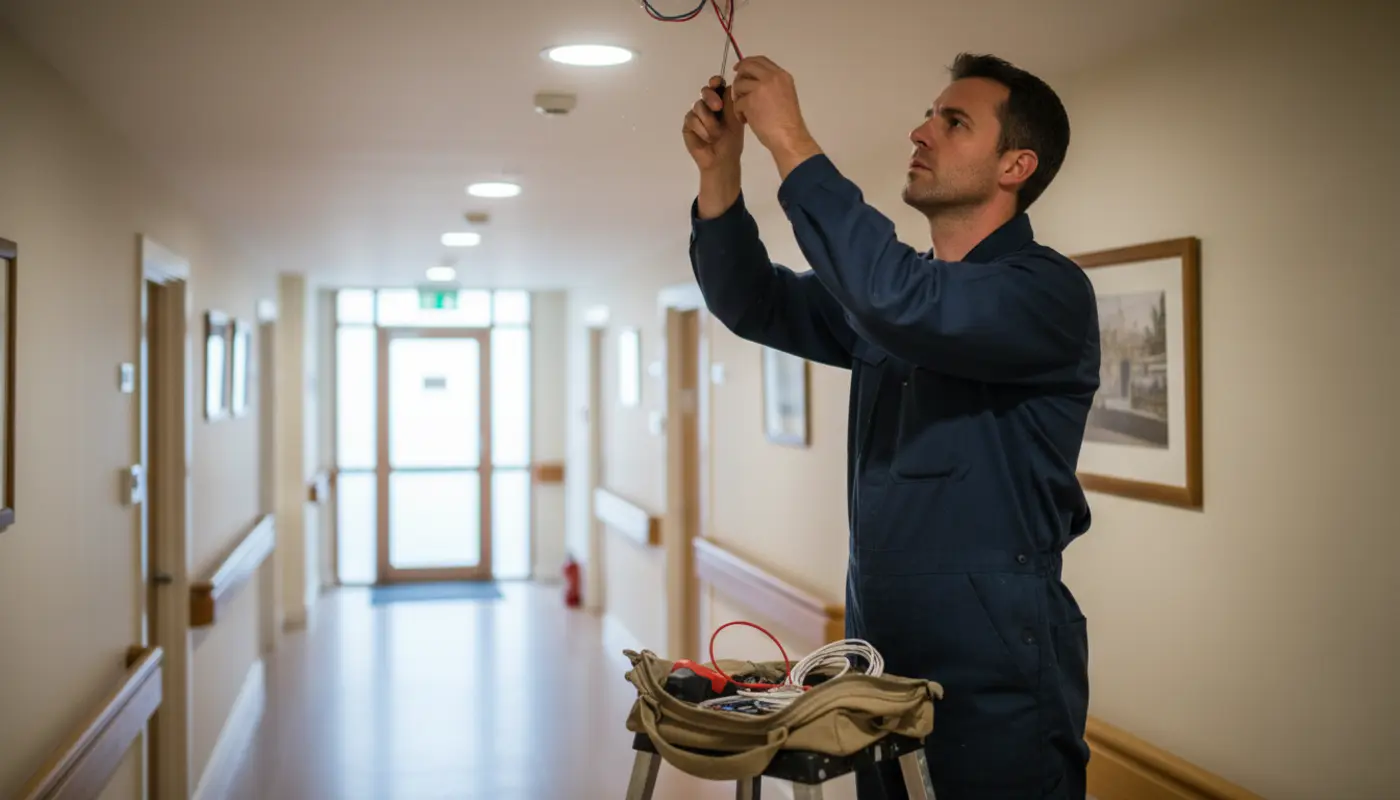
In older buildings across the North West, wireless systems reduce disruption. No chasing walls while residents are in their rooms. In new builds, hard wired systems are often installed from the start.
But here is the real issue. It is not wired versus wireless. It is whether the system is designed around your residents and your evacuation plan.
Alarm Zoning And Evacuation Planning For Vulnerable Residents
Let’s be blunt. You are not evacuating 40 frail residents down a staircase in three minutes. So stop writing plans like you run a secondary school.
Care homes use progressive horizontal evacuation. That means moving residents to a safe area on the same level, behind fire resistant walls and doors.
Your fire alarm zoning must match that plan. Clear zones. Logical layout. Staff know instantly where the activation happened.
- Bedroom detection coverage
- Corridor smoke detectors
- Heat detectors in kitchens
- Accessible manual call points
- Audible and visual alerts
- Nurse call integration where required
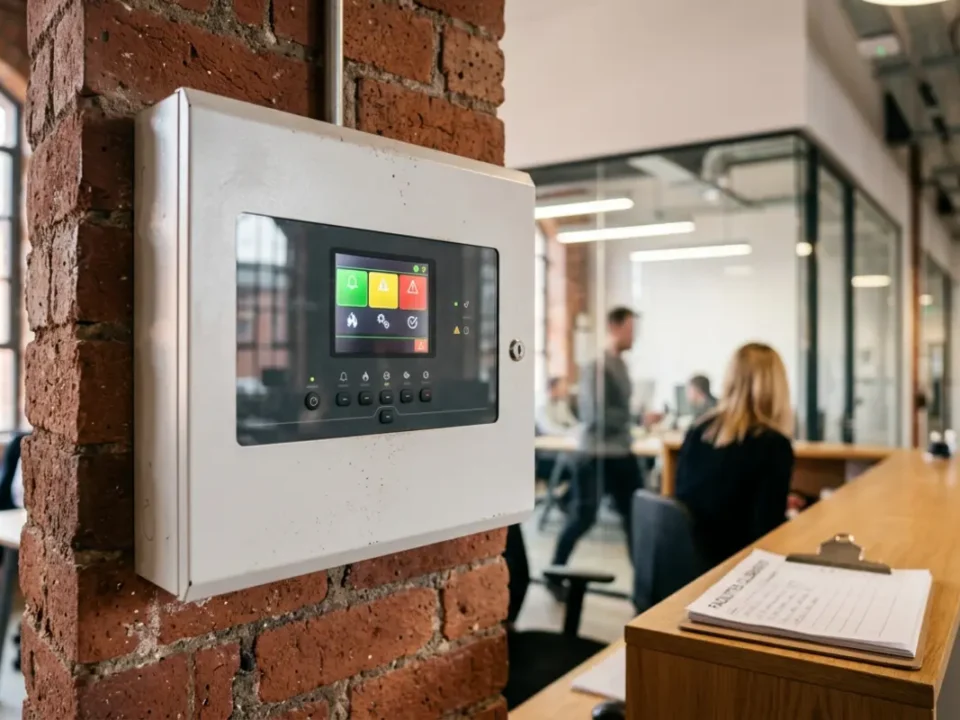
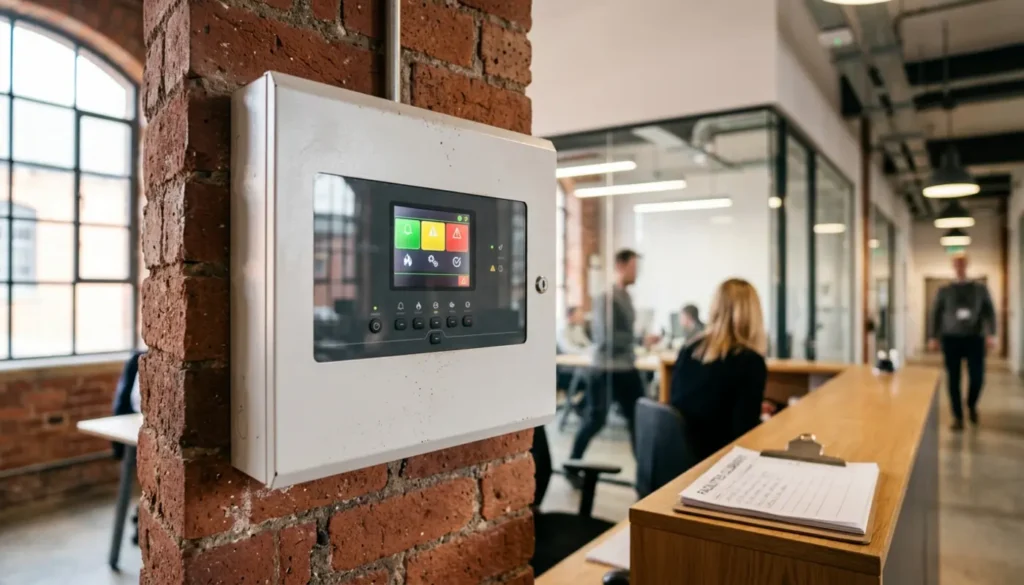
- Clear zone labelling on the panel
Get this wrong and staff lose time. In a real fire, seconds matter.
Fire Risk Assessments For Care Homes Under PAS 79
Stop pretending your five year old risk assessment is still valid. It is not.
You must review it regularly and after significant changes. That includes layout changes, refurbishment or higher dependency residents. If your building or residents change, your assessment must change.
Following PAS 79 keeps the process structured and clear. We explain common compliance gaps in our guide to staying inspection ready in care settings.
A solid assessment should cover:
- Identification of fire hazards
- People at risk including mobility needs
- Evaluation and reduction of risk
- Recorded findings and action plans
- A clear review schedule
Anything less is cutting corners.
Choosing An SSAIB Certified Fire Alarm Installer In The North West
This is where people try to save money. And this is where it backfires.
Your installer should be SSAIB certified and Insurance Approved. Insurers look for third party certification. It shows the company is audited and working to recognised standards.
All our fire alarm systems are designed to BS 5839 and installed to meet Insurance Approved requirements. We provide commissioning certificates and full documentation. That is what CQC inspectors and fire officers expect.
If you are reviewing wider site security, speak to us about access control systems for care homes. These can integrate with fire door release systems so safety and security work together.
iSecurity Solutions is a trusted UK provider of commercial and domestic security systems. We protect homes and businesses around the clock. From CCTV and intruder alarms to fire safety, access control and construction site monitoring, our team designs tailored solutions backed by responsive service and modern remote monitoring technology.
Fire Alarm Maintenance And Testing Requirements
Installing a system is step one. Maintaining it is the real commitment.
BS 5839 requires weekly user tests of manual call points on a rotation basis. Most care homes also require at least two service visits per year by a competent engineer.
You must keep a log book. You must record faults. You must fix them. If your panel has shown a fault light for months, that is not low priority. That is negligence.
Emergency lighting must comply with BS 5266. That includes monthly function tests and an annual full duration test. Fire extinguishers must be serviced in line with BS 5306 and BAFE SP101. Insurers expect valid service certificates.
Yes, it is paperwork heavy. No, that is not an excuse to ignore it.
Costs Of Fire Alarms For Care Homes In The North West
Let’s talk money.
A small care home in the North West may pay between five and ten thousand pounds for a compliant L1 system. Medium and larger homes can exceed twenty thousand pounds. Costs increase if cabling or compartmentation upgrades are needed.
Ongoing maintenance usually costs a few hundred pounds per visit, depending on system size.
Can you afford to get it wrong? Fines for serious breaches can reach six figures. Reputational damage can be worse.
Some providers phase upgrades or explore funding options. Planning beats panic. We explain staged approaches in our blog on budgeting for essential safety upgrades.
Working With North West Fire And Rescue Services
Do not treat your local fire service as the enemy.
Greater Manchester Fire and Rescue Service, Merseyside Fire and Rescue Service and Lancashire Fire and Rescue Service offer guidance and safety visits.
If they raise concerns, act quickly. Document what you have done. Show progress. Fire officers respect proactive management.
They expect compliance with BS 5839. They expect evacuation plans that match resident needs. And they expect staff who know what to do at 3am, not just during a drill.
Final Words
Look. Fire alarms in care homes are not glamorous. They sit quietly on the wall and most of the time do nothing.
That is exactly the point.
But when they are needed, they must work perfectly. Designed to BS 5839. Backed by PAS 79 risk assessments. Maintained to the correct standards. Installed by an SSAIB certified and Insurance Approved company.
If you run a care home in the North West and you are unsure about your system, stop guessing. Get it reviewed properly. Hope is not a strategy.