Fire Alarms for HMOs in Manchester: Landlord Legal Obligations
Let’s be real. Running an HMO in Manchester without the right fire alarm system is not just risky. It is reckless.
You are not just risking a fine. You are risking lives, your HMO licence and your investment.
Here’s what’s actually happening. The law is clear. The standards are clear. Manchester City Council is clear. The only confusion comes when landlords try to cut corners.
If you want the straight answer on what Manchester expects from your fire alarm system, keep reading.
Fire Alarms For HMOs In Manchester And The Legal Framework
There is not one rule. There are several. They all apply.
First, the Regulatory Reform Fire Safety Order 2005. This covers the common parts of your HMO. Corridors. Stairs. Shared kitchens. You are the responsible person. That means you must carry out a suitable and sufficient fire risk assessment and install proper fire detection.
You can read the law on legislation.gov.uk. It is not optional.
Second, the Housing Act 2004. This controls HMO licensing and the Housing Health and Safety Rating System. Fire is a major hazard under this system. If Manchester City Council decides your precautions are poor, they can issue improvement notices or worse.
Third, British Standards. Mainly BS 5839 6 for domestic premises and HMOs. This sets the correct alarm grades and LD categories. If your system does not meet the required grade and category, do not expect an easy inspection.
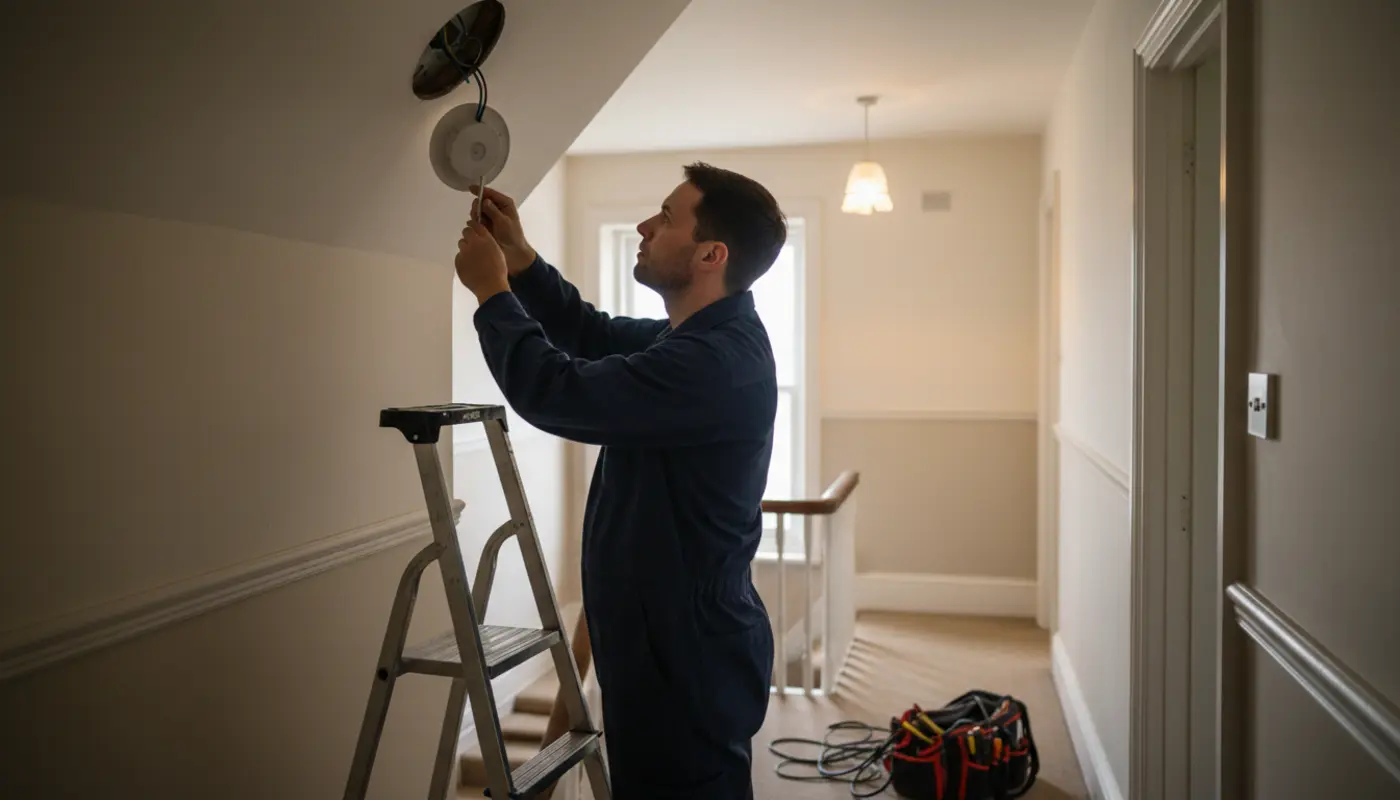
At iSecurity Solutions fire safety services we design and install systems that comply with BS 5839 categories such as L1 and L2 where required and BS 5839 6 for HMOs. All installations are SSAIB registered and Insurance Approved.
Cut the nonsense. If your installer cannot prove compliance, you are exposed.
Manchester City Council HMO Licensing Conditions
Manchester has its own HMO standards. National guidance alone is not enough.
If five or more people from two or more households live in your property, you need a mandatory HMO licence. That licence will include conditions about:
- Fire detection systems
- Interlinked alarms
- Fire doors
- Emergency lighting
- Risk assessments
- Ongoing maintenance
Inspectors expect your system to match BS 5839 6 and your fire risk assessment. A few DIY smoke alarms from the local shop will not pass. Obviously.
Fire Alarms For HMOs In Manchester And BS 5839 6 Compliance
This is where landlords switch off. Grades. Categories. LD1. LD2. LD3.
Look. It is not exciting reading. But ignoring it costs money.
Here is the simple version.
Alarm Grades Explained
BS 5839 6 defines Grades A, C, D1 and D2 for domestic style premises and HMOs.
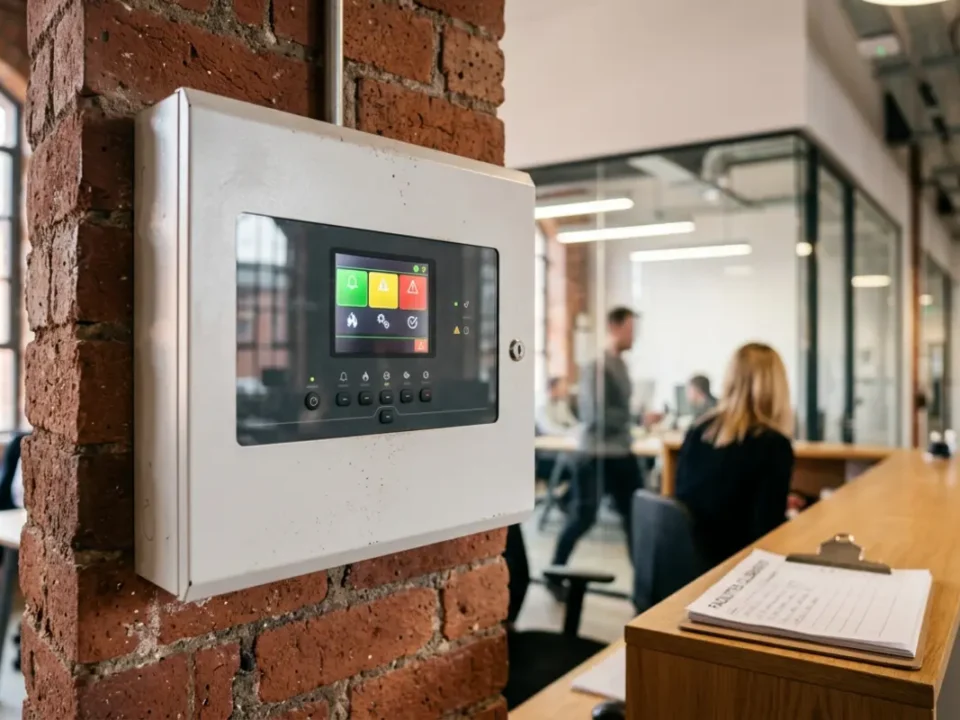
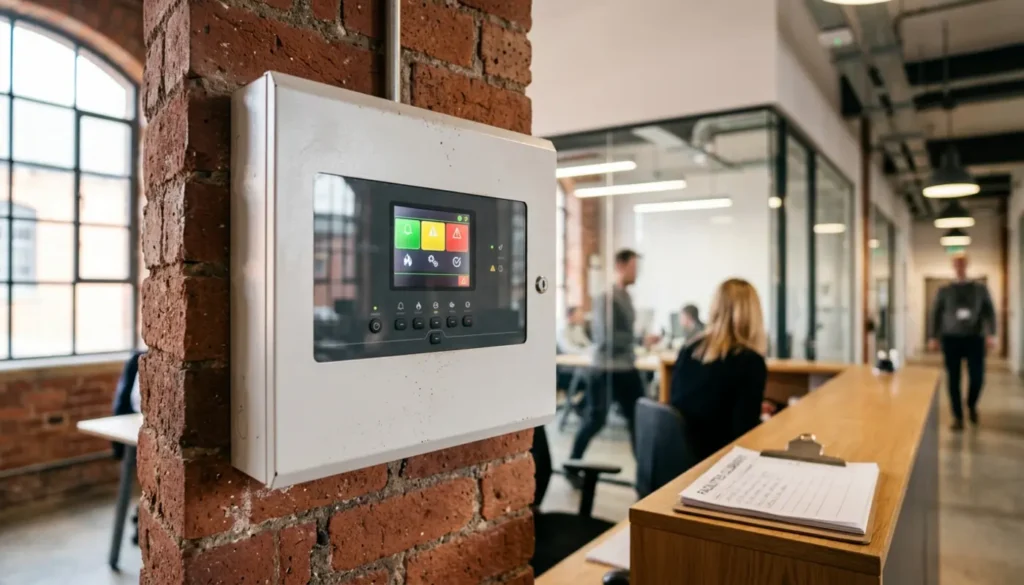
Grade A is a full panel system. Detectors link back to a control panel. Manual call points are installed. Sounders are placed throughout the building. Larger HMOs, especially three storeys or more, often require this.
Grade D1 and D2 are mains powered, interlinked alarms with battery backup. These are common in smaller HMOs. But they still need proper design and full interlinking across floors.
If someone says, “We will just fit a couple of smoke alarms,” stop right there. That is not system design. That is guesswork.
No design. No proper coverage. No defence at inspection.
LD Categories And Detector Locations
The LD category tells you where detectors must be fitted.
LD3 covers escape routes only. LD2 covers escape routes and high risk rooms like kitchens and living rooms. LD1 covers all rooms except toilets and bathrooms.
Most Manchester HMOs need at least LD2. Higher risk layouts often require LD1. The decision must come from a written fire risk assessment.
If you are unsure how detection works in real terms, read how a fire alarm system works. Basic knowledge helps you spot bad advice quickly.
Interlinked Smoke And Heat Alarms Across All Floors
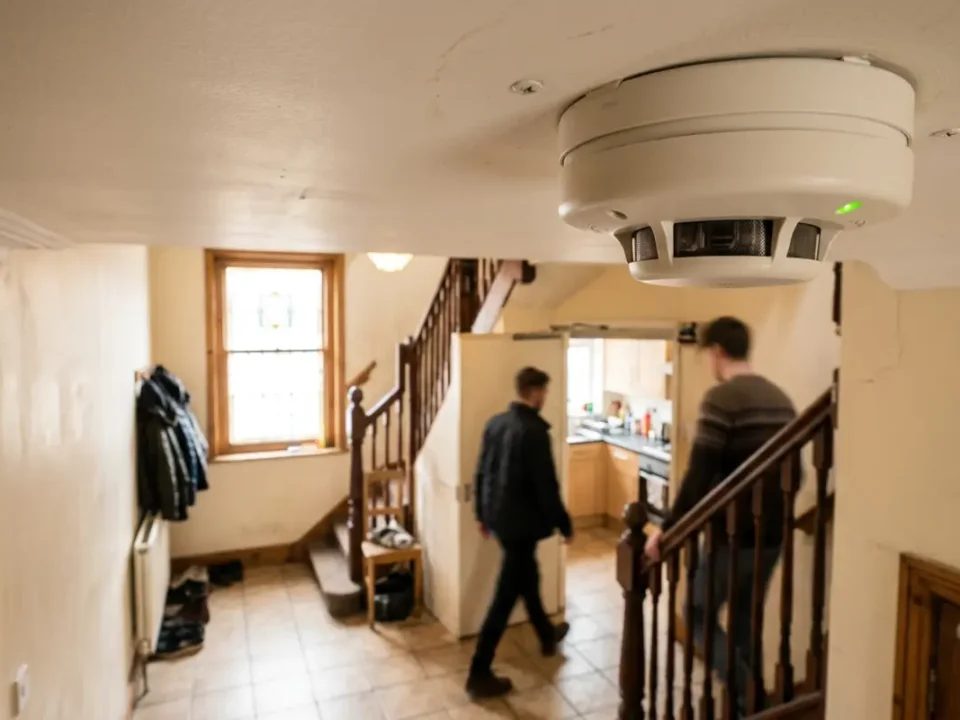
The legal minimum is one smoke alarm on each storey used as living space.
In an HMO, minimum is rarely enough.
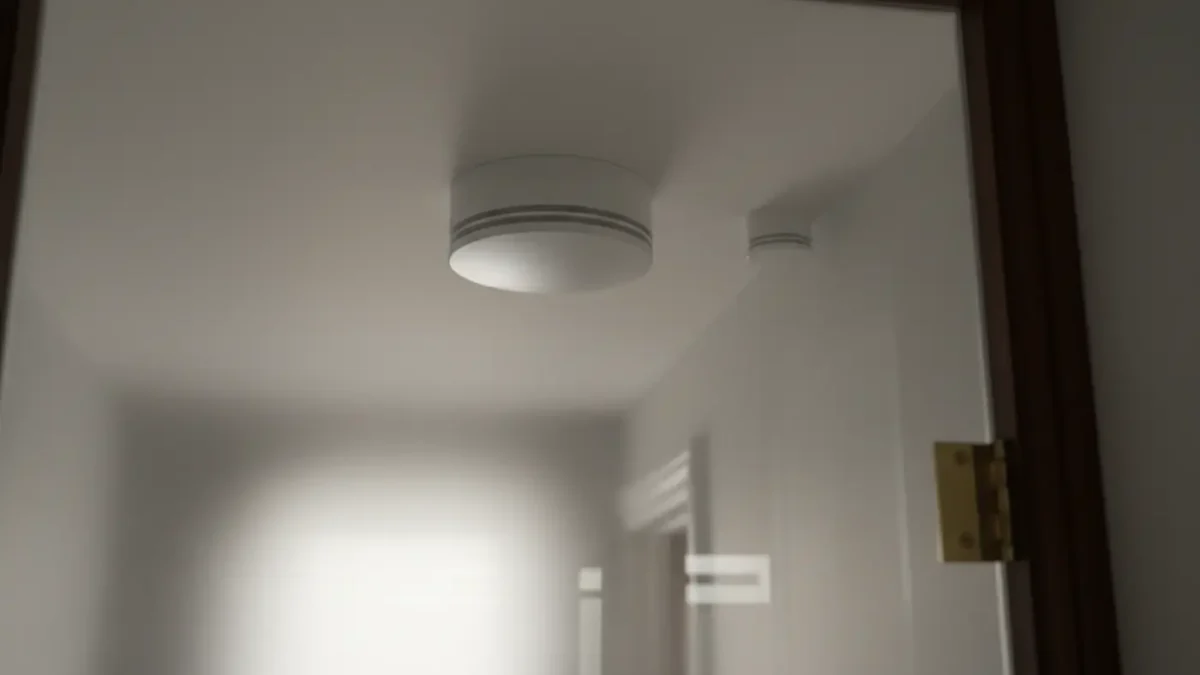
Alarms must be interlinked. When one activates, they all activate. Why. Because the tenant on the top floor will not hear a single alarm in the kitchen below.
Heat alarms belong in kitchens. Smoke alarms belong in escape routes and, depending on the LD category, in bedrooms and living areas.
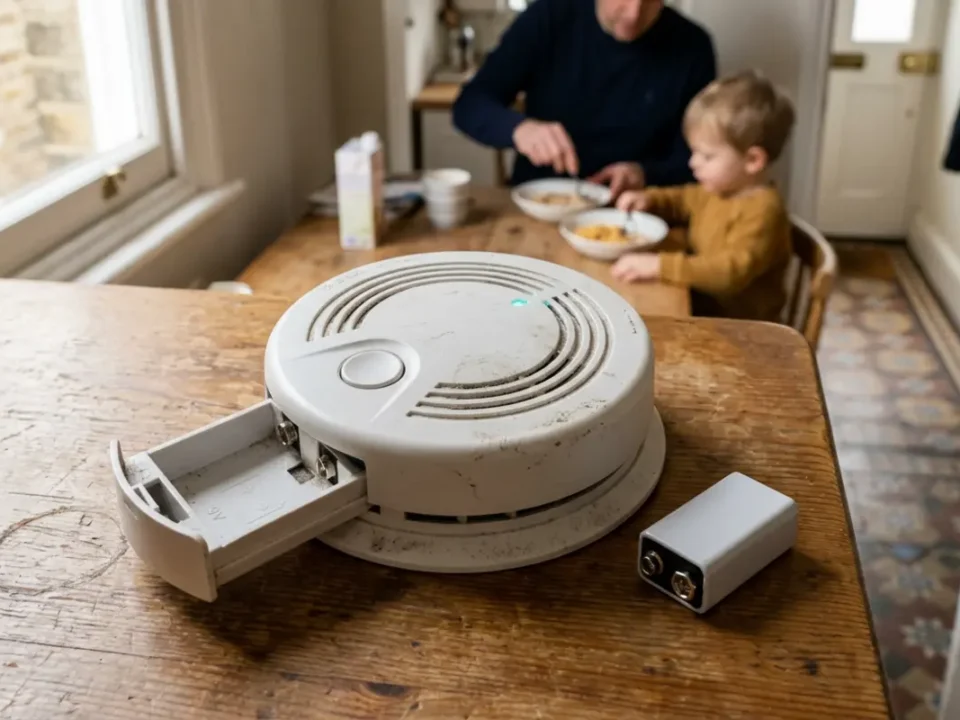
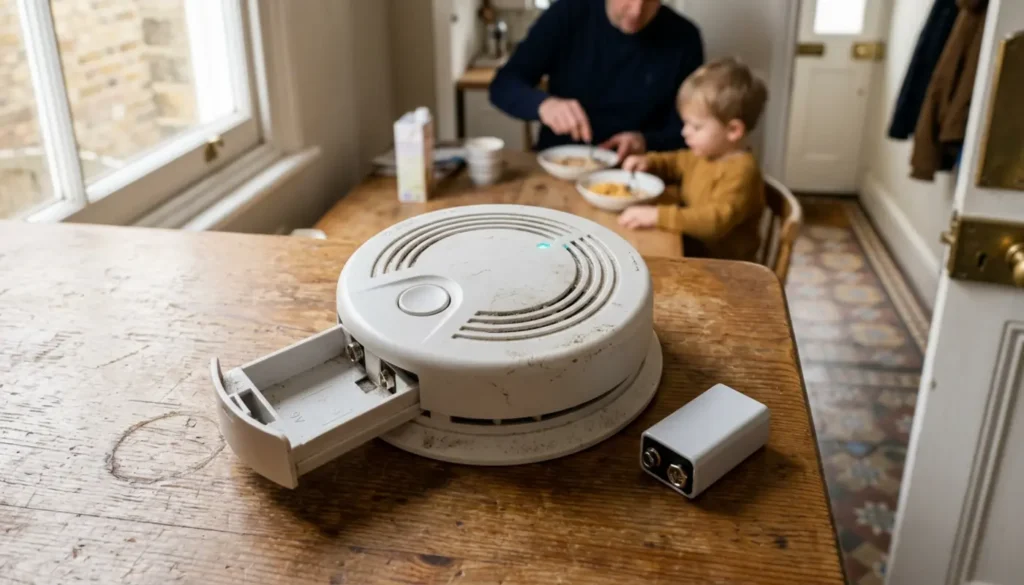
If alarms keep going off for no reason and tenants remove batteries, that is not a tenant problem. It is a design fault. See our guide on why fire alarms beep for common causes.
Fire Risk Assessments For Manchester HMOs
Under the Fire Safety Order, you must complete a suitable and sufficient fire risk assessment for the common parts.
It must identify hazards, people at risk and control measures. It must be written down. It must be reviewed regularly. At least once a year is best practice. Also review it after layout or occupancy changes.
Copying a template from the internet and changing the address is not a proper assessment. Come on.
For more detail see our fire risk assessment guidance. The process is simple. Identify risk. Control it. Record it.
Emergency Lighting And Fire Doors In Manchester HMOs
Fire alarms are only part of the picture.
Emergency lighting in HMOs must comply with BS 5266. That includes monthly function tests and a full annual duration test. Records must be kept. If the lights fail during a power cut, your escape route fails.
Fire extinguishers in common areas must comply with BS 5306 and BAFE SP101. They need annual servicing and certificates. Insurers expect proof.
Fire doors are usually FD30s on bedrooms and risk rooms that open onto escape routes. They need self closers and intact intumescent strips. No wedges. Obviously.
Inspectors will check. If your door has gaps you can see daylight through, it is not compliant.
Penalties For Non Compliance
Let’s talk consequences.
Under the Housing Act 2004, the council can issue improvement notices or prohibition orders. They can revoke your HMO licence. They can apply civil penalties.
Under the Fire Safety Order, Greater Manchester Fire and Rescue Service can issue enforcement notices or prosecute. Fines are unlimited. Prison is possible in serious cases.
Cutting fire safety is not where you save money.
If your system is not professionally designed, installed and maintained, your insurer may challenge a claim after a fire.
We are SSAIB registered and every installation is Insurance Approved. Where systems are monitored or integrated with intruder alarms built to EN 50131 Grade 2 or Grade 3, SSAIB certification is required for Police Response URN eligibility. No certification means no URN. No URN means no police response.
You would not drive without insurance. Do not run an HMO without compliant fire protection.
Ongoing Testing And Record Keeping
Installation is step one. Maintenance is where landlords slip.
Your duties include:
- Weekly alarm tests
- Monthly emergency lighting checks
- Annual alarm servicing
- Annual lighting duration test
- Yearly extinguisher servicing
- Regular fire risk assessment reviews
- Updating your maintenance logbook
If you are unsure about frequency, read how often fire alarms should be tested. It is clear and practical.
Keep every record. Service certificates. Test logs. Risk assessments. Licence documents. When an inspector asks, you produce them immediately.
At iSecurity Solutions, we support Manchester landlords with design, installation and ongoing maintenance. We provide structured service contracts and clear documentation.
This is not about over engineering. It is about installing the correct grade, the correct category and maintaining it properly.
Stop guessing. Get your fire alarms for HMOs in Manchester assessed and installed to BS 5839 6 by an SSAIB registered and Insurance Approved provider.