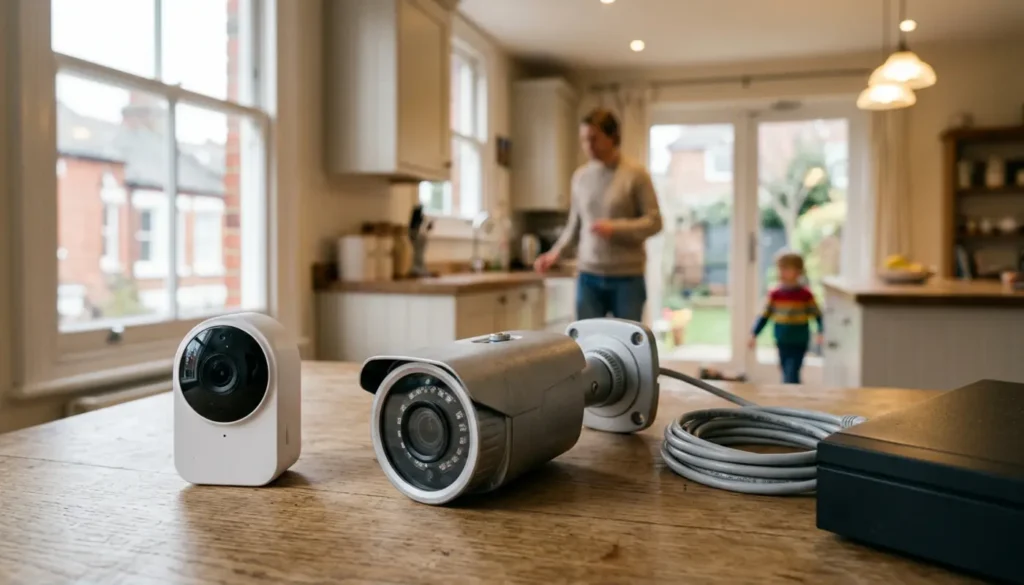
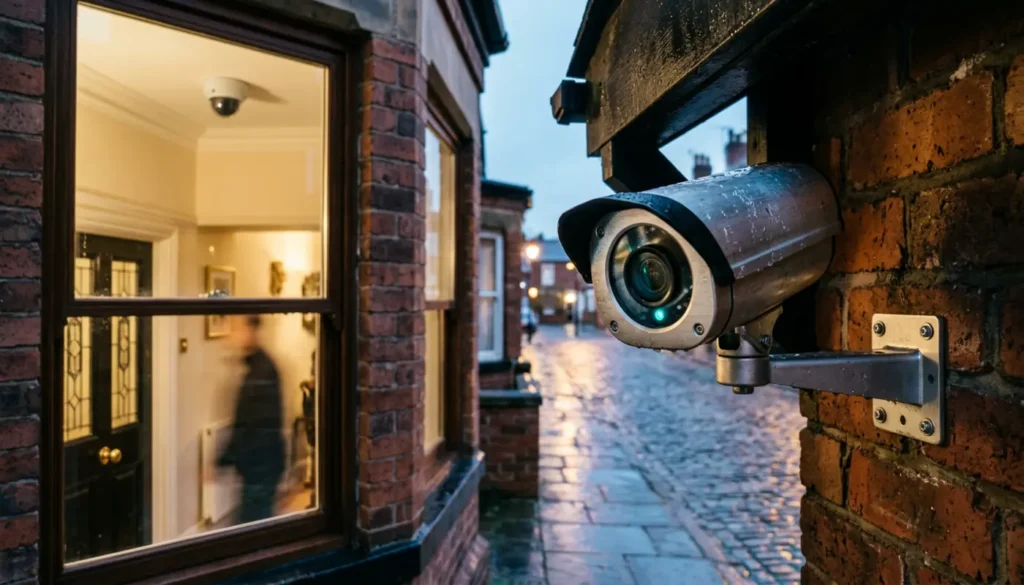
What Is the Difference Between HD and 4K CCTV?
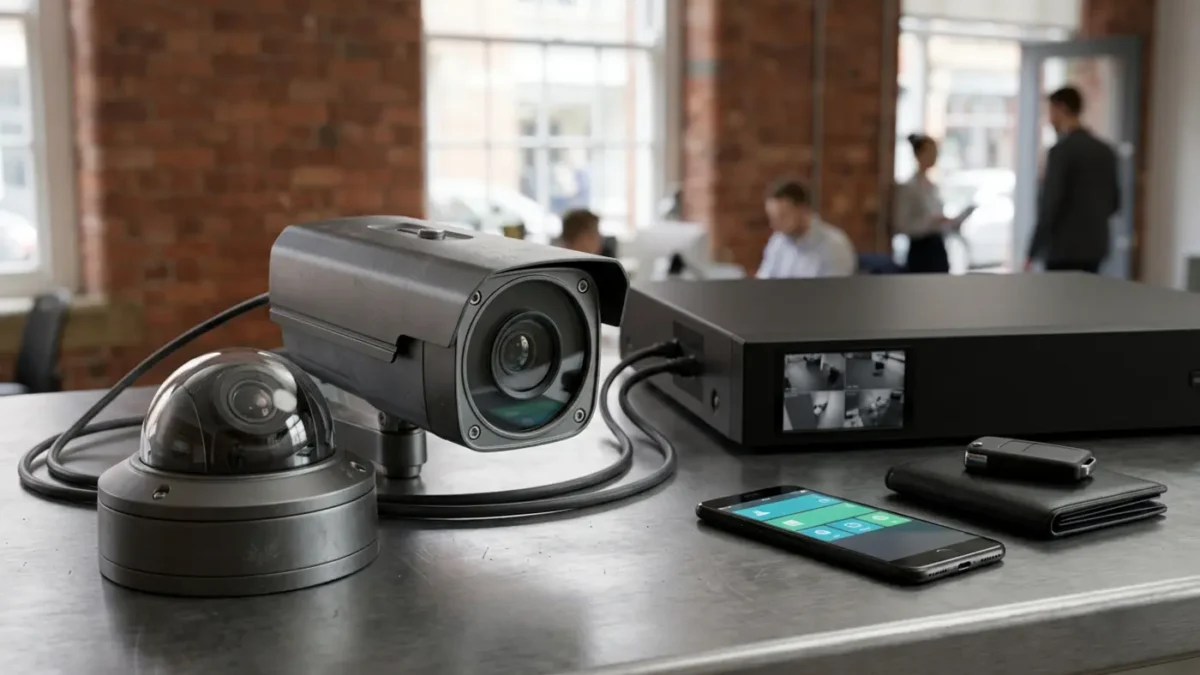
HD And 4K CCTV
The main difference between HD and 4K CCTV is image detail. HD CCTV usually means 720p or 1080p video, while 4K CCTV records at around 8 megapixels, giving roughly four times as many pixels as 1080p Full HD.
If CCTV choices feel confusing, you're not alone. You don't need to chase the biggest number on the box to get a system that protects your property well, because the right choice depends on where the camera is fitted, what it needs to see and how the footage will be used.
That extra 4K detail can help with faces, vehicles, stock movement and wider areas, but 4K is not always the automatic winner. Storage, broadband upload speed, camera placement, lighting and cost all matter, especially for UK homes and businesses that need reliable footage without buying more than they need.
iSecurity Solutions is a trusted UK provider of commercial and domestic security systems, helping homes and businesses stay protected around the clock. From CCTV and intruder alarms to fire safety, access control and construction site monitoring, the team designs reliable, tailored solutions backed by responsive service and modern, remotely monitored technology.
HD And 4K CCTV At A Glance
HD and 4K CCTV are different because they record at different resolutions. Standard HD is 720p, which is 1280 by 720 pixels, or about 0.9 megapixels. Full HD is 1080p, which is 1920 by 1080 pixels, or about 2.1 megapixels, and it remains a common choice for smaller areas where the subject is close to the camera.
4K CCTV, often called 4K UHD, is normally 3840 by 2160 pixels, or about 8.3 megapixels. In simple terms, a 4K camera captures far more dots of information in each frame, which gives you more detail to work with when reviewing footage.
For professionally designed CCTV systems, resolution is only one part of the design. Lens choice, camera height, viewing angle, lighting, recording settings and network capacity all decide whether the final image is useful or just impressively large.
- 720p HD: 1280 by 720 pixels, about 0.9 megapixels, suitable for basic monitoring in small, low risk areas.
- 1080p Full HD: 1920 by 1080 pixels, about 2.1 megapixels, a practical option for doors, counters, small rooms and short distances.
- 4K UHD: 3840 by 2160 pixels, about 8.3 megapixels, better for wider entrances, yards, car parks and areas where later cropping may be needed.
How Much Clearer Is 4K CCTV?
4K CCTV is much clearer than 1080p when everything else is equal. Because it has about four times the pixel count of Full HD, it can show finer details such as clothing, tools, bags, vehicle features and movement across a wider area.
That said, CCTV is not magic, sadly not even the expensive kind. If a person is too far away, the lens is too wide, the image is blurred, or the lighting is poor, 4K will still struggle to provide a clean identification image. Resolution improves potential detail, but it cannot fix every weakness in the scene.
For facial detail, think about the difference between seeing that someone is there and proving who they are. A wide angle 4K camera may show a whole driveway nicely, but a face at the far end might still be too small. A correctly positioned 1080p camera aimed at a narrow doorway can sometimes provide better identification than a badly placed 4K camera covering half the street.
Number plates are even trickier. Headlight glare, reflective plates, speed, rain, camera angle and shutter speed can all affect results. If reading plates is important, a dedicated camera with the right field of view is usually better than relying on one wide 4K overview camera to do everything.
Evidence quality also depends on exporting the original footage properly. Timestamps, continuity, file format and keeping the original recording untouched can all matter if footage is shared with police, insurers or a solicitor.
Digital Zoom And CCTV Detail
Digital zoom works better on 4K CCTV than on HD CCTV because there are more pixels available to crop into. If you zoom into 4K footage, the image usually holds together better than 1080p because the recording started with more information.
There are two types of zoom to understand. Optical zoom uses the camera lens to get closer before the image is recorded, so it captures real detail. Digital zoom simply enlarges recorded pixels afterwards, rather like stretching a photo on your phone until it starts looking blocky.
This is why good positioning matters. If a camera is too far from the target area, digital zoom will only make the weakness more obvious. For entrances, tills, gates and driveways, the camera should be close enough and angled correctly before you worry about whether it is HD or 4K.
You can explore this in more depth in our article on CCTV resolution for identifying faces, which explains how distance and camera angle affect real world identification.
Storage Requirements And Recording Time
4K CCTV needs more storage than HD because each frame contains more image data. The final storage figure depends on resolution, bitrate, frame rate, number of cameras, compression, recording mode and how long you want to keep footage.
Bitrate means how much video data is saved every second. A higher bitrate usually gives a clearer image, but it also fills the hard drive faster. Frame rate means how many images are recorded each second. Higher frame rates can help with movement, although they increase storage use too.
Modern systems often use H.265 compression, which is a codec. In simple terms, a codec is the method used to shrink video files so they take up less space. H.265 can reduce storage and bandwidth compared with older H.264, although the saving depends on the scene, camera settings and how much movement is happening.
As a rough guide, these examples show typical storage needs for continuous recording with H.265, moderate movement and no audio. Real sites can need more or less, so it is always worth allowing spare capacity.
- Four 1080p cameras: about 1 TB to 2 TB for 14 days, or 2 TB to 4 TB for 30 days.
- Four 4K cameras: about 4 TB to 6 TB for 14 days, or 8 TB to 12 TB for 30 days.
- Eight 1080p cameras: about 2 TB to 4 TB for 14 days, or 4 TB to 8 TB for 30 days.
- Eight 4K cameras: about 8 TB to 12 TB for 14 days, or 16 TB to 24 TB for 30 days.
If the scene is busy, the frame rate is high, or audio is recorded, the storage requirement rises. It is sensible to leave spare capacity because hard drive formatting, recording spikes and future camera expansion can reduce the space available.
For business systems, retention should not be guessed. It should match the purpose of recording, the risk level and any legal or insurance needs. In many UK settings, thirty days is common, but some premises need less and some need more.
Bandwidth And Broadband Demands
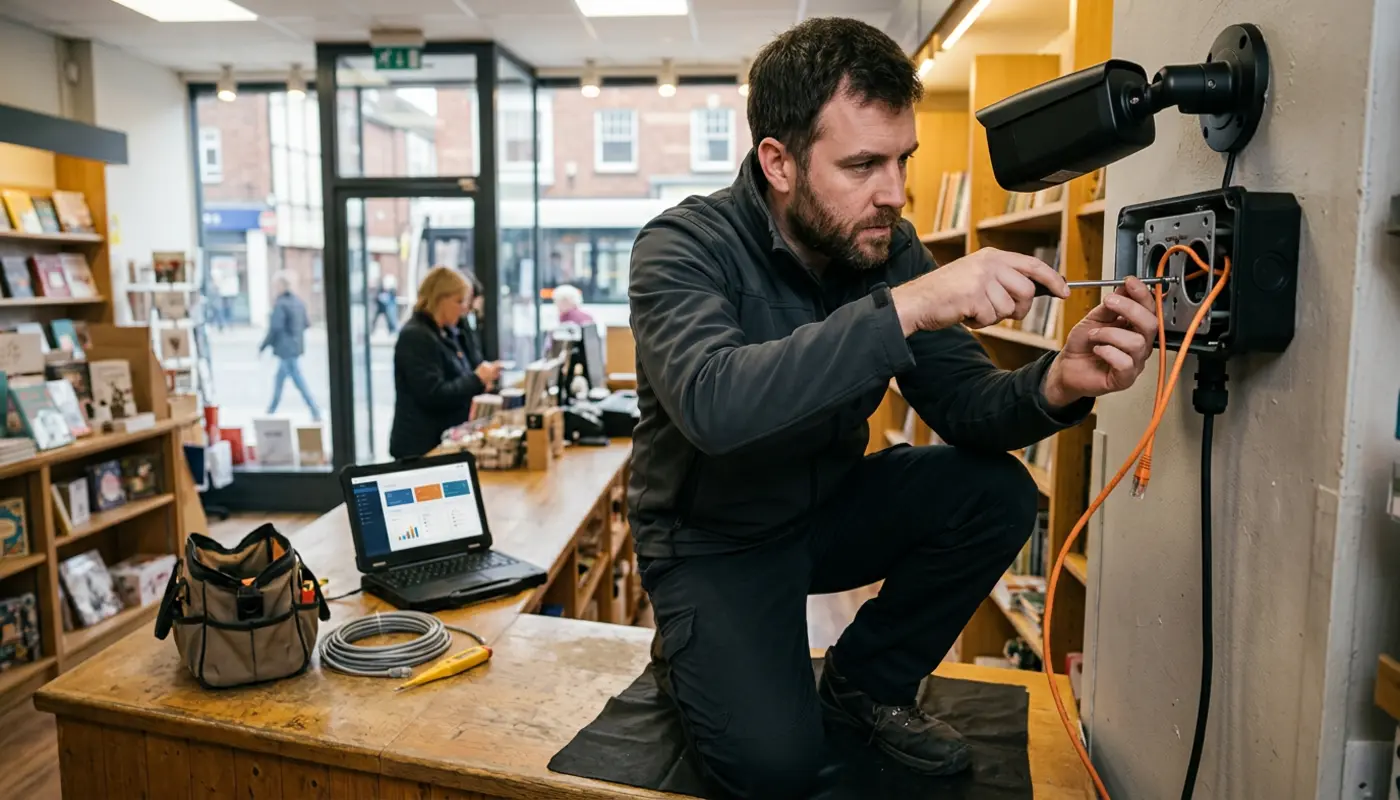
4K CCTV places more demand on networks than HD CCTV, especially with IP CCTV where each camera sends video data through the local network to a recorder. A properly installed wired network with suitable switches normally handles this well, but bargain equipment and weak WiFi can quickly become the grumpy weak link.
For most wired CCTV systems, local recording does not constantly use your internet connection because the cameras record to an NVR on site. NVR means network video recorder, which is the box that stores footage from IP cameras.
Remote viewing is different because it relies heavily on upload speed. UK broadband adverts often highlight download speeds, but CCTV viewing from your phone depends on how quickly your property can send video out. If several 4K streams are viewed remotely at once, slow upload speeds can cause buffering or reduced image quality.
As a simple example, an upload speed below 10 Mbps may struggle if you try to view multiple 4K cameras at full quality away from home. An upload speed around 20 Mbps to 40 Mbps is more comfortable for occasional remote viewing. Faster fibre connections with 50 Mbps or more upload speed usually give a smoother experience, especially for businesses with several users checking cameras.
Many systems solve this by using a sub stream for mobile viewing. This means the recorder sends a lower resolution version to your phone for smooth live viewing, while the full quality footage remains stored on the recorder for evidence.
HD And 4K CCTV Costs In Pounds
4K CCTV usually costs more than HD, not just because the cameras are dearer but because the whole system may need more capacity. The recorder, surveillance hard drives, PoE switches, cabling, monitor and backup power all need to support the higher resolution properly.
For UK buyers in 2026, a basic HD camera will usually be cheaper than an equivalent 4K model. However, the real comparison should be the total installed system cost, not the camera price alone. A low cost 4K camera with poor night performance can be worse value than a well chosen Full HD camera in the right position.
- 1080p CCTV camera: usually £50 to £120 each, depending on lens, night vision, housing quality and brand level.
- 4K CCTV camera: usually £100 to £250 each, depending on sensor quality, low light performance and smart detection.
- NVR recorder: usually £120 to £350, depending on number of channels, 4K support and recording features.
- Surveillance hard drive: usually £60 to £220, depending on capacity, drive grade and retention requirement.
- Professional home installation: often £120 to £250 per camera for straightforward homes, depending on access, cable routes, height, setup time and testing.
- Commercial installation: often £1,000 to £5,000 or more, depending on number of cameras, site size, networking and working height.
- Maintenance: often £120 to £400 per year for many small systems, depending on cleaning, testing, firmware checks and call out cover.
Installation cost depends on access, cable routes, building type, working height, number of cameras and the time needed for setup. A neat home installation is very different from a multi camera commercial system across a warehouse, yard or car park.
Long term costs also matter. Larger hard drives may eventually need replacing, cloud recording may involve subscription fees, and commercial systems should be maintained, cleaned and checked. Firmware updates are important too, because CCTV is part of your network and should not be left forgotten in a cupboard like an old router from 2012.
UK Legal And Regulatory Considerations
CCTV in the UK must be used responsibly, especially if it records people who can be identified. The Information Commissioner's Office explains that domestic CCTV can fall under data protection rules when it captures areas beyond your private boundary, such as pavements, roads or neighbouring property. You can check the official ICO home CCTV guidance for further detail.
For businesses, identifiable CCTV footage is personal data, so UK GDPR and the Data Protection Act 2018 may apply. Organisations should have a clear reason for using CCTV, limit coverage to what is necessary, control who can access footage and avoid keeping recordings for longer than needed.
Signage is also important. People should be told that CCTV is operating, who is responsible for it and why it is being used. A small sign does not solve every compliance issue, but it is a key part of transparency.
Security standards matter as well. For CCTV design, installation and performance, BS EN 62676 may be relevant. EN 50131 is mainly linked with intruder alarm systems, so it should only be considered where CCTV forms part of a wider alarm setup or response procedure.
Performance In UK Weather And Winter Light
UK CCTV has to deal with dark winter evenings, rain, fog, glare, wet roads, street lighting and the occasional spider that decides your lens is prime real estate. In these conditions, camera quality can matter more than resolution alone.
Low light performance depends on the sensor size, lens aperture, infrared strength, exposure control and noise reduction. A 4K camera with a small sensor may produce a noisy image at night, while a high quality 1080p camera with better light handling may provide a cleaner result.
Rain and fog reduce contrast, which makes fine detail harder to see. Water droplets on the lens can distort the image, and headlights can cause glare across the scene. Good camera housings, correct mounting positions and routine cleaning make a noticeable difference.
Wide dynamic range, often called WDR, helps the camera balance bright and dark areas in the same picture. It is useful for entrances, shop fronts, loading bays and car parks where sunlight, headlights or illuminated signs can otherwise wash out important detail.
Which CCTV Resolution Should You Choose?
The best CCTV resolution depends on the area being covered and the level of detail you need from the footage. For a domestic front door, 1080p may be enough if the camera is close, the field of view is narrow and the entrance is well lit. 4K is useful if the camera needs to cover a wider porch, path or shared approach where cropping may be needed later.
For driveways, choose based on distance and purpose. If you only need general awareness, Full HD may work well. If you want vehicle detail across a wider area, 4K can help, but reliable number plate capture often needs a dedicated camera angle and suitable lighting.
For small shops and offices, a mix often works best. Use cameras at entrances and tills for identification, and wider cameras for general coverage of stockrooms, aisles and reception areas. Businesses should also think about staff privacy, access permissions and documented retention.
For car parks and larger commercial premises, 4K is often worthwhile for overview coverage, especially where one camera needs to cover a broad scene. Even then, important points such as gates, barriers and loading bays may need dedicated cameras for identification rather than relying on one wide shot.
For warehouses, schools, places of worship and construction sites, the best answer is usually a designed system rather than a simple HD versus 4K choice. A balanced layout may include overview cameras, identification cameras, suitable lighting, remote monitoring and enough storage for the required retention period.
HD Or 4K CCTV Decision Checklist
Before choosing HD or 4K CCTV, ask what the camera must prove. If it only needs to show that someone entered a garden, HD may be fine. If it needs to help identify a person, track a vehicle or support an insurance claim, higher resolution and better placement become more important.
- How far away is the person, vehicle or object you need to see?
- Is the target moving quickly, such as a car entering a yard?
- Is the area well lit during winter evenings?
- Will the camera capture beyond your property boundary?
- How long do you need to keep recordings?
- Can your recorder and hard drives handle 4K footage?
- Is remote viewing needed, and what is your upload speed?
- Will you need more cameras in future?
- Is the total five year cost still sensible?
Final Thoughts On HD And 4K CCTV
The difference between HD and 4K CCTV is mainly detail, but the best choice depends on what you need the footage to achieve. 4K gives you more pixels, better cropping potential and stronger coverage for larger scenes, while HD can still be perfectly suitable for close range monitoring and smaller spaces.
The most reliable CCTV systems are designed around risk, lighting, distance, storage and legal responsibilities. If the camera is placed well and matched to the job, both HD and 4K can be useful, but if the design is poor, even the sharpest camera can disappoint.
If you're not sure which way to go, getting practical advice can save money and a few headaches. iSecurity Solutions can help you decide whether HD, 4K or a sensible mix of both is right for your property, whether you are securing a single home or managing several business sites.