CCTV for Children’s Care Homes in the North West
CCTV For Children’s Care Homes In The North West
Can CCTV be used lawfully in children’s care homes in the North West? Yes, CCTV can be used where it is clearly needed for safeguarding, proportionate to the risk, explained properly to children and families, and managed in line with the Children’s Homes Regulations 2015, UK GDPR, the Data Protection Act 2018, the Human Rights Act 1998 and Ofsted expectations.
For registered managers, responsible individuals and safeguarding leads, the difficult part is not usually the camera itself, because modern systems are very capable. The real challenge is making sure CCTV protects children without making the home feel watched, cold or institutional.
iSecurity Solutions is a trusted UK provider of commercial and domestic security systems, helping homes and businesses stay protected around the clock. For children’s care homes across the North West, the team designs reliable CCTV, intruder alarm, fire safety, access control and monitoring solutions that support safeguarding, privacy, dignity and inspection readiness.
Why Children’s Care Homes Use CCTV
Children’s care homes use CCTV when there is a clear safeguarding reason, such as unauthorised access, bullying, absconding, exploitation concerns, property damage or serious incidents in shared areas. A well planned CCTV installation can help staff spot risks earlier, review incidents fairly and give managers better evidence when fast decisions are needed.
In the North West, many homes support children with complex needs, trauma histories or high levels of vulnerability, so any security measure must be handled with care. CCTV should never replace good staffing, strong relationships or skilled supervision, but it can support them when it has a clear and lawful purpose.
It is also important to remember that CCTV can feel worrying for children and families at first. A calm explanation, clear boundaries and a chance to ask questions can make the system feel less intimidating and more clearly linked to safety.
CCTV For Care Homes In The North West With Ofsted And Insurance Considerations
CCTV for care homes in the North West must fit within a clear safeguarding framework, rather than being treated as a general security upgrade. CCTV for care homes can be useful for entrances, communal areas and external boundaries, but the reason for each camera should be written down, approved and reviewed.
CCTV design should also take account of BS EN 62676, especially around camera choice, image quality, recording performance, system integrity and evidence handling. When CCTV forms part of a wider monitored security arrangement, including perimeter detection or alarm linked monitoring, the design should also consider EN 50131 risk principles, often Grade 2 or Grade 3 depending on the site.
If police response is required for alarms, monitored CCTV or perimeter detection, an SSAIB certified and Insurance Approved system is normally the prerequisite for a Police Response URN. This pairing matters because insurers, commissioners and local authorities often want proof that the system has been designed, installed and maintained by a competent provider.
The Legal Framework For CCTV In Children’s Homes
The legal framework for CCTV in children’s homes starts with Regulation 24 of the Children’s Homes Regulations 2015, which says monitoring or surveillance of children may only be used for safeguarding and promoting welfare, or protecting other children. It also requires the placing authority to consent, the child to be informed where possible, and the monitoring to be no more intrusive than necessary.
CCTV footage is personal data because it can identify children, staff, visitors and professionals entering the home. That means the home must comply with UK GDPR and the Data Protection Act 2018, including a clear lawful basis, transparent information, restricted access, secure storage and sensible retention periods.
The Human Rights Act 1998 also matters because Article 8 protects the right to respect for private and family life. In plain English, CCTV may be allowed where safeguarding makes it necessary, but the home must be able to show that it has chosen the least intrusive option and has not removed reasonable privacy from children.
The Information Commissioner’s Office gives useful national guidance on video surveillance, including CCTV purpose, data protection impact assessments, signage, retention and access requests. Managers can read the ICO CCTV guidance when checking whether their policy and daily practice are aligned with data protection law.
What Ofsted Expects To See
Ofsted expects CCTV in children’s homes to be used for safeguarding and wellbeing, not for convenience, control or to make up for poor staffing. Inspectors may look for a written CCTV policy, a clear risk assessment, records of placing authority consent, evidence that children have been informed, and reviews showing the system remains necessary.
The Department for Education’s guide to the Children’s Homes Regulations makes it clear that observation, monitoring and surveillance must not remove reasonable privacy. This is especially important around dressing, washing, using the toilet, personal conversations and time when a child reasonably expects to be alone.
A strong policy should explain why the system exists, where cameras are located, who can view footage, how long recordings are kept, how requests are handled and how children can complain. It should also link to safeguarding, behaviour management, missing from care procedures, allegations management and staff conduct policies, rather than sitting in a forgotten folder with a name that nobody can remember.
If you want a quick sense check before Ofsted asks the awkward questions, look at each camera and ask whether you can clearly explain its safeguarding purpose in one sentence. If the answer is unclear, the policy or camera position may need another look.
Where CCTV Is Permitted And Where It Is Not
CCTV is most likely to be appropriate in entrances, exits, driveways, car parks, external boundaries, reception points and some communal areas where there is a genuine safeguarding reason. Corridors may also be justified in some homes, particularly where there are risks of absconding, peer on peer harm, night time incidents or unauthorised movement.
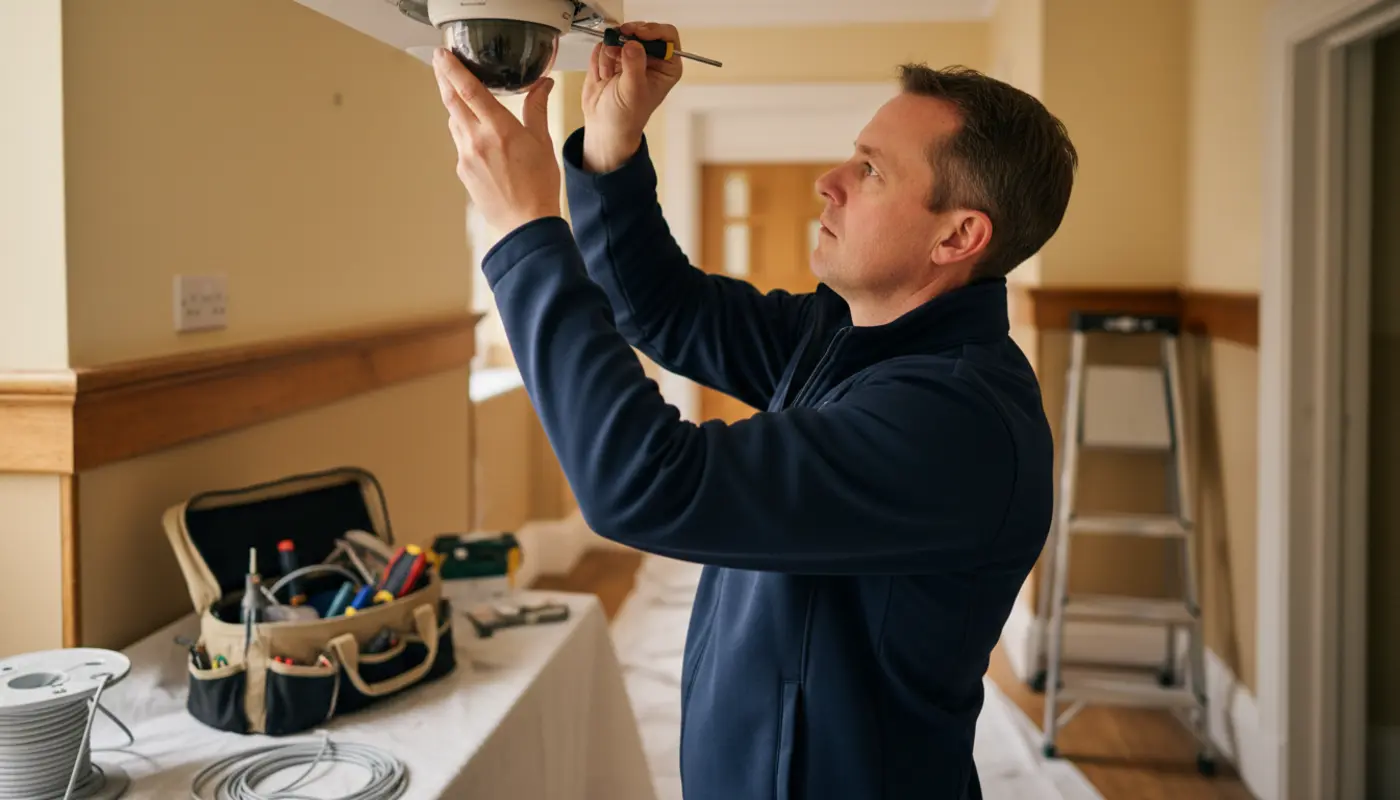
Even in communal areas, the camera angle matters because the system should cover the risk without capturing more detail than needed. Privacy masking can be used to block windows, neighbouring properties or parts of rooms where monitoring is not required.
Bedrooms, bathrooms, toilets, changing areas and private spaces are highly sensitive and should not be monitored as normal practice. Bedroom observation may only be considered in exceptional circumstances, such as where there is a specific and evidenced risk to the child or others, and even then it must be carefully authorised, recorded, time limited and reviewed.
Audio recording is usually more intrusive than video because it captures conversations, emotions and private information. In most children’s homes, recording sound will be difficult to justify unless there is a very strong safeguarding reason, so managers should take specialist advice before considering it.
Consent And Communication With Children And Families
Consent and clear communication are essential before CCTV is used in a children’s care home, especially because Regulation 24 expects written consent from the placing authority before monitoring or surveillance is used for a child. That consent should not be treated as a tick box task, because the home should explain the purpose, areas covered, review dates, complaints route and how privacy will be protected.
Children should be told about CCTV in a way that matches their age, understanding and communication needs. Some children may need a simple visual explanation, some may want a proper conversation, and some may need support from an advocate or trusted adult to express worries about being recorded.
Families, social workers and independent reviewing officers should also understand the reason for CCTV and the safeguards around it. Good communication can reduce anxiety, prevent misunderstandings and show that the home is not trying to watch children for the sake of it.
If a child or family objects, the home should listen carefully and record the concern. The answer may be to adjust camera angles, add privacy masking, review the risk assessment or provide clearer information, rather than simply saying the cameras are staying because security says so.
Data Retention And Secure Storage
CCTV footage in children’s homes should only be kept for as long as needed for the purpose it was collected. Many settings use around 30 days as a practical starting point, but children’s homes should set their own retention period based on safeguarding risk, incident reporting timescales and local authority expectations.
Footage needed for an investigation, allegation, police matter or safeguarding concern may be kept longer, but it should be separated, logged and protected. Once it is no longer needed, it should be securely deleted, not left sitting on a recorder like an old key that nobody admits to owning.
Storage must be secure, whether footage is held locally on a recorder or in a cloud system. Good practice includes encryption, strong passwords, role based access, audit logs, named authorised users and regular checks that the system is recording correctly.
Cloud CCTV can be useful, especially for multi site providers and senior on call managers, but the provider should be UK GDPR compliant and able to explain where data is stored, who can access it and how it is protected. Remote access should be limited to people who genuinely need it, with multi factor authentication and proper logging.
Staff Monitoring And Allegations Management
CCTV in children’s homes should primarily protect children, not create a workplace where staff feel constantly watched. That said, footage can be valuable when investigating incidents, complaints, injuries, missing from care episodes or allegations against staff.
Used properly, CCTV can protect both residents and staff by providing a factual record of what happened in shared areas. It can reduce uncertainty, help managers make fair decisions and support defensible practice when memories differ or emotions are running high.
The key is transparency, so staff should know where cameras are, why they are used, who can view footage and how footage may be used during investigations or supervision. Managers should avoid casual viewing or using CCTV as a substitute for leadership, because that can quickly damage trust.
Training is essential because even the best system can be weakened by poor habits. Staff should understand confidentiality, subject access requests, incident reporting, secure handling of footage and the difference between legitimate safeguarding review and unnecessary snooping.
Integrating CCTV With Wider Safeguarding Policies
CCTV should be part of a wider safeguarding approach that reflects Working Together to Safeguard Children, local safeguarding partnership arrangements and the home’s own statement of purpose. It should connect with risk assessments, care plans, behaviour support plans, missing from home procedures and child protection processes.
For example, if a child is at risk of exploitation and frequently leaves the home without permission, external cameras may support missing from care responses by confirming times, directions and vehicles. That is very different from using CCTV to monitor ordinary daily behaviour where there is no clear safeguarding purpose.
Managers should review the system regularly, especially after placement changes, incidents, complaints, Ofsted feedback or changes to the building. A camera that was justified six months ago may no longer be needed, and proportionate practice means being willing to remove or adjust monitoring when the risk changes.
Practical CCTV Technology Choices For 2026
The best CCTV technology for children’s care homes in 2026 is not simply the system with the sharpest picture. It is the system that supports careful camera placement, privacy masking, secure remote access, reliable recording, easy evidence export and clear user permissions.
High definition cameras can help identify events clearly, but coverage should still be limited to necessary areas. Wider views are not always better because collecting too much footage increases privacy risk and can make reviews harder when an incident needs to be checked quickly.
Remote monitoring must be handled with particular care in children’s homes. Live viewing should be restricted, recorded where appropriate through audit logs, and used only by authorised people for defined safeguarding or security purposes.
A good installer will help you map camera locations against risk, privacy and legal duties before any equipment goes on the wall. That planning stage is where most compliance problems are either solved early or accidentally built into the system, which is far easier than trying to fix them after the drill has been put away.
Before installation, ask whether a child, parent or social worker would understand why each camera is there. If the answer is no, it is worth pausing and reviewing the plan before work starts.
Steps To Review CCTV In A North West Children’s Home
To review CCTV in a North West children’s home, start with a written risk assessment that explains the safeguarding concern, the areas affected and why CCTV is being considered. Then complete a data protection impact assessment, update your CCTV policy, consult placing authorities, inform children and families, and record all decisions clearly.
Before installation, walk the building with safeguarding, care and facilities colleagues so each camera has a clear reason. Check sight lines, private spaces, signage, lighting, storage settings, access permissions and how footage will be exported securely if requested by police, social workers or the local authority.
After installation, test the system, train staff and set review dates. The review should ask whether CCTV is still necessary, whether children feel listened to, whether footage access is controlled, and whether the system is supporting safeguarding without harming dignity.
Final Thoughts On CCTV For Children’s Care Homes
CCTV for children’s care homes in the North West can be lawful, ethical and genuinely helpful when it is planned around safeguarding, privacy and the rights of the child. The strongest systems are not the most intrusive systems, but the ones that are carefully justified, clearly explained and responsibly managed.
If you are reviewing an existing system or planning a new one, treat CCTV as part of your safeguarding toolkit rather than a standalone fix. With the right policy, placement, consent process and secure technology, children’s homes can protect residents, support staff and show Ofsted that CCTV is being used with care and common sense.