What Are the Benefits of Access Control for Commercial Buildings?
Access Control Benefits
The main benefits of access control for commercial buildings are stronger security, controlled staff and visitor entry, clear access records, easier site management, and better protection for sensitive areas. In 2026, UK businesses are using access control not only to lock doors, but also to manage risk, improve safety, and keep daily operations running smoothly.
Traditional keys still have their place, but they can be lost, copied, or kept by former staff without anyone noticing. Modern access control helps businesses decide who can enter, where they can go, and when they can use each part of the building.
iSecurity Solutions is a trusted UK provider of commercial and domestic security systems, helping homes and businesses stay protected around the clock. Our team designs practical access control, CCTV, intruder alarm, fire safety, and monitoring solutions that are reliable, easy to manage, and built around the real risks on site.
Access Control Improves Commercial Building Security
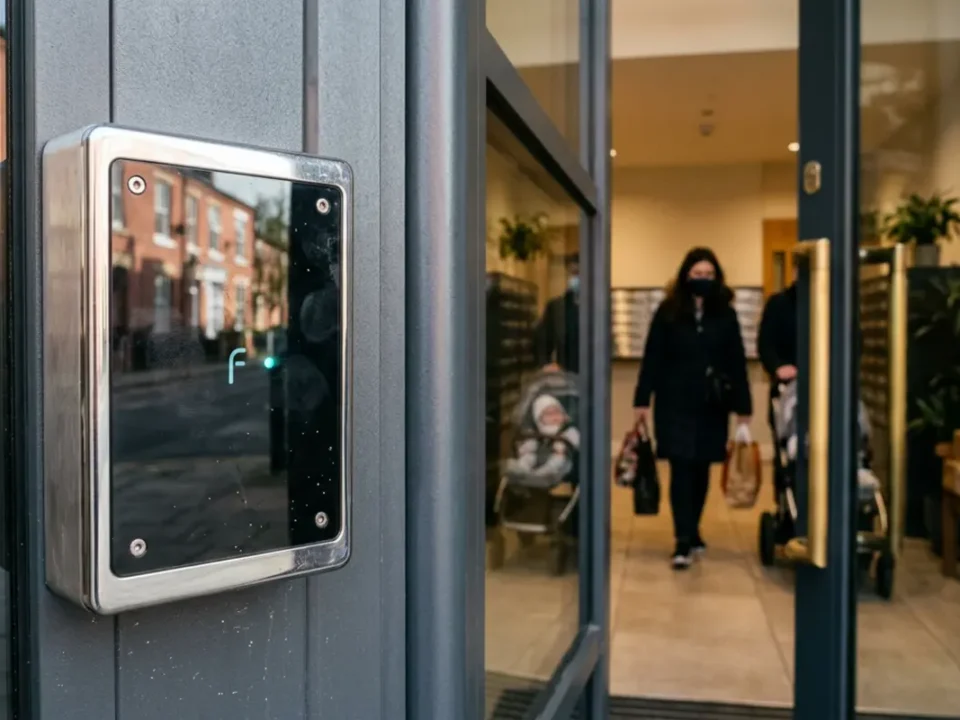
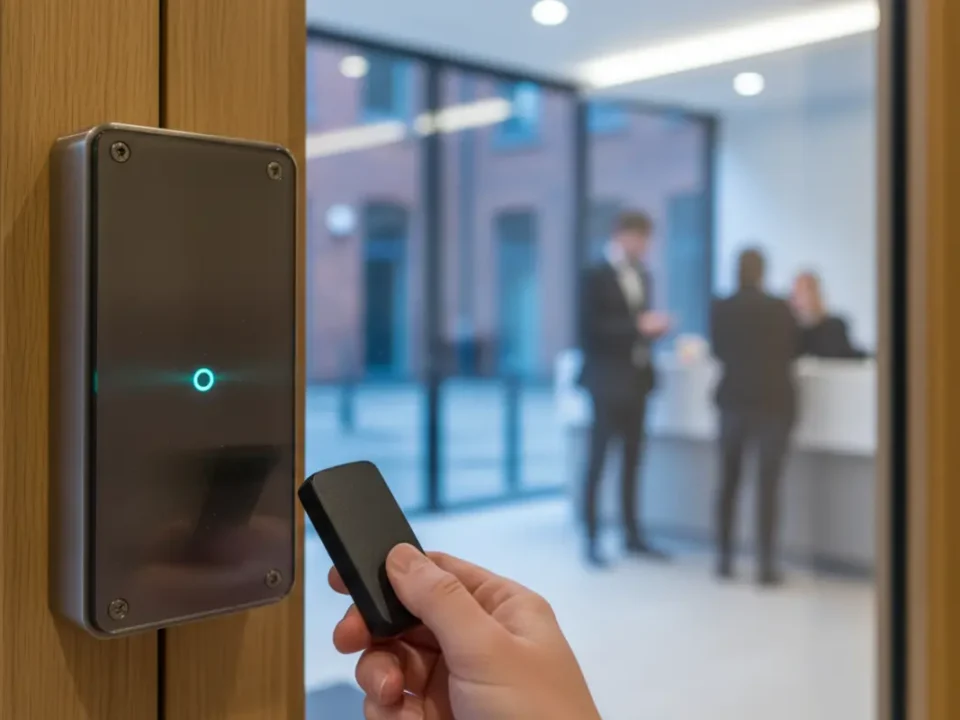
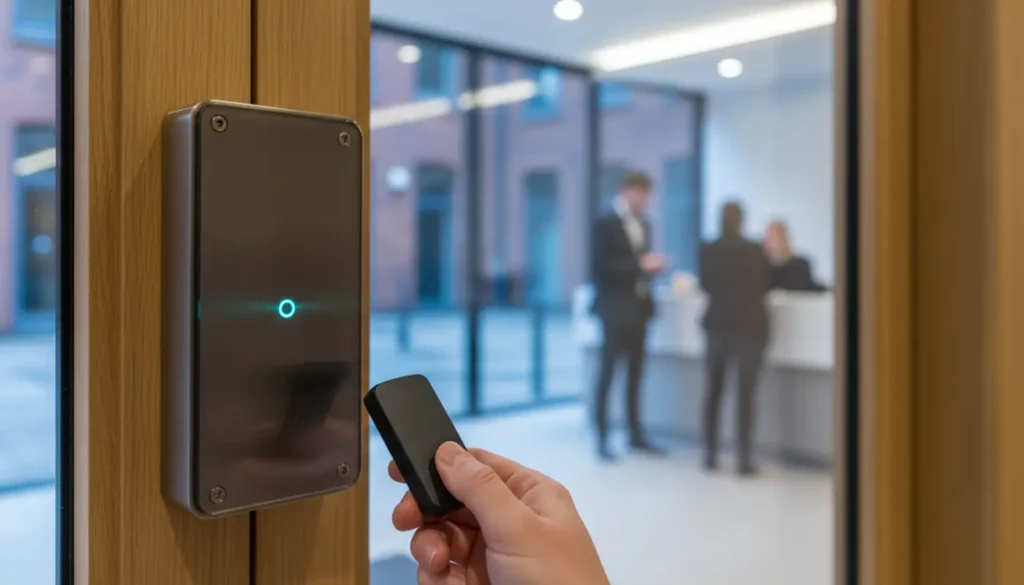
Access control improves commercial building security by replacing uncontrolled keys with digital permissions that can be changed quickly. Instead of wondering who has a copy of the back door key, managers can issue fobs, cards, PIN codes, mobile credentials, or biometric access, depending on the level of security needed.
This matters because commercial buildings often have several types of users, including employees, cleaners, contractors, visitors, delivery drivers, and sometimes tenants. A well planned system makes sure each person only gets access to the areas they genuinely need, which lowers risk without making the building feel difficult to use.
If a member of staff leaves the company, their access can be removed in seconds, rather than waiting for keys to be returned or paying to change locks. That can save time, reduce admin, and remove the awkward task of chasing people for keys after they have moved on.
Controlled Entry For Employees And Visitors
Controlled entry is one of the clearest advantages of access control in a workplace. Staff can move through authorised doors smoothly, while visitors can be directed to reception, signed in properly, and monitored while they are on site.
For a busy office, gym, warehouse, or retail unit, this creates a calmer and more organised entrance process. Employees do not need to keep interrupting reception staff to let people in, and visitors are less likely to walk into private corridors, stock rooms, or staff only areas.
Businesses can also set time schedules for different user groups. For example, office staff may have access from 7 am to 7 pm, cleaners may enter after hours, and contractors may only have temporary access for a set project. It is far better than leaving a spare key under a plant pot, which still happens more often than it should.
Access Control Reduces Unauthorised Access
Unauthorised access can lead to theft, data loss, disruption, and safety concerns. Access control reduces that risk by making entry based on permission rather than trust alone, which is especially useful in buildings with shared entrances or regular visitor traffic.
Door readers, electronic locks, and entry logs create a clear record of who entered and when. If an incident occurs, managers can review access history and understand what happened more quickly, rather than relying on memory or guesswork.
This is also useful for protecting business assets such as laptops, tools, stock, vehicles, cash handling areas, and private documents. Even a simple system can make a big difference when it is fitted to the right doors and managed properly.
Access Control For Multi Tenant Office Buildings
Access control is particularly useful in multi tenant office buildings because different businesses often share entrances, lifts, corridors, meeting rooms, and car parks. Each tenant needs freedom to operate, while the landlord or building manager still needs central control over shared areas.
A good system can separate access rights by company, floor, department, or room. This means one tenant can access their own office and shared facilities without being able to enter another tenant's private workspace or storage area.
Managed buildings can also use access reports to support daily operations. Facilities teams can see busy entry times, monitor out of hours use, and identify doors that are being used more than expected. This can help with staffing, cleaning schedules, and energy planning, which is a useful bonus on top of security.
Access Control Supports Workplace Health And Safety
Access control supports UK workplace health and safety by helping businesses manage who is on site, where people are located, and whether restricted areas are properly controlled. It is not a replacement for risk assessments or staff training, but it gives managers another useful layer of control.
For example, plant rooms, server rooms, chemical stores, rooftops, and machinery areas may need restricted access for safety reasons. Access control helps make sure only trained or authorised people can enter those areas, reducing the chance of accidents or avoidable mistakes.
The Health and Safety Executive offers useful information on managing workplace risks through HSE workplace risk guidance. Access control fits naturally into that wider approach because it helps businesses reduce exposure to hazards and keep better records of site activity.
Easier Management Of Staff Access Levels
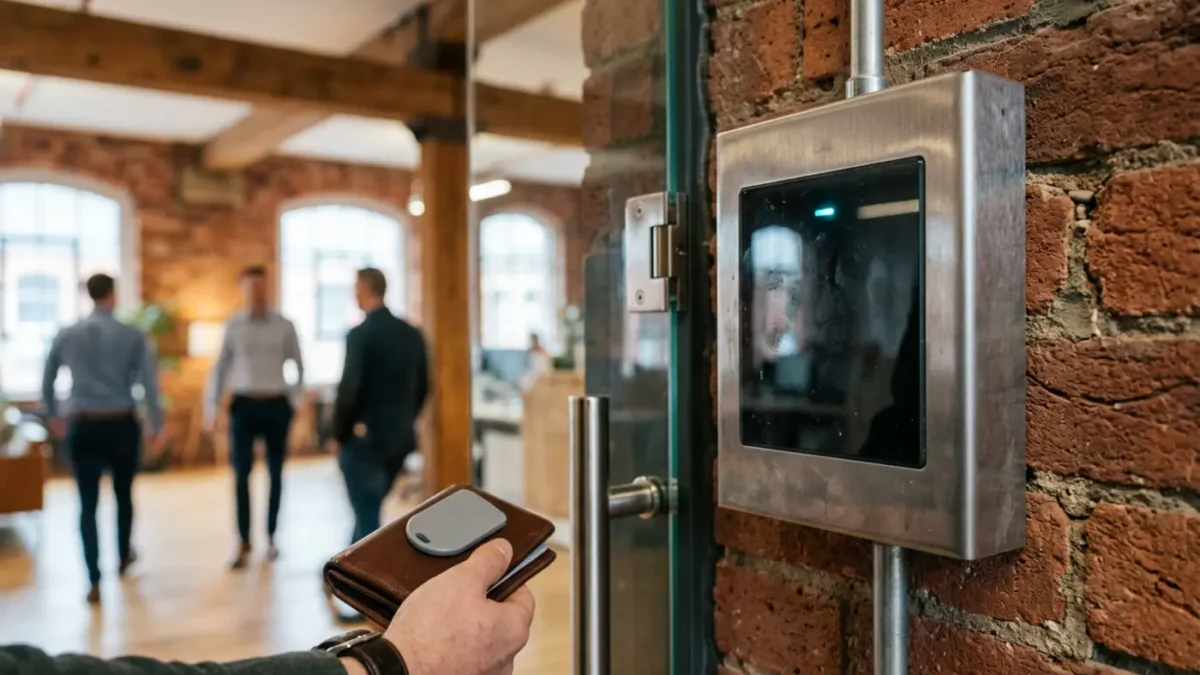
One of the most practical benefits for UK businesses is how easy it becomes to manage staff access levels. Instead of issuing keys for every door, managers can create access groups for roles such as reception, warehouse, accounts, senior management, cleaning teams, and maintenance staff.
This is especially helpful when staff move departments, change shifts, or leave the company. A quick update in the system can change their permissions immediately, which is much simpler than collecting keys and arranging replacements.
Modern systems can also support temporary access, which is ideal for contractors and agency workers. You can allow access for a day, a week, or a specific time window, then let it expire automatically. That removes the common problem of forgotten passes and people keeping access for longer than they should.
For a simple breakdown of readers, credentials, and permissions, how access control systems work explains the basics in plain English.
Access Control Protects Sensitive Business Areas
Not every room in a commercial building carries the same level of risk. A reception area may need to feel open and welcoming, while a server room, finance office, medicine store, stock room, or records archive may need much tighter control.
Access control lets businesses protect sensitive areas without slowing down the whole building. Staff can still move around easily, but high value or confidential spaces can be limited to named users only.
This is useful for organisations that handle personal data, controlled stock, expensive equipment, or private client information. In simple terms, fewer people with access means fewer chances for mistakes, misuse, or security incidents.
Visitor Management And Entry Monitoring
Visitor management is another major benefit of access control for commercial buildings. When linked with reception procedures, the system can help record who is in the building, who they are visiting, and when they leave.
This gives businesses better visibility during normal working hours and during emergencies. If there is a fire alarm, evacuation, or security concern, knowing who may still be inside the building can be extremely helpful.
Entry monitoring also discourages tailgating, which is when someone follows an authorised person through a door without permission. It sounds minor, but it is one of the most common weaknesses in commercial security. Clear entry rules, good door hardware, and staff awareness all help reduce the risk.
Access Control Integration With CCTV And Alarms
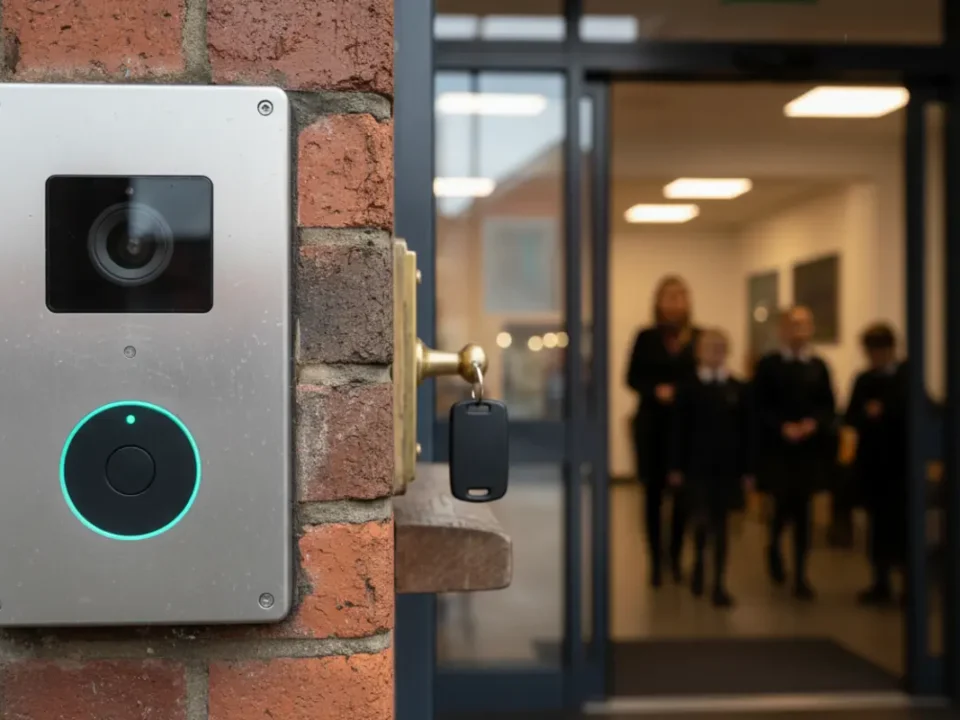
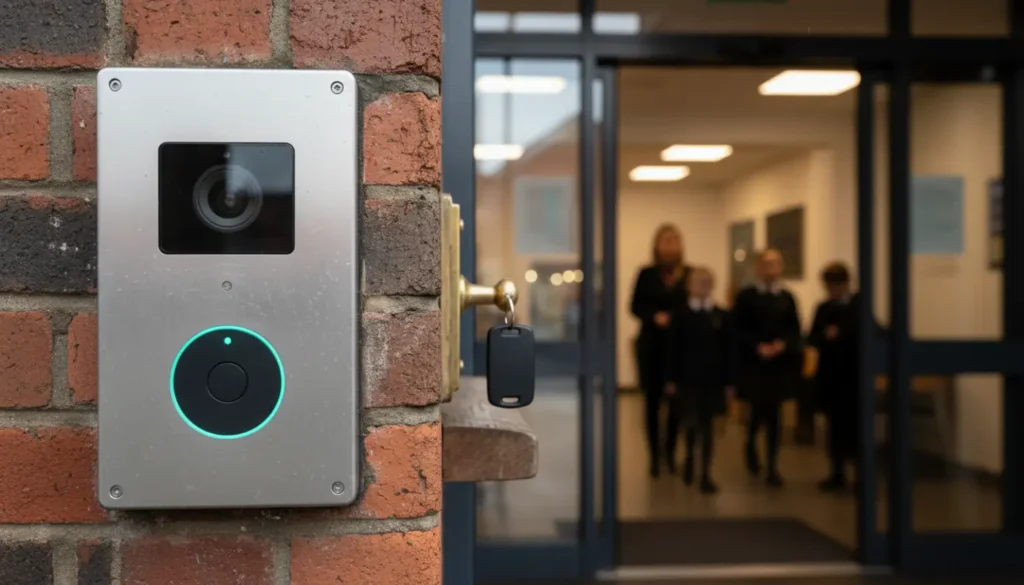
Access control becomes even more useful when it works alongside CCTV, intruder alarms, and door entry systems. For example, if a door is forced open, the system can trigger an alert, while nearby cameras record what is happening.
When a wider commercial security setup combines access control, CCTV, and alarm monitoring, the result is a clearer picture of site activity. Managers can see not only that an event happened, but who was nearby and what the camera footage shows.
Where access control is part of a wider security design that includes intruder alarms, CCTV detection, or monitored CCTV, standards and approvals become important. Intruder alarm and detection elements should be designed with EN 50131 in mind, often Grade 2 or Grade 3 depending on risk, and an SSAIB Insurance Approved installation is normally required before a Police Response URN can be issued for eligible alarm or monitored response systems.
Access Control Cost And Business Value
Access control can reduce long term costs by cutting down on lock changes, key replacement, manual sign in processes, and avoidable security incidents. While there is an upfront installation cost, the system often pays back through better control, reduced admin, and fewer weak points.
It also helps businesses scale their security as they grow. A small office may start with one main entrance and a staff door, then add more controlled doors later as teams expand or risks change.
For landlords and facilities managers, access control can improve tenant confidence and make the building more attractive to professional occupiers. Security is rarely the only reason someone chooses a commercial property, but poor security can certainly be a reason they walk away.
Choosing The Right Access Control System
The right access control system depends on the building layout, number of users, risk level, budget, and daily routine. A small office may only need fob access on the main door, while a larger commercial property may need multiple doors, lift control, visitor passes, audit trails, and remote management.
Cloud managed systems are becoming more popular in 2026 because they let authorised managers update access from a secure online portal. This can be useful for multi site businesses, landlords, and operations teams that do not want to visit site every time a staff member needs a change.
However, the best system is not always the most complicated one. Good access control should feel natural to use, easy to manage, and strong enough for the actual risks on site. If staff find it awkward, they may look for shortcuts, and shortcuts are often where security starts to weaken.
Final Thoughts On Access Control
Access control gives commercial buildings a smarter way to manage security, staff movement, visitor access, and restricted areas. It replaces uncertainty with clear permissions, useful records, and faster control when people join, leave, or change roles.
For UK businesses, the benefits go beyond keeping doors locked. A well designed system can support health and safety, improve tenant management, protect sensitive spaces, and integrate neatly with CCTV and alarms for a stronger overall security setup.
If your building still relies on traditional keys for every entrance, it may be time to review whether that approach still fits the way your business works. A tailored access control system can make daily life easier while giving everyone greater peace of mind.
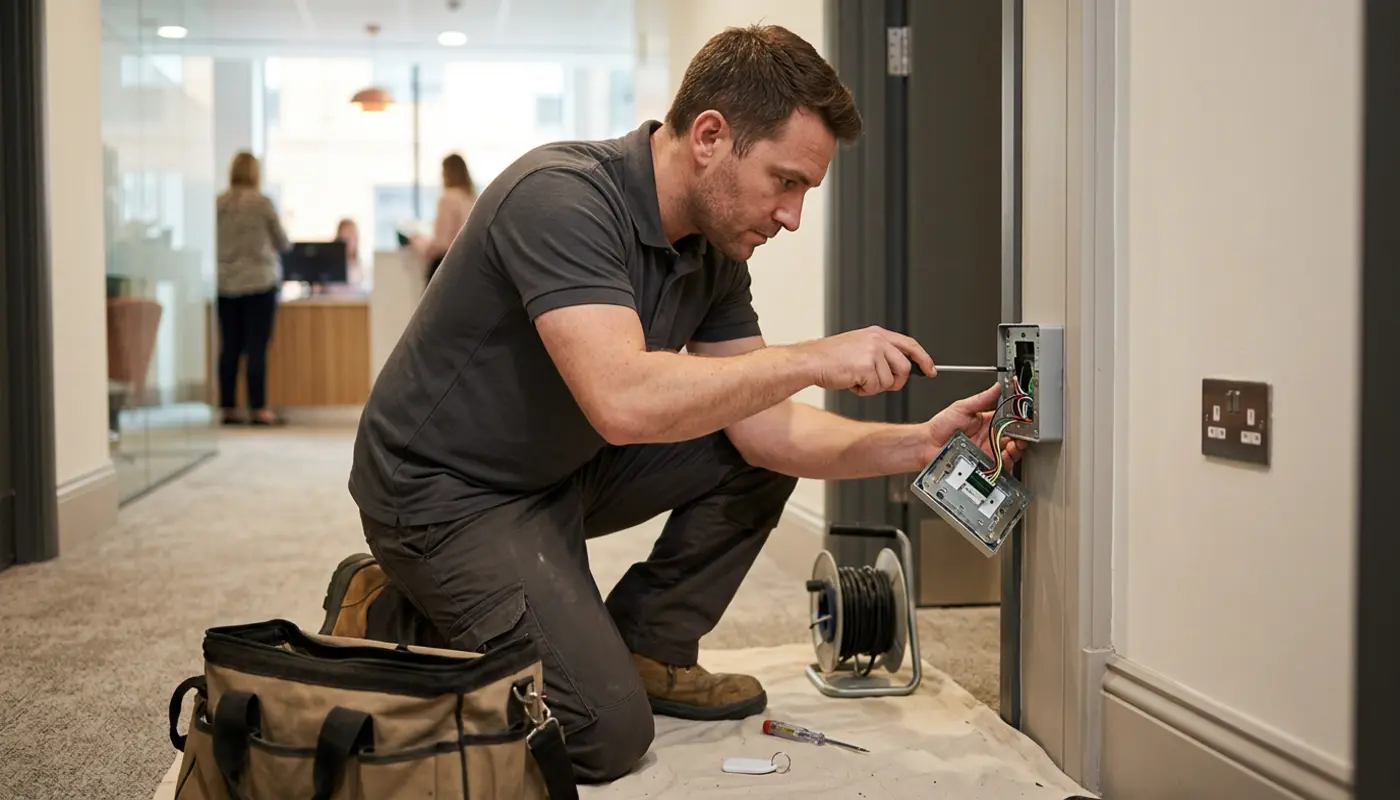
If you are unsure what level of access control your building needs, iSecurity Solutions can help you review your entrances, users, and risks, then suggest a setup that feels practical rather than overcomplicated.
Frequently Asked Questions
What Are The Main Benefits Of Access Control For Commercial Buildings?
The main benefits are controlled entry, better protection against unauthorised access, easier staff management, visitor monitoring, and stronger security for sensitive areas. It also reduces reliance on physical keys, which can be lost or copied.
Is Access Control Suitable For Small UK Businesses?
Yes, access control can work very well for small offices, shops, clinics, and workshops. A simple one or two door system can make security easier to manage without feeling over the top.
Can Access Control Work With CCTV And Intruder Alarms?
Yes, access control can integrate with CCTV, door entry, and intruder alarms to give a clearer view of site activity. Where alarms or monitored CCTV need police response, an SSAIB Insurance Approved system is usually needed for Police Response URN eligibility.
Does Access Control Help With Workplace Safety?
Yes, it helps by restricting access to higher risk areas such as plant rooms, stock rooms, and server rooms. It also gives managers useful records of who entered certain areas and when.
How Much Does Commercial Access Control Cost In 2026?
Costs depend on the number of doors, users, reader types, and software features required. A small system may be relatively modest, while larger multi tenant or multi site systems need a tailored survey for accurate pricing.