How to Monitor a Construction Site After Hours
Monitor A Construction Site After Hours
To monitor a construction site after hours, use a layered security plan that deters entry, detects movement, verifies alerts, supports a safe response and keeps clear records for police, insurers and project managers. The strongest approach usually combines good fencing, lighting, monitored CCTV, temporary alarms, access control and a clear close down routine.
Construction sites can look quiet at night, but they often hold valuable items such as tools, copper, fuel, plant, timber and stored materials. They also contain serious hazards, so keeping people out is about public safety as well as preventing theft, vandalism and project delays.
iSecurity Solutions is a trusted UK provider of commercial and domestic security systems, helping homes, businesses and construction teams stay protected around the clock. From CCTV and intruder alarms to fire safety, access control and construction site monitoring, the team designs reliable, tailored solutions backed by responsive service and modern remotely monitored technology.
Why After Hours Construction Site Security Matters
After hours construction site security matters because most sites become easier to target once workers leave, gates close and supervision drops. A single theft can stop work, vandalism can damage unfinished areas, and arson can turn a manageable problem into a serious emergency.
Tools and materials are easier to move if they are left near a boundary, inside unlocked cabins or in poorly lit areas. Fuel, cable, batteries and small tools are common targets because they can be taken quickly, which makes secure storage and accurate asset records very important.
Trespass is another major concern, especially near homes, schools, footpaths or busy roads. A child or member of the public entering after dark may not understand the danger of open excavations, scaffolding, unstable materials or moving plant, so perimeter protection has a clear safety role.
Fire risk also needs proper attention before everyone leaves for the day. Combustible waste, gas cylinders, fuel stores and unsecured cabins can increase the chance of arson or accidental fire, so housekeeping, lighting, patrols and detection should all form part of the nightly routine.
Start With A Construction Site Security Risk Assessment
A construction site security risk assessment should look at the location, layout, construction phase, asset value, access points, neighbouring properties and the likely impact of an incident. It does not need to be complicated, but it should be honest, practical and reviewed often.
Start by scoring likelihood and impact from 1 to 5 for each main risk. A quiet rural site with expensive plant and no nearby witnesses may score very differently from a small refurbishment project on a busy high street, even if both sites have similar fencing.
Look at what changes each week, because construction sites rarely stay the same for long. New scaffolding, open floors, temporary cabins, deliveries, plant arrivals and fresh access routes can all change the security picture overnight.
If you are unsure whether current fencing is doing enough after dark, turn the findings into a short action plan that names the risk, the current control, the extra action needed, the person responsible and the review date. For example, if a blind corner keeps raising concern, the action might be to add lighting, move a mobile tower or adjust a camera view.
Understand Legal And Regulatory Duties
UK construction site security is closely linked to health and safety duties, particularly under CDM 2015 and the Health and Safety at Work etc Act. The principal contractor is expected to manage site boundaries, coordinate contractors and take reasonable steps to prevent unauthorised access.
The HSE CDM 2015 guidance explains the dutyholder structure and why site control matters throughout the project. In simple terms, the bigger and riskier the site, the more care you need to take when keeping people away from harm.
It helps to separate legal duties from good practice and insurance conditions. A locked gate may be a basic control, while remote monitored CCTV, patrols, Police Response URN eligibility and thermal detection may be required because of the site risk or the insurer's terms.
For monitored CCTV, temporary alarms and perimeter detection, ask whether the installer and monitoring arrangements are properly certified, whether the system is suitable for a temporary construction environment, and whether your insurer has any specific requirements. SSAIB certification is often relevant because it supports Insurance Approved installations and is a prerequisite where a Police Response URN is required.
Build A Secure Construction Site Perimeter
A secure construction site perimeter gives every other security measure a better chance of working. Hoarding, Heras fencing, concrete barriers, lockable gates, warning signs and lighting all help to make the site harder to enter and easier to manage.
Heras fencing can be useful on temporary sites, but it must be stable, checked regularly and suitable for the level of risk. Solid hoarding offers better screening and stronger separation from the public, while concrete blocks or barriers may help protect vulnerable vehicle access points.
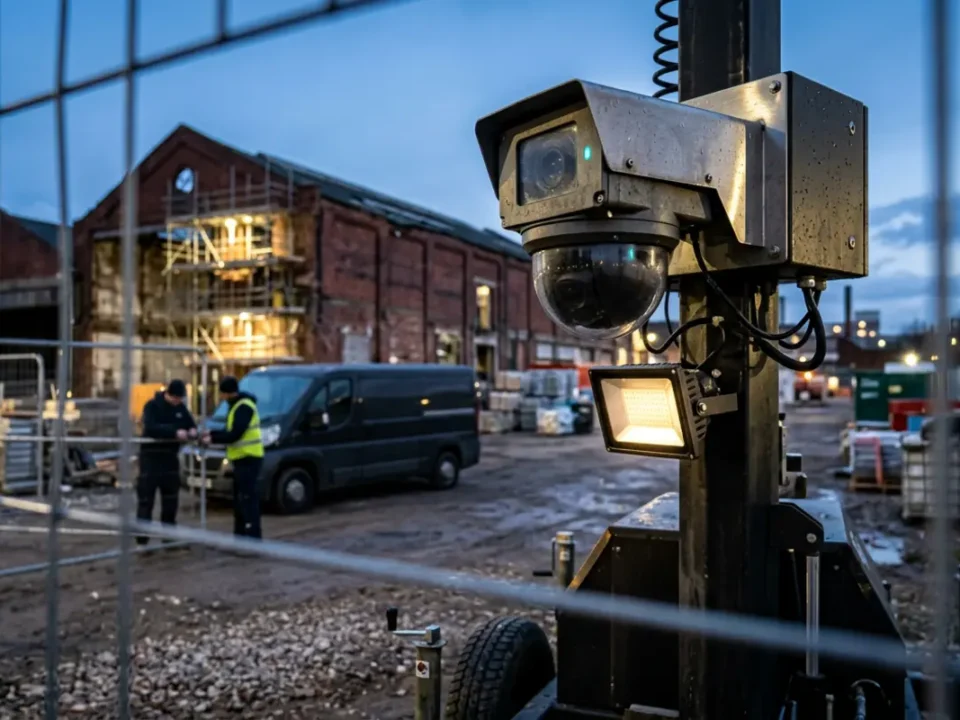
Lighting should support safety and camera performance without dazzling neighbours or creating deep shadows. Dusk to dawn lighting around gates, storage compounds and blind areas can discourage casual trespass, and it makes genuine intruders feel far less hidden.
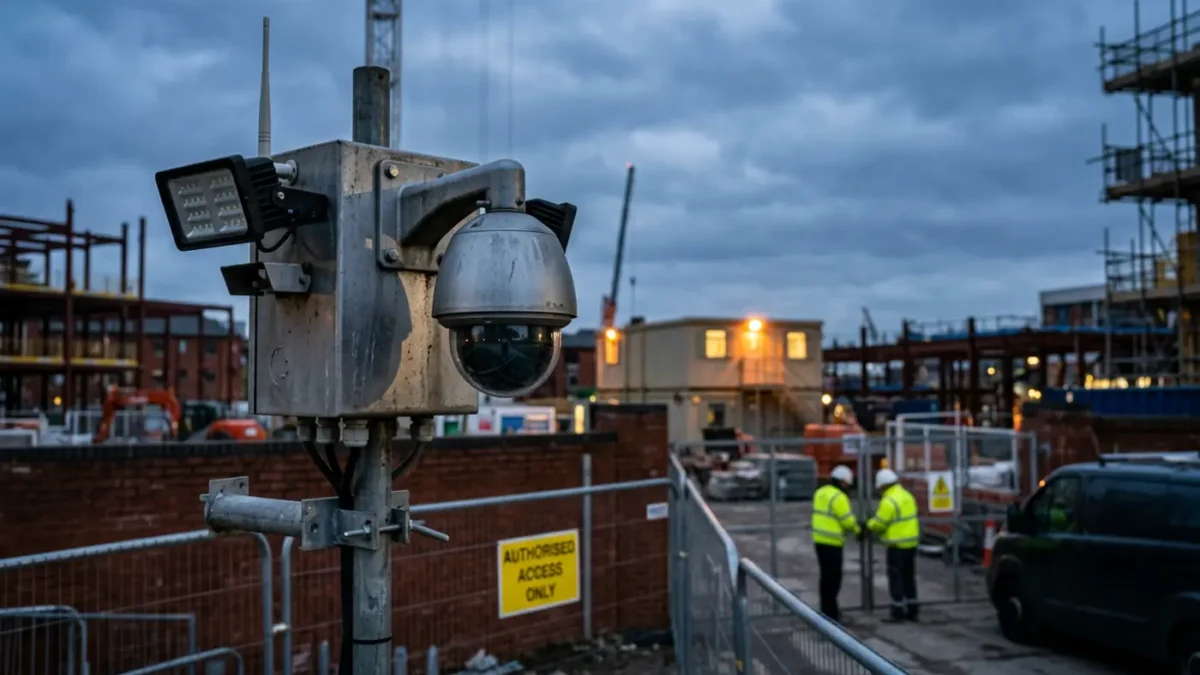
Signs should be clear and easy to read, especially where CCTV is in use. Include warnings about CCTV, site rules, emergency contact details and instructions for authorised visitors, because good signage can prevent confusion and support GDPR transparency.
Choose Remote CCTV And Monitoring Technology
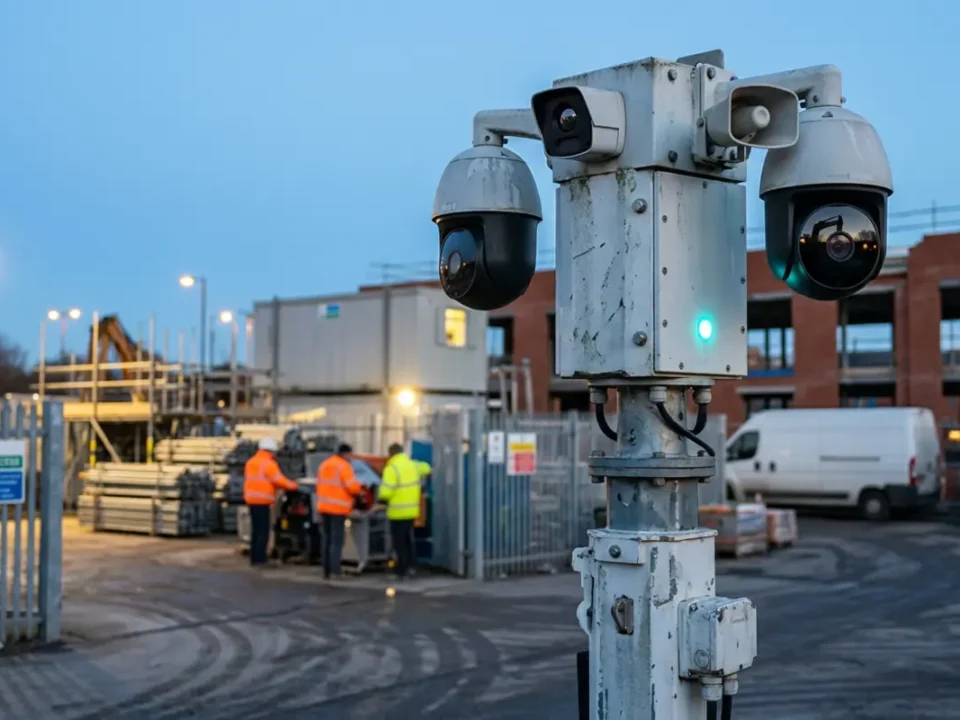
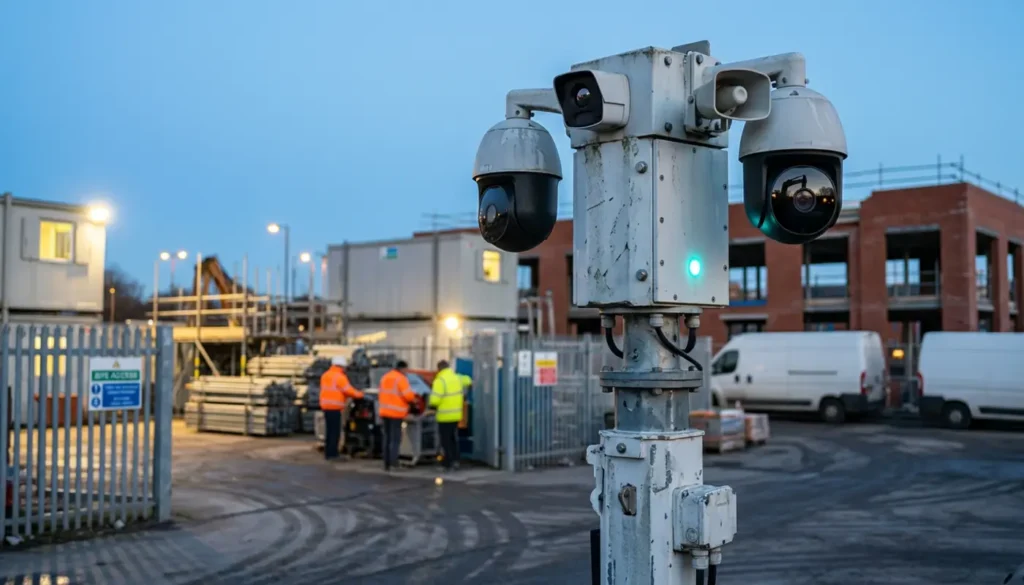
Remote monitored CCTV is one of the most useful ways to monitor a construction site after hours because trained operators can check activity before anyone is sent to site. CCTV that only records may store evidence, but monitored CCTV can trigger action while the incident is still happening.
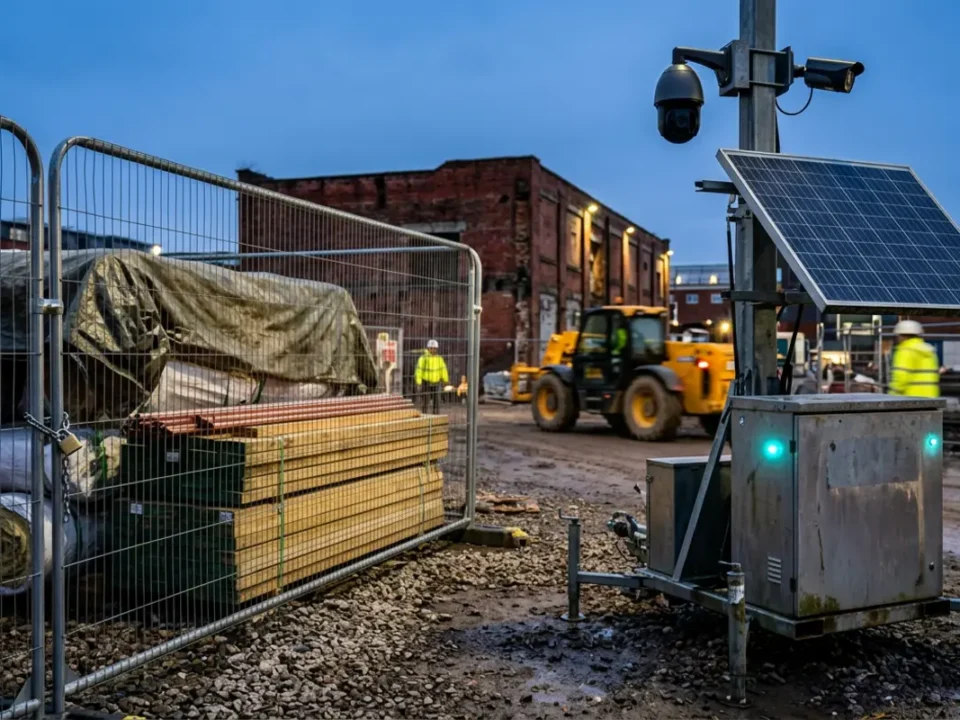
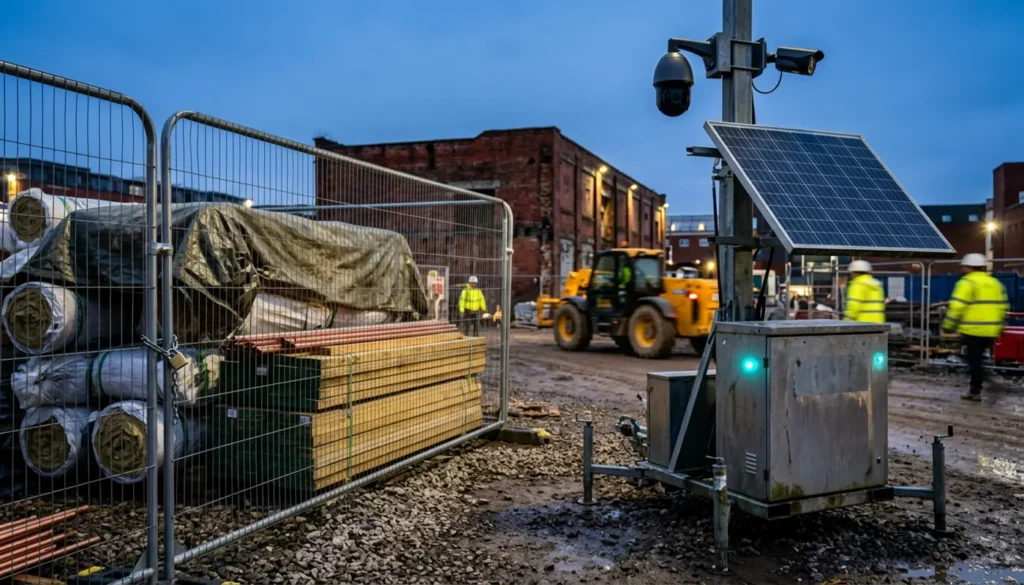
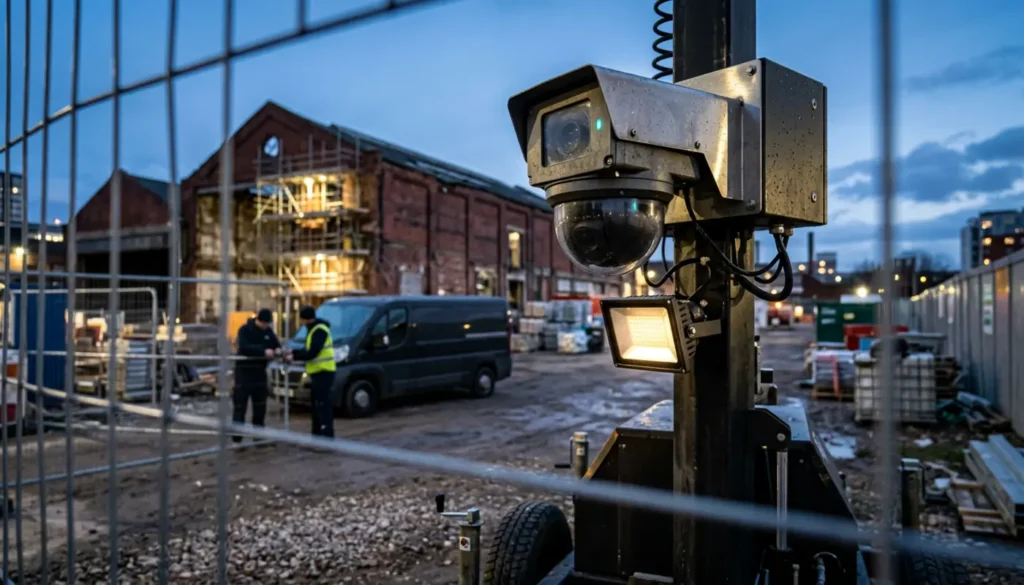
For temporary works, mobile towers and construction cameras are often faster to deploy than fixed systems. construction site security cameras can help cover gates, perimeters, compounds, cabins and high value storage areas while the site layout keeps changing.
Thermal imaging is useful where darkness, distance or low light makes normal video less reliable. A thermal camera detects heat from people or objects, so it can help spot movement near a boundary, although it should still be supported by visible light cameras, good positioning and a clear response plan.
Sites without mains power need a slightly different setup. Solar powered towers, battery systems, wireless alarms and mobile communications can work well, but the design must consider weather, signal strength, battery condition, tampering risk and how the system reports faults.
Where CCTV is integrated with intruder detection or alarm signalling, ask about BS EN 50131 suitability, often Grade 2 or Grade 3 depending on the risk. BS 8418 can also be relevant for detector activated CCTV, while BS EN 62676 helps guide CCTV system quality. A monitored system that may need police attendance should also be designed with Police Response URN requirements in mind, rather than treated as an afterthought.
Add Temporary Alarms And Physical Detection
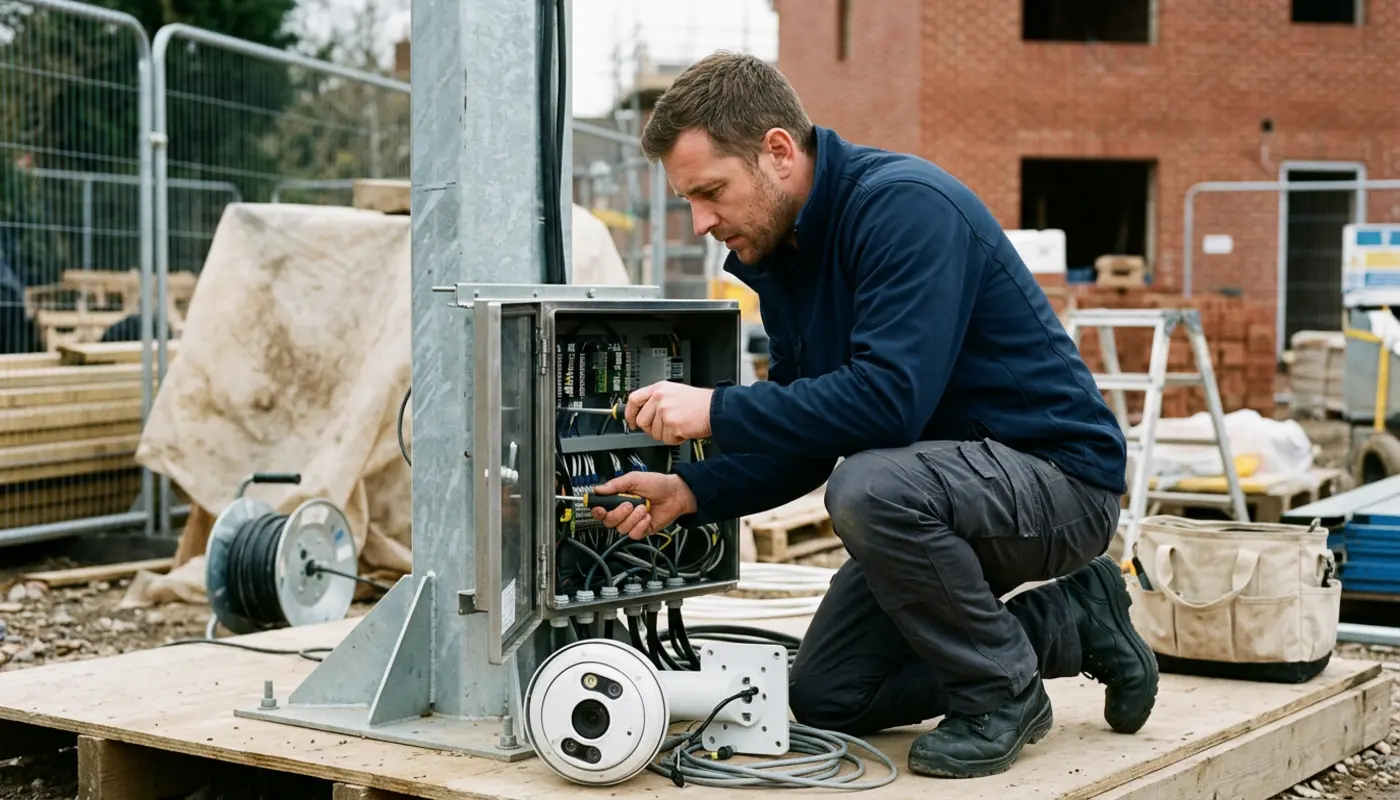
Temporary intruder alarms add another layer of detection, especially for cabins, containers, site offices, gates and storage compounds. Door contacts, movement sensors, perimeter beams, fence detection, plant alarms and container alarms can all help identify unauthorised access early.
For alarm systems, BS EN 50131 is the key standard to discuss, with Grade 2 or Grade 3 chosen according to the level of risk. If police response is required, SSAIB certified and Insurance Approved installation is normally needed before a Police Response URN can be issued.
Verification is important because nobody wants a callout every time a fox wanders past with the confidence of a site manager. Video verification, audio challenge and clear escalation rules help reduce false alarms and make sure the right people are contacted at the right time.
Maintenance is just as important as installation. Test alarms, check batteries, clean solar panels, review camera views after layout changes and record faults, because a good system can become much less useful if it has been knocked out of position by a telehandler.
Decide If Manned Guarding Is Needed
Manned guarding can be valuable on high risk sites, particularly where there are expensive assets, repeated incidents, public exposure or complicated access arrangements. A trained officer can control entry, check gates, challenge suspicious behaviour and coordinate with monitoring operators.
Outsourced security guards normally need the correct SIA licence, and CCTV operators may also need licensing depending on their role and whether public space surveillance is involved. Always check licences and make sure duties are clear before a guard starts work.
Static guarding provides a visible presence and strong access control, but it can be costly and one person cannot be everywhere at once. Mobile patrols suit lower risk or multiple sites, while remote monitoring gives wider coverage and fast verification when paired with a reliable response plan.
If you are not sure whether your site needs guards, cameras or both, the best answer is often a blend. For example, a large site might use remote CCTV, perimeter alarms, mobile patrols and keyholder response, while a high value phase might temporarily add a static guard until the risk reduces.
Control Access, Visitors And Keys
Access control is not just a daytime issue, because poor gate management during working hours can create problems after everyone leaves. Keep a record of who entered, who left, which vehicles attended and what equipment or materials were removed from site.
Digital access systems can make this easier where there are many contractors, deliveries or changing shifts. If you are comparing credentials, permissions and entry records, the ideas in how access control systems work can help explain the basics in a simple way.
A useful gate log should include the visitor's name, company, vehicle registration, arrival time, departure time, purpose of visit and host. Delivery windows should be agreed in advance, and gates should be closed when they are not in active use.
Key control needs discipline, not guesswork and a biscuit tin full of mystery keys. Keep a key register, remove access when contractors leave, change codes after staff changes, and report lost keys or cards immediately.
Protect Plant, Tools And Materials
Plant, tools and materials should be protected in layers, starting with where they are stored. Keep high value items away from the perimeter, use locked containers, secure compounds and robust locks, and avoid leaving portable items visible through fencing.
Plant should have keys removed, cabs locked and immobilisation used where suitable. Wheel clamps, hitch locks, hydraulic locks, ground anchors and careful positioning can make fast removal much harder without creating new safety risks.
Asset marking and records are often overlooked until something disappears, which is never the best time to start searching for serial numbers. Keep photographs, VINs, serial numbers, tracker details, purchase records, insurance documents and marking information in one place.
Thatcham approved trackers can support recovery if plant is stolen, but check what your insurer actually requires. Tracker details, CCTV footage, gate logs and police reference numbers should be available quickly after an incident, because speed matters when equipment is already on the move.
Create An Emergency Response Procedure
A good emergency response procedure explains what happens when an alert is received. The monitoring operator verifies the alarm, uses audio challenge where suitable, contacts the agreed keyholder or responder, and escalates to the police when a crime is in progress or there is immediate danger.
Use 999 for a live crime, fire, serious threat or immediate danger to life or property. Use 101 or online reporting for non emergency follow up, depending on the local police force process and the nature of the incident.
Do not send untrained staff into a potentially dangerous situation just because they live nearby and own a torch. Preserve footage, keep access logs, take photographs when safe, notify insurers within policy deadlines and tell the principal contractor, client and relevant managers.
GDPR also matters when using construction site CCTV. You do not need to make GDPR difficult, but you do need to be clear about why cameras are used, who can view footage and how long recordings are kept. Identify the data controller, define the security purpose, use clear signage, avoid unnecessary capture of neighbouring homes, restrict footage access, set a sensible retention period and document any sharing with police, insurers or investigators.
Use A Nightly Close Down Checklist
A nightly close down checklist keeps security consistent, even when everyone is tired and ready to go home. It should be short enough to use every day, but detailed enough to catch obvious risks before the site is left unattended.
- Remove keys from plant and lock cabins, containers and compounds.
- Secure tools, fuel, gas cylinders and high value materials.
- Close gates, check locks and inspect fencing or hoarding for damage.
- Remove or secure ladders, waste and combustible materials.
- Confirm CCTV, alarms, lighting, batteries and communications are working.
- Update visitor logs, delivery records and emergency contact details.
- Record defects, assign actions and review repeated problems.
Review the security plan after incidents, layout changes, new access routes, plant deliveries, repeated false alarms, seasonal darkness or changes to insurance requirements. A construction site is a moving target, so the security plan should move with it.
Final Thoughts On After Hours Site Monitoring
The safest and most reliable way to monitor a construction site after hours is to build layers rather than rely on one camera or one brave padlock. Perimeter protection, lighting, remote monitored CCTV, temporary alarms, access control, asset protection and a clear response plan all play their part.
In 2026, the strongest site security plans are practical, proportionate and well documented. If you know the risks, control the access points, verify alerts quickly and keep good records, you give your project a much better chance of staying safe, insured and on schedule.