How to Protect Building Materials from Site Theft
Protect Building Materials From Site Theft
Protecting building materials from site theft means using several layers at the same time, including a secure boundary, controlled access, monitored CCTV, good lighting, lockable storage, clear records and a daily closing routine. This approach makes theft harder, improves evidence if something does happen and helps show insurers that reasonable precautions were in place.
Construction theft remains a serious problem for UK sites in 2026, with stolen tools, plant and materials causing replacement costs, delays, insurance issues and the sort of Monday morning stress nobody wants with their coffee. A planned security setup is usually far cheaper than replacing materials, rearranging trades and explaining delays to clients.
iSecurity Solutions is a trusted UK provider of commercial and domestic security systems, helping homes, businesses and construction sites stay protected around the clock. From CCTV and intruder alarms to fire safety, access control and construction site monitoring, our expert team designs reliable, tailored solutions backed by responsive service and modern, remotely monitored technology.
Why Construction Site Theft Costs More Than The Missing Materials
When materials disappear from a site, the loss is rarely limited to the invoice value. A stolen copper delivery can delay electricians, hold up follow on trades, push back completion dates and create disputes over who was responsible for accepting and securing the goods. Insurers may also ask for evidence that reasonable precautions were in place, especially if the materials were left unsecured overnight. The National Business Crime Centre construction site security guidance explains how theft and unauthorised access can affect site safety as well as crime prevention.
The best approach is layered security, sometimes called defence in depth. In simple terms, it means not relying on one item, such as a padlock or a camera, to do all the work. Fencing slows intruders down, lighting removes hiding places, CCTV provides live alerts and evidence, access control creates accountability, and secure storage protects the items most likely to be taken. If one layer fails, another one is still there doing its job.
What Materials And Equipment Are Most Commonly Stolen?
Copper cable, copper pipe and metal fittings are common targets because they are valuable, portable and easy to move quickly. Lead roofing materials, flashings and external metalwork can also be attractive during roofing and finishing phases. Timber, sheet materials, insulation, bricks, blocks and cement may have lower individual value, but thieves can remove large quantities if vehicles can reach the storage area. Catalytic converters, fuel, generators, tools, dumpers and excavators should be included in the same theft risk plan, because criminals rarely respect neat spreadsheet categories.
Materials are often most vulnerable when they are delivered before they are needed, stored near the boundary or left in poorly lit areas. Valuable items should be delivered close to installation where possible, then moved away from gates and public roads straight after unloading. A simple photo of each delivery, along with quantities and delivery notes, can save a painful amount of arguing later. It also gives police and insurers something useful if a theft does happen.
Step 1: Complete A Site Theft Risk Assessment
A good theft risk assessment starts with the site location. Check whether the site is isolated, overlooked by nearby homes, close to main roads or hidden behind hoarding with little natural overlooking. It is also worth checking whether similar thefts have happened nearby, especially involving plant, vans, metal or fuel. Local police updates, insurer feedback and subcontractor experience can all help you spot patterns before criminals spot gaps.
Next, look at the layout as if you were trying to break in, while keeping both feet safely where they should be because the health and safety team already has enough to deal with. Identify blind spots behind welfare units, scaffolding, containers, hoarding and stored materials. Check whether vehicles can drive close to valuable stock, whether gates can be seen from occupied buildings, and whether lighting covers the areas that matter. Review the assessment whenever the site changes, because yesterday's secure compound can quickly become tomorrow's convenient loading bay.
Step 2: Build A Secure Perimeter
Perimeter security is the first visible sign that a site is being managed properly. Heras fencing should be stable, clipped, braced where needed and inspected regularly for gaps, loose panels or signs of tampering. Hoarding may be better for urban sites or projects with a high public interface, but it should not create hidden corners where intruders can work unseen. Gates should be lockable, kept closed outside delivery periods and limited to the fewest practical entry points.
Controlled entry and exit points make theft harder because vehicles and people cannot drift in and out unnoticed. Keep materials, skips, pallets and plant away from boundaries so they cannot be used as climbing aids or quickly loaded from outside the fence. Ladders should be locked away or secured, and scaffolding access should be managed carefully at the end of each shift. A secure perimeter will not stop every determined thief, but it removes the easy win, and easy wins are what opportunists love.
Step 3: Use Lighting And CCTV Where It Actually Helps
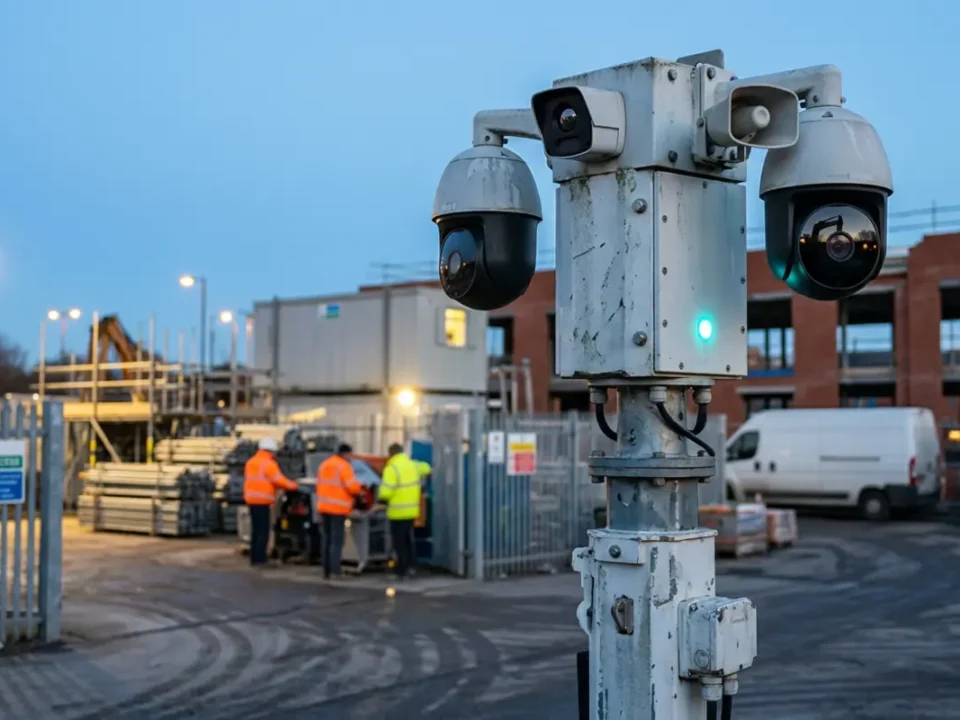
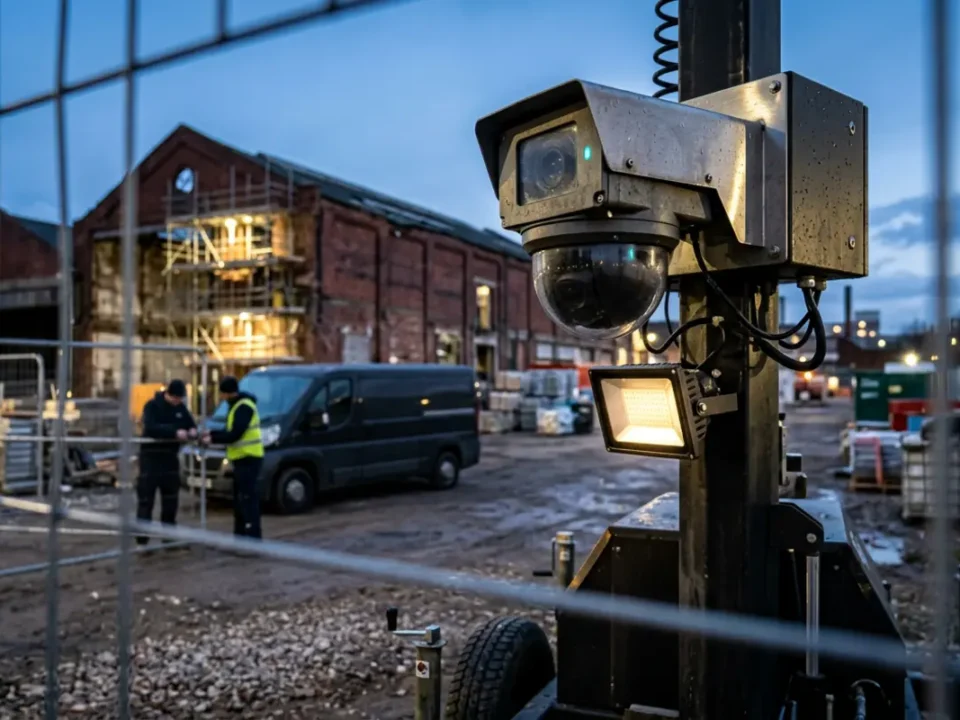
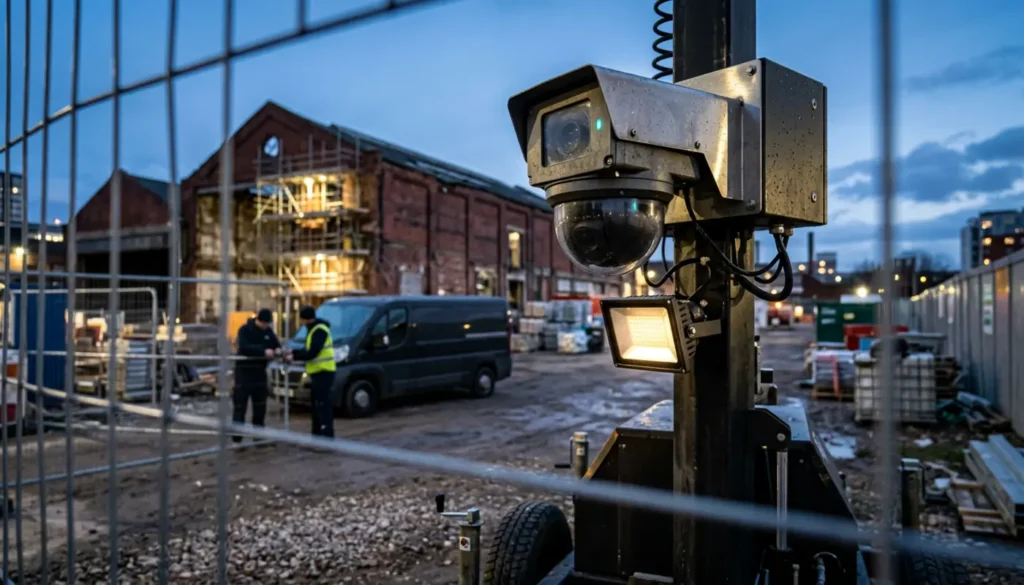
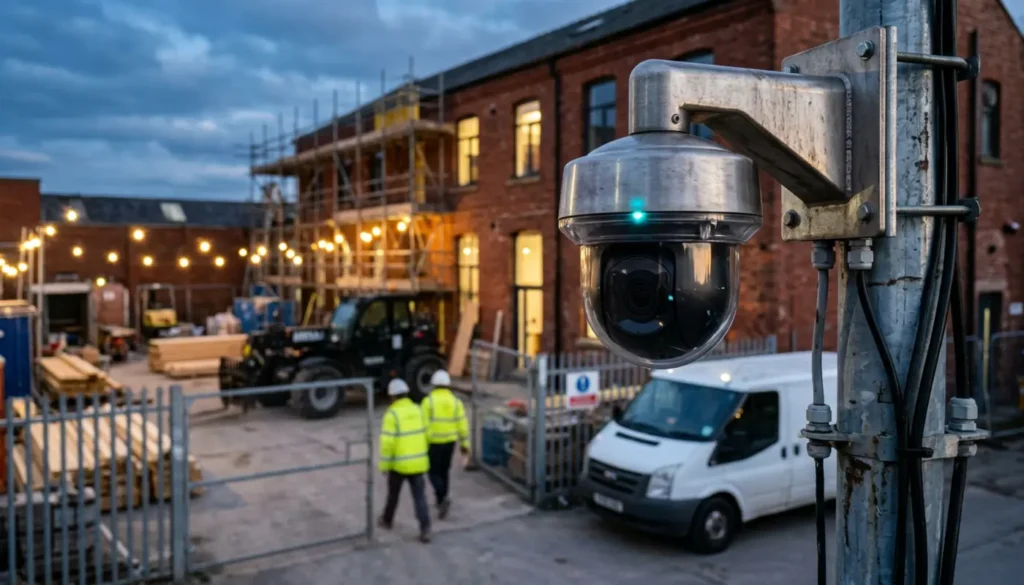
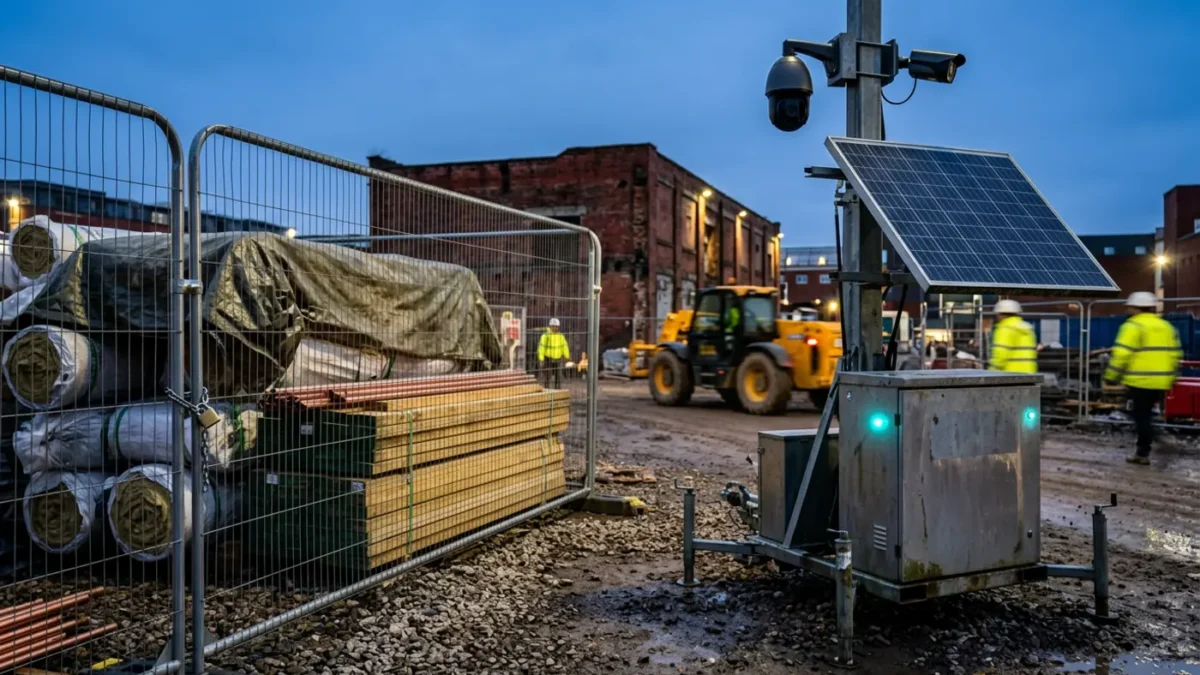
Lighting and CCTV work best when they are designed around real site risks rather than installed wherever a pole happens to fit. Cameras should cover main gates, vehicle routes, material compounds, containers, fuel points, generators and vulnerable boundary sections. Motion activated lighting is useful because it draws attention to movement and helps cameras capture clearer night time images. For changing layouts, mobile CCTV towers can be moved as the project progresses, which is far better than filming a lovely view of yesterday's storage area.
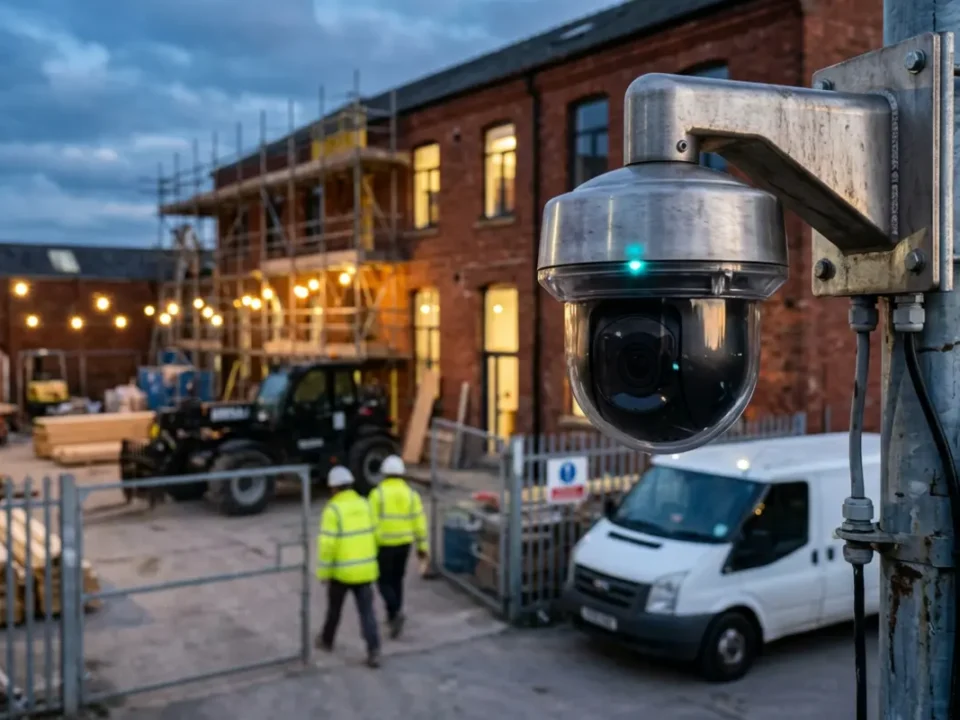
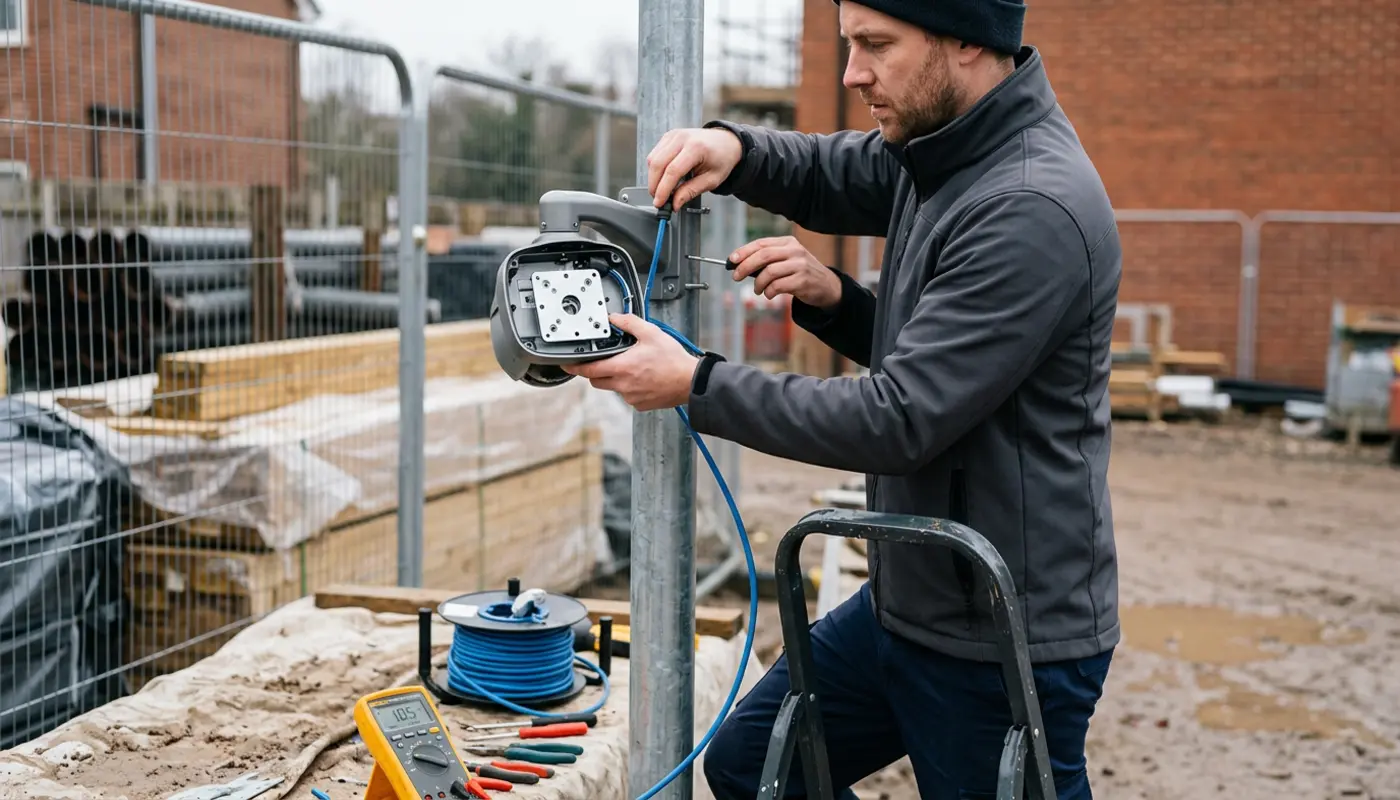
Recording only CCTV is useful after an incident, but monitored CCTV can support faster action because trained operators can review alerts and escalate when needed. For monitored CCTV designed around insurance conditions or police escalation, BS 8418 may be relevant to the system being discussed. BS EN 50131 Grade 2 or Grade 3 requirements may also be relevant where intruder detection forms part of the system design. For construction environments, construction site security cameras should be planned with night images, tamper alerts, recording retention and clear response procedures in mind.
Step 4: Store Building Materials Securely
Lockable steel containers, site vaults and secure tool chests are essential for smaller, valuable items such as power tools, fittings, cable, pipework and specialist components. Keys, fobs and codes should be issued only to people who genuinely need them, then removed promptly when workers leave the project. For bulk materials, create an internal compound away from boundaries and gates, ideally in a well lit area visible from site offices or nearby occupied buildings. If something is expensive, portable and easy to sell, do not leave it sitting in the open with a polite hope that nobody fancies it.
Delivery planning is one of the most overlooked parts of building material theft prevention. Schedule valuable deliveries close to installation, split large orders where practical and make sure authorised staff are present to receive them. Confirm quantities against purchase orders, photograph the delivery and record where the materials are stored. If valuable materials do not need to be on site overnight, secure off site storage may be cheaper than replacing them after a theft.
Step 5: Improve Access Control And Site Management
Access control is not just a smart reader on a gate, although that can be very useful. It also includes visitor logs, contractor sign in, delivery booking, staff identification and clear rules about who can enter storage areas. Paper records can work on smaller sites if they are used consistently, while larger projects often benefit from electronic systems that record entry and exit times. The aim is simple: know who is on site, why they are there and when they leave.
Good site management reduces theft during working hours as well as overnight. Deliveries should be booked, drivers should be directed to the correct unloading point, and visitors should be escorted in restricted areas. Keys for plant, containers and compounds should never be left in cabs, site offices or the classic hiding place that everyone knows about. If your project needs tighter control over gates, stores or welfare areas, access control can help create a clearer audit trail without turning the site into an airport.
Step 6: Mark, Track And Document Assets
Asset marking helps prove ownership and can support recovery if stolen items are found. SmartWater and similar forensic marking systems create a traceable link between the item and the registered owner, while visible warning signs can also act as a deterrent. CESAR registration is widely used for plant and machinery because it gives equipment a recognised identity, making it harder to sell on unnoticed. GPS trackers are useful for valuable mobile plant, generators, fuel bowsers and equipment containers, although tracking should support physical security rather than replace it.
An asset register is one of the dullest documents on site until something goes missing, at which point it becomes everyone's favourite file. Record the item description, make, model, serial number, VIN, purchase date, value, photographs, storage location, marking details, tracker reference and insurance information. Update it when materials arrive, move or are installed. For more site wide prevention ideas, you can also read how to prevent theft on construction sites.
Step 7: Check Insurance And Legal Responsibilities
Construction insurance can be detailed, so never assume every theft is automatically covered. Check your contract works policy, plant cover, tools cover and vehicle cover separately, because each may have different conditions, limits and excesses. Ask whether materials are covered before installation, whether theft from an open site is restricted, and whether fencing, alarms, immobilisers, tracking or monitored CCTV are policy conditions. Keep invoices, delivery notes, photographs, asset registers, CCTV clips, access records and police crime reference numbers because evidence matters during claims.
SSAIB certification matters when monitored CCTV, intruder alarms or perimeter detection need to meet insurer expectations or support police escalation. In many cases, an SSAIB certified and Insurance Approved system is the route to Police Response URN eligibility, where a URN is the unique reference number used for eligible police response. The system design should match the risk, and EN 50131 grades should be considered where intruder detection is included. For example, Grade 2 or Grade 3 may be discussed depending on the site risk, insurer wording and response plan.
Legal and safety duties also overlap with security. Under the Construction Design and Management framework, principal contractors must take reasonable steps to prevent unauthorised access, which protects the public as well as the project. If a theft is in progress or someone is in immediate danger, call 999. For completed incidents, report through the appropriate non emergency police route and obtain a crime reference number. Preserve CCTV footage, avoid disturbing evidence where safe, notify your broker or insurer promptly, then update the risk assessment before reopening affected areas.
Daily Closing Checklist For Site Managers
A consistent close down routine is one of the simplest ways to protect building materials from site theft. It should be owned by a named person, recorded each day and adjusted when the site layout changes. The checklist does not need to be complicated, but it does need to be followed even when everyone is tired and the rain is coming in sideways. Use the points below as a practical starting point.
- Inspect fencing, hoarding and gates for damage or gaps.
- Move materials away from boundaries, gates and public roads.
- Lock containers, vaults, compounds and tool stores.
- Remove keys from plant, vehicles, generators and fuel equipment.
- Check that CCTV, lighting and motion alerts are working.
- Confirm visitors and contractors have signed out.
- Record deliveries, missing items, damage or suspicious activity.
- Update the asset register after major deliveries or moves.
Common Mistakes That Make Theft Easier
The most common mistake is relying on one measure and expecting it to do everything. CCTV without lighting may capture unusable footage, fencing without gate control may simply funnel thieves towards an easy entrance, and locks without key management are just expensive decoration. Other common problems include storing copper beside the gate, leaving tools in vans overnight, accepting valuable deliveries too early and forgetting to record serial numbers. Weekend and holiday periods deserve extra planning because sites are quieter, response times may be slower and thieves know it.
When To Arrange A Professional Site Security Survey
A professional site security survey is worthwhile when a site is large, isolated, repeatedly targeted or storing valuable materials and plant. It is also sensible when there are multiple access points, poor visibility, changing phases or insurer requirements for documented controls. A survey can identify where cameras, lighting, fencing, monitored detection, access control and storage changes will make the biggest difference. That helps you spend the budget where it reduces risk, rather than buying security kit and hoping it lands in the right place.
Final Thoughts On Protecting Building Materials
No single product or procedure will completely remove the risk of site theft, but a layered plan makes your site a far harder target. Start with a realistic risk assessment, then strengthen the perimeter, control access, improve lighting, use monitored CCTV where appropriate, secure materials properly and keep records that stand up when questioned. The aim is not to make life awkward for honest workers, but to make theft awkward for criminals. If you would like a practical second pair of eyes on your site, speak to the iSecurity Solutions team or book a tailored site security survey that fits the way your project actually works.