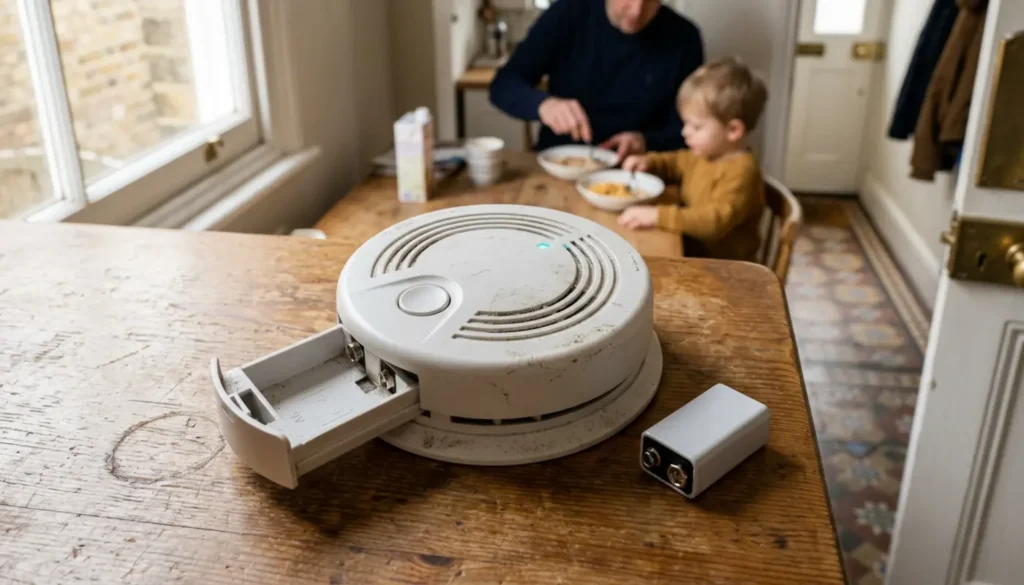
Monitored vs Unmonitored Alarms: The Honest Difference
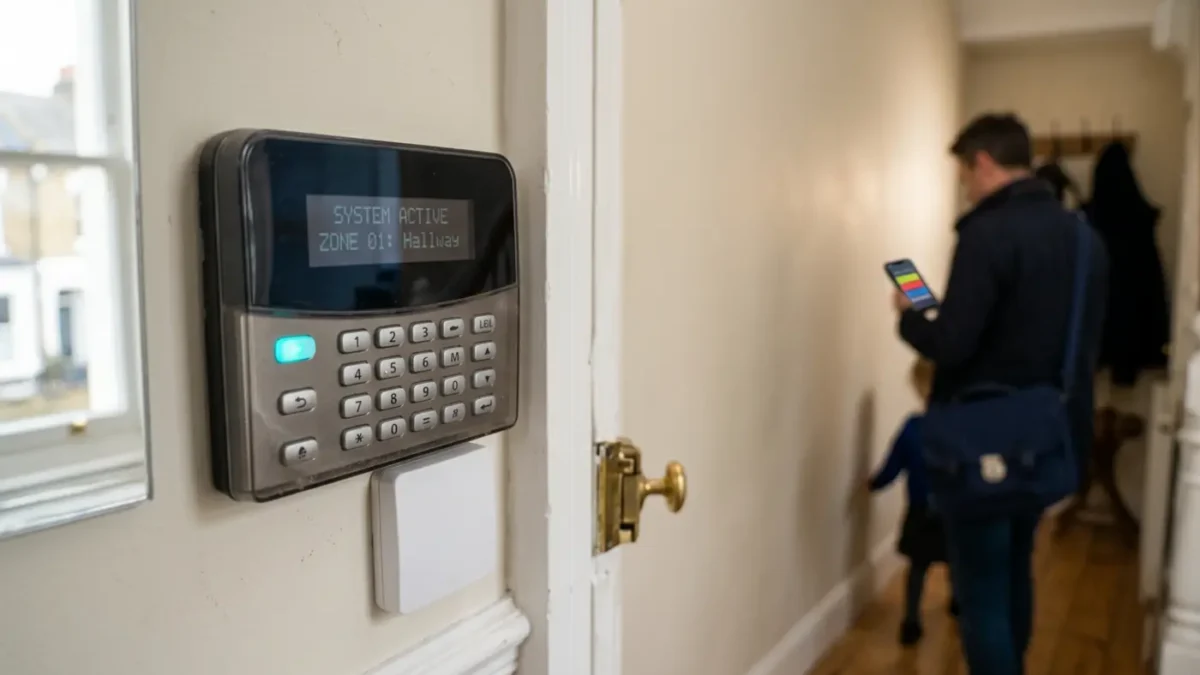
Monitored Vs Unmonitored Alarms
Monitored vs unmonitored alarms differ in one important way: who receives the alert and who takes action when the alarm goes off. Both types can detect a break in and sound a siren, but only a monitored alarm sends a signal to a staffed alarm receiving centre that can follow a set response plan.
For UK homeowners, the choice is not just about smart apps, sirens or the latest kit. It can affect police response, insurance conditions, false alarm handling, reliability when you are away and the real cost over several years.
At iSecurity Solutions, we help homeowners and businesses choose security systems that suit the property, the risk and the budget. As a trusted UK provider of commercial and domestic security systems, we design reliable, tailored solutions for CCTV, intruder alarms, fire safety, access control and site monitoring, backed by responsive service and modern remotely monitored technology.
What A Monitored Alarm Means
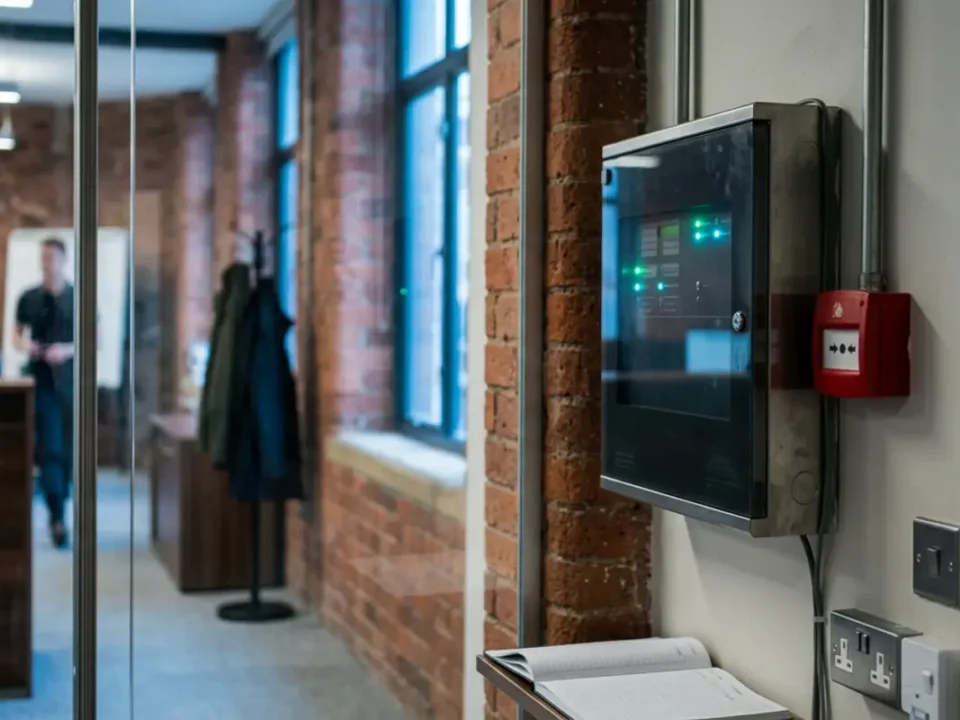
A monitored alarm is an intruder alarm that sends an activation signal to an alarm receiving centre, often called an ARC. An ARC is a staffed monitoring centre that works day and night, including weekends, bank holidays and those moments when you are away from home and not able to check your phone.
When a sensor detects movement, a door contact opens or another protected point is triggered, the alarm panel sends the event through a communication route. This could be broadband, mobile data, a dedicated signalling device or a dual path setup that uses more than one route for extra resilience.
The ARC operator then follows the response procedure agreed when the system is set up. This may include calling named keyholders, checking whether the alarm activation is verified, logging the event and contacting the police where the system meets the required conditions for a Police Response URN.
A monitored alarm does not mean the police automatically arrive every time the siren sounds. In the UK, police response depends on recognised arrangements, alarm verification, false alarm history, local force policy and whether the system has a valid Police Response URN.
In plain English, monitoring means your alarm has a trained team watching for signals when you cannot. That is the real difference.
How A Monitored Alarm Works Step By Step
The process is simple once the jargon is removed. A detector notices activity, the control panel records the event, the system sends a signal to the ARC, and the ARC follows the agreed contact and escalation plan.
- A door sensor, motion detector or shock sensor activates.
- The alarm panel checks and records the event.
- The signal travels to the alarm receiving centre.
- The ARC operator follows the response instructions.
- A keyholder, maintenance contact or police pathway may be used where permitted.
The important phrase is where permitted, because a Police Response URN is not a magic button. For intruder alarms, insurers and police recognised arrangements often expect professional installation, ongoing maintenance and compliance with standards such as BS EN 50131 Grade 2 or Grade 3, depending on the risk level.
What An Unmonitored Alarm Means
An unmonitored alarm, sometimes called an audible only alarm or bells only alarm, detects an event and then relies on sound, app alerts or people nearby to respond. It does not send signals to a staffed ARC unless a professional monitoring service has been added.
Traditional unmonitored systems sound an internal or external siren when triggered. That noise can scare off an opportunist, alert neighbours and draw attention, but the siren itself does not create a police response route or qualify the alarm for a Police Response URN.
Modern self monitored smart alarms add phone notifications, camera alerts and app controls. Many consumer systems offer no subscription or low subscription options, although features vary, and some video history, cloud storage or enhanced alerts may depend on paid plans.
The main weakness is that you become the monitoring centre. If you are asleep, abroad, driving, in a meeting, out of signal, or your phone is on silent because you finally wanted peace from group chats, the response can be delayed or missed.
Put simply, an unmonitored alarm can shout for attention, but it needs you or someone nearby to do something about it.
Key Differences For Homeowners
The honest difference is response, not detection. A self monitored alarm can be useful, but it depends on you, your phone and your chosen keyholders being available at the right moment. If an alert came through at 2 am or while you were on a plane, it is worth asking who would actually deal with it.
- Alert Route: A monitored alarm alerts an ARC, while an unmonitored alarm alerts people through a siren, app or local notification.
- Human Oversight: A monitored system has trained operators, while a self monitored system relies on the homeowner or a trusted contact.
- Police Pathway: A monitored system may qualify for a Police Response URN if the correct requirements are met, while a loud siren alone does not.
- Ongoing Cost: Monitored systems usually include monthly fees, while many self monitored systems avoid professional monitoring costs.
- Best Use: Monitoring suits higher risk or often empty homes, while unmonitored alarms may suit occupied homes with reliable nearby responders.
If you are comparing professional options, intruder alarm systems should be designed around the property layout, entry points, pets, user habits and any insurance wording, rather than being chosen from a box photo alone.
Real Alarm Costs Over Five Years
Alarm pricing is where many people get caught out, because the cheapest kit on day one is not always the cheapest or most suitable choice over five years. A fair comparison should include equipment, installation, monitoring, maintenance, batteries, connectivity and any cloud or app subscription.
A basic self monitored wireless alarm might cost around £250 to £700 for equipment, depending on sensors and sirens. If you fit it yourself and avoid subscriptions, the five year cost could stay close to the purchase price, although you may still pay for batteries or optional cloud features.
A professionally installed unmonitored system may cost roughly £800 to £1,800, depending on property size, number of devices and whether it is wired or wireless. Add annual servicing at perhaps £100 to £180, and the five year total could sit around £1,300 to £2,700.
A professionally installed monitored alarm may start around £1,200 to £2,500, with monitoring commonly ranging from £20 to £45 per month. Add maintenance, signalling and possible call out costs, and a five year total may land between £2,800 and £5,500 or more for larger or higher risk properties.
- Self Monitored Wireless Alarm: Typical starting cost is £250 to £700, with a likely five year cost of £250 to £900 plus optional extras. This suits lower risk homes where you can respond quickly.
- Professionally Installed Unmonitored Alarm: Typical starting cost is £800 to £1,800, with a likely five year cost of £1,300 to £2,700. This suits homes that need better design without ARC monitoring.
- Professionally Installed Monitored Alarm: Typical starting cost is £1,200 to £2,500, with a likely five year cost of £2,800 to £5,500 or more. This suits higher risk homes, empty properties and insurance led systems.
A simple formula helps: five year cost equals equipment plus installation plus sixty monthly payments plus maintenance plus optional services. It is not thrilling maths, granted, but it is cheaper than finding out after installation that the features you need are all extra.
Police Response And URN Rules
In the UK, a Police Response URN is a Unique Reference Number linked to a police recognised alarm arrangement. It helps identify a compliant system when an ARC contacts the police about a verified alarm activation.
The police do not normally attend simply because a house alarm is making noise. Official guidance from sources such as West Yorkshire Police alarm policy explains the role of remote signalling, alarm receiving centres, keyholders and response procedures.
To be eligible for a Police Response URN, the system usually needs to be installed and maintained under recognised standards and connected to approved monitoring arrangements. BS EN 50131 Grade 2 is common for many domestic risks, while Grade 3 may be used where the risk is higher or where an insurer requires it.
False alarms matter as well. Repeated false activations can lead to police response being reduced or withdrawn, which is one reason good design, correct sensor placement and regular maintenance are more than nice extras.
In short, a URN is part of a recognised response route. It is not automatic, and it depends on the system being installed, monitored and maintained properly.
Insurance Requirements In Plain English
Some insurers are relaxed about alarms, while others are very specific. Higher value homes, holiday homes, properties left empty for long periods and homes with valuable jewellery, art, tools or collections may have stricter conditions.
Your policy may require an alarm to be set whenever the property is unoccupied, professionally maintained, monitored by an ARC, installed to BS EN 50131, or connected to a Police Response URN. If you do not follow those conditions, a claim could become difficult at exactly the wrong time.
Do not assume a smart alarm from a well known consumer brand satisfies your insurance. Ask the insurer or broker for written confirmation, including whether they need professional monitoring, a particular alarm grade, annual servicing or evidence of installation by an approved company. It is also wise to send them the proposed alarm specification in writing before installation, so there is less room for confusion later.
Where compliance is needed, SSAIB Insurance-Approved installers can help meet insurer expectations, and SSAIB Insurance-Approved certification is commonly linked with eligibility for Police Response URN arrangements. Always check the exact policy wording, because insurance small print has a habit of being small for a reason.
Reliability When Life Gets Messy
Alarms are not used in perfect conditions. They are used in real homes with sleepy people, weak broadband, curious pets and phones with flat batteries. That is why reliability should be judged by what happens when something goes wrong.
If you are asleep, a push notification might not wake you, especially if your phone is on silent or charging downstairs. A monitored alarm can still send a signal to the ARC, which means someone else is awake and dealing with it.
If you are abroad, self monitoring depends on your data connection, time zone, ability to contact someone and confidence that the alert is genuine. A monitored system can follow a pre agreed keyholder response, which is much more useful when you are several flights and a passport queue away.
If broadband fails, a WiFi only system may lose remote alerts. A better monitored setup may use dual path signalling, meaning it can send alarm signals through more than one route, such as broadband and mobile network backup.
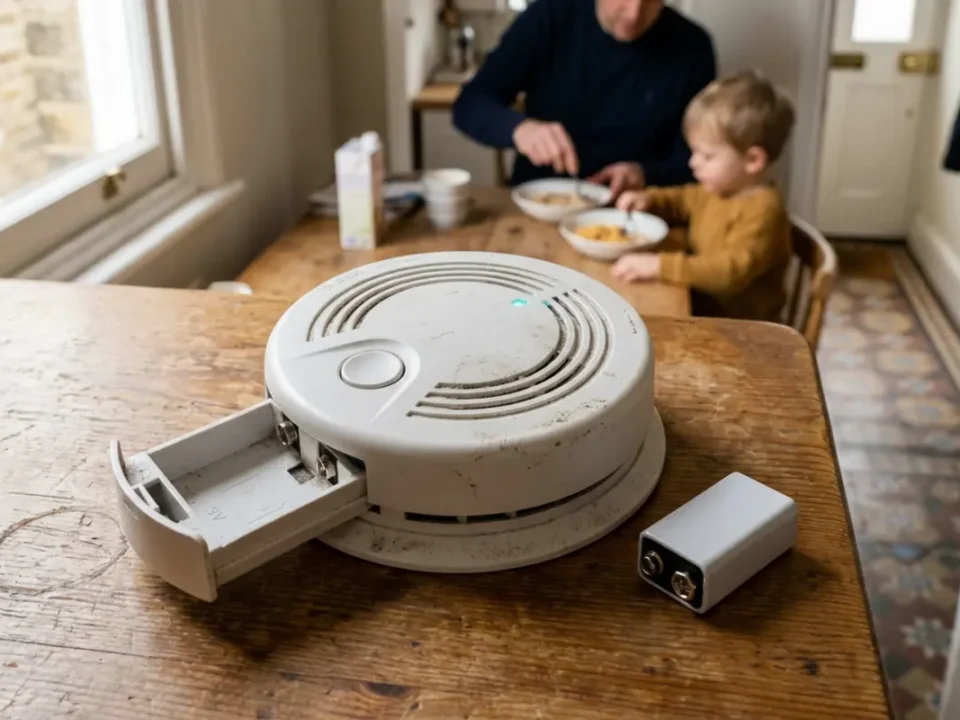
If power fails, check whether the alarm panel has battery backup and how long it lasts. Remember that cameras, routers and smart hubs may not keep working unless they also have backup power.
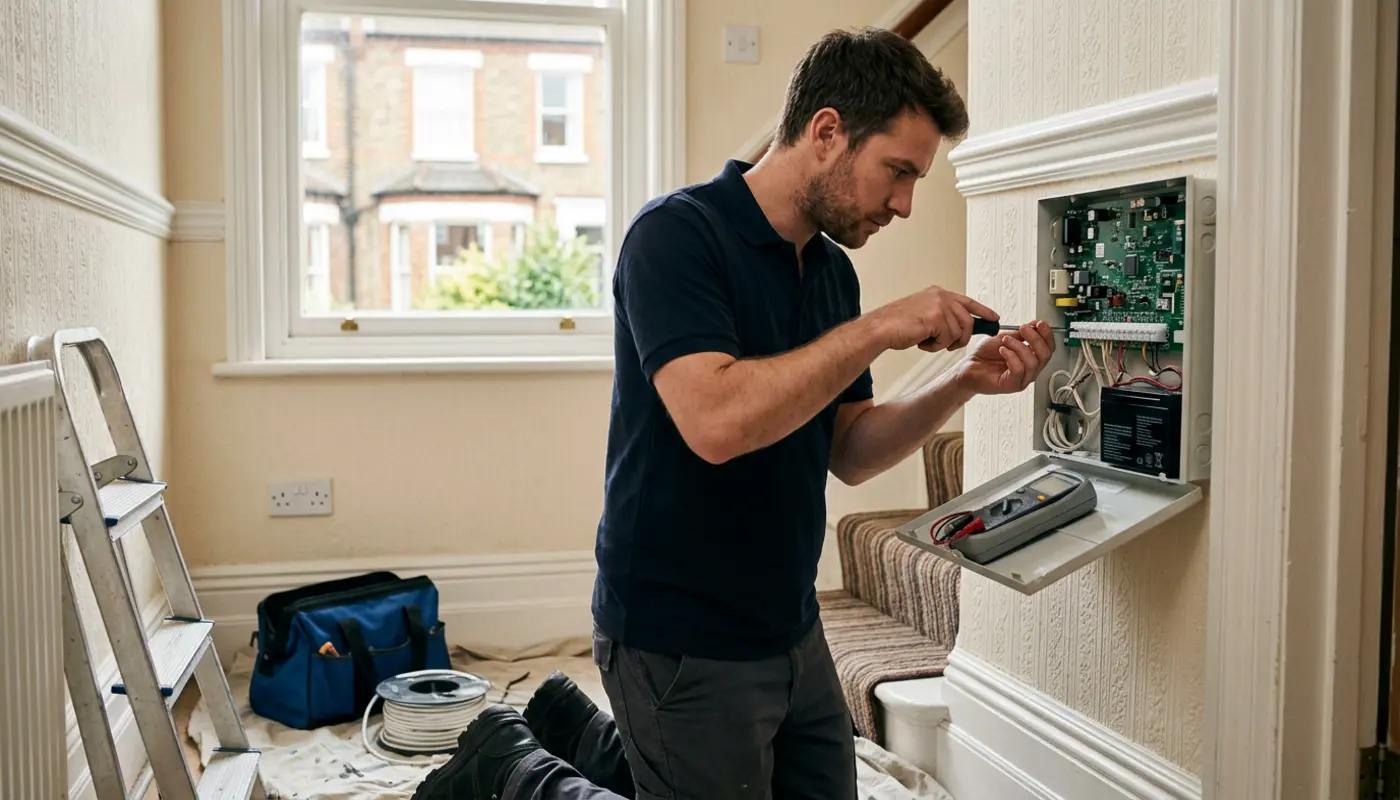
Wireless Self Monitored Alternatives
Wireless smart alarms are popular because they are quick to install, easy to expand and often friendly to renters. Many consumer security products in the UK offer different combinations of sensors, sirens, app alerts, cameras and optional subscriptions.
These systems can be a good fit if you mainly want a deterrent, app control and basic awareness while keeping monthly costs low. They are especially attractive for flats, rented homes and households that want to start small before investing in a professional system.
Before choosing a no subscription alarm, check whether it still sends alerts without paid features, whether more than one person can receive notifications, whether it has a local siren, and what happens if the internet drops. If you want a deeper look at subscription free choices, see wireless intruder alarms with no subscription fees.
The trade off is response. A self monitored system can tell you something may be happening, but it does not provide 24/7 ARC operators, formal escalation or Police Response URN eligibility on its own.
Which Alarm Suits Your Property
For flats, an unmonitored or self monitored system may be enough if neighbours are close, the building has secure communal doors and you can respond quickly. However, check lease rules, landlord permission and whether an external siren is allowed.
For rental properties, wireless systems are often sensible because they can be removed when you move. Make sure the landlord agrees to any fixings, and decide who receives alerts if you are away.
For high value homes, monitored systems are usually the safer conversation to have, especially if insurers mention BS EN 50131 Grade 2 or Grade 3, annual maintenance, Police Response URN eligibility or professional monitoring. The cost is higher, but the response pathway is stronger.
For holiday homes, monitoring is often worth serious consideration because the property may be empty for weeks. A siren in a quiet village or remote lane can ring clearly, but that is not much help if nobody is there to act.
For elderly relatives, simplicity matters as much as technology. A professionally designed system can reduce confusion, give trusted keyholders a clear role and avoid relying on the resident to deal with every alert alone.
Contract Questions Before You Sign
Monitoring contracts can be perfectly reasonable, but you should understand what you are agreeing to. Ask about the minimum term, monthly fee, annual maintenance, call out charges, signalling costs, cancellation notice and whether the equipment is owned by you or rented.
Also ask what keeps working if you cancel monitoring. In some cases, the siren and local detection continue, but ARC response, app features, mobile signalling, servicing packages or cloud functions may stop.
False alarms should be discussed before installation, not after the neighbour has heard the siren for the third time in one month. Common causes include pets, poor sensor placement, low batteries, loose doors, heating movement, user error and badly set entry delays.
Final Verdict And Decision Checklist
Choose a monitored alarm if the property is often empty, you travel frequently, your insurer requires it, you need a Police Response URN pathway, or you do not have reliable nearby keyholders. It costs more, but it gives you a managed response rather than just a notification.
Choose an unmonitored or self monitored alarm if you are usually nearby, you can respond quickly, your insurer accepts it, and you want to avoid ongoing professional monitoring fees. It can still be a sensible deterrent, provided you understand that you are responsible for acting on the alert.
- What does your insurer require in writing?
- Is a Police Response URN needed?
- Who receives the first alert?
- Who responds if you are unavailable?
- What happens during broadband, power or mobile outages?
- Does the system have battery backup?
- Is there dual path signalling?
- What is the full five year cost?
- What happens if you cancel monitoring?
- How are false alarms reduced and recorded?
The best alarm is not always the most expensive or the cleverest. It is the one that gives you the right response, meets any insurance conditions and still makes sense when life gets busy, batteries run low and your phone decides to update at the worst possible time.