Why Does My Fire Alarm Keep Beeping? (And How to Stop It)
Why Does My Fire Alarm Keep Beeping?
Your fire alarm usually keeps beeping because it has a low battery, an old or failing backup battery, dust inside the sensor, a mains power issue, poor positioning, or an end of life warning. In most UK homes, a regular chirp every 30 to 60 seconds is a warning that the alarm needs attention rather than a full fire alert.
Many people say fire alarm when they mean a domestic smoke alarm, so both terms are used here where helpful. The aim is to help you work out why the alarm is making noise, what you can safely check yourself, and when it is better to call a professional.
A beeping alarm is annoying, especially at 2am when the sound seems to travel through the whole house, but it should never be ignored. If the alarm is sounding continuously, or you can see smoke, smell burning, feel heat, or suspect a fire, leave the property straight away and call 999.
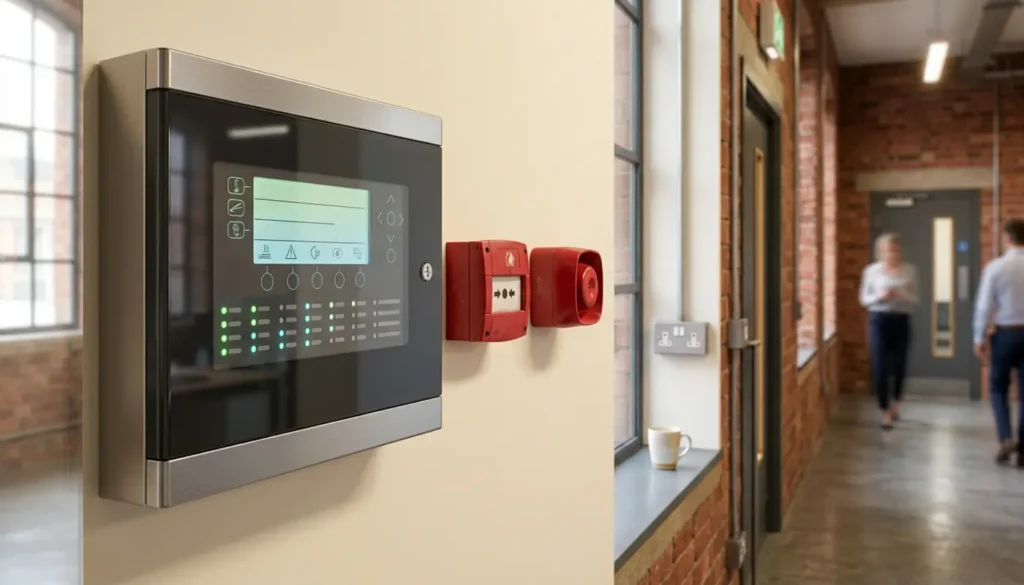
Domestic smoke alarms should normally meet BS EN 14604. Larger fire alarm systems in workplaces, blocks of flats and managed buildings are usually designed, installed and maintained in line with BS 5839. iSecurity Solutions helps homes, landlords and businesses stay protected with reliable testing, maintenance and fire safety support that keeps alarms working when they are needed most.
Identify The Fire Alarm Beep
The sound pattern is the first clue because a short chirp, a repeated alarm and a continuous siren can mean different things. Beep patterns vary by manufacturer, so the label on the alarm and the user manual should always take priority when you are checking the meaning.
A single chirp every 30 to 60 seconds is usually a maintenance warning rather than a full fire alert. It often points to a low battery, weak backup battery, sensor fault, or end of life signal, and it should be dealt with promptly rather than silenced and forgotten.
A loud repeated alarm, or a continuous siren, should be treated as a possible fire warning until you know otherwise. If several interlinked alarms are sounding together, one unit may have detected smoke, heat, steam, dust, or a fault, and the whole system is passing that warning around the property.
Short chirps during the night are common because cooler temperatures can affect weak batteries. It is irritating, but the alarm has not chosen the small hours for dramatic effect; it is often the point where the battery voltage drops low enough to trigger the warning.
If you are not sure which alarm is chirping, stand still for a few seconds and listen carefully before moving from room to room. Sound can bounce around hallways and staircases, which makes the noisy unit harder to spot than it should be.
Low Battery Is The Most Common Cause
The most common reason a fire alarm keeps beeping is a low or failing battery. Battery powered smoke alarms constantly monitor their own power supply, and when the voltage drops below a safe level, the unit chirps to warn you that it may not work properly in an emergency.
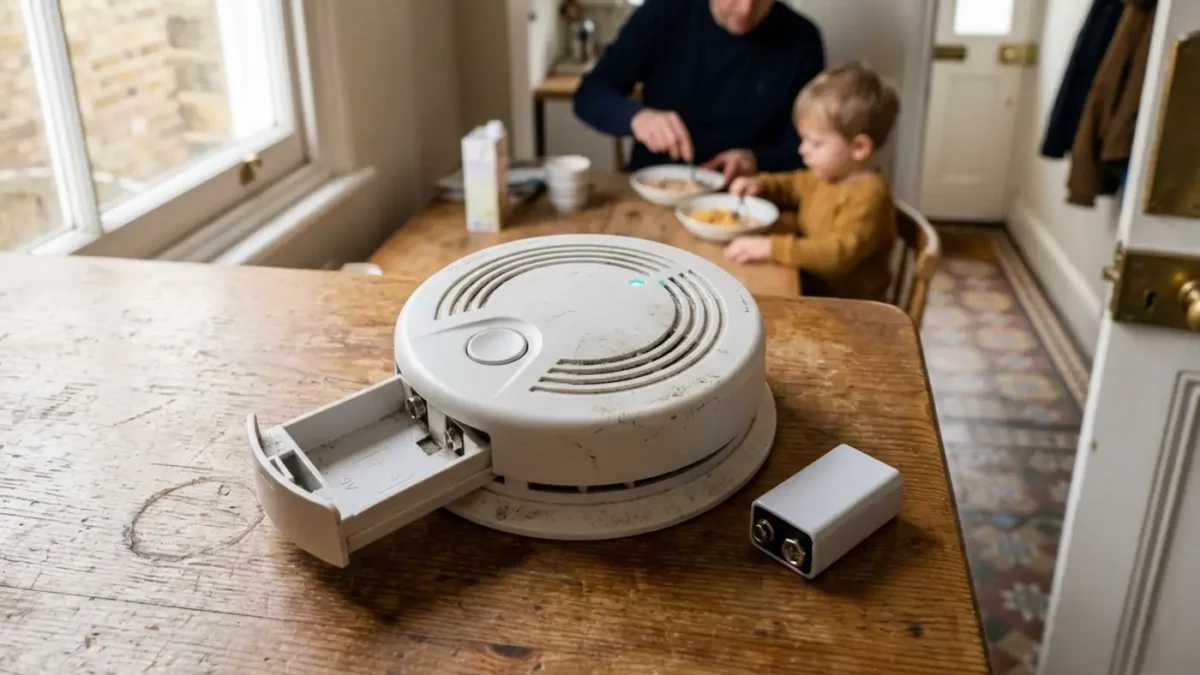
Many older domestic smoke alarms use a 9V alkaline battery, but not all alarms are the same. Some accept specific lithium batteries, some use AA or other battery types, and sealed ten year units are not designed for battery replacement at all.
If your alarm beeps regularly, replace the battery as soon as possible and never remove it permanently just to stop the noise. GOV.UK advises householders to test smoke alarms and replace batteries where needed, with practical advice available through official fire safety guidance.
How To Replace The Battery Correctly
To replace the battery correctly, first find the exact alarm that is chirping, then check the battery type, fit it firmly and test the alarm afterwards. This sounds simple, but in homes with several smoke alarms, carbon monoxide detectors, alarm panels and even old battery toys in drawers, the noisy culprit is not always where your ears first point you.
Once you have found the unit, check whether it is battery powered, mains powered with a backup battery, or a sealed ten year alarm. Look for the model number, battery type and any instructions printed on the side, back plate, or battery compartment.
Use only the battery type recommended by the manufacturer. If the alarm specifies a 9V alkaline battery, use that type unless the instructions clearly say a lithium version is suitable, as the wrong battery can cause poor contact, false faults, or continued chirping.
Fit the battery firmly and match the positive and negative terminals correctly. Close the battery drawer fully, refit the alarm to its base, and press the test button until the alarm sounds, which confirms the unit has power and the sounder is working.
Why It Still Beeps After A New Battery
If your smoke alarm still beeps after a new battery, it may have the wrong battery type, loose contacts, an open battery compartment, dust inside the sensor, or an end of life fault. It is usually worth checking these simple issues before assuming the whole system has failed.
The new battery may be flat, the contacts may not be touching properly, or the compartment may not be fully closed. Some alarms have a small safety tab or locking mechanism that prevents the unit from sitting correctly unless the battery is fitted in exactly the right position.
The alarm may also need a reset to clear remaining charge inside the unit. In general, you remove the replaceable battery, hold the test or hush button for the time stated by the manufacturer, refit the correct battery, reinstall the alarm, and press the test button, but the manual should always guide the exact steps.
If it still chirps, check whether another alarm nearby is making the sound. Chirps bounce around hallways and staircases surprisingly well, which is not helpful when you are trying to find one small plastic circle on a ceiling.
Sealed Ten Year Battery Alarms
A sealed ten year smoke alarm usually needs replacing when it starts chirping near the end of its service life. These alarms contain a long life lithium battery that is built into the unit, so you normally replace the whole alarm rather than opening it or trying to recharge it.
Most sealed alarms have a replace by date printed on the casing or base. If the alarm is close to or beyond that date and has started chirping, the safest option is usually replacement with a suitable BS EN 14604 smoke alarm.
Do not try to prise open a sealed alarm because this can damage the unit and leave the property unprotected. If you are a landlord, property manager, or responsible person for a managed building, keeping records of replacements and tests is sensible, especially where BS 5839 applies to the wider fire detection system.
Dust, Insects And Dirt In The Sensor
Dust, insects, cobwebs and general household dirt can make a smoke alarm beep or false alarm because particles inside the sensor chamber can be mistaken for smoke. Cleaning the vents and the surrounding area often helps if the unit is otherwise in good condition.
Switch off or remove the alarm only if the manufacturer says it is safe to do so, then clean around the vents using a soft vacuum brush attachment. A short burst of clean compressed air may be suitable for some models, but avoid forcing dirt further inside the unit.
Never use water, sprays, solvents, polish, or cleaning chemicals on a smoke alarm. These can damage the sensor, leave residue, or make the alarm less reliable, which rather defeats the purpose of cleaning it.
Regular maintenance makes a big difference, especially in dusty hallways, loft conversions, workshops, rental properties and homes with pets. For a wider look at planned servicing, testing schedules and keeping systems reliable, see our advice on fire alarm maintenance.
Steam, Cooking Fumes And Humidity
Steam, cooking fumes, aerosols and high humidity can all cause unwanted alarm activity because the sensor may react to particles or moisture in the air. If the beeping or false alarm often happens after cooking or showering, the alarm may be in the wrong place or the wrong type for that area.
Smoke alarms should be positioned according to the manufacturer's instructions and relevant guidance. They are usually best kept away from bathrooms, shower rooms, cookers and areas where steam gathers.
That does not mean leaving gaps in protection. It means choosing the right type of detector and placing it where it can detect danger without reacting to normal daily activity.
In some kitchen areas, a heat alarm may be more suitable than a smoke alarm because it reacts to temperature rather than normal cooking particles. If nuisance alarms happen often, do not disable the alarm; review the position and consider getting professional advice.
Mains Powered And Interlinked Alarms
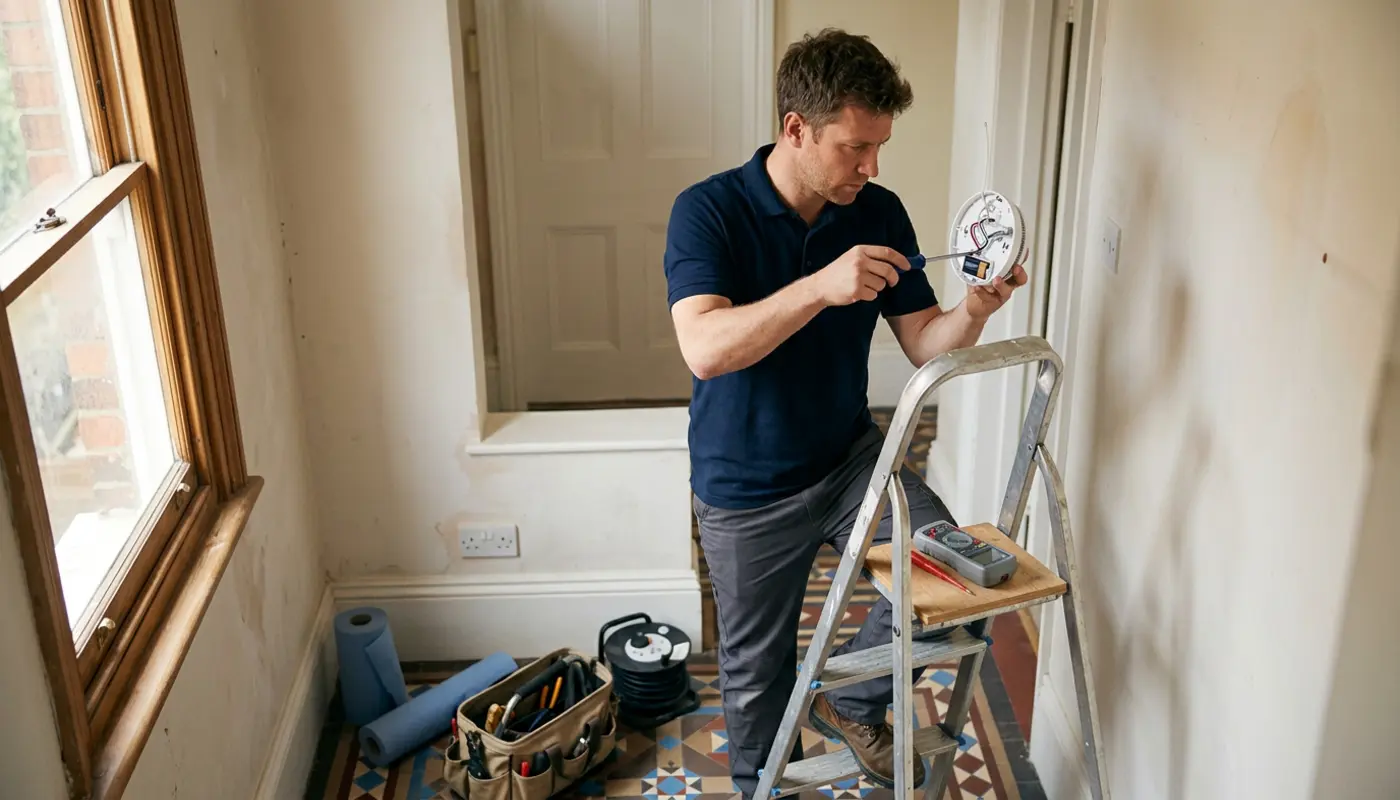
Mains powered alarms can still beep because many of them contain a backup battery. If there has been a power cut, a tripped circuit, a loose connection, or a weak backup battery, the alarm may chirp even though it is wired into the property.
Interlinked alarms add another layer of confusion because one unit can make every connected alarm sound. This is useful in a real emergency because it gives people more warning across the building, but it can make the faulty or triggered alarm harder to identify.
Look for a flashing indicator light, a different sound pattern, or a unit that responds differently when you press the hush button. Do not disconnect mains wiring, remove alarms permanently, or interfere with fixed electrical circuits, as this should be handled by a qualified electrician or competent fire alarm engineer.
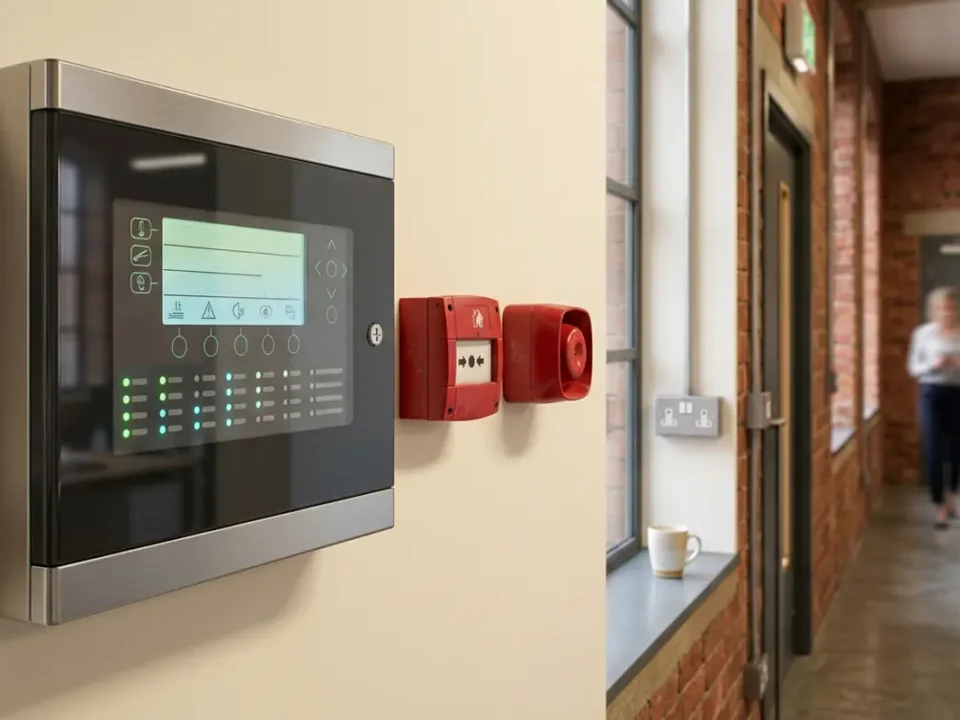
For commercial premises, blocks of flats, HMOs, care settings and managed buildings, fire alarm systems should be assessed against BS 5839. Depending on the building and risk, categories such as L1 or L2 may be needed, with L1 giving wider automatic detection coverage than L2.
Alarm Past Its Expiry Date
A smoke alarm that is past its expiry date can beep because the sensor, electronics, battery, or sounder may no longer be reliable. Even if the unit looks fine from the outside, many domestic alarms should be replaced after around ten years or by the date printed on the casing.
Check the back or side of the alarm for a manufacture date, install date, or replace by date. If it is over ten years old, or the label is unreadable and nobody knows when it was fitted, replacing it is usually the sensible choice.
For businesses and landlords, expired alarms are not just inconvenient because they can create compliance and insurance concerns. The team at iSecurity Solutions can help homes and organisations make sure fire safety equipment is suitable, maintained and properly documented.
How To Stop A Smoke Alarm Beeping Safely
To stop a smoke alarm beeping safely, first make sure there is no fire, then identify the exact device, check the battery, clean the vents, check the expiry date and reset the unit only as the manufacturer explains. The hush button can help for a short time after cooking fumes or steam, but it is not a repair.
Use a safe order of checks. First, confirm there is no smoke, heat or fire. Second, identify the exact device making the sound. Third, check the battery type, fitting and compartment. Fourth, clean around the vents. Fifth, check the date on the alarm. Finally, reset the unit only as described in the manufacturer's instructions.
For replaceable battery alarms, a common reset method is to remove the alarm from its base where permitted, take out the battery, press and hold the test or hush button to discharge remaining power, refit the correct battery, reinstall the unit, and test it. For mains powered alarms, do not remove wiring or attempt electrical work unless you are qualified.
When To Call A Professional
You should call a professional if the alarm is mains powered, interlinked, repeatedly faulty, damaged, expired, or part of a wider building system. Call 999 immediately if there is fire, smoke, heat, or any immediate danger.
Tenants in England should report faulty, missing, or repeatedly failing alarms to their landlord or managing agent, preferably in writing so there is a clear record. If you are a tenant, you should not feel awkward about reporting a faulty alarm because it is a safety issue, not a nuisance complaint.
Under the Smoke and Carbon Monoxide Alarm Regulations, relevant landlords in England must provide smoke alarms on every storey with living accommodation and repair or replace alarms once they are told they are faulty.
Rules differ across Scotland, Wales and Northern Ireland, so landlords and tenants should check the relevant national guidance. In any rented home, nobody should be left relying on an alarm that is disabled, missing, out of date, or known to be faulty.
SSAIB Certified And Insurance Approved Support
SSAIB certified and Insurance Approved support is useful when fire safety forms part of a wider property protection plan, especially for businesses, landlords and managed sites that need clear records and reliable service. iSecurity Solutions is a trusted UK provider of commercial and domestic security systems, helping homes and businesses stay protected around the clock.
From CCTV and intruder alarms to fire safety, access control and construction site monitoring, our expert team designs reliable, tailored solutions backed by responsive service and modern remotely monitored technology. If a monitored intruder alarm is also part of the security package, Police Response URN requirements may apply, while fire alarm design and maintenance should follow the right fire safety standards such as BS 5839 where required.
Final Thoughts
A beeping fire alarm is usually trying to tell you something simple, such as a low battery, dust in the sensor, poor positioning, a backup battery issue, or an expired unit. The important part is to act quickly, check safely and never silence the alarm without fixing the cause.
If you are dealing with a domestic smoke alarm, start with the battery, cleaning and expiry date. If you manage a business, rental property, HMO, or multi occupancy building, make sure the wider fire alarm system is suitable for the risk, compliant with BS 5839 where required, and maintained by competent professionals.