How Do Door and Window Sensors Detect Intruders?
Door And Window Sensors
Door and window sensors detect intruders by spotting a change at an opening, such as a door being opened, a window being forced, vibration on a frame, or the sound of breaking glass. The sensor sends a signal to the alarm control panel, which can then trigger a siren, app alert, keyholder notification, or professional monitoring response. If you are planning protection for a home or business, iSecurity Solutions can help match the right sensors to the property.
If alarm technology feels a little confusing, you're not alone. The good news is that these sensors work in a practical way, and once you understand the basics, the whole system feels much easier to follow.
They are often called the first line of detection because many intrusions start at the edge of a property. Front doors, back doors, patio doors, ground floor windows, garages and stockroom entrances are all natural targets, so protecting them helps the alarm react before someone has moved further inside.
The right setup depends on whether you are protecting a family home, a rental property, or business premises with stock to look after. That answer can change the best mix of magnetic contacts, shock sensors, glass break detectors and monitored intruder alarms, so the system suits the building rather than forcing the building to suit the kit.
Why Door And Window Sensors Matter
Door and window sensors matter because they can detect activity at the point of entry. An internal motion sensor may only react once someone is already inside, while a perimeter sensor can raise the alarm when a door or window is opened, attacked, or disturbed.
That early warning is useful if you want to feel safer at night, protect valuable stock, reduce insurance worries, or secure a property that is empty for long periods. Sensors do not physically stop a burglar, so good locks, secure frames and strong glazing still matter, but they do tell the alarm system when something is wrong.
For homes and businesses, this balance is important. A well planned alarm system should support strong physical security, good habits and a clear response plan, rather than relying on one sensor to do everything on its own.
How An Alarm Sensor Detects An Intrusion
An alarm sensor detects an intrusion by noticing a specific event and reporting it to the control panel. That event might be a door opening, a magnet moving away from a reed switch, a sudden impact on a frame, or the acoustic pattern of breaking glass.
The alarm panel then checks whether the system is set and whether that zone should trigger an alarm, a tamper warning, a fault alert, or a low battery message. A tamper warning means the system thinks a sensor, cover, or cable may have been interfered with, which is helpful because interference can be just as important as an open door.
From there, the system can activate an internal sounder, outside bell box, mobile app alert, or signal to an Alarm Receiving Centre. For monitored intruder alarms, a Police Response URN may be needed for police attendance. A Police Response URN is the unique reference number a monitored alarm needs before a police response can be requested, and SSAIB and Insurance Approved certification is the prerequisite where that response route is required.
Magnetic Contact Sensors And Reed Switches
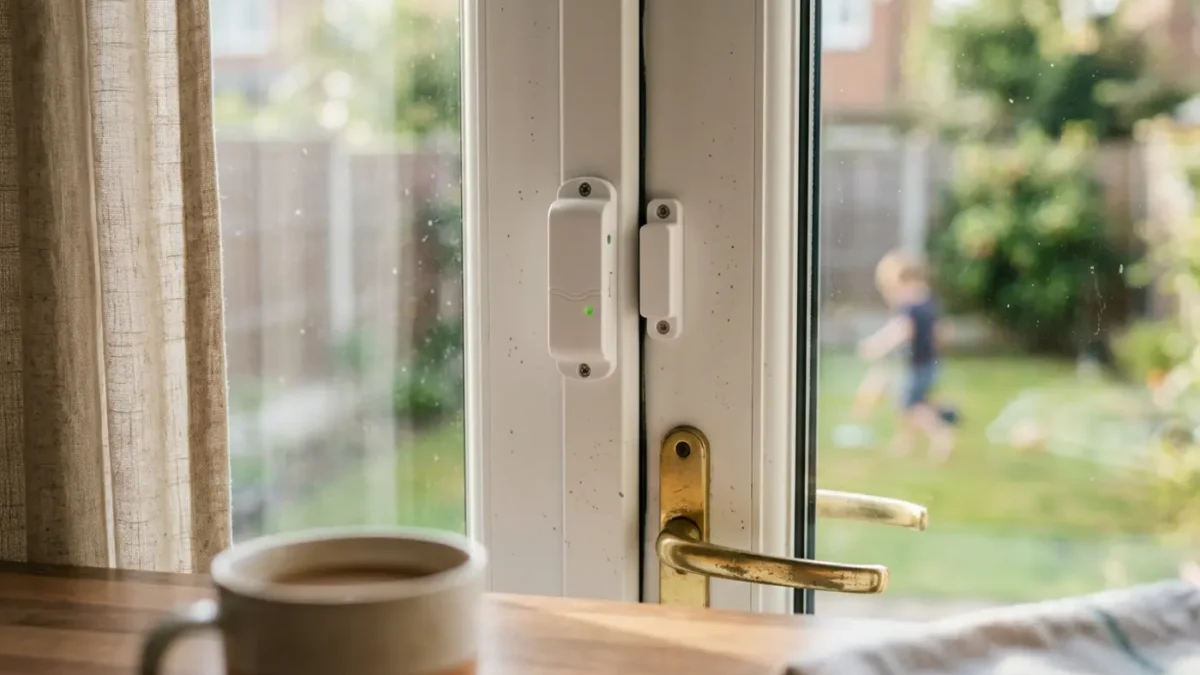
A magnetic contact sensor is the classic door and window alarm sensor. It has two parts, with a small magnet fitted to the moving part of the door or window and a reed switch fitted to the frame.
When the door or window is closed, the magnet sits close to the reed switch and keeps the circuit in its normal state. When the opening moves, the magnet moves away, the switch changes state, and the alarm panel receives that as an open signal.
These sensors are commonly used on front doors, back doors, French doors, sliding patio doors, timber windows, uPVC casement windows and aluminium frames. They are neat, reliable and simple, which is why they are still widely used in modern home security systems and business alarm systems.
The key detail is alignment. If the magnet and reed switch are too far apart, poorly fixed, or fitted on a moving frame section, the alarm may not behave as expected. The National Protective Security Authority explains intrusion detection methods, including magnetic contacts and break glass detection, in its intrusion detection guidance.
What Magnetic Contacts Can And Cannot Detect
Magnetic contacts are excellent at telling whether a protected opening has been opened, but they are not designed to detect every possible method of entry. If someone breaks a pane of glass without opening the frame, a standard contact may not detect that event.
That is why contacts are often paired with shock sensors or glass break detectors in higher risk areas. For example, a patio door may have a magnetic contact for opening detection and a shock or acoustic detector for forced entry attempts on the glass.
For many standard homes, contacts on main doors and accessible windows give a strong base level of protection. For shops, offices, pharmacies, warehouses and higher risk homes, the better answer is usually layered detection rather than relying on one type of sensor to cover every risk.
Wireless Versus Wired Door And Window Sensors
Wireless sensors send radio signals to the alarm control panel, while wired sensors use installed cabling. Both can work well when they are designed and installed properly, but they suit different buildings, budgets and long term maintenance needs.
Wireless sensors are popular in UK homes because they are quicker to install, less disruptive and often easier to fit in finished properties. They can be especially useful in rental homes, period properties, flats and buildings where running cables would mean lifting floors or chasing walls.
Wired sensors are often preferred in new builds, major refurbishments and commercial sites where cable routes can be planned cleanly. They do not rely on individual sensor batteries, although the alarm panel itself still needs mains power and backup battery support.
If you are comparing options for a domestic or commercial system, intruder alarm systems can be designed around the property layout, the required alarm grade, and whether you need local alerts, app notifications, or professional monitoring.
Battery Life And Rental Home Practicalities
Wireless sensor battery life varies by product, signal strength, use, temperature and how often the sensor transmits. A good system should report low battery conditions before the sensor stops working, rather than leaving you to find the problem at the worst possible moment.
For rented properties, wireless devices are often attractive because they may need less drilling, but tenants should still get landlord permission before fitting anything to doors or windows. Adhesive mounting can be helpful, although it must be strong enough to keep the sensor aligned and safe from accidental knocks.
A sensible rental checklist includes the following points.
- Use removable mounting where it is suitable and approved.
- Make sure battery access is easy.
- Check reliable radio coverage before relying on the sensor.
- Agree who is responsible for maintenance.
- Plan what happens if broadband goes down.
A Wi Fi only smart sensor may be convenient, but it is not the same as a properly designed intruder alarm with monitored signalling. For higher risk homes or managed rental properties, the response route matters just as much as the sensor itself.
Vibration And Shock Sensors For Forced Entry
Vibration and shock sensors detect impact or movement through a door, window, frame, or pane of glass. Instead of waiting for the opening to move, they can spot signs of forcing, levering, drilling, or repeated impact.
They are useful on uPVC doors, timber frames, sash windows, patio doors, garage personnel doors and vulnerable glazing. In plain English, they listen for the building version of a heavy knock, although a good sensor does it with far more judgement than a nervous neighbour.
Sensitivity matters a lot. Set too low, the sensor may miss a genuine attack. Set too high, it may react to heavy rain, hail, road vibration, wind, loose frames, or someone slamming a nearby door. This is why on site testing is so important, because a sensor that behaves perfectly in a product sheet may act very differently on a rattly old sash window.
Glass Break Detectors For Large Glazed Areas
Glass break detectors are designed for situations where breaking the glass is a realistic entry method. Patio doors, French doors, conservatories, shopfronts and large office windows are common examples.
Acoustic glass break detectors use a microphone and sound analysis to identify the distinctive pattern of breaking glass. The room layout matters because curtains, blinds, soft furnishings and distance can affect what the detector hears.
Shock based glass detection works differently by sensing vibration or physical disturbance through the glass or frame. This can be useful, but it still needs correct placement and compatibility with the type of glazing.
Neither approach is magic. Acoustic detectors can be affected by similar sharp sounds, while shock detectors can be affected by transmitted vibration. The answer is careful placement, proper testing and using them as part of a wider intruder alarm design.

How Sensors Talk To The Control Panel
The alarm control panel is the brain of the system. Sensors report their status to it, and the panel decides whether the signal is normal, suspicious, faulty, or urgent.
With wired sensors, the detector state travels through installed cables, often with tamper protection so the panel can spot interference with the wiring or device. With wireless sensors, the device sends a radio message, and better systems supervise those signals so missing devices, low batteries, or tamper events can be reported.
The panel also knows which zone has activated. That means it can tell the difference between the front door, kitchen window, rear office door, or stockroom entrance, which is very helpful for keyholders and monitoring centres.
If you want a wider view of how detectors, panels and response paths fit together, you can read how intruder alarms work for a fuller explanation of the complete alarm chain.
Siren, App Alert Or Monitoring Centre
Once a sensor activates, what happens next depends on the system. An audible only alarm sounds a siren and relies on neighbours, passers by, or people nearby to respond.
An app connected system sends a notification to a smartphone or tablet, which is useful but depends on power, broadband, mobile data, cloud services and whether the phone is actually noticed. Most of us have missed a notification before, usually at the least helpful time.
A professionally monitored system sends alarm signals to an Alarm Receiving Centre, where trained operators follow agreed procedures. For police response, systems normally need confirmed alarm signalling, which means the system sends evidence from more than one source before the alarm is escalated. They may also need suitable maintenance, correct documentation and a Police Response URN, with SSAIB and Insurance Approved certification as the prerequisite where that route is used.
Reducing False Alarms In UK Properties
False alarms are frustrating, and they can reduce confidence in the system. The good news is that most are preventable with correct installation, sensible settings and regular checks.
Magnetic contacts should be firmly fixed and aligned with the manufacturer recommended gap. Windows should close properly, frames should not flex too much, and sensors should not be fitted where everyday movement makes them unstable.
Common causes of unwanted activations include the following issues.
- Loose glazing or loose frames.
- Traffic vibration or building movement.
- Strong wind, rain, or hail.
- Weak batteries.
- Doors being shut with a little too much enthusiasm.
- Rushed exits, forgotten codes, or windows left on the latch.
Pets are usually more of an issue with internal motion detectors than with door contacts, but they can still cause problems if they knock loose sensors, push poorly closed doors, or disturb blinds near glass break detectors.
UK Standards And Certification In 2026
For UK intruder alarm systems, BS EN 50131 is the key family of standards for alarm systems and components. In simple terms, it helps define how systems are graded, designed and expected to perform.
Grade 2 is common for lower to standard risk homes and smaller premises, while Grade 3 is used where the risk is higher, such as some commercial properties. The right grade depends on the building, contents, insurer requirements and risk assessment, not just personal preference.
PD 6662 is the UK scheme that applies relevant European alarm standards in a UK context, including BS EN 50131. BS 8243 is also relevant where a system is designed to produce confirmed alarm conditions for police response.
NSI approved or SSAIB and Insurance Approved installers are important when insurers require certified installation, formal maintenance and proper documentation. If a Police Response URN is needed, do not leave certification until the end, because it should shape the system design from the beginning.
Insurance, Part Q And Secured By Design
Insurance requirements vary, so it is always worth checking your policy wording before choosing equipment. Some insurers may be happy with basic protection, while others may require a certified intruder alarm, regular servicing and written evidence of compliance.
Part Q of the Building Regulations is often mentioned in security conversations, but it is about physical resistance to unauthorised access in new dwellings in England. It relates to secure doors, accessible windows and suitable hardware, not electronic alarm sensor certification.
Secured by Design focuses on reducing crime through better physical security, tested products and good design. Door and window sensors support that approach, but they should sit alongside strong locks, secure glazing, lighting and sensible everyday habits.
Choosing The Right Sensor Combination
The right sensor combination depends on the property. A rental flat may suit wireless magnetic contacts with landlord approved mounting, while a standard house may need contacts on access doors and ground floor windows, with extra shock detection at the rear.
A period property with sash windows may need discreet wireless contacts and carefully adjusted vibration sensors, because older frames can move more than modern ones. A home with lots of patio doors may benefit from contacts plus glass break or shock detection.
For small businesses, the design should focus on vulnerable doors, stock areas, offices, shutters and glazing. Larger premises may need zoning, professional monitoring, confirmed alarm signalling and a documented maintenance plan.
iSecurity Solutions is a trusted UK provider of commercial and domestic security systems, helping homes and businesses stay protected round the clock. From CCTV and intruder alarms to fire safety, access control and construction site monitoring, the team designs reliable, tailored solutions backed by responsive service and modern, remotely monitored technology.
If your main concern is family safety, stock loss, out of hours entry, or insurance compliance, it is worth being clear about that from the start. A clear goal makes it much easier to choose sensors that solve the right problem.
Maintaining Door And Window Sensors
Good maintenance keeps sensors trustworthy. A simple routine can prevent faults, reduce false alarms and help you prove that your system has been looked after properly.
- Test each protected door and window regularly.
- Check for low battery or tamper messages.
- Make sure app alerts or keyholder notifications still work.
- Retest sensors after replacing windows, doors, frames, or glazing.
- Check sensors after decorating, building work, or fitting new blinds.
- Keep certificates, servicing records and insurer correspondence in one place.
It is not glamorous, but when you need to show that your alarm has been maintained properly, tidy paperwork suddenly becomes very useful.
Door And Window Sensors Summary
Door and window sensors detect intruders by identifying a clear change at the perimeter of a property, whether that is opening, impact, vibration, or breaking glass. The best systems use the right type of sensor in the right place, then connect it to a reliable control panel and response method.
For UK homes and businesses in 2026, it is worth thinking beyond the cheapest sensor. Consider false alarm risk, battery checks, monitoring, Police Response URN needs, BS EN 50131 grading, insurer expectations and whether professional installation will give you better long term confidence.
If you are unsure what your property needs, a professional sensor survey is a sensible next step. It can help identify weak points, choose the right sensor combination and make sure the system suits your home, rental property, or business premises.
Frequently Asked Questions
Do Door Sensors Detect Someone Breaking Glass?
Usually not if they are only magnetic contacts. You would normally add shock or glass break detection where breaking glass is a realistic entry risk.
Can A Window Sensor Detect Forced Entry Before The Window Opens?
Yes, a shock or vibration sensor may detect impact, levering, or tampering before the window opens. A magnetic contact mainly detects the opening itself.
Are Wireless Sensors Reliable In UK Homes?
They can be very reliable when radio range, battery condition and placement are checked properly. Thick walls, metal frames and poor signal paths should be tested before relying on them.
Will A Door Or Window Sensor Automatically Call The Police?
No, an app alert or siren does not automatically create police attendance. A Police Response URN normally needs a professionally monitored system and SSAIB and Insurance Approved certification where that response route applies.
Does Part Q Require Door And Window Alarm Sensors?
No, Part Q is about physical security for certain doors and windows in new dwellings in England. It does not certify or require a particular electronic alarm sensor.