Monitored Intruder Alarms for Pharmacies: 24/7 Central Station
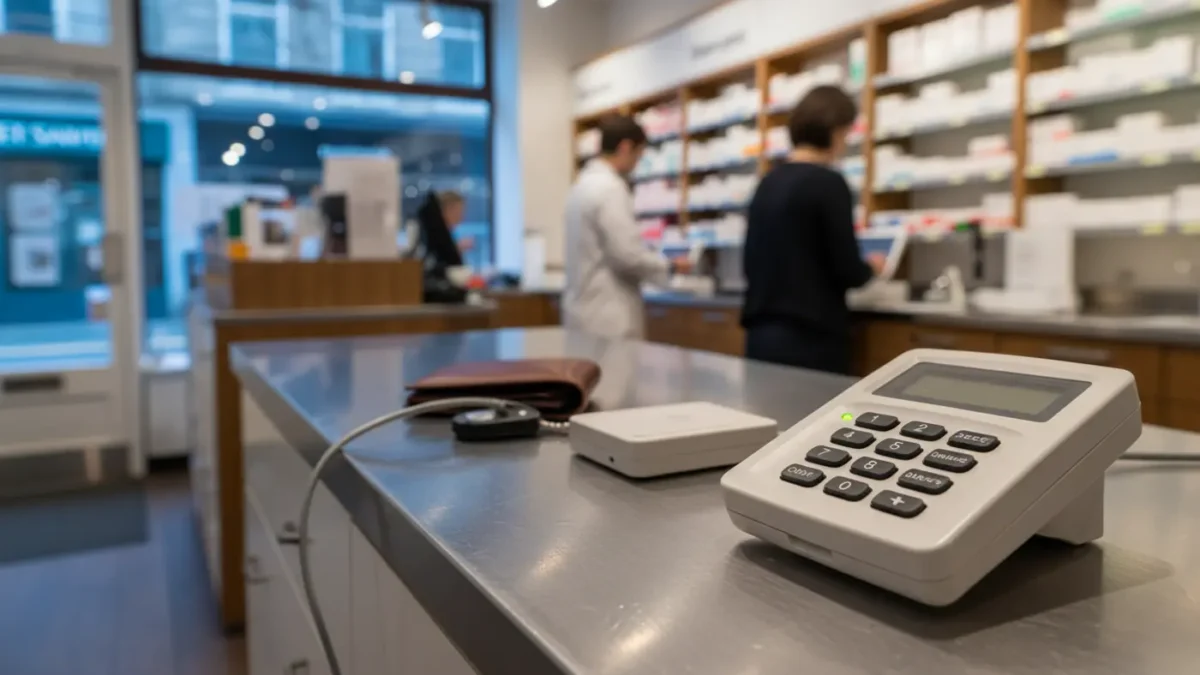
Monitored intruder alarms for pharmacies protect medicines, controlled drugs, cash, staff areas and records by sending alarm signals to a 24/7 Alarm Receiving Centre, often called an ARC. When a confirmed break in is detected, trained operators follow an agreed response plan, contact keyholders and request police attendance where a valid Police Response URN is in place.
Monitored Intruder Alarms For Pharmacies
A pharmacy monitored alarm should do more than sound a bell outside the building, because pharmacies carry risks that many normal retail sites do not face. For Manchester pharmacies and other UK healthcare premises, the right system should meet BS EN 50131, usually Grade 2 or Grade 3 depending on risk, follow BS 8243 for confirmed alarm signalling and use dual path communication so alerts can still reach the ARC if one route fails.
iSecurity Solutions is a trusted UK provider of commercial and domestic security systems, helping homes and businesses stay protected around the clock. For pharmacies, our team designs reliable monitored intruder alarms, CCTV, access control and maintenance support that help protect controlled drugs, staff, stock and premises with clear advice and responsive service.
Why Pharmacies Are High Risk Targets
Pharmacies are high risk targets because they hold items that criminals understand and actively seek, including controlled drugs, medicines, cash, prescription stationery and saleable stock. The risk does not end when the till is empty, because the dispensary, stock room and controlled drugs cabinet can remain attractive targets long after closing time.
Out of hours weakness is a major issue, especially during evenings, weekends, bank holidays and quiet trading periods. Manchester high street pharmacies, urban branches, late opening pharmacies and mixed retail areas can all face different risks, so a monitored intruder alarm with ARC response gives the site a much stronger safety net than a siren only system.
For a deeper look at pharmacy grade alarm design, you can explore Grade 3 intruder alarms for pharmacies in Manchester, which explains how higher risk premises are usually protected. In simple terms, the more attractive the stock and the slower the natural response, the more important professional monitoring becomes.
Pharmacy Alarm Requirements In Manchester
A pharmacy alarm in Manchester should be designed around the real risks inside the premises, not copied from a standard high street shop layout. That means reviewing the dispensary, consultation room, stock room, cash handling area, staff entrance, shutters, roof access, rear doors and the controlled drugs cabinet as separate risk points.
Most commercial pharmacy alarm systems should comply with BS EN 50131, which is the main European standard used for intruder and hold up alarm systems in the UK. Grade 2 may suit lower risk premises, while Grade 3 is often recommended where controlled drugs, higher value stock or insurer requirements make the site more attractive to experienced offenders.
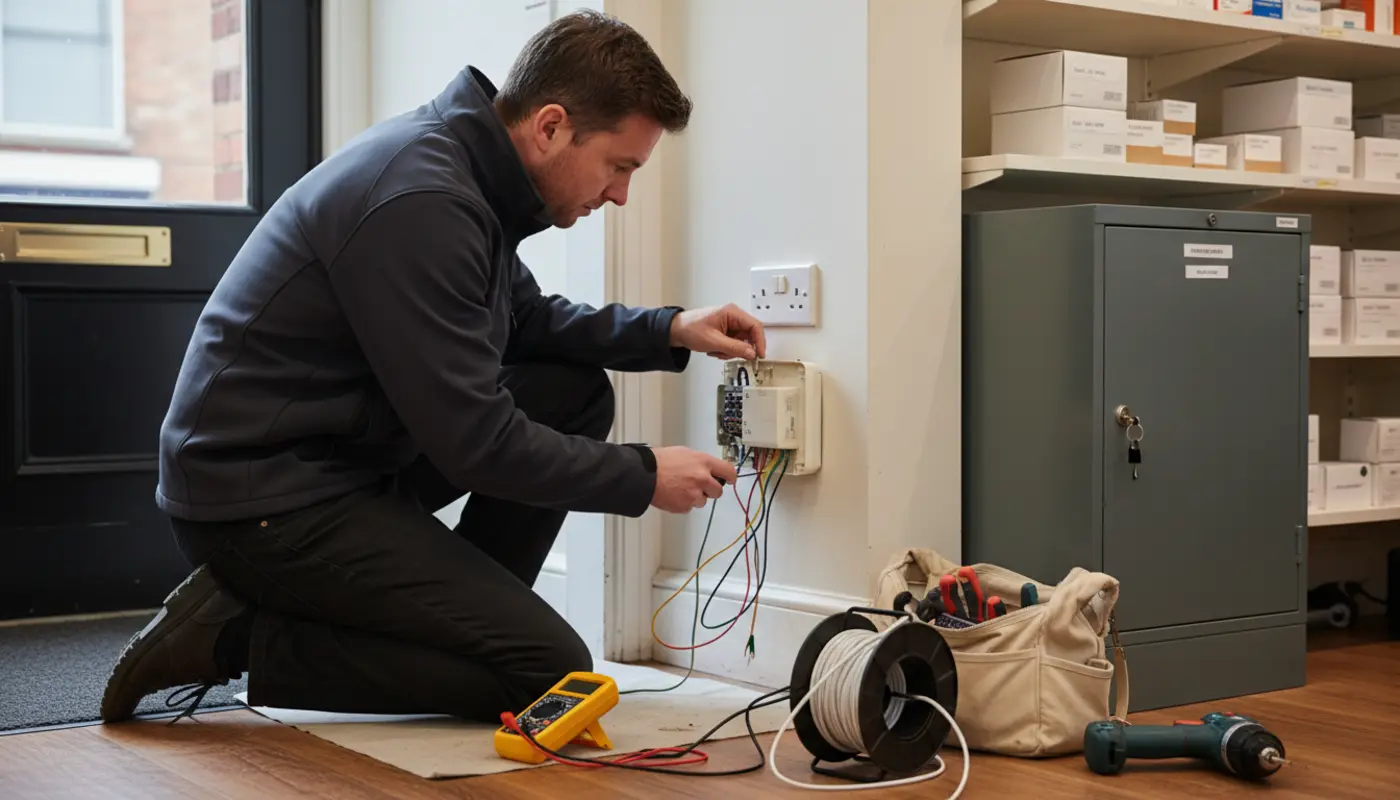
BS 8243 is also important because it explains how confirmed alarm conditions should work to reduce false alarms and support police response. In simple terms, a confirmed alarm gives stronger evidence that a real break in is happening, such as two separate detectors activating in sequence rather than one single sensor reacting on its own.
NHS, GPhC And Controlled Drugs Security
Pharmacy owners and superintendent pharmacists need to think about security through a compliance view as well as a crime prevention view. Controlled drugs are covered by strict safe custody principles, including secure storage, controlled access, key management and clear responsibility for how medicines are handled.
The Misuse of Drugs Safe Custody Regulations 1973 are central to controlled drugs storage, and NHS style guidance commonly expects controlled drugs to be kept in a suitable locked metal cabinet or safe that is fixed securely to the building. The Home Office controlled drug security guidance is a useful official reference for understanding how security measures support the safe possession and supply of controlled drugs.
Requirements can vary depending on your contract, premises type and insurer, so it is always sensible to check the latest NHS, GPhC and insurance guidance before approving a system design. Alarm design should support those duties by protecting the dispensary and controlled drugs cabinet area as a clear priority.
That may include separate alarm zones, magnetic door contacts, vibration sensors, movement detectors, staff only access control and event logs that show when sensitive areas were opened or entered. These measures help create a clearer picture if an incident, stock issue or access concern needs to be reviewed later.
How 24/7 Central Station Monitoring Works
24/7 central station monitoring, more commonly called ARC monitoring in the UK, works by sending signals from your pharmacy alarm panel to a staffed Alarm Receiving Centre. When a detector activates, the panel sends an event through an alarm transmission system, and ARC operators follow an agreed response plan based on the type of activation and your monitoring contract.
The response plan normally includes checking whether the alarm is confirmed, contacting nominated keyholders and, where the system has a valid Police Response URN, requesting police attendance for qualifying confirmed activations. A Police Response URN is the unique number that links your alarm system to the local police force response process, including Greater Manchester Police response processes where applicable.
Unlike a local alarm, which simply sounds on site, ARC monitoring means someone is watching for alarm signals every hour of the day and night. That is especially useful for pharmacies where a break in at 2am needs a proper response plan rather than a noisy box on the wall and hope that someone nearby notices.
If your pharmacy also uses cameras, CCTV systems can be linked so alarm events are supported by visual evidence. This helps keyholders, ARC operators and investigators understand what happened, where it happened and whether the response needs to be treated as urgent.
Police Response URN And Alarm Grades
Police response normally requires the alarm to be designed, installed and maintained by an accredited alarm company and configured in line with recognised standards. SSAIB certified and Insurance Approved installers are commonly required for systems that need a Police Response URN, because the police and insurers need confidence that the system has been installed and maintained properly.
Grade 2 and Grade 3 explain the expected level of risk and the possible skill level of an intruder. A Grade 2 system is designed for lower to moderate risk, while Grade 3 adds stronger protection against tampering, masking and more determined attacks, which is why many pharmacies storing controlled drugs are assessed for Grade 3.
Keeping a Police Response URN also means keeping false alarms under control. Repeated false activations can place police response at risk, so good design, staff training, routine servicing and BS 8243 confirmed alarm setup are not just paperwork, because they help protect the response you may need during a real emergency.
Dual Path Signalling For Pharmacy Alarms
Dual path signalling means your alarm has two communication routes to the ARC, commonly broadband or IP plus a mobile network path such as GSM or 4G. If one route fails because of a network fault, power issue or deliberate line cut, the other route can still send alarm signals.
This is especially important for Police Response URN systems because a monitored alarm is only useful if it can report the problem when it happens. For commercial pharmacy alarms, insurers and police response requirements often expect signalling that can quickly report alarm activations, tamper events and communication faults.
Good signalling also helps with day to day management because the system can report faults before the pharmacy is left exposed overnight. It is far better to deal with a communication fault during normal hours than discover after an incident that the alarm could not reach the ARC.
Integrated Security For Controlled Drugs
The strongest pharmacy security usually comes from layers that work together, rather than one single device doing all the hard work. A monitored intruder alarm can link with CCTV, panic buttons, access control, staff doors and controlled drugs cabinet sensors to create a joined up security picture.
A practical setup might place the public retail area on one zone, the dispensary on another and the controlled drugs cabinet or stock room on a more sensitive zone. If someone enters through the rear door and then triggers movement in the dispensary, the system can create a confirmed alarm in line with BS 8243, helping the ARC make a faster and better informed decision.
Panic buttons, also called hold up alarms or personal attack buttons, support staff safety during opening hours. These should be carefully positioned, discreet, properly explained to staff and installed as part of a compliant system so employees can call for help without putting themselves at extra risk.
Access control can further reduce risk by limiting who can enter staff only areas, consultation rooms and stock spaces. For healthcare sites, pharmacy access control can support better zoning, clearer audit trails and more controlled movement around sensitive medicines.
Typical Pharmacy Alarm Costs In 2026
Pharmacy alarm costs in 2026 vary because no two premises have the same layout, stock profile or insurer requirements. Most pricing includes design, equipment, installation, ARC monitoring, maintenance, signalling charges and Police Response URN administration if required.
As a broad UK guide, a professionally installed monitored commercial alarm may start from around £1,500 to £3,500 for smaller lower risk sites. More complex Grade 3 pharmacy systems with dual path signalling, confirmed detection, panic buttons and cabinet sensors can often sit between £3,500 and £8,000 or more, depending on the layout and specification.
Typical pharmacy alarm costs may include the following.
- Installation and system design.
- ARC monitoring.
- Routine maintenance.
- Alarm signalling subscriptions.
- Police Response URN administration where required.
Ongoing monitoring and maintenance are usually charged monthly or annually, so pharmacies should budget for service visits, signalling subscriptions and possible call outs. A monitored alarm is not a one time purchase like a kettle, although it is much better at protecting controlled drugs than making tea.
Insurance Benefits And Installer Accreditation
Insurers usually look more favourably on professionally designed monitored alarms than basic bells only systems, especially for pharmacies with controlled drugs and cash exposure. Compliance with BS EN 50131, PD 6662, BS 8243, suitable alarm grading and dual path signalling can help show that the risk has been taken seriously.
Using an SSAIB certified and Insurance Approved installer supports insurance confidence and can be essential where a Police Response URN is required. It is not just a badge, because it shows that the company is independently checked for competence, procedures and compliance with recognised alarm standards.
Premium reductions are never guaranteed because insurers also consider claims history, location, stock, locks, shutters and building construction. Even so, a compliant monitored intruder alarm can help meet policy conditions, reduce disputes after an incident and provide stronger evidence that your pharmacy took reasonable precautions.
Choosing The Right Alarm Company
The right alarm company for a pharmacy should understand healthcare environments, controlled drugs risk, insurer expectations and police response rules. You want a team that asks sensible questions on site, rather than simply counting doors and fitting the cheapest kit possible.
Ask whether the proposed system will be designed to BS EN 50131 Grade 2 or Grade 3, how BS 8243 confirmed alarm signalling will work, which ARC will receive signals and whether dual path signalling is included. You should also ask how the installer manages Police Response URN applications, maintenance records, false alarm reduction and staff handover training.
It is worth checking whether your insurer’s alarm requirements are clearly written down before you approve a quotation. A lower monthly cost may not be better if it leaves out services your insurer expects, because nobody wants to discover the small print after a break in.
- Check accreditation. Look for recognised inspectorate approval and SSAIB certified and Insurance Approved status for Police Response URN eligibility.
- Confirm standards. Ask for BS EN 50131, PD 6662 and BS 8243 compliance in writing.
- Review grading. Make sure Grade 2 or Grade 3 is chosen based on your pharmacy risk, not guesswork.
- Ask about integration. Include CCTV, panic buttons, cabinet sensors and access control where relevant.
- Plan maintenance. Schedule routine servicing so performance, signalling and false alarm management stay on track.
Getting Pharmacy Alarm Protection Right
For Manchester pharmacies and other UK pharmacy sites, a monitored intruder alarm is part of responsible premises management. Controlled drugs, staff safety, insurer conditions and out of hours risk all point towards a properly graded, professionally monitored system connected to a 24/7 ARC.
The right setup should combine BS EN 50131 Grade 2 or Grade 3 design, BS 8243 confirmed alarms, dual path signalling and a valid Police Response URN where police response is required. When that is backed by an accredited installer and sensible staff procedures, your pharmacy is far better prepared for the risks that come with serving the public every day.
If you are unsure whether your pharmacy needs Grade 2 or Grade 3 protection, iSecurity Solutions can help you review the risks and choose a monitored alarm setup that fits your premises, insurer and staff routines.