How to Secure a Construction Site with Cctv Cameras?
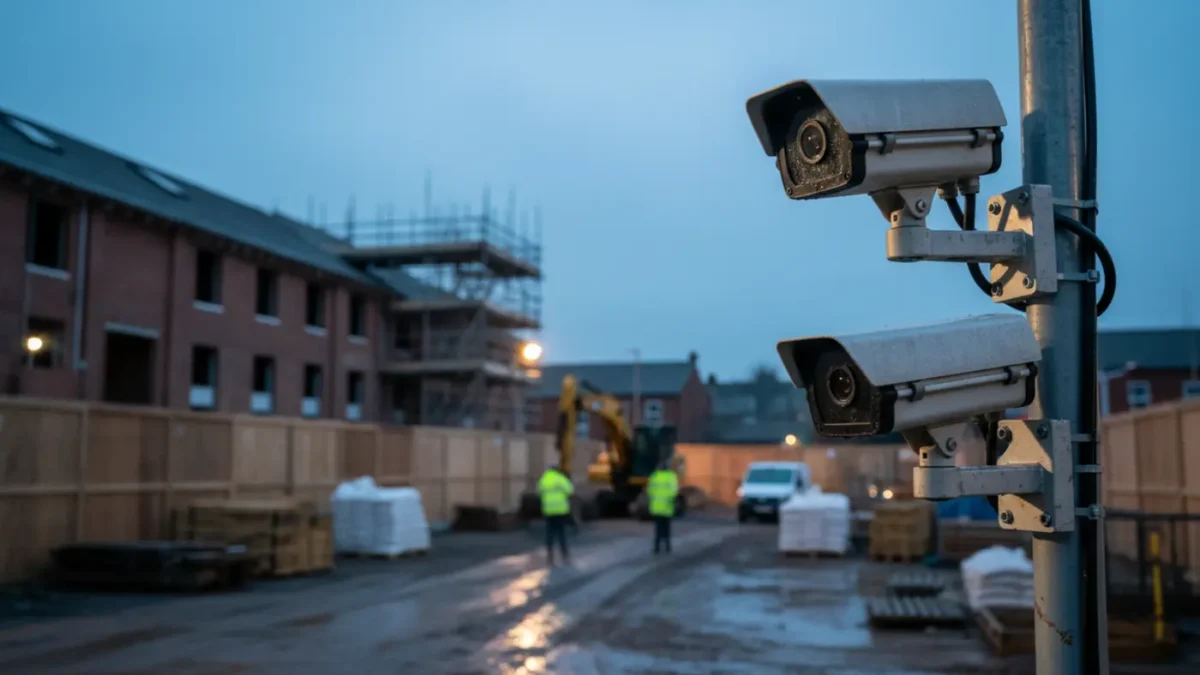
Construction Site CCTV Cameras
Construction site CCTV cameras help secure a site by watching key risk areas, recording clear evidence and allowing fast action when intruders, theft or unsafe behaviour are detected. In 2026, the right approach starts with a proper site risk assessment, followed by weatherproof cameras at entrances, plant storage areas, fuel tanks, material compounds and boundary points, while staying compliant with UK GDPR, the Data Protection Act 2018 and ICO CCTV guidance.
The best results come from combining good camera placement, clear signage, secure footage handling, remote monitoring, power backup and regular maintenance, rather than simply putting up a few cameras and hoping for the best. If you need a practical system designed around real site risks, construction site security cameras can help protect people, plant and materials without making compliance feel like a paperwork mountain.
iSecurity Solutions is a trusted UK provider of commercial and domestic security systems, helping homes and businesses stay protected around the clock. From CCTV and intruder alarms to fire safety, access control and construction site monitoring, the expert team designs reliable, tailored solutions backed by responsive service and modern, remotely monitored technology.
Construction Site CCTV Risk Assessment
A CCTV risk assessment helps you decide what needs protecting, where cameras should go and what you need to record. It should sit alongside your wider health and safety planning, because security on a construction site is not only about stopping theft. It is also about preventing unauthorised access, reducing vandalism and keeping people away from dangerous areas.
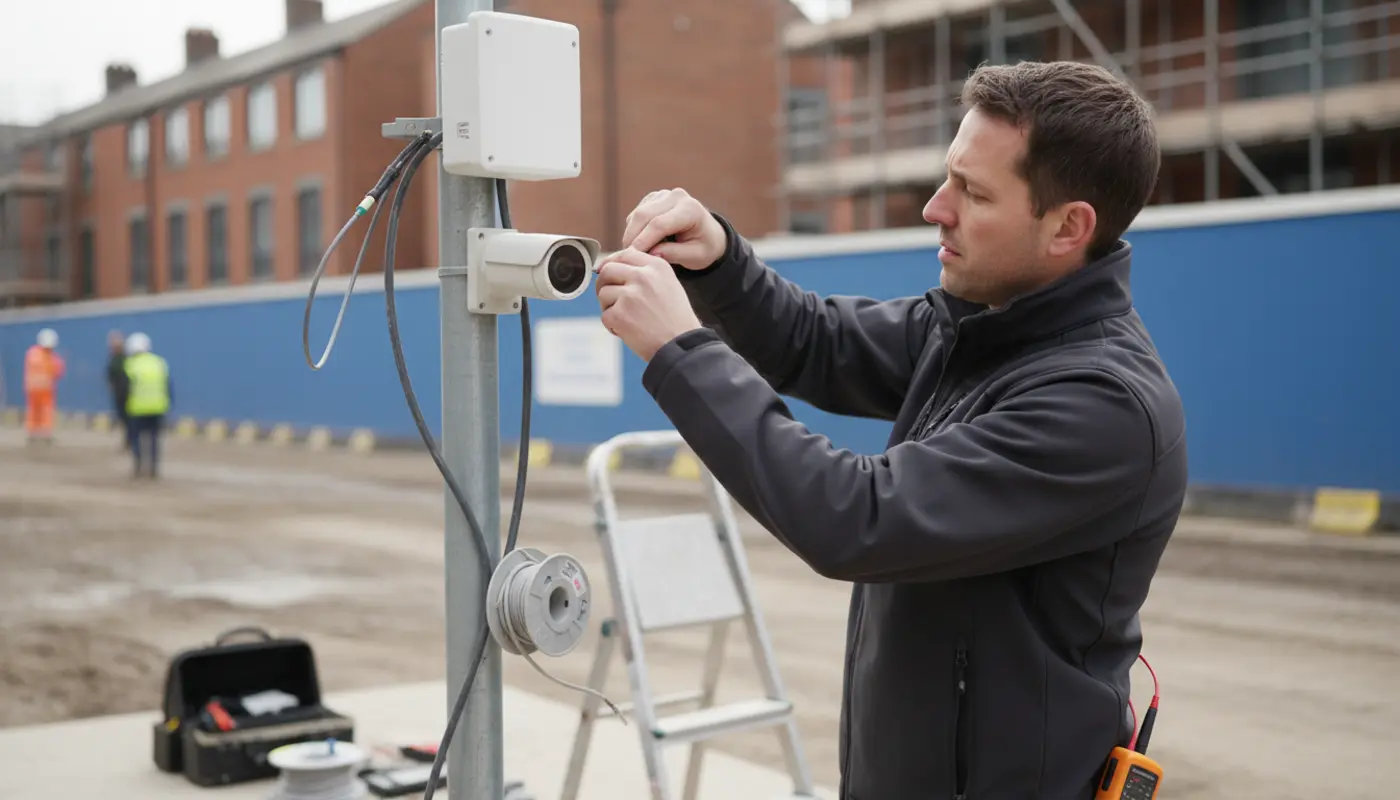
Walk the site before any cameras are installed and look at it in the same way an opportunist might. Check boundary fencing, blind spots, scaffolding access, vehicle routes, dark corners, delivery zones and areas where tools or materials are stored overnight. If the site changes every few weeks, which construction sites often do, build flexibility into the CCTV design from day one.
Your risk assessment should identify the most vulnerable points, including site entrances, temporary gates, plant and machinery storage, fuel tanks, generators, material compounds and welfare units. It should also note nearby homes, public footpaths and neighbouring businesses, because cameras should not record areas that are not needed for site security.
UK GDPR And CCTV Law
CCTV footage can count as personal data when it identifies workers, visitors, delivery drivers or members of the public. That means your business may be a data controller under UK GDPR and the Data Protection Act 2018, with duties for how footage is collected, stored, viewed and deleted.
For most construction sites, the lawful basis for CCTV is likely to be legitimate interests, such as preventing crime, protecting valuable plant and supporting site safety. You still need to show that CCTV is necessary and fair, which means you should not record more than you need, keep footage for too long or use recordings for a purpose that was never explained.
The Information Commissioner’s Office provides clear advice on video surveillance, and its CCTV and video surveillance guidance is a useful reference for UK businesses. It covers signage, lawful basis, access control, retention and how to respond when someone asks to see footage of themselves.
If you are already managing deadlines, deliveries and site safety, CCTV compliance can feel like one more job on a long list. Getting it right early can save a lot of trouble later.
ICO CCTV Guidance On Signs And Transparency
CCTV signage is not just a finishing touch. It is a legal expectation when people may be recorded, and signs should be visible, readable and placed before someone enters an area covered by cameras.
A good construction site CCTV sign should say that CCTV is in operation, explain the purpose such as crime prevention and site safety, name the organisation responsible and give contact details for queries. Put signs at all site entrances, on perimeter hoarding where cameras cover public facing areas and near internal points where visitors or contractors may enter monitored zones.
Do not hide signs behind gates, skips or stacks of bricks. If someone needs to search around to find your CCTV notice, it is not doing its job. Clear signage also helps deter thieves because it tells them the site is actively protected.
Weatherproof And Vandal Resistant Cameras
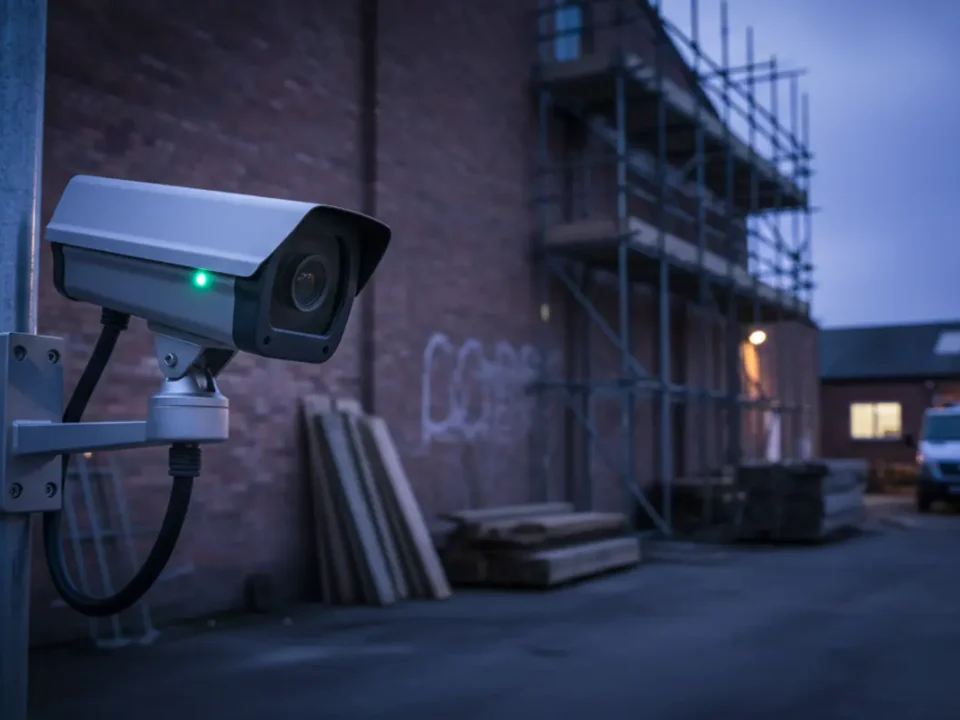
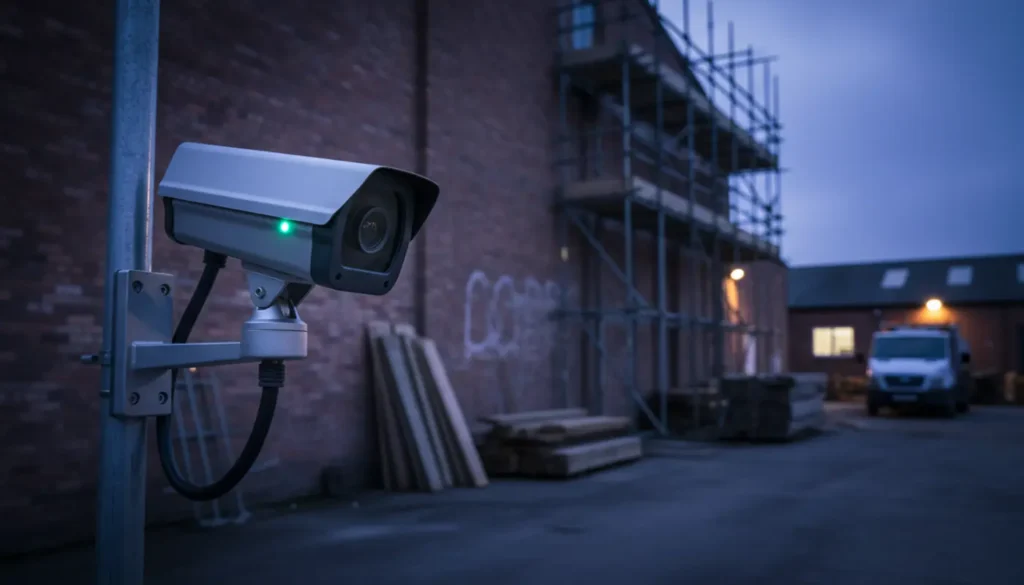
Construction sites need cameras that can cope with British weather, dust, vibration and the odd knock from machinery. Look for weatherproof IP rated security cameras, where the IP rating tells you how well the camera housing resists dust and water. For outdoor construction use, strong weather protection is essential because rain, wind and site grime are part of everyday conditions.
Camera housings should be vandal resistant where they are within reach, and recording equipment should be kept in secure lockable cabinets or protected control units. HD colour recording, low light performance, infrared night vision and good handling of bright headlights are especially useful for entrances and vehicle routes.
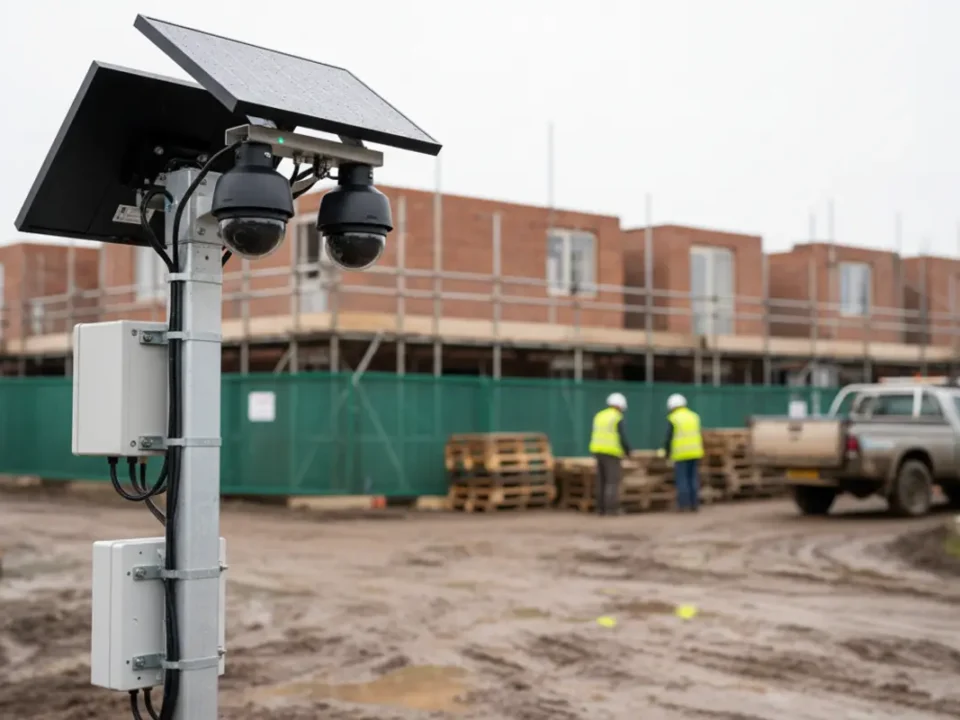
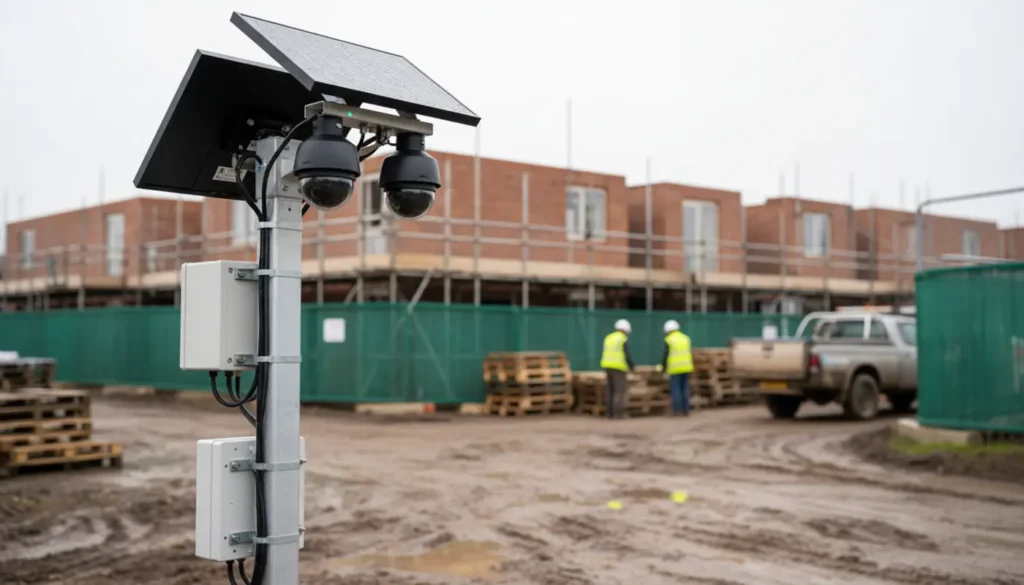
You may also want a mix of fixed cameras, pan tilt zoom cameras and temporary CCTV towers depending on the size and layout of the site. Fixed cameras are ideal for gates and compounds, while movable towers can follow the project as higher risk areas shift during each phase.
Construction Site CCTV Camera Placement
The strongest CCTV design starts with the places where loss or danger is most likely. Site entrances should capture clear images of people and vehicles coming in and out, ideally with views that support identification without recording unnecessary areas outside your boundary.
Plant and machinery zones need strong coverage because excavators, dumpers, telehandlers and specialist tools are expensive, mobile and attractive to organised thieves. Fuel tanks and generators also deserve attention, especially on remote sites where theft can stop work before the first brew of the morning.
Material compounds, delivery zones and laydown areas should be monitored because copper, timber, steel and high value fixtures can disappear quickly when a site is quiet. For a deeper look at why these systems matter throughout a project, see why construction site security cameras are important.
Solar Power, Battery Backup And 4G Monitoring
Not every construction site has reliable mains power, especially during early groundworks or remote projects. Solar powered CCTV and battery backed units can keep cameras running when cables are impractical, temporary supplies are not ready or power gets cut.
Good power planning matters because a camera that stops working at midnight will not help much at 2 am. Check battery capacity, likely winter sunlight, backup runtime and how often units need inspection. A professional installer should size the system around real site conditions, not a sunny brochure photograph taken somewhere far warmer than the North West in February.
4G monitored CCTV systems are now a popular choice for UK construction sites because they can send live footage and alerts without fixed broadband. When motion detection or virtual tripwires pick up activity after hours, alerts can go to a remote monitoring centre, site manager or nominated response team.
Whether your site needs monitored CCTV or recorded only coverage depends on risk, location, working hours and insurer requirements. Where police response is required, a Police Response URN may be needed, and eligibility is normally linked to compliant monitoring arrangements through an SSAIB certified and Insurance Approved provider.
Secure Footage And Limited Access
CCTV footage should only be available to people who genuinely need it. That normally means authorised managers, the security provider and any monitoring centre staff involved in protecting the site. Avoid open access, shared passwords or leaving recordings on an unsecured laptop in the site office, because it creates avoidable data protection and security risks.
Set a retention period before the system goes live. Many sites use a limited period such as 30 days unless footage is needed for an incident, insurance claim or police investigation. Whatever period you choose, document it and make sure footage is deleted securely when it is no longer needed.
If someone asks to see footage of themselves, you must have a process for handling that request under data protection rules. You may need to blur other people, check whether disclosure could affect an investigation and respond within the required timescale. Keeping a simple CCTV log makes life much easier when questions arise.
Police Guidance And Insurer Requirements
Secured by Design is a police backed initiative that promotes security measures designed to reduce crime. For construction projects, its principles can help with camera placement, lighting, access routes, boundary protection and the use of temporary CCTV during the construction phase.
For larger or higher risk schemes, it can be worth speaking with local police Designing Out Crime Officers early in the planning stage. They may highlight issues that are easy to miss, such as weak boundary lines, hidden approach routes or poorly lit compounds.
Your insurer may also have expectations around construction site CCTV, monitored alarms, plant protection and key control. Share the risk assessment, camera layout and monitoring arrangements with them before installation, because compliant security can support insurance discussions and reduce unwanted surprises after an incident.
CCTV Maintenance And Footage Audits
CCTV is not a fit and forget system, especially on a site where dust, weather, vibration and changing layouts can affect performance. Schedule regular checks to make sure cameras are clean, focused, recording correctly and still pointing at the right areas.
Maintenance should include checking power units, solar panels, battery status, 4G signal strength, firmware updates, time and date stamps, alert rules and storage capacity. If the system integrates with intruder detection, EN 50131 should be considered, commonly Grade 2 or Grade 3 depending on site risk, especially where alarms and CCTV are used together for confirmed response.
For CCTV system design and performance, BS EN 62676 may also be relevant, especially on higher risk or insurer led projects. This standard helps set good practice for video surveillance systems, including image quality, system design and recording performance.
Run footage audits throughout the project to confirm that recordings are usable and that access is controlled. A weekly visual check and a more detailed monthly review can prevent the common problem of finding out too late that a camera was blocked by scaffolding.
Construction Site CCTV Checklist
A clear checklist keeps the project practical and helps prove that CCTV was planned properly. Use it during installation, handover and project phase changes, especially when the site layout shifts or new assets arrive.
- Complete a site risk assessment before cameras are installed.
- Identify entrances, plant zones, fuel tanks, compounds and blind spots.
- Document your lawful basis for CCTV under UK GDPR.
- Carry out a DPIA where surveillance may create higher privacy risks.
- Install visible CCTV signs at entrances and monitored areas.
- Use weatherproof IP rated and vandal resistant cameras outdoors.
- Add solar power, battery backup or 4G where mains and broadband are unavailable.
- Limit who can view live footage and recordings.
- Set a clear retention period and deletion process.
- Test cameras, alerts, storage and remote monitoring regularly.
Final Thoughts
The safest way to secure a construction site with CCTV cameras is to treat security as part of the project plan, not as an afterthought. A well designed system protects assets, supports safety, deters intruders and helps your team respond quickly when something does not look right.
In 2026, construction site CCTV also needs to be legally sound, with clear signage, limited coverage, secure storage and proper documentation. Get the basics right early, keep reviewing the system as the site changes and you will have CCTV that works hard without creating compliance headaches.