Access Control for Colleges in the North West

Access Control In The North West
Access control in the North West helps colleges protect students, staff and visitors by making sure only approved people can enter the right areas at the right time. For estates teams, safeguarding leads and senior leaders, it supports duty of care, visitor control, incident review, fire safety planning and insurance expectations, not just the day to day use of door readers and ID cards. A well planned system also gives busy college teams a clear way to manage access through a trusted partner such as iSecurity Solutions.
College Access Control For Safer Campuses
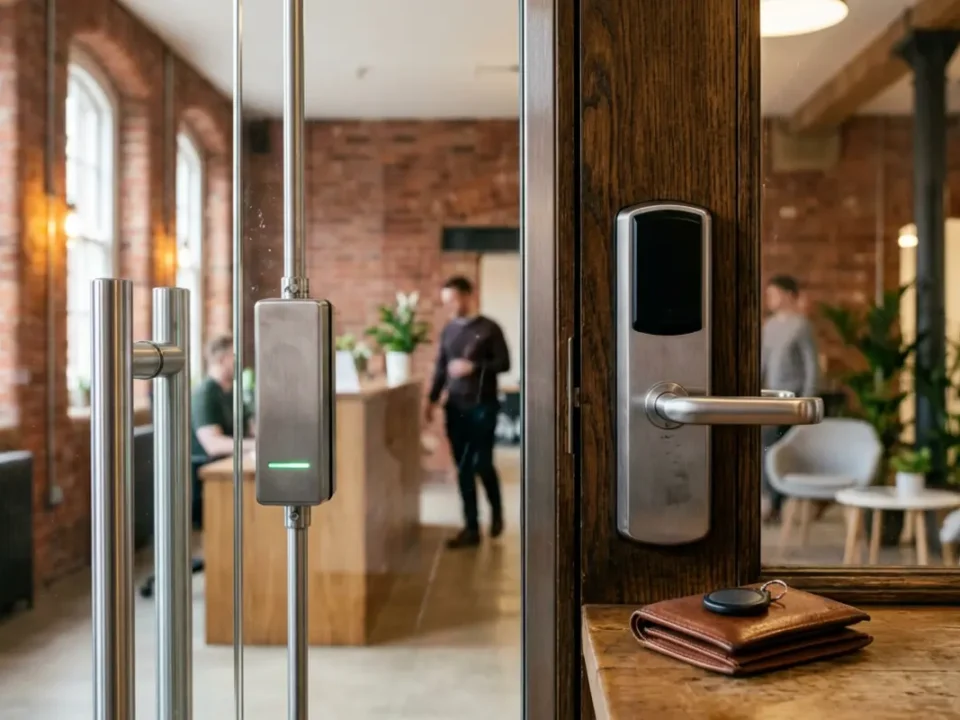
College access control gives education sites a practical way to manage main entrances, teaching blocks, workshops, staff rooms, visitor routes and restricted spaces. It can use student ID cards, staff passes, visitor badges, contractor permissions and time based rules, so each person has access that matches their role, timetable and reason for being on site.

North West colleges often manage mixed estates across Greater Manchester, Merseyside, Lancashire, Cheshire and Cumbria, including main campuses, training centres, workshops and shared community buildings. The challenge is to keep the campus friendly and open enough for learning, while stopping unauthorised movement through areas where students, records, equipment or staff need extra protection.
iSecurity Solutions is a trusted UK provider of commercial and domestic security systems, helping homes, colleges and businesses stay protected around the clock. From CCTV and intruder alarms to fire safety, access control and construction site monitoring, the team designs reliable, tailored systems backed by responsive service and modern remotely monitored technology.
Why Access Control Matters For Colleges
Modern access control helps colleges control who can enter buildings, when they can enter and which rooms they can use. In a live college setting, this is especially useful during enrolment, exams, evening classes, open days, term breaks and planned maintenance, when different groups need different access at different times.
The Department for Education explains that good access control is a key part of school and college security, particularly where visitors must not enter buildings without being acknowledged. Colleges can review the official position in the DfE school and college security guidance, which highlights access control, incident planning and clear site security procedures.
A centralised system is especially useful for colleges with more than one campus because authorised staff can update permissions from one place. That means a lost card can be cancelled quickly, a new starter can be added without delay and temporary access can be given without handing out keys that may not come back.
Regulatory Drivers For College Access Control
Access control decisions in colleges are shaped by safeguarding duties, the Prevent duty, DfE security guidance, fire safety law, insurance expectations and local risk assessments. In simple terms, colleges need to know who is on site, why they are there and whether they should be able to access certain areas.
Safeguarding sits at the centre of college security. A college may have open receptions, public events and adult learners arriving at different times, yet it still has clear responsibilities towards young people, vulnerable learners, staff and visitors. Access control supports those responsibilities by reducing unplanned movement through teaching blocks, keeping visitors visible and helping staff challenge people who are in the wrong place.
The Prevent duty also matters, especially for further education and higher education style campuses that host external speakers, community events and evening activities. Access control does not replace safeguarding judgement, but it helps colleges apply risk assessments by limiting event access, issuing temporary visitor permissions and keeping clear audit trails for controlled spaces.
For event planning, this may mean giving approved guests access to one lecture theatre only, setting time limits for community use, keeping external speakers away from staff areas and making sure public evening activities do not open the whole campus by accident. The official Prevent duty guidance is useful when colleges are reviewing how site access supports wider safeguarding decisions.
Fire safety must be designed from the start. Fire alarm systems for colleges should follow BS 5839, often with L1 or L2 category coverage depending on the site risk, building layout and any sleeping or higher risk areas. Fire risk assessments should also follow PAS 79 principles and consider how electronic locks, access controlled doors and escape routes work during an emergency.
Types Of Access Control Systems For College Campuses
Colleges can choose from card, fob, keypad, biometric and mobile access systems, depending on the level of risk and how each area is used. Most campuses use a mix of these options, with simple credentials for everyday movement and stronger checks for sensitive rooms such as server rooms, science labs, exam stores and finance areas.
- Cards and fobs work well for students, staff and regular contractors because they are quick to issue and easy to cancel.
- Keypads can suit low risk internal rooms when codes are changed often and not shared widely.
- Biometric access can support sensitive rooms where stronger identity checks are needed.
- Mobile credentials can be useful for staff and learners who already use smartphones.
Card and fob systems remain the everyday workhorse for many colleges because they are familiar, fast and simple to manage. A lost card can be blocked in seconds, permissions can be changed for a new timetable and different access rights can be set for students, teaching staff, cleaners, contractors and governors.
Keypad and PIN entry can still be useful for low risk internal doors or occasional access areas, but colleges need to manage codes properly. If one PIN is shared across a department for years, it stops being a strong control and becomes a campus secret that too many people know.
Biometric access, such as fingerprint or face recognition, can provide stronger identity checks for sensitive areas. Colleges should still think carefully about privacy, consent, alternative access for people who cannot use biometrics and the data protection impact of storing biometric templates.
Mobile credentials are becoming more common because many staff and students already use smartphones every day. They can use Bluetooth or NFC to open doors, but colleges should plan for flat batteries, lost phones, learners without suitable devices and a simple fallback process during bad weather or busy arrival times.
If your college is comparing options, the practical differences between credentials are explained further in key fob smart card biometric and app access control, which is useful when deciding what should be used on main entrances, teaching spaces and higher risk rooms.
Managing Multi Building And Multi Site Campuses
Access control for multi building colleges needs to work across teaching blocks, specialist centres, workshops, sports areas, staff offices and shared community spaces. A central platform helps estates and authorised managers update access permissions without visiting every building separately.
Good design starts with estate mapping. Colleges should list each building, entrance, shared space, restricted area, out of hours activity and user group, then create access rules around real behaviour rather than a neat plan that nobody follows once term starts.
Role based permissions are especially helpful. A construction student may need daytime access to workshops, a lecturer may need staff room and department access, a cleaner may need early morning access to several blocks and a contractor may need one week of controlled entry to a plant room.
Time based permissions also support safeguarding and cost control. Evening learners can be limited to active teaching areas, exam stores can be locked outside approved periods and unused buildings can remain secured during holidays while still allowing planned maintenance access.
Integration With CCTV Intruder Alarms And Fire Systems
Access control works best when it connects with wider security systems, especially CCTV. When a door event links to camera footage, staff can quickly see who used a door, whether a card was passed to someone else and what happened before or after an incident.
Where monitored CCTV is used for out of hours protection, colleges should consider how events are handled by a monitoring centre and whether escalation could support a Police Response URN where applicable. If CCTV is linked with alarm detection, the wider alarm design should align with EN 50131 Grade 2 or Grade 3 based on risk, with SSAIB Certified and Insurance Approved installation often being the usual route for Police Response URN eligibility.
Intruder alarms are another important part of campus protection, particularly for buildings with IT equipment, workshops, catering areas or high value teaching resources. An integrated intruder alarm system can arm or disarm selected zones based on approved access events, while EN 50131 Grade 2 or Grade 3 design supports a stronger insurance position and Police Response URN planning.
Fire integration needs careful design because security must never trap people inside a building. Electronic locks should be linked with fire alarm cause and effect where needed, while emergency lighting should comply with BS 5266, including monthly functional checks and annual full duration testing.
Fail safe locks release when power is lost, which can support safe escape routes. Fail secure locks stay locked when power fails, which can protect higher risk areas, but they must be designed carefully so people can still escape safely in an emergency. Where door release systems are connected to fire alarms, BS 7273 part 4 should be considered as part of the design.
Colleges also need to consider wider fire equipment and records, especially where access controlled areas include labs, kitchens or workshops. Fire extinguishers should be maintained to BS 5306 and BAFE SP101, with an annual service certificate often required by insurers, while fire safety planning should make sure doors, escape routes and emergency releases are tested together.
Visitor Management And Controlled Entry
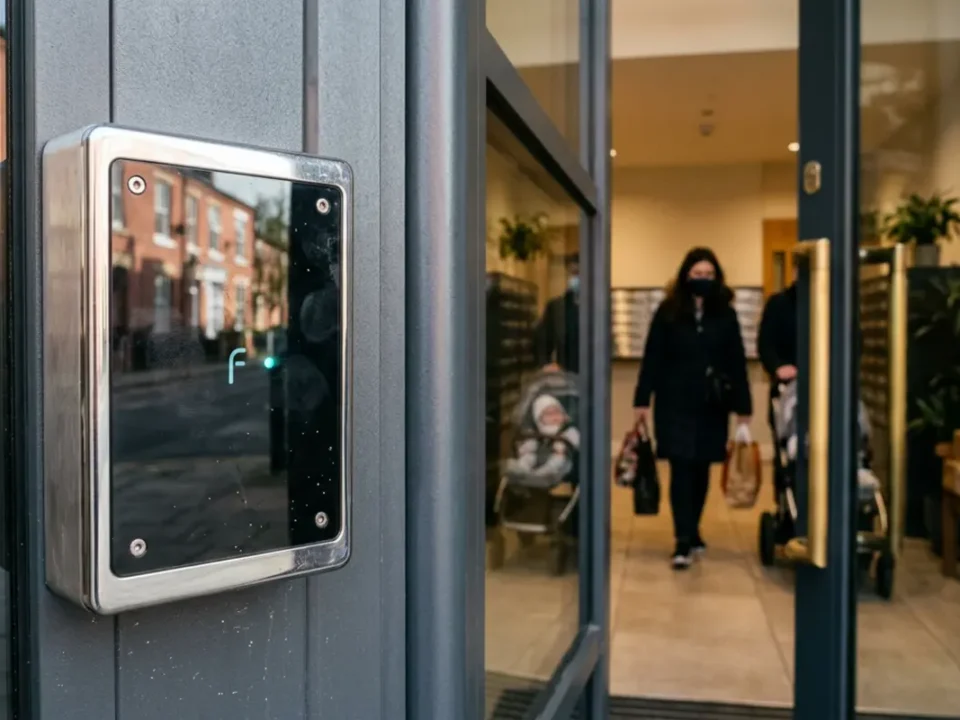
Visitor management is where access control becomes very visible to staff, students, parents and guests. A strong process should make it much harder for visitors to move beyond reception without approval, while still keeping the welcome friendly and professional.
- Reception sign in with clear ID checks.
- Host approval before access is granted.
- Visible visitor badges with agreed access areas.
- Supervision rules for visitors who need to enter teaching spaces.
- A record of when each visitor leaves site.
Digital visitor systems can replace paper books and make the process quicker, cleaner and more useful during an emergency roll call. They can print photo badges, record vehicle details, flag DBS information where appropriate and issue time limited access to agreed areas only.
For safeguarding, the key is not just recording visitors, but controlling where they can go. A visiting lecturer might access one teaching block during a scheduled session, while a contractor may need plant room access outside student hours and a parent may only need reception and a meeting room.
Zoning Restricted Areas And Student ID Integration
Zoning helps colleges avoid treating the whole campus as one open space. It separates public, teaching, staff only, operational and high risk areas, so access permissions can match the level of risk in each part of the estate.
- Public areas such as reception and visitor waiting spaces.
- General teaching spaces used by students and staff.
- Staff only areas such as offices, staff rooms and records rooms.
- Higher risk areas such as labs, server rooms and exam stores.
- Operational areas such as kitchens, plant rooms and maintenance spaces.
Low risk areas may only need card access and CCTV coverage, while medium risk staff areas may need card plus PIN outside normal hours. High risk areas, such as server rooms and exam storage, may justify stronger controls such as biometric access, dual authorisation or tighter time schedules.
Student ID card integration can make access control easier to use and cheaper to run over time. The same credential can support library borrowing, printing, catering, attendance recording and building access, as long as the college has clear policies on data use, retention and privacy.
That joined up approach is useful, but it should not become a data grab. Colleges should only collect information they need, explain how access logs are used and make sure permissions are removed quickly when a student leaves, a staff member changes role or a contractor completes work.
Choosing A North West Installer In 2026
Colleges should choose a North West access control installer with education experience, strong documentation, clear training, reliable support and the ability to integrate access control with CCTV, alarms, visitor systems and fire interfaces. It is also sensible to ask for examples of similar work across colleges, schools or universities, especially where multiple buildings and live teaching environments were involved.
- Education sector experience across live campus environments.
- Clear door schedules, drawings and handover records.
- Practical training for reception, estates and safeguarding teams.
- Reliable support for faults, changes and term time pressure points.
- Integration knowledge across CCTV, alarms, visitor systems and fire interfaces.
Accreditation matters because insurers and governors often want evidence that systems are designed, installed and maintained properly. Many colleges look for SSAIB Certified and Insurance Approved companies, particularly where intruder alarms, monitored CCTV or perimeter detection may need Police Response URN support after the required certification process.
Handover should include as fitted drawings, door schedules, user training, admin guidance, test records and a clear maintenance plan. Where systems rely on networks, colleges should also ask about resilient cabling, secure software access and backup procedures, so the system remains dependable during busy enrolment periods.
Maintenance Software Updates And Scalability
Access control is not a fit and forget system, especially on a campus where hundreds or thousands of credentials may change each year. Planned maintenance should check readers, locks, door closers, controllers, power supplies, backup batteries, emergency releases and software health.
- Check readers, locks, controllers and door closers.
- Test emergency releases and fire alarm interfaces.
- Review backup batteries and power supplies.
- Remove old users and update access permissions.
- Install software updates and review administrator access.
Software updates are just as important as physical checks. Colleges should keep systems patched, remove old users, review administrator rights and check that access groups still match current departments, timetables and safeguarding arrangements.
A scalable system helps colleges grow without starting again every few years. That means choosing platforms that can add new doors, campuses, credentials, integrations and reports as student numbers change or new buildings are opened.
For colleges wanting ongoing help rather than a one off installation, structured service contracts can keep systems tested, updated and ready for audits, inspections and everyday campus life.
Final Thoughts For North West Colleges
Access control for colleges in the North West should be practical, compliant and simple enough for busy teams to manage. The best systems support safeguarding, Prevent duty risk management, fire safety, visitor control and day to day teaching without making campus life feel cold or complicated.
By combining clear policies with the right mix of cards, fobs, mobile credentials, visitor badges, CCTV links, alarm integration and regular maintenance, colleges can create a safer environment for students, staff and visitors. iSecurity Solutions designs education focused systems that help colleges protect people, manage risk and stay ready for the demands of 2026 and beyond.