Cctv Installation for Pharmacies in Greater Manchester
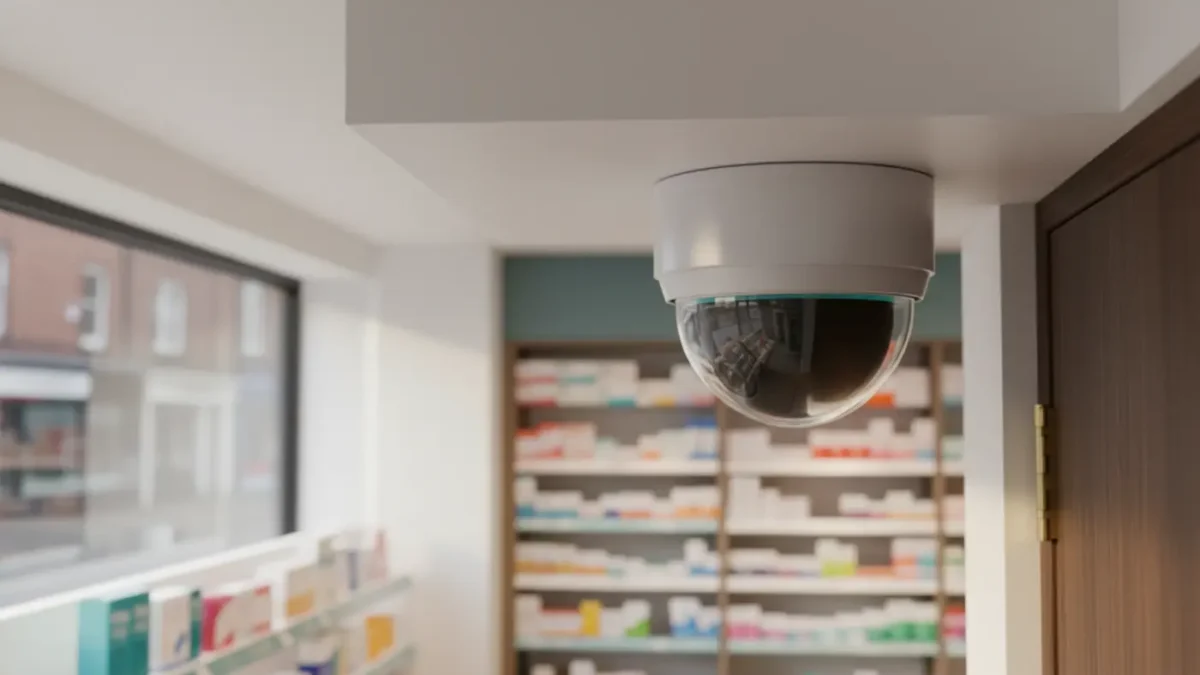
CCTV Installation For Pharmacies In Greater Manchester
If you run a pharmacy in Greater Manchester, security is no longer just about stopping the occasional shoplifter. It is about protecting controlled drugs, keeping your team safe, meeting NHS expectations and staying compliant with UK data protection law. With retail crime rising across the region, pharmacy owners are under real pressure to strengthen protection while still maintaining patient trust and confidentiality.
Recent GOV.UK crime outcomes statistics show that shoplifting remains a serious issue across England and Wales. Cases supported by clear CCTV evidence are more likely to lead to charges. For community pharmacies handling high value stock and controlled drugs, reliable surveillance can make the difference between a frustrating loss and a successful prosecution.
At iSecurity Solutions, a trusted UK provider of commercial and domestic security systems, we support pharmacies across Greater Manchester with tailored CCTV systems that are compliant, discreet and effective. The focus is simple. Protect people, medicines and premises without making your pharmacy feel unwelcoming or intrusive.
Why Pharmacy Crime Is A Growing Concern In Greater Manchester
Pharmacies face different risks compared to most retail shops. Alongside everyday shoplifting, there is the added threat of prescription medication theft, targeted burglary for controlled drugs and, sadly, aggression towards staff. In busy areas such as Manchester, Salford and Bolton, longer opening hours and high footfall increase exposure. Your team should feel safe at work, and a well designed CCTV system plays a key role in that.
Controlled drugs are particularly attractive to organised criminals. Even a small blind spot can lead to serious losses and regulatory scrutiny. Would your current system clearly show who accessed your dispensary if you needed to review footage tomorrow? CCTV not only deters opportunistic theft, it also provides reliable evidence during internal investigations or Home Office inspections.
UK Legal Requirements For Pharmacy CCTV
Installing CCTV in a pharmacy means complying with the Data Protection Act 2018 and following guidance from the Information Commissioner's Office. You must have a lawful reason for recording, avoid unnecessary intrusion and clearly inform customers and staff that cameras are in use.
The Surveillance Camera Code of Practice is built around transparency, proportionality and accountability. In simple terms, monitor only what is necessary for security, store footage safely, restrict access to authorised staff and set a clear retention period. Many pharmacies choose to retain footage for around 30 days unless it is needed for an investigation.
Clear signage is essential. Notices must state that CCTV is operating, identify the data controller and provide contact details. Cameras must never be installed in toilets or private changing areas. Consultation rooms should be assessed carefully so that confidential patient discussions are not recorded unnecessarily. Reviewing your signage and positioning regularly helps ensure you remain compliant.
Controlled Drugs Storage And Regulatory Expectations
Home Office guidance and MHRA expectations require pharmacies to take reasonable steps to prevent diversion and unauthorised access to controlled drugs. This includes secure cabinets or safes, limited staff access and accurate record keeping. CCTV positioned to monitor entry points to controlled drugs storage areas adds an extra layer of accountability.
Best practice is to cover the dispensary entrance, the controlled drugs cabinet area and any rear delivery or fire exit doors. Cameras should focus on who enters and exits rather than zooming in on prescription labels. This approach protects valuable stock while also respecting patient confidentiality.
For more detail on local considerations, visit CCTV for pharmacies in Greater Manchester, where controlled drug security is explained in greater depth.
NHS Pharmacy Contract And Security Expectations
NHS community pharmacy contracts place strong emphasis on safe and effective service delivery. While CCTV is not always specifically required, strong security measures support clinical governance, safeguarding and risk management responsibilities.
In practice, this means showing that you have taken sensible steps to protect medicines, confidential information and staff. CCTV supports incident reporting, discourages violence and provides evidence if a complaint or investigation arises. If an issue occurred today, would your current system provide footage clear enough to support your case?
Choosing The Right CCTV System For Pharmacy Premises
Many pharmacy owners ask whether to choose IP cameras or analogue systems. In 2026, IP CCTV systems are usually the better option because they offer higher image quality, remote viewing and easier integration with alarms and access control.
If you are weighing up the options, see IP cameras vs CCTV systems explained. In simple terms, IP systems send footage over your secure network, allowing authorised users to view images remotely. Analogue systems may cost less at the start, but they generally offer lower resolution and less flexibility over time.
For evidential quality, cameras should capture clear facial images at entrances and detailed views at the dispensary counter. Footage is typically stored on a network video recorder with encrypted hard drives. Access must be password protected and limited to trained staff so that data remains secure and compliant.
Covering Key Zones In A Community Pharmacy
Effective CCTV design begins with identifying key zones. In a typical Greater Manchester pharmacy, these include the main entrance and exit, shop floor shelving, dispensary counter, controlled drugs storage access, consultation room entrance, rear delivery doors and any car park or alleyway.
Entrances should capture clear head and shoulder images. The dispensary counter should record interactions without revealing private prescription details. Back of house areas, including stock rooms and fridges, should monitor access rather than constantly focusing on work surfaces. Reviewing your layout regularly helps identify and remove blind spots.
If your pharmacy includes a car park or rear yard, external cameras can help deter break ins and anti social behaviour. Practical positioning advice is available in where you can point CCTV cameras, helping you avoid common privacy issues.
Integration With Alarms And Remote Monitoring
CCTV is most effective when combined with a professionally installed intruder alarm. For pharmacies storing significant quantities of controlled drugs, systems should comply with EN 50131 standards. This usually means Grade 2 or Grade 3, depending on the level of risk.
If you require police response and insurer approval, installation must be carried out by an SSAIB certified and Insurance Approved provider. Without SSAIB certification, a Police Response URN cannot be issued for monitored alarms. Many pharmacy owners in Greater Manchester choose integrated CCTV and alarm systems because they allow faster response and clear visual verification during incidents.
Further information on compliant alarm systems can be found at intruder alarms for pharmacies in Manchester, especially where Grade 3 protection is recommended.
Signage And Transparency Under The Surveillance Camera Code
Signage must be clearly visible at entrances and throughout monitored areas. It should state that CCTV is in operation and provide contact details for the data controller. This approach meets legal requirements and acts as a visible deterrent.
Professional signage reassures patients that surveillance is in place for safety, not intrusion. When customers understand why cameras are installed, it helps maintain trust and confidence in your service.
Choosing A Greater Manchester Based CCTV Installer
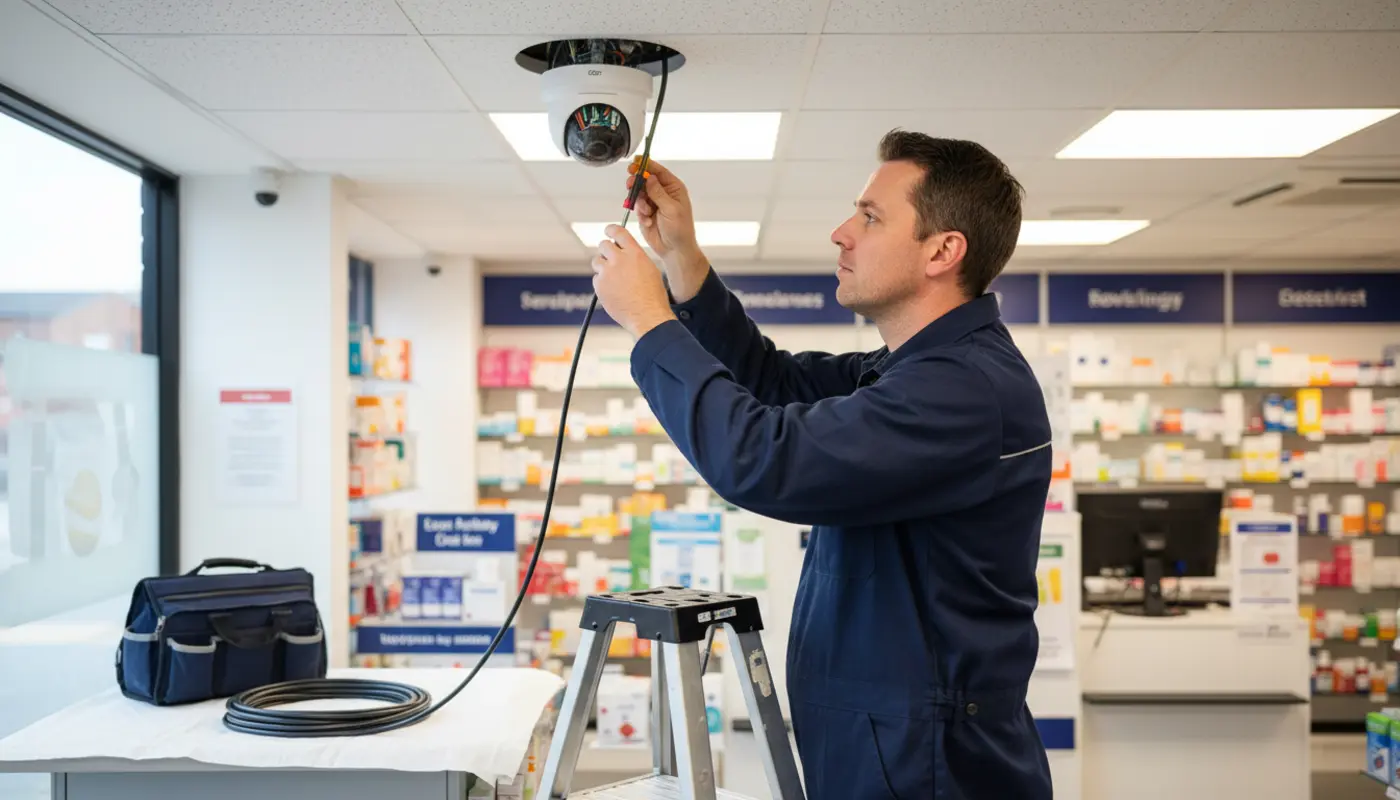
Selecting the right installer is just as important as choosing the right equipment. An SSAIB certified and Insurance Approved company demonstrates compliance with recognised standards and is often required by insurers. If your system is connected to a monitored alarm and you need a Police Response URN, SSAIB certification is essential.
Local experience also matters. A Greater Manchester based installer understands local crime trends, police procedures and borough specific considerations. Asking about previous pharmacy projects, knowledge of data protection and ongoing maintenance support can help you make a confident decision.
For long term reliability, consider a structured security maintenance contract. Regular servicing, firmware updates and documented inspections ensure your system performs properly when it is needed most.
Final Thoughts On CCTV Installation For Pharmacies In Greater Manchester
CCTV installation for pharmacies in Greater Manchester is about more than installing cameras. It is about protecting controlled drugs, supporting NHS governance, reassuring staff and patients and meeting your duties under the Data Protection Act 2018.
With careful system design, sensible zoning and SSAIB certified, Insurance Approved installation, your pharmacy can reduce risk without compromising professionalism or privacy. When security is planned properly, it feels supportive rather than intrusive. Most customers will simply see a well managed and safe environment.