Why Does My Business Need Fire Extinguishers in Manchester
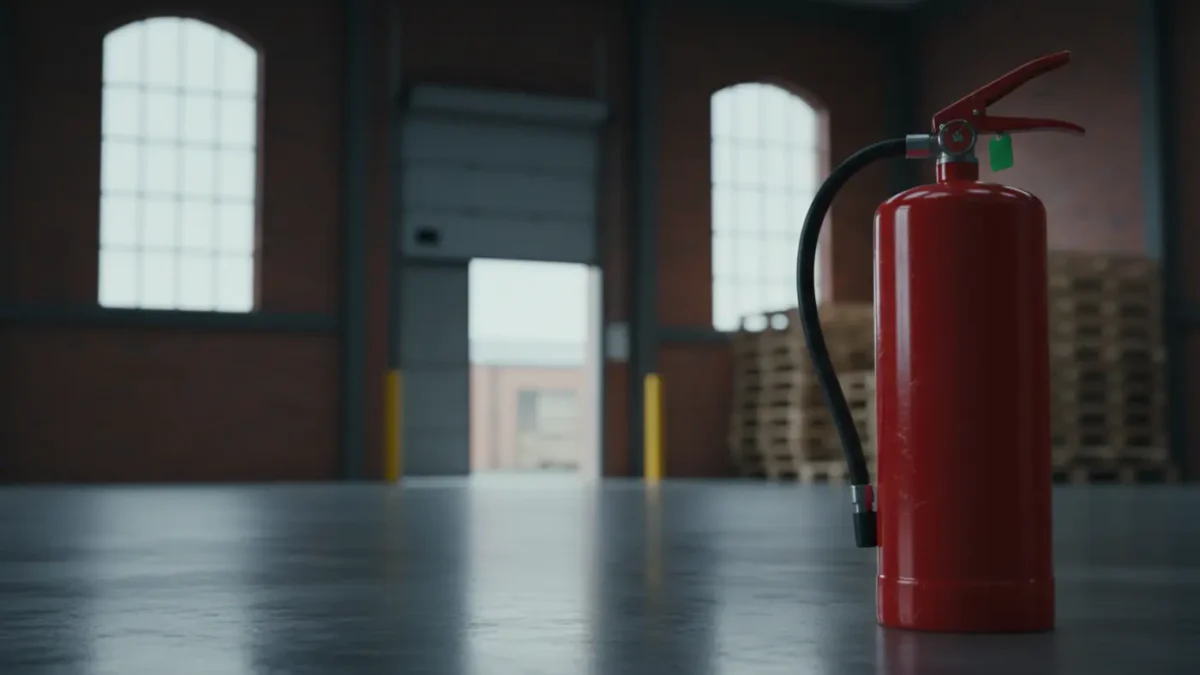
Why does your business need fire extinguishers in Manchester? In most commercial premises, they are a legal and practical part of fire safety. They help protect staff and visitors, limit damage, support insurance compliance, and show that you have taken sensible precautions under the Regulatory Reform Fire Safety Order 2005.
Fire Extinguishers In Manchester
If you run a shop, office, warehouse, cafe, salon, workshop, or other commercial premises in Manchester, fire extinguishers are usually not optional. The law expects the responsible person to provide suitable firefighting equipment where needed, and in real terms that nearly always means portable extinguishers in the right places. For a wider look at compliant fire safety solutions, it helps to start with the basics and build from there.
That matters because a small fire can become a serious incident very quickly, especially in busy workplaces with staff, customers, stock, cooking equipment, paper records, or electrical equipment. A correctly placed extinguisher can sometimes stop a minor problem before it turns into a full evacuation, costly repairs, or a difficult conversation with your insurer.
Why Businesses Need Fire Extinguishers
The main reason businesses need fire extinguishers in Manchester is simple. They help protect life, reduce property damage, and support compliance with fire safety duties placed on employers, owners, landlords, and occupiers. If you are reviewing your wider premises risk, the team at iSecurity Solutions can help make the process much easier to manage.
There is also a strong local reason to take this seriously. Greater Manchester Fire and Rescue Service can inspect business premises and take enforcement action if fire precautions are missing or poorly managed. No business wants the first proper review of its fire safety arrangements to happen during an inspection or after an incident.
For many businesses, the issue is not just legal compliance but business continuity as well. If a fire damages stock, closes your unit for weeks, or stops trading at the busiest time of year, the cost can be far greater than the price of installing and maintaining the right extinguishers. That is one reason many firms review their ongoing fire safety servicing and support at the same time.
The Legal Requirement For Fire Extinguishers
The Regulatory Reform Fire Safety Order 2005 is the main law covering fire safety in commercial premises in England. It sounds more complicated than it really is. In simple terms, it says the responsible person must take general fire precautions and provide suitable firefighting equipment where needed. Official Home Office guidance explains that it will normally be necessary to provide a suitable number of appropriate portable fire extinguishers, usually placed on escape routes and near exits.
That does not mean every building should have the same setup. The number, type, and position of extinguishers should come from your fire risk assessment. If you want a useful local explanation of that process, see fire risk assessment for businesses in Manchester, which explains how risk based decisions work in commercial settings.
The Responsible Person And Their Duty Of Care
Every business should know who the responsible person is. That might be the employer, owner, landlord, managing agent, or someone with control of the premises. They are expected to assess fire risks, put sensible precautions in place, and make sure staff and visitors are protected.
In practice, that duty of care means more than buying a red cylinder and hoping for the best. The responsible person should make sure extinguishers are suitable for the actual risks on site, easy to reach, clearly signed, and kept in proper working order. If you manage a larger site or several premises, support from dedicated business security and fire specialists can save a lot of guesswork.
Staff also need information, instruction, and training. A fire extinguisher only helps if people know when to use it, when not to use it, and when evacuation comes first. Would your team know which extinguisher to use if a small fire started in the stockroom? It is much better to answer that now than during an emergency.
Manchester Enforcement And Inspection Powers
Greater Manchester Fire and Rescue Service is an enforcing authority for the Fire Safety Order. That means it can inspect commercial premises, offer guidance, and where necessary take formal action if standards fall short. For Manchester businesses, that local enforcement role makes compliance feel very real rather than something hidden away in a government document.
During an inspection, officers may look at your fire risk assessment, extinguisher provision, maintenance records, staff training, escape routes, signage, and the general condition of the premises. The official GMFRS business safety guidance is a useful reference if you want to understand how local fire safety enforcement works.
If serious problems are found, enforcement action can include notices requiring improvements, restrictions on the use of the premises, or prosecution in more serious cases. That is why missing, unsuitable, or unmaintained extinguishers are not a minor admin issue. They can form part of a much wider compliance problem.
Insurance, Claims, And Business Interruption
Most business owners do not think much about extinguishers until they picture the aftermath of a fire. Insurers often expect you to maintain reasonable fire precautions, and that can include suitable extinguishers, servicing records, and evidence that your fire safety arrangements are being managed properly. If these basics are missing, a claim can become far more complicated at the worst possible time.
If you are already juggling staff, stock, customers, and compliance, fire safety can easily slip down the list until something forces a closer look. Extinguishers can also reduce downtime. Stopping a small bin fire, electrical fire, or packaging fire before it spreads may save your stock, equipment, and trading hours. That practical side of compliance is one reason many businesses also read up on fire extinguisher servicing rather than treating maintenance as a box ticking exercise.
Fire Risk Assessment Comes First
Your fire risk assessment is what decides which firefighting equipment is needed. For commercial premises, that means identifying fire hazards, considering who may be at risk, reviewing the precautions already in place, recording findings where required, and checking them again when things change. If you use a structured assessment method such as PAS 79, the aim is to create a clear record of hazards and controls without making the process feel more difficult than it needs to be.
A good assessment looks at the reality of your site. An office with printers, cables, and paper storage does not carry the same risks as a restaurant in central Manchester with deep fat fryers, or a warehouse filled with pallets, packaging, and loading areas. The extinguisher plan should match the actual risk, not a generic template.
Choosing Fire Extinguisher Types And Placement
Different fires need different extinguishers, which is where many business owners understandably start to switch off. The simple version is that the extinguisher type should match the materials and equipment most likely to catch fire in that area, and the placement should support safe use near escape routes in line with BS 5306 guidance and the findings of your site specific risk assessment. Once the basics are in place, staying compliant is usually much easier than people expect.
Offices And Admin Spaces
Offices usually have Class A risks such as paper, cardboard, and furniture, along with electrical equipment like monitors, servers, and photocopiers. Water or foam may be suitable for ordinary combustibles, while CO2 extinguishers are commonly used near electrical equipment because they do not leave the same messy residue behind. If your office also has emergency lighting, those systems should be tested in line with BS 5266, including monthly and annual checks.
Warehouses And Industrial Units
Warehouses often have a wider mix of risks, including stored goods, packaging, timber pallets, and sometimes flammable liquids. In these environments, extinguisher coverage often needs careful zoning so the right units are available in the right places, especially near exits, plant areas, and loading points. If the site has wider security and fire support needs, a joined up approach through commercial services can make management much easier.
Hospitality And Food Premises
Restaurants, cafes, pubs, and takeaway kitchens need special attention because cooking oils create Class F fire risks. Wet chemical extinguishers are typically used for commercial kitchen oil fires, while public areas may still need other suitable extinguisher types for paper, textiles, and electrical risks. There is more sector specific detail in fire extinguishers for restaurants in Manchester.
Retail And Premises Used By Customers
Retail spaces often contain mixed risks, from packaging and display materials to lighting, tills, and stockrooms. The key is making sure extinguishers are visible, clearly signed, and not hidden behind seasonal displays or bulky shop fittings.
How Many Fire Extinguishers Does A Manchester Business Need
There is no single number that suits every premises, because layout, hazards, and floor area all matter. However, common guidance often uses a rule of thumb of one extinguisher for every 200 square metres, with at least one on each floor, alongside the need for suitable Class A cover and any extra specialist units required for higher risk areas.
That said, a rule of thumb is only a starting point. Your actual provision should follow the fire risk assessment, especially if you have kitchens, workshops, server rooms, flammable liquids, or unusual layouts. The safest answer is always the one based on your premises rather than guesswork.
Maintenance, Servicing, And Training Requirements
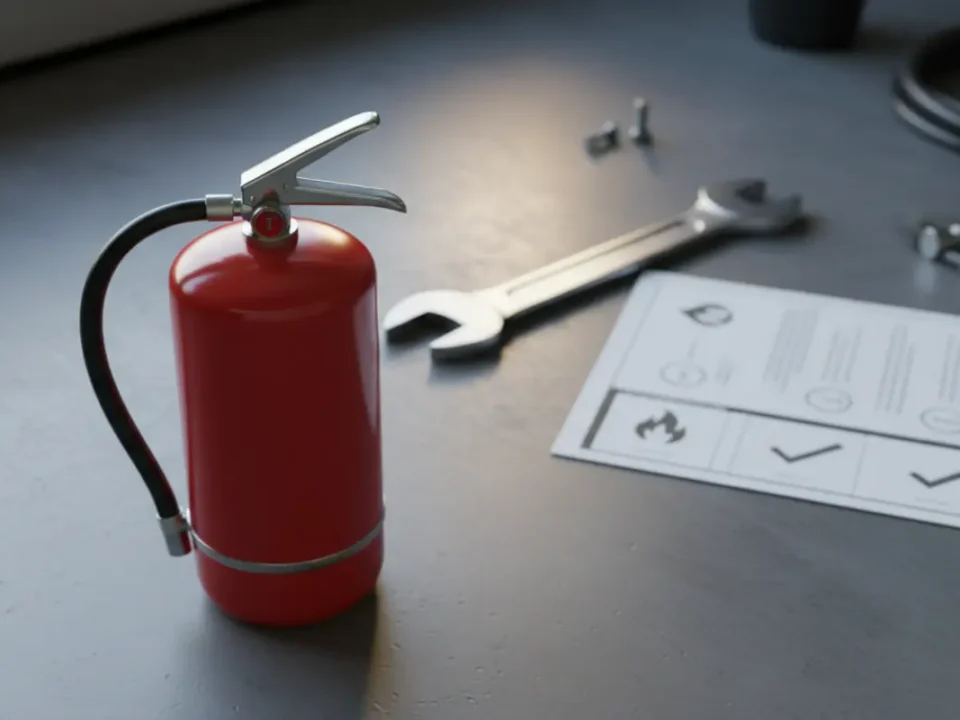
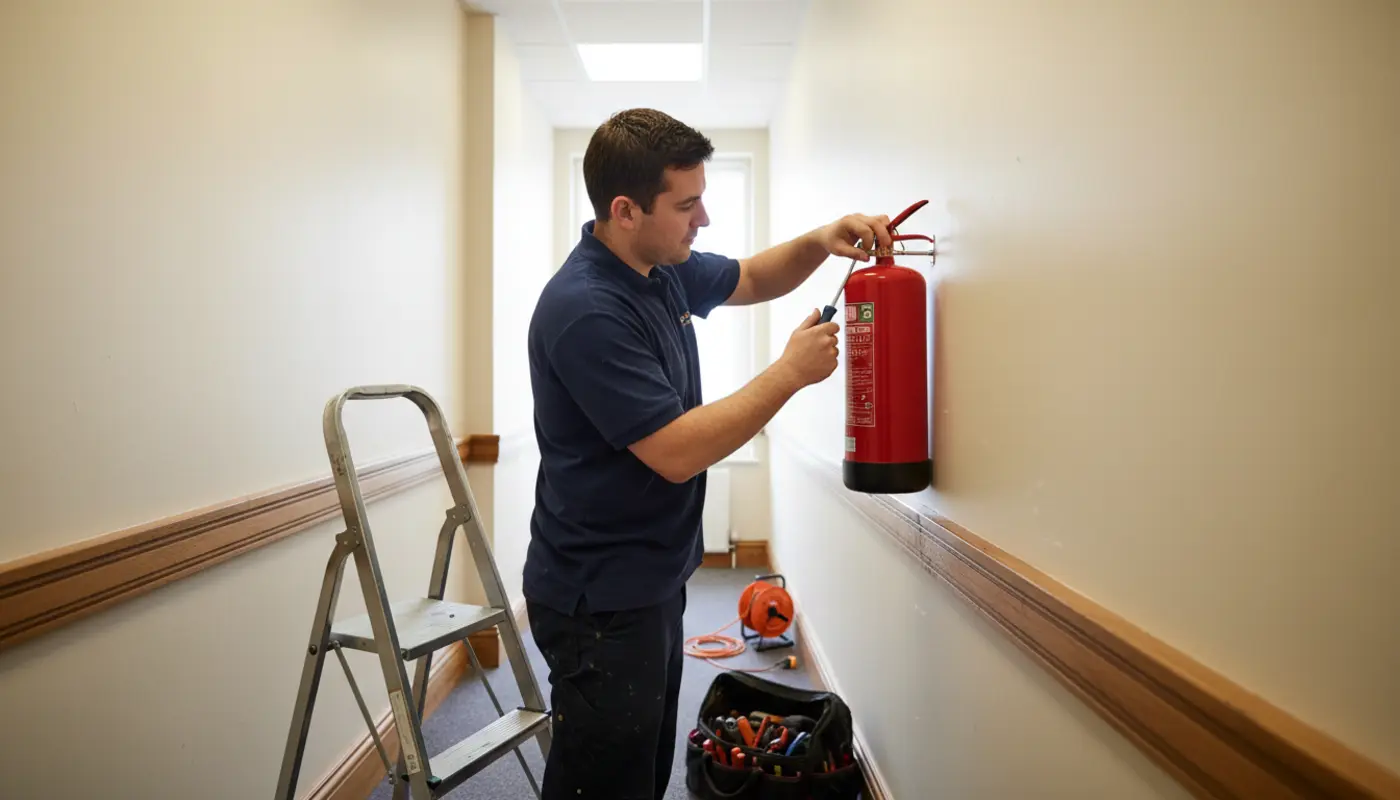
Once extinguishers are installed, the job is not finished. Under BS 5306 and BS 5306 3, extinguishers should have regular maintenance, with monthly visual checks by the responsible person and annual servicing by a competent engineer. Where extinguishers form part of your insurance evidence, annual service records under BS 5306 and BAFE SP101 are often required.
Monthly checks are fairly simple. Make sure each extinguisher is where it should be, clearly visible, not damaged, not discharged, and still has readable instructions and intact tamper indicators. These checks are quick, but they matter.
Annual servicing goes further and should be done by a competent provider. Depending on the extinguisher type, additional extended servicing or overhaul may be needed at longer intervals. Keeping the service label, certificate, and logbook updated can make life much easier if an inspector or insurer asks questions later.
Training is just as important. Staff should know the alarm procedure, evacuation route, assembly point, and the basics of extinguisher use. In many workplaces, a short induction and regular refresher training are enough to improve confidence without making the whole subject feel overwhelming.
Practical Checklist For Manchester Businesses
- Identify who the responsible person is for the premises.
- Carry out and review a suitable fire risk assessment, ideally using a structured method such as PAS 79.
- Provide the right extinguisher types for your actual risks.
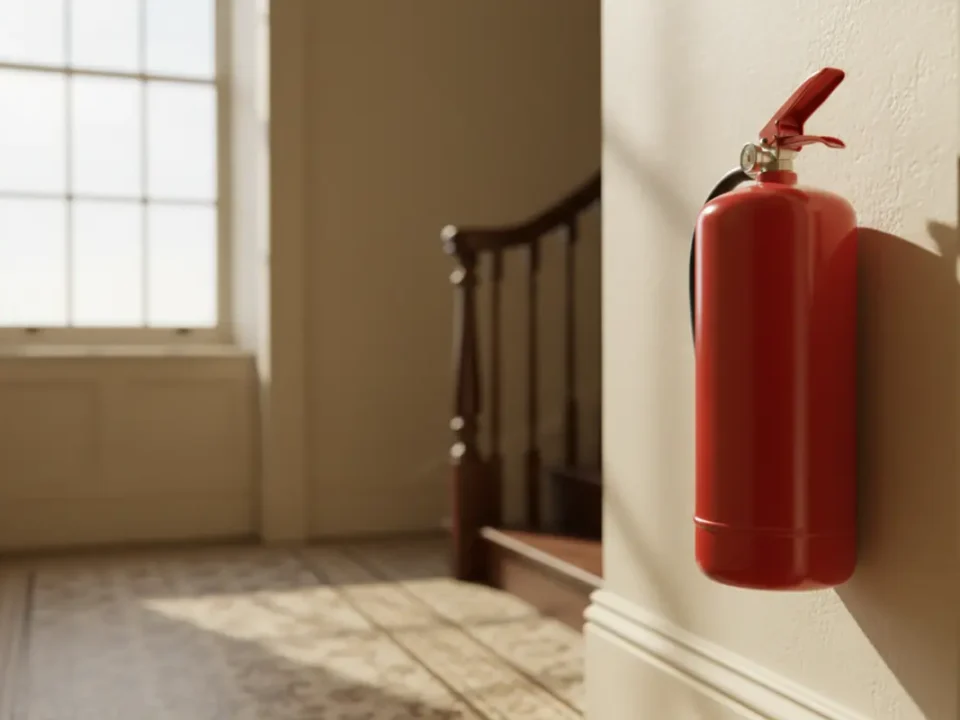
- Place extinguishers on escape routes and near exits where appropriate.
- Arrange monthly visual checks and annual servicing to BS 5306 and BAFE SP101 requirements.
- Keep records of inspections, servicing, and staff training.
- Review your wider fire precautions, including alarms to BS 5839 where relevant, often Category L1 or L2 depending on the premises type.
If your site also relies on alarm maintenance and coordinated compliance across systems, you may find useful background in our recent article on fire alarm service contracts.
For businesses that need to combine practical controls with documented assessment, there is also helpful context in our article on business fire risk assessments in Manchester.
Final Thoughts
So, why does your business need fire extinguishers in Manchester? Because they are a normal and often essential part of complying with fire safety law, protecting staff and visitors, reducing damage, supporting insurance, and helping your business recover from a small incident before it becomes a major one.
For most commercial premises, the real question is not whether extinguishers are needed, but whether they are suitable, correctly placed, properly serviced, and backed by good training and records. Get those parts right, and fire safety becomes much more manageable than it first appears.