How Mobile Cctv Improves Construction Site Security
Mobile CCTV For Construction Site Security
How does mobile CCTV improve construction site security? Mobile CCTV improves construction site security by giving UK builders visible deterrence, remote monitoring, recorded evidence, faster incident response and flexible coverage without needing fixed power, broadband or permanent camera infrastructure.
If you've ever arrived on site to find a broken gate, missing tools or damaged plant, you'll know how quickly security problems can turn into project delays. Construction sites are tempting targets because plant, tools, fuel, copper, timber and materials can be worth thousands of pounds, and many sites are quiet after dark. A break in is not just frustrating. It can delay trades, disrupt programmes, raise insurance concerns and leave the site manager with a Monday morning headache no amount of strong tea can fix.
At iSecurity Solutions, mobile CCTV is designed around real site risks, not a one size fits all box ticking exercise. As a trusted UK provider of commercial and domestic security systems, our team helps homes and businesses stay protected around the clock with CCTV, intruder alarms, fire safety, access control and construction site monitoring. The aim is simple. Protect assets, support safety, help prove what happened and give contractors practical peace of mind.
The Scale Of Construction Site Theft In The UK
UK construction sites face a steady mix of theft, vandalism, trespass and antisocial behaviour, especially during evenings, weekends and holiday shutdowns. Thieves often target items that are easy to move and quick to sell, such as power tools, cable, fuel, batteries, small plant, generators and building materials.
The real cost is often much higher than the value of the stolen item. If a digger disappears, a subcontractor cannot work, deliveries may need rearranging, labour stands idle and the project programme takes a hit. Even a stolen set of tools can stop a trade team for a day, and that delay can ripple across the whole site.
Vandalism can be just as damaging, particularly when intruders damage welfare units, smash windows, start small fires or interfere with machinery. Mobile CCTV helps by making the site look watched, recording activity and giving a monitoring team the chance to act before a minor intrusion turns into a costly incident.
What Mobile CCTV Means On A Construction Site
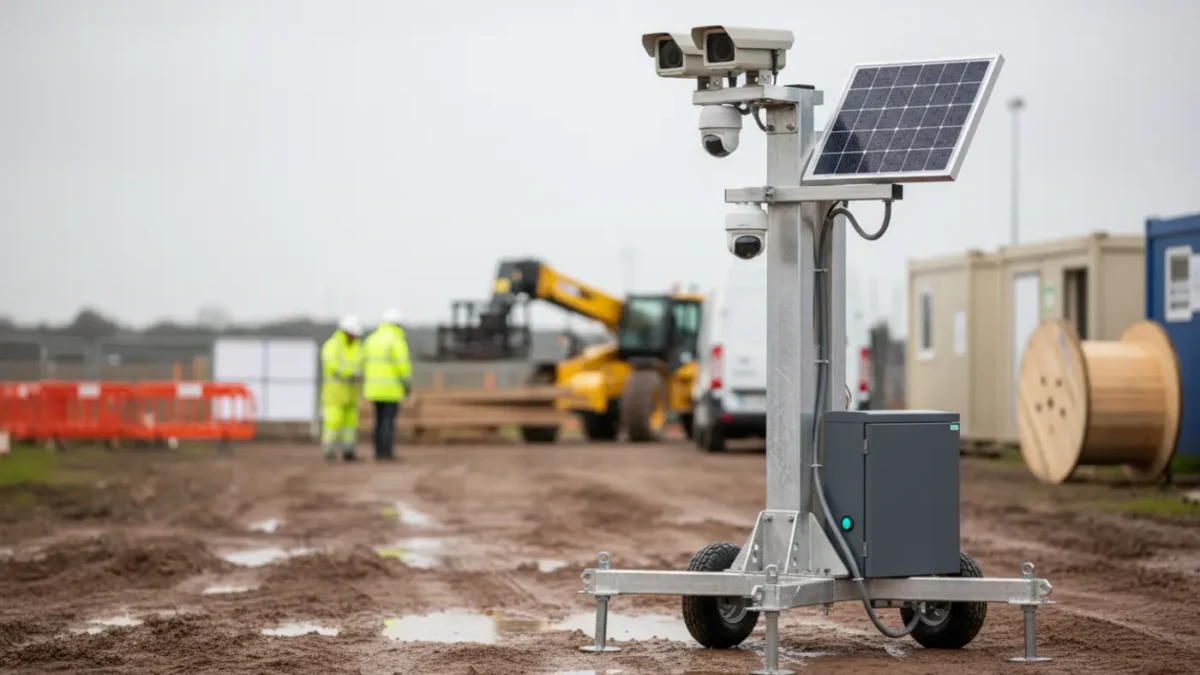
Mobile CCTV usually means temporary camera towers or trailers that can be delivered, positioned and activated quickly. A typical tower may include high definition cameras, night vision, motion detection, loudspeakers, recording equipment, solar or battery power and mobile data connectivity through 4G or 5G.
Unlike fixed CCTV, mobile towers do not need the same level of permanent cabling, building mounted brackets or established site services. That matters on live construction projects because the layout changes constantly, and the riskiest area in week four may not be the riskiest area in week twelve.
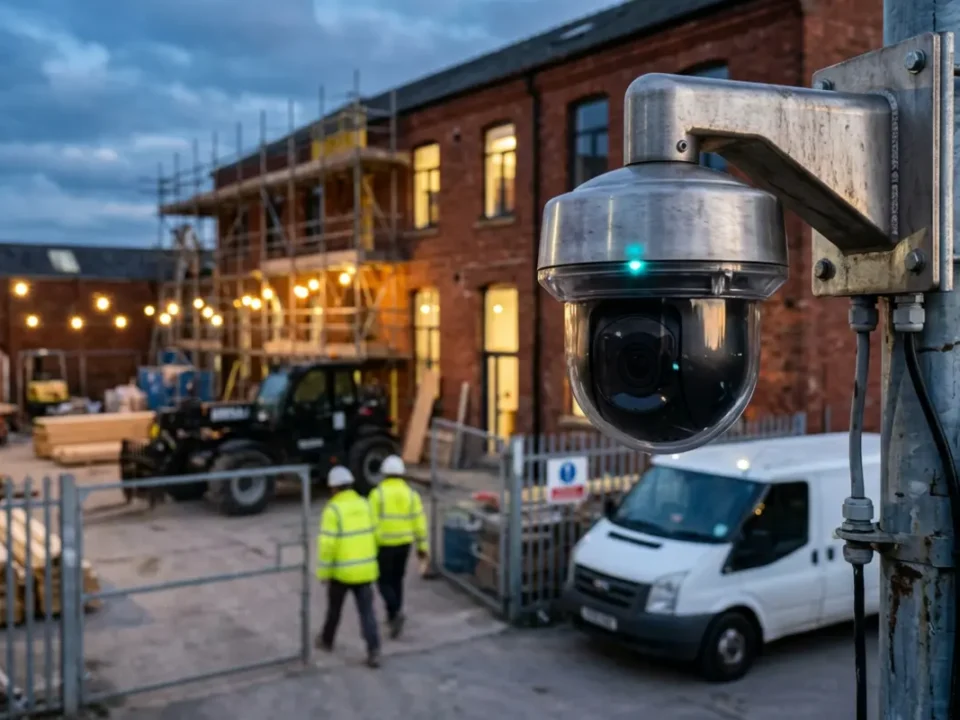
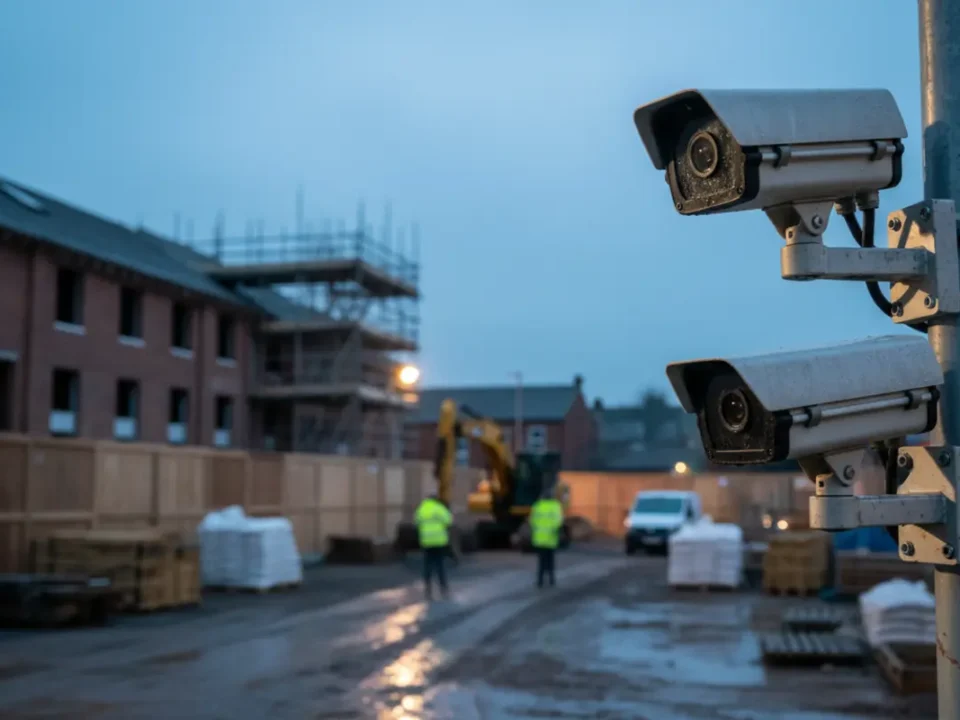
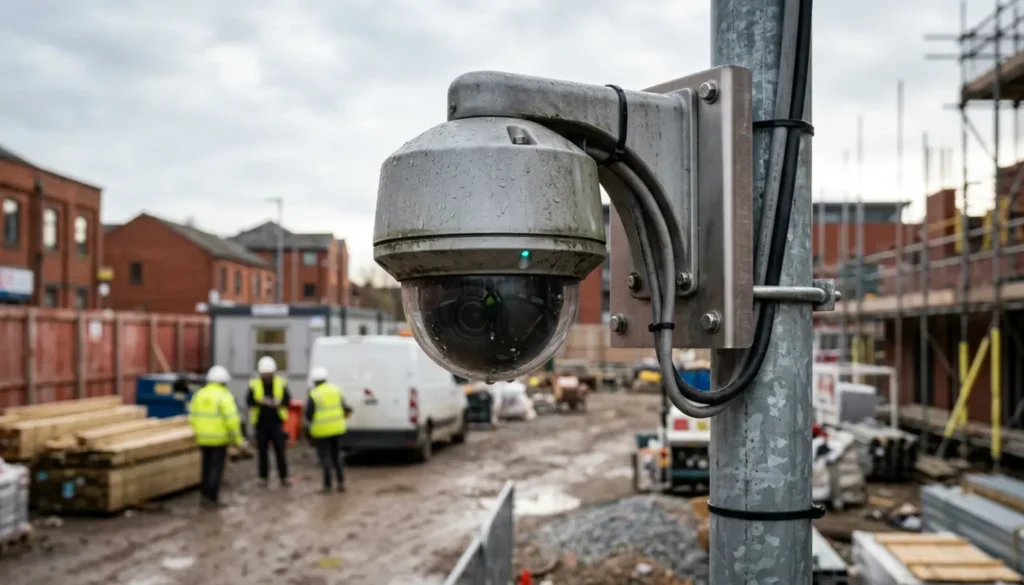
For sites needing a designed and managed approach, construction site security cameras can be planned around compounds, gates, welfare areas, scaffold lines, fuel stores and valuable materials. Good placement is half the battle because a costly camera pointing at the wrong fence will not protect the part of the site that matters most.
24 Hour Remote Monitoring And Police Response
The biggest advantage of monitored mobile CCTV is that it does not simply record trouble for someone to watch later. Detector activated CCTV uses sensors or video analytics to spot movement in protected areas, then sends an alert to a remote video monitoring centre where trained operators check the footage.
If the operator sees a genuine intrusion, they can issue an audio warning, contact the nominated keyholder, call a mobile response team or escalate to the police where the correct process is in place. For monitored CCTV and perimeter detection, a Police Response URN is important because it links a compliant system to police response protocols, with SSAIB Insurance Approved certification normally being a key prerequisite for that route.
BS 8418 is the recognised UK standard for the installation and remote monitoring of detector activated CCTV systems that are intended to support police response. It covers practical matters such as system design, alarm verification, monitoring procedures and reducing false activations. You can read the official reference through GOV.UK BS 8418 guidance.
EN 50131 is also relevant where CCTV is linked with intruder alarm detection or perimeter protection, especially when the system forms part of a wider electronic security design. On many construction sites, Grade 2 or Grade 3 risk planning may be used depending on value, exposure, insurer expectations and the likelihood of repeat attacks.
Visible Towers Deter Opportunistic Thieves
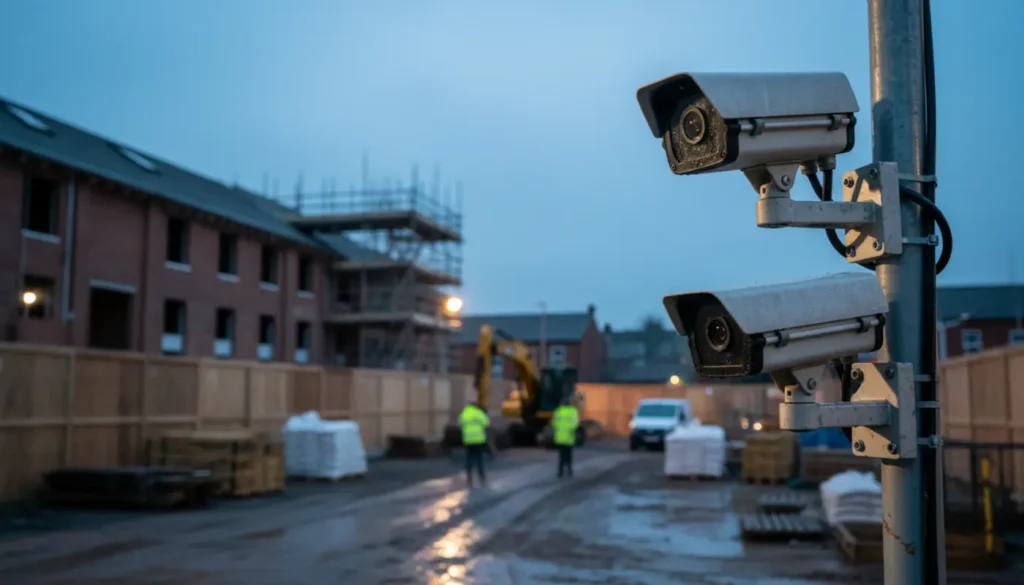
Most site thieves prefer easy, quiet and low risk targets. A tall CCTV tower with clear signage, visible cameras, lighting and speaker warnings sends a simple message. The site is being watched, and entering it is not worth the risk.
That deterrent effect matters because prevention is always cheaper than recovery. Once plant has left the site, even good footage may not bring it back quickly enough to save the programme. Visible mobile CCTV helps push opportunists towards giving up before they cut a fence, force a gate or climb into a compound.
Audio challenge is particularly useful after hours. If someone enters a protected zone and hears a live warning from a monitoring operator, it creates immediate pressure and proves that the cameras are not just decorative tubes on a pole.
Off Grid Power For Changing UK Sites
Construction sites are rarely neat, especially in early phases when there may be no mains power, no broadband and plenty of mud. Mobile CCTV suits these conditions because towers can run on solar panels, batteries, hybrid power packs or generator backup where needed.
Solar and battery systems are designed to cope with typical UK weather, although the exact setup should always be matched to camera load, monitoring hours, winter light levels and site exposure. In simple terms, more cameras, more analytics and longer dark hours mean the power plan needs proper thought.
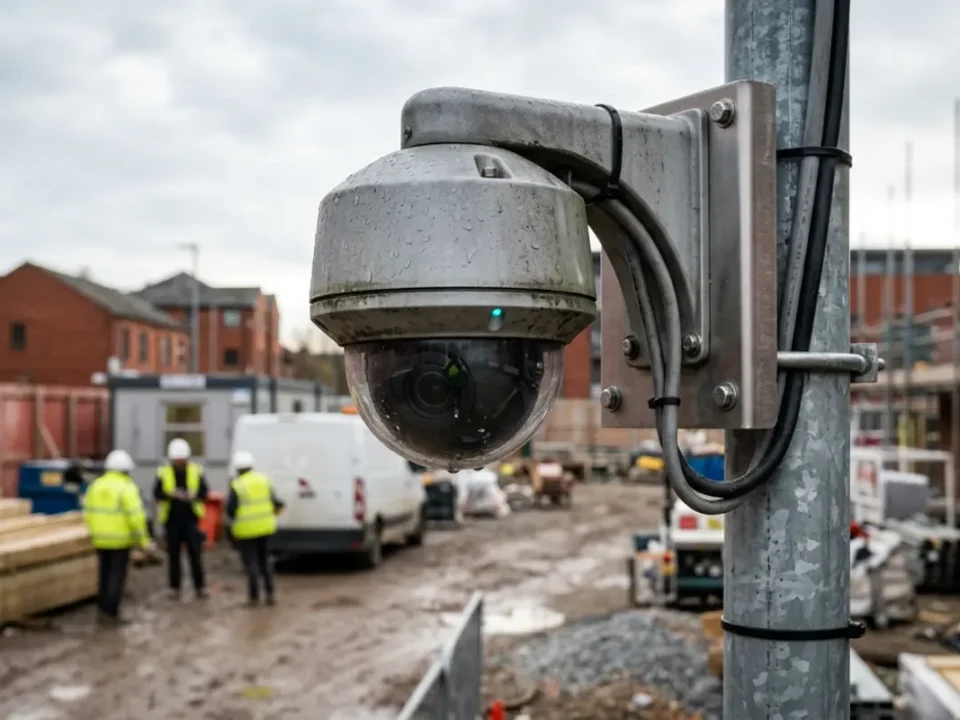
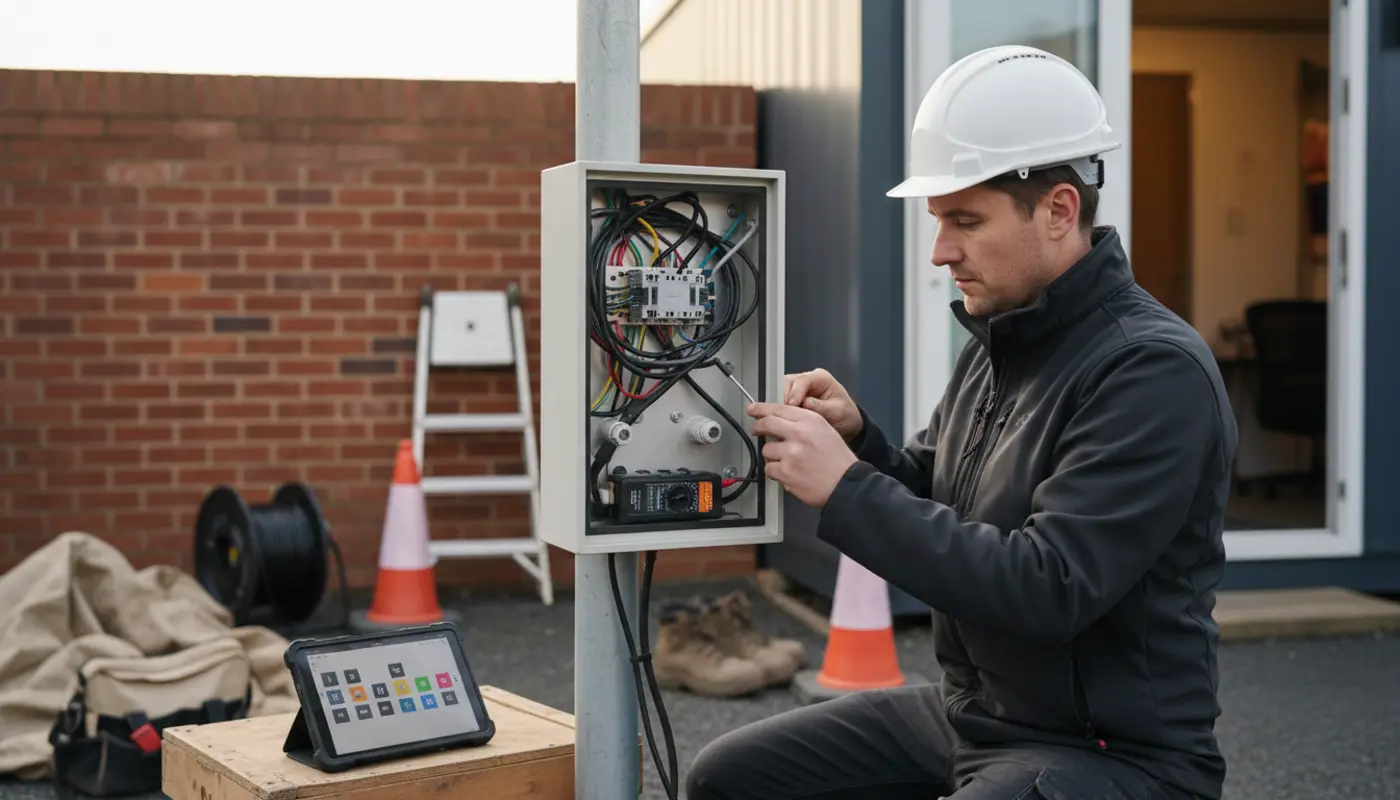
Weather rated equipment is also important. Outdoor construction security cameras need to handle rain, dust, wind, vibration and temperature changes, so strong housings, secure mounting and regular checks are not optional extras. If a camera fails during the one weekend thieves turn up, nobody will be impressed by the excuse.
Supporting HSE And Site Safety Duties
Mobile CCTV is not only about stopping theft. It can also support health and safety management by helping site teams review access control, traffic routes, lifting zones, delivery areas, exclusion zones and behaviour around high risk work areas.
The Health and Safety Executive expects construction sites to manage risks to workers and the public, and that includes preventing unauthorised access. CCTV does not replace fencing, lighting, inductions, supervision or proper RAMS, but it can help prove that controls are being checked and that unsafe patterns are being spotted.
Footage can be useful after accidents, near misses or disputes because it helps managers understand what actually happened. Rather than relying only on memory, which can be patchy when people are shaken up, video evidence can show vehicle movement, pedestrian routes, gate activity and whether site rules were followed.
Health And Safety Monitoring Beyond Security
Mobile CCTV can help reduce accidents by giving managers a wider view of the site. For example, cameras can monitor busy access roads, reversing areas, crane zones, scaffold edges, plant crossings and storage zones where poor housekeeping may become a trip hazard.
Lone worker safety is another strong use case, especially during early starts, late finishes, weekend checks or remote civil engineering works. Visual checks through monitored cameras can support welfare calls, lone worker procedures and escalation if someone appears injured, distressed or inactive for longer than expected.
Near miss recording is also valuable because the best safety teams learn before something serious happens. If footage shows repeated unsafe shortcuts, poor segregation or vehicles turning too close to pedestrians, site managers can change the layout, update briefings and prevent the next incident.
Rapid Redeployment Across Sites And Phases
A fixed system can work well in a finished building, but construction sites move. Groundworks, steel frame, envelope, fit out and handover phases all create different risks, which is why mobile CCTV towers are useful throughout the project lifecycle.
So, what happens when your site layout changes halfway through the project? During groundworks, towers may focus on plant, fuel bowsers and open boundaries. During fit out, attention often shifts to stored materials, installed appliances, cable, boilers, copper and access points. As the risk moves, the tower can move with it, without waiting for a permanent cable route or building mount.
If you're managing several live sites, the real benefit is flexibility. You can move protection where the risk is highest instead of paying for a fixed system that no longer covers the right area. A tower may protect one site during a high value delivery phase, then move to another project during a shutdown, which makes the equipment work harder across the business.
If you're planning how alerts, remote viewing and out of hours response should work, our guide to construction site security camera monitoring is a useful next step.
Mobile CCTV Compared With Security Guards
Security guards still have a place on some high risk sites, particularly where there are frequent deliveries, public interface issues, high value assets or a need for on site patrols and gate control. However, full time guarding can become expensive quickly, especially if a site needs cover every night and all weekend.
Mobile CCTV is often more cost effective because one monitored setup can watch multiple zones at once, does not need breaks, does not get tired and does not mind standing in the rain. That said, cameras cannot physically detain someone or repair a broken fence, so the best solution depends on risk, location, insurer expectations and response arrangements.
A sensible comparison should include weekly hire or installation costs, monitoring fees, call out arrangements, power costs, insurance conditions, expected loss reduction and the value of recorded evidence. In many medium risk projects, mobile CCTV gives strong value because it combines deterrence, verification and evidence.
Insurance And Claims Support
Insurers like clear risk controls because they reduce uncertainty. A well planned mobile CCTV system can help show that the contractor has taken reasonable steps to protect plant, tools, materials and the public outside working hours.
Some contractors may find that monitored CCTV supports insurance discussions or helps meet policy conditions, particularly where valuable plant or repeated theft risk is involved. Premium reductions are never automatic, but better security can improve the risk profile and make claims easier to evidence.
Footage can also help prove the timeline of an event, identify vehicles, show forced entry and support police reports. If a claim is challenged, clear video evidence and documented monitoring logs can be far more useful than a vague note saying, "something happened over the weekend".
How To Plan Mobile CCTV Properly
Start with a site risk assessment that lists what needs protecting, where intruders are likely to enter, what neighbours overlook the site and which areas become vulnerable after dark. Do not only protect the main gate because intruders rarely choose the route that is most convenient for your camera layout.
Next, plan tower positions around boundary fencing, access roads, storage compounds, welfare units, fuel tanks, scaffold access points and blind spots. Lighting should be considered at the same time because even good cameras need the right conditions to produce useful footage.
Power and connectivity should be checked before installation. Solar and battery may suit remote sites, while mains power may be available later in the build. Mobile data signal strength should also be tested because remote monitoring depends on reliable communication.
Finally, agree the response plan. Your site team should know who receives alerts, who attends call outs, when police escalation is appropriate, how the Police Response URN is managed and how footage is stored. The system should also be included in inductions, site rules and privacy notices so workers understand why cameras are present.
Future Trends In Smart Site Security
In 2026, more mobile CCTV systems are using smart video analytics to reduce false alarms and improve detection. Analytics can identify line crossing, loitering, vehicle movement and people entering restricted areas, which helps monitoring teams focus on real threats rather than every fox enjoying a night stroll across the compound.
Smart detection will not replace good security planning, but it can make monitoring faster and more accurate. When used responsibly, it can reduce nuisance activations, support safer working and give project teams better information about how their sites are used outside normal hours.
The strongest results come when analytics, BS 8418 aligned monitoring, practical site knowledge and clear response procedures work together. Technology is useful, but it performs best when it is designed around the site rather than added as an afterthought.
Final Thoughts
Mobile CCTV improves construction site security by combining deterrence, monitoring, evidence, flexibility and cost control in one practical setup. For UK builders dealing with theft, vandalism, changing layouts and out of hours risk, it offers a strong alternative or addition to traditional guarding.
The best systems are planned carefully, monitored properly and matched to the site phase, not simply parked by the gate and forgotten. With the right design, mobile CCTV can protect assets, support HSE duties, improve insurance confidence and help keep projects moving without unnecessary drama.
If you're unsure what level of protection your site needs, it is worth starting with a simple site risk review. That way, you can match the cameras, monitoring and response plan to the real risks on the ground.