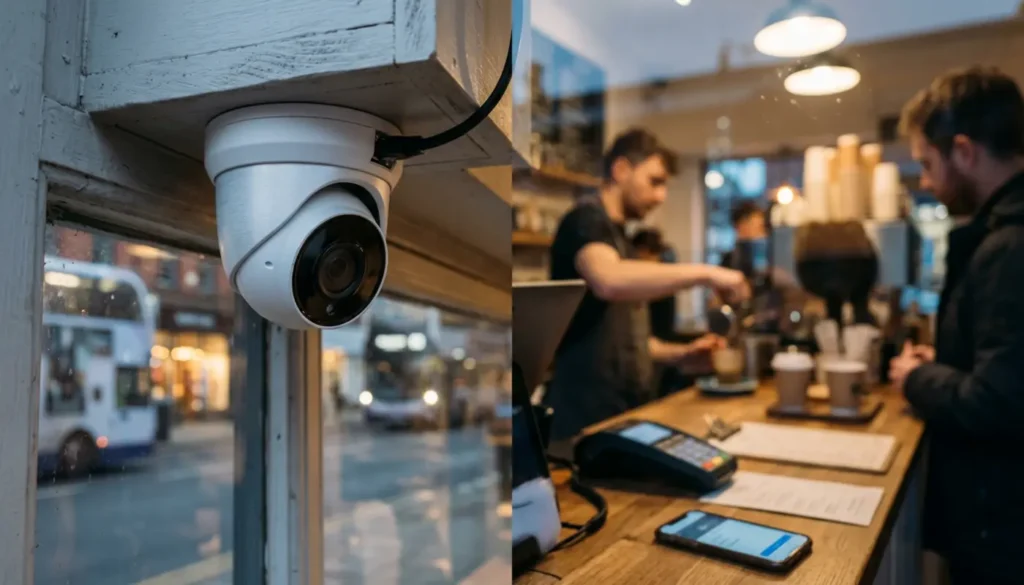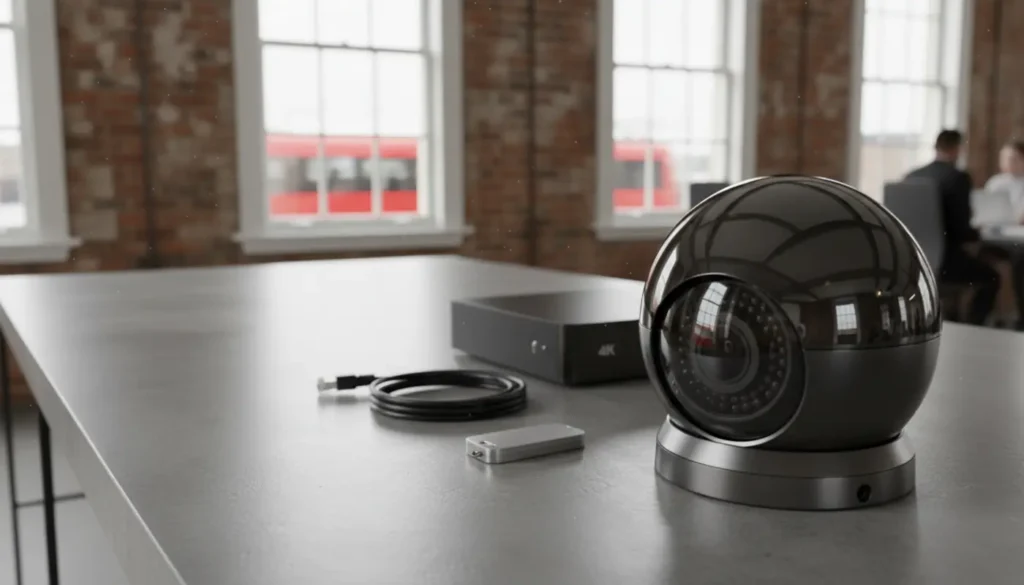
How Far Can CCTV Cameras See?
CCTV Cameras
How far can CCTV cameras see? Most UK home CCTV cameras can clearly cover around 5 to 20 metres for useful detail, while commercial CCTV systems can cover 20 to 100 metres or more when the right lens, resolution, lighting and installation are used.
The important point is that seeing something is not the same as identifying it. A camera might spot movement at the end of a long driveway, but that does not always mean it can identify a face or read a number plate. That is why a well planned system from iSecurity Solutions focuses on usable evidence, not just large range claims.
iSecurity Solutions is a trusted UK provider of commercial and domestic security systems, helping homes and businesses stay protected around the clock. From CCTV and intruder alarms to fire safety, access control and construction site monitoring, our expert team designs reliable, tailored solutions backed by responsive service and modern, remotely monitored technology.
Quick Answer For CCTV Viewing Distance
A typical domestic CCTV camera with a wide view is usually best for recognising activity within 5 to 15 metres, while a carefully chosen commercial camera can monitor much longer distances. If you need face identification, number plate capture or perimeter detection, the camera must be selected for that specific job rather than chosen by megapixels alone.
For homes and businesses, a properly designed CCTV system should match the camera range to the area being protected. A front door needs close facial detail, a driveway may need vehicle recognition, and a large yard may need long distance detection supported by closer detail cameras.
- Detection: Confirms that a person or vehicle is present.
- Observation: Shows clothing, movement, direction and general activity.
- Recognition: Helps match a person to someone already known or previously seen.
- Identification: Gives enough detail to establish who someone is with much greater confidence.
- Number Plate Reading: Requires a dedicated view, correct angle, suitable lighting and often ANPR settings.
What Affects How Far CCTV Cameras See?
The real CCTV viewing distance depends on the lens, field of view, image resolution, lighting, camera position, weather and how fast the subject is moving. That is why two cameras with the same megapixel rating can perform very differently in the same location.
Lens Focal Length
Lens focal length is measured in millimetres, and it controls how wide or narrow the picture looks. A 2.8 mm lens gives a broad view, which is useful for gardens, rooms and small shop floors, but it spreads detail across a wider scene. A 6 mm, 8 mm or longer lens narrows the view and brings distant subjects closer, a little like looking through binoculars rather than a wide window.
This is the main trade off. A wide view sees more of the area, but gives less image detail at distance. A longer lens sees less of the area, but gives more detail where it is aimed. For a long driveway, entrance gate or yard boundary, a varifocal lens is often useful because it can be adjusted during installation to suit the exact scene.
Field Of View
Field of view is the width and height of the scene the camera captures. The wider the view, the more space the camera covers, but each person or vehicle takes up fewer pixels in the image. If a camera is trying to cover a whole car park with one wide shot, it may detect movement easily but struggle to identify faces or plates at the far end.
A common mistake is expecting one camera to do every job. In practice, a wide camera can provide general awareness while a second, narrower camera captures detail at the entrance, till, gate or loading bay. Security is often improved by sensible placement rather than simply buying the highest specification camera.
Resolution And Image Quality
Resolution matters, but it is not a fix for every problem. A 1080p camera has fewer pixels than a 4MP or 8MP 4K camera, so higher resolution can help with detail if the lens and lighting are suitable. However, a poorly positioned 4K camera can still produce weak evidence if the subject is too far away, moving quickly or standing in poor light.
For practical CCTV identification distance, pixel density is the key idea. Pixel density means how many pixels cover each metre of the scene. As the scene gets wider or the subject moves farther away, the number of pixels on that person or vehicle drops, and the useful detail falls with it.
Understanding DORI And BS EN 62676 Part 4
DORI is a helpful way to describe CCTV range because it separates what the camera can detect, observe, recognise and identify. The approach is linked to BS EN 62676 Part 4, which is used in CCTV selection, planning, installation, commissioning, maintenance and testing.
As a simple guide, detection is often discussed around 25 pixels per metre, observation around 63 pixels per metre, recognition around 125 pixels per metre, and identification around 250 pixels per metre. These figures help explain why a camera may detect a person at 60 metres, yet only identify them much closer.
This also supports the wider UK security approach of designing CCTV around what the system needs to prove, rather than simply choosing cameras by range or megapixels. The key question is whether you need to detect movement, observe behaviour, recognise someone or identify them clearly.
- Detect At 25 Pixels Per Metre: You can tell someone or something is there.
- Observe At 63 Pixels Per Metre: You can see clothing, behaviour and direction.
- Recognise At 125 Pixels Per Metre: You may recognise someone you already know.
- Identify At 250 Pixels Per Metre: You have much stronger facial or evidential detail.
DORI figures should be treated as planning guidance, not a guarantee. Real footage can be affected by compression, focus, dirty lenses, glare, rain, fog, camera angle and night time movement. In plain terms, it is better not to design a system right on the limit if you want clear evidence later.
How Far Different CCTV Camera Types Can See
Different CCTV camera types are built for different jobs, so their useful range changes depending on how they are used. A bullet camera on a driveway, a dome camera in a shop and a PTZ camera on an industrial site may all be excellent choices, but each one has a different purpose.
Bullet Cameras
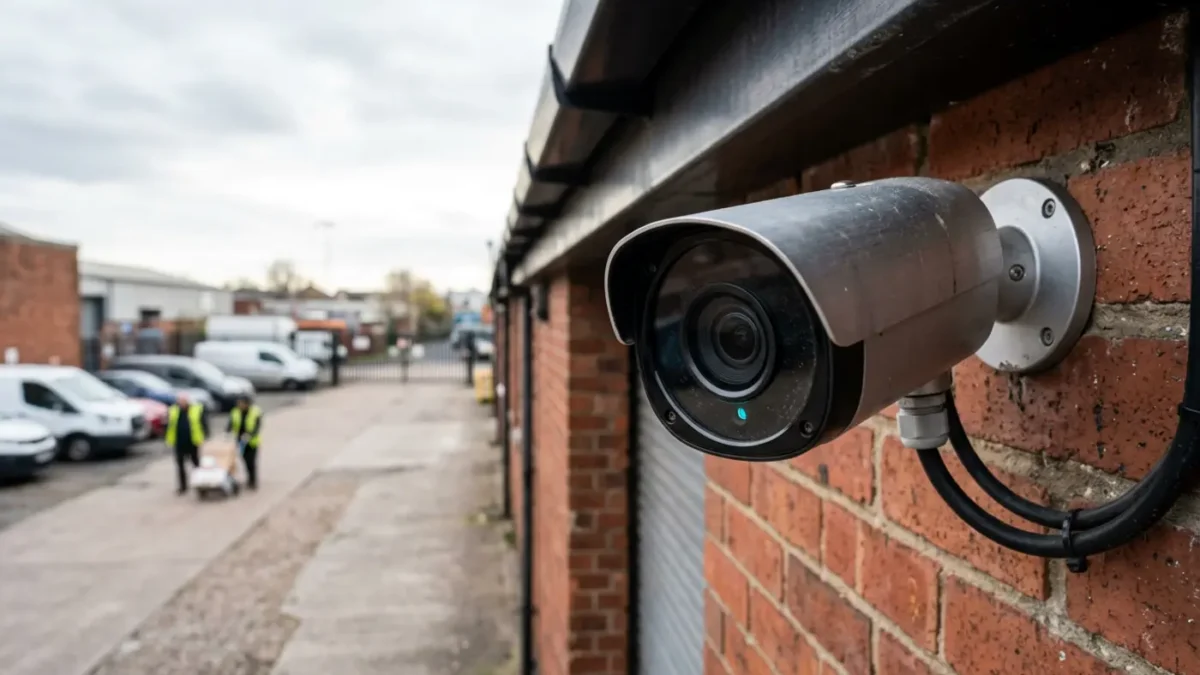
Bullet cameras are often used outdoors because they are directional, visible and easy to aim at driveways, gates, yards and building entrances. Their distance depends heavily on lens choice. A wide bullet camera may cover a short driveway well, while a longer lens model can focus on a gate or approach road.
Dome Cameras
Dome cameras are popular in shops, offices, corridors and covered outdoor areas because they look neat and can be more resistant to tampering. The dome shape itself does not decide how far the camera can see. The lens, sensor, resolution and lighting do the real work.
PTZ Cameras
PTZ cameras can pan, tilt and zoom, which makes them useful on larger sites where an operator or monitoring team can actively follow activity. Optical zoom can give much longer viewing distances than a fixed wide camera, but there is one important point to remember. If the camera is looking left when something happens on the right, it may miss the key moment, so fixed cameras are still important for continuous coverage.
ANPR Cameras
ANPR cameras are designed to capture number plates, and ordinary CCTV should not be expected to do the same job. Reliable plate capture needs the right angle, shutter speed, lens, lighting and vehicle positioning. This is especially important at night, when headlights and reflective plates can confuse a normal camera.
For more practical detail on vehicle entrances and plate capture, see CCTV and ANPR for car showrooms, which explains why general overview cameras and dedicated plate cameras are usually separate parts of a good system.
Thermal Cameras
Thermal cameras detect heat differences rather than visible light, so they are useful for perimeter detection, open yards and darker areas where standard cameras struggle. They can detect people or vehicles in difficult conditions, but they do not normally provide facial identification. Thermal is best for spotting that something is there, while visible light CCTV confirms the detail.
How Far Can CCTV See At Night?
CCTV night vision range is usually shorter than daytime performance, especially when identification is needed. Infrared LEDs can light an area in darkness, but an advertised IR distance of 30 metres does not mean the camera can identify a face clearly at 30 metres.
Infrared works by sending out light the human eye cannot see, then using the camera sensor to capture the reflection. It is useful, but it can bounce off walls, windows, rain, dust, cobwebs and anything close to the lens. White light or colour night vision can help, but it needs enough visible light and careful positioning to avoid glare.
Common night problems include headlight glare, backlighting, reflective number plates, motion blur and uneven lighting across the scene. For homes, a modest security light can greatly improve driveway footage. For businesses, controlled lighting around entrances, loading bays and car parks often improves CCTV identification distance more than simply buying a higher resolution camera.
UK Weather And Real World Visibility
UK weather can make a big difference to CCTV performance. Rain can blur the lens cover, scatter infrared light and create reflections on wet ground. Fog and mist reduce contrast, which makes people and vehicles harder to distinguish, especially at longer distances.
Low winter sun is another common issue. A camera facing the wrong direction can end up looking into bright glare, causing washed out faces and poor detail. Frost, condensation, insects, dust and cobwebs can also reduce performance, particularly with infrared at night because the light reflects from anything close to the lens.
Good maintenance is simple but important. Check lenses and covers regularly, trim vegetation, remove cobwebs and make sure parked vehicles, signs or seasonal growth have not blocked the target area. A camera cannot see through a hedge, no matter how many megapixels it has.
Domestic And Commercial CCTV Viewing Distances
For UK homes, CCTV is usually used to identify visitors at the front door, monitor driveways, protect side passages, watch gardens and secure garages or sheds. Identification normally happens at shorter distances, often within 5 to 10 metres, because faces need to be large enough in the picture to be useful.
For shops and offices, cameras often need to cover entrances, tills, corridors and stock areas. A wide camera may show what happened, while a tighter camera at the entrance gives better facial detail. In car parks, one camera might provide general activity monitoring, while separate cameras cover entrances, payment points and vehicle routes.
Industrial sites and yards may need longer viewing distances for gates, boundaries and storage areas. Long lens visible cameras, PTZ cameras and thermal detection can all play a part, especially when remote monitoring is used. For monitored CCTV and perimeter detection, an SSAIB certified and Insurance-Approved installation can support Police Response URN eligibility where the system design and confirmation requirements apply.
Legal Considerations For CCTV Range In The UK
CCTV range is not only a technical issue, because the farther a camera sees, the greater the chance it captures neighbours, pavements, roads or shared areas. The ICO advises home users to position cameras so they only capture their own property where possible, and its home CCTV guidance explains what to consider if footage includes people outside your boundary.
The good news is that most CCTV privacy issues can be avoided with sensible camera positioning, clear signage and privacy masking where needed. For businesses, CCTV that records identifiable people generally needs to follow UK GDPR and the Data Protection Act 2018. That usually means having a clear purpose, using signage, limiting access to footage, keeping recordings secure and not storing them longer than needed.
Standards matter too. CCTV planning is commonly linked with BS EN 62676 Part 4, while intruder alarm systems use EN 50131, usually Grade 2 or Grade 3 depending on risk. Where CCTV forms part of a wider security setup, the whole system should be designed so it is practical, compliant and proportionate.
Installation Tips To Maximise Effective CCTV Range
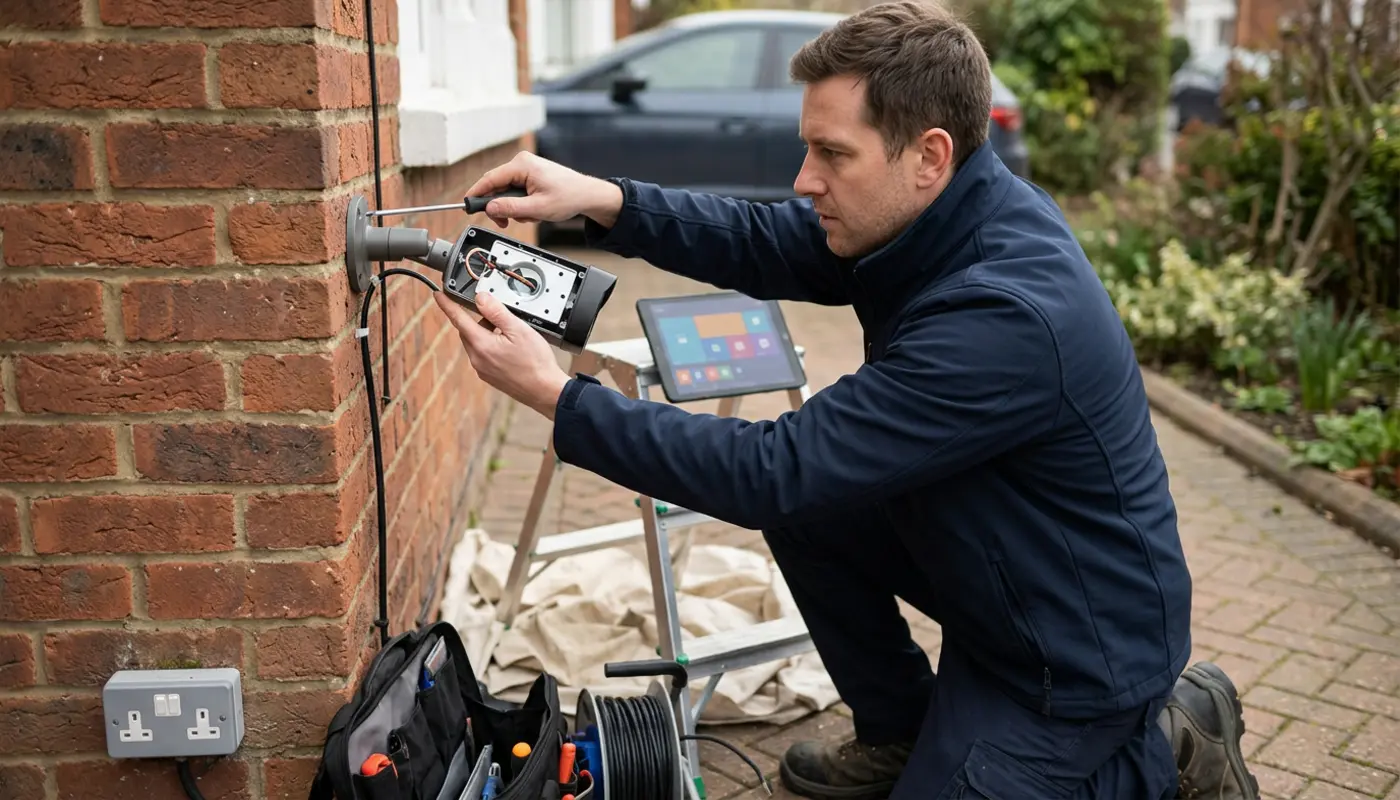
Start by deciding what you actually need from the camera. Do you want to detect movement, observe behaviour, recognise a person, identify a face or read a number plate? Once that is clear, measure the distance to the target area and choose the lens and resolution around that requirement.
Avoid mounting cameras too high if facial detail matters, because a steep downward angle often gives you footage of heads and shoulders rather than clear faces. Aim cameras across the target zone where possible, keep important areas large in the image and avoid pointing directly into bright lights or the low winter sun.
Use optical zoom or a longer lens for distant detail rather than relying on digital zoom after the event. Digital zoom only enlarges the pixels already captured, so it cannot create missing detail. Finally, test recorded footage during the day, at night, in rain and with normal movement, because live previews can look better than the evidence you later need.
Final Thoughts On CCTV Camera Range
The honest answer to how far CCTV cameras can see is that it depends on what you mean by see. Detection can happen at long distances, but recognition, identification and number plate capture need much more careful planning.
For most UK properties, the best CCTV system is not the one with the biggest headline range. It is the one that uses the right camera, lens, resolution, lighting and position for each part of the site. Get those basics right, and your footage becomes far more useful when it really matters.
If you are unsure what range you need, it is worth getting the site checked properly so the cameras are chosen around real evidence, not guesswork.
Frequently Asked Questions
Can A CCTV Camera See 100 Metres?
Some CCTV cameras can detect movement at 100 metres or more with the right lens, but identification at that distance needs specialist design. A general home camera is unlikely to provide clear facial detail that far away.
How Far Can A 4K CCTV Camera Identify A Person?
There is no single distance because lens choice, field of view, lighting and pixel density all matter. A 4K camera can give excellent detail, but only if the person is large enough in the image.
Is 4K CCTV Always Better Than 1080p?
4K gives more pixels, which can help with detail, but it is not always better if the lens, lighting or camera angle is wrong. A well positioned 1080p camera can outperform a poorly planned 4K camera.
Can CCTV Cameras Read Number Plates At Night?
Yes, but reliable night time plate reading usually needs a dedicated ANPR camera setup. Ordinary CCTV may struggle because headlights, reflective plates and motion blur can reduce accuracy.
Do CCTV Systems Need SSAIB Approval?
For many business and monitored security setups, insurers may prefer or require an SSAIB certified and Insurance-Approved installer. Where monitored CCTV links to confirmed alarm response, this can also support Police Response URN eligibility.