Fire Extinguishers for Restaurants in Manchester
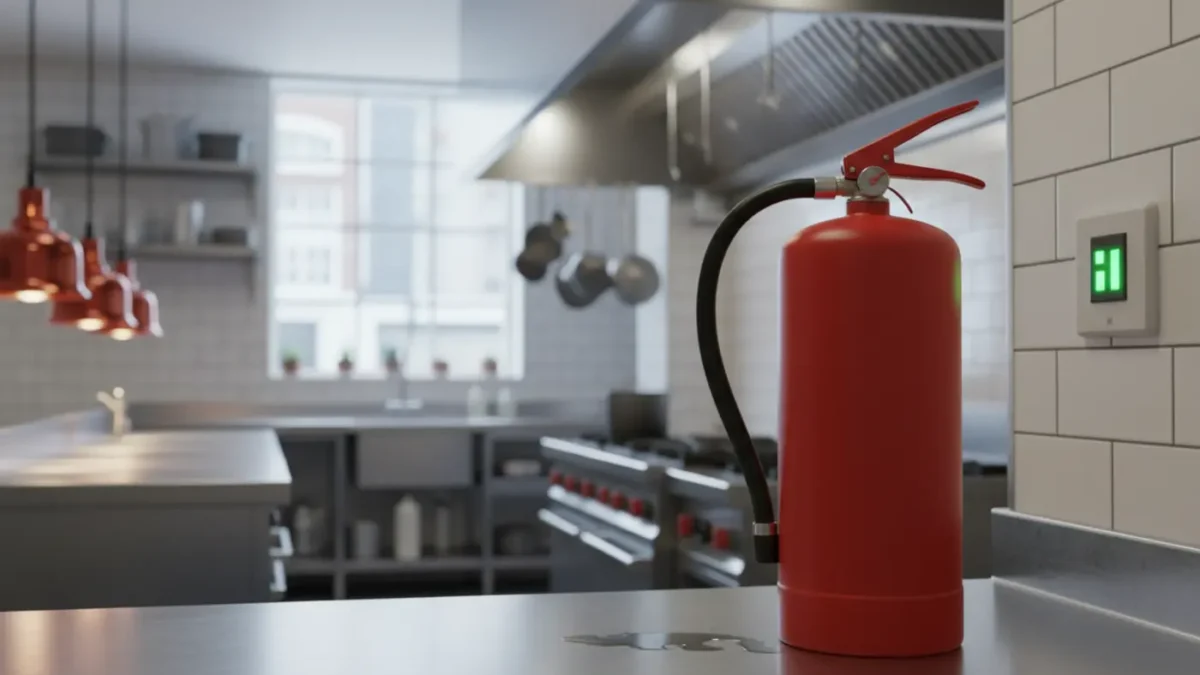
What fire extinguishers does your restaurant in Manchester actually need? And how do you stay legal without drowning in paperwork?
Let’s be real. Most restaurant owners think a couple of red cylinders on the wall tick the box. Job done. Until an inspector walks in. Or worse, a fryer goes up and nobody knows what to grab.
iSecurity Solutions is a trusted UK provider of commercial and domestic security and fire safety systems. We help homes and businesses stay protected around the clock. From CCTV and intruder alarms to fire safety, access control and construction site monitoring, our expert team designs reliable and tailored solutions backed by responsive service and modern, remotely monitored technology. Whether you secure one site or manage many, we protect what matters most.
We support Manchester restaurants with practical, compliant fire protection. No fluff. Just systems that meet UK law, insurance demands and common sense.
Fire Extinguishers For Restaurants In Manchester
If you searched for fire extinguishers for restaurants in Manchester, you already know this is not about buying the cheapest extinguisher online.
Here’s what’s actually happening. UK restaurants must comply with the Regulatory Reform Fire Safety Order 2005. You are the responsible person. That means you must carry out a fire risk assessment and provide suitable firefighting equipment.
Not random equipment. Suitable equipment.
Restaurant Fire Extinguisher Manchester Wet Chemical BS 5306 Requirements
In a commercial kitchen, that means wet chemical extinguishers for Class F fires. These cover cooking oils and fats. Throw water on burning oil and you create a fireball. Come on.
All extinguishers must be installed and maintained in line with BS 5306. Annual servicing is not optional. The annual service certificate is insurance required and often checked during licensing reviews. Skip it and you gamble with your business.
For the legal detail, read the Regulatory Reform Fire Safety Order 2005. It is your legal duty.
Fire Safety Compliance Requirements For UK Restaurant Premises
Stop pretending fire safety is just a box ticking task. It is a legal framework with teeth.
Under the Fire Safety Order, every restaurant must have a suitable fire risk assessment. If you employ five or more people, it must be written down. In reality, every Manchester restaurant should document it.
We carry out fire risk assessments that follow PAS 79 methodology. That means a clear and structured assessment that insurers and enforcement officers respect.
Your assessment must cover cooking risks, electrical hazards, storage, escape routes and staff training. Not a template downloaded at midnight.
Appropriate Fire Extinguisher Types For Commercial Kitchens
Let’s cut the confusion.
- Wet chemical for fryers
- CO2 for electrics
- Water for solid materials
- Foam for mixed risks
- Fire blankets near cookers
- Clearly marked locations
- Easy access routes
Wet chemical extinguishers are mandatory where deep fat fryers are present. They create a soapy layer over burning oil. This cools and smothers the fire.
CO2 extinguishers cover electrical risks. Think distribution boards, refrigeration units and POS systems. They leave no residue.
Water and foam units usually sit in dining areas and storage zones. Your fire extinguisher supply and servicing plan must match your layout. Not guesswork.
Placement Standards For Fire Extinguishers In UK Restaurants
Here is where people get it wrong. They mount extinguishers wherever there is spare wall space.
BS 5306 gives clear guidance. Extinguishers should sit on escape routes, near exits and within proper travel distance from risks. In kitchens, wet chemical units go near but not right next to fryers. If you must walk through flames to reach it, you installed it wrong.
They must be visible, signed and mounted at the correct height. Not hidden behind flour bags.
Would your team know where the nearest wet chemical extinguisher is right now?
During our fire safety system installations, we plan around real working conditions. Chefs move fast. Your equipment must be reachable in seconds.
Maintenance And Inspection Cycles Under BS 5306
Bluntly, if you are not servicing extinguishers every year, you are non compliant with BS 5306.
BS 5306 requires:
- Regular visual checks by staff
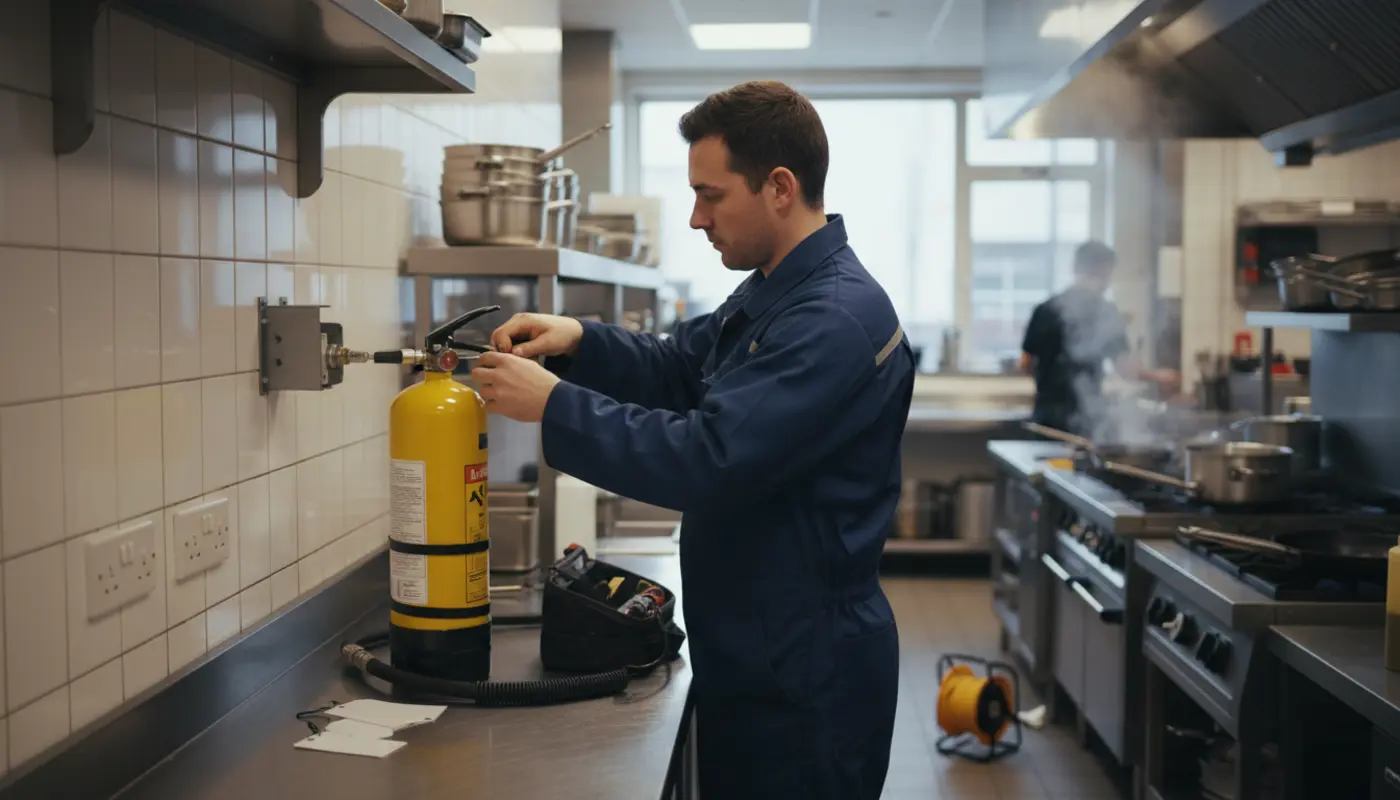
- Annual service by a competent engineer
- Extended service at five years for certain types
- Full discharge or overhaul where required
You also need records. Dates. Signatures. Service labels. The annual certificate is insurance required. Lose it and your claim can fall apart.
We provide documented servicing across Manchester. Certificates are ready for environmental health officers and insurers. Simple and clear.
Kitchen Hazard Zones And Fire Prevention Measures
Extinguishers are your last line of defence. Prevention is smarter.
High risk zones include deep fat fryers, grills, extraction hoods and electrical points. Grease in ductwork is a known fire starter. Ignore cleaning schedules and problems follow.
Your PAS 79 fire risk assessment should clearly identify these zones. Control measures may include fixed suppression systems, duct cleaning and strict oil management.
One serious kitchen fire means dealing with environmental health, insurers and lost bookings. It is your reputation on the line.
We often integrate extinguishers into a wider fire alarm system compliant with BS 5839. For restaurants, this is often Category L2. That provides detection in escape routes and high risk areas like kitchens.
Emergency lighting must meet BS 5266. Monthly function tests and an annual full duration test must be recorded. There is no point having a safe exit if nobody can see it during a power cut.
Staff Training Requirements For Fire Response In UK Hospitality
Buying equipment without training staff is pointless.
Under the Fire Safety Order, staff must receive proper fire safety training. That includes raising the alarm, evacuating guests and knowing when it is safe to use an extinguisher.
Training should happen at induction and be refreshed regularly. Hospitality has high staff turnover. You cannot ignore that.
We cover practical extinguisher use, fire classes and clear warnings. For example, never use water on burning oil. Obviously.
Approved Fire Safety Suppliers And Services In Manchester
Not all suppliers are equal. Stop pretending they are.
Your provider should work to BS 5306 and ideally hold BAFE SP101 certification for portable fire extinguisher servicing. That shows third party competence. Insurers and auditors look for it.
At iSecurity Solutions, installations are Insurance Approved. Our wider fire and security systems are SSAIB certified and Insurance Approved where applicable.
Choosing a cheap and unverified contractor to save money can cost your licence. That is not smart.
Insurance And Compliance Checks For UK Restaurant Operators
Here is what insurers care about.
A current fire risk assessment under PAS 79. Annual extinguisher servicing to BS 5306. Fire alarm systems meeting BS 5839. Emergency lighting maintained under BS 5266.
If you use fixed suppression above cooking lines, that must also be serviced and recorded.
Miss any of this and you risk reduced payouts or rejected claims.
A compliant Manchester restaurant setup protects staff, diners and your livelihood.
Frequently Asked Questions
Are wet chemical extinguishers mandatory in Manchester restaurants?
How often must restaurant fire extinguishers be serviced?
Do I need a written fire risk assessment for my Manchester restaurant?
What other fire systems should restaurants install?
Is your fire extinguisher servicing SSAIB certified?
If you run a restaurant in Manchester and you are unsure about compliance with BS 5306, get it checked. Fire safety is not where you cut corners. Cut the nonsense instead.