Construction Site Security Camera Monitoring: Costs, Features
Construction Site Security Camera Monitoring Costs
Construction site security camera monitoring in the UK usually costs around £25 to £90 per day for a temporary monitored camera tower, or about £500 to £2,500 per month for a managed setup in 2026. Larger or higher risk sites can cost £1,500 to £5,000 per month, depending on the site size, camera count, power supply, mobile data, monitoring hours, installation needs and VAT position.
The main features to compare are remote monitoring, motion detection, night vision, thermal imaging, audio challenge, alarm links, 4G or 5G connectivity, and whether the system is rented or bought. A small housing plot will not need the same setup as a large development with plant, fuel and materials spread across several areas, so the lowest quote is not always the best value.
iSecurity Solutions is a trusted UK provider of commercial and domestic security systems, helping homes and businesses stay protected around the clock. For construction sites, the team designs practical, reliable and remotely monitored solutions that help reduce theft, prevent vandalism, support insurance needs and give site managers more peace of mind.
Why Construction Site Security Camera Monitoring Matters
Construction site security camera monitoring matters because live sites often hold expensive plant, tools, fuel, cable, metals and materials in areas that become quiet after working hours. One break in can lead to stolen equipment, damaged fencing, lost labour time, programme delays and difficult insurance conversations, especially when the site has no clear evidence of what happened.
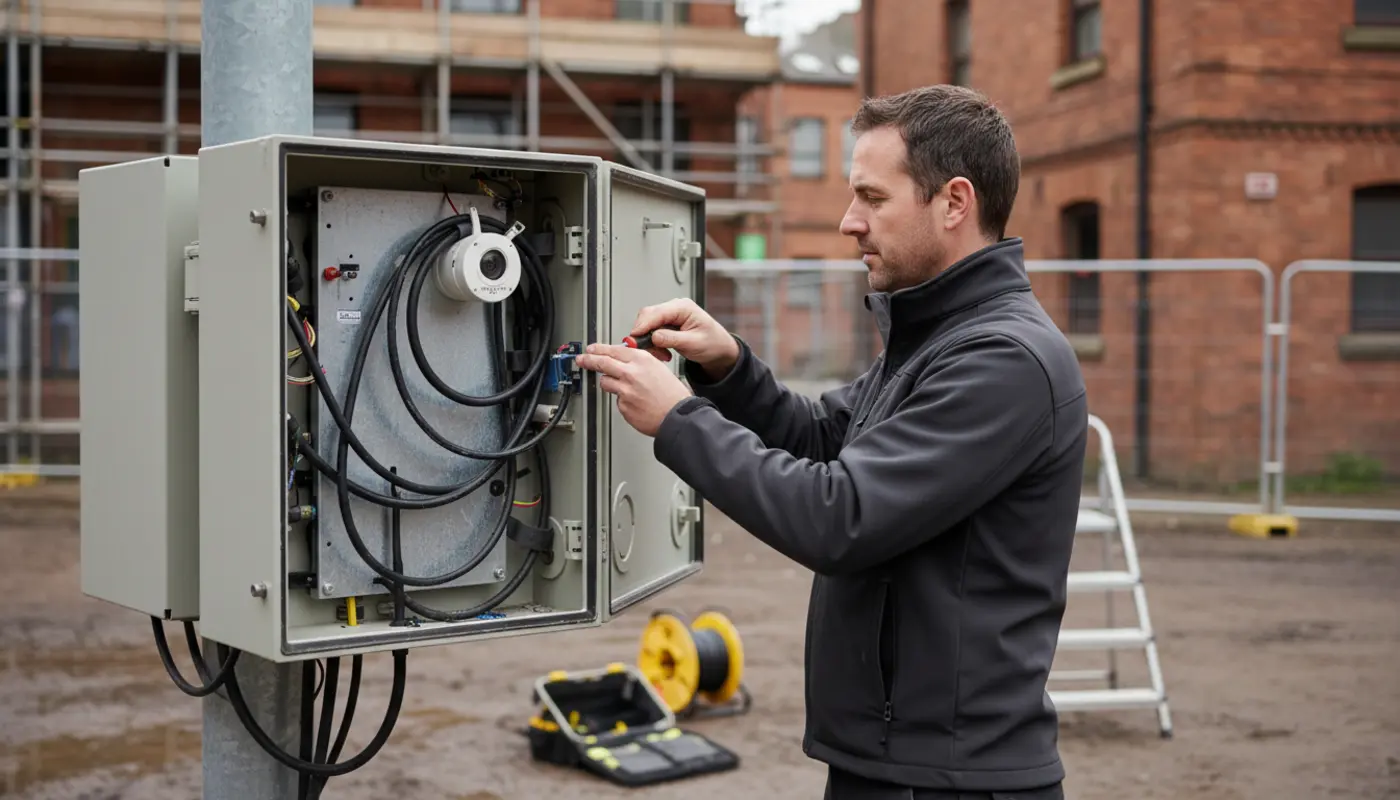
Remote monitored CCTV gives you more than recordings after the event because trained operators can view alerts in real time, issue live audio warnings and escalate confirmed incidents to keyholders or emergency services where appropriate. For a stronger plan, construction site security cameras should be considered alongside fencing, lighting, access control and clear site procedures, rather than treated as one lonely camera on a pole.
Good footage also helps with evidence. Clear images of vehicles, faces, number plates and entry points can make insurance claims smoother and police reports more useful, which is far better than blurry night footage that leaves everyone guessing.
UK Construction Site CCTV Monitoring Costs
Construction site CCTV monitoring costs normally fall into two routes, rental or purchase. Rental is common for temporary works because it keeps upfront spend lower and usually includes installation, maintenance, mobile data and monitoring in one weekly or monthly package.
As a broad 2026 UK guide, a single temporary CCTV tower with remote monitoring may cost around £175 to £600 per week. Larger sites with several towers, thermal cameras, audio deterrents and full out of hours monitoring can reach £1,500 to £5,000 per month. Purchase costs can range from several thousand pounds for a basic deployable unit to more than £15,000 for an advanced tower with solar panels, battery backup, analytics and monitoring centre links.
Most commercial security quotes are shown excluding VAT unless stated otherwise, so it is worth checking before comparing suppliers. A quote that looks cheaper at first can become less attractive once installation, data, monitoring, relocation and removal are added.
Typical Cost Options
- Daily hire: Around £25 to £90 per day. This suits very short works, emergency cover and small temporary risks, but setup, collection and VAT may be extra.
- Weekly hire: Around £175 to £600 per week. This is useful for short term projects and early phase sites, but you should check monitoring hours, call outs and data costs.
- Monthly rental: Around £500 to £2,500 per month for many managed sites. This suits most construction programmes with changing layouts, but relocation, maintenance and removal should be confirmed.
- Large monitored setup: Around £1,500 to £5,000 per month. This is often needed for high value plant, large compounds and sites with repeat incidents.
- Purchase: Several thousand pounds to more than £15,000. This can suit long programmes, yards and contractors that reuse equipment, but storage, servicing, SIM cards, monitoring and redeployment still cost money.
Rental is often better for projects under twelve months, early phase sites without fixed power, or developments where the layout changes often. If you are unsure whether to rent or buy, start with project length, site risk and whether the equipment will be reused after handover.
Typical Daily, Weekly And Monthly Rates
Daily rates are useful for very short works, but most suppliers prefer weekly or monthly pricing because setup and collection costs are still involved. A short term single camera tower may work out at around £25 to £90 per day, while weekly hire usually gives better value across a normal construction programme.
For monthly planning, a small site might budget around £500 to £1,200 per month for one monitored unit. A medium site may sit closer to £1,500 to £3,000 per month with multiple cameras and stronger detection, while large compounds, infrastructure works and sites with high value plant usually need a bespoke price because the risk and coverage area can change week by week.
The headline camera price is only part of the total cost. Ask whether the quote includes installation, call outs, monitoring centre fees, data SIM cards, maintenance, battery checks, redeployment, audio challenge, reporting and removal at the end of the project.
What Affects Construction Site Monitoring Prices
Site size is the obvious starting point, but shape matters just as much. A neat square compound may need fewer cameras than a long narrow development with blind corners, scaffolding, storage areas and several access points.
Camera count also affects cost, although adding extra cameras does not always multiply the price in a straight line. Once monitoring, connectivity and site attendance are already in place, extra cameras can sometimes be added more efficiently than installing separate systems.
Monitoring hours make a clear difference. Some sites only need out of hours monitoring, while others need full twenty four hour coverage due to public access, high value assets or repeated incidents nearby.
Contract length matters too. A three month hire may carry higher weekly costs because mobilisation is spread over a shorter period, while twelve or twenty four month agreements may attract better rates if the equipment stays in place.
Risk profile is another major factor. Inner city regeneration sites, remote rural plots, plant yards, demolition sites and locations with repeated trespass may need more robust towers, thermal detection, perimeter sensors and faster escalation procedures.
Solar Powered And Mains Powered Options
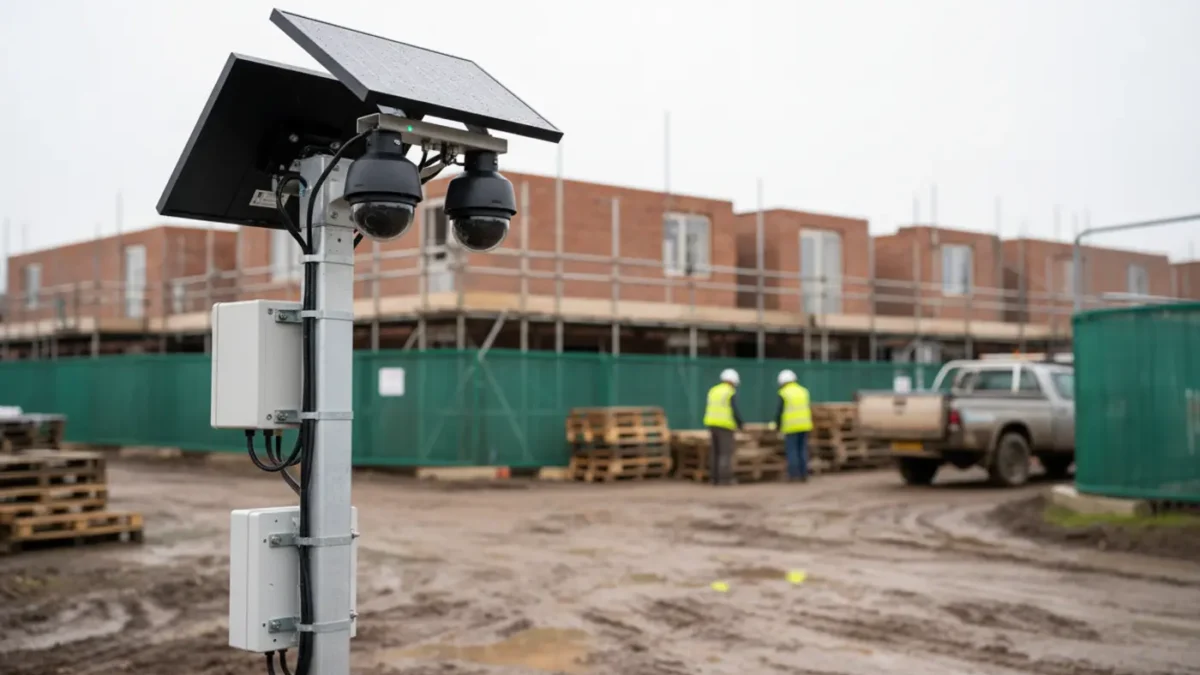
Solar powered camera towers are popular on construction sites because early phase projects often have no reliable mains power. They use solar panels to charge batteries, then run cameras, routers, lights and detectors from stored energy when daylight is limited.
Mains powered systems are usually stronger for longer term sites, fixed compounds and locations with stable infrastructure. They can support higher power loads, more permanent cameras, better lighting and a wider mix of devices without relying heavily on battery capacity.
Hybrid systems often offer a useful middle ground. A tower may use mains power where available but keep battery backup for power cuts, or use solar as the main source with a backup charging option during darker winter periods.
Solar options can cost more to hire or buy because batteries, charge controllers and panels add hardware cost, but they can save money by avoiding generator use, cabling and fuel logistics. Mains systems may cost less to run once infrastructure exists, although temporary cabling, electrical safety and relocation work can add to the project bill.
4G And 5G Connectivity For Remote Monitoring
Most temporary construction CCTV uses 4G or 5G to send footage and alerts to a monitoring centre. In simple terms, the camera system uses a mobile data connection rather than waiting for broadband that may not arrive until the building is nearly finished.
A good setup should check signal strength before installation and may use multi network SIM cards to improve reliability. This is especially important on remote plots, basements, steel framed sites and areas where mobile coverage changes depending on the network.
5G can provide faster upload speeds and lower delay where coverage is strong, but 4G is still suitable for many monitored CCTV systems. The key is not chasing the newest label, but making sure alerts arrive quickly, operators can view useful footage and data costs are clearly included in the quote.
Features Worth Paying For
Motion detection is one of the core features because it tells the system when something may be happening instead of recording endless hours of nothing. Better analytics can reduce false alerts from rain, foxes, loose sheeting and the occasional plastic bag that seems determined to cause trouble.
Night vision is essential because many construction thefts happen after hours, at weekends or during holiday closures. Infrared cameras can see in darkness, while strong low light cameras can produce clearer colour images when there is enough light from street lamps or site lighting.
Thermal imaging costs more, but it can be valuable for large perimeters, dark compounds, rural sites and areas where intruders may hide behind materials. Thermal cameras detect heat, so they are useful when normal cameras struggle with darkness, shadows or long distances.
Audio deterrents can turn monitoring from passive recording into active prevention. If an operator sees someone entering a restricted area, they can issue a live warning through a speaker, which often sends intruders back over the fence quicker than a polite site notice ever could.
Lighting, sirens and access control can also be linked into the system. You can explore why these layers matter in our article on construction site security cameras, especially if you are building a security plan from scratch.
Alarm Integration And Police Response
The strongest systems combine CCTV with intruder alarms, perimeter detection and clear response procedures. A typical workflow is detection, visual verification by the monitoring centre, live audio challenge, keyholder notification and escalation where the incident is confirmed.
Where monitored CCTV is linked with intruder detection, the alarm components should comply with EN 50131, usually Grade 2 or Grade 3 depending on site risk and insurer expectations. CCTV system design should also consider BS EN 62676, while detector activated CCTV is commonly assessed against BS 8418. If your insurer expects monitored detection as well as cameras, it is better to confirm that before anything goes missing.
For a Police Response URN, an SSAIB certified and Insurance Approved installation is normally the prerequisite, and the system must be properly maintained and monitored. That distinction matters because not every camera system qualifies for police response. A cheap unmonitored camera may record evidence, but it will not give you the same verified escalation route as a professionally monitored and compliant setup.
UK Legal And Compliance Requirements
Construction CCTV must follow UK GDPR and data protection rules if it records identifiable people. The site operator, principal contractor or organisation deciding why and how cameras are used will usually act as the data controller, so responsibility should be clear from the start.
The Information Commissioner’s Office gives clear advice on CCTV responsibilities, including signage, lawful purpose, retention and subject access requests through its CCTV and video surveillance guidance. For construction sites, this means workers, visitors and the public should understand that cameras are in use and know who to contact about the system.
Signs should be placed at entrances, site gates, pedestrian access points and any area where people may be recorded. Footage should only be available to authorised people, and access should be logged where possible. Retention periods vary, but many sites keep footage for around thirty days unless an incident, investigation or insurance claim requires longer storage.
A Data Protection Impact Assessment is sensible where cameras cover workers, public areas or neighbouring properties. This is a simple check that looks at privacy risks before cameras are used. Cameras should focus on gates, compounds, perimeters, storage and plant, while avoiding areas where people would expect privacy, such as toilets, changing areas and welfare spaces.
If someone makes a subject access request, the site should know who handles it, how footage will be searched and how other people in the recording will be protected. That may sound like admin, but it is much easier when the process is agreed before the first alert comes through.
Insurance Impact And Return On Investment
Monitored CCTV can support insurance discussions because it shows that the site is taking practical steps to reduce theft, trespass and vandalism. It may not automatically reduce premiums, but it can help meet policy conditions and provide useful evidence if a claim happens.
Return on investment should be measured against more than the stolen item. A stolen excavator attachment, generator, fuel bowser or cable drum can delay trades, increase hire costs, disrupt deadlines and create awkward knock on costs that never fit neatly into the original budget.
For example, if monitored CCTV costs £1,500 per month on a six month project, the spend is £9,000. If it prevents one theft involving plant, materials, repairs and delay costs of £15,000 to £30,000, the system has likely paid for itself before counting reduced stress and better insurer confidence.
There is also a safety benefit. Better visibility around site access, trespass and after hours movement supports wider site control, especially when it sits alongside risk assessments, induction procedures, access rules and clear reporting lines.
Comparing UK Provider Options
Rather than ranking brands, it is more useful to compare provider types. Equipment rental firms may be strong on fast deployment, guarding companies may focus on response, and specialist security installers usually bring better system design, integration and compliance support.
Ask whether the provider surveys the site properly, designs camera positions around risk, explains monitoring procedures, confirms who responds to alerts and provides maintenance. Also check whether they understand GDPR, insurer requirements, BS EN 62676, BS 8418, EN 50131 alarm integration and Police Response URN routes where needed.
Use this checklist when comparing quotes.
- Survey quality and risk assessment.
- Monitoring centre process and alert verification.
- Response procedures and keyholder escalation.
- GDPR support, signage and footage access.
- Alarm integration and standards awareness.
- Maintenance cover, call outs and battery checks.
- Solar, mains and hybrid power options.
- Contract flexibility for site changes.
- Insurance support and documentation.
- Clear pricing for VAT, installation, data, relocation and removal.
The right provider should talk about outcomes, not just hardware. If the conversation begins and ends with how many cameras you want, rather than what you need to protect, you may be buying equipment instead of a security solution.
Final Thoughts
Construction site security camera monitoring costs vary widely, but the best value comes from matching the system to the real risk. Rental works well for temporary projects, purchase can suit repeat use, solar helps sites without mains power, and 4G or 5G connectivity keeps monitoring practical before broadband exists.
The smartest approach is layered. Good camera coverage, reliable power, strong connectivity, night performance, active deterrents, compliant data handling and clear response procedures all matter. Done properly, monitored CCTV protects assets, supports insurance, reduces disruption and makes your site far less inviting to the wrong kind of visitor.
Frequently Asked Questions
How Much Does Construction Site CCTV Monitoring Cost In The UK?
Most sites pay around £500 to £2,500 per month for managed monitoring, although larger or higher risk sites can cost more. The final price depends on cameras, towers, power, connectivity, monitoring hours, VAT and contract length.
Is It Better To Rent Or Buy Construction Site Cameras?
Renting is usually better for temporary projects under twelve months, while buying can make sense for contractors that reuse equipment across several sites. Always compare total cost, maintenance, storage and redeployment before deciding.
Do Solar Powered CCTV Towers Work In UK Weather?
Yes, if they are designed with suitable battery capacity and realistic winter performance in mind. Hybrid backup is worth considering for high risk sites or locations with poor sunlight during darker months.
Do Monitored Cameras Need SSAIB For Police Response?
For a Police Response URN, the connected alarm or detection system normally needs to be installed and maintained by an SSAIB certified and Insurance Approved company. CCTV alone may record evidence, but verified alarm integration is what supports formal escalation.
What CCTV Rules Apply On UK Construction Sites?
You must follow UK GDPR, use clear signage, have a lawful reason for recording and control who can access footage. Cameras should avoid private areas and only cover what is necessary for site security.