Common Reasons for a Fire Alarm to Go Off?
Common Reasons A Fire Alarm Goes Off
A fire alarm usually goes off because it has detected cooking fumes, steam, dust, insects, aerosols, vaping, low batteries, ageing parts, building work, system faults or a real fire risk such as an electrical fault or overheated appliance. Even when the cause seems harmless, every activation should be treated as a possible fire until the area has been checked safely.
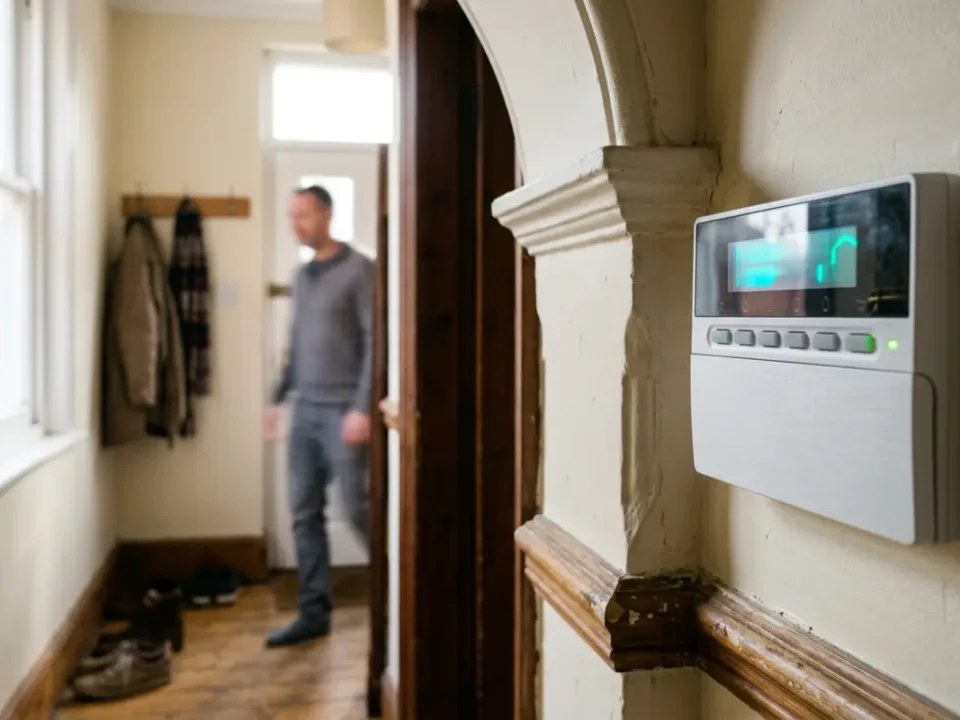
A fire alarm sounding for no clear reason can be stressful, especially at night, during work or in a shared building where people need quick and clear instructions. A continuous alarm, a short chirp every few minutes and a fault light on a fire alarm panel can all mean different things, so it helps to understand what the system is trying to tell you.
iSecurity Solutions helps homeowners, landlords and businesses reduce unwanted alarms without weakening fire protection. As a trusted UK provider of commercial and domestic security systems, isecurity Solutions supports properties with CCTV, intruder alarms, fire safety, access control and modern remotely monitored protection tailored to each site.
What To Do When A Fire Alarm Sounds
If there is smoke, heat, flame, a burning smell or any sign that something is wrong, leave the building straight away and call 999. Close doors behind you if it is safe, do not stop to collect belongings, and never use a lift unless the building's official emergency plan clearly says it is safe to do so.
- For homes and rented properties, get everyone out first if there is any sign of fire.
- For shared buildings, follow the displayed evacuation procedure and report the alarm.
- For commercial buildings, staff should follow the fire alarm procedure they have been trained to use.
If you cannot see a fire, do not simply silence the alarm and carry on. Check the nearby area carefully without putting yourself in danger, then identify which detector or zone has activated. If the building is shared, report it to the landlord, responsible person, facilities team or accommodation provider.
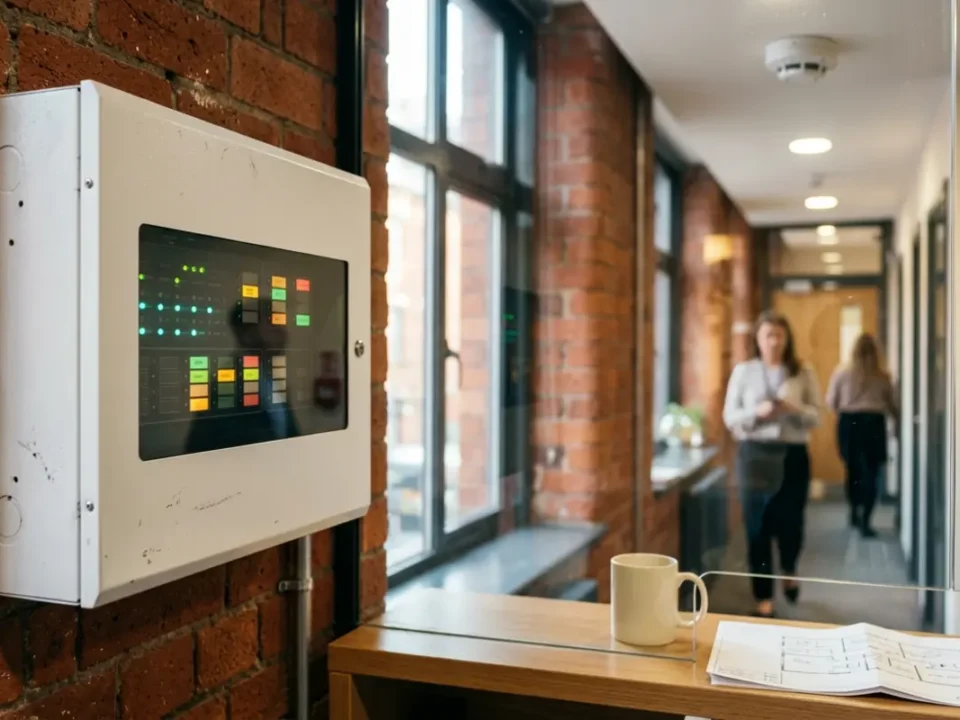
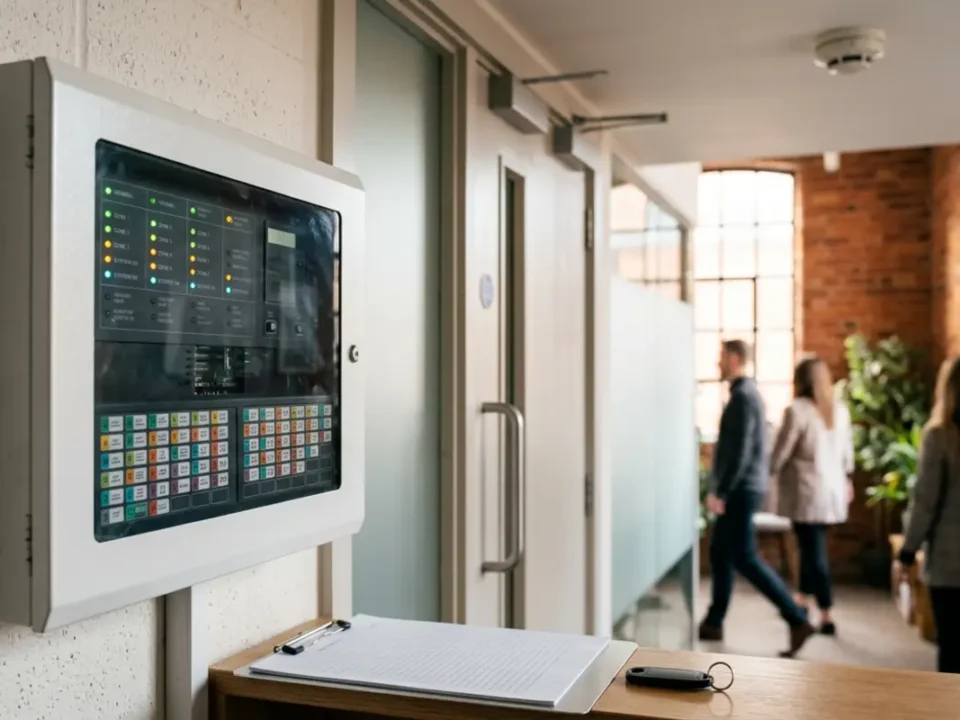
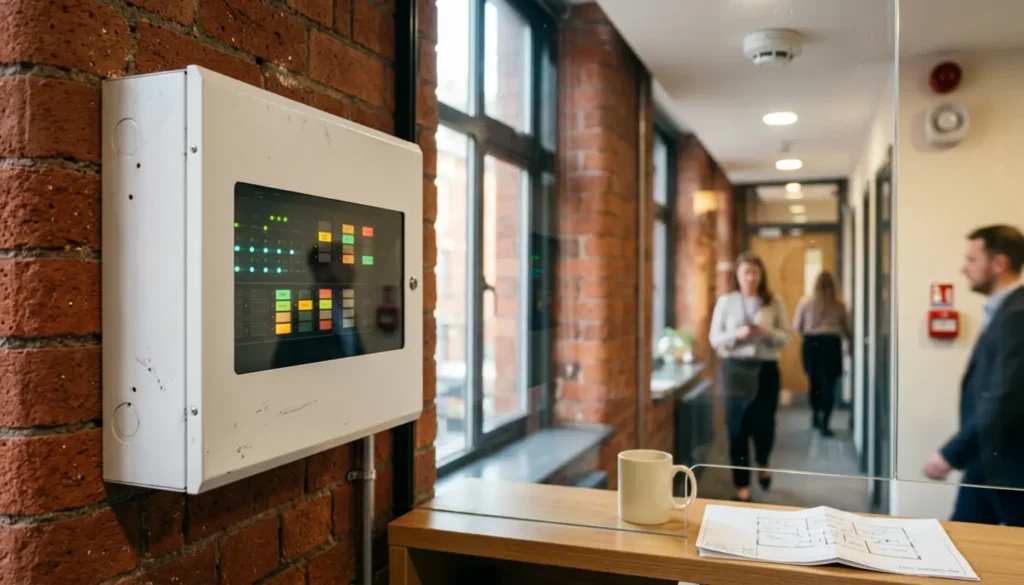
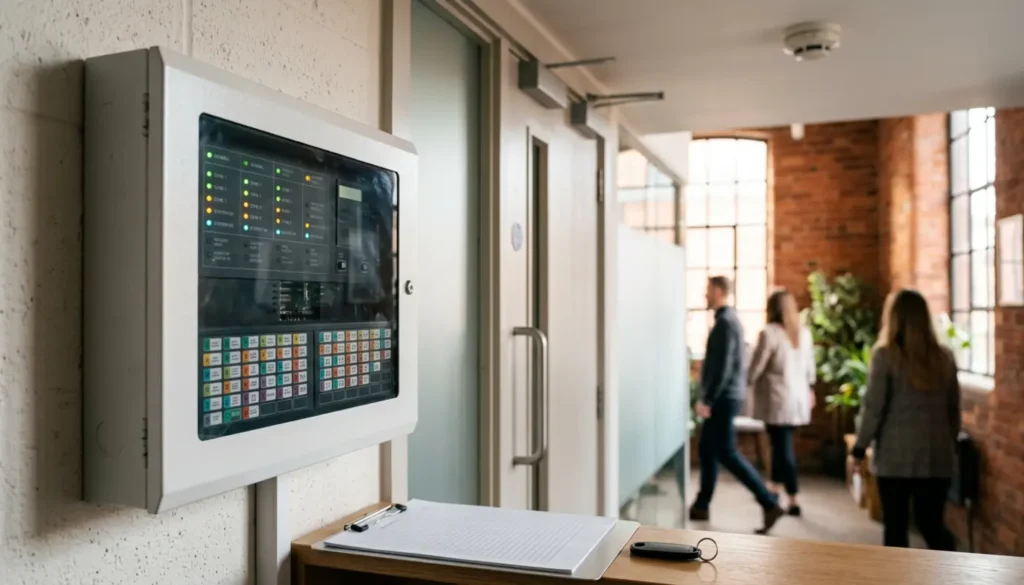
In commercial premises, the fire alarm procedure should already be clear to staff and visitors. That usually means following the evacuation plan, checking the fire alarm panel only if you are trained to do so, and recording the incident so repeated activations can be investigated properly.
Common Fire Alarm Causes
Fire alarms are designed to react quickly because early warning saves lives. The challenge is that smoke detectors can also react to harmless particles in the air, while fire alarm systems can show faults when parts are dirty, damaged, poorly positioned or due for maintenance.
Cooking Fumes, Burnt Toast And Frying
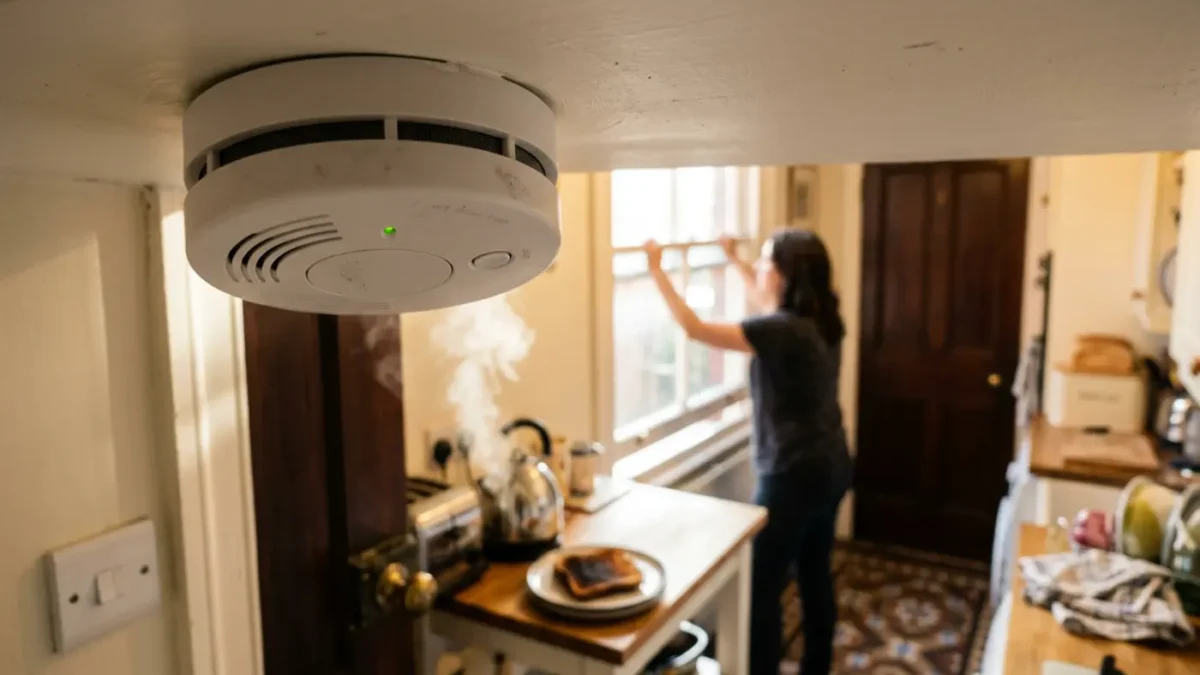
Cooking is one of the most common reasons a fire alarm goes off in UK homes, flats, student halls and shared kitchens. Burnt toast, frying oil, grilling, roasting and smoky pans can release tiny airborne particles that look like smoke to an optical smoke detector.
This is especially common in small flats, open plan homes and HMOs where the kitchen is close to a hallway detector. If the alarm nearest the kitchen keeps activating, improve ventilation, use the extractor fan, keep kitchen doors closed where suitable, and ask a competent person to review the detector type and position.
A heat alarm is usually more suitable than a smoke alarm in a kitchen because it reacts to temperature rather than normal cooking fumes. London Fire Brigade gives helpful public advice on choosing smoke and heat alarms, including why smoke alarms should not normally be placed too close to kitchens or bathrooms, in its home fire safety guidance.
Steam From Showers, Kettles And Boiling Water
Steam can trigger some smoke detectors because dense water vapour may enter the sensor chamber and confuse the device. This often happens in compact flats, poorly ventilated bathrooms, shared accommodation and properties where a bathroom opens directly onto a landing or corridor detector.
If the alarm sounds after someone uses the shower, steam is a likely cause. Kettles can create similar issues if they sit underneath or close to a detector, especially in studio flats and office kitchens. Better ventilation, opening windows where safe, using extractor fans and reviewing alarm placement can help, but alarms should not be moved casually because poor positioning can reduce early warning during a real fire.
Dust, Dirt And Insects Inside The Detector
Dust, grease, cobwebs and small insects can build up inside smoke detectors and interfere with the sensor chamber. The detector may then behave as though smoke is present, even when the room looks clear.
Gently cleaning around the alarm with a vacuum cleaner brush attachment can help, as long as you follow the manufacturer's instructions and avoid damaging the device. If a detector keeps activating after cleaning, or if it is in a dusty workshop or refurbishment area, it may need professional inspection or replacement.
Ageing Alarms Past Their Service Life
Many domestic smoke alarms are commonly replaced after about ten years, although the exact lifespan depends on the manufacturer, device type and environment. A sealed battery lasting ten years does not mean the alarm itself will work forever, even if it has sat quietly on the ceiling for years.
BS 5839 related guidance and manufacturer instructions should be considered when planning testing, maintenance and replacement for fire detection systems. In commercial buildings, device replacement is not just about age because servicing records, fault history, room conditions and the overall fire alarm design also matter.
Low Or Faulty Batteries
A short chirp every few minutes often points to a low battery, a fault warning or an end of life signal. This is different from a full continuous alarm, which should always be treated as a possible fire until checked.
Replace user replaceable batteries promptly, and if the unit has a sealed battery at the end of its life, replace the whole alarm. Do not remove the battery just to stop the sound because that leaves the property unprotected.
If the issue is a repeated beep rather than a full alarm, you may find extra practical advice in why your fire alarm keeps beeping.
Tradesperson Activity And Refurbishment Work
Building work is another common reason a fire alarm goes off, especially in offices, schools, care homes, shops and blocks of flats. Welding, grinding, cutting, soldering, sanding, drilling, plaster dust, demolition and paint spraying can all create smoke, heat, dust or airborne particles.
Temporary detector covers should only be used under an approved procedure by authorised people, and they must be removed immediately after the work. If part of a system is isolated during controlled works, suitable alternative precautions may be needed, such as a fire watch, clear communication and a final check before the area is handed back.
Vaping, Cigarette Smoke And Aerosols
Cigarette smoke and vape clouds can activate sensitive smoke detectors, particularly in enclosed rooms, toilets, student accommodation, offices and rented properties. It will not happen every time with every detector, but repeated activations should never be dismissed as definitely just vaping without checking for fire.
Aerosols can have a similar effect because tiny droplets float into the detector chamber. Hairspray, deodorant, dry shampoo, disinfectant, cleaning sprays and paint sprays should be used away from detectors and with good ventilation, especially in bedrooms, bathrooms, salons, changing rooms and office toilets.
Fire Alarm Faults And Poor Maintenance
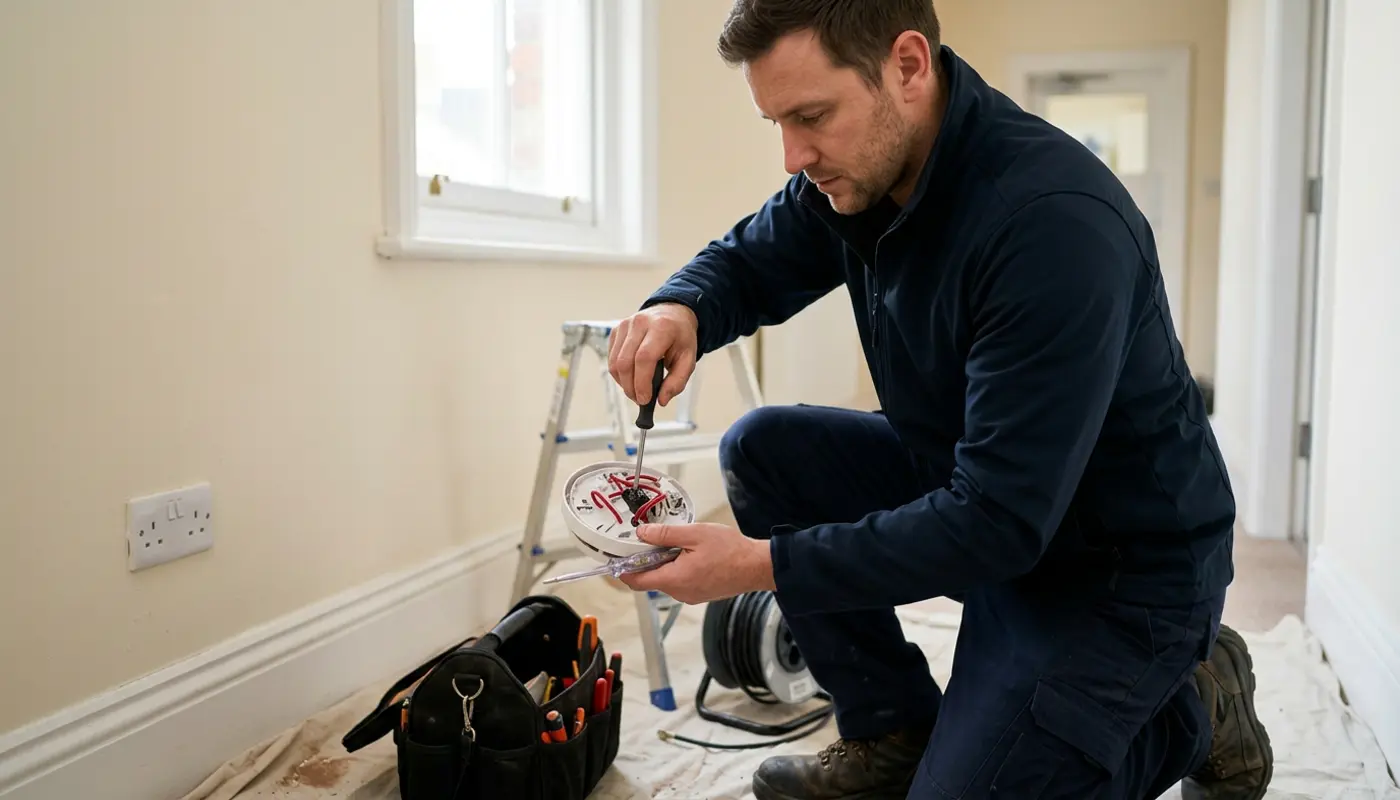
A fire alarm can go off because of an equipment fault rather than smoke in the room. Warning signs include a fault light, unusual panel messages, damaged call points, loose devices, water getting into equipment, damaged cables or repeated activations with no clear trigger.
Commercial fire alarm systems should be designed, installed, tested and maintained in line with BS 5839, with clear records for testing, servicing and defects. The Regulatory Reform Fire Safety Order 2005 also places duties on the responsible person to keep fire safety equipment in efficient working order and good repair.
For businesses, landlords and managing agents, a reliable maintenance plan helps spot problems before they become noisy, disruptive and expensive. iSecurity Solutions provides professional fire safety support for properties that need dependable fire detection and clear compliance records.
Real Fire Risks That Trigger Alarms
False alarms are frustrating, but real fires are the reason alarms exist, so no activation should be ignored. Electrical faults, overloaded sockets, candles, smoking materials, heaters, tumble dryers and lithium ion batteries can all create genuine smoke, heat and fire.
Electrical warning signs include hot plugs, scorch marks, flickering lights, buzzing sockets, burning smells and circuit breakers that keep tripping.
- If it is safe, switch off the affected appliance or circuit.
- If there is smoke, heat or fire, leave the building and call 999.
- If warning signs keep coming back, arrange a competent electrical inspection.
Tumble dryers need particular care because lint build up and blocked ventilation can create a serious fire risk. Clean filters, avoid running appliances unattended, and follow manufacturer instructions, especially in shared laundry rooms and busy family homes where machines work hard.
Lithium ion batteries in phones, laptops, vapes, e bikes, e scooters and mobility devices also need sensible charging habits.
- Use the correct charger for the device.
- Avoid damaged batteries and swollen devices.
- Charge on a hard surface, away from beds, sofas and piles of coats.
- Keep charging devices away from escape routes.
How To Spot Different Fire Alarm Problems
A continuous fire alarm with smoke, heat or a burning smell should be treated as a real fire, so evacuate and call 999. A short chirp at regular intervals usually means low battery, end of life warning or a fault, but it still needs action rather than being ignored.
An alarm after cooking usually points to fumes, poor ventilation or unsuitable detector location, while an alarm after a shower often points to steam. Activation during sanding, welding or decorating suggests dust, smoke, heat or aerosol particles, while repeated activations with no obvious cause need a competent inspection.
If a commercial panel shows a fault, note the message and follow your site procedure. Do not keep resetting the panel without investigating because repeated resets can hide a real issue and leave the responsible person without a clear record of what happened.
Fire Alarm Advice For Landlords And HMOs
Landlords need to make sure fire alarm arrangements are suitable for the property and the people living there. In England, smoke alarms are usually required on every storey used as living accommodation, and carbon monoxide alarms are required in certain rooms with fixed combustion appliances.
If a tenant reports a faulty alarm and it is found not to be working properly, it must be repaired or replaced. For HMOs and shared accommodation, the risk of nuisance alarms can be higher because shared kitchens, communal corridors and several people cooking at different times all increase the chance of repeated activations.
Good ventilation, suitable detector selection, clear tenant instructions and regular checks help reduce unwanted alarms without compromising safety. Licensed HMOs may also have additional local authority requirements, and commercial grade systems may be needed depending on the property layout and risk.
Fire alarm design and maintenance should align with BS 5839 where relevant, and landlords should keep evidence of testing, servicing and repairs. Clear records are useful for safety, compliance and insurance discussions if an incident occurs.
Fire Alarm Advice For Workplaces And Sites
In workplaces, the responsible person should make sure fire alarm arrangements are suitable for the building, the people inside it and the work being carried out. That includes routine testing, servicing, defect repairs, staff training and clear records.
Refurbishment sites need extra control because hot works and dusty works can create both fire risks and unwanted alarm activations. Hot work permits, agreed isolation procedures, detector protection, contractor briefings, fire watches and end of day inspections are all part of keeping the building safe.
If the building use changes, the fire detection strategy may need review. A room that was once a quiet office but becomes a workshop, kitchen, laundry, store room or server area may need a different detector type or updated cause and effect programming under BS 5839 principles.
How To Reduce Fire Alarm Activations Safely
The safest way to reduce nuisance fire alarm activations is to fix the cause, not weaken the protection. A good solution should make unwanted alarms less likely while keeping early warning in place for a real fire.
- Review detector locations if alarms keep activating in the same area.
- Use heat alarms in suitable kitchen areas where appropriate.
- Improve bathroom and kitchen ventilation.
- Keep detectors clean and replace ageing units.
- Manage aerosols, vaping and dusty work sensibly.
Do not permanently cover a detector, remove batteries, disconnect devices or move alarms without competent advice. A fire alarm that never sounds because it has been disabled is not a safe solution, even if it makes breakfast quieter.
For commercial systems, routine servicing is essential because it checks devices, panels, sounders, batteries, wiring and records. To understand what good servicing should look like, read commercial fire alarm servicing frequency for practical maintenance guidance.
SSAIB Insurance Approved Fire Safety Support
iSecurity Solutions supports UK homes and businesses with reliable fire safety, CCTV, intruder alarms, access control and construction site monitoring. Our team designs tailored systems that protect people and property around the clock, with responsive service and modern remotely monitored technology where suitable.
For wider property protection, working with an SSAIB certified and Insurance Approved provider can support safer, more reliable security arrangements across the site. Fire alarm work should still follow the correct fire safety standards, including BS 5839 where relevant, so your system is designed, installed and maintained with care.
Final Thoughts
Most fire alarm activations have an explainable cause, from toast and steam to dust, batteries and refurbishment work. The key is to treat every activation seriously first, then investigate safely and record what happened so the same issue does not keep coming back.
If alarms are repeatedly going off, chirping, showing faults or causing disruption in a home, HMO or workplace, it is worth getting competent advice. A well designed and well maintained fire alarm system protects people, supports compliance and helps everyone get on with the day with fewer unexpected sirens.
Frequently Asked Questions
Why Does My Smoke Alarm Go Off When I Cook?
Cooking fumes from burnt toast, frying, grilling or overheated pans can enter a nearby smoke detector and look like fire particles. Better ventilation and the correct detector type, often a heat alarm for kitchens, can reduce the problem.
Can Steam Trigger A Fire Alarm?
Yes, dense steam from showers, kettles or boiling water can trigger some smoke detectors, especially in small flats and poorly ventilated spaces. If it keeps happening, improve ventilation and ask for competent advice before moving any alarm.
Why Is My Smoke Alarm Chirping Every Few Minutes?
A regular chirp usually means a low battery, fault warning, contamination or end of life signal. Replace the battery if the model allows it, or replace the whole unit if it has reached the end of its stated life.
Should I Remove The Battery If The Alarm Keeps Going Off?
No, you should never leave an alarm disabled. Investigate the cause, ventilate if safe, use the approved hush button if available, and arrange repair or replacement if needed.
Do Fire Alarm Systems Need Professional Maintenance?
Yes, commercial fire alarm systems should be maintained in line with BS 5839 by a competent provider, with records kept for testing, servicing and faults. Where wider security systems are involved, an SSAIB certified and Insurance Approved provider can also support compliant, reliable protection across the property.