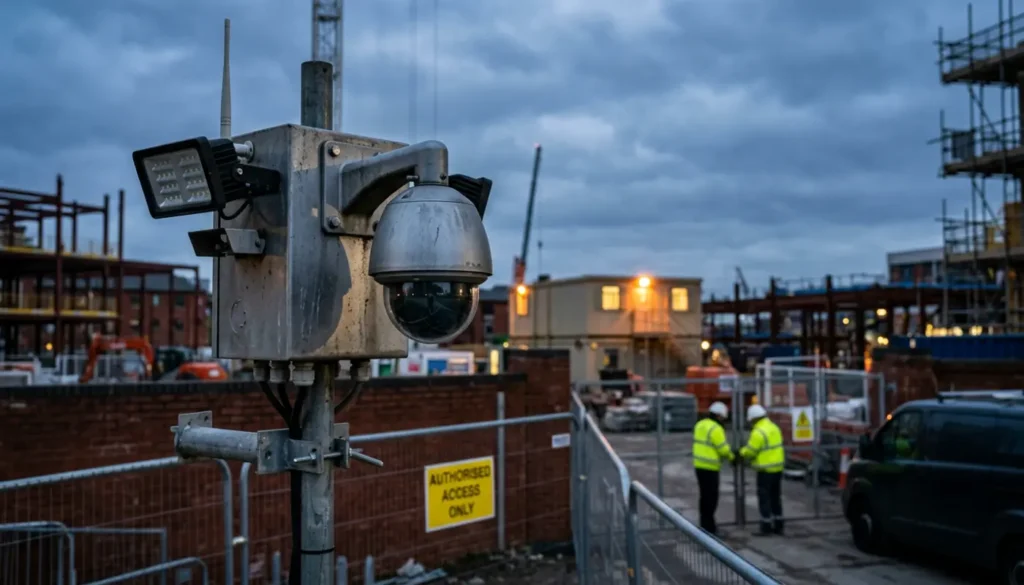
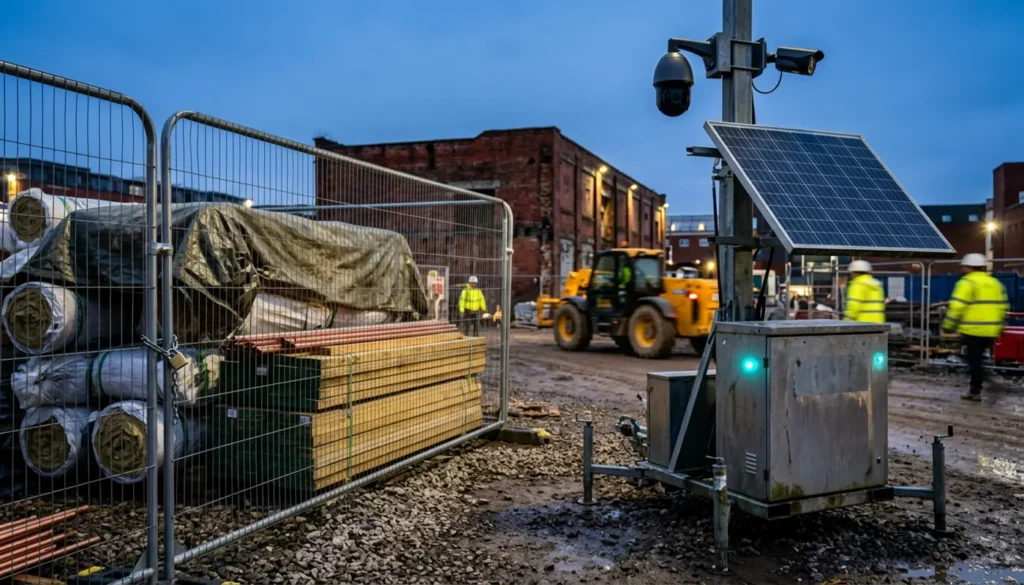
How Long Can Construction Cameras Record?
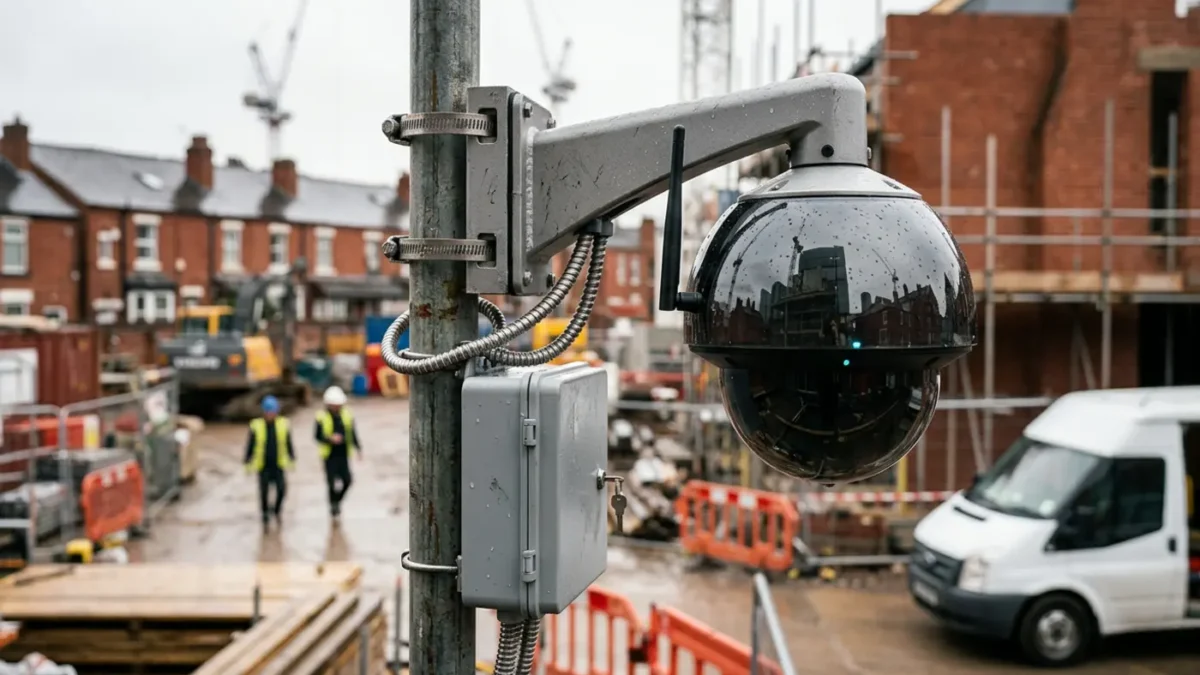
Construction Cameras Recording Time
Construction cameras can record from a few days to several months, depending on storage size, camera settings, power supply, mobile signal and whether they record all the time or only when motion is detected. A small camera with an SD card may keep footage for days or weeks, while a larger NVR system with high capacity hard drives can store video for much longer.
Recording time matters because UK construction sites are often targeted for plant theft, fuel theft, cable theft, vandalism and unauthorised access after hours. When something happens, useful footage can help prove what took place, support an insurance claim and give the police clearer evidence.
iSecurity Solutions is a trusted UK provider of commercial and domestic security systems, helping homes, businesses and construction sites stay protected around the clock. Our team designs reliable, tailored CCTV, intruder alarm, fire safety, access control and construction site monitoring solutions, backed by responsive service and modern remotely monitored technology.
Construction Cameras Recording Duration At A Glance
Construction cameras recording duration depends on the system design, but there are sensible ranges to use when planning site security. A single motion activated camera may keep footage for several days or weeks, while a larger recorder with several terabytes of storage can retain video for weeks or months.
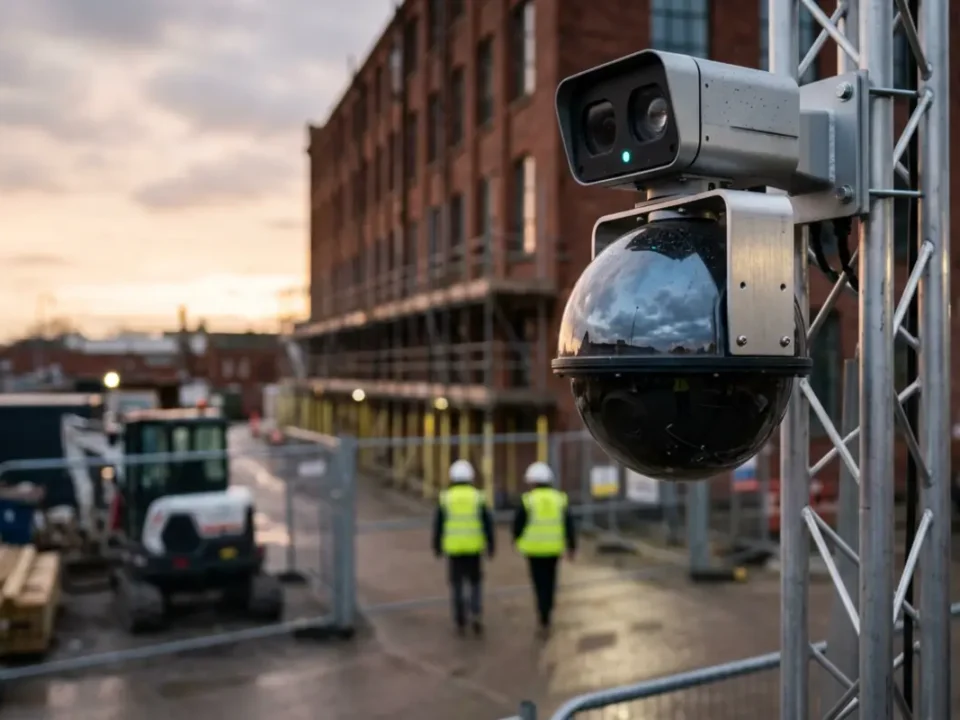
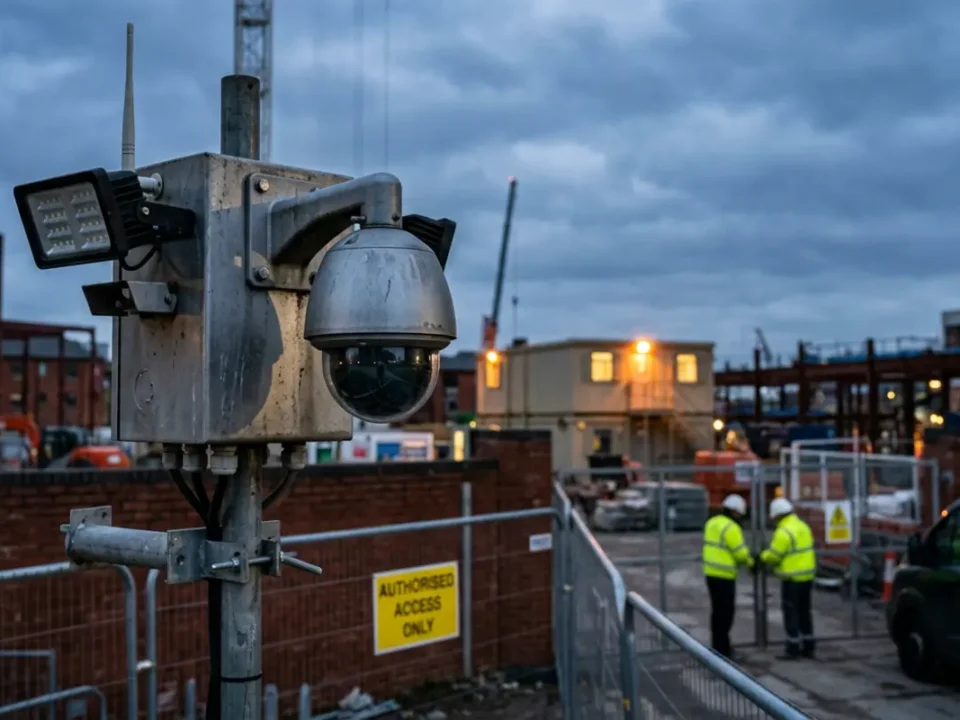
For sites that need temporary or long term protection, construction site security cameras can be designed around the site layout, risk level, working hours and how quickly incidents are usually noticed.
A single 1080p camera on motion recording will normally store far more days than a 4K camera recording continuously. Four or eight cameras recording day and night will use storage much faster, especially if they cover busy gates, vehicle routes, site entrances or areas with regular movement.
If you need footage for insurance, remote monitoring or a longer safety net before video is overwritten, that should shape the storage plan before installation. It is much easier to size storage correctly at the start than to find out later that the key footage disappeared too soon.
As a rough guide, SD card storage suits smaller or temporary areas, DVR or NVR hard drives suit multi camera systems, and cloud storage works well where remote access and off site backup are important. Hybrid systems are often the most dependable choice because they use local storage for full recording and cloud storage for alerts, clips and key events.
How To Calculate CCTV Recording Time
The simplest way to calculate CCTV recording time is to compare available storage with daily storage use. If your system uses 50GB per day and you have 1TB of usable storage, you may get around 20 days of recording before the oldest footage is overwritten.
A more technical estimate is storage required equals bitrate multiplied by seconds per day, multiplied by the number of cameras, multiplied by retention days, divided by 8. Bitrate means how much video data the camera creates every second, usually measured in megabits per second.
For example, one 1080p camera recording at a moderate bitrate may use far less storage than one 4K camera at a high frame rate. If four cameras use the same settings, storage use is roughly four times higher, which is why multi camera sites need proper storage planning rather than guesswork.
Real results vary because cameras may use constant bitrate or variable bitrate. Variable bitrate changes depending on what is happening in the scene, so rain, moving trees, flashing lights, headlights, machinery and people walking through the site can all increase video data.
Key Factors That Affect Recording Time
Resolution has a big effect on how long construction cameras record. 1080p gives useful general detail, 4MP can help with faces and vehicle details, and 4K provides sharper images but uses much more storage unless settings are carefully managed.
Frame rate also matters because it controls how many images are captured each second. A higher frame rate can be useful at entrances, loading bays and vehicle gates, but it also creates larger video files, so there is little value in using very smooth video to record an empty area overnight.
Compression helps reduce storage without simply lowering image quality. H.264 is widely compatible, while H.265 can often reduce bitrate and storage needs, although the actual saving depends on the camera, scene movement, lighting, hardware and recording settings.
Camera count is another important factor. If one camera records for 30 days on a given storage setup, four similar cameras with the same settings may reduce that to around a quarter of the time unless storage capacity is increased.
Lighting and movement can make a real difference. A quiet compound at night may use less data than a busy entrance with headlights, rain, reflective hi vis clothing, passing traffic and a loose banner moving in the wind.
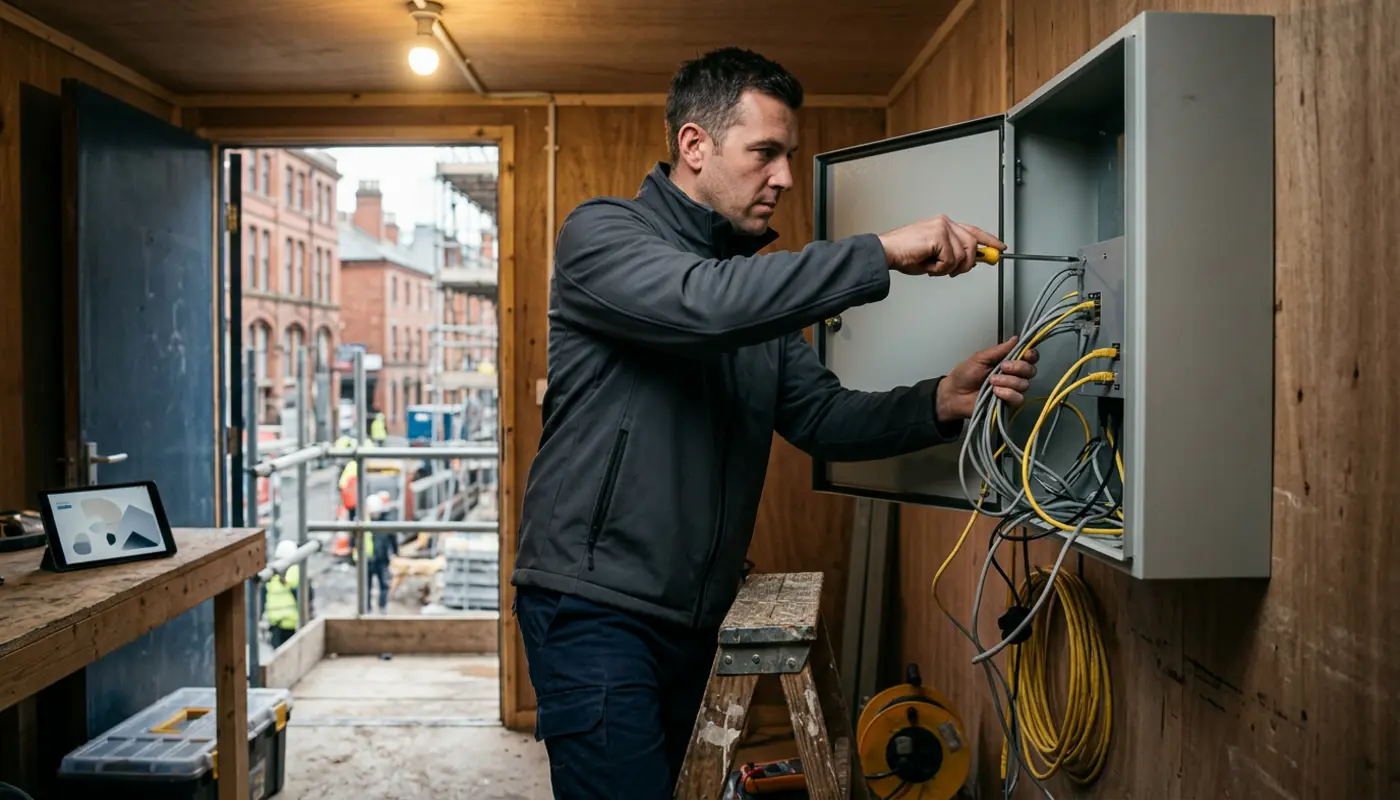
Storage Options For Construction Site CCTV
SD Cards
SD cards are often used for edge recording, which means footage is stored inside the camera itself. They are useful for small sites, temporary areas, backup recording and locations where running cables to a central recorder is not practical.
The downside is that capacity is limited, and if the camera is stolen or damaged, the footage stored inside it may be lost too. High endurance cards are strongly recommended because ordinary cards can wear out quickly when video is being written and overwritten every day.
DVR And NVR Hard Drives
DVR systems are generally used with compatible analogue cameras, while NVR systems are used with IP cameras that send video over a data network. NVR systems are common on modern construction sites because they can support higher resolution cameras, remote access and flexible layouts.
An NVR with several terabytes of storage can record for weeks, depending on camera count and settings. It should be kept in a locked, ventilated and secure location because the recorder is the heart of the system, and losing it can mean losing the evidence as well.
Cloud Storage
Cloud storage keeps footage or event clips off site, which is valuable if equipment is damaged, stolen or vandalised. It also allows authorised users to view video remotely, receive alerts and share evidence more easily with insurers or the police.
The trade off is cost and connectivity. Cloud recording depends on upload speed, mobile data allowance, subscription terms, clip length, resolution and whether the camera uploads continuously or only after an event.
Hybrid Storage
For many UK construction sites, hybrid storage is the sensible middle ground. Local recording gives longer retention and full timelines, while cloud clips protect important events and make remote monitoring easier.
Continuous Versus Motion Activated Recording
Continuous recording captures everything, which is ideal for higher risk areas such as gates, plant compounds, fuel storage and material zones. It reduces the chance of missing an event, but it uses far more storage and can create more footage to review.
Motion activated recording saves footage only when movement is detected, so it can greatly extend storage time. It is useful for compounds, perimeters and temporary camera positions where there should be little or no activity outside working hours.
The catch is that motion detection must be set up properly. Poor sensitivity settings, badly drawn detection zones, low lighting, rain, wildlife, moving shadows and camera shake can cause missed events or too many false alerts, which is when the system starts acting like a nervous doorbell.
A good setup often combines both methods. Critical areas can record continuously, while lower risk areas can use motion triggered recording with pre event and post event recording so the moments before and after the trigger are captured too.
Power Supply And Battery Life
Mains powered cameras are the most reliable option where temporary or permanent electricity is available. They can support continuous recording, infrared lighting, remote access and stable operation, provided the power supply is protected against tampering and outages.
Battery powered cameras are useful for short projects, remote areas and temporary works, but battery life depends on recording mode, temperature, mobile signal, night vision use and how often alerts are sent. Continuous recording can drain batteries quickly, so event based recording is usually more practical.
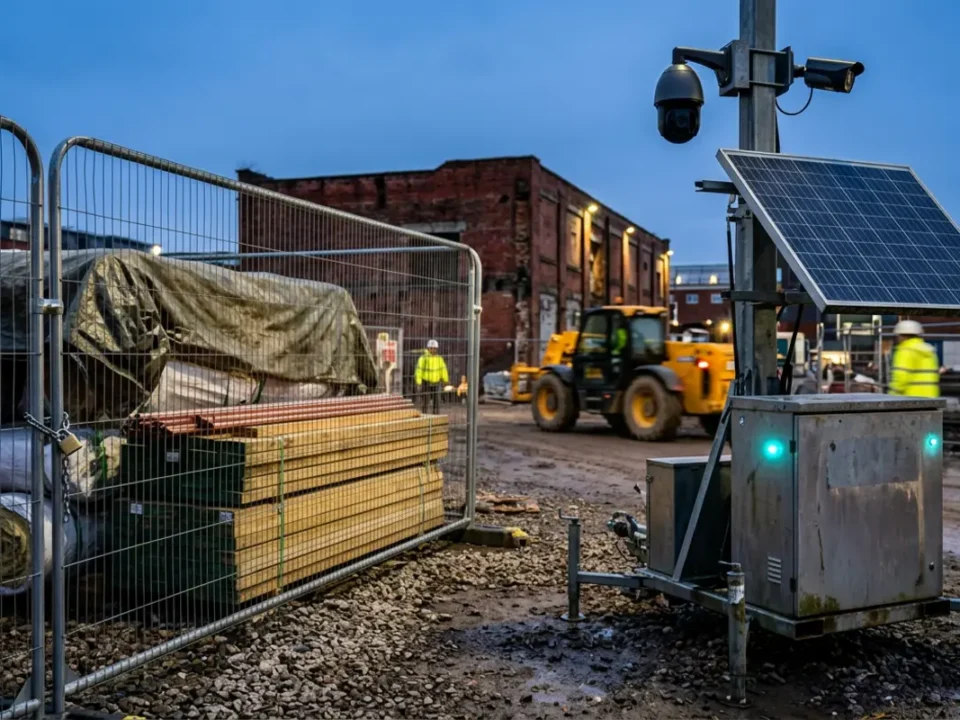
Solar powered CCTV can work well on construction sites without fixed power, especially when paired with a suitable battery. The design must allow for UK winter conditions, shading from buildings or scaffolding, short daylight hours and the real power use of the camera.
For dependable performance, include battery backup, power loss alerts, surge protection, safe mounting and regular maintenance checks. A camera that runs well in July may need extra support in January, because British weather has a habit of testing security equipment.
4G, 5G And Remote Monitoring
Mobile connected construction cameras can send alerts, provide live viewing, upload event clips and support remote monitoring without fixed broadband. This is especially useful for rural sites, temporary compounds and early project stages before services are installed.
The important point is upload speed, not just signal bars. A phone might show a decent signal, but the camera still needs enough upload capacity to send video reliably, especially if several cameras are active or someone is viewing live footage.
Before installation, test coverage at the exact camera positions, not just at the site cabin or postcode. The Ofcom mobile coverage checker is a useful starting point, but real site testing with the intended network or a multi network SIM is still worth doing.
Where the mobile signal is weak, external antennas, local fallback recording and store and forward uploading can help. This means the camera keeps recording locally if the connection drops, then uploads when the signal returns.
UK CCTV Retention And Legal Considerations
There is no automatic legal rule that says UK construction CCTV must be kept for 30 days. Under UK GDPR and the Data Protection Act 2018, footage should be kept only for as long as necessary for the purpose it was collected.
A sensible retention period should be documented and based on site risk, how quickly incidents are normally reported, insurance expectations, contract requirements and the type of footage being captured. If a theft or incident is discovered, relevant footage should be exported or locked straight away so it is not overwritten.
As practical examples, short term works may only need a few days or a couple of weeks, while higher risk sites, plant compounds or monitored compounds may justify longer retention where it is necessary and proportionate. These are examples, not fixed legal rules, so the retention period should always match the reason for recording.
Construction CCTV can capture workers, visitors and members of the public, so signage matters. Signs should explain that CCTV is in operation, why it is being used, who controls it and how people can make enquiries.
Access to footage should be limited to authorised people, and exports should be handled securely. Privacy zones may be needed to avoid filming neighbouring homes, public areas or welfare spaces where surveillance would be excessive.
If your wider site plan includes monitored CCTV, intruder alarms or perimeter detection, SSAIB and Insurance Approved installation is often important for insurer confidence. SSAIB and Insurance Approved status is also the prerequisite for a Police Response URN where police response is required. CCTV and intruder alarm design should also consider BS EN 50131 where relevant to system grading and connected security measures. Some projects may ask for an NSI approved installer or an SSAIB and Insurance Approved installer, so it is worth checking insurer and contract requirements early.
Construction Camera Costs In Pounds
Construction camera costs in 2026 vary because each site has different risks, power options, storage needs and monitoring requirements. A small temporary setup may cost much less than a large commercial build with multiple cameras, solar units, NVR storage, analytics and live monitoring.
Hire can suit short projects, fast deployments and changing site layouts because the equipment, support and maintenance are usually built into the arrangement. Purchase may be better for long term developments or contractors who want to reuse equipment across several projects.
- Camera hire: £150 to £500 per month, often suitable for short projects and temporary sites.
- Camera purchase: £250 to £1,500 per camera, often suitable for long term use across several projects.
- Storage upgrades: £80 to £400 plus, useful where longer local recording retention is needed.
- Cloud subscriptions: £10 to £60 per camera per month, useful for remote access and event backup.
- SIM data plans: £10 to £80 per month, needed for 4G or 5G connected sites.
The main cost drivers include camera resolution, number of cameras, storage size, SD card upgrades, NVR hard drives, cloud subscriptions, SIM data plans, installation labour, mounting equipment, solar or battery hardware and ongoing monitoring. Extra storage is usually cheaper than losing evidence after a serious incident, so it is worth planning properly at the start.
Would you rather pay a little more for extra retention now, or explain later why the key footage disappeared two days too soon? It is not a pleasant conversation, especially when insurers are involved.
You can also compare related planning advice in how many CCTV cameras a construction site needs, especially if you are still deciding how many views are needed before calculating storage.
Choosing The Right Setup By Site Type
Small refurbishment projects often need one or two cameras covering entrances, tools and materials. Motion recording, SD card storage or a compact cloud plan may be enough, especially where mains power is available and the project is short.
Housing developments usually need multiple cameras, overlapping perimeter views, gate coverage, local NVR storage and 4G or 5G connectivity where broadband is not yet installed. Retention should be planned around how often managers visit the site and how quickly problems are usually spotted.
Large commercial builds often need higher resolution cameras, calculated NVR capacity, backup power, remote monitoring, cloud event backup and strict access controls. These sites benefit from a proper security risk assessment because the layout changes as the build progresses.
Temporary or remote sites need strong equipment, solar or battery power, mobile connectivity, local fallback recording and regular checks. If the site is rural, do not assume every network will work equally well, because a few metres can make a difference to signal strength.
Final Thoughts On Construction Camera Recording
Construction cameras can record for days, weeks or months, but the useful answer depends on storage, resolution, frame rate, compression, camera count, power and recording mode. The best system is not always the one with the longest recording time, but the one that keeps the right footage for the right period and protects it when something happens.
For most UK sites, the safest approach is to calculate storage before installation, use motion recording where appropriate, protect key areas with continuous recording, test mobile connectivity and document retention rules. That way, your cameras are not just watching the site, they are helping you prove what happened when it matters.