Why Is Remote CCTV Monitoring Useful for Builders?
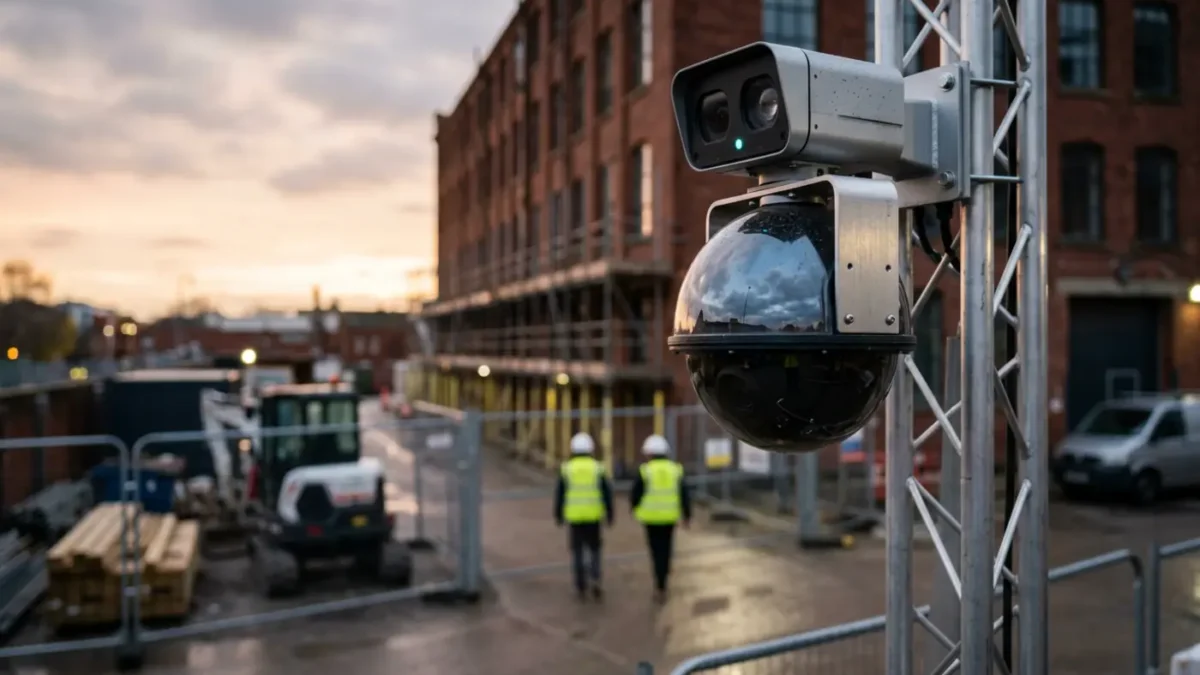
Remote CCTV Monitoring For Builders
Remote CCTV monitoring helps builders protect UK construction sites when nobody is on site. It detects suspicious activity, lets trained operators check live footage, and supports a fast response before theft, damage or delay becomes a costly problem.
Building sites are tempting targets because tools, plant, copper, cabling, diesel, scaffolding and materials can be valuable, easy to move and hard to trace once removed. For builders working to tight margins in 2026, one bad weekend can lead to replacement costs, delays, insurance excesses and difficult client conversations on Monday morning.
iSecurity Solutions is a trusted UK provider of commercial and domestic security systems, helping homes, businesses and construction sites stay protected around the clock. Our team supports builders, developers and site managers with practical security systems, including monitored CCTV, site cameras, alarms and tailored response procedures that fit the way construction projects actually run.
What Remote CCTV Monitoring Means For Construction Sites
Remote CCTV monitoring is different from simply recording footage. A recording only system may show what happened after a break in, while active CCTV monitoring alerts a monitoring station when movement is detected, so an operator can check the live images and decide whether the threat is real.
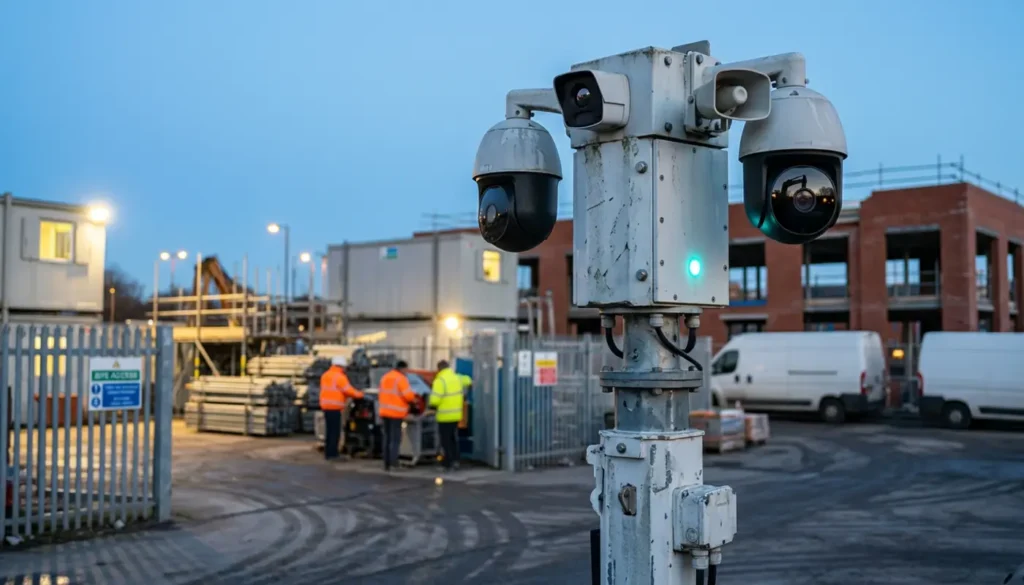
On a construction site, this usually means cameras, smart detection or external sensors spot activity near gates, compounds, scaffolding or storage areas. The operator can view the event, use audio warnings where fitted, notify a keyholder, contact a response team, or escalate to police where the agreed process and circumstances allow.
For builders comparing options, construction site security cameras are most useful when they are planned around real site risks, not just placed where they look neat on a drawing. Access points, blind spots, public boundaries and valuable assets all need proper coverage.
How It Helps Deter Theft Before Tools And Materials Disappear
Theft from building sites is not limited to expensive diggers. Thieves often target items that are easy to move quickly, such as:
- Power tools and batteries
- Copper pipe and cabling
- Diesel and generators
- Scaffolding boards and fencing
- Lighting, fuel bowsers and newly delivered materials
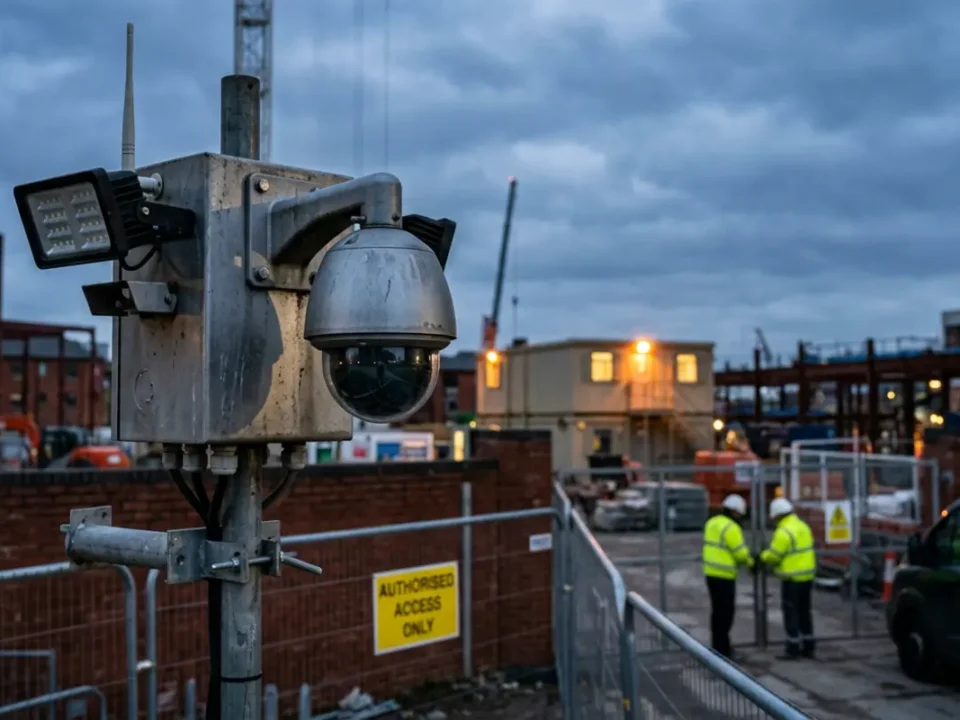
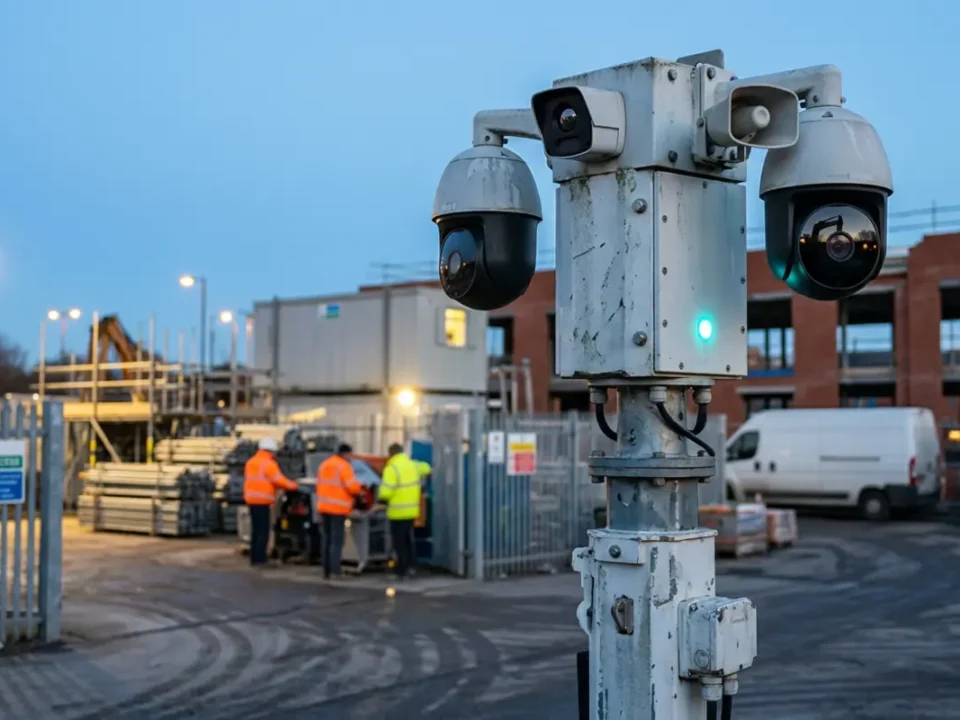
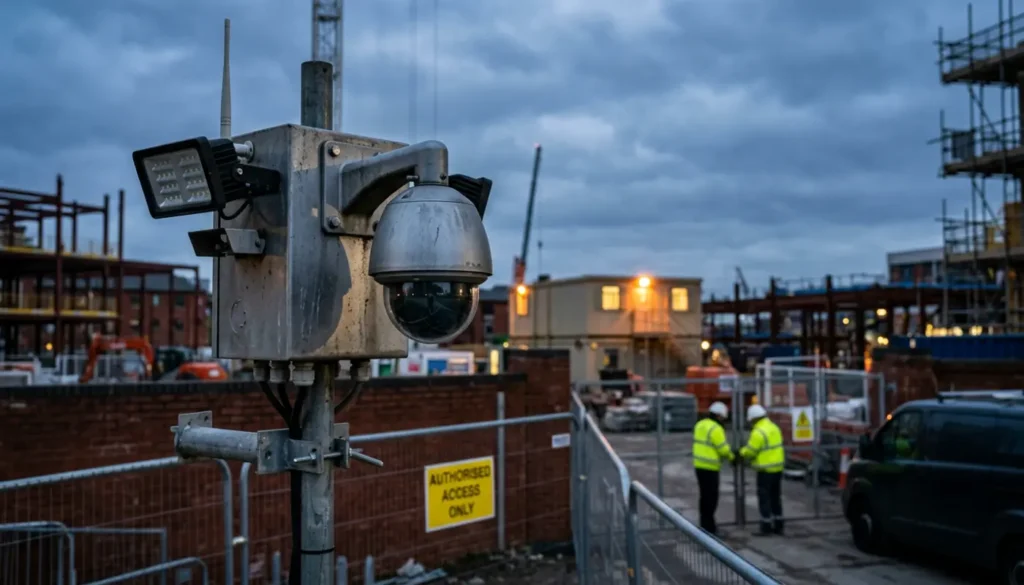
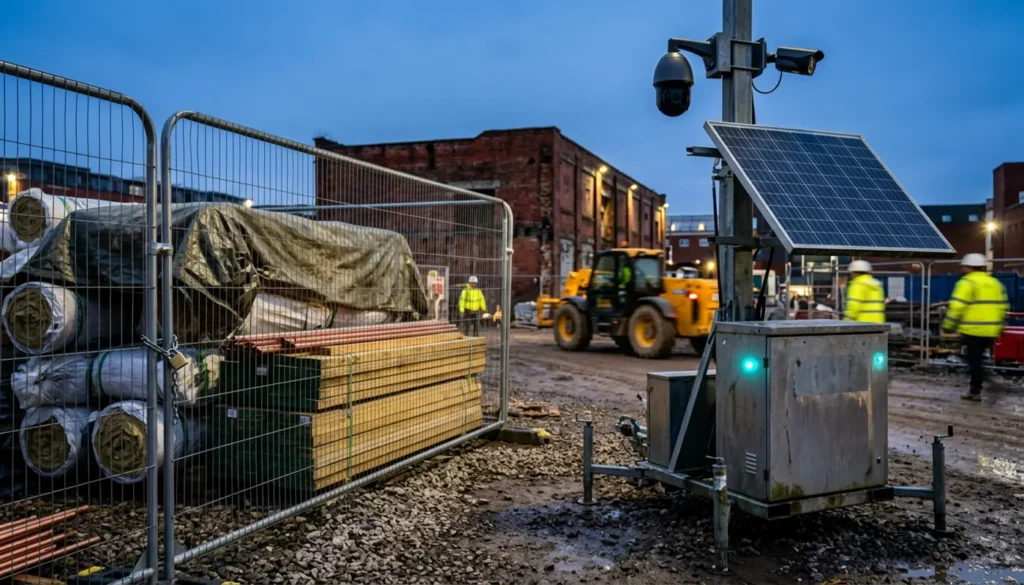
Visible CCTV towers, warning signage, lighting and speakers make a site feel watched. That matters because many opportunist thieves prefer easy targets, and a camera that can talk back is far less inviting than a quiet compound with a padlock and a hope for the best.
Remote monitoring is especially useful because it reduces the gap between intrusion and action. If someone climbs a fence at 2 am on a Sunday, the system can raise an alert while they are still on site, instead of leaving you to find the damage when the first trade arrives.
CCTV should still be part of a layered construction site security plan. Strong fencing, locked gates, secure containers, fuel controls, plant immobilisers, asset marking, serial number records and good key control all make monitored cameras more effective.
How It Can Reduce Financial Losses And Insurance Pressure
The cost of site theft is rarely just the value of what was stolen. A £12,000 loss in tools and materials might also create extra costs that quickly add up:
- A £2,500 policy excess
- £1,200 in emergency hire
- £2,000 in labour standing time
- Further delay costs if the programme slips
Insurance can help, but it is not a magic wand. Contractors' All Risks policies, plant cover and material damage cover may include excesses, theft conditions, storage rules, unattended site clauses or sub limits, so it is worth checking the wording before assuming everything is covered.
Remote CCTV monitoring may support risk management discussions with insurers, especially where your policy asks for monitored security, secure storage or out of hours protection. It does not automatically reduce premiums, but fewer avoidable claims can help protect your claims history and support future underwriting conversations.
Why It Protects Sites During Nights, Weekends And Bank Holidays
Construction sites are often most vulnerable when they are quiet. Nights, weekends, Christmas shutdowns, Easter breaks and bank holidays can leave sites unmanned for long periods, and that gives intruders time to force gates, strip cable or damage temporary works. Is your site most exposed when everyone has packed up for the weekend?
Out of hours monitoring creates a clear plan for what happens when the site team has gone home. Good arrangements should cover:
- Monitoring hours and keyholder details
- Escalation steps and physical response
- Maintenance support and battery status
- Network checks and alert handling
- Public holiday procedures
For sites close to housing estates, schools or public footpaths, monitoring also helps spot trespassers before curiosity becomes danger. Children entering a site after hours is not just a nuisance issue, it can become a serious safety incident very quickly.
How It Can Cost Less Than Round The Clock Guarding
A continuously staffed guarding post needs 168 hours of cover each week. At an indicative £18 to £25 per hour, that is roughly £3,024 to £4,200 per week before VAT, and that simple calculation does not include supervision, relief cover, travel, equipment or site specific contract terms.
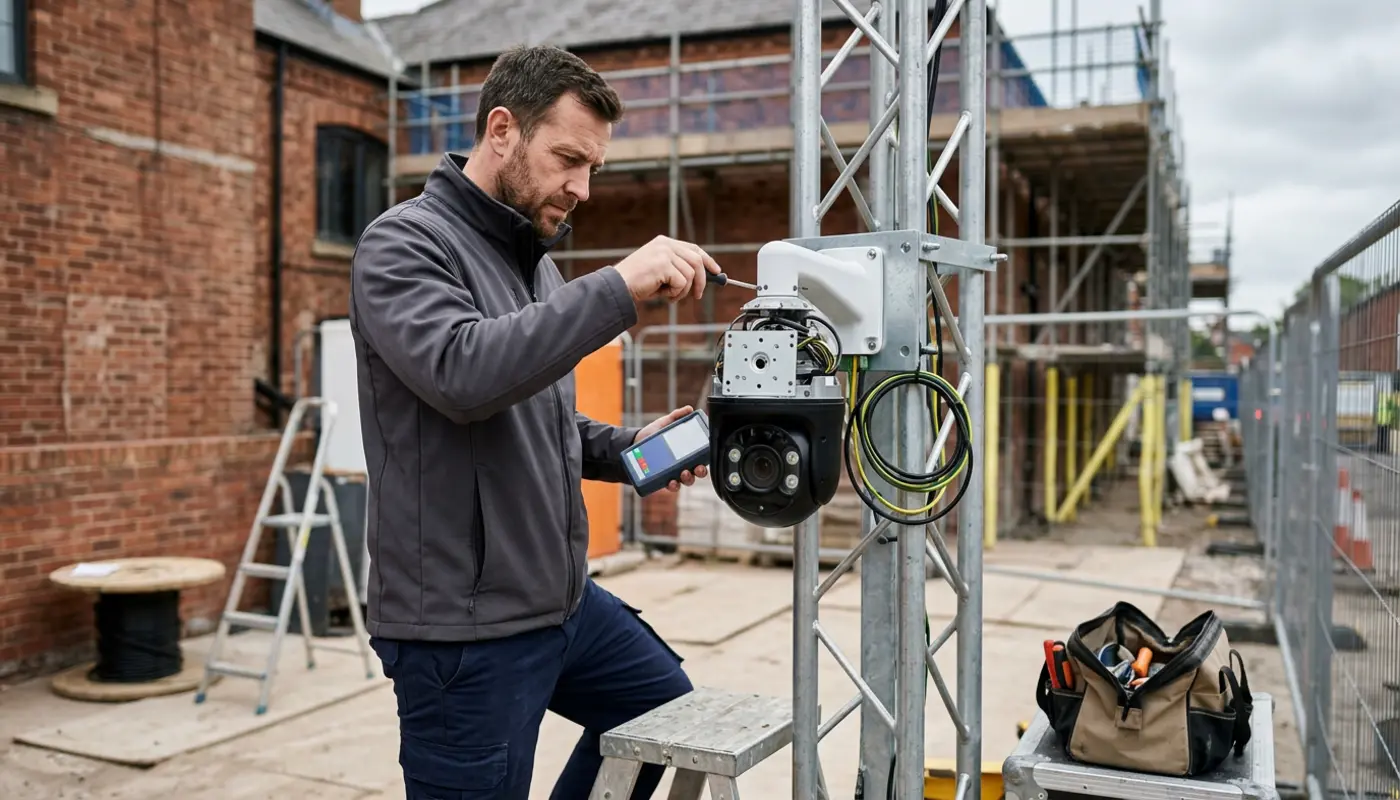
Remote CCTV monitoring has its own costs, including mobilisation, camera tower rental, monitoring fees, 4G connectivity, maintenance, lighting, audio equipment and call out arrangements. Even so, for many temporary sites it can offer wide visual coverage without the weekly labour cost of a permanent guard.
It is not always a complete replacement for manned guarding. A guard may still be better where you need physical searches, visitor control, regular vehicle management, welfare checks or immediate on site action.
A hybrid model can work well on higher risk projects. Remote CCTV detects and verifies activity, while a guard, keyholder or response team attends when the situation needs a physical presence.
How It Supports Verified Response And Police Escalation
One of the biggest benefits of monitored CCTV is verification. Instead of sending a vague alarm signal, the monitoring operator can look at the footage and confirm whether there appears to be a genuine incident, such as people cutting a fence, entering a compound or loading materials into a vehicle.
Police escalation depends on the circumstances, the quality of information and the relevant police force procedures. A 999 call may be appropriate where a crime is in progress, while a police linked system may require compliance with NPCC requirements and a Police Response URN, which is a Unique Reference Number used to identify an eligible security system.
For detector activated CCTV, intruder alarms and perimeter detection, SSAIB certification is an important prerequisite for an Insurance-Approved installation and Police Response URN eligibility. Systems should also be designed with BS EN 50131 in mind, commonly Grade 2 or Grade 3 depending on the risk level, site value and insurer requirements.
If police response matters to your project, do not leave it vague. Ask the supplier clear questions before agreeing anything. Confirm whether the monitoring centre is compliant, whether the installation supports URN application, what evidence operators provide, and whether response is keyholder only or police linked.
You can also read more about site monitoring options in remote CCTV for construction sites, which explains how live monitoring works in more detail.
How It Helps Prevent Trespass, Vandalism And Public Risk
Sites near schools, housing estates, public paths, railway lines, car parks and busy roads face a different kind of risk. Not everyone entering a site is there to steal, but trespass, vandalism and unsafe access to scaffolding can still create major problems.
Monitored CCTV can identify people climbing fencing, trying scaffold ladders, entering partly demolished buildings or wandering into restricted areas. Where loudspeakers are fitted, operators can issue a calm warning such as, You are on a construction site and must leave immediately, which often ends the incident before anyone gets hurt.
The Health and Safety Executive explains that construction sites should take reasonable steps to prevent unauthorised access, especially where the public could be exposed to danger. Its guidance on protecting the public is a useful reference for builders planning site boundaries, access controls and public safety measures.
Under the CDM Regulations 2015, CCTV does not replace fencing, gates, risk assessments or active site management. It supports those controls by helping dutyholders spot problems quickly and review what happened afterwards.
How It Provides Evidence For Insurers, Police And Disputes
Good footage can be valuable long after the alert has ended. Time stamped video can show when an intrusion happened, which vehicle entered, what was taken, whether a gate was left open, or whether damage happened before or after a contractor attended.
This evidence can help with police reports, insurance claims, client discussions and subcontractor disputes. It can also support internal investigations, especially where there is disagreement about delivery times, missing materials, site access or damage to temporary works.
Evidence quality matters, so cameras need clear views, accurate timestamps, secure storage, controlled user access and simple export options. Incident logs should show who viewed footage, when it was shared and why, because a blurry clip with no context is not much use when everyone is already arguing.
How It Lets Managers Check Progress Without Constant Travel
Remote CCTV is not only about crime. Site managers, project managers and clients can use authorised access to check deliveries, monitor progress, confirm whether work has started, review weather impact and reduce unnecessary travel between multiple locations.
Some systems can support time lapse records, which are useful for client updates, marketing, programme reviews and end of project reporting. Used sensibly, that can save time and improve communication without turning CCTV into a substitute for proper supervision.
Privacy still matters, particularly where cameras may capture workers, neighbouring homes or public areas. Camera positions, signage, privacy masking, retention periods and access permissions should be set carefully so monitoring remains proportionate and lawful.
Why It Works Well For Temporary And Moving Sites
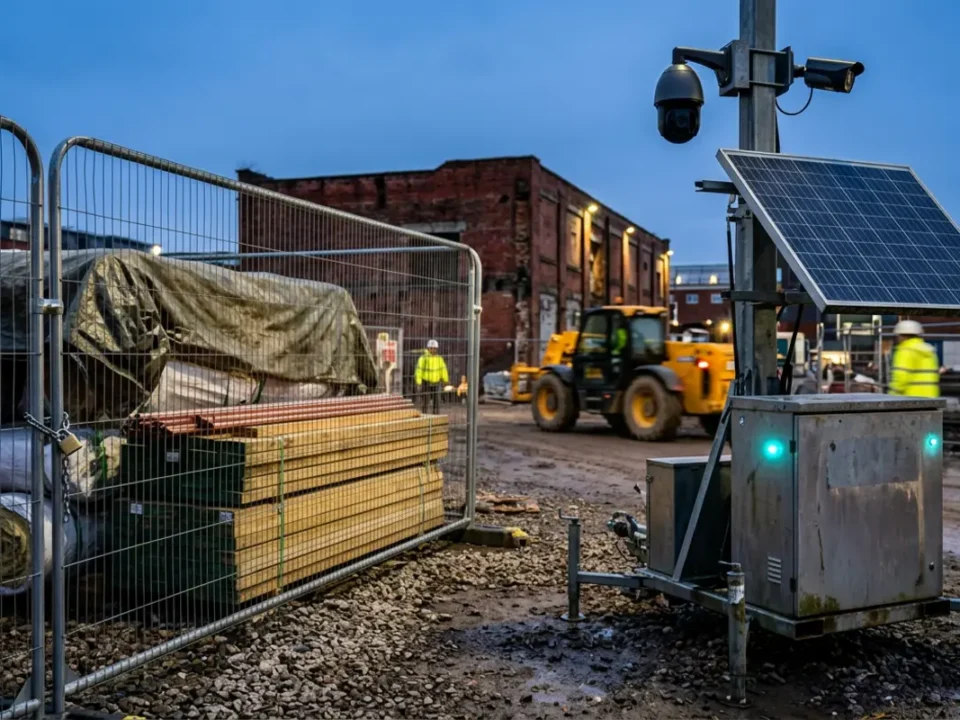
Construction sites change quickly, which is why fixed security is not always practical. Solar powered towers, battery backed cameras, 4G connectivity and relocatable units can be deployed quickly, then moved as the site footprint changes.
A proper survey should check the practical details before equipment arrives on site. You will want to look at:
- Likely entry points and blind spots
- Power availability and 4G signal strength
- Solar exposure and winter battery performance
- Anchoring, tamper detection and maintenance visits
- Whether cameras overlook public or neighbouring property
- How alerts will be handled during poor weather
Connected CCTV should be treated like any other networked technology. Default passwords should be changed, administrator access restricted, software updated and remote access secured, because a camera system is only helpful if it is reliable and protected from misuse.
Final Thoughts On Remote CCTV Monitoring For Builders
Remote CCTV monitoring is useful for builders because it turns construction site CCTV from a passive recorder into an active protection tool. It helps deter theft, manage out of hours risk, support police and keyholder response, reduce disruption and provide evidence when something goes wrong.
The best results come from matching the system to the site, not buying cameras by guesswork. Look at your assets, boundaries, public interfaces, insurance conditions, response needs and project timeline, then choose monitoring that fits the risk rather than the other way round. When you are already managing trades, weather, deliveries and deadlines, your security should make life easier, not add another problem to the list.
Frequently Asked Questions
Is Remote CCTV Better Than A Security Guard?
Remote CCTV can cover more areas at once and may cost less than round the clock guarding, but it cannot physically intervene. Higher risk sites may need a hybrid approach with monitoring and a guard or response team.
Can Remote CCTV Guarantee A Police Response?
No, it cannot guarantee attendance. Police response depends on verification, force procedures, available resources and whether the system is eligible for a Police Response URN.
Does Construction Site CCTV Need SSAIB Certification?
For police linked alarms, monitored CCTV or perimeter detection, SSAIB certification is commonly required for an Insurance-Approved installation and Police Response URN eligibility. It is also sensible to check insurer requirements before installation.
Can Solar CCTV Work Without Mains Power?
Yes, solar and battery powered CCTV can work well on temporary sites, but performance depends on sunlight, battery capacity, camera use, weather and maintenance. Winter conditions should always be considered during the survey.
Is Construction Site CCTV Covered By UK GDPR?
Yes, CCTV can capture personal data, so builders need a clear purpose, visible signage, secure storage, sensible retention periods and controlled access. Privacy masking may be needed where cameras face homes, public paths or neighbouring land.