DIY vs Professional CCTV Installation: Which Is Best?
CCTV Installation Choices
DIY versus professional CCTV installation: which is best for your property in 2026? DIY CCTV is usually best for simple home setups with one or two cameras, while professional CCTV installation is better for larger homes, businesses, monitored systems, difficult cabling, reliable evidence, cyber security and UK privacy rules.
CCTV is now common across UK homes and businesses because people want clear footage, remote viewing and peace of mind without turning a spare room into a control centre. Smart cameras, video doorbells, network video recorders and cloud storage have made security easier to access, but the range of choices can still feel confusing.
For homeowners, landlords and business owners, the real decision is not only who drills the holes. It is who designs the system properly, keeps it secure and makes sure it records the right areas without upsetting neighbours or causing issues with the Information Commissioner's Office.
iSecurity Solutions is a trusted UK provider of commercial and domestic security systems, helping homes and businesses stay protected around the clock with CCTV, intruder alarms, fire safety, access control and site monitoring.
DIY Versus Professional CCTV: Quick Comparison
The quick answer is simple: DIY wins on low initial cost and convenience, while professional installation wins on design quality, reliability, compliance and aftercare. If you only need a camera by the front door, DIY may do the job well, but if you need usable footage at night across several areas, the professional route often saves time, stress and repeat purchases.
Would you rather save money upfront, or have someone accountable if the footage fails when you need it? That question usually points you in the right direction.
- Upfront cost: DIY is cheaper to buy, while professional quotes include labour, design and testing.
- Installation time: DIY may be done in an afternoon, unless the app decides otherwise, while professional work is planned and checked properly.
- Camera placement: Professionals consider blind spots, lighting, height, privacy zones and evidence quality.
- Cabling: DIY often relies on Wi Fi or visible cables, while professional systems usually use neater protected cable routes.
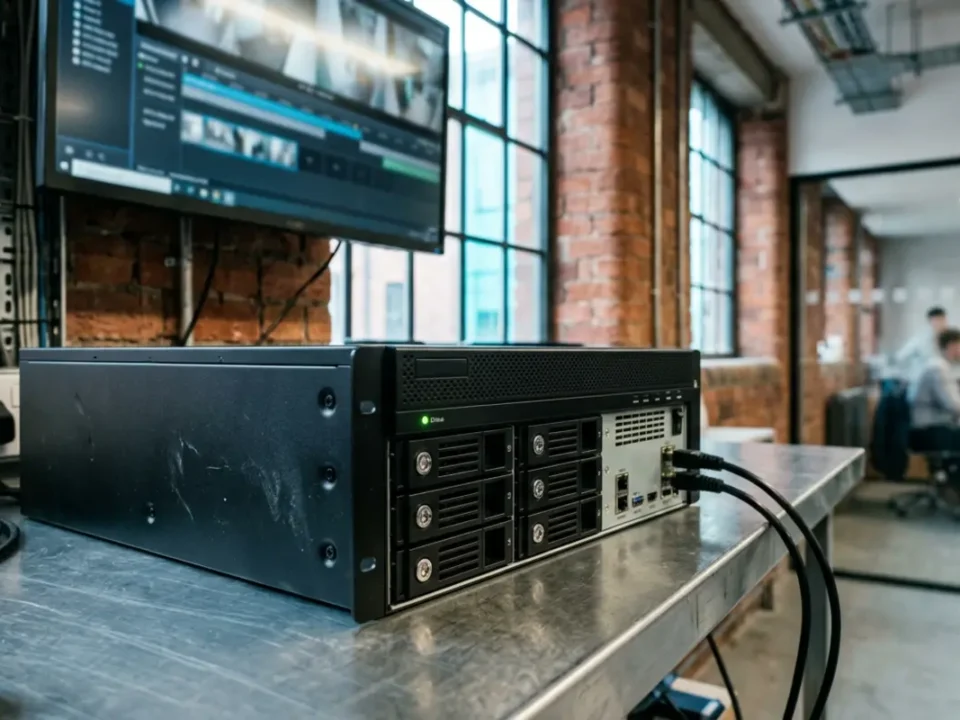
- Storage: DIY often uses microSD or cloud subscriptions, while professional systems may use a network video recorder with storage made for constant recording.
- Legal setup: DIY users must manage privacy and data protection themselves, while a good installer will advise on signage, retention and access controls.
- Support: DIY support is usually app based, while professional support can include maintenance, repairs and system upgrades.
What Counts As DIY CCTV Installation?
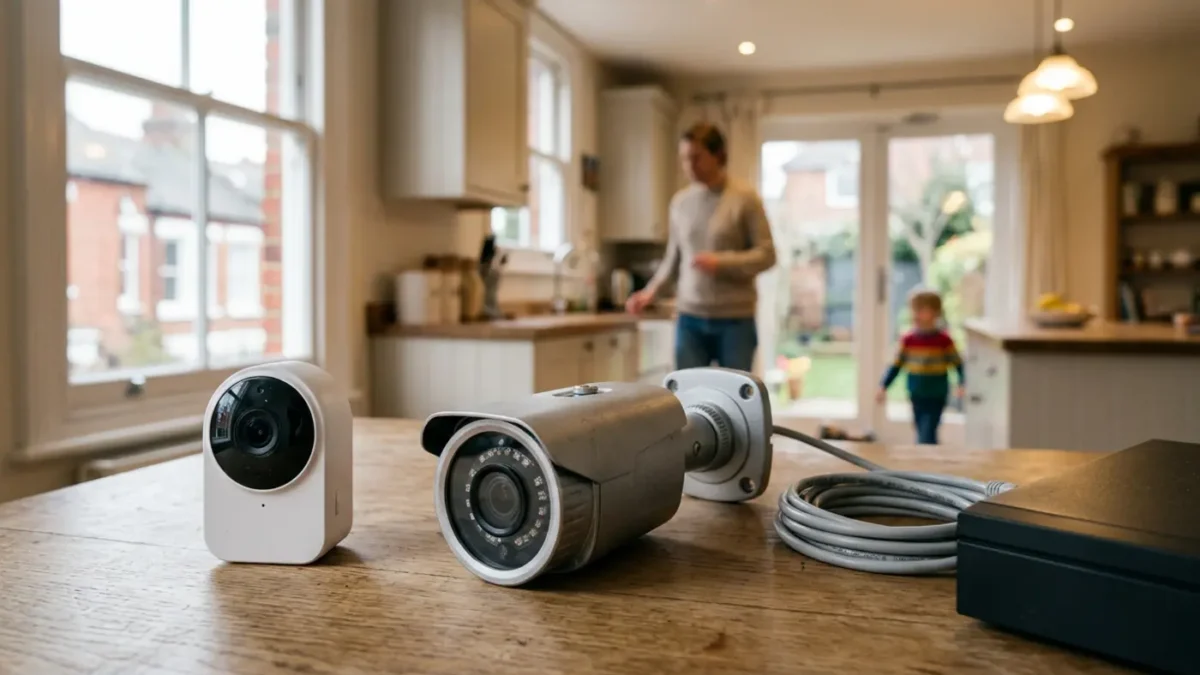
DIY CCTV installation means you buy and fit the cameras yourself, then set up recording, alerts, remote viewing and storage through an app or recorder. Typical DIY equipment includes smart cameras, mounts, power supplies, Ethernet cable, Wi Fi connections, microSD cards, cloud accounts, a network video recorder and a mobile app.
DIY can be realistic for one or two cameras, especially if you have strong Wi Fi, easy mounting positions and no awkward cable routes. It suits low risk home use where cameras mainly cover your own door, driveway or garden, and where you feel confident setting passwords, updates, privacy zones and motion alerts.
Not sure whether your Wi Fi is strong enough for outdoor cameras? That is a common warning sign that a quick DIY setup could become a much longer weekend than planned.
DIY becomes less appealing when ladders, brickwork, weak Wi Fi, shared access paths and night time identification all become part of the job. At that point, the money saved can quickly disappear into extra tools, replacement mounts, signal boosters and a quiet wish that the box had stayed unopened.
What Professional CCTV Installation Includes
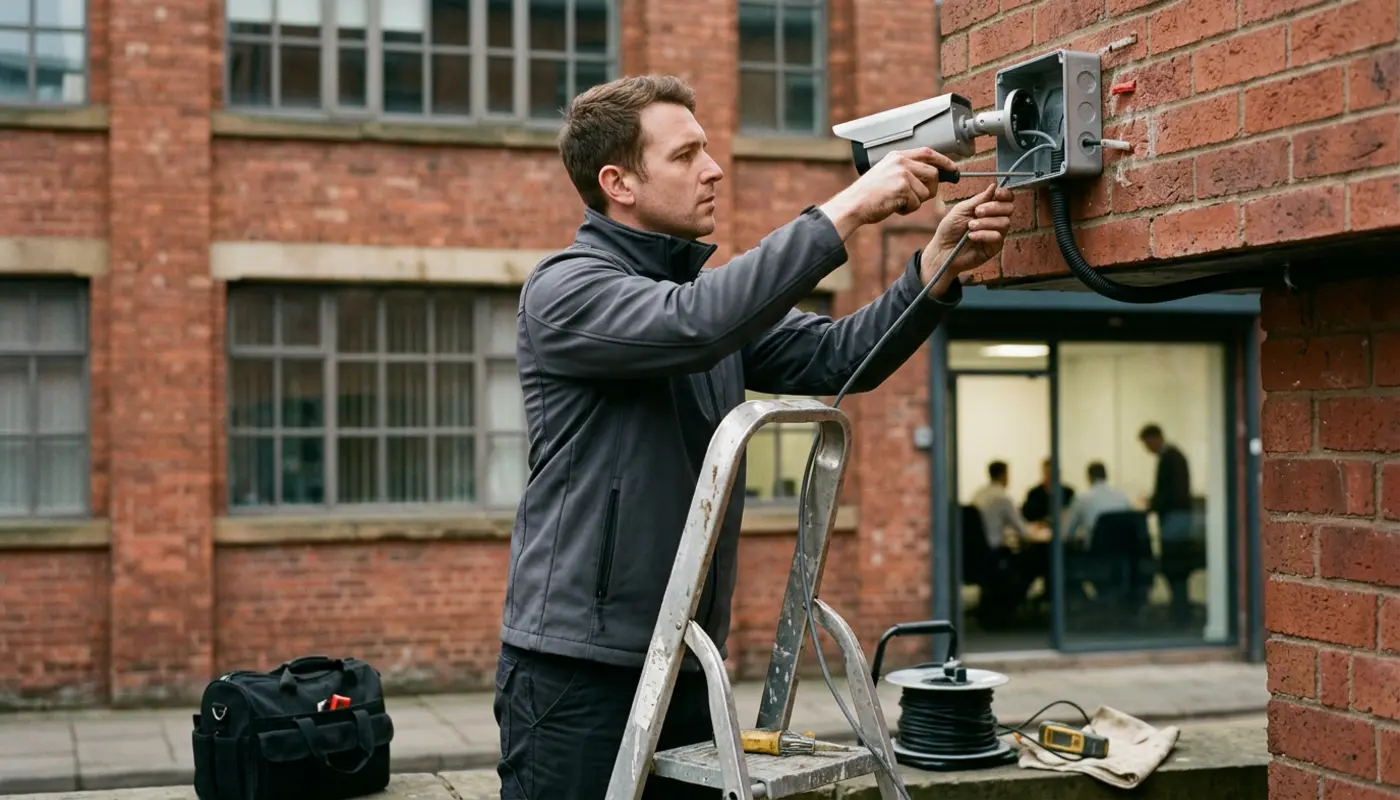
Professional CCTV installation should include a site survey, camera positioning plan, suitable equipment choice, secure cabling, weatherproof mounting, recorder setup, app setup, privacy advice, testing and handover. A quality installer will look at what you actually need to see, not just where a camera can be fixed to a wall.
For properly planned domestic and commercial systems, CCTV installation should also consider lighting, lens angle, storage time, user permissions, cyber security, relevant CCTV standards such as BS EN 62676 and maintenance. If monitored CCTV is connected to an alarm response process, SSAIB Insurance Approved certification may be needed for insurer acceptance, and a Police Response URN can be relevant where police response is required.
A professional quote should list the number of cameras, model details, resolution, low light performance, network video recorder capacity, cable type, labour, access equipment, VAT, warranty and any ongoing support. If the quote is vague, ask for details, because a cheap quote with unclear kit can be as useful as a chocolate padlock.
Upfront CCTV Installation Costs In 2026
Indicative UK planning costs in 2026 vary widely, so treat these figures as sensible estimates rather than fixed prices. A single DIY smart camera may cost around £40 to £200, while a basic multi camera Wi Fi kit may sit between £200 and £600 depending on storage, batteries and cloud features.
A wired PoE, or Power over Ethernet, security camera kit with a network video recorder may cost around £350 to £1,200 before tools, cable, fixings and your own time. Professional CCTV installation for a typical four camera home system may start around £900 to £2,000, while larger eight camera homes or small business systems can range from roughly £1,800 to £5,000 or more depending on access, specification and storage.
For a deeper look at camera numbers, specification and budgeting, you can compare practical examples in CCTV cost planning.
Prices change because every property is different. Tall walls, old brick, rendered surfaces, outbuildings, long cable runs, poor broadband, London labour rates and high level access can all affect the final figure, so always compare like for like quotes rather than only choosing the lowest price.
Long Term Costs, Warranty And Maintenance
The cheapest CCTV kit is not always the cheapest system over three to five years. DIY recurring costs can include cloud subscriptions, battery replacements, failed power supplies, new SD cards, broken mounts, extra cables, app subscriptions and your own troubleshooting time.
Professional systems have different long term costs, such as maintenance visits, hard drive replacement, cleaning, camera realignment, firmware checks, which are camera software updates, and future upgrades. The advantage is that faults are easier to diagnose, and warranty support is usually clearer when one company supplied, installed and checked the system.
A simple total cost formula is: equipment plus installation plus storage subscriptions plus maintenance plus repairs plus upgrades. If a DIY camera needs a monthly subscription to unlock useful recording, the three year cost may be closer to a professionally installed local recording system than it first appears.
UK Legal Requirements For CCTV
UK CCTV law depends on what your cameras record. If your domestic CCTV only captures your own home and garden, data protection law may not apply in the same way, but if it records a pavement, road, shared path, neighbour's garden, customers, staff or contractors, extra responsibilities can apply.
Businesses and organisations using CCTV usually need to comply with UK GDPR and the Data Protection Act 2018. That means having a clear purpose, collecting no more footage than needed, displaying signs where needed, limiting access, storing footage securely, setting a suitable retention period and deleting recordings when they are no longer needed.
Legal duties can vary depending on how the cameras are used, who is recorded and why the footage is kept, so it is worth checking your setup before you rely on it.
People often call this ICO registration, but the more accurate point is that some organisations may need to pay the ICO data protection fee, depending on their circumstances. The ICO gives clear public advice on home CCTV systems, including what to do if your camera captures areas beyond your boundary.
Neighbour Privacy And The Surveillance Camera Code
Responsible CCTV should be necessary, fair and clear. In plain English, do not film more than you need, do not record private areas without a strong reason and make sure people can tell CCTV is in use where appropriate.
Good privacy controls include tilting cameras down, using privacy masking, which blocks part of the camera view, avoiding windows and gardens, disabling audio unless there is a clear need and checking views again after building work or landscaping changes. Audio is often more intrusive than video, so leaving it switched off is usually the safer default.
The Surveillance Camera Code of Practice mainly applies to relevant public place surveillance systems and public authorities in England and Wales, but its principles are useful for private homes and businesses too. They encourage clear purpose, secure footage, controlled access and regular review, which are all sensible habits.
Installation Quality For UK Conditions
Good CCTV camera placement is about capturing useful evidence, not simply getting the widest possible picture. Entry points, driveways, gates, side passages, tills, stock rooms and loading areas are common priorities, but cameras placed too high may only capture the top of someone's head.
For image quality, resolution matters, but it is not everything. Lens angle, sensor quality, frame rate, compression, dynamic range and pixels on target, which simply means the detail available on the person or object you need to identify, all affect whether you can identify a face, number plate or incident clearly.
UK weather also deserves respect. Rain, frost, wind, condensation and temperature changes can cause problems if cameras, junction boxes and cable entries are not sealed properly, so outdoor equipment needs suitable weather ratings and protected connectors.
Cabling should be protected from tampering, moisture, rodents and rubbing damage. External rated Ethernet cable, conduit, neat trunking, sealed wall entries and labelled cable routes all make future maintenance easier, especially when someone asks why camera three stopped recording two winters from now.
NVR Versus Cloud CCTV Storage
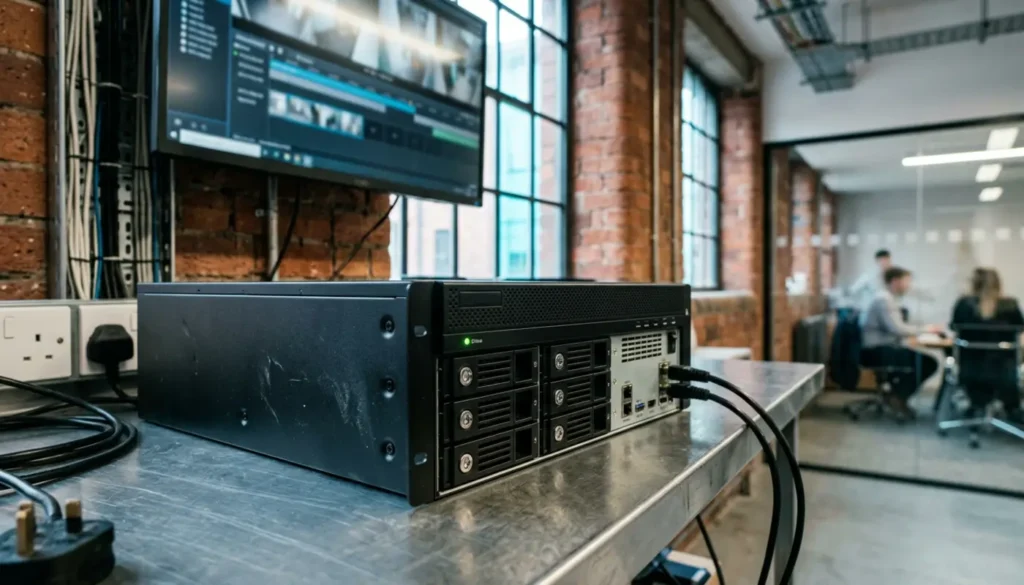
An NVR, or network video recorder, stores footage locally from IP cameras. Local recording can continue during an internet outage, which is useful for homes and businesses that want reliable evidence without depending fully on broadband.
Cloud storage gives easy remote access and off site backup, but it usually depends on a subscription, account security and internet connection. Before choosing cloud CCTV, check the retention period, export options, outage behaviour and what features stop working if you stop paying.
A hybrid system can be a sensible middle ground, using local recording for everyday reliability and cloud backup for important events. This works especially well for higher risk sites where losing footage would be more than a minor annoyance.
Cyber Security Risks With DIY CCTV
Cyber security is one of the biggest differences between casual DIY and well set up professional CCTV. Common risks include default passwords, reused passwords, old firmware, shared administrator accounts, exposed port forwarding, weak Wi Fi and unsecured remote access.
A basic security checklist should include unique long passwords, multi factor authentication, firmware updates, restricted user permissions, secure router settings and disabled features you do not need. If possible, keep cameras and recorders away from guest Wi Fi and avoid remote access settings that are not needed.
Hardwired PoE security cameras are generally more stable than Wi Fi cameras because they use network cable for data and power. Wi Fi cameras are quicker to install and less disruptive, but they depend on wireless signal strength, battery life, power points and network settings.
Insurance, SSAIB Insurance Approved Installers And Police Response
CCTV may help with insurance, but discounts are never guaranteed. Some insurers recognise professionally installed systems, while others may require specific coverage, maintenance records, monitoring, alarm integration or approval by a recognised body.
If your CCTV is part of a wider security setup, ask your insurer whether they require NSI or SSAIB Insurance Approved installation. For alarm systems and some monitored CCTV arrangements, SSAIB Insurance Approved certification can be a prerequisite for a Police Response URN, which is the unique reference used when a monitored system qualifies for police response.
Also ask whether the system should meet any linked alarm standards such as EN 50131 Grade 2 or Grade 3 where intruder detection is included alongside CCTV. CCTV on its own is not the same as an intruder alarm, but many commercial security designs combine cameras, alarms and monitoring for stronger protection. Where monitored detector activated CCTV is used, BS 8418 may also be relevant.
DIY Versus Professional CCTV Decision Matrix
Choose DIY CCTV if your system is small, access is easy, Wi Fi is strong and you are confident managing passwords, updates, privacy zones and storage. It is best for simple homes where cameras stay within your private boundary and you do not need business level paperwork.
Choose professional installation if you need several cameras, hidden or external cabling, reliable night identification, business surveillance, privacy compliance, insurer recognition or long term support. It is also the safer route for shops, offices, warehouses, rented buildings, shared entrances and sites where footage may include staff, customers or members of the public.
A hybrid option can work well if you want to choose the equipment yourself but need help with safe mounting, cable routing, network setup, privacy masking and final testing. It gives you more control over kit choice while reducing the risk of poor installation.
Final Verdict
DIY CCTV is not automatically bad, and professional CCTV is not automatically perfect. The best choice depends on property size, budget, camera count, access difficulty, privacy risk, insurance conditions and how important reliable footage is when something goes wrong.
For one or two simple home cameras, DIY can be perfectly reasonable if you are comfortable with the setup and ongoing maintenance. For multi camera homes, businesses, monitored systems and sites where footage needs to be dependable, professional installation is usually the better investment.
Before deciding, compare the full three to five year cost rather than the shelf price. Include storage, subscriptions, repairs, maintenance, cyber security, privacy setup and the value of having someone accountable when the system needs to work properly.