How Often Should a Commercial Fire Alarm Be Serviced?
Commercial Fire Alarm Servicing
A commercial fire alarm should usually be inspected, tested and serviced by a competent professional at least every six months, in line with BS 5839 Part 1. Your team should also carry out a weekly fire alarm test by using a different manual call point each time and recording the result in the fire alarm logbook.
Fire alarm servicing matters because a system can look fine but still have dirty detectors, weak batteries, faulty sounders or hidden panel faults. In England and Wales, the Regulatory Reform Fire Safety Order 2005 requires fire safety equipment to be kept in efficient working order and good repair.
iSecurity Solutions is a trusted UK provider of commercial and domestic security systems, helping homes and businesses stay protected around the clock. Our team supports commercial premises with reliable fire alarm servicing, practical advice and modern fire safety solutions that suit the building, the level of risk and everyday use.
Why Commercial Fire Alarm Servicing Matters
A fire alarm gives people early warning, helps staff act quickly and reduces the chance of a small fire becoming a serious incident. It is not just a box on the wall that makes a noise, although it can certainly do that with plenty of confidence during a Monday morning test.
For most businesses, the alarm system forms part of a wider fire safety plan. This may include evacuation procedures, staff training, emergency lighting, extinguishers and a suitable fire risk assessment. That assessment may follow PAS 79 principles, which give a clear way to review fire hazards, people at risk and the controls needed.
Regular servicing also helps reduce false alarms, which can disrupt work, frustrate staff and make people take alarms less seriously over time. A well maintained system is more likely to respond correctly, show faults clearly and support your legal and insurance responsibilities.
What BS 5839 Part 1 Recommends
BS 5839 Part 1 is the main British Standard for fire detection and fire alarm systems in non domestic premises. It recommends that inspection and servicing visits should normally take place at intervals that do not exceed six months, and that the work should be carried out by a competent person with suitable knowledge, training and equipment.
The standard is not the same as the law, but it is widely treated as recognised good practice. In plain English, following BS 5839 Part 1 helps you show that your maintenance routine is sensible, structured and based on an accepted standard rather than guesswork.
In higher risk buildings, extra checks may be needed between normal six monthly visits. Examples include large multi zone systems, sleeping accommodation, care settings, high occupancy venues, industrial premises, dusty areas, kitchens, older systems and sites with repeated faults or false alarms.
The fire alarm category also matters. A category L1 system gives automatic detection throughout the building, while an L2 system provides detection in defined higher risk areas and escape routes. Both should be maintained in line with BS 5839 Part 1 and the premises fire strategy.
Is Six Monthly Servicing A Legal Requirement?
The simple answer is that the Fire Safety Order does not usually say the exact words "service every six months" for every commercial fire alarm. Instead, it places duties on the Responsible Person to make sure fire safety equipment is suitable, maintained and effective.
The six monthly servicing interval comes from BS 5839 Part 1 guidance, not from one universal sentence in legislation. However, if something went wrong and records showed that the system had not been inspected for a long time, it would be very difficult to argue that it had been properly maintained.
For England and Wales, you can read the official workplace fire safety responsibilities on GOV.UK fire safety guidance, which explains who may be responsible and what duties apply. Scotland and Northern Ireland have separate legislation and guidance, so businesses operating across the UK should check the correct rules for each nation.
Who Is Responsible For Arranging Servicing?
In England and Wales, the Responsible Person is usually the employer, building owner, landlord, occupier or anyone with control over the premises. In shared buildings, more than one person may have duties, so clear communication between tenants, landlords and managing agents is important.
A facilities manager can organise servicing, a maintenance company can carry it out, and a nominated employee can manage weekly tests. Even so, the legal duty does not simply disappear because a task has been delegated, as the person or organisation with control must make sure the work is arranged, completed and recorded.
If your premises has recently changed layout, occupancy, opening hours or use, the service frequency should be reviewed. A quiet office that becomes a busy training centre, for example, may need a different risk approach because more people are now relying on the alarm. If your building layout has changed since the system was installed, it is worth checking whether the alarm coverage still suits the way people use the space.
Weekly Fire Alarm Testing Is Still Needed
Weekly testing and professional servicing are different jobs, and one does not replace the other. The weekly fire alarm test is a simple user check that confirms the system can receive a signal from a manual call point, operate the expected warning devices and reset correctly.
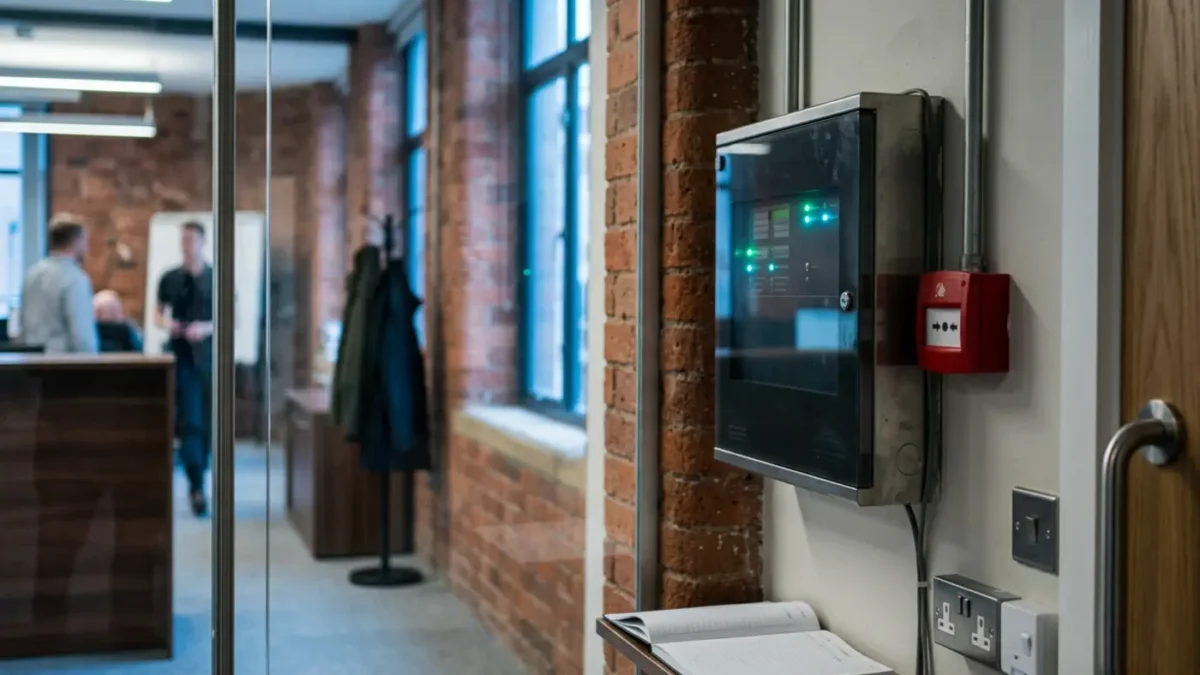
A good weekly test routine should include telling staff the test is about to happen, contacting the alarm receiving centre if the system is monitored, operating a different manual call point each week and checking that the correct zone appears at the panel. The result should then be entered in the fire alarm logbook, including the date, time, call point location, name of the tester and any fault found.
Do not use the same call point every week unless there is a strong reason. Rotating the call points helps you gradually check different parts of the building, which is far more useful than repeatedly proving that one button near reception still works perfectly.
If a fault appears during the weekly test, report it straight away rather than waiting for the next service visit. A fault that affects detection, sounders, power supplies or alarm transmission may need urgent attention and temporary risk controls until it is fixed.
If you want a fuller explanation of routine testing, you can read how often fire alarms should be tested for practical steps that support day to day compliance.
Quarterly, Six Monthly And Annual Checks Explained
Six monthly professional servicing is the usual benchmark for many commercial fire alarm systems, but some buildings need more frequent attention. Quarterly inspections may be sensible where the system is complex, the site is high risk, faults are common or the fire risk assessment identifies a need for closer monitoring.
Annual checks may form part of a broader review, but they should not be treated as a replacement for six monthly servicing where BS 5839 Part 1 maintenance is appropriate. In some premises, the year end review may look at records, false alarm trends, system changes, staff procedures and whether the existing system still matches the building risk.
Think of it like looking after a vehicle used every day for business. A quick visual check is useful, but it does not replace a proper service by someone who knows what they are testing and what could go wrong.
What A Professional Fire Alarm Service Covers
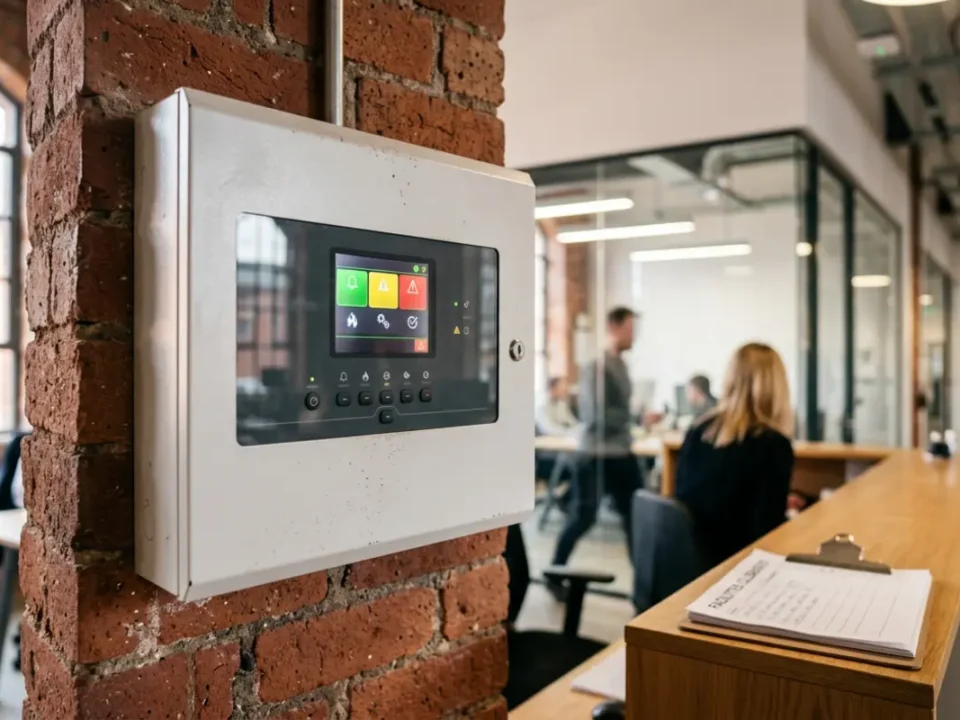
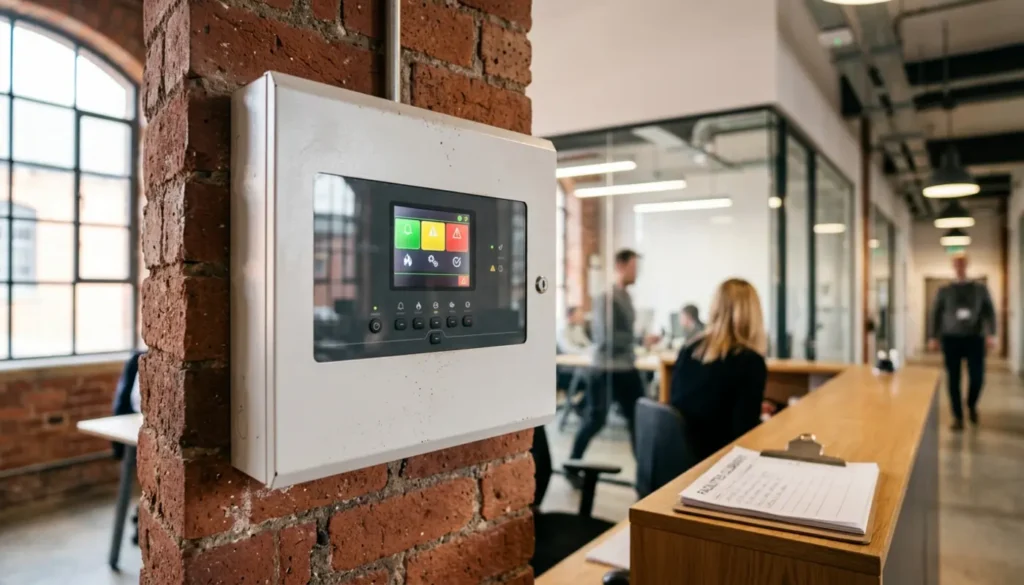
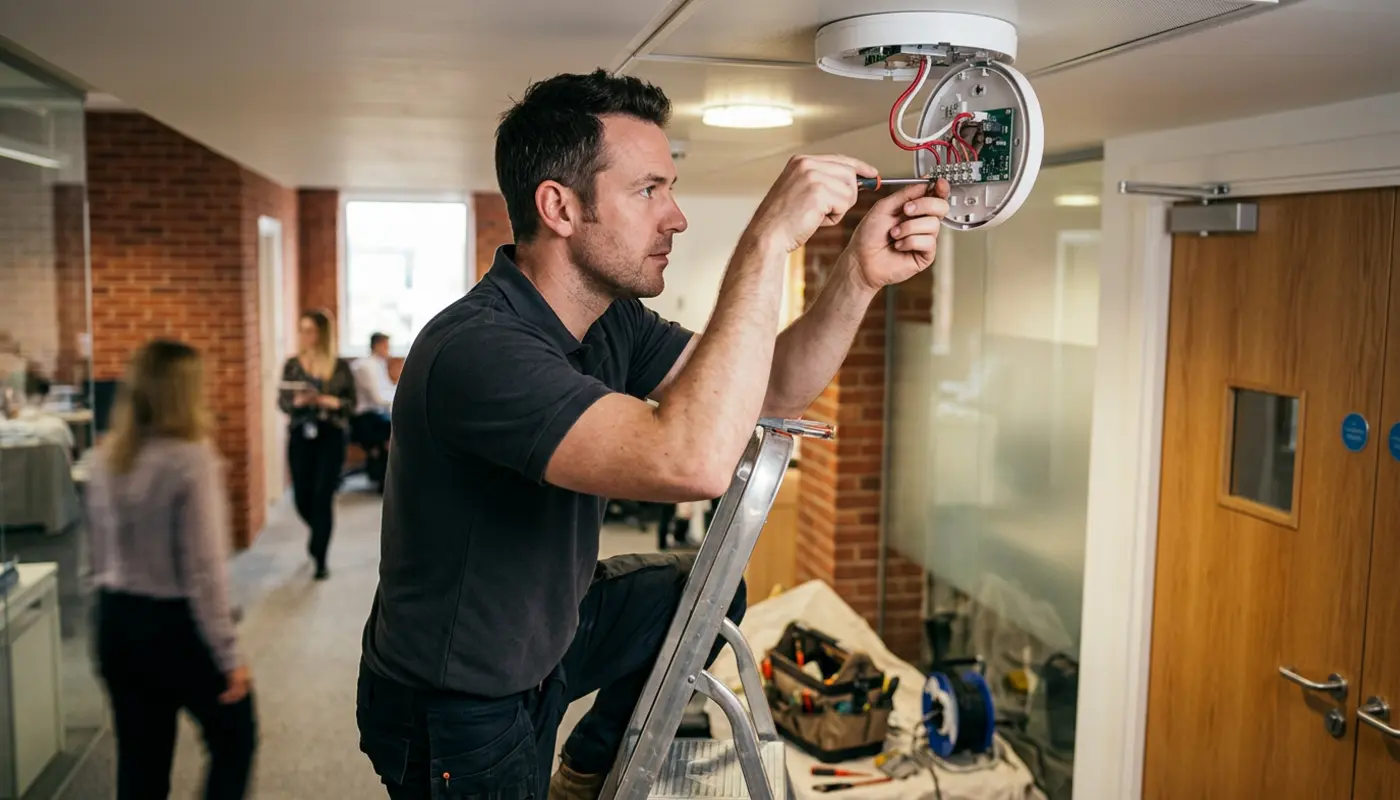
A competent fire alarm service visit should be more than a quick glance at the panel. The engineer will normally check the control and indicating equipment, review fault history, inspect power supplies, test standby batteries and confirm that indicators and controls work as expected.
Detectors and manual call points should be checked for damage, dirt, blockage and suitability for the area they protect. Smoke and heat detectors may need specialist test equipment, because waving a piece of paper near the ceiling is not exactly a recognised engineering method.
Sounders and visual alarm devices should be tested to confirm they operate correctly and provide suitable warning. Where sound levels are poor, or where changes to partitions, racking or equipment have affected warning levels, the engineer should flag this for review.
The service should also include cause and effect checks where relevant. Cause and effect simply means what the system is supposed to do when a device activates, such as releasing fire doors, sending a signal to an alarm receiving centre, shutting down plant, controlling lifts or linking with access control.
For monitored systems, the alarm receiving centre should be notified before testing and signals should be checked where required. After testing, monitoring should be restored and any communication fault should be recorded clearly.
Businesses that need a wider fire safety review can explore our fire safety services, including support with fire alarms, servicing and compliance led maintenance.
Fire Alarm Logbook And Records
Your fire alarm logbook is the evidence trail that shows what has happened to the system over time. It should include weekly tests, professional service visits, faults, false alarms, activations, disabled zones, repair work, engineer reports and any changes to the system.
Records are useful for fire authorities, insurers, landlords, auditors and internal management. They also help engineers spot patterns, such as repeated detector contamination in one area or battery faults appearing before they become a bigger problem.
Paper logbooks are still common, but electronic records can also work well if they are easy to access, secure and properly backed up. The main point is that the information should be accurate, current and available when requested. If your records do not show weekly tests clearly enough for an inspector or insurer, now is a good time to tidy them up.
What Happens If Servicing Is Missed?
If a commercial fire alarm is overdue for servicing, the biggest concern is simple: you may not know whether it will work correctly in an emergency. Faults can remain hidden, batteries can weaken, detectors can become dirty and system links can stop operating as intended.
There can also be legal and financial consequences. Fire authorities may issue enforcement notices where fire safety duties are not being met, and serious breaches can lead to prosecution, fines or even imprisonment in the most severe cases.
Insurance can also become difficult if records are poor. A missed service does not automatically invalidate every claim, but failure to maintain the system or comply with policy conditions may affect a claim depending on the wording and circumstances.
If your service is overdue, arrange a competent inspection promptly, document the gap and consider short term controls if the system has known faults. It is better to deal with it honestly and quickly than to hope nobody notices, because fire safety paperwork has a habit of being requested at the least convenient time.
Choosing A Competent Fire Alarm Provider
A competent provider should understand BS 5839 Part 1, the installed equipment, the building use and the practical risks on site. They should provide clear service reports, explain defects in plain language and help you prioritise urgent safety issues over nice to have improvements.
Third party certification can be a useful sign of competence. BAFE SP203 Part 1 relates to the design, installation, commissioning and maintenance of fire detection and alarm systems, while NSI fire certification can also support independent assessment of a provider's capability.
Before appointing anyone, check that their certification is current, that the scope includes maintenance and that they can support the type of system you have. Ask how they handle emergency callouts, serious faults, replacement parts, cause and effect testing and coordination with monitoring centres.
A good service contract should state the inspection frequency, what is included, response times, reporting format and how repair work is approved. Clear terms prevent surprises later, which is helpful because fire alarm surprises are rarely the fun kind.
Final Thoughts
For most commercial premises, the practical answer is professional fire alarm servicing at least every six months, supported by weekly in house testing and proper records. BS 5839 Part 1 provides the recognised benchmark, while the Responsible Person must make sure the system remains suitable, maintained and effective for the premises.
If you are not sure when your fire alarm was last serviced, start with the logbook, the latest service certificate and any outstanding defect reports. From there, arrange a competent review and keep the routine simple, consistent and well documented.
If you are not sure whether your commercial fire alarm is due for servicing, we can help you check your records, review your system and arrange a suitable maintenance schedule. Get in touch with iSecurity Solutions for friendly, practical fire alarm servicing support.
Frequently Asked Questions
Is Fire Alarm Servicing Every Six Months Compulsory?
Six monthly servicing is recommended by BS 5839 Part 1 and is widely treated as good practice, although the legal duty is to maintain suitable fire safety equipment in working order. In many commercial premises, ignoring the six monthly benchmark would be difficult to justify.
Do I Still Need Weekly Fire Alarm Tests?
Yes, weekly testing is still needed because it checks basic operation between professional service visits. Use a different manual call point each week and record the result in the fire alarm logbook.
Can An Employee Carry Out The Weekly Test?
Yes, an employee can carry out the weekly test if they have been properly instructed and know how to record results and report faults. Professional servicing should still be carried out by a competent fire alarm engineer.
What Should Be Recorded In The Fire Alarm Logbook?
Record weekly tests, service visits, faults, false alarms, activations, disabled zones, repairs and any changes to the system. Good records help demonstrate compliance to inspectors, insurers and fire authorities.
Should My Fire Alarm Company Be SSAIB Certified?
SSAIB certification is more commonly associated with security systems, and when referenced it should be alongside Insurance Approved work, while fire alarm competence is usually demonstrated through schemes such as BAFE SP203 Part 1 and relevant fire certification. Always check that the provider's current scope covers fire alarm maintenance to BS 5839 Part 1.