Which Fire Alarm System Is Best for Commercial Buildings?
The best fire alarm system for a commercial building is the one that matches the fire risk assessment, building layout, occupancy, evacuation plan and required BS 5839 category. Small and simple premises may suit a conventional system, while medium, large or more complex buildings usually benefit from an addressable system because it gives clearer location information. Wireless systems can also be a strong option for listed buildings, refurbishment work and sites where cabling would cause too much disruption.
Best Fire Alarm System
Choosing a commercial fire alarm system can feel confusing at first, especially when different categories, panels and detector types are mentioned at the same time. The main point is simple: the system should be designed around the real fire risk in your building, not chosen only because it is the cheapest or newest option.
It helps to separate two decisions that often get mixed together. BS 5839 categories, including L1, L2, L3, L4, L5, P1, P2 and M, describe the level and purpose of protection. Conventional, addressable and wireless describe how the system is built and how devices communicate with the control panel.
iSecurity Solutions is a trusted UK provider of commercial and domestic security systems, helping homes and businesses stay protected around the clock. The team supports fire safety, CCTV, intruder alarms, access control and construction site monitoring with reliable design, modern remotely monitored technology and responsive service.
Quick Answer For Commercial Fire Alarm Systems
For a small office, shop or simple single floor unit, a conventional fire alarm may be suitable if the fire risk assessment supports that choice. For a larger office, warehouse, hotel, care home, school, retail unit or multi occupancy building, an addressable fire alarm is often the better choice because it can identify individual devices and help staff locate a possible fire quickly.
Wireless fire alarms can work very well in listed buildings, occupied premises, temporary buildings and refurbishment projects where running cables would be awkward, costly or damaging. They still need careful planning, including radio signal checks, battery planning and ongoing supervision, so the system remains dependable after installation.
Legal Duties For UK Commercial Premises
In England and Wales, commercial fire safety is mainly governed by the Regulatory Reform Fire Safety Order 2005. It places duties on the Responsible Person, which may be an employer, owner, landlord, occupier, facilities manager, managing agent or another person who has control of the premises.
The Responsible Person must carry out a suitable and sufficient fire risk assessment, put appropriate fire precautions in place, maintain fire safety systems, plan for emergencies and provide staff with information and training. Official guidance from GOV.UK fire safety responsibilities explains who may hold these duties and why responsibilities can be shared.
In Scotland, duties sit under the Fire Scotland Act 2005 and the Fire Safety Scotland Regulations 2006. The wording is slightly different, with a focus on dutyholders, but the practical point is similar: assess the risk, reduce it, maintain fire precautions and keep arrangements under review.
Northern Ireland has its own fire safety legislation and local guidance, so businesses should check the right requirements for their premises. A national chain, for example, should not assume that a fire strategy written for England automatically covers sites in Belfast, Glasgow and Cardiff without a local review.
Fire Risk Assessment Comes First
A fire alarm should never be chosen only because it has a low price, a smart panel or a glossy brochure. The starting point is the fire risk assessment, because it identifies who is at risk, how a fire might start, how smoke could spread and how people would escape.
A good assessment looks at practical building and people related factors before equipment is selected.
- Ignition sources, kitchens, plant rooms, workshops and storage areas.
- Escape routes, ceiling voids, risers, high ceilings and unusual layouts.
- Sleeping occupants, vulnerable people, visitor numbers and staffing levels.
- Property protection, business continuity and insurer expectations.
- Historic fabric, multiple tenants and areas that are difficult to access.
If it is not clear where your building fits, that is exactly where a proper review helps. The right alarm design should follow the risks found in the building, rather than a rough guess based on property size alone.
BS 5839 Fire Alarm Categories
BS 5839 is the key British Standard used for fire detection and alarm systems in non domestic premises. It helps competent designers decide what level of detection and warning is suitable, although the final category should always follow the fire risk assessment and fire strategy.
Category M Manual Systems
Category M means manual call points are provided, but there is no automatic fire detection. This may suit some simple, lower risk premises where people are awake, familiar with the building and able to raise the alarm quickly, but it is not right for every workplace.
Life Protection Categories L1 To L5
L1 offers automatic detection generally throughout the building and is used where the highest level of life protection is needed. L2 covers specified higher risk areas as well as escape route protection, while L3 is designed to warn people before escape routes become affected by fire or smoke.
L4 focuses mainly on escape routes, and L5 is a custom category used to meet a specific fire safety aim. For example, a particular room, process area or risk may need targeted detection even if full building coverage is not required.
Property Protection Categories P1 And P2
P1 provides automatic detection throughout the building for property protection, while P2 protects defined areas where the risk to stock, equipment, data or business continuity is greatest. Property protection is useful for insurers and resilience planning, but it does not replace life safety duties.
Conventional Fire Alarm Systems
A conventional fire alarm groups detectors and call points into zones. When the alarm activates, the panel shows the affected zone, so staff know the general area but not usually the exact device that triggered it.
Conventional systems can work well in small offices, small shops, simple units and low complexity premises where the building is easy to understand. They are familiar, fairly straightforward and can offer a sensible balance of cost and function when only a few zones are needed.
The limitation is location detail. In a larger building, searching a whole zone for the source of an alarm can waste valuable time, a bit like trying to find a ringing phone in a busy supermarket aisle while everyone is pretending to stay calm.
Addressable Fire Alarm Systems
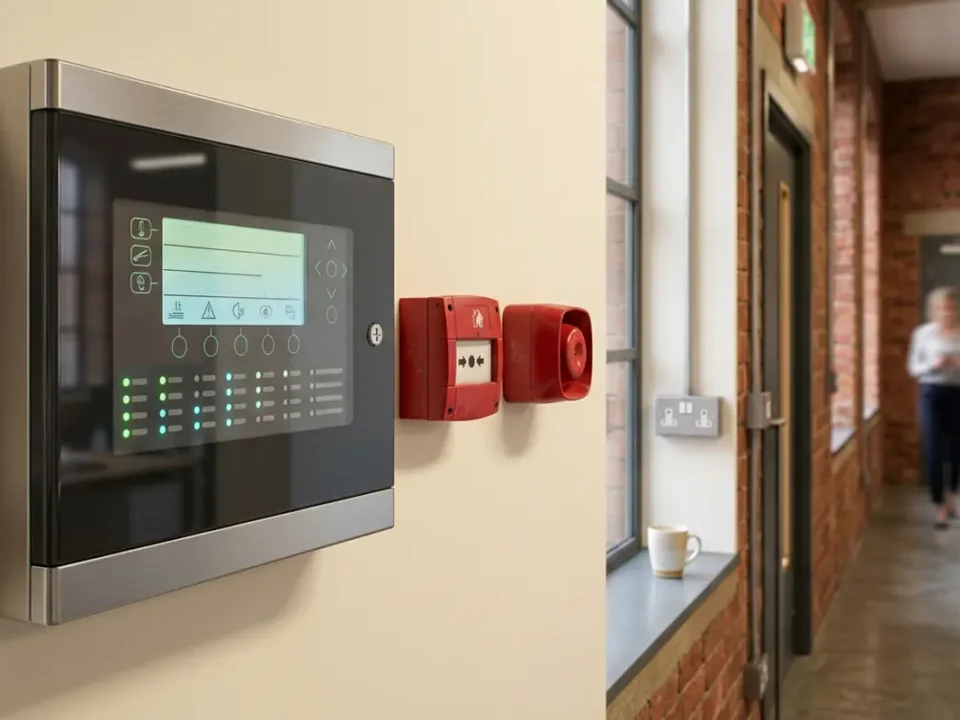
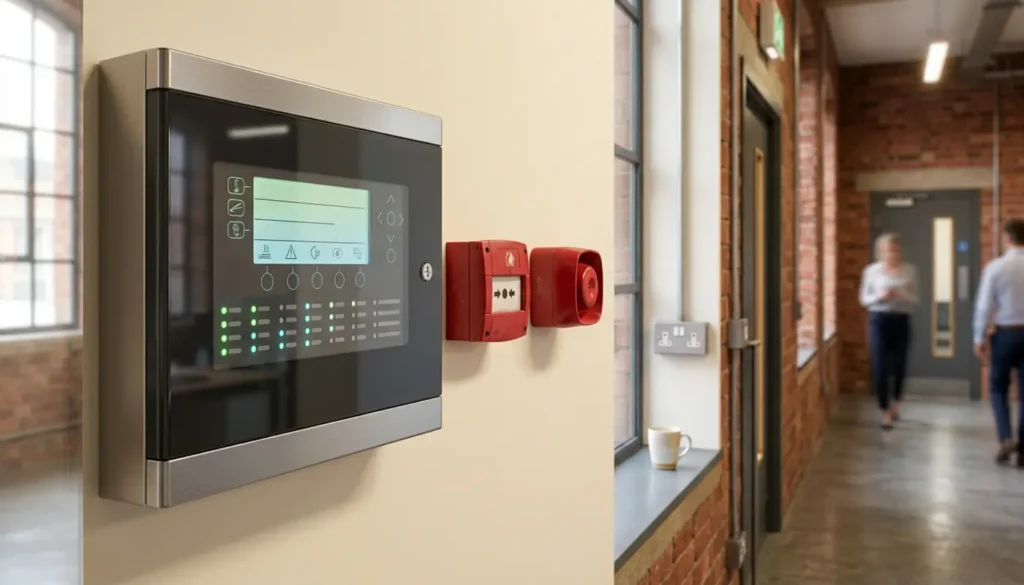
An addressable fire alarm gives each detector, call point or device its own address. When something activates or develops a fault, the panel can identify the exact device, which helps staff investigate quickly and helps engineers maintain the system more efficiently.
Addressable systems are often best for medium to large commercial buildings, multi floor offices, warehouses, hotels, care homes, schools, campuses and multi occupancy properties. They also support more advanced cause and effect programming, such as staged evacuation, lift control, smoke control, access control release and signalling to monitoring centres.
They do cost more to design and commission properly, and they rely on accurate programming and documentation. For complex premises, the extra clarity is often worth it because it supports faster response, better fault diagnosis and easier future expansion.
Fire safety systems from iSecurity Solutions are designed around the building, not a one size fits all panel choice, which is how commercial fire protection should be approached.
Wireless Fire Alarm Systems
Wireless fire alarms use supervised radio links between devices and the control panel instead of traditional cabling to every point. They can be ideal for listed buildings, occupied offices, heritage sites, temporary spaces and phased refurbishments where cable routes are difficult or disruptive.
The main advantages are speed, flexibility and less disturbance to walls, ceilings and day to day operations. This can be especially helpful where drilling through historic finishes would be about as welcome as a fire drill during a board meeting.
The design still has to be careful and properly recorded. A competent designer should carry out radio checks, consider signal paths, plan battery replacement, check interference risks and make sure faults are reported clearly at the panel.
Choosing By Building Type
Offices need detection that reflects occupancy patterns, open plan areas, meeting rooms, kitchens, comms rooms, plant spaces and escape routes. Small offices may suit conventional systems, but larger or multi floor offices usually benefit from addressable detection because exact location information matters.
Retail units must consider customers, changing displays, stockrooms, aerosols, dust, fitting rooms, staff areas and loading bays. A simple shop may not need a complex system, but larger stores and shopping environments often need addressable coverage and clear evacuation logic.
Warehouses bring different challenges, including high ceilings, racking, smoke layering under the roof, dust, loading doors, forklift traffic and difficult maintenance access. Specialist detection, beam detectors or air sampling detection may be needed where standard point detectors are not enough.
Hotels, care homes and other sleeping accommodation need particular care because people may be asleep, unfamiliar with the building or unable to evacuate without help. In these settings, early warning, staff response, evacuation strategy and BS 5839 category selection are central to safe design.
Schools and colleges need strong systems that cope with changing room use, kitchens, workshops, sports halls, visitors and busy evacuation procedures. Multi occupancy buildings also need coordination between landlords, tenants and managing agents, especially where common areas, shared escape routes and linked systems are involved.
Key Components And Standards
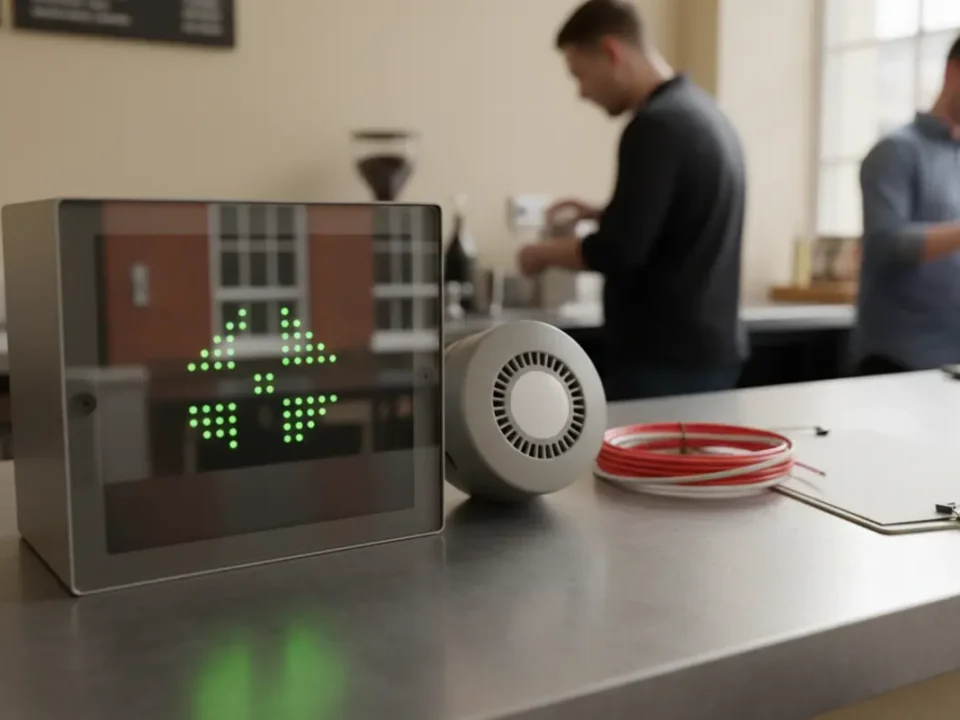
A commercial fire alarm system normally includes control and indicating equipment, automatic detectors, manual call points, sounders, visual alarm devices, power supplies and standby batteries. Larger or more complex sites may also include networked panels, specialist detectors, voice alarm and remote monitoring.
Components should be suitable for the design and generally aligned with relevant EN 54 product standards, but a certified device does not automatically make the whole installation compliant. The full system still needs competent design, installation, commissioning, documentation and maintenance.
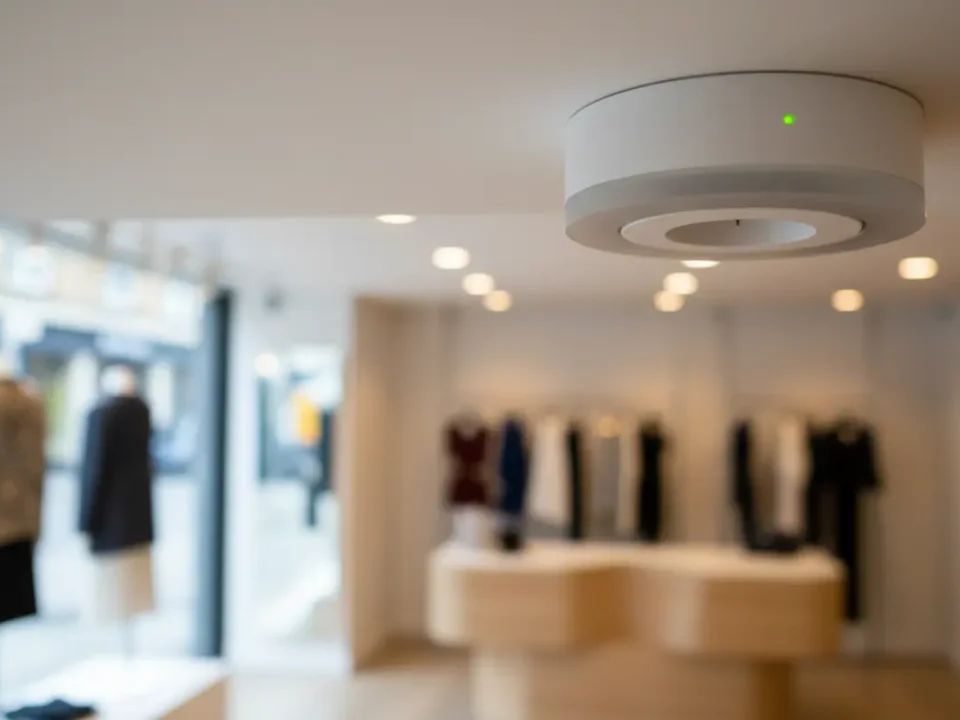
Detector choice is important because not every detector suits every space. Smoke detectors may be ideal in many areas, heat detectors may work better near kitchens, and multisensor devices can help reduce unwanted fire signals where conditions change during the day.
Voice alarm systems may be appropriate for larger, crowded or complex buildings where spoken instructions are safer than bells alone. These systems are designed with reference to BS 5839 Part 8 and should deliver clear messages that support the evacuation plan.
Fire alarms may also interact with emergency lighting, fire extinguishers, access control, lifts, smoke control and building management systems. Emergency lighting is commonly considered against BS 5266, fire extinguisher provision against BS 5306, and fire risk assessment methods may follow PAS 79 principles, but each area should still be reviewed by a competent person.
Installation Commissioning And Maintenance
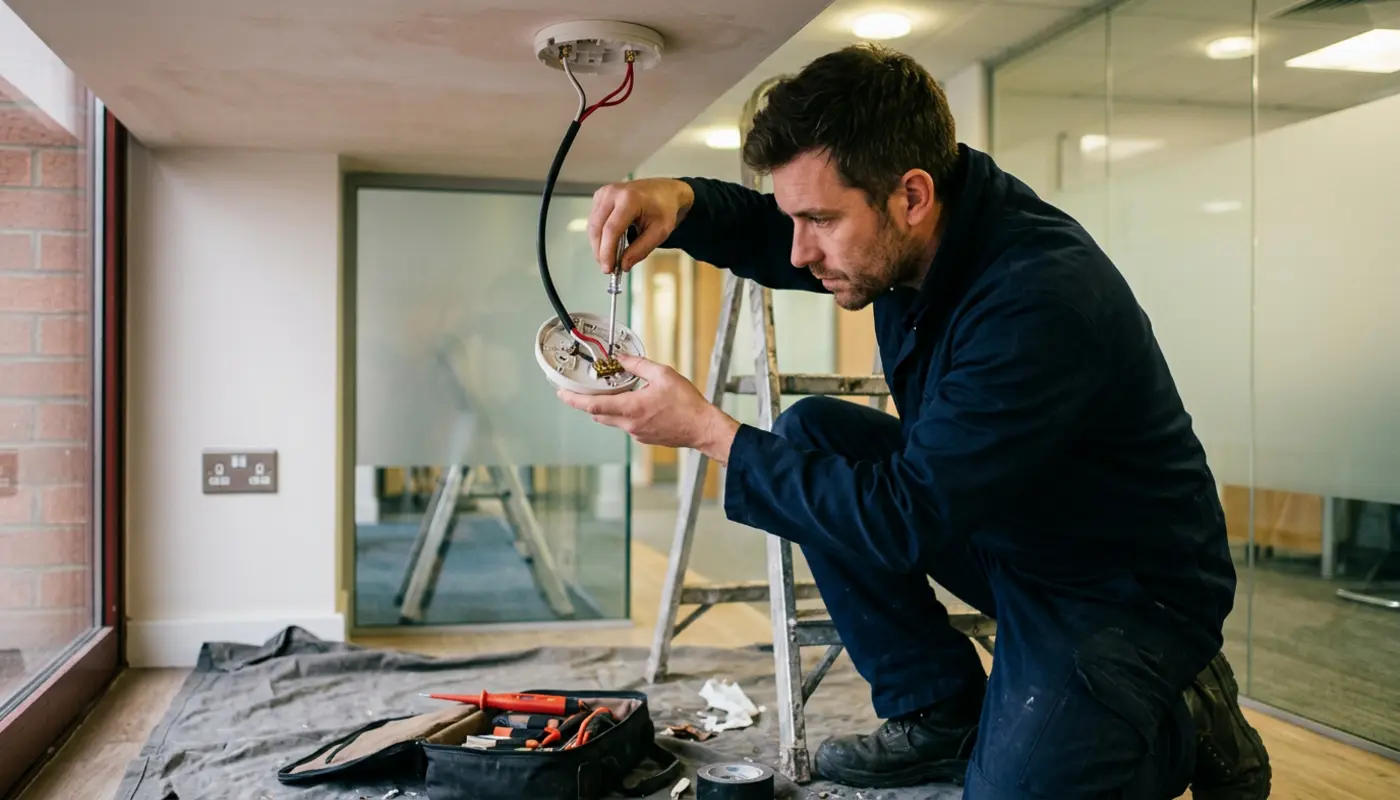
Commercial fire alarm work should be carried out by competent installers, and many buyers look for third party certification such as BAFE SP203 Part 1 or an equivalent scheme. This type of scheme can cover areas such as design, installation, commissioning, handover and maintenance, so always check that certification covers the specific work being quoted.
For fire alarm procurement, the key focus should be BS 5839, suitable third party fire certification, documented commissioning and insurer acceptance. For security alarms and monitoring, SSAIB certified and Insurance Approved providers can also be relevant, especially where an EN 50131 Grade 2 or Grade 3 intruder alarm and a Police Response URN are required, but that should be understood separately from fire alarm certification.
At handover, you should receive the design category, zone or loop drawings, device schedules, cause and effect matrix, commissioning certificate, as fitted drawings, user instructions, logbook and training. If any of those are missing, ask before signing off the job, because future you will be grateful.
Routine checks matter just as much as installation. Weekly user testing, logbook entries, panel checks, prompt defect correction and servicing by a competent person at least every six months are common expectations for commercial premises.
Cost False Alarms Monitoring And Integration
Costs depend on the risk assessment, number of devices, type of detection, cabling routes, access equipment, panel complexity, wireless survey requirements, programming, monitoring and documentation. The cheapest quote is not always the best value if it misses design detail or creates nuisance alarms later.
False alarms, often called unwanted fire signals, can be reduced by choosing the right detector for the environment, avoiding poor siting, controlling dust and steam, cleaning devices and investigating repeated activations. Staff training also helps, especially around contractors, cooking areas and temporary works.
Remote monitoring through an alarm receiving centre can pass fire signals to trained operators when the premises are closed or lightly staffed. Monitoring does not remove the Responsible Person's duties, but it can improve response arrangements when supported by clear keyholder procedures and tested signalling.
Fire alarms may also connect with sprinklers, access control, lifts, smoke control, emergency lighting and building management systems. Every interface should have a documented cause and effect plan, because nobody wants a mystery button approach to life safety.
Practical Decision Checklist For 2026
- Confirm which part of the UK applies and who holds fire safety duties.
- Complete or review the fire risk assessment before choosing equipment.
- Define life protection and property protection objectives.
- Select the appropriate BS 5839 category, such as L1, L2, L3, L4, L5, P1, P2 or M.
- Decide whether conventional, addressable, wireless or hybrid architecture best suits the building.
- Consider sleeping occupants, vulnerable people, visitors, contractors and evacuation complexity.
- Review cabling routes, listed building restrictions, access needs and future changes.
- Ask for evidence of competence, commissioning records and maintenance arrangements.
- Plan weekly testing, six monthly servicing, logbook updates and system reviews after building changes.
Final Thoughts On Commercial Fire Alarms
The best commercial fire alarm system is not a universal product choice. It is a risk based specification. Conventional systems can suit simple premises, addressable systems are usually better for larger or more complex buildings, and wireless systems can be excellent where cabling is difficult or disruptive.
If you are comparing quotes, focus on the fire risk assessment, BS 5839 category, installer competence, documentation, maintenance and long term usability. A well designed system should protect people, support compliance, reduce disruption and give you clear evidence for insurers, auditors and enforcing authorities.
If you would like a clear next step, book a fire alarm review with iSecurity Solutions and compare your current system against your fire risk assessment. It is a practical way to check what you have, what you need and what can wait.