What Fire Alarm System Does a Business Need in the UK?
Fire Alarm System In The UK
A UK business needs a fire alarm system that matches its fire risk assessment, supports safe escape, and follows BS 5839 Part 1 for non domestic premises. For many businesses in 2026, this means a professionally designed system with suitable detectors, manual call points, sounders, control equipment, servicing records, and a clear routine for weekly testing.
If fire alarm rules feel confusing, you're not alone, because every building has different risks, layouts, staff numbers, and escape routes. iSecurity Solutions is a trusted UK provider of commercial and domestic security systems, helping homes and businesses stay protected around the clock with reliable fire safety, CCTV, intruder alarms, access control, and modern remotely monitored solutions.
The right fire alarm system matters because the wrong choice can delay evacuation, cause false alarms, upset insurers, and lead to problems with the local fire and rescue authority. iSecurity Solutions helps businesses by assessing the site, explaining the fire alarm category needed, and installing practical fire safety systems that are easy for staff to use and maintain.
Why Fire Alarm Requirements Matter For UK Businesses
A fire alarm is not just a box on the wall that makes a noise when someone burns toast in the staff kitchen. It is a life safety system that gives people early warning, helps them leave safely, and supports your legal duty to manage fire risk properly.
In a small office, the right system may be fairly simple, while a care home, restaurant, warehouse, hotel, or HMO may need more detection, clearer zoning, remote monitoring, and detailed records. The system should be chosen because of the fire risk, building layout, and people inside, not because a cheap panel looked good online.
Businesses looking for compliant support can explore our fire safety systems for design, installation, servicing, and ongoing maintenance. A well planned system reduces confusion, gives staff more confidence, and helps show that your organisation takes fire safety seriously.
The Legal Framework For Business Fire Alarms
In England and Wales, the main law is the Regulatory Reform Fire Safety Order 2005. It says that where necessary, premises must have suitable fire detectors and alarms, and the duty usually sits with the Responsible Person, who may be the employer, owner, landlord, managing agent, or person in control of the premises.
You can read the legal wording on fire detectors and alarms in the official Regulatory Reform Fire Safety Order 2005. Scotland and Northern Ireland have their own fire safety laws, but the practical approach is similar. Assess the risk, put suitable precautions in place, maintain them, and keep clear records.
The Responsible Person must arrange a suitable and sufficient fire risk assessment, act on its findings, inform staff, and make sure fire safety arrangements stay effective. If several businesses share a building, cooperation is important because one poorly managed area can affect everyone's escape route.
How A Fire Risk Assessment Decides The System You Need
A fire risk assessment looks at how a fire could start, who may be at risk, how quickly people can escape, and whether the current fire precautions are good enough. It should consider ignition sources, combustible materials, staff training, vulnerable people, sleeping risk, plant rooms, kitchens, stock areas, escape routes, and any spaces where a fire may not be noticed quickly.
For many businesses, a PAS 79 style fire risk assessment is a useful benchmark because it gives a structured way to review hazards, people at risk, and action plans. The assessment should not just tick a box, as it should lead directly to the fire alarm category, detector locations, manual call point positions, and maintenance plan.
If you are unsure how assessment findings affect the specification and cost, our article on fire alarm installation costs explains the main pricing factors in plain English. Costs vary by building size, risk, system type, device count, and monitoring needs, but the cheapest system is rarely good value if it fails to match the real risk.
BS 5839 Part 1 Fire Alarm Categories Explained
BS 5839 Part 1 is the main British Standard used for fire detection and alarm systems in non domestic premises. It explains how systems should be designed, installed, commissioned, and maintained, and it groups alarm systems into manual systems, life protection systems, and property protection systems.
Category M is a manual system, where people raise the alarm using manual call points. It may suit very simple premises where a fire is likely to be seen quickly, but it is not enough where automatic detection is needed because areas are unoccupied, hidden from view, or used for sleeping.
Life protection categories are labelled L1 to L5. L1 gives automatic detection throughout most areas of the building, L2 covers defined higher risk areas plus escape routes, L3 protects escape routes and rooms opening onto them, L4 protects escape routes only, and L5 is a custom arrangement for a specific risk.
Property protection categories are P1 and P2. P1 gives wide detection to protect the whole building, while P2 focuses on defined high risk or high value areas, such as server rooms, production spaces, stock rooms, or plant rooms.
Which Fire Alarm System Suits Which Business?
Offices often need a system that protects escape routes, meeting rooms, kitchens, store rooms, and plant areas, with the exact category depending on size and layout. Many offices use an addressable system because it can identify the exact device in alarm, which is helpful when the issue is a burnt bagel in the third floor kitchen.
Shops and retail units need good coverage in sales areas, back rooms, staff rooms, and stock areas. Larger retail premises may also need zoning, visual alarm devices for noisy spaces, and links with shutters, access control, or public address systems.
Warehouses and industrial sites need careful design because high ceilings, racking, dust, vehicle movement, and large open areas can affect detector choice. Beam detectors, heat detectors, aspirating detection, or specialist devices may be recommended where standard smoke detectors would be unsuitable or likely to cause regular false alarms.
Restaurants, pubs, and hospitality venues need suitable coverage around kitchens, bars, plant rooms, guest areas, and escape routes. Heat detection is often better than smoke detection in steamy or smoky areas, because nobody wants the alarm sounding every time the chef gets enthusiastic with the grill.
Care homes, hotels, hostels, HMOs, and other sleeping risk premises usually need stronger life protection because people may be asleep, elderly, vulnerable, unfamiliar with the building, or slower to evacuate. In these settings, L1 or L2 systems are often considered because early warning across risk areas is vital.
Conventional, Addressable, Wireless And Hybrid Systems
A conventional fire alarm system divides a building into zones, and the panel shows which zone has activated. It can suit smaller or simpler premises, but it does not usually identify the exact detector, so staff may need to search the area to find the cause.
An addressable fire alarm system gives each device its own identity, so the panel can show the precise detector, call point, or interface in alarm. This is useful for larger buildings, multi floor premises, schools, care homes, hotels, warehouses, and sites where fast checking matters.
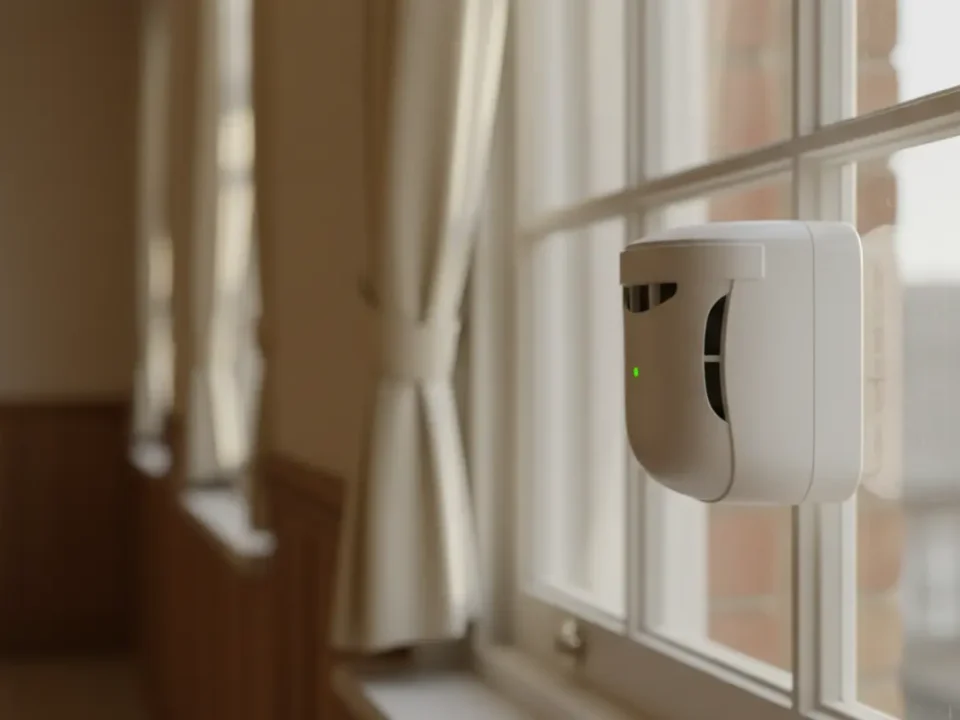
A wireless fire alarm system uses radio communication between devices and the panel, reducing the need for cabling. It can be useful in listed buildings, occupied premises, temporary sites, or places where running cables would cause disruption, although signal surveys and battery checks are important.
A hybrid system combines wired and wireless equipment, often giving a practical balance. For example, a business might use wired devices in a new extension and wireless devices in an older part of the building where cable routes are difficult.
Key Components Of A Compliant Fire Alarm System
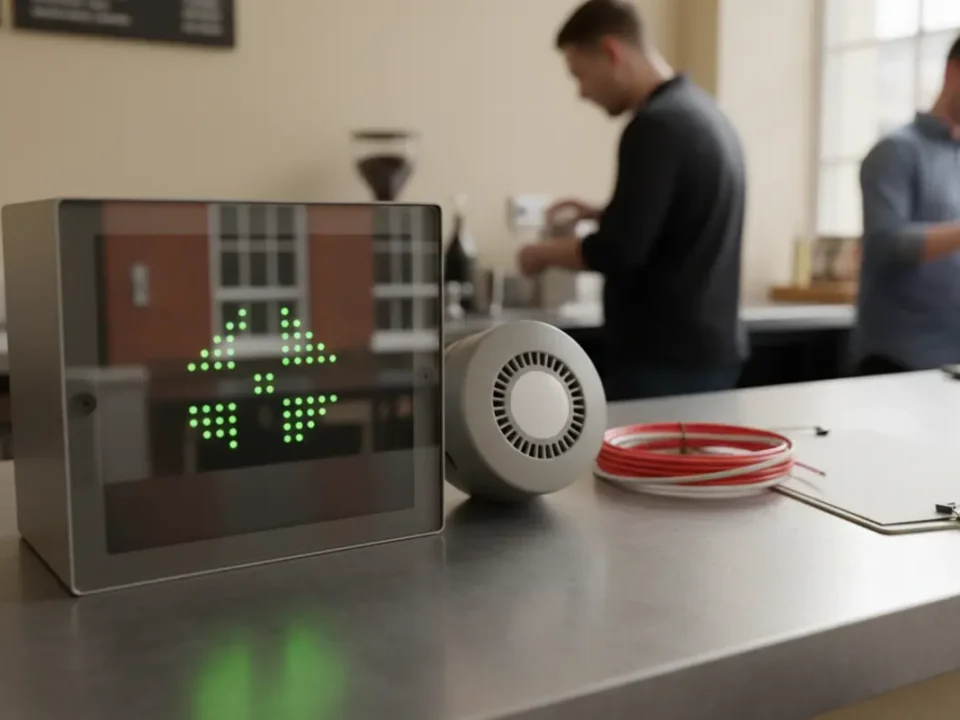
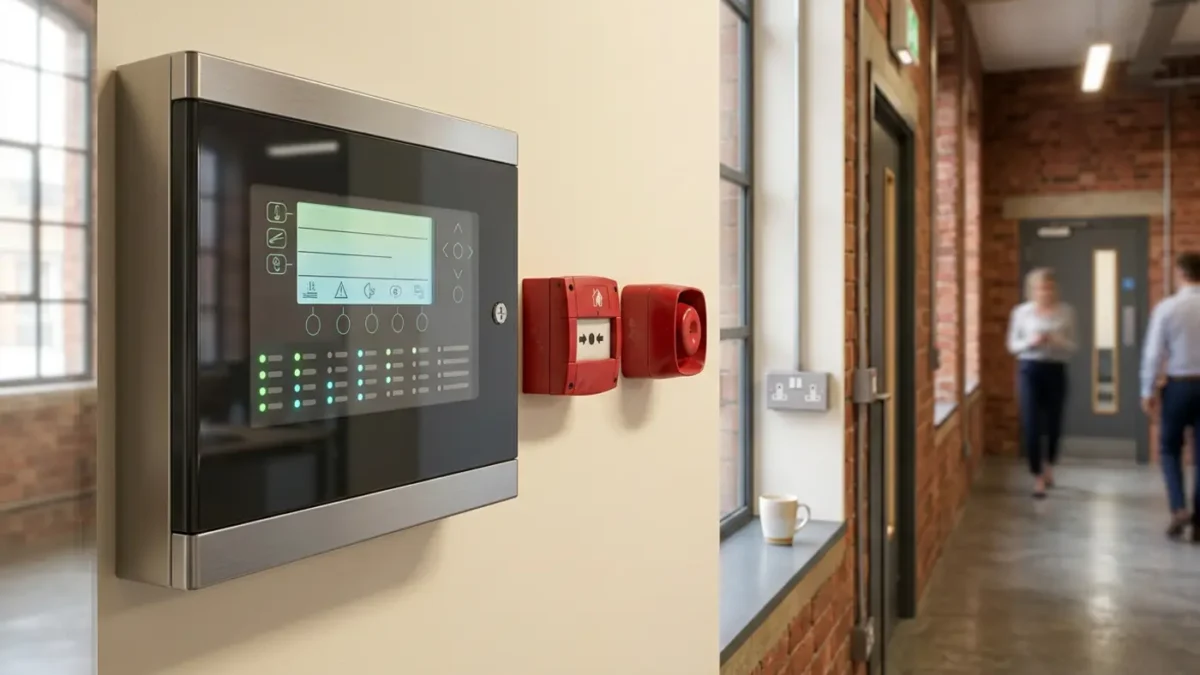
The control panel is the brain of the system, showing faults, alarms, zones, and device information. Staff should know how to silence, reset, and investigate the system correctly, because resetting without checking the cause is a bit like turning off a warning light in a car and hoping the engine has forgiven you.
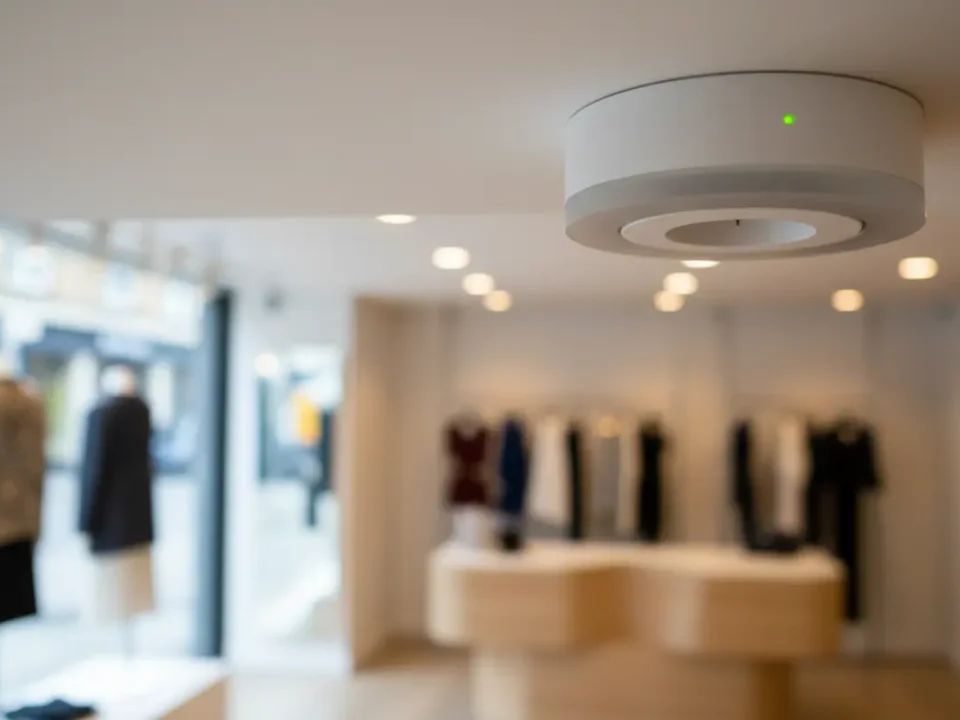
Detectors identify signs of fire, usually smoke, heat, flame, or a mix of conditions. The correct detector type matters because the wrong choice can create nuisance alarms, slow detection, or missed risks.
Manual call points let people raise the alarm if they discover a fire. These are normally placed on escape routes and near exits, so someone can trigger the warning without moving towards danger.
Sounders and beacons warn people to evacuate. Beacons are especially important in noisy areas, accessible settings, toilets, workshops, or places where someone may not hear the alarm clearly.
Modern systems may also include door release interfaces, plant shutdown links, lift controls, remote monitoring, and signalling to an alarm receiving centre. Remote monitoring can help businesses that are empty overnight or hold valuable stock, because an alarm can be acted on quickly even when nobody is on site.
Commercial Fire Alarm Systems And Insurance
Insurers often expect fire alarm systems to match the fire risk assessment, be installed to BS 5839 Part 1, and be maintained with clear records. Some policies may also ask for specific monitoring, keyholder response, or evidence of regular servicing, so it is sensible to check the policy wording before choosing a system.
It is also important not to mix up fire alarm certification with security alarm rules. SSAIB and Insurance Approved providers are often relevant for intruder alarms, CCTV, access control, and Police Response URN requirements, while fire alarm competence should be checked through recognised fire schemes such as BAFE SP203 1 where applicable.
Other safety standards may apply alongside the fire alarm. BS 5266 relates to emergency lighting, BS 5306 covers fire extinguishing equipment, and BAFE SP101 is linked with competent fire extinguisher maintenance. EN 50131 grades apply to intruder alarm systems rather than fire alarms, so a good provider should explain which standards apply to which part of your protection plan.
Choosing A Competent Fire Alarm Installer
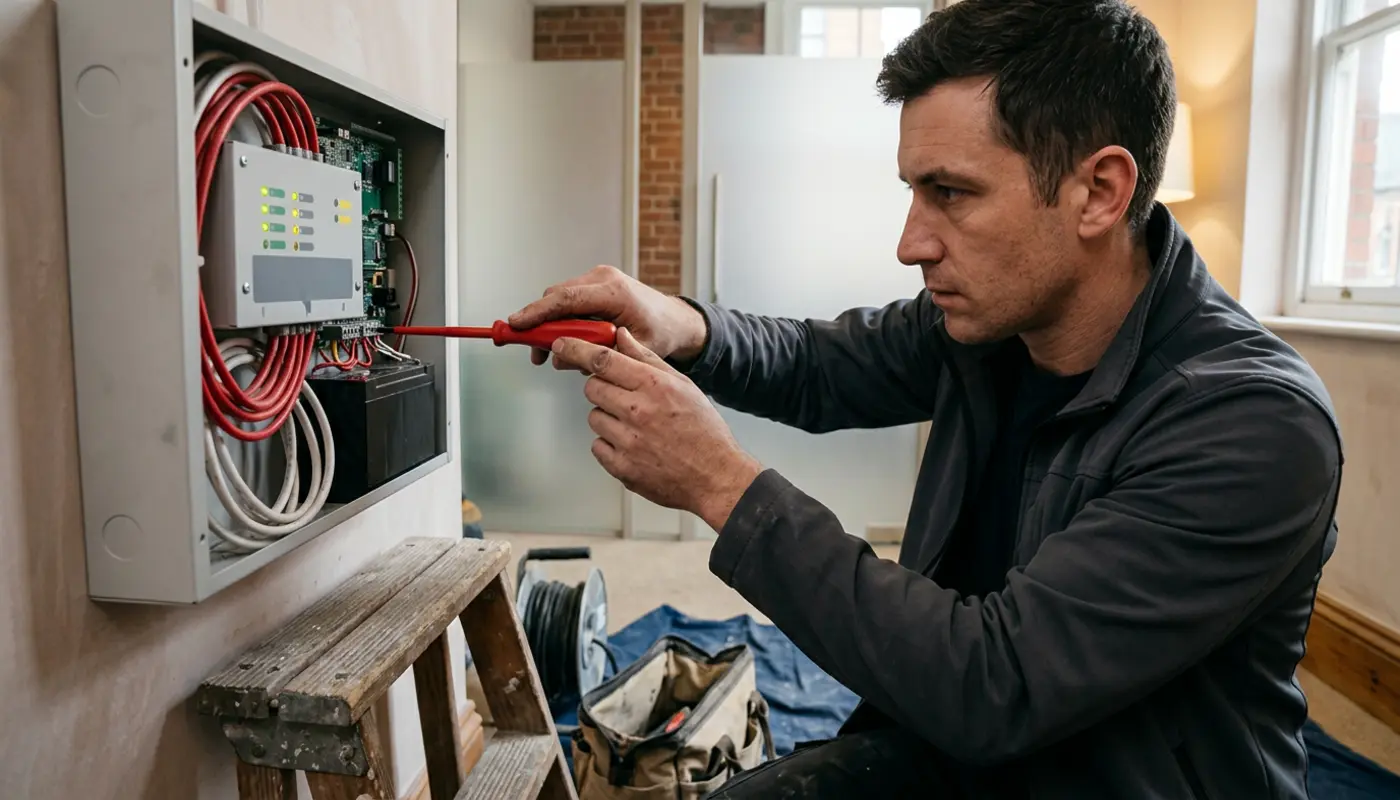
A competent installer should understand BS 5839 Part 1, provide proper design documents, install suitable equipment, commission the system, explain how it works, and leave you with certificates and records. They should also be able to discuss your fire risk assessment rather than selling the same package to every premises.
BAFE SP203 1 is an important scheme for fire detection and alarm competence, covering areas such as design, installation, commissioning, and maintenance. NSI approval can reassure you that a provider is independently checked against recognised standards, while LPCB approval can give extra confidence that products, systems, or services have been assessed through a respected certification process.
Before appointing an installer, ask what category they recommend, why they recommend it, whether they will provide drawings and certification, and how ongoing servicing will work. A good installer will welcome these questions rather than treating them like an interrogation under a very bright lamp.
Testing, Servicing And Record Keeping
Most businesses should carry out a weekly fire alarm test, using a different manual call point where practical. The test should be done at roughly the same time each week, staff should know it is a test, and the result should be recorded in the fire logbook.
Professional servicing is commonly carried out at least every six months for commercial fire alarm systems, although higher risk sites may need more frequent visits. Maintenance should include checks of devices, batteries, sounders, signals, faults, contamination, cause and effect programming, and any changes to the building.
Your fire logbook should record weekly tests, false alarms, faults, servicing visits, staff training, evacuation drills, and any corrective actions. If the fire and rescue authority visits, neat records can make life much easier because they show that fire safety is being managed properly rather than remembered once a year in a mild panic.
A Practical Fire Alarm Checklist
- Complete a suitable fire risk assessment for the premises.
- Choose the correct BS 5839 Part 1 alarm category.
- Use the right detector types for each area.
- Make sure manual call points are easy to reach on escape routes.
- Check that sounders and beacons can warn everyone who may be inside.
- Carry out and record weekly fire alarm tests.
- Arrange professional servicing at suitable intervals.
- Keep a clear fire logbook with faults, false alarms, servicing, drills, and actions.
- Train staff so they know what to do when the alarm sounds.
Penalties And Enforcement In The UK
Fire and rescue authorities can inspect business premises and take action where fire safety is poor. They may issue advice, an alterations notice, an enforcement notice, a prohibition notice, or in serious cases, prosecute.
Penalties can include unlimited fines and, for serious breaches, imprisonment. The risk is not only legal, because a poor fire alarm system can also affect insurance, business continuity, reputation, staff safety, and the ability to reopen after an incident.
England, Wales, Scotland, and Northern Ireland do not all use identical fire safety laws, so businesses should check the relevant national fire safety guidance for their location. The simple approach is to know which rules apply, follow the assessment, maintain the system, train staff, and keep clear records.
Final Thoughts On Choosing The Right Fire Alarm System
The right fire alarm system for a UK business is the one that matches the fire risk assessment, follows BS 5839 Part 1, protects people first, and supports the way the building is actually used. A small low risk office may need a different system from a restaurant, care home, warehouse, hotel, or HMO, which is why a proper assessment matters.
If you want a practical starting point, ask who uses the building, whether anyone may be asleep or vulnerable, whether escape routes are protected, whether high risk rooms are covered, whether staff will hear the alarm, and whether there is a servicing plan. Once those answers are clear, choosing between conventional, addressable, wireless, and hybrid systems becomes much less daunting.
iSecurity Solutions designs and maintains compliant fire alarm systems for UK businesses, with clear advice and dependable support. The aim is simple. You get a system that works when it matters, supports your duties, and lets you get on with running the business without fire safety keeping you awake at night.
Frequently Asked Questions
What Fire Alarm System Does A Small Business Need?
A small business needs a fire alarm system based on its fire risk assessment, building layout, and occupancy. Many small premises use a conventional or addressable system designed to BS 5839 Part 1, with manual call points, suitable detectors, sounders, and a clear testing routine.
Is A Fire Alarm A Legal Requirement For UK Businesses?
A fire alarm is required where the fire risk assessment shows it is needed to give suitable warning. Under the Fire Safety Order in England and Wales, the Responsible Person must provide appropriate fire detectors and alarms where necessary.
What Is The Difference Between L1 And L2 Fire Alarm Systems?
An L1 system gives automatic detection throughout most areas of a building, while an L2 system covers escape routes plus specific higher risk areas. Care homes, hotels, and complex premises often need higher life protection than a simple office.
How Often Should A Business Fire Alarm Be Serviced?
Most commercial fire alarm systems should be professionally serviced at least every six months, with weekly user testing recorded in the fire logbook. Higher risk premises may need more frequent maintenance depending on the assessment and system design.
Should I Use An SSAIB And Insurance Approved Installer For Fire Alarms?
For fire alarms, look for competent fire accreditation such as BAFE SP203 1, while an SSAIB and Insurance Approved provider is especially relevant for security systems and insurer recognised protection. Using properly certified professionals helps support compliance, documentation, and long term reliability.