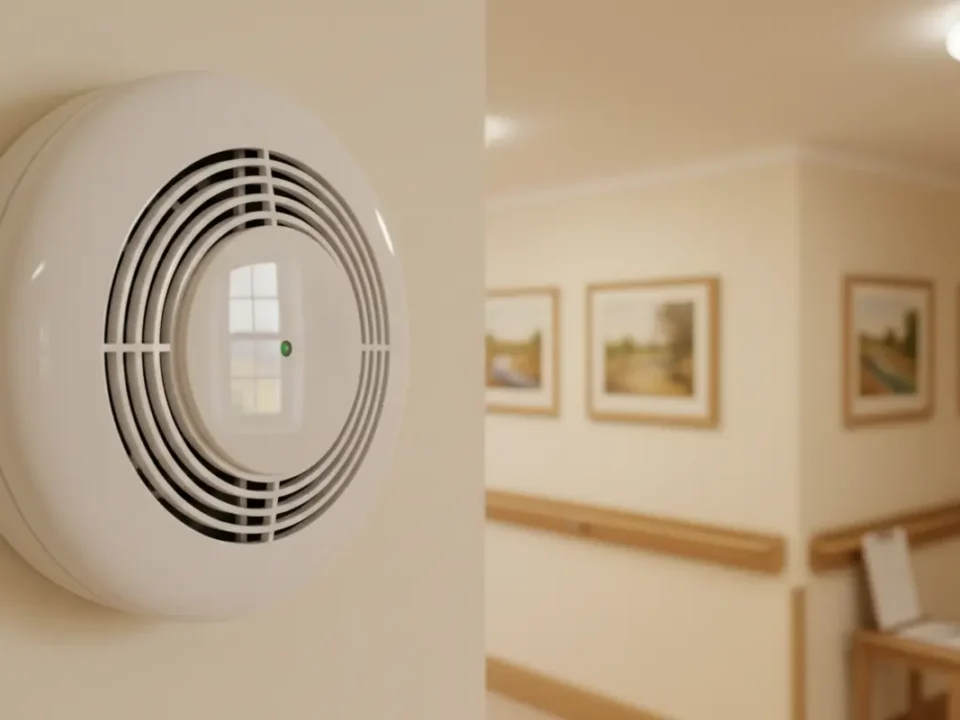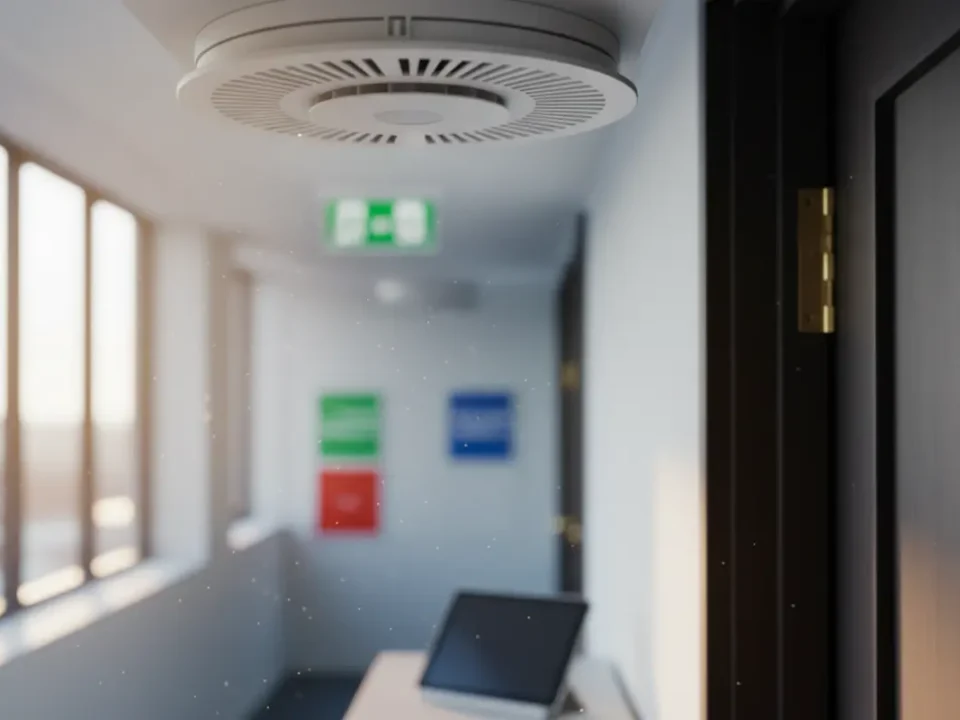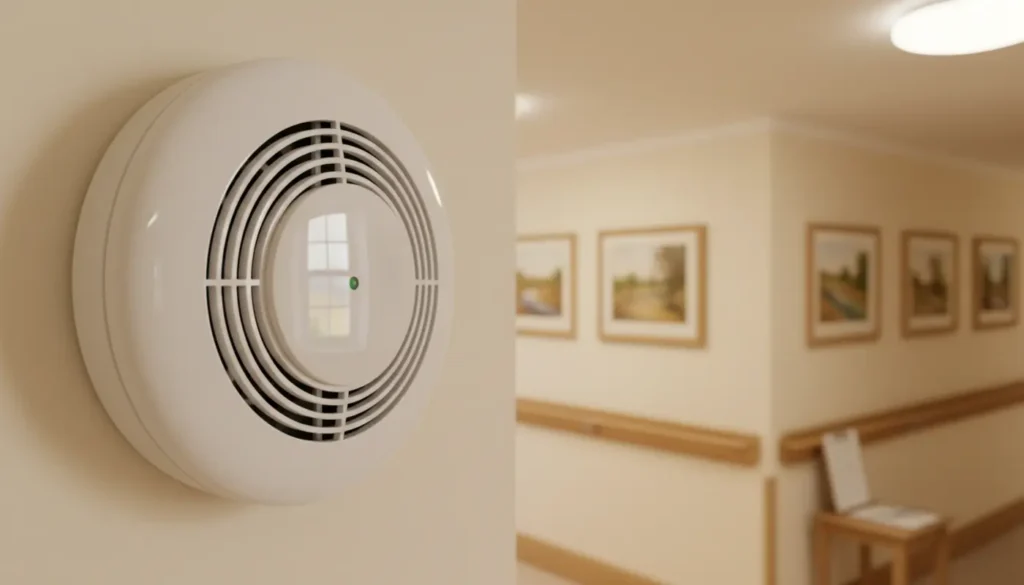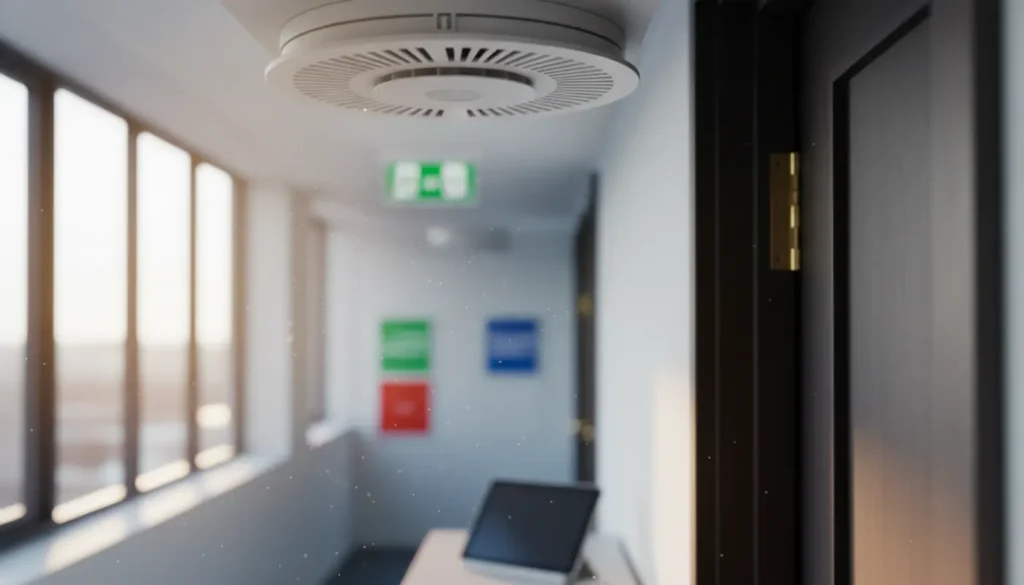
Fire Alarm Maintenance for Care Homes Guide
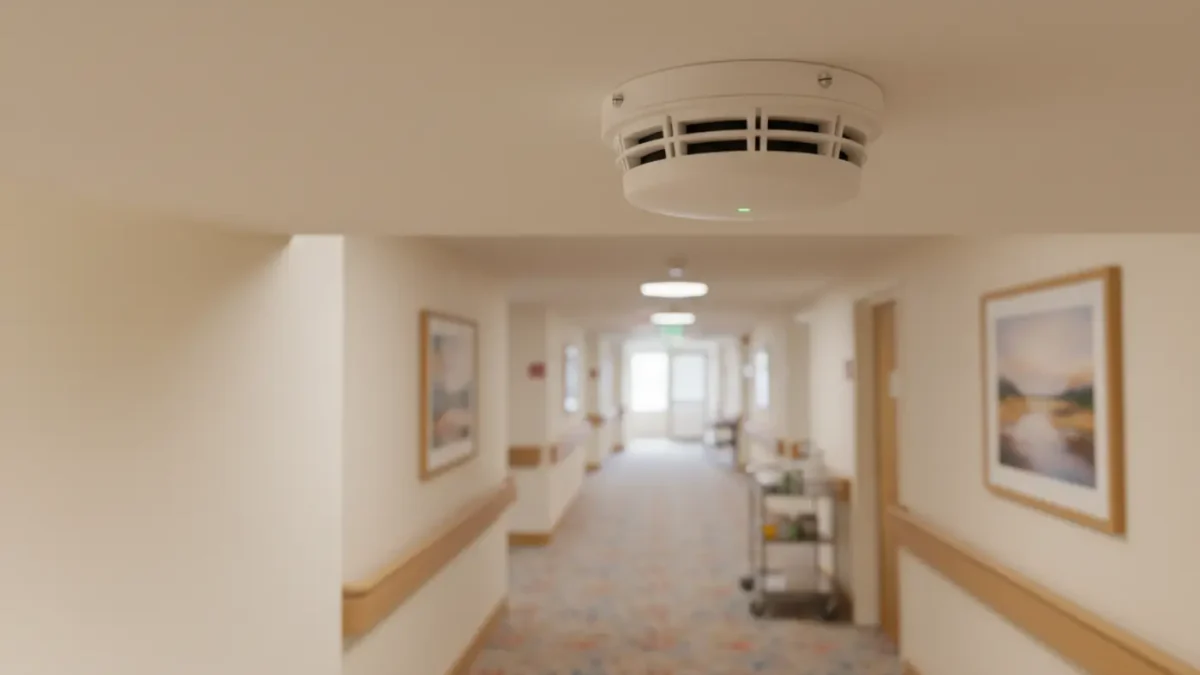
Fire alarm maintenance for care homes means keeping the system ready to work at all times through regular testing, planned servicing, clear records, and staff who know what to do when an alarm sounds. In 2026, CQC will expect care homes to show clear evidence of this, with maintenance aligned to the Regulatory Reform Fire Safety Order 2005, the Health and Social Care Act 2008, and BS 5839 for commercial fire alarm systems.
In care homes, this is far more than routine paperwork. Residents may have limited mobility, dementia, hearing loss, or need help to evacuate, so even a small fault can become a serious risk very quickly. iSecurity Solutions supports care homes across the North West with dependable maintenance, practical support, and documents that hold up well during inspections and audits.
Fire Alarm Maintenance For Care Homes
Fire alarm maintenance for care homes has one clear purpose. Residents and staff must be warned quickly and safely if a fire starts. The Responsible Person must make sure the system suits the building, stays in good working order, and is tested often enough to find faults before they become a danger. In most care homes, the expected standard is a BS 5839 Category L1 system, which gives the highest level of life protection with automatic detection across the building.
In day to day terms, proper maintenance usually includes daily visual checks, weekly manual call point tests, monthly checks on power supplies and alarm devices, engineer servicing at planned intervals, and a full annual review. If you need a wider view of compliant systems in this setting, the care home fire alarm overview is a useful place to start.
The Legal Framework For Fire Alarm Maintenance
The legal side is more straightforward than it first sounds. Under the Regulatory Reform Fire Safety Order 2005, the Responsible Person must provide suitable fire precautions and keep them in efficient working order. For care providers, the Health and Social Care Act 2008 adds to that duty because safe care and treatment includes safe premises, safe equipment, and sensible systems that protect residents from avoidable harm.
CQC usually looks for proof, not big claims about compliance. That means service reports, test records, staff training records, fire drill records, and evidence that faults are dealt with quickly. Care homes that already manage planned maintenance well often benefit from structured service contracts because they reduce the chance of missed visits and missing paperwork.
What Fire Alarm System Care Homes Usually Need
Most care homes are expected to have a Category L1 fire detection system under BS 5839. In simple terms, this means automatic detection is provided throughout the building, including circulation spaces, rooms, roof voids where needed, and other areas where a fire could start without being noticed straight away. This matters because residents may not be able to leave the building quickly on their own, so early warning is essential.
The system will usually include a control panel, smoke or heat detectors, manual call points, sounders, visual indicators, interface units, and a backup power supply. For a straightforward explanation, this guide explains how fire alarm systems work.
Weekly Testing Requirements Under BS 5839
BS 5839 requires regular user testing, and the weekly manual call point test is one of the key tasks for care homes. A different call point should usually be activated each week on a rotation so that, over time, the whole building is covered. The test confirms that the panel receives the signal, the alarm sounds correctly, and staff can hear it where they need to.
It also checks staff response, which is just as important. There is not much value in a perfectly working alarm if no one knows which zone has triggered or who should investigate. The result should be recorded in the fire safety logbook with the date, time, call point location, outcome, and any fault or follow up action.
It is good practice to carry out the test at about the same time each week so staff know it is planned, while still rotating the location. If the system is monitored, many homes also tell the alarm receiving centre before testing. That avoids unwanted call outs and saves a few awkward explanations later.
Monthly Checks That Matter
Monthly checks help spot quieter issues that are easy to miss. These usually include inspecting the standby batteries, checking the panel for fault history, confirming that sounders and visual indicators are operating correctly where needed, and making sure no detector or call point has been blocked, damaged, painted over, or covered by a well meaning decoration.
Linked equipment should be checked as well. If doors release on alarm, if lift controls connect to the system, or if there are visual alerts for staff and residents in certain areas, those parts need attention too. Monthly checks do not replace engineer servicing, but they do show active management and help stop small issues growing into bigger compliance problems.
Engineer Servicing And Periodic Inspection
Under BS 5839, periodic inspection and servicing must be carried out by a competent person, and the gap between service visits should not be more than six months. In care homes, more frequent visits are often the better option, especially in larger or older buildings, sites with a history of false alarms, or homes with more complex evacuation plans. Visits every three months are common because they give closer oversight and reduce the chance of faults sitting unnoticed.
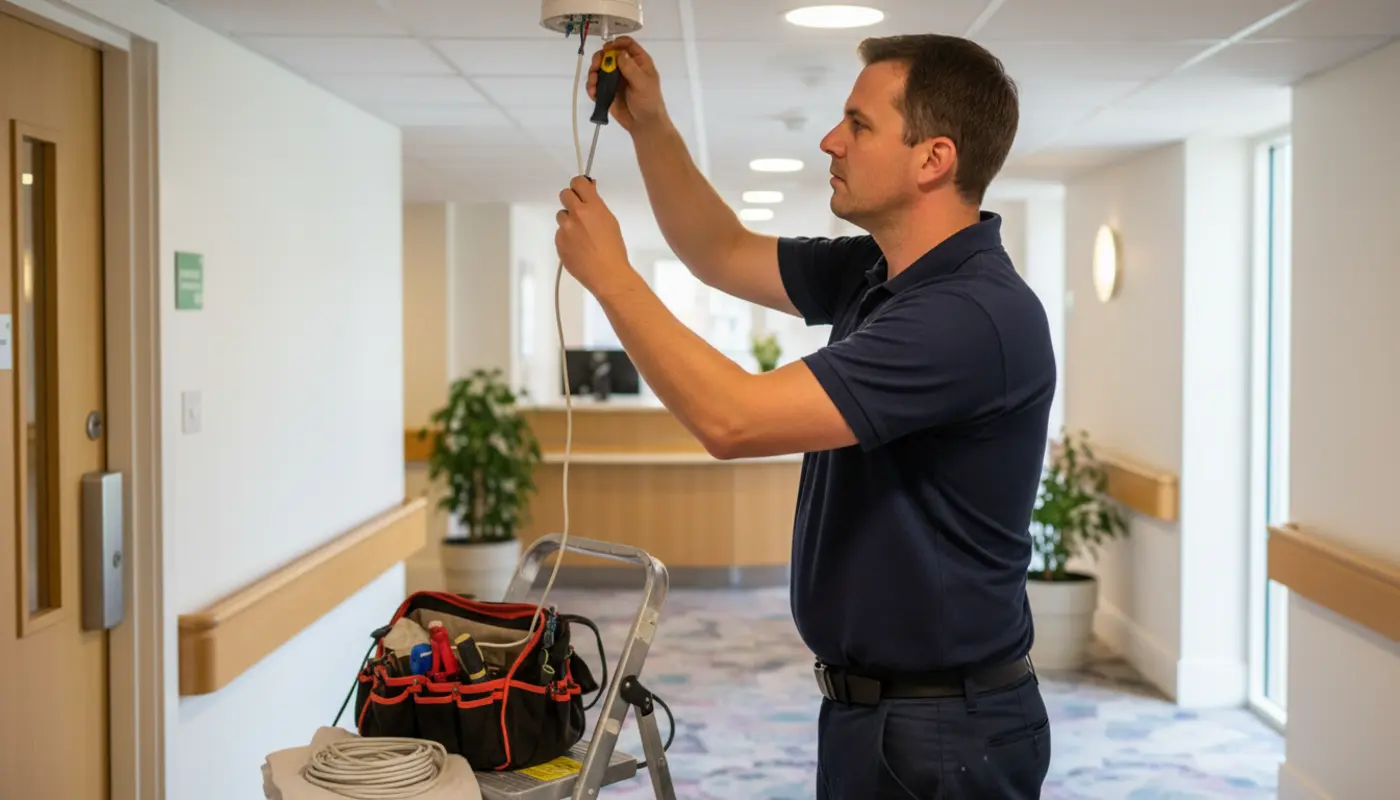
During a service visit, the engineer will usually inspect the panel, test a proportion of detectors and call points, check standby power, review the logbook, look at the fault history, and confirm that devices are still suitable for the environment. Homes that want a clearer picture of what a maintenance plan should include can review this page on a fire alarm service contract.
When CQC inspections and insurer expectations are involved, paperwork matters almost as much as the testing itself. Maintenance certificates should be easy to find, properly signed, and linked to any remedial work so there is a clear trail from fault found to fault fixed.
Annual Inspection And Certification Requirements
Every care home should have a full annual inspection process that confirms the system has been maintained properly through the year and still suits the building. Over the service cycle, all devices should be tested in line with BS 5839, and the provider should receive updated certification and reports showing the condition of the system, any recommendations, and any outstanding work.
The annual review is also the right time to ask whether the building has changed. New bedrooms, altered layouts, changed use of lounges, converted storage rooms, or extra assisted living equipment can all affect detector coverage, audibility, and evacuation planning. A certificate is useful, but it should match the site as it really is, not as it looked several refurbishments ago.
How Fire Alarm Maintenance Links To The Fire Risk Assessment
Fire alarm maintenance and the Fire Risk Assessment should work together. If engineer reports keep showing repeat false alarms, failing batteries, dirty detectors, or gaps in coverage, that information should feed back into the risk assessment. In the same way, if the risk assessment highlights vulnerable residents or possible evacuation delays, the alarm strategy may need to be reviewed.
Maintenance findings should feed straight into the Fire Risk Assessment whenever they show a pattern or a risk that needs attention. For a closer look at that wider process, the article on fire risk assessments for care homes explains how the pieces fit together.
Where emergency lighting supports the escape plan, it needs its own maintenance route too. In care homes, that means compliance with BS 5266, including monthly function tests and annual full duration testing, because alarm audibility is only part of safe evacuation if escape routes are not properly lit.
Record Keeping And What CQC Inspectors Expect
CQC inspectors usually want to see organised, current, and believable records. That means a fire safety logbook with weekly tests, monthly checks, engineer service reports, annual certificates, fault reports, records of false alarms, and evidence of remedial action. If a fault was found three months ago and no one can explain what happened next, it tends to draw the wrong kind of attention.
Useful records should include the date and time, the device or zone tested, who carried out the check, what happened, and what action was needed next. Digital records can work well, and so can paper logbooks, as long as they are complete and easy to find during an inspection.
The key point is having a clear audit trail that shows the home is managing fire safety actively rather than relying on crossed fingers and good luck. For general guidance on maintenance and recording duties, this fire service guide on maintenance and recording is a helpful reference and supports the need for regular checks and proper documentation.
Staff Training, Fire Marshals, Drills And PEEPs
Even a well maintained alarm system is only one part of the wider picture. Staff need to know what the alarm sounds like, what the panel is telling them, which zones cover which areas, and what the immediate action plan is during the day and at night. Induction training matters, but refresher training matters just as much because agency staff, night teams, and shift changes can quickly expose weak points.
Fire Marshals or nominated fire leads should understand weekly testing, logbook completion, fault reporting, and how to work with engineers. They do not need to be electronics experts, but they do need enough confidence to manage the basics calmly. If your home is also reviewing extinguishers, evacuation aids, and wider compliance, this piece on fire extinguishers for care homes adds helpful context.
PEEPs, or Personal Emergency Evacuation Plans, are especially important in care settings. They should reflect each resident’s mobility, cognition, hearing, staffing support needs, and likely route of evacuation. Drills should test not only movement and communication, but also whether the alarm is actually prompting the response the home expects.
How Fire Alarm Compliance Affects CQC Safe Ratings
Fire alarm compliance directly supports the CQC Safe line of enquiry because it shows the home is taking practical steps to prevent avoidable harm. Inspectors are usually more reassured when they see a recent Fire Risk Assessment, current alarm certificates, evidence of weekly checks, and staff who can explain what happens when an alarm activates without looking completely stuck.
Homes that perform well here tend to be proactive rather than reactive. They review false alarm trends, complete follow up actions quickly, keep records tidy, and link maintenance to training and evacuation planning. You can also read more on this wider topic in security and fire system maintenance for care homes.
Consequences Of Failure To Comply
Failure to comply can lead to enforcement notices from the fire authority, warning notices from CQC, reputational damage, and insurance issues after an incident. Under the Fire Safety Order, serious failings can lead to prosecution, fines, and in the worst cases, restrictions on use of the building. In a care setting, the impact can spread quickly because residents, families, commissioners, and inspectors all expect clear signs of safe practice.
Insurance is another major factor. Fire installations should be Insurance Approved, and many providers and insurers look for clear evidence that maintenance has been carried out by a properly accredited provider. Where SSAIB certification is required by the insurer or client, that should be confirmed in advance so the system and documentation meet expectations.
For a practical sector specific comparison, you may also find fire alarms for care homes in the North West useful when reviewing system expectations against resident safety needs.
Keeping Care Homes Safe With Planned Maintenance
Fire alarm maintenance in care homes comes down to consistency. Weekly tests, monthly checks, competent servicing, annual certification, strong records, and trained staff all support the same aim of protecting vulnerable residents and proving compliance when asked.
In 2026, care providers face too much scrutiny to rely on informal routines or missing paperwork. A clear maintenance plan linked to BS 5839, the Fire Risk Assessment, and CQC expectations makes day to day management easier, improves safety, and helps avoid the kind of last minute panic no one wants. As a trusted UK provider of commercial and domestic security systems, iSecurity Solutions helps homes and businesses stay protected around the clock with reliable fire safety support, tailored solutions, responsive service, and modern monitored technology that helps keep what matters most safe.